Chunhui Wang, Yu Tian, Ting Jiang (2022). Cognitive Ergonomics in the Design of the Display Interface for Manually Controlled Rendezvous and Docking. In: Advances in Ergonomics In Design, Usability & Special Populations: Part I. AHFE Open Access, vol. 18. https://doi.org/10.54941/ahfe100762
Manually Controlled Rendezvous and Docking (manual RVD) is a complex and demanding task for astronauts. The design quality of the display interface is critical for astronauts’ performance in manual RVD tasks. Present study aimes to improve the design of the display interface for manual RVD based on the analysis of the cognitive demands of the task. The cognitive demands of the RVD task on the human operators were analyzed by theoretical analysis and imperial research, and the cognitive demands were taken into consideration in the ergomomic design of the display interface for RVD tasks. Theoretical analysis and experimental data suggest that spatial transformations are highly demanded, and speed perception may be difficult for the operators. The arrangement of the display and the characteristics of the elements on the display were designed to facilitate human perception, judgement and decision, and several design schemes were proposed. The overall display interface which we designed demonstrated satisfying qualities. Analysis of the cognitive processes and cognitive demands of the manual RVD task provided important guide for the design of the RVD interface. The display interface we designed successfully supported the manual RVD tasks in China’s SZ-9 and SZ-10 missions.
Rendezvous and Docking (RVD) generally has two modes, automated RVD or manually controlled RVD (manual RVD). Due to the more flexibible and robust decision-making ability, RVD tasks with manual mode can achieve higher success rate. Meanwhile, the RVD task characteristics also put strong cognitve demands on the astronauts. The ergonomic design of the manual RVD system, especially the display interface on which the astronaut obtain the key information of the spacecrafts, plays an important role in supporting the exertion of the human capability in manual RVD task to guarantee high reliability of the space missions. Present study aimes to improve the design of the display interface for manual RVD based on the analysis of the cognitive demands of the task. The cognitive demands of the RVD task on the human operators were analyzed by theoretical analysis and imperial research, and were taken into consideration in the ergomomic design of the display interface for RVD tasks.
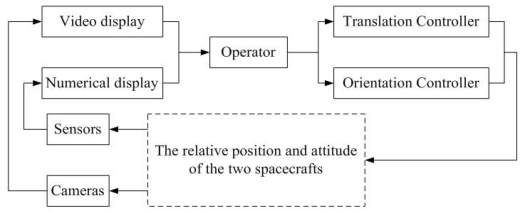
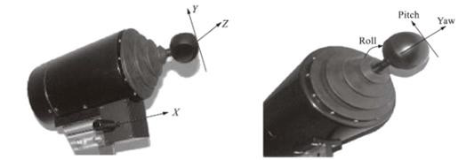
THE MANUAL RVD TASK AND THE SIMULATOR Space rendezvous and docking generally involves two spacecrafts, namely, a chaser spacecraft and a target spacecraft. In the manual RVD task, the operator, displays, and controllers form a closed loop, as shown in Figure 1 (Wang and Jiang, 2011; Wang et al., 2011). For existing manual RVD systems, video images of the target spacecraft obtained from the cameras are displayed on the monitoring interface, numerical data obtained from the sensors which indicate the relative position and attitude of the two spacecrafts are also provided (for instance, numerical Ergonomics In Design, Usability & Special Populations I (2022) data can be overlaid on the edge of the interface). The operator which is fastened to the bucket seat in the cockpit observes the information displayed on the monitoring interface and manipulates the controllers to complete the manual RVD task (Zhang et al., 2011, Wang et al., 2014). The system generally includes two controllers in the chaser spacecraft: one translation controller, shown in Figure 2a, which controls the X, Y, and Z axes of the chaser’s position, and one orientation controller, shown in Figure 2b, which controls the yaw, pitch, and roll of the chaser’s attitude. A manual RVD simulation system was designed and developed by technicians at the China Astronaut Research and Training Center (Wang, et al., 2011). The simulation system was established by modeling and simulating the Guidance, Navigation, and Controls Systems (GNC), the docking mechanisms, the instrumentation, the TV video system, and the cabin environment. The experimental schemes and initial parameters of the simualted RVD tasks can be configured. The performance of a RVD task is recorded automatically by the simulation system. The simulation system has been used for ergonomic design and evaluation of the manual RVD system. (as shown in Figure 1)
Figure 1. The display-human-controller loop in the manual RVD task.
(a) (b)
Figure 2. The two controllers of the manual RVD system. Left: the translation controller which controls the X, Y, and Z axes of the chaser’s position. Right: the orientation controller which controls the yaw, pitch, and roll of the chaser’s attitude.
COGNITIVE DEMANDS OF THE MANUAL RVD TASK Therectical analysis of the cognitive operations in the manual RVD task
The cognitive operations in manual RVD were analyzed theoretically according to the Adaptive Control of Thought- Rational (ACT-R) cognitive architecture. ACT-R is a theory that consists of multiple modules and explains how these modules are integrated to produce coherent cognition. Cognitive modules in ACT–R include the goal module, the declarative memory module, the visual module, the imaginal module. The cognitive modules in ACT-R are associated with distinct cortical regions (Anderson et al., 2004; Anderson et al., 2008). In line with the ACT-R theory, by consulting experts of manual RVD, discussing with the subjects and watching their operations, the cognitive modules and the cognitive operations involved in the manual RVD task process were deduced as follows. The goal module: to bring the relative position and attitude of the two spacecrafts under control. The declarative memory module: store task related knowledge and skills for retrieval. The visual module: monitor the video image on the display and search for information needed. The imaginal module: imagine the 3D images of the two spacecrafts and the dynamic changing processes of the 3D Ergonomics In Design, Usability & Special Populations I (2022) images. The productions: judge the relative position and attitude of the two spacecrafts and decide the control actions. The detailed cognitive operations in manual RVD were also analyzed under the ACT-R cognitive architecture. From those analyses, the cognitive operations considered to be necessary for completing the manual RVD task are visual search, spatial transformations, speed perception, choice reaction, knowledge retrieval and imagination. The design of the display interfaces should facilitate human perception such as visual search, spatial transformations and speed perception. Eye tracking data revealing the cognitive demands in the manual RVD task
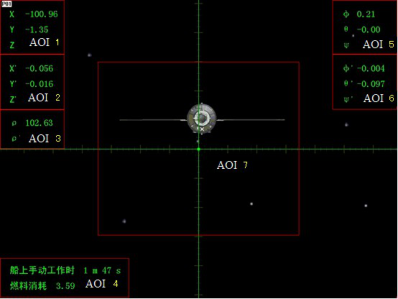
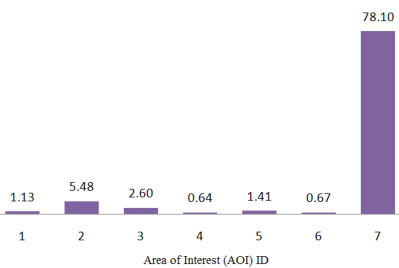
Ten male technicians aged between 26 and 31 years from China Astronaut Research and Training Center participated in the RVD tasks in which their eye tracking data were collected. The main monitoring interface is divided into 7 Areas of Interest (AOI). The fixation distribution and dwell time in the seven AOI were calculated. Statistic data show that human eyes were fixed on the image of the spacecraft nearly 80% of the time, while fixations on the numerical display areas count for only about 20% of all the fixations. This indicates that spatial perception and spatial transformations are highly demanded. Among the numerical display areas, the velocity display area attracted more fixations than the deviation display area, and the average fixation dwell time of the subjects on the velocity display area was much longer than the average fixation dwell time on the deviation display area, which indicates that the velocity information may be more important and are more difficult to extract. So speed perception may be difficult for the operators.
Figure 3. Dividing the RVD display into Areas of Interest (AOI)
(a) (b)
Figure 4. The eye activity measures of the participants in RVD tasks, (a) left: Percent of accumulated fixation time on the AOIs, (b) right: Mean time for one fixation on the AOIs.
Empirical research to reveal the key spatial ability for the manual RVD task 15 male participants performed manual RVD task simulations and spatial ability tests (the object-manipulation spatial ability and spatial orientation ability). Participants’ performance in the test of visualization of viewpoints (which measures the spatial orientation ability) was found to be significantly correlated with their manual RVD Ergonomics In Design, Usability & Special Populations I (2022) performance, indicating that the spatial orientation ability in the sense of perspective taking is particularly important for accomplishing manual RVD (Wang et al., 2014).
ERGONOMIC DESIGN OF THE INTERFACES FOR MANUAL RVD TASK
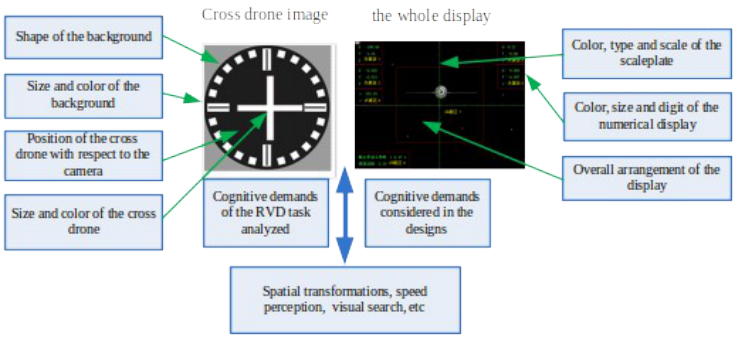
Figure 5. Ergonomic design of the interface with consideration of the cognitive demands of the manual
RVD task
Based on the ergonomic standards and conventions in manual RVD system design, we first proposed several design schemes of the RVD interfaces, Principles such as “pictorial realism”, “compatible motion” were considered in the design of the protocols of the video display and the numerical display to alleviate human cognitive workload and reduce human error. Then cognitive demands of the manual RVD task were analyzed theoretically and empirically. By considering the cognitive demands of the manual RVD task, the elements in the manual RVD interfaces, especially elements of the cross drone image and the main information display, were selected and modified. The final display scheme as part of the whole training simulator facilitates human perception and human decision- making, guaranteed the skill acquisition of the astronauts on ground, and supported the manual RVD tasks in China’s SZ-9 and SZ-10 missions.
CONCLUSIONS
Present study demonstrates a case study showing the application of cognitive ergonomics in space industry. By cognitive task analysis and empirical researches, we decuded that several cognitive operations (eg. spatial information processing, speed perception and visual search) are highly demanded in the RVD tasks. The cognitive demands were taken into consideration in the ergomomic design of the display interface for RVD tasks. The arrangement of the display and the characteristics of the elements on the display were designed to facilitate human perception, judgement and decision. The overall display interface designed demonstrated satisfying qualities and successfully supported the manual RVD tasks in China’s SZ-9 and SZ-10 missions. For complex human computer interaction (HCI) tasks such as the manual RVD task, analysis of the cognitive demand of the task will provide helpful guides for the ergonomic design of the system.
REFERENCES
Anderson J.R., Bothell D., Byrne M.D., Douglass S., Lebiere C., Qin Y. (2004). An integrated theory of the mind. Psychological Review, 111: 1036-1060. Anderson J.R., Fincham J.M., Qin Y., Stocco A. (2008). A central circuit of the mind. Trends in cognitive sciences, 12: 136-143. Wang, B., Jiang, G., Chao, J., Wang, X., Wang, Y., Wang, C., and Lian, S. (2011). Design and Implement of Manned
Rendezvous and Docking Ergonomics Experimental System. Space Medicine and Medical Engineering 24, 30-35. (in Chinese) Ergonomics In Design, Usability & Special Populations I (2022)
Wang, C., and Jiang, T. (2011). Study on Ergonomic Design of Display-control System in Manual-control Rendezvous and Docking. Manned Spaceflight 17 50-53, 64. (in Chinese) Wang, C., Tian, Y., Chen, S., Tian, Z., Jiang, T., & Du, F. (2014). Predicting performance in manually controlled rendezvous and
docking through spatial abilities. Advances in Space Research, 53(2), 362-369. Zhang, Y., Xu, Y., Li, Z., Li, J., and. Wu, S. (2011). Influence of monitoring method and control complexity on operator performance in manually controlled spacecraft rendezvous and docking. Tsinghua Science and Technology 13(5), 619-624.
Ergonomics In Design, Usability & Special Populations I (2022)
LISTED IN THE AHFE DIGITAL BOOKSTORE CATALOGUE
Explore the complete digital volume
Advances in Ergonomics In Design, Usability & Special Populations: Part I
Read this individual research paper free through the original publisher, or explore the full digital proceedings book.
ISBN 978-1-4951-2106-7
Explore this ISBN in the AHFE Bookstore ↗Listed in the July 2026 bookstore catalogue; search by ISBN to confirm current availability · Digital book purchase optional