Luz M. Sáenz, Ana María Lotero, Emilio Cadavid, Gustavo Sevilla (2022). Anthropometry as a Resource in the Learning Process of Ergonomics / Human Factors & Design. In: Advances in Ergonomics In Design, Usability & Special Populations: Part II. AHFE Open Access, vol. 19. https://doi.org/10.54941/ahfe1001248
The Design Faculty’s Ergonomics Research Line at the Universidad Pontificia Bolivariana (UPB) in Medellín, Colombia, which provides the basis for courses in Ergonomics and Design, has developed a series of didactic strategies that are included in the academic training of industrial designers. These strategies develop students’ ability to recognize – within a framework of Ergonomics/Human Factors – conceptual criteria, techniques and Anthropometric procedures for the design process. This proposal presents theoretical and practical activities designed by the Ergonomics Research Line of the Design Studies Group (GED) at UPB, within the framework of the Anthropometry for Design: Manual and Measuring Equipment research project. This project entails the development of Anthropometry approach exercises, a procedure for sizing objects based on anthropometric criteria. It has also led to a basic research process for the erGO research seedbed (thematic examination, current state of the industry and the development of a prototype of an instrument for measuring hands). The project also acts as a motivational endeavor for the students: through these proposals, they contribute towards the creation of a laboratory of Ergonomics/Human Factors from the anthropometric component.
Anthropometry, as a discipline based on anthropological foundations, understands the human being in terms of measurements: length, width, perimeters, creases, etc. It provides a technique that is instrumental and that takes into account the required protocols, and is expressed as data, graphics, tables and charts. Information that can be used by the discipline of Ergonomics/Human Factors has huge potential in contributing towards design in every type of environment in which people interact (work systems, products, services) (Dul, et al, 2012), providing conditions of adaptation and comfort.
Anthropometry is used in Ergonomics as a technique and an instrument, providing information and contributing towards the analysis of human beings during activity. It also helps facilitate the decision-making process when sizing objects, equipment, tooling, spaces, clothing, etc. In the design process, it constitutes a requirement for adaptation and enables conditions of comfort. It is also a factor that determines the level of acceptance of a particular product by its users.
In the academic training of industrial designers, Anthropometry is a common theme in the broad academic field of Ergonomics/Human Factors, and constitutes a theoretical and practical component in design work.
The Design Faculty’s Ergonomics Research Line at the Universidad Pontificia Bolivariana (UPB) in Medellín, Colombia, has developed a series of didactic strategies (pedagogic approach) that bring together Ergonomics and Design and strengthen the capacity to recognize conceptual criteria, techniques and Anthropometric procedures in the configuration process of objects. Furthermore, these strategies constitute a framework for Ergonomics/Human Factors.
Theoretical content of the courses is laid out, as well as exercises for the practice and application of Ergonomics in the Ergonomics and Design courses 1 and 2, and includes a methodological proposal for the sizing of objects, and Anthropometry as an action line of Seedbed Research: erGO – an example of the research process (thematic examination, current state of the industry and the development of a prototype of an instrument for measuring hands) as a requirement for degree work.
PEDAGOGICAL APPROACH: ERGONOMICS IN THE ACADEMIC TRAINING OF INDUSTRIAL DESIGNERS (THE “HOW”) General guidelines for UPB’s Pedagogic Model emphasize learning, the active role of the student in developing knowledge and the teacher’s role as an intermediary, as well as research, experimental work and the practice of independent activities (Universidad Pontificia Bolivariana, 2009).
The Faculty of Industrial Design, through the GED’s Research Lines, as well as through teaching activities carried out in theoretical and practical courses at undergraduate and postgraduate level, has set up a research hub known as erGO; has participated in the development of degree projects (research training); and has carried out applied research projects and consulting activities, all of which correspond to a model of educational practice that favors research as an alternative in the creation of knowledge”.
UPB’s Faculty of Industrial Design features a body of knowledge known as “components”. This body allows students to benefit from a more comprehensive academic training, and forms part of their educational and disciplinary outlook (Faculty of Industrial Design, 2009). One of these is the Functional-Operational component that sees “the object as useful”. From this perspective, “the value in use” of the object and its relationship with the user, within a particular context or activity, can be defined. The function can then be understood as a configuration of products that determines technical and operational efficiency, the usefulness they provide, as well as the relationship with the user in terms of physicality and perception (Sáenz, 2005).
The Functional-Operational component – as a dimension for the configuration of objects – provides the theoretical, practical and methodological foundations for determining the formal and informal properties of the object (technical function); the utility that the object offers (utility function); and the set of physical and cognitive actions that must be considered when adapting the object to the user (person-object relationship function) (Valencia, 2007).
The themes associated with the knowledge and work of Ergonomics form part of the functional-operational component. This component not only deals with content, but conceptualizes the optimization of the User-Product- Context relationship that guides the framework of knowledge and application. The following courses are included in the undergraduate study program: Ergonomics and Design 1 (Man as a Living Being), Ergonomics and Design 2 (Man as a user of objects: Conditions that can optimize the User-Product-Context interface) and an optional course: Inclusive Design among others (Sáenz, Integration of Ergonomics in the Design Process: Conceptual, Methodological, and Practical Foundations, 2011).
The courses are part of the training cycle from the first to the sixth semester.
The vocational training cycle runs from the seventh to the tenth semester, and forms an implementation stage.
Anthropometry as a Resource in the Teaching-Learning Process of Ergonomics/Human Factors and Design. Theoretical Content In the framework of this thematic design, Anthropometry is established as a theoretical and practical component of the Ergonomics and Design course 1. It generates ideas about the concept and evolution of measurement systems and facilitates the understanding of Anthropometry as a support discipline for design work, background, definitions, fundamental steps that need to be taken, the concept of variability, anthropometric data gathering, understanding of tables and compilation of dimensions, current techniques and, above all, the implementation of data in the decision- making process to define the size of objects, and the extent to which the relationship between the person and day-today objects can be defined as adequate.
In the Ergonomics and Design course 2, the relationship between Ergonomics/Human factors and the Design process is established, and in each stage of the process the corresponding criteria for each discipline is shown. These criteria must be developed in a parallel and complementary way, and, most importantly, must be developed from the beginning of the configuration process of the objects/products.
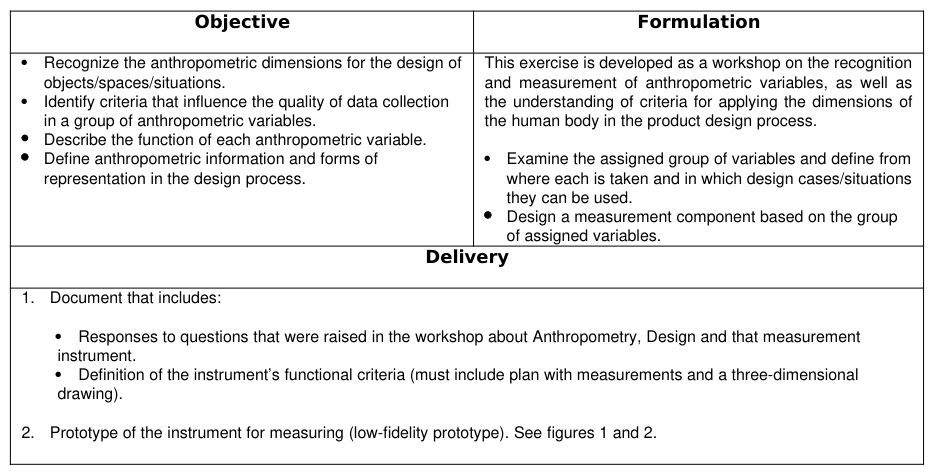
Exercises for the practice and application of Anthropometry These exercises are developed in the Ergonomics and Design courses 1 and 2. Are developed as a workshop on the recognition and measurement of anthropometric variables, as well as the understanding of criteria for applying the dimensions of the human body in the product design process. Also, designing measurement tool. The objectives, formulations and expected results are described.
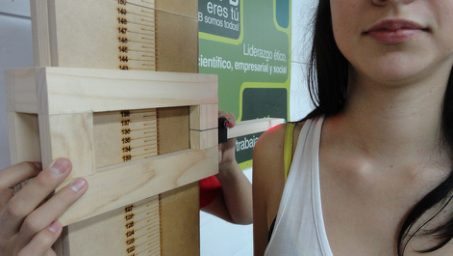
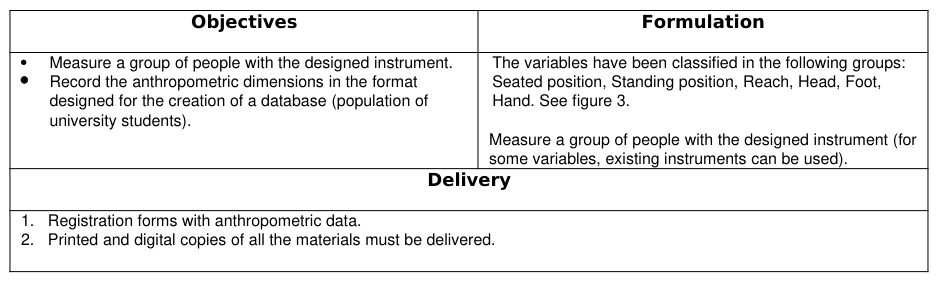
Table 1: Workshop on an anthropometric measurement tool for a group of variables Objective FormulationFigure 1. Measurement tool for standing position Figure 2. Measurement tool for a handTable 2: Workshop on anthropometric measurement (student population tables) Objectives FormulationFigure 3. Two groups of anthropometric measurements.
Figure available in the original PDF paper.
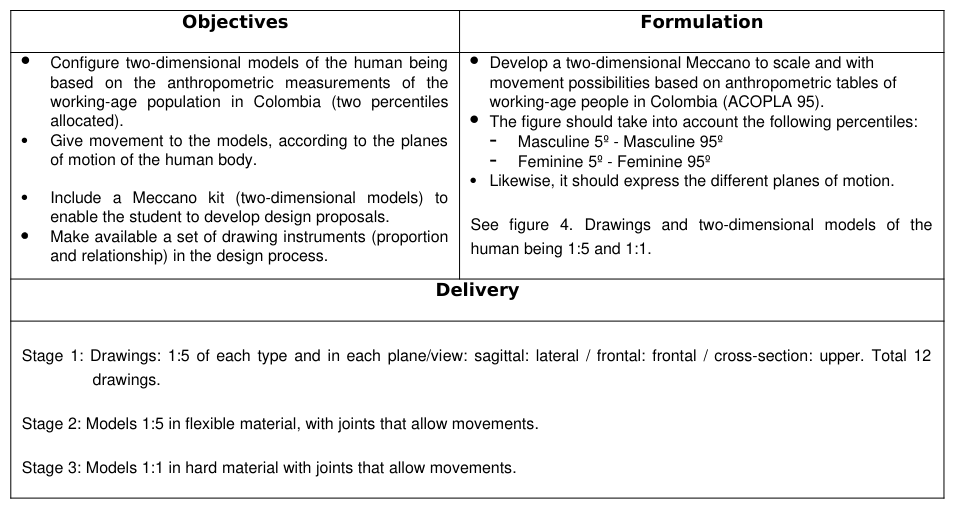
Table 3: Exercises for preparing teaching materials: 1:5 scale models and 1:1 scale models Objectives FormulationFigure 4. Drawings and two-dimensional models of the human being 1:5 and 1:1.
Figure available in the original PDF paper.
Development of a methodology for the sizing of objects One of the implementation exercises proposes a procedure/methodology that emphasizes the identification of the size of the objects in terms of the interfaces that are shown and the related anthropometric dimensions.
The procedure requires:
Carry out a detailed drawing of the chosen proposal. This drawing must contain general views (front, sides, top, rear), a three-dimensional representation and the operation (use) sequence of the object.
Determine the object’s interfaces. The interface refers to the physical and functional connection between the product and the user, allowing the operational and/or functional use of the product.
Define the particular body part that connects physically (directly or indirectly) with the interfaces of the object. For example, in the use of a telephone: hand, face, ear.
Determine the corresponding anthropometric variable for each body part.
Select the percentile(s) that is/are seen to correspond with the group(s) of user(s) of the product.
Depending on the percentage, define the unit of measurement (meter – centimeter – millimeters).
Determine the equivalent measure in the interface. Analysis must be carried out to ascertain if this measure takes into account a percentage of the measure determined by the space.
Chart the body part relationship, anthropometric variable with the interface of the object.
The development of a prototype, initially low fidelity, facilitates tests with groups of users to determine whether the dimensions of the product are correct or incorrect.
Anthropometry as a course of action in the Research Hub Within the framework of the Research Training System at the Faculty of Industrial Design at the UPB, an investigative exercise was carried out as a graduation project. It also constituted one of the results of the Anthropometry for Design projects. The students group that took part in project were: Luis Fernando Echavarría Carolina Piedrahita and Juan Sebastián Rojas.
The objective of this research was to define the design requirements and to develop an anthropometric measuring tool for hands, and which would achieve the following: cover anthropometric measuring tool requirements for learning through practice; increase student interest in the implementation of design that encompasses anthropometry; and support the configuration process through a focus on User-Centered Design that sees anthropometry as a fundamental part of Ergonomics/Human Factors criteria. A further objective was to contribute to the strength of the Ergonomics/Human Factors laboratory at the Universidad Pontificia Bolivariana through the creation, design, and manufacture of a tool that will facilitates the gathering of specific data (anthropometric measurements of the hand).
For the development of the project, students took part in a process of weekly tutorials that complied with the research process in five stages: 1. Theoretical framework; 2. Fieldwork; 3. Analysis of results; 4. Development of the prototype; 5. Evaluation and pilot of final product.
The research methodology that was carried out to achieve the objectives entailed in stage 1: information gathering and conceptualization relating to the theme of hand measurement, research into background and the development of a theoretical framework. Four large variables were made available: the user (both the user of the tool as well as the population that would be measured for it); the product (functional-operational, aesthetic-communicative, and technical-productive criteria for the design of a measuring tool); the context (environmental and special characteristics of a measurement laboratory); and the activity (relating to the measuring process and techniques). These variables were examined, which in turn created issues associated to subvariables, which enriched the conceptualization stage.
In stage 2, a double entry system was used to analyze the state of anthropometric measurement tools that are currently available. The crossing of variables produced the design requirements for the measuring tool, based on theoretical information that was drawn together, and the subsequent analysis of this information.
Subsequently, in stage 3, sketches of the tool were carried out that led to the selection of a Prototype 1 made from medium-density fiberboard (MDF). The following factors were taken into consideration during the development of this prototype: the functioning of the mechanisms, the structure, the material and the dimensions of the hand.
The problems identified in three usability tests with different populations (15 people in each test) meant a second prototype was developed with adjustments to material, shape and mechanisms. Using this prototype, a preliminary pilot test was carried out on five people to examine and verify both how the product operated, and the evaluation sheets and data collection. As a result, the criteria to improve the design of the tool were obtained.
In stage 4, a third prototype (definitive instrument) was made that, during a final stage, and following a pilot test, was validated and handed to the University as a methodological tool for understanding anthropometry in the Ergonomics/Human Factors Laboratory. See figures 5 and 6 measurement tool for a hand.
Figures 5 and 6. Measurement tool for a hand.
CONCLUSIONS
Anthropometry is an essential tool for work carried out by the designer. In addition to providing theoretical information, it is a technique that helps to define the size of objects. It is also a requirement for adaptation in the person-object relationship, and contributes towards conditions of comfort and security for the users.
Anthropometry is a fundamental part of an industrial designer’s academic training. It enables the designer to recognize the physical characteristics of the human being: the dimensions of the User and their importance in the configuration and size of objects – the product(s) must take in to consideration the space and environment in which they are used, as well as the activity that determines the way the objects are used.
In UPB’s Faculty of Industrial Design, Ergonomics and Design have been linked by the Functional-Operational component that determines the formal and functional properties of the object (technical function), the utility that the object offers (utility function) and the set of physical and cognitive criteria and actions that must be considered when adapting the object to the user (person-object relationship function).
As part of the curriculum, the theoretical content and applications of Anthropometry are included in the Ergonomics and Design courses 1 and 2, Optional Function as Inclusive Design?? and as part of the activities that are included in the academic research training for the development of applied projects in degree work.
The activities carried out generate results and/or elements for design project work, as well as providing support for the practice of anthropometric techniques and managing of the Ergonomics/human factors laboratory at the UPB.
In the Faculty of Industrial Design at UPB in Medellín, Colombia, Anthropometry constitutes one of the main lines of action of the erGO research seedbed, and provides an alternative approach to the development of research training projects.
REFERENCES
Facultad de Diseño Industrial, E. d. (2009). Modelo disciplinar de la facultad de diseño industrial. Universidad Pontificia Bolivariana. Medellín, Colombia. Sáenz, L. M. (2005). Ergonomía y Diseño de Productos. Criterios de análisis y aplicación. Medellín, Colombia: Universidad
Pontificia Bolivariana. Sáenz, L. M. (2011). “Integration of Ergonomics in the Design Process: Conceptual, Methodological, and Practical Foundations”. En W. Karwowski, M. Soares, & N. Stanton, Human Factors and Ergonomics in Consumer Product Design, Methods and Techniques. Section1: Methods for Consumer Products Design 1 (p. 155-175). Boca Ratón: CRC Press Taylor & Francis Group. Universidad Pontificia Bolivariana. (2009). Modelo Pedagógico Universidad Pontificia Bolivariana. Website http://www.upb.edu.co/pls/portal/docs/PAGE/GP_REPOSITORIO_IMAGENES/PG_RIMG_MEDELLIN/MODELO %20PEDAGOGICO.PDF Valencia, A. (2007). La estructura: un elemento técnico para el diseño. Medellín: Universidad Pontificia Bolivariana
LISTED IN THE AHFE DIGITAL BOOKSTORE CATALOGUE
Explore the complete digital volume
Advances in Ergonomics In Design, Usability & Special Populations: Part II
Read this individual research paper free through the original publisher, or explore the full digital proceedings book.
ISBN 978-1-4951-2107-4
Explore this ISBN in the AHFE Bookstore ↗Listed in the July 2026 bookstore catalogue; search by ISBN to confirm current availability · Digital book purchase optional