Charles Ricardo Leite da Silva, Paula da Cruz Landim, João Eduardo Guarnetti dos Santos (2022). An Introduction About the Usability of Protective Clothing: A Historical Analysis. In: Advances in Ergonomics In Design, Usability & Special Populations: Part III. AHFE Open Access, vol. 20. https://doi.org/10.54941/ahfe1001348
Faculty of Architecture, Arts and Communication, UNESP - Univ Estadual Paulista, Av. Eng. Luiz E. C. Coube, 14-01, 17033-360 - Bauru - São Paulo, BRAZIL
This study aims to develop a historical analysis of protective clothing. Initially, it is explained in the analysis adopted. I.e., the combination of a diachronic and synchronic analysis in order to reflect on the design of wearable devices, as investigated, garments of protection. To do so, carry on about the state of the art of clothing, the first record of their presence in the day-to-day company until present models. Finally, we address the particularities of a user-centered design, with a view to effective usability.
This paper presents some findings from doctoral research in progress, the first author, which focuses on research are the clothes / clothing protection, also identified as personal protective equipment (PPE).
Guimarães (1977) and Martins (2005) observe that the history of clothing offers an important tool sociocultural and that both men and women dress in accordance with the spirit of his time. In this preamble, Castro (2004) recounts in Recall that if we consider the history of clothing twentieth century, for example, found that this was marked by daring cuts and necklines, leading to denudation and flexibility increasing, and the physical appearance starts to depend increasingly on body and look after it becomes a necessity. But every step of stripping the body was not free of constraints, conflicts and scandals: the shorts Scouts of the 20s was very censored because the legs show publicly was taboo; bikinis in the 50s, have generated many conflicts between fathers and daughters, the daring of the '60s miniskirt scandalized, before it became fashionable, and monoquíni (bikini with only one handle) 70s is still taboo. Today, in cities, men adopt as the shorts business suit and, often, or use open shirt or shirtless.
It is known that clothing has undergone numerous changes over time and context of each population , serving as a parameter to a better understanding of the society in which we find ourselves (Dorfles, 1988). In this sense, for Lipovestsky (2009) states that the history of clothing is a prime reference. The author also adds that , above all in the light of the metamorphoses of styles and rhythms precipitated the change in dress which applies this historical conception of fashion, where the ball is of the opinion that when fashion was exercised over rumor and radicalism , one that for centuries represented purest manifestation of ephemeral organization.
The design of this work is focused on discussing the idea of design solutions present in the PPE used in Brazil, which we believe have currently poor aesthetic presentation. Therefore, to create a dialogue between what is available today and the solutions already employed in the past, we decided to present the outline of a historical analysis, with views of the reasons we deploy that make these terms or those alternatives in the design of contemporary clothing protection.
Thus, the purpose of this article is to relate some stories, precursors, convergences and divergences present design, ergonomics and usability of personal protective clothing produced in Brazil. Therefore, we use as a case study, the protective garments, got it in the trunk of PPE for protection.
EVOLUTION OF GARMENTS Human history tells us that over the centuries, man has faced several and varied weather. He rose from the savannas, venturing through the backlands and mountains when needing just cover your skin to protect climate hostilities.
Initially, animal skins were the basis of the first human clothes, but according to historians , ended up getting a little inconvenient , due to the strong smell and weight and, animal fur was eventually replaced by wool, which was much advantage as would protect the person from the cold, even when wet (Sarraf, 2004). This author further states that, in turn, after centuries, with technological progress, because it is lighter and enjoyable to wear, eventually prevailed employment cotton garments to composition, but has a disadvantage when the combination of rain and wind therefore soaks up water, and contributes to loss of body heat and depend on the exposure time, can induce hypothermia.
Guimarães (1977) estimates that, nowadays, people spend more than a third of their lives in the workplace. So that is leading the garments used on this site and contribute to the act without welfare. According to Maciel and Nunes (2011), the influence of exogenous aspects such as sunlight, heat, rain, and cold winds that make the use of industrial uniforms with specific features even more indispensable to the achievement of the tasks efficiently and accurately.
Thus, as described Boeniger (2003), the story of protective clothing and their improvement are well documented. For this, he summarizes that since the use of animal skins, followed by the use of natural materials for the growing number of synthetic materials available today, all protective clothing, somehow provide some level of security/protection the user. Recalling that the goal is to combine proper protective clothing when risk is how to optimally use the product (clothing).
In summary, garments of protection available to workers today are the result of a complex historical process and varied influences. Since it, as they declare Keatinge (1969) and Cardoso (2008), we found marks of evolution in the design of such garments throughout the history of civilizations.
If we consider the history of design, we can identify that we have had periods where aesthetics of products, such as garments, was over its utility / function. In turn, points to Moraes (1999), had moments of a rigid and formal design as opposed to decorative aesthetics.
PROTECTIVE CLOTHINGS Protective clothing products are functional, as is the case of personal protective clothing, whose most important function is to protect the human body against harmful environmental influences (eg, physical, chemical, biological and thermal).
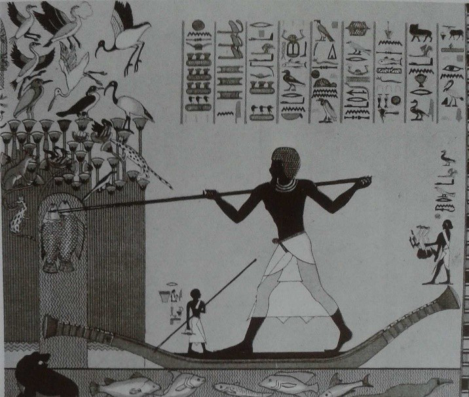
We understand without difficulty that the language of painting helps to shape the exquisite recounting the routine and day-to-day some civilizations.
Figure 1 gives us a good idea of how some elements, even if rudimentary, was present and exert their protective role in the working lives since 1900 BC, where we highlight the tunic used, which also functions as an element of thermal protection. Beyond the symbolic value associated with the status of citizen.
Figure 1: Detail of the wall of the tomb of Egyptian high dignitary, the Khnumhotep. (Gombrich, 2009).
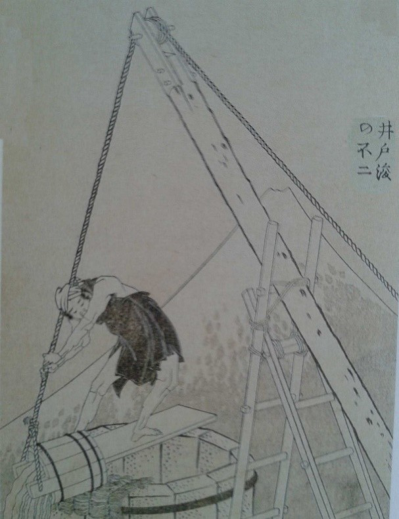
Meanwhile, Figure 2 presents the work of Japanese artist Katsushika Hokusai, who registers with the woodcut combined with painting, the activity of drawing water from a well. Through the image, we can reflect on the garments used in the execution of such activity. Simplistically, we can see that thought in a garment / proper attire that situation. Ie, lightweight parts, semi-permeable material, and head protection.
Figure 2: Katsushika Hokusai Japanese woodcut. (Gombrich, 2009).
While new technological solutions are created to better serve existing by virtue of the production processes demands, there has been increasing research / investigations on the effectiveness, efficiency and usability of the proposals created, depending on the complexity of the human variable. Something very typical of studies involving the design and ergonomics. It is in this perspective that we conduct this work.
It behooves us clarify what we characterize as somewhat protective clothing. For this, we rely on the concept of the Brazilian government, through the Ministry of Labor, which as of the regulation norm n° 6 (NR6), relates what we call protective clothing such as protective clothing trunk against risks of origin thermal, mechanical, chemical, radioactive, weather; against moisture from operations with the use of water, including bulletproof vests permitted use working for vigilantes carrying firearms Recall that in Brazil to obtain a certificate of approval issued by the Ministry of Labour and Employment, protective garments must have documented efficacy through tests conducted in suitable laboratories, government partners. The tests that are subject to the garments and other PPE are formulated in accordance with international standards, and are subject to continuous and formulations to improve.
By Figure 3, we can see some examples of protective clothing commonly used by Brazilian companies. Each, certifiably proven efficacy for the proposed variable protection.
Figure 3: Example of protective clothing trunk circulating in Brazil. (collection of researchers).
Figure available in the original PDF paper.
It is important to explore what mentions the American National Standards Institute (ANSI), through its standards, by advocating that people should be warned of the nature of the danger surrounding them, their degree of severity, the consequences for the involvement of people with danger; actions or guidelines on how to avoid the danger. From this principle, we say that the provision of PPE (protective clothing) does not relieve the employer of the worker clarify the risks that surround it.
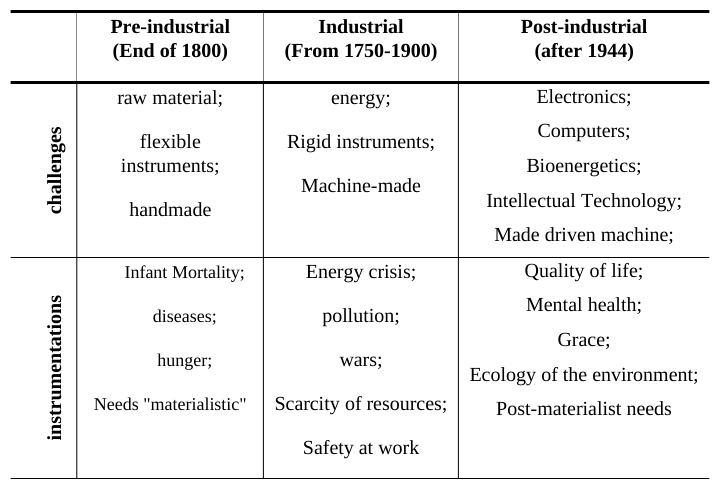
USER CENTERED DESIGN AND USABILITY The nuances that characterize contemporary design date back several situations experienced in pre-industrial, industrial and post-industrial societies (DE MASI, 1991; PAVSNER, 1962).
We can see through the table 1, a summary of a comparative framework formulated by Daniel Bell and adapted by Domenico de Masi, some typical elements of industrial society, affecting all production corresponding to the current time.
Table 1: Some characteristics of pre-industrial, industrial and postindustrial societies. (Bell, 1973 adapted by De Masi, 1991.
For its part, in recent years, the interest for the study of human-centered solutions has been increasing, especially due to the development of technologies in the field of portable artifacts. According to research by Ferraro and Ugur (2011), this category / class of products "compels" the designer to use their sensitivity to solve problems by meeting not only the technological requirements, but also the needs of the user, with a focused approach in humans.
In this scenario, where we noticed that in recent decades, the profile of the world's population has changed. According to Fiorani (2004), there are now more profiles capacities (physical, sensory and cognitive) than in the past. In turn, these profiles is accompanied by different patterns of lifestyle for work, leisure and well- being and social interaction.
Imbricated in the interaction between technology and the human body , the technological artifacts has created a potential for wearable technologies , which are mostly incorporated into garments or accessories that run constantly and can be used comfortably. That is the prerogative of an effective usability.
We emphasize that usability engineering emerges as a systematic effort by companies and organizations to develop artifacts easy to use, effective and efficient (Cybis, 2007). However, for Ferraro and Ugur (2011), although wearable technologies are seen as solutions made to create a more comfortable use of technology, designers should approach the materialization of these technologies in the human body at different levels, whether physical, psychological and social.
At the same time, as Pasher (2010 ), lies in the reflection that fill the gaps between technology and the human body, wearable technologies also introduce new social concerns . Once can mediate the ways in which individuals are perceived by others, interact with others, and manage their own physical space.
METHODOLOGICAL PROCEDURES AND RESULTS The approach employed in this research examined nearly 30 models of protective Clothing stem marketed in Brazil, released by the Ministry of Labour and Employment - MLE, the Brazilian government responsible for the evaluation and certification of these artifacts.
For this, we used the analytical model proposed by Gui Bonsiepe et al. (1984 ) , in accordance with the techniques of synchronic and diachronic analysis , where were we draw some considerations about the quality , usability factor as these products .
Lies in remembering that the diachronic analysis proposes to document the development of the artifacts in the course of time. At the same time, synchronic analysis serves to recognize the universe of artifact in question, in order to understand the details and particularities products already developed, such as strengths, weaknesses, needs, functional requirements, etc.
In this context, the results indicate that in the classic fight between design aesthetics and function of products, garments of protection have analyzed functional characteristics and evaluated, and appropriately controlled by the Brazilian government. I.e., how the body health and worker safety systematized protection system meets the needs of them and is in line with what are considered the vanguard of systems for preventing incidents and accidents.
However, we identified that the most psychological relationship of the user (user or employee) with the product (protective clothing) is almost disregarded by the regulatory system. In addition, this, in turn, generates some constraints identified. Ie not full acceptance of protective devices the worker is an announcement of problems in prevention as a whole.
CONCLUSIONS
In this context, we consider the production of such garments industry in Brazil, using technologies sometimes considered outdated in terms of relating to user safety and comfort of these PPEs. For its part, we see little mobilize design professionals to take responsibility for this imminent demand.
Therefore, by understanding and use of technological innovations from research in progress on micro, designers should take the opportunity, supported by an approach able to correctly interpret the demands, and develop design solutions, according to current needs.
REFERENCES
Bell, Daniel. (1973). “The coming of post-industrial society: adventure in social forecasting”. New York, USA: Perseus Book. Boeniger, Mark. (2003). “Chemical protective clothing and the skin: practical considerations”. In: Chemical
protective clothing. ANNA, Daniel H. (Eds.). 2nd. Falls Church, USA: American Industrial Hygiene Association. Bonsiepe, Gui. (1984). “Metodologia experimental: desenho industrial”. Brasília: CNPq/Coordenação Editorial. Cardoso, Rafael (2008). “Uma introdução a história do design”. São Paulo: Blucher. Castro, Ana Lúcia de. (2004). “Culto ao corpo: identidades e estilos de vida”. In: Congresso Luso-Afro-Brasileiro de Ciências Sociais, VIII, Coimbra. Anais... Coimbra: Centro de Estudos Sociais, 2004. Cybis, W. (2007). “Ergonomia e usabilidade: conhecimentos, métodos e aplicações”. São Paulo: Novatec. De Masi, Domenico. (1991). “L’avvento post-industriale. Roma: Franco Angeli. Dorfles, Gillo. (1988). “A moda da moda”. São Paulo: edições 70. Ferraro, Venere; Ugur, Secil.(2011). “Designing wearable technologies through a user centered approach”. In: DPPI
'11 - Proceedings of the 2011 Conference on Designing Pleasurable Products and Interfaces. New York: ACM. Fiorani, Eleonora. (2004). “Abitare il corpo: la moda”. Milão, Italy: Lupetti. 271p.
Gombrich, E. H. (2009). “A história da arte”. 16ª ed. Rio de Janeiro: LTC. 688 p. Guimarães, Ruth. (1977). “Conquistas humanas: vestuário”. Vol. III. São Paulo: Círculo do Livro. 297p. Keatinge, W. R. (1969). “Survival in cold water: The physiology and treatment of immersion hypothermia and of drowning”. Oxford: Blackwell Scientific Publications. Lipovestky, Gilles. (2009). “O império do efêmero: a moda e seu destino nas sociedades modernas”. Trad. Maria
Lucia Machado. São Paulo: Companhia das Letras. 347p. Maciel, Dulce Maria Holanda; Nunes, Ana Camila Nobre X. (2011). “Uniformes: bem estar e segurança para trabalhadores de limpeza pública”. In: Revista Moda e Palavra, ano 4, n.7. p. 59-74. Martins, Suzana Barreto. (2005). “O conforto do vestuário: uma interpretação da ergonomia. Metodologia para
avaliação de usabilidade e conforto no vestuário”. Florianópolis, 2005. 140f. Tese (Doutorado em Engenharia de Produção) – Universidade Federal de Santa Catarina. Moraes, Dijon de. (1999) “Limites do design”. São Paulo: Studio Nobel. Pasher, Edna; Popper, Zvika; Raz, Hadas; Lawo, Michael. (2010). “WearIT@work: a wearable computing solution for knowledge-based development”. In: International Journal of Knowledge-Based Development, v. 1, n. 4, Jan. p. 346-360. Pavsner, Nikolaus. (1962). “Os pioneiros do desenho moderno: uma história do desenho aplicado e das modernas
tendências da arquitetura desde William Morris a Walter Gropius”. Trad. João Paulo Monteiro. Lisboa - Rio de Janeiro: Ulisseia. Sarraf, Robert Assaad El. (2004). “Aspectos ergonômicos em uniformes de trabalho”. Porto Alegre, 2004. 149f.
Dissertação (Mestrado em Engenharia de Produção) – Universidade Federal do Rio Grande do Sul.
LISTED IN THE AHFE DIGITAL BOOKSTORE CATALOGUE
Explore the complete digital volume
Advances in Ergonomics In Design, Usability & Special Populations: Part III
Read this individual research paper free through the original publisher, or explore the full digital proceedings book.
ISBN 978-1-4951-2108-1
Explore this ISBN in the AHFE Bookstore ↗Listed in the July 2026 bookstore catalogue; search by ISBN to confirm current availability · Digital book purchase optional