Ziyue Huang, Yunfei Chen, Lei Tang, Qian Chen (2022). Optimal Design of Operating Interface in Slidform Paver’s Remote Controller. In: Intelligent Human Systems Integration (IHSI 2022): Integrating People and Intelligent Systems. AHFE Open Access, vol. 22. https://doi.org/10.54941/ahfe1001064
The slidform paver’s remote controller enables the operator to move around the machine at any time in a manual control mode, thus making the opera-tor acquire a more ideal paving operation vision. Taking GOMACO G+ re-mote as the research object, this research not only systematically analyzes the structure of human-machine interface in G+ remote from the perspective of ergonomics, but also puts forward the corresponding optimization design scheme based on the operation logic and human habits of HCI theory, so as to realize the optimization design concerning the human-computer interface of the slidform paver’s remote controller. Additionally, the subjective evaluation of experts represented by the evaluation of information readability and communication correctness is adopted to evaluate the efficiency of the operation panel before and after optimization. In accordance with the experimental results, it is indicated that the remote control interface have been optimized to a certain extent.
Intelligent Human Systems Integration (IHSI 2022): Integrating People and Intelligent Systems https://openaccess.cms-conferences.org/#/publications/book/978-1-7923-8988-7
INTRODUCTION
Slidform paver is a modern road construction machinery, mainly used in the paving of cement concrete drainage ditch, curbs, anticollision walls and other pavement structures (Wu, 2021). Operators are typically required to work on the pivoting console of traditional slidfom pavers. At present, some of the advanced slidform pavers are equipped with a portable remote controller. The driver can wear it around his waist and work on the operating platform or the ground through manual control for a better paving view.
Since the paving site is mostly outdoors, the safety of the driver and the comfort of operation are paid special attention. There are more than forty operating elements in the remote controller of the slidform paver. The operating experience and work efficiency of the driver are directly affected by the layout of the operating interface.There is a wealth of theoretical research on the layout design of the operation interface. Jamil, Chen, and Cloninger (2015) found using the Hildreth algorithm to study the sorting of the elements in the interface, and the efficiency of this method is verified through experimental evaluation. Ma, Zhao, and Xin (2020) found equipment professionalism combine with Human-centered theory. Tang, Qin, and Ou (2016) found using Hick's law and Fitts's law as the modeling basis to study the usability of the human-machine interface.
Interface layout design theory is widely used and practiced in the design of automobiles, fighter jets, and websites, but most of the research and application of construction machinery such as slidform pavers are still functional (Zhao, 2009). Taking GOMACO G+ remote as the research object, this research not only analyzes the components of weight and the priority ranking with AHP, but also redesigns the remote layout based on the cognitive load and visual movement in ergonomics.
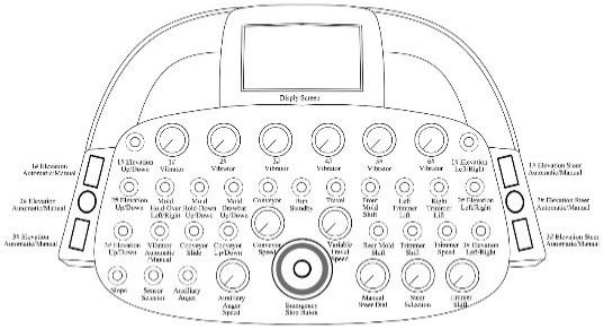
Figure 1. Composition of operation interface in GOMACO G+ remote.
Intelligent Human Systems Integration (IHSI 2022): Integrating People and Intelligent Systems https://openaccess.cms-conferences.org/#/publications/book/978-1-7923-8988-7
OPTIMIZATION DESIGN METHOD OF OPERATION INTERFACE LAYOUT The Composition of the Slidform Paver’s Remote Controller Interface
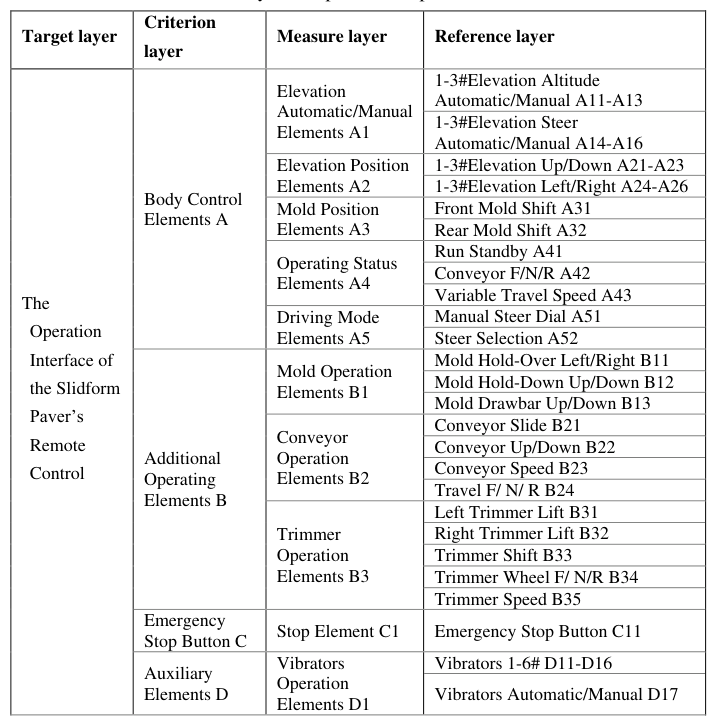
The operation interface of the slidform paver’s remote control is composed of panels and components, including various buttons, switches, knobs and display screens, as shown in Figure 1. The target components are layered. As shown in Table 1, the operation interface of the slidform paver’s remote controller is the target layer; the 5 types of operation elements are the criterion layer; the 14 types of functional elements are the measure layer; and the specific buttons are used as the measure layer reference.
Table 1: Hierarchy of components of operation interface Target layer Criterion layer Measure layer Reference layer
Intelligent Human Systems Integration (IHSI 2022): Integrating People and Intelligent Systems https://openaccess.cms-conferences.org/#/publications/book/978-1-7923-8988-7
Weight Analysis of Components Based on AHP The operation interface of the slidform paver’s remote control has a large number of components and complex functions, so the Analytic Hierarchy Process is used to analyze the weight of the components (Xiao, 2017). First, the complex problem is decomposed into a multi-level structure, and then value is assigned according to the degree of importance, the evaluation object is quantitatively analyzed, and finally the weight value is obtained to solve the multi-level and multi-objective decision-making problem. The specific implementation steps are:
For the group of elements at the same level in the operation interface shown in Table 1, the slidform paver’s experts are invited to use the 1-9 importance table to compare and assign values, quantify the importance of each influencing factor, and obtain the judgment matrix 𝐴.
Equations and mathematical formulas are available in the original paper PDF.
𝑎𝑗𝑖, i,j=1,2,3,…,n . (1) Due to the strong subjectivity of expert scoring, in order to make the result more scientific and reasonable, the consistency test of the expert scoring matrix 𝐶𝑅.
Among them, the largest characteristic root of λmax judgment matrix, and the average random consistency index 𝑅𝐼 value of different order matrices can be obtained by looking up the table. When 𝐶𝑅< 0.1, the matrix is considered to have satisfactory consistency, otherwise the expert's score is not credible and should be discarded. Normalize each column of the judgment matrix 𝐴 that meets the consistency test.
Find the sum of the elements of the matrix 𝐴, 𝑀𝑖.
Normalize Mito get 𝑤𝑖.
Intelligent Human Systems Integration (IHSI 2022): Integrating People and Intelligent Systems https://openaccess.cms-conferences.org/#/publications/book/978-1-7923-8988-7
Find the AHP weight vector after expert empowerment 𝑤.
𝑤= (𝑤1, 𝑤2, ⋯, 𝑤𝑛). (6) Multiply the weight vector of the criterion layer by the weight vector of the measure layer to obtain the absolute weight vector of the elements of the measure layer.
Interface Layout Strategy Based on Ergonomic Due to the layout of the operating elements of the slidform paver’s remote control, it directly affects the experience and work efficiency of the operator. Therefore, from the perspective of ergonomics cognitive load and visual movement rules, it provides theoretical guidance for the layout of components.
There are three main sources of cognitive load: external cognitive load, internal cognitive load and related cognitive load (Walker, Aswad, and Lacroix, 2021). Yan, Zhang, Shao, and Zhang (2020) found in the interface design, the external cognitive load should be minimized, the related cognitive load should be increased, and the limited cognitive resources should be used rationally, so as to improve the user experience. The following design strategies need to be followed in the design of the operation interface of the slidform paver’s remote control: [1] The components are classified according to their different functions, and similar functional components should be laid out in the same area. For example, operating elements related to running status, such as standby switch, driving speed knob, etc., can be arranged in combination;
[2] The components with high frequency of use and high importance are placed in the area where the user feels comfortable to operate; [3] Safety components should be placed in eye-catching areas, such as emergency stop buttons;
[4] If there is a sequence of component operations, it needs to be laid out according to the order of use.
In the organization of interface elements, we must follow the human visual search principle, so that the operator can find the required information with the shortest visual search route. This can reduce the operator's distracted attention, thereby improving the operator's work efficiency. The following design strategies need to be followed in the design of the operation interface of the slidform paver’s remote control:
Intelligent Human Systems Integration (IHSI 2022): Integrating People and Intelligent Systems https://openaccess.cms-conferences.org/#/publications/book/978-1-7923-8988-7
[1] People's gaze movement habit is usually from left to right and from top to bottom. Vertical movement of the sight is more likely to cause fatigue than horizontal movement. Therefore, the operating elements and graphics can be arranged logically from left to right and top to bottom; [2] When the picture is directly in front of the visual center, the human eye's observation rate of the 4 quadrants is upper left, upper right, lower left, and lower right;
[3] Straight lines are easier to be accepted by human eyes than curved lines in the picture; [4] The operating elements are classified and arranged in different areas, which is conducive to visual search operations.
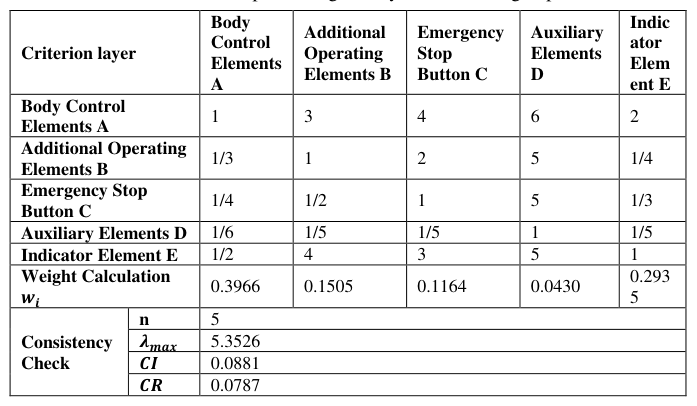
Optimized Example of Operation Interface Layout After the actual operation process, 4 sliding mold machine operators and 2 experts were invited to score. During the consistency check, one piece of data was not consistent. Taking an expert’s assignment of the target layer as an example, the analytic hierarchy process is used for analysis, and the results are shown in Table 2.
Table 2: Example of weight analysis in criterion groupTable 3: Average weight table of criterion layer and measure layer
Table available in the original PDF paper.
Intelligent Human Systems Integration (IHSI 2022): Integrating People and Intelligent Systems https://openaccess.cms-conferences.org/#/publications/book/978-1-7923-8988-7
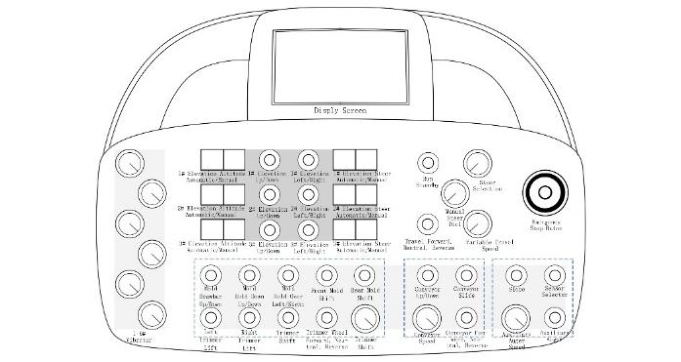
It can be seen from Table 3 that among all the criteria, the weights of the fuselage operating elements, indicator elements and additional operating elements are higher, which are 0.3942, 0.2808 and 0.1610. These components should be given priority in the design process, and they should be set up in areas with good visibility and easy operation. The weight value of emergency components is 0.0503, but due to the high importance of such components in emergency situations, they should be placed in a location with strong accessibility and not easy to mis-operate during the design; auxiliary components are the importance and frequency of use. The low components have a weight value of 0.0438. The location of these components can be considered in the final stage of the design. The specific layout design of each component refers to the absolute weight value of the measure layer and ergonomics theory. Use light gray to divide each functional area of the operation panel, which is conducive to visual search. Figure 2 shows the optimized design of the operation interface.
Intelligent Human Systems Integration (IHSI 2022): Integrating People and Intelligent Systems https://openaccess.cms-conferences.org/#/publications/book/978-1-7923-8988-7
Figure 2. Optimization design scheme of operation interface.
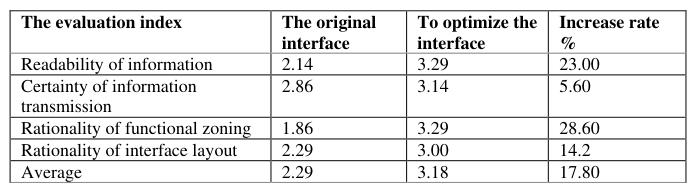
EVALUATION OF THE DESIGN PLAN This paper adopts the subjective evaluation method, five sliding mode machine operators and two researchers are selected to respectively evaluate the readability of the original operation interface and the optimized operation interface, the certainty of information transmission, the rationality of functional zoning, and the rationality of interface layout; using the 0~5 points scale quantification standard, after statistical analysis of the data, the average value of each index is calculated to obtain the results in Table 4. The results show that the average score of the optimized operation interface is higher than that of the original operation interface, especially in terms of the readability of information and the rationality of functional partitions; meanwhile, the cognitive characteristics and user experience of operators have been valued, and the overall layout is more humane.
Table 4: Results of the scheme evaluation The evaluation index The original interface To optimize the interface
Intelligent Human Systems Integration (IHSI 2022): Integrating People and Intelligent Systems https://openaccess.cms-conferences.org/#/publications/book/978-1-7923-8988-7
CONCLUSIONS
Considering the complex outdoor working environment of the sliding mode machine, this research takes the remote control of the sliding mode machine as the object, analyzes the composition of the components of the remote controller, and uses the AHP optimization method to obtain the weight value and arrangement priority of the importance of the components. From the engineering perspective, 8 design strategies are summarized. The design results are verified by the subjective evaluation method of experts, and the results show that the optimized scheme is more reasonable and humane than the original interface layout, which provide a new design method for the layout design of the remote control of the sliding mode machine.
REFERENCES
Jamil, N., Chen, X., Cloninger, A. (2015). Hildreth’s algorithm with applications to soft constraints for user interface layout. Journal of Computational and Applied Mathematics, 288(11), 193-202. Ma, C., Zhao, D., Xin, H. (2020). Design of Human-Machine Interface for
Intelligent Equipment Based on User Experience. Computer Integrated Manufacturing System, 26(10), 2650-2660. Tang, S., Qin, Z., Ou L. (2016). Menu Usability Research Based on Hick's Law and Fitts's Law. Computer Engineering and Applications,52(10),254-258. Walker, J.A., Aswad, M., and Lacroix, G. (2021). The impact of cognitive load on
prospective and retrospective time estimates at long durations: An investigation using a visual and memory search paradigm. Memory & Cognition. Wu, H. (2021). Analysis and Optimization of Low-speed Running Stability of Hydraulic System of Three-track slidform paver. Science and Technology Innovation, 116-117. Xiao, J. (2017). Comprehensive Evaluation of Human-Machine Interface of
Industrial Control System Based on AHP-Entropy Method. Industrial Design, 2017(06):186-187+189. Yan, K., Zhang, K., Shao, J., and Zhang, Z. (2020). Research on Cognitive Load Oriented to Human-Computer Interaction Digital Interface. Development and Innovation of Mechanical and Electrical Products, 33(01),85-88. Zhao, G. (2009). Development and Application of Curb Slidform Paver in China
and abroad. 26(11), 16-20.
Intelligent Human Systems Integration (IHSI 2022): Integrating People and Intelligent Systems https://openaccess.cms-conferences.org/#/publications/book/978-1-7923-8988-7
LISTED IN THE AHFE DIGITAL BOOKSTORE CATALOGUE
Explore the complete digital volume
Intelligent Human Systems Integration (IHSI 2022): Integrating People and Intelligent Systems
Read this individual research paper free through the original publisher, or explore the full digital proceedings book.
ISBN 978-1-7923-8988-7
Explore this ISBN in the AHFE Bookstore ↗Listed in the July 2026 bookstore catalogue; search by ISBN to confirm current availability · Digital book purchase optional