Rafaela Norogrando (2022). Second Skin’s Sensitivity: Memories and Consciousness. In: Human Dynamics and Design for the Development of Contemporary Societies. AHFE Open Access, vol. 25, pp. 19–28. https://doi.org/10.54941/ahfe1001367
In order to explore the relationship between people and clothing products, this study addresses material culture and consumption in recent years in the face of the construction of heritage narratives related to the history of fashion design. According to the social circle of values consecration, connections between subjects and objects are fluid and the approach to the material culture and memories can be created and conduct. The history of fashion can be restricting to the materiality of objects or including the intangible elements related to this. The study is based on theoretical approaches and bibliographic review; a case study and ethnographic research on fashion exhibitions and correlated subjects; and comparative analysis including five hundred institutional exhibitions promoted in the last 50 years. This research also comprehends an exploratory study on the project Tati-Viana, which resulted in a fashion design output included in the heritage collection at the National Costume Museum (Portugal). Results showed that emotion and the relationship between people-objects through memories can be an alternative and deliberate tool for sensitizing actions to conscious consumption.
Due to the challenge of answering preponderant questions in the scope of human relations and material resources, the fashion system is deflagrated in its scope and represents one of the most important scenarios for the global economy - in a broad perspective, ranging from the management of subsidies to the individual well being.
A feature of this system, in addition to the generated industrial gear and commercial connections, lies on the immateriality related to the subjectivity of the human being. In other words, the entire process of creation and con- sumption is fed by emotional connections that are semantically attached to products and made explicit in their dissemination and/or communication of concepts (brands, organizations, people, etc.). A set of agents that lead to the construction of thought and understanding of value is added to this perspe- ctive, in a “consecration circuit” (Bourdieu 1974). In this way, consumption choices are consolidated within the conceived context and also sensitized by choices in the lifestyle of each person.
However, the concept of “conscious capitalism” (Sisodia, Timothy and Eckschmidt, 2018), brought as one of the goals for an effective change in our relationship with global challenges, is even more complex and time- consuming when combined (or inseparable) to the “responsible consum- ption” (UNESCO). This action implies a generational reconstruction of the commercial relationship created to meet emotional needs through the con- sumption of objects and especially objects admittedly belonging to another psychosocial position. In this sense, every clothing element possesses this sym- bolism and non-verbal language and, after food related issues, it tends to be the closest intrinsic matter related to the individual and to the individual in society.
The analysis conducted was designed to correspond to the complexity and subjectivity of the subject. Thus, the adopted guidelines allowed a compre- hensive view on the specificities related to the study. Topics included in the analysis were the following: conscious consumption and media image; and material culture and its relationship with communities (political-economic).
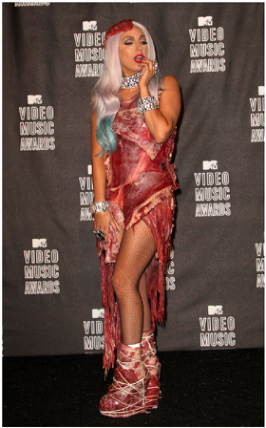
EMOTIONAL SENSIBILITY - EMPATHY Regarding conscious consumption choices in fashion, it is possible to histori- cally approach the manifestations that emerged in the middle/end of the 20th century concerning the non-use of animal skins – especially in the process prior to the production of clothes. From actions with celebrities against the use of fur coats in the 1980s (Nadeau, Chantal, 2001) to the effective position of brands joining together for this cause (Biondi, 2019), there is still a large market (Marriott, 2020) in the sense that is not enough to have a unilateral position on commercialization, but a rupture in the demand for the product.
Is not enough to be rational in respect to the reflexive relation with con- sumption: it also requires emotional discomfort and shock in respect to matters established by common sense. The fashion image, the association of iconic personalities, or the association between performative areas, such as fashion and music, communicates powerfully in a sensitive sphere (Benetti and Norogrando, 2016).
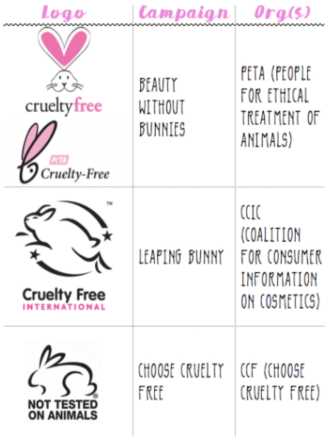
The connotation of an action by an emotional relationship sensitized in the face of the suffering of a living being is consolidated in the 21st century in the configuration of the logo that represents non-cruelty or non-intervention to animal life by industrial processes. The image of a rabbit, a character that appears in the classics of children’s literature, is used as a communicant agent to adults in their consumption process. The bunny’s fluffy skin and the ima- gery created by childhood memories seek in the subconscious an empathic reason for the conscious selection in respect to the consumption of products.
“This situation is reflected in the behavior of consumers wanting for more information on what they buy, or even to buy less. Thus, against the notion of fast-fashion that disqualifies clothing - and our relationship with it - as “soulless and homogeneous”products (Fimmano in OVNE 2017), an inverse order is obtained: a more inclusive, identitary and consequently emotional order, with a recovered sense of caring for our second skin.” (Norogrando, 2018).
Second Skin’s Sensitivity: Memories and Consciousness 21
Figure 1: “Meat-dress” in Gaga backstage at the 2010 VMAs, Frederick M. Brown via Getty Images.Figure 2: Bunny Logos. According to Cruelty Free Kitty, there are “only 3 bunny logos a cruelty-free shopper should trust”. https://www.crueltyfreekitty.com/cruelty- free-101/cruelty-free-bunny-logo/. Reconfigured image from tricksandtrucco.com
In a less direct approach to the right to life, but which also infers in the well- being of community’s quality of life, movements for territorial inclusion or the inclusion of material culture by their origin also configure an alternative to sustainable development, responsible consumption and more “soul” to objects. These actions also end up bringing an economic reconfiguration of
22 Norogrando
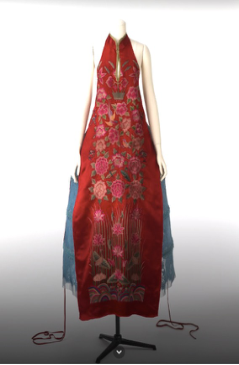
Figure 3: Hwarot dress, Jin Te Ok’s 1999 S/S collections, uses traditional Korean embroidery.
the appreciation of identity value in a review of the concept of fashion itself - by a political analyze of the economically dominant culture. (de Oliveira Santos 2020).
Actions of this type also end up bringing an economic reconfiguration. Situations in which the major centers of imagery reference by eco- nomic domain are revisited and the situation of “decolonial” territories (Mignolo2011) by a “frontier culture” are also weighted and re-meaning. The massification of globalization has its counterpart in the “glocal” concept and is necessary to review local and traditional cultural manifestations to feed “wise practices” of design (Albino 2017). The distinctive qualities of the territories bring within them the sense of belonging and the search for new correlations becomes a fundamental condition for quality of life.
An exploratory work, presented in detail by Norogrando (2018), in addi- tion to the common inspirational approach to local material culture, sought to reconfigure it as a raw material – which in Portuguese achieves a spe- cial linguistic relationship, since the words used have the same morphology: “materia-prima” (raw material) + “cultura material” (material culture) = “cultura material-prima” (raw material culture).
As raw material, source of research and inspiration, was selected the apron of the Vianese women’s clothing, typical of the northern region of Portugal. This choice was based on the fact that this dress, with emphasis on the red Lavradeira costume, is an important icon of Portuguese identity and imagery (Medeiros, Pereira and Botelho, 2009).
Having in mind a conceptual stance in favor or recovering material culture in association with concepts and processes of sustainability, the raw mate- rial had to be second-hand and bought to an online platform – option made intentionally in order to provide to the fashion design product development process an element related to contemporary practices of communication and marketing – directly from the owner who reported that the apron was over 40 years old in 2016.
Second Skin’s Sensitivity: Memories and Consciousness 23
Figure 4: NEW CROSS collection from Agustín Nicolás Rivero. recontextualization of fabrics and references of Colombian in a political act of communication through fashion.
Figure 5 and 6: Tati-Viana dress details (front/inside and back). Figure 7: Images of the photographic edition of the Tati-Viana global dress pro- ject: costume composition with children’s dress produced with artifact of Portuguese material culture. Photo by Vava Etchepare.
Intentionally, the object was not deprived of its characteristics. On the con- trary: the approach was based in a historical appreciation and an intervention focused on the preservation of the object memory, even in its apparent finishing details inside the piece (Figure 3). The composition of the entire coordinate had objective choices regarding materials acquisition and ada- ptation/making of textures, colors and dimensions. As an example, the fact that the footwear is made of fabric (with a lace-like finish) and has a gol- den toecap and clasp seeks a relationship with materials and references from the region, such as goldsmith in the scope of filigree work. The “Tati-Viana” dress was linked to the heritage collection of the National Costume Museum (Portugal) under the inventory number 38851/1 and sequence, and access at http://www.matriznet.dgpc.pt.
24 Norogrando
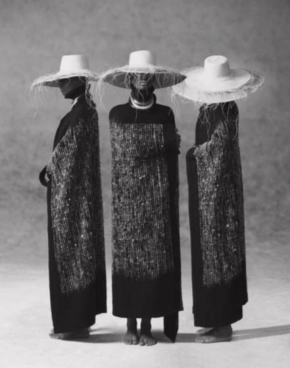
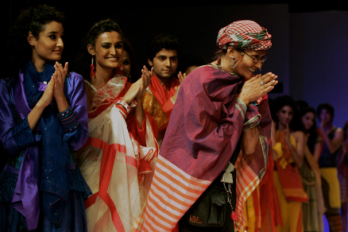
Figure 8: Bibi Russel. A legacy of fashion recognition as an agent of change in the lives of communities and girls.
The use of clothes or traditional elements of material culture for design is not a new approach. On the contrary, it has always been required in order to trace a connection of identity and temporality, mainly by reviewing handicrafts for a possible approach of insertion into urban and universal aesthetics routines.
Based on this closer relationship with the territory, its ancestry and parti- cularities, UNESCO has supported actions reinforcing possibilities of sustai- nability in communities. It’s looking for “themselves” in detriment of mass production and, consequently, reconfigured the concept of Fashion made by the western construction of culture, y a concept of centralized historical nar- rative and tending to exclude “border cultures” – mainly cultures that were colonized in a matrix of domination/inferiority.
Cultural diversities are beginning to be exposed in an inclusive way to the fashion system, and provide answers to the challenges imposed to industries - which need to be overcome in this ecosystem. They also potentiate a review on the value of objects and our relationship with them in order to start a process of consumption resignification, especially regarding objects that - on our skin and in metamorphosis with our body - communicate directly our choices and the messages we expose of ourselves.
EXHIBITING (RE)MEMORIES In the context of culture, materiality and territory, museums are instituti- ons that seek to promote, in different ways and objectives, the relationship between people and heritage. As they are not in the ephemerality of media communication, but supported by the collection that constitute them, they transit in another frontier of communication, reflection and value constru- ction. For this reason, it is pertinent to review the narratives that are woven on the fashion universe. In the last 20 years there were an increased number of institutions that emerged and were consolidated by the subject of fash- ion in patrimonial restructuring and institutional positioning. Consequently, in the last 10 years, more exhibitions dedicated to this cultural and econo- mic manifestation have been held. However, in a relationship of 50 years of exhibitions by the theme of fashion, with the revision of title and whenever possible synopsis of events, it is observed that it is recent and increasingly
Second Skin’s Sensitivity: Memories and Consciousness 25
common a curatorship based on a reflection on objects and less about their chronology, typology or authorship. To demonstrate this statement, it is pos- sible to highlight the exhibitions that are taking place in two of the most important institutions dedicated to research and narrative on fashion - in this heritage construction on our contemporaneity and in the relationship with our second skin by reconfigurations of the object’s memories: Victo- ria and Albert Museum (London, UK) and the Metropolitan Museum (New York, USA).
On the former island of the empire where the sun did not set, takes place an exhibition dealing with the legitimation of a border culture on the edge of post-colonialism for the fashion system: Africa Fashion (July, 2, 2022 – April, 16, 2023). The chief curator Christine Checinska reinforces that “African fashion is something that has existed forever, something that’s been a part of was” (video at V&A website). Certainly, this is not exclusively related to the color of her skin, but to the inevitability concerning the coexistence that always dyed new colors every time and memory in different places.
The previously inaugurated exhibition curated by Claire Wilcox and Rosa- lind McKever, Fashioning Masculinities: The Art of Menswear (March, 19 – November, 6, 2022), on a different subject, also brings inclusion to a reframing. Masculinity is revisited in the different memories of his ima- gery to “celebrate the power, artistry and diversity of masculine attire and appearance” (V&A website).
In New York, the MET, under the curatorial directive of Andrew Bolton – after emblematic exhibitions such as “About Time” or “Notes of Camp” in which the curator detached itself from chronologies or authorship and revi- sited fashion for its plastic elements in narratives that instigated and mocked common sense or temporal evolution – started in 2021 a two-part expository conception highlighting the American territory.
In America: A Lexicon of Fashion (September 18, 2021 – March 14 post- poned to September 5, 2022), brings together “approximately 100 men’s and women’s ensembles by a diverse range of designers from the 1940s to the present are featured. Enclosed in scrimmed cases that represent three- dimensional “patches” of a quilt, they are organized into 12 sections that explore defining emotional qualities Nostalgia, Belonging, Delight, Joy, Wonder, Affinity, Confidence, Strength, Desire, Assurance, Comfort, and Consciousness”. In the individual customs, a word in the label on the top of the had reflects other expressions of emotions qualities related to American Fashion.
The second part of this expository conception – In America: An Anthology of Fashion (May, 5 to September, 5, 2022) “displays a survey of more than two hundred years of American domestic life and tells a variety of stories— from the personal to the political, the stylistic to the cultural, and the aesthetic to the ideological” (MET website). Finally, an approach that highlights some characteristics of designers in America, because here there is the inclusion of all who in this land take root. This is a narrative that can be redesigned in dif- ferent countries, especially those that were also composed of mixtures such as, for example, the south of this America: a Brazil founded in indigenous ter- ritory by the “discoveries”, lived from slavery to abolition, from migrations
26 Norogrando
fleeing hunger and war to constant transformations – characteristics of the world that has always moved. In the ennto, especially with the digital age, the return to the bodybuilding of matter, space and time gain another meaning and need.
All exhibitions reflect the role of dress in shaping identity.
CONNECTING - DRESSING EMOTION Returning to the project developed in an experimental context – the dress Tati-Viana, it is relevant to highlight one of the results obtained in a subsequ- ent action developed with a senior community by the Heart Memory Project, when the differences and importance of the intergenerational relationship were verified.
The Tati-Viana dress was used as a starting point for an approach with stu- dents from the Senior University of Gafanha da Nazaré in order to develop fashion design projects departing from obsolete objects in their homes. This approach was also easily achieved with undergraduate students in pedagogi- cal actions within the scope of curricular units in the Fashion Design course at the University of Beira Interior, where I teach.
It was found that the relationship of these women with artifacts is by a simplification in their routines. By sharing their life stories, they showed the accumulation and consequent waste not as a part of their economic condi- tions, and not related their ethical behavior. Most reported a measured and even subsistence relationship (in some youths) with objects of use, such as clothes, shoes or only one shoe. Even in those in which economic conditions allowed more comfort, there was no relationship that could be minimally compared with the approach of young people today towards the fast-fashion system. These ladies told meticulous memories, details of objects and rela- tionships with some rite of passage or moments that caused some emotion, especially those that generated some empowerment.
Bearing in mind that this work was developed by a professor accompanied by a young master’s student, it was possible to verify different generational perspectives. One of them was exactly the fact that the senior generation did not accumulate objects, but recovered what was used up, took care of and were not in the habit of buying without an evidently justified reason. The inte- gration between generations can explain, and even facilitate a reconnection to the viability of other lifestyles in the economic scenario, in which the concepts of sustainability, circular economy are (or have been) an integral part of everyday life in community and of the modus operating in the relati- onship with objects of personal use. At the end of the work with this small group of senior women, a fashion show was held in which each of the students proudly paraded the object they had developed through different upcycling processes and in an affectionate sharing of materials, techniques, stories and memoirs.
The few examples presented here help in the figuration of a reflection on the need for connections through design with elements of our humanity in contexts that bring sensitivity, emotion and empathy in the configuration, narrative and appropriation of objects to a lifestyle, an identity and a new
Second Skin’s Sensitivity: Memories and Consciousness 27
memory of our material and social constructions. For an effective imple- mentation of the theory defended here there are limitations related to the efficient monitoring of the emotional impact in the medium and long term. As a result of the projects developed there was the triggering of another action - Hearts&Hands Project for UNITÁ-UBI, with more people and generations involved in order to propagate one of the main benefits of a more consci- entious and interconnected relationship with material objects: breakage of programmed obsolescence and consume responsible or less manipulated.
Fashion, for all its gears and connection with subjects, imitates life as in an intimate relationship (Carvalhal, 2020) and thus the act of dressing not only covers a body, but shapes it, modifies its dimension, movements, and personifies an intimacy, values and immateriality of the sensibility and con- science of each human being. These individual actions, in addition to all the regulations for industries, may have an impact on the challenges (UNESCO) for the resolution of sustainable development goals.
ACKNOWLEDGMENT
ID+ Research Institute for Design, Media and Culture.
This work is financed by national funds through FCT - Foundation for Science and Technology, I.P., under the Project UIDB/04057/2020.
The presentation of this work at the AHFE 2022 also had the financial support of FLAD – Luso-American Foundation for Development.
REFERENCES
Benetti, Alfonso and Norogrando, Rafaela. 2016. “Linguagens, emoções e memórias: relações entre música e moda”. Moda, Música e Sentimento. São Paulo: Estação das Letras e Cores. Biondi, Annachira. 2019. The fur industry is fighting back. The Vogue Business.
Available at https://www.voguebusiness.com/sustainability/materials-fur-industr y-faux-vegan-prada-chanel-yoox-net-a-porter-burberry [Accessed 20 February 2022] Bourdieu, Pierre. 1974. Alta Costura e Alta Cultura. Available at http://www.mom.ar q.ufmg.br/mom/02_babel/textos/bourdieu-alta-costura.pdf [Acessed 20 February 2022]. Campbell , maeve. 2019. “Fashion giant LVMH partners with unesco to ach-
ieve sustainable goals”. Euronews. Available at https://www.euronews.com/g reen/2019/05/14/lvmh-partners-unesco-sustainable-goals [accessed 20 February 2022] de Oliveira Santos, H. (2020) Uma análise teóricopolítica decolonial sobre o conceito de moda e seus usos (p. 164–190). Florianópolis, Brazil. ModaPalavra V. 13, N. 28 abr./jun. 2020. Marriot, Hannah, 2020. “Fur is out of favour but stays in fashion through stealth
and wealth”. The guardian. Available at https://www.theguardian.com/environm ent/2020/nov/06/fur-is-out-of-favour-but-stays-in-fashion-through-stealth-and- wealth-mink [Accessed 20 February 2022] Medeiros, António; Pereira, Benjamim and Botelho, João Alpuim, 2009. Uma Imagem da Nação: Traje à Vianesa. Viana do Castelo: Câmara Municipal de Viana do Castelo.
28 Norogrando
Mignolo, W. (2011). The darker side of Western modernity: Global futures, decolonial options. Durham: Duke University Press. Nadeau, Chantal, 2001. Fur Nation: From the Beaver to Brigitte Bardot. Routledge Norogrando, Rafaela, 2015. Narrativas patrimoniais sobre moda: análise das temáti-
cas expositivas e das escolhas museográficas, Revista dObra[s], vol 8, n° 8. São Paulo: Estação das Letras e Cores. ISBN 9771982031115 Available at https: //dobras.emnuvens.com.br/dobras/article/view/109 [Accessed 26 February 2018] Norogrando, Rafaela, 2018. “Fashion design through sustainability and material culture: an exploratory and experimental study” In Broega at all. Reverse design: a current scientific vision from the international fashion and design congress. CRC Press. OVNE. 2017. OVNE Entrevista, Philip Fimmano: “Produtos sem alma não atraem
mais as pessoas” 7/04/2017. Available at https://medium.com/ovne/produtos-sem -alma-n~{a}o-atraem-as-pessoas-3cf60219fb7f [Accessed 26 February 2018] Sisodia, Raj; Henry, Timothy; Eckschmidt, Thomas. 2018. Conscious Capitalism Field Guide: Tools for Transforming Your Organization. Harvard Business Review Press UNESCO Courier. 2018. “Bibi Russell: encontrando a magia nos dedos”. Avai-
lable at https://pt.unesco.org/COURIER/2018-2/BIBI-RUSSELL-ENCONTRAN DO-MAGIA-NOS-DEDOS [accessed 20 February 2022] UNESCO website, partners and news: https://en.unesco.org/creativity/sites/creativit y/files/247785en.pdf https://www.un.org/sustainabledevelopment/blog/2019/08/ actnow-for-zero-waste-fashion/ https://unfashionalliance.org
LISTED IN THE AHFE DIGITAL BOOKSTORE CATALOGUE
Explore the complete digital volume
Human Dynamics and Design for the Development of Contemporary Societies
Read this individual research paper free through the original publisher, or explore the full digital proceedings book.
ISBN 978-1-958651-01-8
Explore this ISBN in the AHFE Bookstore ↗Listed in the July 2026 bookstore catalogue; search by ISBN to confirm current availability · Digital book purchase optional