Paulo Dinis, Inês Veiga (2022). Disassembly Objects: The Importance of Materials in Product Design Education. In: Human Dynamics and Design for the Development of Contemporary Societies. AHFE Open Access, vol. 25, pp. 490–498. https://doi.org/10.54941/ahfe1001425
Higher education, more specifically in the scientific area of product design at the School of Architecture of the University of Lisbon, has sought to adopt new methodologies and exercises to balance theory and practice through the articulation of several curricular units. In the scope of the Master in Product Design, the articulation between the units of Sustainability of Products and Services and Product Engineering and Production Systems are positioned as an integral and fundamental part of the project practice. These disciplines integrate the product development exercise through the research and analysis of information associated with the history and life cycle of the object under study, the use of software to obtain technical data, an environmental impact assessment, handling and direct observation to recognise functional modules, components and materials, and the production of diagrams and tables for the identification, description and correlation between the constituent elements of the product-system.The disassembly of existing products on the market in an academic environment combined with the research of the typological evolution of the equipment and the mapping of its life cycle, enables hands-on analysis and exploration of materiality. This approach allows design students to focus on solving real problems and exercise systemic thinking through the reformulation through the possibility of reviewing functional, technical, and ecological priorities of the original product. In this view, this paper results from an analysis to understand the benefits of 'reverse designing' to learning about sustainability strategies and planning of the production system of these products with direct consequences on the results of the projects of the Product and Service Design discipline.
This article is a reflection based on a teaching experience at university level, where an exercise in Product Design articulates the collaboration with other curricular units, to deepen design issues and allow students to reflect and act upon different fundamental aspects of products and material culture. More specifically in articulation with the Product Engineering and Produ- ction Systems and Sustainability of Products and Services, the exercise focuses on the study of the “inside” of existing products, through techniques such as disassembly and the calculation of the ecological footprint with tools specifically created for designers.
Disassembly Objects: The Importance of Materials in Product Design Education 491
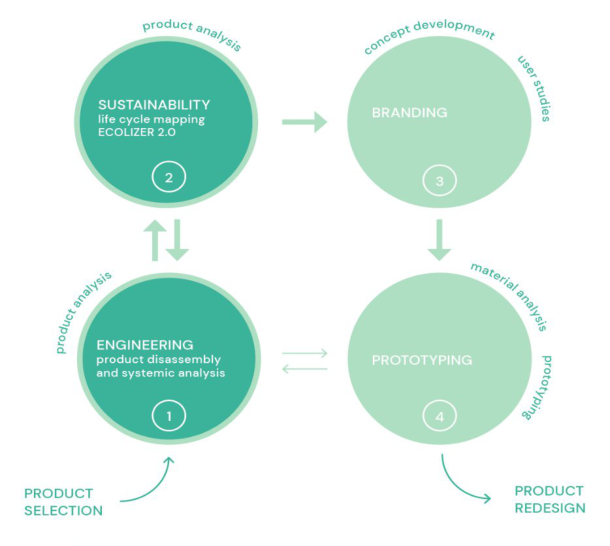
Figure 1: The articulation between the different curricular units and their contribution to the product design exercise in the Project curricular unit. (authors, 2022).
Experience under these two units has shown good results in acquiring a holistic understanding of a product as a whole (which is more than the shell or external part). Also, during the assignments, by reflecting on the origin of some materials or the way some components are difficult to disassemble, students become aware of the impact that design/design decisions have on the lifetime of products and the contribution to more or less sustainable futures.
Starting from a description and illustration of the objectives and tasks of the exercise in these two curricular units, the results of this experience, betw- een 2021 and 2022, will be discussed. The main objective of the article is to systematize the knowledge about the learnings generated by the experiment, and to help rethink the exercise, updating it. Another secondary objective is to obtain a panorama of the intersections between the different areas that con- tribute to Product Design, and in the future rethink articulations and perhaps include new objectives and tasks. In this sense, we also intend to discuss the benefits and challenges associated with the separation between areas, and/or their joint interconnection in Product Design pedagogy.
FRAMEWORK In the Master in Product Design, the Product Design integrates the articu- lation between different curricular units, namely Product Engineering and Production Systems, Materials and Prototyping, Sustainability of Products and Services, and Branding of Products and Services.
492 Dinis and Veiga
The starting point is the selection of a product with an electronic, electri- cal, or mechanical component. The methodology of the exercise mirrors the design process that begins with Research, Concept, Development and Design. The initial research stage corresponds to the articulation with the units of Product Engineering and Production Systems and Sustainability of Products and Services to survey and study the product in relation to its function and use. In the research stage, still, with the unit of Branding the students proceed to an analysis of the brand and the morphology of the product in relation to the experience and value proposal. The next stages of Concept and Develo- pment continues with the Branding unit, and later, in the mock-up the unit of Materials and Prototyping enters the process.
In the research stage, while in the Project unit the product is studied through observation drawing, in the Engineering unit the students make a systemic analysis focusing on materials, production processes, operation and maintenance of the selected product, using a thematic or typological histo- rical framework to understand its industrial, technological and utilitarian evolution. In the Sustainability unit the students create a visualization of the life cycle of the selected product, and begin to identify critical phases of its lifecyle, and hypotheses about improvements in the ecological performance of the respective product-service system.
The requirements to fulfill the research and analysis part of the exercise in the Project unit are: Decomposition; Functional Analysis, Market Product Survey and Product Life Cycle Analysis. However, these four objetives gain greater depth and questioning in the respective curricular units in which they are carried out, which is the main focus of this article.
THE EXERCISE IN ENGINEERING AND SUSTAINABILITY DISCIPLINES In Product and Production Systems Engineering the objectives are:
Characterize the technical-functional evolution of the selected equipment; Encourage interest and learning by practice in the disassembly of equipment and use of tools; To understand the technical-constructive functioning and the correlation between the various groups of components and materials; Produce schemes and/or diagrams of content organization.
To achieve these objectives, it is assumed that the tasks will be carried out using manual and workshop practice: Observe and handle the object “for the first time”; Use the tools and proce- dures necessary for disassembly and check which parts/modules are preferred to start the process; Ungroup modules and separate components by functi- ons and/or materials; Create maps and / or tables of components to identify and organize content; Record the tasks and sequences of disassembly through product diagrams.
In Sustainability of Products and Services the aims are: Practice systems thinking by analyzing and surveying existing material and contextual products; Broaden knowledge of tools, materials, technologies and production processes in sustainable product design; Approach sustai- nability as a criterion in product design; Explore eco-design and circular
Disassembly Objects: The Importance of Materials in Product Design Education 493
design strategies reflecting on its possible application, implications and consequences in product design.
Using visualization and calculation tools, these aims are materialized through the following activities: Create a Product Life Cycle Map; Through the quantification and survey of the components done in the Engineering unit, then, calculate the ecolo- gical impact of the product translated into eco-indicators using the ECO- LIZER 2.0 tool. Interpret the results of the table; Build a Lid’s Wheel matrix and reflect on priorities for a “sustainable redesign”; Identify a Circular Design strategy that could be applied to the original product and explore what the consequences and implications might emerge for the design project.
METHODS AND LEARNING IN PRODUCT AND PRODUCTION SYSTEMS ENGINEERING Attributes and Functional Characteristics to Explain the Product
The activity begins with the direct observation and handling of the small household appliance, previously selected in articulation with the curricular unit of Design and Services Project. The procedure is intended to be manual and intuitive in order to capture the operational, aesthetic and material esse- nce of the object, according to the mechanisms or functions and without the activation of a power source. In this interpretation as a designer, the student must resort to the methodologies and concepts of Design to characterize the functions and attributes of the equipment. Based on market research and according to the evolutionary pattern in the technical-functional domain, the student is expected to be able to associate and describe fundamental elements for the identification of the family or typology of equipment, the com- mercial variants, the cultural influence and the terminologies of industrial production.
Disassembly and Analyze Product Break up The disassembly process foresees a sequential work plan according to the original constructive logic, aimed to capture as best as possible all the proce- dures used in the assembly of components and between materials. The visual recognition elaborated in the previous task is crucial in the following acti- ons. Using specific tools for this purpose (safety bits) the work begins and the different assembly modes are verified (screws, fittings, gluing). Learning by hand in the disassembly of the small electrical appliance is the opportunity for students to observe and question the production processes used and their consequences.
Disassembly is an avenue for understanding the constraints and/or oppor- tunities of processes in product design, in optimizing the functionality of components, and in making production systems more profitable, especially with regard to the product life cycle (Becerra, 2016).
494 Dinis and Veiga
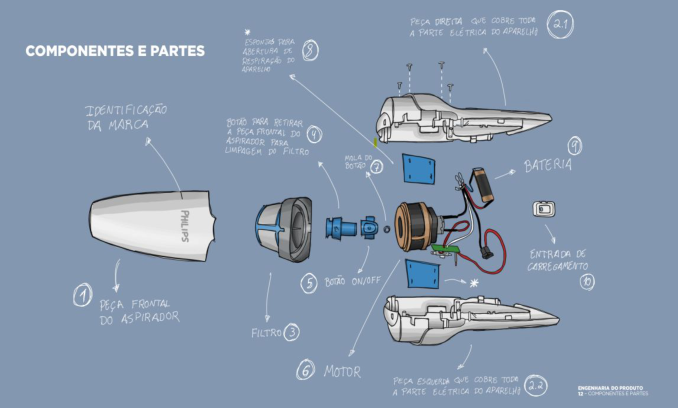
Figure 2: Example of exploded perspective. (Fonseca, 2022).
Functional Group Parts and Palette Materials After disassembling the main structures, the first criteria are created for organizing and forming the groups according to their location, correlation, mechanism, function, and material. “Since this can be a complex process, it helps to number each of parts to be specified and to organize them either under permanent/fixed elements or under first, second or third read. It often helps to request an expanded view with all the external parts form the indu- strial designers or the product engineers as well as orthographic views of the product, …” (Becerra, 2016, p. 58).
Whenever possible, the students should separate all components that have been assembled together, even if this requires cutting, drilling or breaking. Electrical circuits, motors, batteries and the like are preferably kept in their original state and classified according to technical specifications (power, weight, dimensions, ...).
Technical Specification Document Product engineering collects and organizes information in maps, graphs, tables and/or visual diagrams that specify concrete data about the object of study and determine the ability to analyze the process and the level of understanding of the exercise.
The identification and detailed description of the technical and functional specifications of the components when communicated by graphic systems contribute to the reflection and knowledge of the methodologies or stra- tegies to be adopted. In agreement with the qualitative and quantitative data, the use of technical drawing and exploded perspective synthesizes the data obtained and produces indispensable information for the understan- ding of the concepts “design for manufacturing” and “design for assembly” (Ramos et al, 2017).
Disassembly Objects: The Importance of Materials in Product Design Education 495
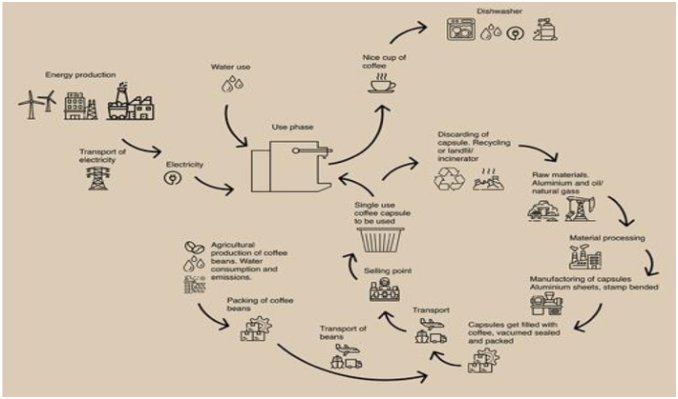
Figure 3: Example of Life Cycle maps. (Borgen, 2022).
METHODS AND LEARNING IN SUSTAINABILITY OF PRODUCTS AND SERVICES Life Cycle Analysis
The first stage of the exercise consists of making a product life cycle map to understand the system of relationships and identify all the stakeholders that participate in the various phases of the product life cycle. Life Cycle Analysis (LCA) is a framework to compile the inputs and outputs of energy, matter and co-products and evaluate the potential environmental impacts of a product throughout its life cycle. However, although the students, in parallel with the Engineering unit, are identifying the materials and processes that intervene in the product, the most accurate information about inputs and outputs of energy, raw material, and co-products in the system is not easily accessible or even compiled for some materials or processes. To build the life cycle, students’ research focuses mostly on the internet. However, because the information to be able to perform a proper LCA is not within reach due to the complexity and/or lack of data, the students build a visualization of the system that integrates the product. This involves identifying and mapping all the activities, environments, resources, interactions, objects, matter, and users that are necessary for the product to exist and function.
ECOLIZER and Eco-indicator 99 One life cycle analysis tool specially created by and for designers is the ECO- LIZER 2.0 (OVAM, 2009). It allows us to understand the “critical” stages of the life cycle, in terms of materials and process management, and the envi- ronmental weight they carry. It serves to compare products and processes in terms of eco-efficiency levels. The Ecolizer is based on the use of “eco- indicators” which are numbers that quantify the total environmental burden of materials and production processes by translating into milli-points (mPt)
496 Dinis and Veiga
the reference unit measured by weight or quantity in Kg or m3 (OVAM, 2009). With this tool, the goal of the second phase of the exercise is to calculate the environmental impact of the selected product, knowing that the higher the value in eco-indicators, the higher its environmental impact. To use the Ecolizer, the following steps are performed: Define the functional unit. In the construction of the maps students inter- pret the functional unit as something that can vary over the cycle. We can consider the unit as a singular material, or a set of materials transformed into the selected product.
Fill in the table. From the inventory of all constituent components, materi- als, and processes of the product, students weight and measure the quantity of the materials, components, and processes to fill in the table. The eco-indicator values, in Ecolizer 2.0, are available by material (kg of material), production processes (kg extruded plastic, m3 laminated wood), transportation (tons per km by land or sea), energy (units in kW or kHz of electricity or heat) and disposal or recycling scenarios (kg of material wasted or recovered in disassembly). The table is divided into the main life cycle phases of a pro- duct: production, transportation, use, and disposal. The table allows us to determine the total value in each phase, and in the total of all phases. Thus, in addition to materials, students must identify production processes asso- ciated with each material, to insert in the production phase, and the table does the automatic multiplication of weight value X corresponding value in mPt. In the transportation phase, we try to identify the factory, if not the headquarters of the distribution company, and from there we calculate in km the distance to Lisbon, the place where we are. In the usage phase, we define an average scenario of how long the product will be used. When it is not possible to determine this, the calculation is made at 1 year of use, considering the student as the user. In this phase, with electrical products, we calculate the product’s power in relation to the energy expenditure or input it needs to function. In the disposal phase, we establish that when it is possible to recover the materials then a calculation is made of its weight against the possibility of recycling or treating the material that is present in the Ecolizer. One of the biggest problems identified in this first phase is in the electrical components, motors and batteries, which generally cannot be disassembled. Sometimes they are also the heaviest component of the product, and when this happens, we try to identify some of the materials and calculate it by obse- rving the percentage of quantity and remove from the total weight. This has been a way of quantifying this component rather than excluding it from the calculation.
Interpreting the data. After including the eco-indicator data per kg of mate- rial, industrial process or kw of energy, the students proceed to interpret the resulting values at each stage of the product life cycle to see which stages are “critical” or ecologically intensive, and what may be the reasons. For example, a large amount of different materials or processes in production, large amount of energy consumed in the use stage, materials are not recycla- ble... Transport is generally a critical stage, however, it is possible with the total weight of the assembled product to proceed to the calculation that how
Disassembly Objects: The Importance of Materials in Product Design Education 497
many products makes 1 ton - and from there to get more precise and accurate results in the table.
Lid’s Wheel The whole vision of the product and its impact, allows thinking about possi- ble improvements of the product and its life cycle from a sustainability point of view. Thus, the third stage of the exercise consists in exploring possible improvements of the product, based on the visual scheme of the “Lids Wheel” matrix.
The Lids Wheel is an “improvement factor thinking”tool generally applied in the context of improving environmental aspects of a product in 7 main strategies: redesign, select low impact materials, reduce material usage, opti- mizing production techniques, optimizing the distribution system, reduce the Impact during use, optimizing the initial life cycle, optimizing the end-of-life system (Crul, Deihl and Ryan, 2009). It serves precisely to guide measures to be taken according to the strategies identified as priorities, being able to compare the relative environmental impact between two products, services or processes (benchmark).
Based on the results of the ecolizer table, students draw a scheme that cor- responds to the impact of the original product, and then redesign the scheme of the “improved” product by selecting two or more strategies that could be adopted or rethought. In addition to the web, students must justify their decisions in writing.
Circular Design Among the 5 circular design strategies proposed by Bakker, Hollander and Hinte (2014), “Design for Dis- and Reassembly” is one that students imme- diately consider choosing. This is because they draw a parallel with the very product disassembly process undertaken in the Engineering unit and can qui- ckly understand how easy/difficult the process was and the design approach behind that ease/difficulty. Other strategies such as “ease of maintenance and repair”, “adaptability and upgradability” and “standardization and compa- tibility” also help students to think of the selected product in terms of service or in complement to other existing products in this way solving hypotheti- cally (in proposal) critical issues identified in earlier stages of the exercise. On the other hand, this is a stage where students creatively approach sustaina- bility by attending to aspects of “attachment and trust” or “durability” that can transform the product into something completely different.
CONSIDERATIONS AND RECOMMENDATIONS In this exercise, systemic thinking is practiced as the students understand that the whole is more than the parts. The combination of an engineering and sustainability approach allows students to gain awareness about the conse- quences of any design decision. The empathy with in which they begin to look at the small appliance, and the strategies they adopt in addition to the usual formal “shell” concept design, reveal the knowledge they have acqui- red, the reflection on the problems and options, and the maturity in the way
498 Dinis and Veiga
they can generate ideas and debate the issue in different contexts. Students realize in practice the designer’s responsibility to know how to choose the right materials for the function they are intended for, and the environmental, economic, and social implications of these choices, not just the product itself. The exercise in these two units demonstrates that study and analysis are key tasks in the product design process, and are crucial learning steps for students in product design with an emphasis on sustainability or engineering.
Understanding the evolution of materials and products, the students also learn that design is not synonymous with invention but that there is an evolving material culture.
Inverting the design process through disassembly is a didactic that makes students go back to the essential function or premise that made the product exist in the first place and in that sense promotes critical thinking about the real needs and desires that motivate, justify or trigger a design process. The- refore, the students’ evolution in dealing with the variables surrounding the project proposal was verified.
In conclusion, this article constitutes the beginning of a joint reflection on the more concrete impact of engineering and sustainability on the students’ practice in the unit of Product Design. It is therefore necessary to understand to what extent the contribution of other curricular units such as Branding and Prototyping can be articulated in this partnership between Product Engi- neering and Sustainability. The synergy of concepts can interfere in a more direct way in the development and consequently in the prototyping of some- thing that can be just a modification or the creation of a product, a service or a completely new system.
REFERENCES
Bakker, C., Hollander, M., Hinte, E. (2014). Products That Last: Product Design for Circular Business Models. Amsterdam: Bis Publisher. Becerra, L. (2016). The Fundamental Principles of Colour Material Finish. London.
Frame Publishers. Borgen, B. (2022) Diagnóstico de um produto, Exercício da UC de Sustentabilidade de Produtos e Serviços. Faculdade de Arquitetura da ULisboa. Portugal. Crul, M., Deihl, J.C. and Ryan, C. (2009). Design for Sustainability: a step-by-
step approach, United Nations Environment Programme. The Netherlands: Delft University of Technology. Fonseca, B. (2022). Product ID – Seleção e análise de objetos, Exercício da UC de Engenharia do Produto e Sistemas de Produção. Faculdade de Arquitetura da ULisboa. Portugal. OVAM (2019) Ecolizer 2.0: Ecodesign tool.Ramos, AM et al (2017). Engenharia +
Design: da ideia ao produto. Publindústria, Edições Técnicas, Porto.
LISTED IN THE AHFE DIGITAL BOOKSTORE CATALOGUE
Explore the complete digital volume
Human Dynamics and Design for the Development of Contemporary Societies
Read this individual research paper free through the original publisher, or explore the full digital proceedings book.
ISBN 978-1-958651-01-8
Explore this ISBN in the AHFE Bookstore ↗Listed in the July 2026 bookstore catalogue; search by ISBN to confirm current availability · Digital book purchase optional