Cristina Salvador (2022). Interaction and Comfort for Children - Textiles and Composite Materials. In: Human Factors for Apparel and Textile Engineering. AHFE Open Access, vol. 32, pp. 113–119. https://doi.org/10.54941/ahfe1001545
The study presented in this paper, is part of a product design research about children's material surroundings and is based on the review of literature and case study. In an architectural scale approach, a ceramic tile project was developed and prototyped, aiming to provide wall covering solutions, which may stimulate the interaction of the child with his/her surroundings through customization and imagination, following also concerns on sustainability. Glazed earthenware tiles, being popular mineral origin materials, have been used for centuries in households. It seemed necessary to search for information on other natural origin material possibilities that may complete a modular system, namely specific textile materials of animal origin (wool based) and other vegetable source composite materials (cork based), from Portugal. It was possible to achieve a wider view of the advantages and disadvantages of each material, its implications on human interaction and on sustainability. It helped provide directions for a suitable choice of materials in this wall covering project, bearing in mind children's interaction and comfort, but also innovation and playfulness in their development.
This paper presents a study based on the review of literature and case study, which is part of a research project, intending to create solutions of pro- duct design for children, in order to contribute to the child’s well-being and sustainability. Starting with body-scale products, the research project evo- lved to an architectural scale study about interior coatings or coverings and the interaction with the child’s surroundings, aiming to provide comfortable, sustainable but also playful solutions. Within this objective, a design project of a ceramic tile suitable for children was developed and prototyped, using a plaster cast, white clay or earthenware and white glazing (Salvador, 2020a). The intention was to explore wall covering solutions that can be customi- zed by children, on this case, with resource to imagination and drawing or illustration, in a two-dimensional approach. Another path for enhancing inte- raction with his/her surrondings is to provide the child the capacity to change volumetrically interior coverings, in a three-dimensional approach. Earth- enware, although having a strong presence in Portuguese territory (Apicer,
2022) and with very good quality characteristics, demonstrates disadvanta- ges for an interaction based on three-dimensional approaches with children, as its fragility, when handled. In order to seek for solutions to complete a tile system or wall covering with two-dimensional and three-dimensional approa- ches, seemed necessary to search for alternatives to ceramic materials, which are non-renewable source mineral materials, requesting a large amount of energy to be produced (Quinteiro et al, 2012) (Rocha et al, 2010). The need is also to search for materials suitable to be handled by children; materials, which may be produced of waste, bearing in mind the concept of circular eco- nomy (Salvador, 2020b); and renewable materials of local farming, reducing carbon footprint and promoting social balance in communities. The star- ting point of this research focused on local woolen textiles and cork based composite materials.
WOOLEN TEXTILES In previous studies, sheep wool has been researched as a natural textile material of animal origin, in a context of application on children’s furniture (Salvador, 2019). In an overall view, wool fibres are mainly made of a natural protein, which is keratin and have high hygroscopicity and high abrasion resi- stance (Rowe, 2009), but these hair fibres can be irritating to sensitive skin, such as children’s skin, due to scales on the surface of the fibre. However, wool fibres with diameters inferior to 30µm are deflected when contacting with the skin and avoid irritation (Naylor, 2010). Australian merino wool fibres can have less than 22 µm (Woolmark, 2022a), being more comfor- table in contact with the skin. Also, merino wool is breathable and not an allergen, helping to reduce symptoms of eczema, which affects up to 28% of children worldwide (Woolmark, 2022b). This makes specific woolen produ- cts, suitable to be in contact with the child’s skin. Original from Spain, merino wool farming was introduced in Australia, as well as in New Zealand, Argen- tina and several countries in Europe. There is a breed of merino in Serra da Estrela region, in Portugal, probably with origins in Spanish merino, breeds from Alentejo and bordaleira breed (Andrade, 1987). Serra da Estrela borda- leira breed didn’t have relevant use in textile manufacturing, a few decades ago, as the sheep gave essentially milk for traditional cheese from the region. This kind of wool didn’t have enough quality as merino did. However, the scales present in the wool fibre’s surface are important for the characteristic feature of felting (Woolmark, 2022a), which enhances the wool products’ thermal and resistance properties. Burel was traditionally, a felted 2x2 twill fabric made from Serra da Estrela bordaleira wool with natural wool colors - brown, white or pearl and mixed (sarrubeco). Since Roman occupation times, wool farming was known in this mountain region (Pereira, 2017), but with the spread of religious orders in the Middle Ages, burel was manufactured in a larger scale for catholic monastic orders’ habits. Burel Factory (Burel Factory, 2022a) and Ecolã (Ecolã, 2022) are the two remaining burel and woolen pro- ducts’ factories in the region. Whilst Ecolã, with almost 100 years of history (starting in 1925), produces mainly burel for apparel, bedding and accesso- ries, Burel Factory started in 2006, when two mountain explorers opened the
Interaction and Comfort for Children - Textiles and Composite Materials 115
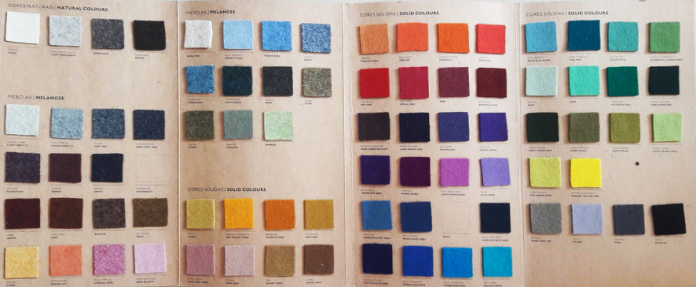
mountain hotel Casa das Penhas Douradas, Serra da Estrela, Portugal in an old sanatorium site. Burel Factory, as it is the only company producing colle- ctions of interior coatings, was researched, as case study. Lanifícios Império, founded in 1947 in Manteigas, Serra da Estrela, Portugal, was an insolvent woolen textile’s factory with 19th century machinery. Burel Factory felt the need to get local textiles for the hotel and decided to acquire and recover Lanifícios Império, in 2010–2012. Local employment was created and social development in the region was enhanced (Burel Factory, 2022b). Thus, a lot of discarted wool from shepherds was applied to make useful products. After being sheared off from sheep, the wool is washed and sent to Burel Factory. Afterwards is carded, spun, woven on the looms and dyed, if necessary. Later, the wool is beaten and scalded, transforming the fabric into burel, making it denser, resistant, with the intended thickness and fairly waterproof. It can shrink from 30 to 40% in size, with specific densities of 450g, 600g, 800g and 1400g. Burel Factory uses Serra da Estrela bordaleira wool, sometimes mixed with Churra wool and Serra da Estrela merino white wool. The felting pro- cess transforms a 100% wool fabric that could be uncomfortable next to the skin into a softer structured material, suitable for three-dimensional applicati- ons. About sustainability, their wool is natural, biodegradable, recyclable and durable, farmed from local outdoor living sheep. They hold a certification RSC (Recycled Claim Standard) with a zero-waste strategy and low ecologi- cal impact. Burel Architecture (a specific branch of the company for Interior Design) produces wall coverings, burel tiles, acoustic panels and modular solutions, ensuring high performances on sound reverberation and ther- mal insulation, leading to better energy efficiency and sustainability (Burel Architecture, 2022). Using up to 80 colours (synthetic, but ecological dyes) (see Figure 1), its products are available in more than 20 different patterns and textures, made by hand with several sewing points. These wall cove- rings provide a natural barrier against sound, insulate from heat and cold in interior environments and are easily cleaned with periodic vacuuming. Also present 98.5% waterproof characteristics, 60.000 Martindale of resistance to
Figure 1: Burel Factory catalog with natural and dyed samples (photo: Cristina Salvador, 2022).
116 Salvador
abrasion, fire resistance and do not cling when cut. Although Burel Archite- cture markets acoustic panels inspired in Tangram games, it doesn’t produce any wall covering products specifically for children.
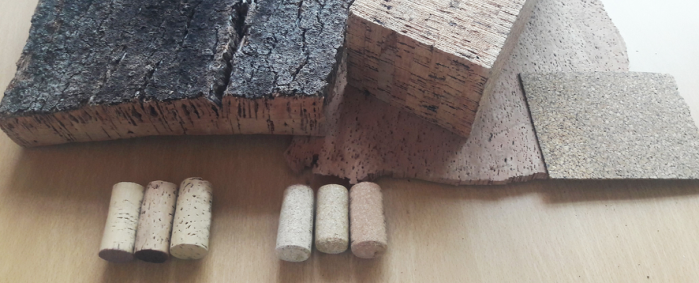
CORK COMPOSITES Cork is a natural vegetable origin material of renewable source, with layers of cell walls mainly composed by suberin, which is hydrophobic and responsible for its elasticity. Cork is the bark harvested from the cork oak (Quercus suber L.), an evergreen hardwood tree, highly present in the Western Mediterranean Basin, which has been selected as the National Tree in Portugal, since 2011. Portugal is the current world market leader in this field as it holds almost 50% of cork production (about 200 000 tons per year) (Amorim, 2022) (Apcor, 2022) and about one third of cork oak tree total area (Gil, 2015). This raw material is hypoallergenic and has unique properties of thermal and acoustic insulation, lightness, impermeability to liquids and gases, elasticity, softness, fire-retardancy, vibration absorbance, abrasion resistance, biodegradability and recyclability. Each tree has an average lifespan of 200 years, the bark regenerates and is harvested each 9 years. The process is carried out carefully, so it doesn’t harm and benefits the tree. Used for more than 5000 years in Persia, Egypt and Babylon, cork was applied in container sealers, wine stop- pers, floats for fishing nets, sandal and shoe soles in Ancient Greece. Romans also used cork to insulate their roofs and ceilings (City Cortex, 2022). Being the bark of a tree, only 30% of natural cork was mainly used to produce small objects as wine stoppers, due to its relatively low thickness (20–50 mm). This means 70% of natural cork harvested was waste, until cork derivatives and composites were developed in the late 19th century and its applicati- ons spread in several areas (Soares et al., 2011) (see Figure 2). Cork waste can be recycled and may be incorporated into other materials used for wall coverings, pavements, insulation corkboards, memo boards, high competi- tion kayaks, badmington rackets, aircraft and aerospace components, toys,
Figure 2: Natural cork, cork stoppers in natural cork, cork stoppers in agglomerated cork, laminated cork and agglomerated cork sheet (from left to right) (photo: Cristina Salvador, 2022).
Interaction and Comfort for Children - Textiles and Composite Materials 117
fashion items, etc. (Silva et al., 2010) (Fernandes et al., 2011) (Andrzejewski et al., 2019) (Amorim, 2022).
Amorim Cork Composites started in 1963, taking advantage of the cork waste from Corticeira Amorim, the main Portuguese cork company, origi- nated in 1870. Amorim markets raw material, wine stoppers, coverings and pavements, agglomerates, composites, insulation panels and was researched as case study. The company went through several restructuring moments, spreading its branches to forest management, research and development in cork, cork products and derivatives, aiming to a 90% waste recovery rate and carbon neutral production methods (Amorim, 2022). Granulated cork can be introduced as filling in several particle composite materials with diffe- rent matrixes or binders, based on thermoplastic polymers, biopolymers, clay or cement, as well as laminar composite materials with thermoplastic she- ets, wood and fibreboard or plywood, stone, etc. As cork can have so many applications, Amorim, besides being a producer and marketing its products, adopted a policy of partnership in special projects, with other companies, architects and designers. Some of them with large visibility as the Serpentine Gallery Pavillion 2012, designed by Herzog & de Meuron and Ai Weiwei (Serpentine, 2022). The interior covering and furniture were made with cork agglomerate. After being harvested very gently with a special hatchet, cork is left outdoors to lose some moisture, washed, selected and trimmed to produce small objects. The waste is washed, dryed and grinded. Agglomerated cork may be produced with heat, granulated cork and high pressure, or also adding a polymeric binder and molded. Amorim Cork Flooring produces wall and floor coverings with cork agglomerate, taking advantage of the important properties and characteristics from cork, already listed. Amorim introduced Corkeen playground pavement system with 90% cork, for outdoor use (Cor- keen, 2022), but without any collection of wall covering products, specifically for children.
CONCLUSION
In this study, the aim was to search for alternative materials to earthenw- are for integration in a modular wall covering system, enabling children’s interaction. Felted woolen textiles, namely burel and cork based composite materials were researched as options. As natural vegetable and animal ori- gin materials of local farming and harvest, these materials have important properties and characteristics for a comfortable, safe and sustainable human interaction. Two main Portuguese producers of wall coverings in each of these materials were researched as case studies, so that is possible to achieve a wider view of the advantages and disadvantages of each material, who produces it, how it is produced and its impact on sustainability. None of the compa- nies selected produces wall-coverings specifically for children. In conclusion, burel and cork agglomerate seemed suitable to apply in a wall covering system fit for children’s interaction, due to fire-resistancy, waterproof, thermal and acoustic insulation, lightness, unbreakability, soft touch, etc. Both are local products, with reduced carbon footprint and its production methods aim to
118 Salvador
save energy, save water and recycle waste. Wool and cork farming or harve- sting, does not harm sheeps and cork oaks, it is beneficial for the animals, the trees and their ecosystem. With these materials is possible to trace an interesting parallel, on waste recovering, regenerative natural elements and circular economy driven production processes. Therefore, this study provi- ded directions for a suitable choice of materials in the context of the wall covering project, bearing in mind children’s interaction and comfort, but also innovation and playfulness in their development, giving them the chance to customize their environment, both in two-dimensional and three-dimensional approaches.
ACKNOWLEDGMENT
Without the support of the University of Lisbon, Lisbon’s School of Archite- cture, CIAUD - Research Centre in Architecture, Urbanism and Design and FCT - Foundation for Science and Technology, Portugal, this study wouldn’t be possible.
REFERENCES
Andrzejewski, J. et al. (2019). Cork-wood hybrid filler system for polypropylene and poly(lactic acid) based injection molded composites. Structure evaluation and mechanical performance. Composites Part B: Engineering, vol. 163:2019. Elsevier. pp 655-668. Amorim (April, 15, 2022) Amorim Cork. Corticeira Amorim Website: https://www.
amorim.com/en/cork/ Andrade, P. et al (1987). Merino da Beira Baixa: contribuição para o seu estudo.
Castelo Branco: Instituto Politécnico de Castelo Branco - Escola Superior Agrária. Apcor (April, 15, 2022) Associação Portuguesa de Cortiça. Estatísticas. Media Center. Apcor Website: https://www.apcor.pt/media-center/estatisticas/ Apicer (April, 14, 2022) Associação Portuguesa das Indústrias de Cerâmica
e Cristalaria. Recursos Estratégicos, Energia, Matérias Primas e Recursos Humanos. Revista Keramica, n° 371, Julho/Agosto 2021. Apicer Website: https://www.apicer.pt/apicer/pt/edicoes Burel Architecture (April, 15, 2022) Wall Coverings; The Science Behind the Wall.
Burel Architecture Website: https://www.burelarchitecture.com/wall-coverings/ Burel Factory (April, 12, 2022a) A Transformação da Lã; Sobre Nós. Burel Factory Website: https://www.burelfactory.com/pt/sobre-nos/a-fabrica/transformacao-la/ Burel Factory (April, 15, 2022b) A História; Sobre Nós. Burel Factory Website:
https://www.burelfactory.com/pt/sobre-nos/a-fabrica/a-historia/ City Cortex (April 16, 2022) Origens da Cortiça. City Cortex Website: https://citycortex.com/pt/cork Corkeen (April 16, 2022) Corkeen brand, by Amorim. Corkeen Website: https://ww
w.corkeen.com/en/corkeen/brand/ Ecolã Portugal (April 13, 2022) Matéria prima - Lã; Ecolã Website:https://ecolapor tugal.com/pt/home-2/ Fernandes, E. et al. (2011). Properties of new cork-polymer composites: Advantages
and drawbacks as compared with commercially available fibreboard materials. Composite Structures, vol. 93, Issue 12:2011. Elsevier. pp. 3120–3129. Gil, L. (2015). New Cork-Based Materials and Applications. Materials 2015.8:2.
(ed.) Tabrizian, M. Basel: MDPI. pp 625-637.
Interaction and Comfort for Children - Textiles and Composite Materials 119
Naylor, G. (2010). Fabric-evoked prickle in worsted spun single jersey fabric, Part 4: Extension from wool to OptimTMfine fiber. Text. Res. J., 80, 537–547. Pereira, A. (2017). A Indústria Têxtil Portuguesa - The Portuguese Textile Industry.
Lisboa: CTT. Salvador, C. (2019). Textile elements in a design project of children’s furniture.
Textiles, Identity and Innovation: Design the Future. Proceedings of the 1st Inter- national Textile Design Conference (D_TEX 2017). London: Taylor and Francis Group. Salvador, C. (2020a). Design for Children - Ergonomics in a Ceramic Tile’s Project. In: Rebelo F., Soares M. (eds) Advances in Ergonomics in Design. AHFE 2019. Advances in Intelligent Systems and Computing, vol 955. Cham: Springer. pp. 692–699. Salvador, C. (2020b). Design Strategies for a More Sustainable and Optimized Inte-
raction. In: Rebelo, F., Soares, M. (eds) Advances in Ergonomics in Design. AHFE 2020. Advances in Intelligent Systems and Computing, vol 1203. Cham: Springer. Serpentine (April 16, 2022). Serpentine Galleries What’s On Serpentine Gallery Pavilion 2012 by Herzog & de Meuron and Ai Weiwei. Serpen- tine Website: https://www.serpentinegalleries.org/whats-on/serpentine-gallery- pavilion-2012-herzog-de-meuron-and-ai-weiwei/ Silva, J. et al. (2010). Exploring the use of Cork Based Composites for Aerospace
Applications. Materials Science Forum, vol. 636–637. Trans Tech Publications. pp. 260–265. Rocha, C. et al (2010). Innovation and Ecodesign in Ceramic Industry. An Overview of Knowledge Needs in Portugal, Spain and Greece. INNOECODESIGN. Repositório LNEG Website: https://repositorio.lneg.pt/bitstream/10400.9/1184/ 1/INNOECODESIGN.pdf Rowe, T. (ed.) 2009. Interior Textiles – design and developments. Cambridge:
Woodhead Publishing Limited. Soares, B. et al. (2011). Cork composites and their role in sustainable development.
Procedia Engineering, vol. 10:2011. Elsevier. pp. 3214–3219. Quinteiro, P. et al (2012). Allocation of energy consumption and greenhouse gas emissions in the production of earthenware ceramic pieces. Journal of the European Ceramic Society 32:10. Elsevier. pp. 2087–2094. Woolmark (April 12, 2022a) What is Merino wool & how it is made?; What is
Merino wool? Woolmark’s Website: https://www.woolmark.com/fibre/what-is- merino-wool/ Woolmark (April 12, 2022b) Are you allergic to wool?; Woolmark’s Website: https://www.woolmark.com/fibre/are-you-allergic-to-wool/
LISTED IN THE AHFE DIGITAL BOOKSTORE CATALOGUE
Explore the complete digital volume
Human Factors for Apparel and Textile Engineering
Read this individual research paper free through the original publisher, or explore the full digital proceedings book.
ISBN 978-1-958651-08-7
Explore this ISBN in the AHFE Bookstore ↗Listed in the July 2026 bookstore catalogue; search by ISBN to confirm current availability · Digital book purchase optional