Pavel Vránek, Michal Šimon, Filip Rybnikár, Ilona Kačerová (2022). Identification of the dependence between local muscle load and the method of predetermined times. In: Human Error, Reliability, Resilience, and Performance. AHFE Open Access, vol. 33, pp. 157–164. https://doi.org/10.54941/ahfe1001580
In industrial practice today, the focus is mainly on production automation, big data and smart things. But processes that can't be automated yet are being forgotten. These are manual assembly operations. In the world of assembly, it is still not possible to replace all manual activities appropriately with automation. For this reason, too, there is still a need to address standard setting. However, performance has long since ceased to be the only factor considered by industrial companies. As important as it is to ensure that workers are as productive as possible and that the resulting revenue is maximized. However, the health of the workforce itself cannot be ignored.In order to achieve optimal results, it is necessary to constantly link performance and workers' health. This thesis will examine precisely the link between rationalization and ergonomics or between the setting of standards, worker movements, and potential worker overload. Specifically, it focuses on finding the link between ergonomics and norming or finding the link between local muscle loading and the pre-set time method. The contribution of this work is to detect bad movements at the design stage of a new workplace, as well as to detect dangerous movements in real production without EMG measurements.The evaluation and selection of a suitable measurement tool is the result of the research part. After studying the literature and articles that deal with ergonomics, a measuring instrument for measuring local muscle strain using electromyography will be used for the dissertation research. In the Czech Republic, there is only one measuring device, which is: EMG Holter from Geta. The data collection is oriented toward workers in assembly companies within the Czech Republic, therefore the EMG Holter will be used. Due to the research conducted and literature studied, it was found that the most common occupational disease is upper limb disorders, which are caused by overuse and repetitive movements. Carpal tunnel syndrome has been the most common occupational disease in the Czech Republic for several years. The issue of local muscle strain is nowadays very much addressed. In the Czech Republic, the local muscle load is measured on the forearms of the upper limbs (flexor, extensor). The only legally approved device is the EMG Holter from Geta. The review of scientific articles focused mainly on the issue of norming, with a detailed focus on the MOST method (Maynard Operation Sequence Technique) and its connection with ergonomics. Subsequently, the field of integrated electromyography was explored, especially the measurement of local muscle loading on the upper forearm. Due to the very small sample of papers found on the topic of the link between the MOST method and ergonomics in general, it was found that a very small number of authors had dedicated their research to this topic. However, the models found did not include a link to any norming method focusing on local muscle loading. The aim of this thesis is Identification of the relationship between local muscle loading and the pre-set time method. Within this thesis, I will discuss the MOST (Maynard Operation Sequence Technique) or the method of analysing movement patterns. In order to understand the aforementioned link, it is necessary to create a database of at-risk movements and relate these movements to the MOST method.
In industrial practice today, the focus is mainly on production automation, big data and smart things. Thanks to the capabilities of modern technology, some processes are gradually replacing workers. Within manufacturing and assembly companies in the Czech Republic, a large number of activities, espe- cially assembly processes, are still performed by humans. In the world of assembly, it is still not possible to replace all manual activities appropria- tely with automation. For this reason, too, there is still a need to address standard setting. However, performance has long since ceased to be the only factor considered by industrial companies. As important as it is to ensure that workers are as productive as possible and that the resulting revenue is maxi- mized. However, the health of the workforce itself cannot be ignored. Today, whether it is, for example, compliance with occupational safety or the pre- vention of occupational diseases, it should be a top priority within industrial enterprises.
In order to achieve optimal results, it is necessary to constantly link per- formance and workers’ health. This thesis will examine precisely the link between rationalization and ergonomics, or between the setting of standards, worker movements and potential worker overload.
OBJECTIVES In view of the theoretical conclusions defined in the literature re-view and the fact that no representative model was found in the studied literature and scientific articles focused on the field of linking standardization with ergono- mics, which would allow to predict the values of physical load of humans in
the work process. For this reason, the main objective of the dissertation was defined. Another reason for orienting in this direction is the fact that manual work still prevails over automation in industrial enterprises, and therefore it is necessary to deal with the health of workers while keeping productivity in high numbers. Even though legislation focuses on the physical health of the worker, in companies this area is not linked to the standards and activities of the workers. In a company, only the OHS officer understands this fact, but he or she does not have enough influence to change the mindset of pro- cess engineers and standards setters. Therefore, there is a conflict between these departments, and there is also a conflict between human health and productivity.
It is therefore important to align these areas and synchronize standards with worker workload and health. This synchronization will lead to the elimination of risk factors and the decline of occupational diseases.
THEORETICAL FOUNDATIONS On the basis of the studied literature and the comparison of the individual methods, I have concluded that the standardization of work is constantly needed in the Czech Republic and the use of the method of predetermined times will be suitable as a suitable method of standardization for the disser- tation. Since the two methods MTM and MOST belong to this group, it is necessary to give preference to one of these methods. From the comparison according to the table above, the use of MOST method will be appropriate for this thesis. The main criterion is the use of an efficient and fast tool to determine the norm, which implies that it is not appropriate to use the MTM method as it is lengthy and thus inefficient compared to the MOST method. I am therefore inclined to use the MOST method. Should the MOST method prove inadequate during the research, the MTM method will be used.
The evaluation and selection of a suitable measurement tool is the result of the research part. After studying the literature and articles that deal with ergonomics, a measuring instrument for measuring local muscle strain using electromyography will be used for the dissertation research. In the Czech Republic, there is only one measuring device, which is: EMG Holter from Geta. The data collection is oriented towards workers in assembly companies within the Czech Republic, therefore the EMG Holter will be used.
If the output of the work will be implemented abroad, it is always necessary to consider the given legislation and also the measuring devices. From the diploma thesis of my colleague Ing. Karolína Paˇcišková we know that the EMG Captiv device measures identically to the EMG Holter. Therefore, it can be assumed that the resulting model can be used abroad using the EMG Captiv measuring device.
Measurement of local muscle load is essential for this work, as the most common occupational disease is upper limb damage (carpal tunnel). In the Czech Republic, most companies are manufacturing or assembly companies with a high proportion of manual activities. Within these factories, risky movements and overloading of workers often lead to occupational diseases. Therefore, it is necessary to start linking the area of local muscular loading
Identification of the Dependence Between Local Muscle Load 159
with standardization, as the health of the worker should be the first priority. If the resulting model of this work will be applied in operation and used by industrialization workers or lean departments, then the project workers from these teams can evaluate the process themselves and thus find workplaces at risk.
Due to the research conducted and literature studied, it was found that the most common occupational disease is upper limb disorders, which are caused by overuse and repetitive movements. Carpal tunnel syndrome has been the most common occupational disease in the Czech Republic for several years. The issue of local muscle strain is nowadays very much addressed. In the Czech Republic, the local muscle load is measured on the forearms of the upper limbs (flexor, extensor). The only device allowed by legislation is the EMG Holter from Geta.
The review of scientific articles focused mainly on the issue of norming, with a detailed focus on the MOST method (Maynard Operation Sequence Technique) and its connection with ergonomics. Subsequently, the field of integrated electromyography was explored, especially the measurement of local muscle loading on the upper forearm.
Due to the very small sample of papers found on the topic of the link between the MOST method and ergonomics in general, it was found that a very small number of authors had dedicated their research to this topic. The Ergo MOST method was discovered in the searches, which provides some way of highlighting inappropriate working postures. Furthermore, a model for local muscle strain assessment was discovered, which contains steps for correct and timely identification of muscle strain in the workplace. The model contains cards with average results of local muscle strain levels for 15 work activities. However, the models do not include a link to any norming method.
The research conducted and the resulting conclusions provide a compre- hensive view of the research to date on the issue of linking the method of predetermined times (MOST) with electromyography. Based on the research, the following sub-theses of the dissertation were established:
No model was developed to link the results of local muscle loading and the method of predetermined times (MOST).
Research to date has focused on the MOST method, but on linking it to other ergonomic methods.
The importance of ergonomics in industrial enterprises is increasing, with a particular emphasis on the elimination of repetitive movements and inappropriate working postures.
Integrated electromyography is measured by different measurement techniques.
Measurement of local muscle load on the forearm (flexors, extensors) is only carried out in the Czech and Slovak Republics in terms of work categorization.
In view of the theoretical conclusions defined in the previous chapter and the fact that no representative model has been found in the studied litera- ture and scientific articles focusing on the link between standardization and
ergonomics, which would allow predicting the values of physical load of a person in the work process. For this reason, the main objective of the dis- sertation was defined. Another reason for orienting in this direction is the fact that manual work still prevails over automation in industrial enterprises, and therefore it is necessary to deal with the health of workers while keeping productivity in high numbers. Even though legislation focuses on the physical health of the worker, in companies this area is not linked to the standards and activities of the workers. In a company, only the OHS officer understands this fact, but he or she does not have enough influence to change the mindset of process engineers and standards setters. Therefore, there is a conflict betw- een these departments, and there is also a conflict between human health and productivity.
It is therefore important to align these areas and synchronize standards with worker workload and health. This synchronization will lead to the elimination of risk factors and the decline of occupational diseases.
DESCRIPTION OF THE PROCESS This paper summarizes the current status of the dissertation on which the author has worked. The thesis is still in its early stages as the topic has chan- ged. The status of the thesis is now at the stage where the research part has been completed, and the literature on ergonomics and human physical stress has been studied. In this part, some consensus has been found with researchers who are dealing with similar topics, but mainly from a medi- cal point of view. Only a fraction of these publications then penetrates the industrial sphere. In industrial practice, ergonomic methods such as RULA, NIOSH, and the like are mainly found. Furthermore, this is complemen- ted by complex software, but these are based on measuring body and limb angles and generating complex animations, which then derive the load on the individual. This involves the creation of a model (digital twin) of the workplace, including recording the movement of the worker. From the avai- lable literature, it was found that only one device is permitted within the Czech Republic, which is mandated by legislation. It is a local muscle strain assessment device from Geta. The device is called EMG Holter. From the sea- rches it was found that there is no study or work that links the occupational medical field with industrial practice. Similarly, it was found that no publica- tions address linking norming and standardization with local muscle strain measurements.
The above suggests that there is scope for research to be conducted. The aim of the research is to create a model that will link both areas, it will be possible to implement it at different stages of projects, e.g. it will be possible to use this model already in the technical preparation of production, where we will be able to use this model to predict risky movements that can be eliminated at the design stage.
Furthermore, we will be able to apply the model in a real and functional workplace where bad movements leading to occupational diseases are being performed. Using the model, we will be able to build a movement equation, determine the movements at risk and, by using fixtures or changing the layout
Identification of the Dependence Between Local Muscle Load 161
of the workplace, we will be able to change the existing process without putting too much strain on the worker’s upper limbs.
Now the work is in a state where data collection is constantly taking place in the form of measurements of different workers in different indu- strial companies. The measurements are taken on workers who are doing manual work or operating a particular type of machine, whether automatic or semi-automatic with a high stroke rate. For concreteness, these positions are:
Machine operator in the automotive industry
Assembly worker
Machine operator
Quality worker
Warehouse worker Approximately 40 jobs were measured and input data was taken for the dissertation. The measurements are taken to determine the appropriate type of operation, specifically workplaces, which will then be the focus of the dis- sertation. The measurements were carried out in different types of companies, whether they were industrial companies with piece production, small batch or mass production. Measurements were also carried out in logistics centers where warehouse positions were measured.
The measurements are already beginning to crystallize the type of pro- duction that will be the primary focus of this work. Piece production is unsuitable for this purpose due to the variety of movements and their repeti- tion. There was no routine repetition of activities in the enterprises measured with this type of production, so further measurement will not be needed in this area. The total number of measurements in this type of production is 8 jobs. Another group that has been excluded from the measurements are logi- stics warehouse worker type positions. There was no overuse of the upper limbs in the local muscle strain measurements for the positions measured. A total of 9 warehouse worker type positions were measured. The target group appears to be the automotive industry as well as mass production with a high proportion of manual work. In these operations, the work is routine and based on a rapid sequence of manual operations that are constantly repeated. Measurements are the most represented in this group. A total of 20 measu- rements were taken at different positions in batch production. The plan is to take 10 more measurements from this area to complete the data collection for the initial analysis.
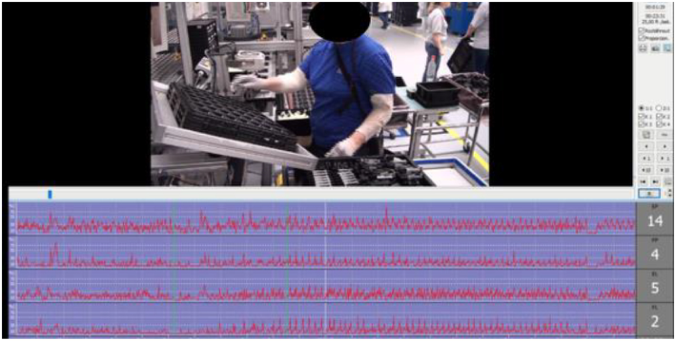
It is now important to describe the process of model development and to describe the steps that will lead to the achievement of the set objectives. Since in the Czech Republic the measurement of muscle local load is only allowed with EMG Holter devices, the thesis will use ergonomic measurements of local muscle load as input data for the initial analysis. As part of the EMG Holter measurements, a recording of the maximum force (Fmax) is taken while a video is simultaneously recorded to capture the process itself. After the measurements or data collection, the recordings are merged to create a video recording that shows the progression of the forces on the forearm (load) while also linking the recording to the video of the entire process. Thanks to
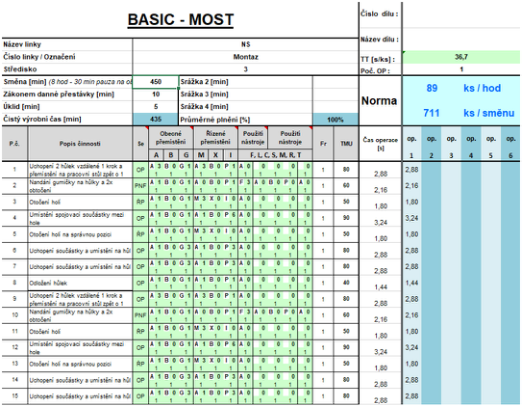
Figure 1: Sample of local muscle load measurement.Figure 2: Sample of local muscle load measurement.
this merging, we are able to define the load at each moment of the process that the worker is performing. An example of the measurements is shown in the Figure 1: The next step in the development of the model is the initial analysis and evaluation of the data. The analysis of the collected data is already underway as part of the work schedule. For the fifteen measured positions, a form has already been created that contains the sequence of movements of the process using the method of predetermined times (MOST). For all videos, a form will first be created describing the sequence of movements using the MOST method. This will be followed by linking the code to the measured load values and a database will be created that will contain information about the motion
Identification of the Dependence Between Local Muscle Load 163
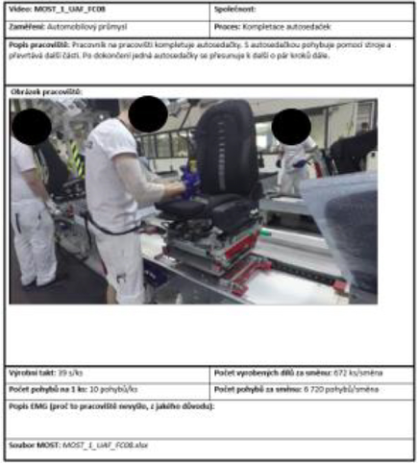
Figure 3: MOST - process description.
code, load magnitude. It will also contain data on the product or parts hand- led by the worker, the number of pieces the worker produces per hour and shift and hence the associated number of movements per shift. With this data, the thesis will be able to create a data base for the resulting EMG and MOST link model.
Examples of the initial analysis are shown in the Figure 2. This is a form with a sequence of movements using the method of predetermined times - MOST.
Figure 3 shows a sample form with the basic process information needed to design the model.
CONCLUSION
The search is based on norming, specifically focusing on the MOST method, and then also on ergonomics, where the search focuses on local muscle loa- ding. The aim of the searches was to discover whether anyone in the scientific field had already addressed something similar. The results of the searches of the scientific articles showed that no one had yet attempted to link the method of predetermined times to the measurement of local muscle loading. From these searches, the thesis objectives and thesis statement were subsequently determined. The last chapter describes the current state of the dissertation as well as the process of work that will be used to achieve the creation of a given model that will link the method of predetermined times and the measurement of local muscle load.
ACKNOWLEDGMENT
This article was created with the support of the internal grant of the Univer- sity of West Bohemia, number SGS-2021-028 - Developmental and training tools for the interaction of man and the cyber-physical production system.
REFERENCES
Bureš Marek, (2013) Workplace design and optimization. 1st ed. 1st edition: SmartMotion s.r.o., ISBN: 978-80-87539-32-3 Dockx, Kim, Esther Mj Bekkers, Veerle VAN Den Bergh, Pieter Ginis, Lynn Rochester, Jeffrey M Hausdorff, Anat Mirelman a Alice Nieuwboer. (2016) Virtual reality for rehabilitation in Parkinson’s disease. Cochrane Database of Systematic Reviews [online]. ISSN 1465-1858. Kaˇcerová, I., Kába, M. (2019) Use of biomechanical systems for muscle load
assessment. Industrial Engineering: International Student Scientific Conference, 65–72. Khan, Omar, Imran Ahmed, Joshua Cottingham, Musa Rahhal, Theodoros N. Arvanitis a Mark T. Elliott. (2020) Timing and correction of stepping movements with a virtual reality avatar. PLOS ONE [online]. ISSN 1932-6203. Laring, J., Forsman, M., Kadefors, R., & Örtengren, R. (2002). MTM-based ergo-
nomic workload analysis. International Journal of Industrial Ergonomics, 30: 135–148. Laver, Kate E, Belinda Lange, Stacey George, Judith E Deutsch, Gustavo Saposnik a Maria Crotty. (2017) Virtual reality for stroke rehabilitation. Cochrane Database of Systematic Reviews [online] ISSN 1465–1858. Mcgraw-Hill Science/Engineering/Math. Niebel, B., & Freivalds, A. (2003). Methods, Standards, & Work Design (11th ed.).
LISTED IN THE AHFE DIGITAL BOOKSTORE CATALOGUE
Explore the complete digital volume
Human Error, Reliability, Resilience, and Performance
Read this individual research paper free through the original publisher, or explore the full digital proceedings book.
ISBN 978-1-958651-09-4
Explore this ISBN in the AHFE Bookstore ↗Listed in the July 2026 bookstore catalogue; search by ISBN to confirm current availability · Digital book purchase optional