Filip Rybnikár, Michal Šimon, Pavel Vránek, Ilona Kačerová (2022). The influence of ergonomics as a quality parameter on the evaluation of manual assembly processes. In: Production Management and Process Control. AHFE Open Access, vol. 36, pp. 82–90. https://doi.org/10.54941/ahfe1001622
Current trends in the development of automation and digitalization of production processes allow new approaches to data collection and processing. The development of technology and the speed of change mean that companies are not always able to take advantage of the benefits of applying these modern possibilities. New tools make it possible to increase the efficiency of manufacturing processes while at the same time optimizing them. Various classical methodologies for evaluating production processes are used for this purpose. However, these methodologies often fail to respond to the development of the industry and are not sufficient for objective evaluation of production processes. A significant shortcoming is the difficulty of standardizing the general analysis of the production process or of including qualitative evaluation parameters among the quantitative ones. This is reflected in inaccurate evaluation outputs, especially in the manual processes of larger assembly units with a high proportion of human labor. Due to the higher proportion of human labor, errors and shortcomings often occur in these processes, which can be linked precisely to qualitative parameters that cannot be easily determined from the database of quantitative parameters.One such parameter is the ergonomics of the tasks performed, particularly in terms of inappropriate working positions. The identification of these parameters and their influence on the evaluation of production processes is critical for the competitiveness of manufacturing companies. The development of modern technologies, specifically Motion Capture suits, allows these parameters to be monitored, recorded, evaluated, and subsequently included in a comprehensive evaluation of manufacturing processes. Motion Capture technology enables the recording of working motion and ranges of limb angles relative to a specified plane of the person being measured at any given time. Work movements are recorded in real-time and the resulting data can then be processed and evaluated. This data in the form of qualitative indicators are used to support and objectify the evaluation of production processes. The approach allows for higher evaluation accuracy and helps manufacturing companies optimize other business processes to ensure greater competitiveness. This paper deals specifically with the process of using the Motion Capture suit to identify quality parameters for the evaluation of manufacturing processes.
The Influence of Ergonomics as a Quality Parameter on the Evaluation 83
INTRODUCTION
Today’s era associated with Industry 4.0 and digitalization is increasing the importance of using modern approaches over traditional ones. Therefore, the specific focus of companies in the transformation to Industry 4.0 is on the use of modern technologies. The prerequisite of the era is the progress toward robotics and autonomous technologies that can interact with the system and self-manage, or sensor-based reading of data in large volumes (Xu, Xu, and Li 2018). The goal of the world’s industrial countries is to get to the forefront during the 20s precisely due to modernization. The barrier to such development is high remaining proportion of cheap human labor and the lack of tools to harness the potential (Berlin et al. 2021). The authors mention various aspects and barriers that limit the societies transformation process. They consider one of these barriers to be the delayed development of methods for evaluating production processes in the context of corporate development (Oztemel and Gursev 2020). Since manufacturing processes are still largely based on human labor or a combination of human labor together with the work performed by machines, it is clear that it is the inclusion of human factors and influences that is needed to raise the level of methods for evaluating manufacturing processes. The importance of this factor is particu- larly evident in manual processes, which consist mainly of assembly activities (Berlin et al. 2021).
A THEORETICAL FRAMEWORK The speed of development of modern technologies often means that indu- strial companies are failing to adapt quickly enough to these changes and use modern approaches. These approaches help companies streamline and optimize business
processes, which can be done using process simulation methods to solve process evaluation problems (Karabegovic et al. 2020). According to the authors, various problems arising during the evaluation of production pro- cesses can be observed for a relatively long time - especially problems with the inclusion of qualitative factors among the classic quantitative factors, such as the factor of workplace ergonomics (Hernandez-Matias et al. 2006).
Production Process Evaluation In consideration of the previously mentioned fact, it can be said that process automation is focused beyond the classical implementation of single-purpose machines mainly on the area of material handling, storage, and simple assem- bly operations in high tact. On the contrary, processes that rank among the lower levels of automation include, for example, the assembly of larger assemblies (Frohm et al. 2008). Since the evaluation of manufacturing pro- cesses is usually based on hard metrics and Machine-derived data, manual assembly processes are more prone to errors in this evaluation. Another important fact is that these processes are usually impossible to automate or the implementation of these technologies is not profitable in terms of inve- stment and the need for competent plant operators (Burggräf et al. 2020). Possible solutions can be observed in the form of combining some level of
automation and human labor, but even so, there is a high proportion of manual activities (Maisano, Antonelli, and Franceschini 2019).
Authors in the literature agree that manufacturing process assessment methodologies have weaknesses and there is no uniform approach leading to objective assessment and the production of relevant outputs (Dobra 2022; Gupta and Vardhan 2016). Within the views on additional factors influencing the evaluation of manufacturing processes, the authors mention different perspectives. Some viewpoints consist of the absence of the factor of stan- dardized operation time consumption, others in the absence of supporting processes within the assessment or the focus on workplace performance only under full load (Jia et al. 2018). A frequently repeated view is just the inclu- sion of soft factors, such as workplace ergonomics or worker experience (Szczepaniak and Trojanowska 2019). The next part of this paper focuses specifically on the factor of ergonomics and its integration as a qualitative criterion in the evaluation of manufacturing processes, specifically manual assembly of larger assemblies.
Ergonomics Evaluation Different methods and approaches are used to assess ergonomics. The rea- son why ergonomics assessment is important for improving the accuracy and objectivity of the evaluation of production processes is the effect of the repe- titive movements and working postures that workers are forced to undergo in the course of their work. This context makes it necessary to consider the technological and work aspects of the assembly system in the development of the assessment. Various classical approaches and methods of ergonomic assessment are generally used to evaluate working positions, which can be used to perform a comprehensive ergonomic analysis. Some of the standard methods used include OWAS, RULA, REBA or NIOSH (Marín and Marín 2021). Each of these methodologies pursues its own objectives for ergono- mics assessment to a certain degree of complexity depending on the resources available to the manufacturing company. In some cases, the assessment is car- ried out by an external ergonomics laboratory, while in others the companies have an ergonomics specialist. However, the trend is towards increasing wor- ker comfort and the associated ability to use modern approaches based on, for example, sensors or kinematic suits (Akhmad and Arendra 2018).
METHODOLOGY
The above classical approaches have some errors and inaccuracies due to the subjectivity of the evaluator. Motion Capture technology is a device that makes it possible to interpret the process in a standard form every time. In the context of the development of companies corresponding to Industry 4.0, the use of this modern technology is very topical (Menolotto et al. 2020). MoCap suits allow the recording of worker movements in real-time, subse- quent analysis, and, if necessary, evaluation. The main objective is to identify critical sections of the production process that are ergonomically unsuitable
The Influence of Ergonomics as a Quality Parameter on the Evaluation 85
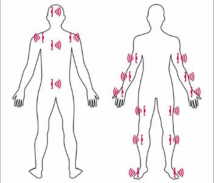
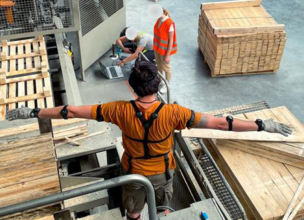
Figure 1: Location of MoCap sensors on the body of the measured person. (Adapted from Noitom, 2022).Figure 2: MoCap technology deployment and calibration. (Author, 2022).
for the worker. At the same time, according to the analysis of the measu- rement outputs, different ergonomic conditions can be monitored at each measured moment (Hu et al. 2021).
Process of Capturing Movement with Motion Capture There are several basic steps involved in Motion Capture measurement. First of all, it is necessary to select the workstation to be measured with the MoCap suit and the subsequent ergonomic analysis and evaluation. Motion Capture suit technology uses sensors to record motion, with the help of which the proband’s motion is translated into a virtual environment (Chen, Li, and Jiang 2022). Standard Motion Capture kinematic suits include 17 sensors (see Figure 1) located on different parts of the body, deployed according to a schematic, see figure below (Yunus et al. 2021).
The sensors work wirelessly against a router that is connected to the device’s PC where the motion-sensing will be recorded. The actual measu- rement, therefore, takes place by first putting the MoCap suit on the worker performing the selected part of the production process. Next, the user starts calibrating the suit against the real system and, once properly calibrated, starts measuring the worker’s movements. Both the calibration and the mea- surement itself are run in the appropriate application for the kinematic suite installed on the PC from which the measurement is triggered. The picture below (see Figure 2) shows an example of the suit calibration.
The motion measurements are recorded in real-time to the device with the aforementioned supporting application working with the Motion Capture kinematic suit. This software allows not only the transfer of real movements
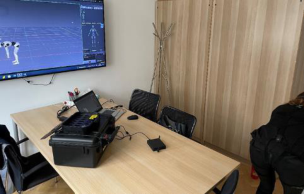
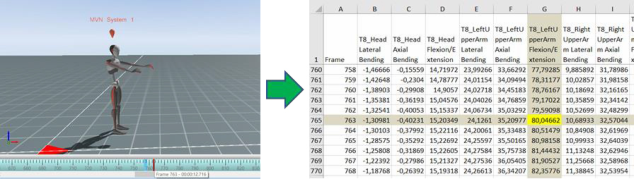
Figure 3: Real-time motion recording. (Author, 2022).Figure 4: Example of converting a motion record to tabular values. (Author, 2022).
to a virtual environment (see Figure 3) in which the recording can be further manipulated but also the export of recorded data in various formats.
Ergonomics of Working Positions Evaluation Process Motion transfer to the PC application is also complemented by the option to select the number of recordings per second (fps) up to 120 fps. The higher value provides not only an increase in smoothness but more importantly a higher level of accuracy when using Motion Capture’s cinematic suit compa- red to other methods. In the application on the respective PC, movements are recorded in real-time and can be exported to numerical values (see Figure 4).
The numerical values in the defined tables can then be further processed, evaluated, and reported according to the required outputs. There are several possibilities of evaluation and reporting, it is possible to do it based on export in a table editor and graphical evaluation, or then using specially created applications working with the transferred motion to the virtual environment and evaluating the recorded data. As a rule, the types of evaluation and repor- ting are quite dependent on the choice of kinematic suit used, however, some degree of connectivity can be established for these tools.
RESULTS
For the demonstration of the evaluation, ergonomic evaluation rules were selected based on the parameters of the Czech legislation NV 361/2007 Coll. defining working positions and their ergonomics. The evaluation focuses on the neck, upper limbs and trunk of the measured person. The neck posi- tions are defined by the ranges of flexion/extension, abduction/adduction and rotation. Similarly, for the trunk positions. Upper limb positions are
The Influence of Ergonomics as a Quality Parameter on the Evaluation 87
Table 1. Body parts angle ranges in relation to the body plane and acceptability of these positions according to Czech legislation. (Adapted from NV 361/2007, 2022).
Table available in the original PDF paper.
Body Part Posture Acceptable Conditionally Acceptable Unacceptable Neck Lean 0°–15° 15° and more Tilt 0°–15° 15° and more Inclination 0°–25° 25°–40° 40° and more Rotation 0° 0°–15° 15° and more Lean 0°–40° 40°–60° 60° and more Chest Tilt 0° and less Bend 0°–20° 20° and more Rotation 0°–20° 20° and more Shoulder Flexion 0°–40° 40°–60° 60° and more Extension 0° and less Abduction 0°–40° 40°–60° 60° and more Adduction 0° and less
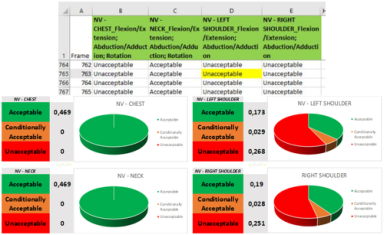
Figure 5: Example of a measured proband evaluation. (Author, 2022).
defined by ranges in flexion/extension and abduction/adduction. Czech legis- lation divides work positions into acceptable, conditionally acceptable and unacceptable. Conditionally acceptable values are limited to a maximum occurrence of 160 minutes per average 8-hour shift, unacceptable work posi- tions have this limit set at 30 minutes. Acceptable positions are defined by the range of angles (see Table 1) of a given body part relative to its plane (info@aion.cz n.d.).
The inclusion of the soft aspect of work position ergonomics in the eva- luation of production processes in the model example is based on Czech legislation. However, the application of a similar mechanism can be used by analogy according to any predefined evaluation method. Thus, it is pos- sible to set input parameters in the form of inclusion of different parts of the human body in the evaluation and also in the form of specific limit values of the range of angles of individual body parts. An undeniable advantage is the ability to identify a specific section of a manufacturing operation where higher worker strain occurs within the manufacturing pro- cess, and to optimize this manufacturing operation in the real world for better results. The figure below (see Figure 5) is an example of the speci- fic measurement snapshot shown in the figure above (see Figure 4), as well
Figure 6: Application for identifying the influence of ergonomics on the production process evaluation. (Author, 2022).
as an overall assessment of the operation performed on the proband being measured.
CONCLUSION
Due to the repetitive theme of manufacturing process evaluation for more than 20 years, which is usually based on the OEE (Overall Equipment Effe- ctiveness) methodology, this topic is still very topical and still not fully resolved (Jonsson and Lesshammar 1999; Muchiri and Pintelon 2008; Oli- veira et al. 2019). The problem of shortcomings in manufacturing process evaluation is the absence of soft evaluation metrics, for example, OEE is based on performance, availability and quality evaluation. Deficiencies rela- ted to assembly processes (Maropoulos et al. 2014) or deficiencies related to the non-consideration of important support processes such as material hand- ling (Battini et al. 2011) are often mentioned. It can be said that a certain factor that needs to be considered in the evaluation to achieve better results, identify bottlenecks and continuous improvement within the company is the ergonomics of the work positions occurring in the manufacturing operation performed.
The approach presented in this paper proposes and describes a meth- odology that can address this gap in manufacturing process evaluation approaches and achieve greater accuracy in output values. The advantage of using modern Motion Capture kinematic suit technology also lies in the ability to maintain the full fidelity and functionality of the actual manufa- cturing operation being performed. This operation can be replayed at any time in the digital environment, to look into the performed tasks, identify problem sections in terms of worker load in inappropriate working positions and try to optimize the given activity to improve the final evaluation of the production process.
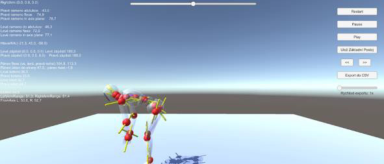
At the moment, this methodology is being developed in terms of properly tuning the influence of the work position on the evaluation of the produ- ction process and testing on a large group of probands, followed by a specific quantification of the effect and inclusion in the evaluation methodology. A PC application (see Figure 6) specifically developed for this purpose is also used to observe the effects of ergonomics on the evaluation of the production process.
At the moment, this methodology is being developed in terms of properly tuning the influence of the work position on the evaluation of the production
The Influence of Ergonomics as a Quality Parameter on the Evaluation 89
process and testing on a large group of probands, after which the specific quantification of the influence will follow and be included in the evaluation methodology. A PC application (see Figure 6) specifically developed for this purpose is also used to observe the effects of ergonomics on the evaluation of the production process.
By studying the literature on the topic of evaluation of manufacturing pro- cesses and identifying all the factors affecting this evaluation, it was found that the currently used approaches to evaluation are not objective in the evaluation of manual assembly processes. A clear problem with the current approaches is the integration of soft factors, such as ergonomics of working positions, which have a significant influence on the performance of manual production processes, among the hard factors classically used. The inclu- sion of just these soft factors and the approach to their integration is now being investigated by many authors. Trends related to the development of modern technologies and their penetration among common users allow to search for appropriate ways to integrate them. One such technology is the Motion Capture kinematic suit, facilitating the identification of the influence of ergonomics, and especially working postures, on the evaluation of produ- ction processes. It can be said that the current approaches to evaluation will soon be complemented by soft factors, thus achieving not only more accurate outputs of manufacturing process evaluation, but also better opportunities to identify bottlenecks within the production process, its optimization and the related increase in competitiveness of industrial enterprises.
ACKNOWLEDGMENT
This article was created with the support of the internal grant of the Univer- sity of West Bohemia, number SGS-2021-028 - Developmental and training tools for the interaction of man and the cyber-physical production system.
REFERENCES
Akhmad, S, Arendra, A. (2018). “Development of EsMOCA RULA, Motion Capture Instrumentation for RULA Assessment.” Journal of Physics: Conference Series 953. Battini, D., Faccio, M., Persona, A., Sgarbossa, F. (2011). “New Methodological
Framework to Improve Productivity and Ergonomics in Assembly System Design.” International Journal of Industrial Ergonomics 41. pp. 30–42 Berlin, C., Bergman, M., Chafi, M., Falck, A., Örtengren, R. (2021). “A Systemic Overview of Factors Affecting the Cognitive Performance of Industrial Manual Assembly Workers.” In Proceedings of the 21st Congress of the International Ergonomics Association (IEA 2021). Burggräf, P., Wagner, J., Koke, B., Steinberg, F. (2020). “Approaches for the Predi-
ction of Lead Times in an Engineer to Order Environment—A Systematic Review.” IEEE Access 8: 142434–45. Chen, Shuqing, Li, Jiang. (2022). “Pose Measurement and Assembly of Spacecraft Components Based on Assembly Features and a Consistent Coordinate System.” International Journal of Advanced Manufacturing Technology 120 (3–4): 2429–42.
Dobra, P. (2022). “Towards 100% Overall Equipment Effectiveness (OEE) at Semi- Automatic Assembly Lines – Case Study.” In Advances in Systems Engineering. Frohm, J., Lindström, V., Winroth, M., Stahre, J. (2008). “Levels of Automation in
Manufacturing.” Ergonomia - International Journal of Ergonomics and Human Factors 30. Gupta, P., Vardhan, S. (2016). “Optimizing OEE, Productivity and Production Cost for Improving Sales Volume in an Automobile Industry through TPM: A Case Study.” International Journal of Production Research 54. Hernandez-Matias, J. C., Vizan, A., Hidalgo, A., Rios, J. (2006). “Evaluation of Tech-
niques for Manufacturing Process Analysis.” Journal of Intelligent Manufacturing 17. Hu, Cao, Yang, Xiong, Lou. (2021). “Performance Evaluation of Optical Motion Capture Sensors for Assembly Motion Capturing.” IEEE Access 9. Government Regulation n. 361/2007 Coll., https://www.zakonyprolidi.cz/cs/2007-
361. Jia, Lie, Zhang, Dai. (2018). “Finite Production Run-Based Performance Evaluation of Assembly Systems with Bernoulli Machines.” In 2018 Annual IEEE International Systems Conference (SysCon). Jonsson, P., Lesshammar, M. (1999). “Evaluation and Improvement of Manufactu-
ring Performance Measurement Systems - the Role of OEE.”International Journal of Operations & Production Management 19. Karabegovic, I., Karabegovic, E., Mahmic, M., Husak, E. (2020). “Implementation of Industry 4.0 and Industrial Robots in the Manufacturing Processes.” In New Technologies, Development and Application Ii. Maisano, Antonelli, Fanceschini. (2019). “Assessment of Failures in Collabora-
tive Human-Robot Assembly Workcells.” In Collaborative Networks and Digital Transformation. Marín, J., Marín, J. J. (2021). “Forces: A Motion Capture-Based Ergonomic Method for the Today’s World.” Sensors 21. Maropoulos, Muelaner, Summer, Martin. (2014). “A New Paradigm in Large-
Scale Assembly—Research Priorities in Measurement Assisted Assembly.” The International Journal of Advanced Manufacturing Technology 70. Menolotto, Komaris, Tedesco, O’Flynn, Walsh. (2020). “Motion Capture Technology in Industrial Applications: A Systematic Review.” Sensors 20. Muchiri, P., Pintelon, L. (2008). “Performance Measurement Using Overall Equi-
pment Effectiveness (OEE): Literature Review and Practical Application Discus- sion.” International Journal of Production Research 46. Oliveira, Taki, Sousa, Salimi. (2019). “Global Process Effectiveness: When Overall Equipment Effectiveness Meets Adherence to Schedule.” Procedia Manufa- cturing, 29th International Conference on Flexible Automation and Intelligent Manufacturing (FAIM 2019). Oztemel, E., Gursev, S. (2020). “Literature Review of Industry 4.0 and Related
Technologies.” Journal of Intelligent Manufacturing 31. Szczepaniak, M., Trojanowska, J. (2019). “Methodology of Manufacturing Process Analysis.” In Advances in Manufacturing II. Xu, L. D., Xu, E. L., Li, L. (2018). “Industry 4.0: State of the Art and Future Trends.”
International Journal of Production Research 56. Yunus, Jaafar, Azlan, Azraii, Hossain. (2021). “Implementation of Kinetic and Kinematic Variables in Ergonomic Risk Assessment Using Motion Capture Simu- lation: A Review.” International Journal of Environmental Research and Public Health 18.
LISTED IN THE AHFE DIGITAL BOOKSTORE CATALOGUE
Explore the complete digital volume
Production Management and Process Control
Read this individual research paper free through the original publisher, or explore the full digital proceedings book.
ISBN 978-1-958651-12-4
Explore this ISBN in the AHFE Bookstore ↗Listed in the July 2026 bookstore catalogue; search by ISBN to confirm current availability · Digital book purchase optional