Ulugbek Ismatullaev, Alisher Saduakas, Kwanmyung Kim (2022). Human Factors Considerations in Design for the Elderly. In: Human Factors in Aging and Special Needs. AHFE Open Access, vol. 38, pp. 23–33. https://doi.org/10.54941/ahfe1001660
As the elderly population continues to grow in many developed countries, there is an immense need for products and services to improve their well-being. At present, numerous supportive technologies are being implemented to assist the elderly, both at home and outdoors. However, the application of human factors is often overlooked in the development of such technologies. Identifying human factors and ergonomic issues could help to produce designs that better meet the capabilities, limitations, and needs of the elderly. It also serves to increase the well-being and comfort of the elderly and to reduce the potential errors that often occur when using technology. Therefore, we conducted this study to analyze the prevalent problems related to human factors among the elderly and identify possible solutions to improve products and services for the target population.
The elderly population continues to grow at an increasingly prevalent rate worldwide. According to the World Health Organization, the number of peo- ple aged 60 years and older will increase from 1 billion in 2020 to 2.1 billion people by 2050, while the world’s population aged 80 years and older will triple and reach 420 million (World Health Organization, 2021). The elderly population is also becoming more diverse, and the number of elderly people in the population of the minorities is rapidly growing. In addition, the cost of caring for the elderly is becoming volatile, and the number of people caring for the elderly is declining (Czaja, 2018). Given the limitations of older peo- ple and the growing demand for elderly care, the development of assistive devices and support systems can promote successful aging. Ergonomics (or human factors) play a key role in the development of products and services for the elderly. Ergonomics aims to ensure that the demands created by the system are consistent with the cognitive abilities and functional experiences of older people (Czaja, 2018). Traditionally, the application of human factors has allowed designers to properly design products and systems by considering physical, cognitive, and organizational problems (Karwowski, 2012). Despite the wide application of ergonomics in healthcare and workplace design, it is usually neglected in the design of digital products, assistive devices, and
social technologies, where human interaction actively takes place. Therefore, the purpose of this study is to analyze the problems associated with aging and to consider human factor solutions in designing products and services for an older population.
METHODOLOGY
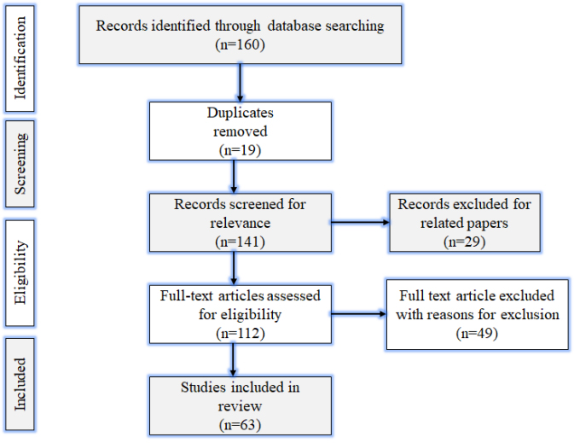
In this study, we used the preferred reported items for systematic reviews and meta-analysis (Figure 1), as it allowed us to reduce the risk of including an excessive number of studies addressing the same question (Moher et al., 2009). We used Google Scholar because it provides a powerful tool for fin- ding articles that are already known, while identifying a large amount of potentially relevant gray literature (Haddaway et al., 2015).
The following search terms and keywords were applied to find relevant stu- dies: “elderly” OR “elder” OR “aged” OR “senior” OR “older” OR “aging” OR “old age” with at least one of the words in the title of the article, and “human factors” OR “Ergonomics.” with the exact phrase in the title of the article. We included journal and review articles, research reports, and confe- rence papers published in English. We only selected papers that addressed the elderly and ergonomic-related issues and relevant solutions. The last search was conducted on November 19, 2021, and the included literature was limi- ted to that date. We found 160 publications related to these keywords. Before proceeding to the analysis, we first checked for duplications and excluded 19 duplicate studies. We excluded 11 non-English papers and 18 book chapters. A total of 19 studies that did not match the search keywords were excluded, as well as a total of 30 studies that did not meet the objectives of this study. Thus, 63 studies were selected for the final in-depth analysis.
Human Factors Considerations in Design for the Elderly 25
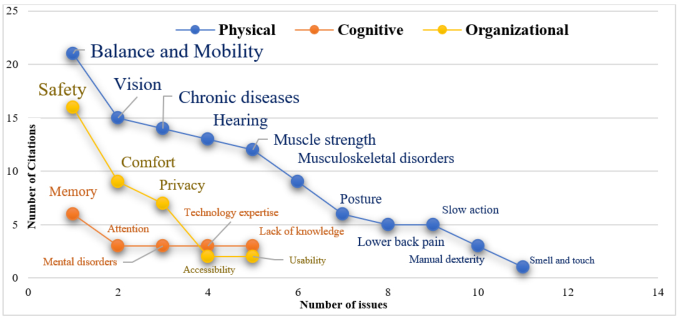
Figure 2: Common problems related to human factors among the elderly.
HUMAN FACTORS: ISSUES AND POSSIBLE SOLUTIONS During the review, we assessed human factors related to the aging population and categorized these issues based on physical, cognitive, and organizational factors.
As shown in the Figure 2, physical factors are the most common problems related to the elderly, followed by organizational and cognitive issues.
Physical Problems Balance and mobility, physical disorders, chronic diseases, and sensory pro- blems are the most common issues among the elderly. In particular, mobility and posture problems are most prevalent in patients with chronic heart fai- lure, fatigue, and shortness of breath, who have recently undergone surgical procedures, who sit in one place for long periods of time, and who are elderly with lower back pain (Holden and Mickelson, 2013). Improper posture has also been observed to cause several issues in the elderly when using tran- sportation. The height of steps in vehicles, driving, and the design of vehicles without considering handicapped seniors and their wheelchairs can lead to many problems (Souders et al., 2015; Cahill et al., 2020; Chen and Wong, 2014). To improve mobility, balance, and posture impairments in the elderly, the design process should consider aspects such as aisle width, low first steps, fewer steps, handrails installed where needed, and a place for the wheelchair (Souders et al., 2015). Moreover, autonomous driving increases the quality of driving for the elderly, who suffer from mobility problems. However, poten- tial concerns of autonomy, mental health, and privacy of the elderly should be carefully considered (Cahill et al., 2020). Balance is one of the leading causes of falls in the elderly, with 1 in 3 65-year-old individuals experiencing the problem of falling at work each year. Therefore, Perry (2010) argues that equipping work environments with ergonomic requirements for the elderly increases efficiency during work and helps prevent injuries. Immobility, bala- nce, and posture problems make sitting and standing activities more difficult
for the elderly, thus increasing the need for additional support. While suppor- tive devices, including walking sticks, walkers, and wheelchairs, are available to the elderly, they cannot help users in situations where standing and sit- ting are necessary. Although devices that help in such situations are available in the healthcare industry, they are expensive to use at home (Brandl et al., 2017). Furthermore, health changes and a sedentary lifestyle lead to many chro- nic diseases in the elderly, including diabetes, heart disease, cancer, and inflammation. Annual disease monitoring, drug support to control insulin and blood pressure, the health of diabetics, regular exercise to control wei- ght, and nutrition assistance can help the elderly with diabetes and chronic heart failure (Majid et al., 2018, Holden and Mickelson, 2013). However, several ergonomic risk factors, noise, poorly designed equipment, and pro- ducts in the workplace and home may also lead to other chronic diseases such as back pain, deafness, pulmonary disease, asthma, lung cancer, depres- sion, and leukemia (Hernandez et al., 2021). In particular, poorly designed chairs, car seats, and prolonged sitting can lead to increased musculoskele- tal disorders in the elderly, along with lower back pain (Majid et al., 2018, Almandrawy, 2015). In such cases, comfortable seating and ergonomically designed chairs ensure proper posture, reduced fatigue, postural stability, and back pain improvement (Almandrawy, 2015).
Sensory factors decrease with age and cause many problems in the elderly population. Visual impairment is one of the main causes of falls at home (Câmara et al., 2010). Poor vision also complicates driving in dark environ- ments, which in turn requires the development of necessary street lighting designs (Charness et al., 2011). Moreover, decreased vision, hearing loss, manual dexterity, and decreased psychomotor and cognitive skills lead to dif- ficulties in using technological devices (Sheikh et al., 2016). Hrovatin et al. (2016) emphasized the need to pay special attention to working surface sinks and cooker areas to prevent falls and other accidents at home. Additionally, it was noted that for a working surface from 1400 to 2000 lx, the general lighting in kitchen areas should be between 600 and 900 lx. Installation of light sensors in areas where the elderly are active assists with poor vision. For instance, the use of light sensors in the closet makes it easier for the elderly to find what they need in the closet (Gu and Zeng, 2019). The consideration of the large size of the screen, target color and background color, low-frequency voice reminders, and clear music is another solution to support visual and hearing impairments in the elderly (Fa and Soo, 2018). Singh et al. (2013) suggested that the design of hearing aid controls should be based on patient reports of tactile sensitivity in the fingertips, hand dexterity, disability, pain, and stiffness of the hands.
As a person ages, the muscles become rigid and the musculoskeletal system deteriorates. At home, these problems make activities more dangerous for the elderly; for example, picking up an item from furniture, such as a wardrobe, or climbing on a chair (Gu and Zeng, 2019). Muscle strength in older workers decreases by 25-35% at age 65, which in turn requires a specific workplace design for aged workers (Perry, 2010). Moreover, 60-70% of work-related musculoskeletal disorders are related to the poor design of equipment and
Human Factors Considerations in Design for the Elderly 27
the environment in the workplace (McGowan, 2010). A poorly designed car seat can also lead to an increase in musculoskeletal disorders in the elderly (Zuhairi and Majid, 2017).
Cognitive Problems It has been found that gradual memory loss in humans begins at age 45, and there is a dramatic decline by age 70 (Fa and Soo., 2018). This can make it difficult for the elderly to take most medications on time (Holden and Mickel- son, 2013). The use of human factors in smartphone applications, such as user-centered design, may be beneficial for the elderly who have difficulty using smartphones because of memory decline or dementia (Heiden et al., 2017). In healthcare, misunderstanding or forgetting health information by elderly patients can lead to poor medical decision-making and even more severe injuries. In such cases, the use of electronic health devices (eHealth) is the most effective solution (Pak et al., 2011).
Attention related problems can occur at any age during the performance of complex tasks. However, it is more common in the elderly because of the significant memory decline (Heiden et al., 2017). This poses even grea- ter challenges for transportation planners and safety engineers, as they need to address the potential challenges faced by elderly road users with reduced perceptual, cognitive, and psychomotor abilities (AbdelRazig et al., 2016). Charness et al. (2017) reported that the development of educational tip cards that teach seniors traffic control devices will greatly help older people expe- rience age-related changes, such as attention, encoding, and comprehension, to safely use the roads.
Nearly 20% of the population aged 55 years and older suffer from men- tal health issues (Heiden et al., 2017). This mental issue, in turn, makes it more difficult to design industrial products in line with these target popula- tion demands. A specific product should not only be aesthetically pleasing but also be able to provide comfort and safety in both work and out-of-work acti- vities, and should be designed optimally, considering the mental deficiencies in the elderly mentioned above (Rubinova, 2017).
Furthermore, a lack of knowledge or technical expertise impedes the use of modern technological devices. Luo et al. (2021) found that poor technical skills in the elderly cause difficulties in their use of electronic personal health record (ePHR) devices. In addition, the lack of learning and poor technical skills also undermine the use of smartphone devices in the elderly. They tend to use them when they are satisfied with the use of mobile phones and when they are aware of their advantages (Zhou and Shen, 2016). The lack of kno- wledge among the elderly about the disease and the products they consume also poses additional problems. For example, Holden and Mickelson (2013) found that some elderly people have insufficient knowledge of chronic heart failure and its symptoms, and some patients do not know that the food they eat contains a lot of sodium.
Organizational Problems Ergonomic issues related to safety in the home, workplace, transportation, and wearable devices were also identified. Hrovatin et al. (2016) found that
homes, especially kitchens, are not equipped according to ergonomic requi- rements, whereas safety is the most reported problem by many seniors. Thus, considering the characteristics of the anthropometric, physical, and mental disabilities of the elderly will help prevent safety hazards associated with the use of chairs and wardrobes at home (Gu and Cheng., 2019; Alman- dawy, 2015). In a working environment, ambient temperature is one of the most important factors influencing worker safety and performance (Tosi and Pistolesi, 2019). This is especially serious in the elderly, where the tempera- ture may be more severe owing to decreased temperature sensation. In recent years, wearable devices have been used to report safety problems, including falls and emergencies, in elderly monitoring systems (Hossain, 2014). How- ever, it should be noted that they are not aesthetically pleasing, do not have sufficient accuracy, and have limited ability to identify hazards autonomously (Minconelli et al., 2019). Zuhairi and Majid (2017) reported the possible safety issues of driving car seat and noted that the use of ergonomic princi- ples in the design of a car seat, especially for an elderly driver, can reduce the risk of accidents. It is also recommended to use 3-point shoulder belts on buses, as 2-point shoulder belts are sufficient to prevent a passenger from being thrown out but can cause passengers’ upper extremities and head to hit the seat in front of them (Souders et al., 2015).
In recent years, new technologies, in particular, autonomous driving, moni- toring systems, smart homes, and wearable devices, have required the use of users’ private data to improve the quality of services. However, this can lead to privacy and autonomy concerns. In particular, it was confirmed that pri- vacy became an important concern in the elderly monitoring system (Hossain, 2014; Holden and Mickelson, 2013; Luo et al., 2021; Ahmad and Mozelius, 2019). Therefore, healthcare providers need a balance between supporting the autonomy of the elderly and promoting a monitoring system (Ahmad and Mozelius, 2019). Privacy is another important issue in autonomous driving. It is essential to ensure that older drivers have control over their data and how it is stored and shared with others (Cahill et al., 2020). Therefore, crea- ting an environment that is suitable for the elderly is greatly required because healthy aging occurs through autonomy, which leads to active participation in life and improved quality of life (Therriault et al., 2019).
No matter how functional modern technologies are, if they do not provide an easy, convenient, and usable interface, older people will find it difficult to use them because of the various shortcomings associated with aging. For example, in monitoring systems, elderly people may have difficulty receiving and accessing various types of information depending on how the informa- tion is delivered, such as font color, size, screen size, and the size of the data transmitted from monitoring devices (Hossain, 2014). ePHR devices that consider usability heuristics, have easy and convenient access, and a user interface tailored to the needs of the elderly can solve the above problems (Hossain, 2014; Pak et al, 2011; Luo et al., 2021). In a work environment, it was found that workers do not use personal protective equipment because they are uncomfortable, cumbersome, and unsuitable for wear (Tosi and Pistolesi, 2019). As this situation directly affects safety, it is necessary to develop user-friendly and suitable work helmets for the elderly. At home,
Human Factors Considerations in Design for the Elderly 29
Table 1. Problems and solutions of human factors.
Table available in the original PDF paper.
Items HFEs Issues Found HFEs Issues Addressed P C O P C O Healthcare Yes Yes Yes Yes Yes Yes Monitoring system Yes Yes Yes No No Yes Mental healthcare Yes Yes No Yes Yes Yes Rehabilitation Yes No No Yes No No Medication Yes Yes Yes Yes Yes Yes Home Yes Yes Yes Yes No Yes Bathroom Yes Yes Yes Yes No Yes Kitchen Yes No Yes Yes No Yes Interior & Furniture Yes No Yes Yes No Yes Transportation Yes Yes Yes Yes Yes Yes Public transportation Yes No Yes Yes No Yes Driving Yes Yes Yes Yes No No Interior Yes Yes Yes Yes No Yes Roadway Yes Yes No No Yes No Digital devices Yes Yes Yes Yes Yes Yes Personal computer Yes Yes Yes No No No Smartphones Yes Yes Yes Yes Yes Yes Assistive devices Yes No Yes Yes No Yes Wearable devices Yes No Yes No No No Wheelchair Yes No Yes Yes No Yes Workstation Yes No Yes Yes No Yes
Equation reproduced from the original PDF.
the bathroom, mirrors, and grab bars should be installed in front of the washstands, have handles to help the elderly stand, and provide a bell for anti-slip doormats and alertness (Herawati et al., 2014). Furthermore, it was found that older people face many difficulties in using smartphones because of their complex and useless functions; they do not meet the needs of the target population (Fa and Soo, 2018).
Summary The review results showed that physical and cognitive decline associated with aging causes the elderly to have many difficulties in performing various daily activities and using products. Organizational factors also lead to additional problems for the elderly, which directly affects their quality of life. Table 1 summarizes the problems and solutions of human factors in the design for the elderly found in this review.
CONCLUSION
Although the consideration of human factors is widely used in the design of products and services for the elderly, in some application domains, human factors are still disregarded, particularly in the areas of monitoring, driving,
computers, and wearable technology (Table 1). The application of ergono- mics is needed to make products and systems more personalized for the elderly, considering their weaker body and cognitive functions compared to young adults. Overall, the key findings of this review allowed us to derive a few considerations for the ergonomics needed to design products and systems for the elderly in various application domains.
As people age and become weaker, the need for healthcare devices, inclu- ding rehabilitation, monitoring, and assistive devices, has increased. Howe- ver, problems with vision and hearing, poor technical skills, and memory loss make it difficult to use these technological devices. Healthcare devices such as ePHRs and eHealth, designed to address the shortcomings of the elderly, as well as provide easy access and usability, can be of great help in commu- nication between the elderly and physicians in elderly monitoring systems. However, privacy concerns regarding the elderly should be carefully addres- sed. In addition, the fact that some seniors do not know the composition and calories of the foods they consume requires specific programs that provide nutrition management for the elderly.
At home, mobility, balance, posture, vision, and poorly designed furniture cause problems such as falling in the elderly. It is recommended that, in rooms where the elderly are more active at home, especially in bedrooms, bathro- oms, and kitchens, attention is given to floor surfaces, room lighting, and the provision of handrails where necessary. For instance, the installation of light sensors in the wardrobe, bathroom corridor, and the use of an alarming bell in the bathroom can prevent fall-related accidents. A supporting device that helps the elderly sit and stand at home is also required for those who suffer from mobility, balance, and posture problems.
The elderly mainly suffer from poor vision, mobility, balance, low back pain, musculoskeletal disorders, and reduced cognitive and perceptual pro- blems when using vehicles. Thus, in a dark environment, complex road signs, ergonomic car seats, and step heights in vehicles should be carefully conside- red when designing vehicles for the elderly. Autonomous driving can help older people with cognitive, physical, and perceptual problems; however, privacy issues should be addressed.
Decreased vision, hearing ability, manual dexterity, and poor technical skills make it difficult for the elderly to use digital devices. Therefore, when designing computer technology and communication devices, it is recom- mended to pay close attention to larger screen and font sizes, target and background color, and clear sound.
Manual dexterity and tactile sensitivity in the elderly are common issues that hinder the use of assistive devices, particularly hearing aids and wea- rable devices. In addition, a non-aesthetic design and insufficient accuracy make them more complicated for application by older adults. However, the development of ergonomically designed and accessible wearable devices can be helpful in scenarios such as blood pressure, heart pulse, and emergency detection in the older population.
Physical problems, poorly designed tools and equipment, noise, and tem- perature are the leading causes of accidents, chronic diseases, and other disorders in older workers. Thus, the development of temperature-related
Human Factors Considerations in Design for the Elderly 31
risk detection devices, smart safety kits, and ergonomically equipped working environments is highly recommended.
ACKNOWLEDGMENT
This work was supported by the Technology Innovation Program (20015056, Commercialization Design and Development of Intelligent Product-Service System for personalized full silver life cycle care) funded by the Ministry of Trade, Industry, and Energy (MOTIE, Korea).
REFERENCES
AbdelRazig, Y., Doczy, R., Boot, W. R., Ozguven, E. E., Moses, R., & Transportation Research, B. (2016). Spatial Context Roadway Safety Analysis for the Aging Popu- lation: A Hybrid 3-Dimensional Visualization and Human Factors Simulation Approach. 18p. Ahmad, A., & Mozelius, P. (2019). Critical factors for human-computer interaction
of eHealth for older adults. PervasiveHealth: Pervasive Computing Technologies for Healthcare, 58–62. Almandrawy, M. A. T. (2015). Ergonomics Design Metal Chair for the Elderly. Brandl, C., Rasche, P., Bröhl, C., Theis, S., Wille, M., Schlick, C. M., & Mertens, A. (2017). Incentives for the acceptance of mobility equipment by elderly people on the basis of the Kano model: A human factors perspective for initial contact with healthcare products. Advances in Intelligent Systems and Computing, 482, 161–171. Cahill, J., Crowley, K., Cromie, S., Doyle, C., Kenny, E., Kay, A., Gormley, M.,
Hermann, S., Hever, A., & Ross, R. (2020). Advancing a ‘Human Factors & Ethics Canvas’ for New Driver Assistance Technologies Targeted at Older Adults. Lecture Notes in Computer Science (Including Subseries Lecture Notes in Artificial Intelligence and Lecture Notes in Bioinformatics), 12198 LNCS, 503–520. Câmara, J. J. D., Engler, R. D. C., & Fonseca, P. D. O. (2010). Analysis and ergonomics of houses for elderly people. Periodicum Biologorum, 112(1), 47–50. Charness, N., Boot, W., Kaschak, M., Arpan, L., Cortese, J., Clayton, R., Roque,
N., Paedae, B., & Barajas, K. (2017). Human Factors Guidelines to Develop Educational Tip Cards for Aging Road Users Charness, N., Mitchum, A., Champion, M., Cowing, B., & Stothart, C. (2011). Aging Driver And Pedestrian Safety: Human Factors Studies. 103p. Chen, Q., & Wong, S. F. (2014). Applied human factors engineering in advanced veh-
icle design for elder and handicapped people. FAIM 2014 - Proceedings of the 24th International Conference on Flexible Automation and Intelligent Manufacturing: Capturing Competitive Advantage via Advanced Manufacturing and Enterprise Transformation, 325–331. Czaja, S. J. (2017). Aging, mind and brain: A human factors engineering perspective.
The Wiley Handbook on the Aging Mind and Brain, 662–672. Fa, W., & Soo, K. C. (2018). Research on Smart Phone Interfaces for the Elderly Based on Ergonomics. Journal of Physics: Conference Series, 1098(1), 12011. Gu, C., & Zeng, J. (2019). Research on the Design of the Elderly Wardrobe Based on
Ergonomics. IOP Conference Series: Materials Science and Engineering, 573(1). Haddaway, N. R., Collins, A. M., Coughlin, D., & Kirk, S. (2015). The role of Google Scholar in evidence reviews and its applicability to grey literature searching. PloS one, 10(9), e0138237.
Heiden, S. M., Holden, R. J., Alder, C. A., Bodke, K., & Boustani, M. (2017). Human factors in mental healthcare: A work system analysis of a community-based pro- gram for older adults with depression and dementia. Applied Ergonomics, 64, 27–40. Herawati, L., Diana, F., & Yuliawati, S. (2014). Designing Ergonomics House for
Elderly. Hernandez, C. J. C., Llabores, R. G., & Quevedo, V. C. (2021). Ergonomics Study on Productivity of Middle-aged Workers in the Shoe Industry. Holden, R. J., & Mickelson, R. S. (2013). Performance barriers among elderly chro-
nic heart failure patients: An application of patient-engaged human factors and ergonomics. Proceedings of the Human Factors and Ergonomics Society, 758–762. Hossain, M. A. (2014). Perspectives of human factors in designing elderly monitoring system. Computers in Human Behavior, 33, 63–68. Hrovatin, J., Pišot, S., & Plevnik, M. (2016). Healthy ageing at home: ergo-
nomics adaptations of interior design and self-assesed quality of life of older adults of the municipality of ljubljana. Annales Kinesiologiae, 7(2), 139–152. https://www.who.int/news-room/fact-sheets/detail/ageing-and-health Karwowski, W. (2012). The discipline of human factors and ergonomics. Handbook of human factors and ergonomics, 4, 3–37. Luo, Y., Dozier, K., & Ikenberg, C. (2021). Human-Technology Interaction Factors
Associated With the Use of Electronic Personal Health Records Among Younger and Older Adults: Secondary Data Analysis. Journal of Medical Internet Research, 23(10), e27966. Majid, A. Z. A., Yusoff, I. S., & Tamrin, S. B. M. (2018). Ergonomics Review: Identify Discomfort Seating Posture Among Elderly Taxi Drivers at Malaysia Perspective. … .Telkomuniversity.Ac.Id. McGowan, B. (2010). Human Factors Design Considerations for the Aging Popula-
tions. All Days, 240–252. Moher, D., Liberati, A., Tetzlaff, J., Altman, D. G., & PRISMA Group*. (2009).
Preferred reporting items for systematic reviews and meta-analyses: the PRISMA statement. Annals of internal medicine, 151(4), 264–269. Pak, R., Fink, N., Price, M., & Battisto, D. (2011). Two Case Studies in Human Factors in Healthcare. International Journal of Healthcare Delivery Reform Initiatives, 2(4), 17–38. https://doi.org/10.4018/978-1-60960-177-5.ch012 Perry, L. S. (2010). Designing the workplace for the aging workforce. White Paper,
Zurich in North America, 20, 2010. Rubinova, D. (2017). Ergonomics for The Elderly As The Topical Criterion For Industrial Design creation. 4th International Multidisciplinary Scientific Conference on Social Sciences and Arts SGEM2017, urban planning, architecture and design, 51. Sheikh, J. A., Zafar, B., Pervez, A., & Bhutta, Z. I. (2016). Smartphone ergonomics:
A proposal for older people. Advances in Intelligent Systems and Computing, 485, 831–841. Souders, D., Gepner, B., Charness, N., & Wekezer, J. (2015). A User-Centered Literature Review of Safety and Human Factors Issues Involving Older Adults as Cutaway Bus Passengers. Taveira, A. D., & Smith, M. J. (2012). Social and organizational foundations of
ergonomics. Handbook of human factors and ergonomics, 274-297. Therriault, P. Y., Lefay, G., Lord, M. M., & Desaulnier, A. (2019). The use of technology as a creative means of ergonomics to support the realization of activities in an aging population: A review of the literature. Advances in Intelligent Systems and Computing, 826, 8–15.
Human Factors Considerations in Design for the Elderly 33
Tosi, F., & Pistolesi, M. (2019). Ergonomics evaluation of workstations for mechanical engineering companies with particular attention to older workers. Advances in Intelligent Systems and Computing, 824, 410–420. World Health Organization (2021) Aging and Health; WHO Website: https://www.who.int/news-room/fact-sheets/detail/ageing-and- health Zhou, X., & Shen, W. (2016). Research on interactive device ergonomics designed for
elderly users in the human-computer interaction. International Journal of Smart Home, 10(2), 49–62. Zuhairi, A., & Majid, A. (2017). To Investigate the Association Between Current Car Seat Design With Body Posture for Reducing Musculoskeletal Disorders (MSDs) Through Ergonomics Principles Among Malaysian Elderly. Malaysian Journal of Creative Media, Design and Technology, 1(3).
LISTED IN THE AHFE DIGITAL BOOKSTORE CATALOGUE
Explore the complete digital volume
Human Factors in Aging and Special Needs
Read this individual research paper free through the original publisher, or explore the full digital proceedings book.
ISBN 978-1-958651-14-8
Explore this ISBN in the AHFE Bookstore ↗Listed in the July 2026 bookstore catalogue; search by ISBN to confirm current availability · Digital book purchase optional