Elisangela Vilar, Francisco Rebelo, Margarida Cordeiro, Paulo Noriega (2022). User Acceptance: Case study of an interactive shopping assistant. In: Ergonomics In Design. AHFE Open Access, vol. 47, pp. 642–651. https://doi.org/10.54941/ahfe1001993
An increasing number of retailers are considering merging online with offline channels so that they can interact with each other by the omnichannel strategy. In this context, this paper presents a study to examine the user acceptance of an interactive shopping assistance to help customers during the shopping experience through a mobile application. A conceptual model was developed and evaluated using the Unified Theory of Acceptance and Use of Technology. According to the results, three main factors that influence acceptance of this concept were Usability, UX, and Trust. Clearly, the first factor, Usability, was the highest weight in the user acceptability of the proposed technology, responsible for 53.6% of the variance. The second factor concerning UX only weighs 16,7 % in the explained variability of the results. Both women and men consider functionalities as a facilitating factor for a more positive experience. Results from this study show that users are open to new solutions to facilitate the shopping experience, mainly those that are easy to use and suitable to users’ needs.
According to Soysal, Zentner, and Zheng (2019), an increasing number of retailers are considering merging online with offline channels, in a way that they can interact with each other by the omnichannel strategy. An example of this trend is the new Amazon stores opened in the USA, in which the advanta- ges from the physical shopping experiences, such as to touch, try and feel the product, are combined with online purchase. Thus, the new store function as a traditional commerce place, but also a pick point for the online store – redu- cing delivery time and shipping costs - and a place for experiencing products before purchase, in a way to reduce return and exchange taxes. This duality is interesting because, on the one hand, there is e-commerce with a well-based global trend of rapid growth (U.S. Department of Commerce, 2021). On the other hand, consumers have become more aware of their rights, needs, and expectations, demanding new solutions for physical and online purchase experience. The discussion about how physical stores will adapt themselves to the digitalization trend has been discussed in the last years, with authors
User Acceptance: Case Study of an Interactive Shopping Assistant 643
suggesting the decreasing of their presence on the physical market, in a way to become showrooms, and others putting the physical stores as the center of a brand experience (Alexander and Cano, 2018).
According to Alexander and Cano (2018), multichannel retailers are domi- nating the current retail scenario, and some issues arise with this. One of them is related to the management of different channels to create a captiva- ting shopping experience. Other is the integration of the sales experience in multiple channels preserving the interaction with the brand; that is, the inte- raction with the brand remains more important than the interaction with the channels. Another important issue is customization, which offers the customer what matches their preferences and wants, mainly considering pre- vious data acquired from online shopping, online searches, and/or physical shopping.
In this context, this paper presents a pilot study to examine the accepta- nce of an intelligent shopping guide to help customers during the shopping experience through a mobile application. For this, a conceptual model was developed and evaluated using the Unified Theory of Acceptance and Use of Technology - UTAUT (Venkatesh et al., 2003).
THE MODEL TO ACCESS TECHNOLOGY ACCEPTANCE The Unified Theory of Acceptance and Use of Technology (UTAUT) was developed by Venkatesh and colleagues (2003) and is based on the revision and comparison of eight different theories that were unified in an alternative model integrating their main elements. After reviewing the theories, seven constructs were highlighted and used by the UTAUT. The main criterion for this was that constructs had to be significant direct determinants of intention or usage in one or more individual models. Thus, according to the UTAUT authors, Performance Expectance, Effort Expectance, Social Influence, and Facilitating Conditions will play a significant role as direct determinants of user acceptance and usage behavior (Venkatesh et al., 2003).
Performance Expectance - is defined “as the degree to which an indivi- dual believes that using the system will help him or her to attain gains in job performance” (p. 447) and comprises five constructs from different models: perceived usefulness (PU), Extrinsic motivation (EM), Job-fit, here considered as Perceived adaptability (PA), Relative outcome (RO), and Outcome expe- ctations (OE); Effort Expectancy - is defined as “the degree of ease associated with the use of the system” (p. 450) and comprises three constructs from dif- ferent models: Perceived Ease of Use (PEU), Complexity (C), and Ease of Use (EU); Social Influence - is defined as “the degree to which an indivi- dual perceives that important others believe he or she should use the new system” (p. 451). Three constructs are related to this: Subjective norm (SN), Social factors (SF), and Image (I). Facilitating Conditions - are defined as “the degree to which an individual believes that an organizational and technical infrastructure exists to support the use of the system”(p. 453), and three diffe- rent constructs support this: Perceived behavioral control (PBC), Facilitating Conditions (FC), and Compatibility (CO).
Table 1. Constructs and their definition according to Heerink and colleagues (2009).
Table available in the original PDF paper.
Additionally, Indirect Determinants Were Also Considered Anxiety (A) and Self-efficacy (SE) - were considered by the authors of the model as indirect determinants of behavioral intention that are mediated by perceived ease of use. Attitude towards using Technology (AT) - was also considered an indirect determinant, and is related to “the individual’s overall affective reaction to using a system” (p. 455), comprising four constructs: Attitude towards Behavior (AB), Intrinsic Motivation (IM), Affect towards Use (AU), and Affect (AF). Behavioral Intention (BI) – according to Ven- katesh and colleagues (2003), behavioral intention will positively influence technology usage.
The UTAUT model was further improved by Heerink and colleagues (Heerink et al., 2009) to incorporate constructs related to the perceived social ability of a robotic system. Thus, in this version, the authors propose the inclusion of four determinants: Perceived Enjoyment, Perceived Sociability, Social Presence, and Perceived Adaptability. Table 1 shows the constructs and their definition according to Heerink and colleagues (2009). Considering the nature of this study’s object, that is the acceptance of interactive personal
User Acceptance: Case Study of an Interactive Shopping Assistant 645
assistant to help in a shopping experience, the model proposed by Heerink and colleagues (2009) was used.
METHOD
The main objective of this study was to explore the main variables that affect user acceptability of an Interactive Shopping Assistant. For this, the UTAUT model, adapted by Heerink and colleagues (2009), was used. Thus, a que- stionnaire was formulated considering the constructs most suitable for the technology in analysis. The questionnaire was distributed online using the Google forms® tool.
Conceptual Development of the Interactive Shopping Assistant According to Diamandis and Kotler (2020), Artificial Intelligence (AI) “makes retail cheaper, faster, and more efficient, touching everything from customer service to product delivery. It also redefines the shopping experie- nce, making it frictionless and once we allow AI to make purchases for us ultimately invisible.”
The proposed system is based on an app used on mobile devices. The system’s main objective is to facilitate finding and discovering items at physi- cal stores located in shopping malls. With this, the proposed system seeks to improve the shopping experience as it will become faster and more facilitated. Using also data about users’ physical conditions, the system will also be able to give suggestions about items’ size that could be most suitable for the user. The proposed system will use Augmented Reality (AR) technology to allow users to have additional information about items’ location, size, availability, price, materials, and others. The interactions with this system were planned to be mainly related to the main functionalities presented.
Questionnaire Development For the questionnaire development, the following constructs were selected from the list in Table 2, according to Heerink and colleagues’ (2009) model and the nature of the analyzed product.
After constructs selection, the questions were formulated based on each construct definition. Thus, for each construct, one or more questions were posed. The final questionnaire is presented in Table 2 Table 1. All answers were collected using a Likert-type scale, varying from 1 to 7 (completely disagree – completely agree), and questionaries were applied online through Google Forms®.
Participants didn’t interact with a real product because the evaluation was made considering a conceptual and hypothetical system. Instead, they were inserted into a narrative context that intended to make them think about the possibilities of this product, as well as about some problems that may arise with it.
Narrative Context To make people aware about products capabilities and possible problems that also could arise with a system like this, a narrative context was developed.
Table 2. Variables, explanation, and questions used for the online questionnaire.
Table available in the original PDF paper.
The main objective of the narrative was to make participants aware about the context of use and conceptual product’s main functionalities, as well as about some problems that may arise with its use. For this, the participants were inserted into the context of a shopping activity into a shopping mall that was presented to them in a form of a video.
The narrative was developed considering two main aspects, to bring par- ticipants closer to the products’ use, introducing the system through an example of what could be its application on a real situation, and to pre- sent the proposed system main functionalities and possible problems that could happen with its use. With this, we intended to develop a link between the participant and the video main character, creating empathy, and making participants more aware about the proposed system.
User Acceptance: Case Study of an Interactive Shopping Assistant 647
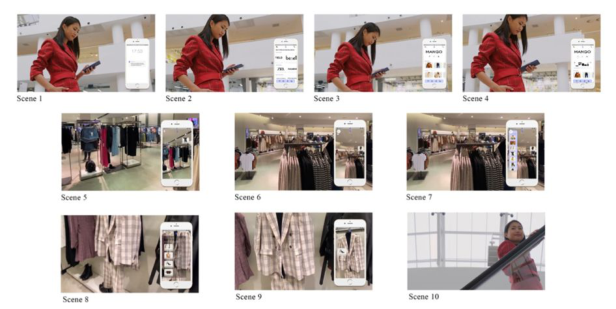
Figure 1: Storyboard images of the video shown before the questionnaire, illustrating the different features and functions of the proposed product.
The narrative was developed considering three main stages. In the first, the focus was on the products’ use and its availability to the users. The second stage comprises the experience the users have while interacting with the system. And the third stage, focused on the emotions related to the sense of accomplishment users can achieve while using the system to improve their shopping experience. Based on the narrative, storyboards were created for a video development.
Figure 1 shows the storyboard for video development in which the main features and functionalities of the proposed product, as well as some concerns, are presented.
The developed questionnaire together with the video were previously pre- tested to verify incongruences and/or misunderstanding in both, question- naire and video. This pre-test was a presential interview with 10 participants who watched the video, fulfilled the questionnaire and gave their feedback about any troubles they experienced during this interaction. After few adju- stments, the final version of the video and questionnaire were established and launched online.
Protocol An online approach was considered for the application protocol. Considering this, at the beginning of the questionnaire participants were informed that they would watch a video and then, based on this video, they should answer the questions. The questionnaire with the video attached to this was launched on the online platform (Google Forms) and shared in social networks for three days. The sample was meant to be as wide as possible, reaching a broad range of people with different ages, and locations. Thus, people can fulfil the questionnaire based on their perceptions about the conceptual product they saw on the video. Demographic data were also collected through some questions at the end of the questionnaire.
Table 3. Percentages of scores for each construct (N = 59), averaged for the items of each group.
Table available in the original PDF paper.
RESULTS AND DISCUSSION
Table 3 shows the percentages of scores for each construct (N = 59). The results are averaged for the items of each construct. Percentages are pre- sented for average values minor than 3, between 3 and 4, and greater than 5, from the scale 1 completely disagree and 7 completely agree. Thus, first column represents a discordance, response 4 is the neutral response that does not agree or disagree with the sentence, and responses greater than 5 are considered as concordance.
Analyzing Table 3 we can see a slight tendency to the right, that is, answers greater than 5 (56.8%). Recalling our main objective of this study, we want to explore what are the main variables that affects user acceptability of the Inte- ractive Shopping Assistant. The more positive influence was “Perceived ease of use” and “Intention to use”, respectively with 86.4% and 84.7%. Next with values of 67.8% and 64.4% are the “Perceived adaptiveness”and “Atti- tude towards technology”. With values of 55.9% are the variables “Perceived usefulness” and “Trust”. The more negative influence over user acceptability was Anxiety with only 6.8% and Perceived enjoyment with 32.2%. To mea- sure reliability or internal consistency of the questionnaire, Cronbach’s alpha was applied. In our case Cronbach’s alpha is 0.87, higher than 0.8, indicates an excellent internal consistency. A high level of consistency for this specific sample shows that the questionnaire is reliable and accurately measures the variable of interest.
A factorial analysis was performed to identify the minimum number of factors that represent the relationships between the various items of the que- stionnaire. The Keyser-Meyer-Olkin test had a value of 0.822 revealing that the analysis of the main components is meritorious. Table 4 shows the factor matrix after varimax rotation. Factor extraction determined three factors. The first factor is responsible for 53.6% of the variance and consists of Percei- ved adaptiveness, Perceived ease of use, Perceived usefulness and Intention to use. These variables are related with usability issues and intention to use. The nature of the variables in this factor will be called Usability.
The second factor, responsible for 16.7% of variance, is comprised by Anxiety, Attitude towards technology and Perceived enjoyment. These vari- ables are more related to emotional aspects of the user experience, thus this factor is called UX. The third and last factor, responsible for 10.9% of the
User Acceptance: Case Study of an Interactive Shopping Assistant 649
Table 4. Factor matrix after varimax rotation.
Table available in the original PDF paper.
variance, is Trust. As this factor consists of one variable, we will keep its name.
Concerning demographic variables, there was no differences in gender for any of the constructs, but there was a negative correlation between Age and level of Anxiety (r=-0.52; a<0.001). This means that with the increasing of age the levels of anxiety decreases. Usually, we think that older people have higher resistance to technology as previously reported (Ellis and Allaire, 1999), however if we think that the questions of anxiety in the current study are more related with problems of data privacy, maybe in this study this nega- tive relation could be explained by an unawareness of this issues related with technology usage and data privacy in older population.
Main results also shown that most of participants (71.5%) think that an automatic creation of a personal profile could make shopping experience ease. However, they present some concern about the origin of those data, as 78.6% of the inquired disagreeing that that origin is irrelevant. Most of them (78.5%) also disagree that be constantly monitored is irrelevant. These results show a tendency regarding users’ anxiety in having sensitive personal data available, negatively influencing the acceptance of the proposed type of solution. 42.9% of the participants agree that their likes on online platform could be monitored and studied for their profile creation. Also, according to the results, 73.3% of the participants agree that the proposed technology is perceived as ease to use. It could be explained by the intuitive and simple design approach adopted for the interface. Results from questionnaire also shows that most of participants (69%) agree with the statement that the user’s needs will be met, and 66% of participants also consider this technology to be beneficial. Participants were also asked about the level of agreement with the statement related to the use of this technology by their friends. Thus, a total of 74.9% of participants agree that their friends would use an appli- cation of this type. Most participants (71.4%) also think they could use this technology for a long period of time.
CONCLUSION
This study aimed to explore the main variables that affects user accepta- bility of an Interactive Shopping Assistant. For this the adapted version of the UTAUT model was used to develop a questionnaire. According to the
results, three main factors that influence acceptance of this Shopping Assi- stant were Usability, UX and Trust. Clearly the first factor, Usability, was the one with highest weight in the user acceptability of the proposed techno- logy. The second factor concerning UX only had a weight of 16.7% in the explained variability of the results. It seems clear that usability is an important factor for the acceptance of the product, however what was not expected was that the UX had such a low weight concerning the acceptance of the proposal. Since it is a proposal that uses augmented reality to visualize clothes accor- ding to the preferences of the users, we were expecting here a “wow!” factor that would maximize the weight of the UX. Eventually as the constructs of “Perceived enjoyment” and “Attitude towards technology” have a drawback related with issues of data privacy (the experience of having your location data accessed by the application), this fact could weakens the “wow!” side of UX.
A limitation in this study was the low number of participants that should be higher and more diverse. For this study, FC construct was not used as the main focus was the perceived experience while interacting with the proposed product. For further studies, FC construct should be considered to also inve- stigate the perception about physical environment and its interaction with the app using AR.
This project goes beyond the actual usage of technology by stores, appro- aching new ways of interaction as if the benefits of the experience of online shopping are transposed to a physical store, not abstracting users from physical spaces and experiences, but complementing them with digital tech- nologies. Results from this study shows that users are opened to new solutions to facilitate the shopping experience, mainly those that are easy to use and suitable to users’ needs.
ACKNOWLEDGMENT
This work is financed by national funds through FCT - Fundação para a Ciência e a Tecnologia, I.P., under the Strategic Project with the refere- nces UIDB/04008/2020 and UIDP/04008/2020. 2020 and ITI -LARSyS-FCT Pluriannual funding’s 2020-2023 (UIDB/50009/2020).
REFERENCES
Alexander, B. and Cano, M.B. (2018) “Futurising the physical store in the omnichannel retail environment,” in Exploring Omnichannel Retailing: Common Expe- ctations and Diverse Realities. Springer International Publishing, pp. 197–223. doi: 10.1007/978-3-319-98273-1_9. Diamandis, P. and Steven Kotler, S. (2020) The Future Is Faster Than You Think:
How Converging Technologies are Transforming Business, Industries, and our Lives. Simon & Schuster. Available at: https://www.wook.pt/livro/the-future-is- faster-than-you-think-peter-h-diamandis/23715923 (Accessed: June 29, 2021). Ellis, R.D. and Allaire, J.C. (1999) “Modeling computer interest in older adults: The role of age, education, computer knowledge, and computer anxiety,” Human Factors, 41(3), pp. 345–355. doi:10.1518/001872099779610996.
User Acceptance: Case Study of an Interactive Shopping Assistant 651
Heerink, M. et al. (2009) “Measuring acceptance of an assistive social robot: A suggested toolkit,” in Proceedings - IEEE International Workshop on Robot and Human Interactive Communication, pp. 528–533. doi: 10.1109/RO- MAN.2009.5326320. Soysal, G., Zentner, A. and Zheng, Z. (2019) “Physical Stores in the Digital
Age: How Store Closures Affect Consumer Churn,” Production and Operations Management, 28(11), pp. 2778–2791. doi: 10.1111/poms.13069. U.S. Department of Commerce (2021) QUARTERLY RETAIL E-COMMERCE SALES 3 rd QUARTER 2021. Washington, DC. Available at: http://www.census.gov/retail (Accessed: February 1, 2022). Venkatesh, V. et al. (2003) “User acceptance of information technology: Tow-
ard a unified view,” MIS Quarterly: Management Information Systems, 27(3), pp. 425–478. doi: 10.2307/30036540.
LISTED IN THE AHFE DIGITAL BOOKSTORE CATALOGUE
Explore the complete digital volume
Ergonomics In Design
Read this individual research paper free through the original publisher, or explore the full digital proceedings book.
ISBN 978-1-958651-23-0
Explore this ISBN in the AHFE Bookstore ↗Listed in the July 2026 bookstore catalogue; search by ISBN to confirm current availability · Digital book purchase optional