María López, Mónica Acosta-Rodas, Mónica Bolaños-Pasquel, Jaime Moscoso, Carlos Ramos-Galarza (2022). Technological Innovations for ADHD Assessment. In: Healthcare and Medical Devices. AHFE Open Access, vol. 51, pp. 133–137. https://doi.org/10.54941/ahfe1002108
1 Centro de Investigación en Mecatrónica y Sistemas Interactivos MIST/Carrera de Psicología, Universidad Tecnológica Indoamérica, Av. Machala y Sabanilla Quito-Ecuador, Ecuador ↗
2 Facultad de Psicología, Pontificia Universidad Católica del Ecuador, Av. 12 de Octubre y Roca, Quito-Ecuador, Ecuador; Centro de Investigación en Mecatrónica y Sistemas Interactivos MIST/Carrera de Psicología, Universidad Tecnológica Indoamérica, Av. Machala y Sabanilla Quito-Ecuador, Ecuador ↗
The attention-deficit/ hyperactivity disorder (ADHD), is a neurobiological disorder and belongs to those called neurodevelopmental disorders, since it is commonly diagnosed in childhood, and persists into adulthood. The ADHD is divided by its central symptomatology in hyperactivity, and inattention, variable according to the case. It is one of the most diagnosed disorders in the child and education psychology fields, it has been considered that every child and adolescent must have an integral treatment plan, where technology advances can be part of it, and being available at home, becoming psycho-educative, and supportive in the treatment process. Thus, in this article, a revision of current applications about ADHD is presented.
The attention-deficit/hyperactivity disorder (ADHD) is one of the most dia- gnosed disorders in psychology field and linked to education, it causes lear- ning difficulties from early stages of life, therefore, broad scientific research has been conducted, and proved that, it is one of the most controversial chil- dren clinic syndromes, since its symptomatology shows similar inattention and hyperactivity characteristics to those expected in typical development (APA: DSM-IV, 2013).
ADHD is a neurobiological and neurodevelopmental disorder that is commonly diagnosed in childhood, and might partially persist into adulth- ood, it is characterized by presenting hyperactivity symptoms, and excessive motor activity in comparison to the expected according to age and develo- pmental stage, as well as impulsivity, that means acting without previous reflection; and attention difficulties (Ministerio de Sanidad, Servicios Soci- ales e Igualdad, 2017). Thanks to symptomatology knowledge, ADHD is sub-divided in three different presentations: combined presentation, predo- minantly inattentive presentation, and predominantly hyperactive/impulsive presentation (APA: DSM-IV, 2013).
Within the theories of the origin of ADHD, are genetics, environmental factors, brain damages, and eating related factors. One of the theories linked to the neuropsychology about the origin of ADHD is the fact that it might be an executive brain impairment, that causes incapacity to inhibit or delaying answers to organize, and control the attention, behavior, or their emotions to face environmental demands presented daily (APA: DSM-IV, 2013). ADHD might influence on learning, behavior problems, and school age children ada- ptative processes, involving teachers, classmates, and even their own family’s uneasiness, one of the main characteristics refers to the cognitive functioning of people suffering these disorders, which does not allow them to adapt to the environment (APA: DSM-IV, 2013).
It is important to distinguish between ADHD, and inattention, hyperacti- vity, and impulsivity expected within this children’s stage, development level, or intellectual coefficient. While children grow, symptoms decrease, especially those related to hyperactivity (Rusca-Jordán & Cortez-Vergara, 2020). The intensity of symptomatology is context-dependent, meaning that, it decreases in structured, organized, interesting, or novelty situations. Another impor- tant aspect to take into consideration is that, these children usually present difficulties when socializing, these children might impose their desires, and decisions when choosing a game, generating their pairs rejection; some chil- dren are tagged negatively or different treated at home, and school, while, at the same time, they must face their difficulties of inattention, being unsettled, not reflexive before talking or behave, representing a challenge when lear- ning and, at the end, disrupting their expectable functioning in the scholar environment (Rusca-Jordán & Cortez-Vergara, 2020).
Within ADHD demonstrations, it will vary according to the developmen- tal stage, generally, the range of age that is necessary to focus on is between 6 and 9 years old, since it is the stage where ADHD characteristics start to influence negatively in children daily functioning (Rusca-Jordán & Cortez- Vergara, 2020). In school years, these children may show the following characteristics, tantrums linked to their emotional dysregulation, neurops- ychological deficits, hyperactive/impulsive presentation, aggressiveness, and oppositionist. When adolescents, they still count with the diagnosis and its symptomatology, especially those referents to comorbid behavior; in this stage the next characteristics arise, symptoms related to hyperactivity, impul- siveness, inattention, low self-esteem risk, self-concept distortion, depressed mood, low academic performance, and if it is linked to affective disorders, the risk of suicidal thoughts and behaviors could increase (Rusca-Jordán & Cortez-Vergara, 2020).
It is important to stress that ADHD diagnosis in early stages is vital, because it allows professionals to give the best treatment to work on chil- dren issues and will avoid a negative prognostic for this disorder. To obtain the appropriate information the interview with parents is required to detail the presence of the symptoms, its intensity, frequency, and time persistence (Rusca-Jordán & Cortez-Vergara, 2020). The data that given by school- teachers would also be a useful resource to make a precisely diagnostic. Interviewing, and observing family dynamic, and child behavior, will also contribute to identify comorbidities, such as behavior disorders, depression,
Technological Innovations for ADHD Assessment 135
anxiety, mania, tics, among others. It must be highlighted that, before making a diagnostic, neuropsychological tests are applied to confirm it.
In general, it is possible to consider that the 80% of children diagnosed with ADHD count with a long-term favorable prognostic, when it has been diagnosed before adolescence, behavioral and academic problems associated, are worked on (Vélez-Álvarez & Vidarte, 2012). The 20% of the diagnosis of ADHD in children is nominated as severe, who will present difficulties into adulthood, with persistence of symptomatology, and 80% of cases of children who do not receive any treatment have a bad long-term prognostic, where another related disorders such alcoholism, pharmaco-dependency, working instability, antisocial personality disorders, and difficulties in inter-personal relationships might be seen (Vélez-Álvarez & Vidarte, 2012).
Every child and adolescent diagnosed with ADHD must have an individu- alized integral treatment where intensity, and the influence of the disorder in his/her daily functioning is considered, therefore, it is necessary to contribute this plan with technological tools, for example, with a mobile application that would improve typical ADHD manifestations, where patients and their families’ doubts about this disorder would be answered. This mobile appli- cation would be used as a psychoeducational tool as well, contributing to patients’ treatment adherence, and parental satisfaction, since the aim of this application is to optimize functioning by diminishing inappropriate behaviors.
TECHNOLOGICAL INNOVATIONS FOR THE TREATMENT OF ADHD Following, mobile applications and technological programs focusing on treatments for ADHD, are presented.
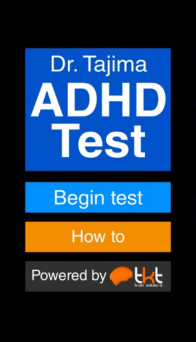
ADHD TEST This mobile application has been developed with the aim of giving a close pre- sumptive diagnosis of ADHD (Tajima, 2020). This test is based on ADHD clinical criteria, this test must be fill up by parents of children suspecting of ADHD, questions are related to child’s behavior in the last 6 months. There are 3 test types, one focusing on hyperactivity, the second one on attention, and the third one, on the combination of inattention and hypera- ctivity (ADHD). Once the test has been completed, the application displays the results, as well as some therapeutical recommendations according to the case (Fig. 1).
FOCUS ADHD This application seeks to measure inattention, hyperactivity, or both levels, through a set of questions about patients’ current behaviors (Hospital de Clínicas de Porto Alegre, 2021). Evaluations are made weekly, and at ran- domly schedules. At the end, the application will show the results obtained, which are able to be compared to those obtained in previous weeks, offering a close presumptive diagnosis (Figure 2). It is important to mention that this app offers the opportunity to link to the account to three people as contri- butors to this patient, for example, a teacher, a friend, a doctor, or any other
Figure 1: Screenshot of the application ADHD test.Figure 2: Screenshots of the mobile application focus ADHD.
person who is able to work hand to hand with this patient, and who will also help in the assessing process, as well as on tasks presented in the app. This application also offers interesting information about ADHD in children, adolescents, and adults, inviting the user to know more about this disorder.
CONCLUSION
The attention-deficit hyperactivity disorder is one of the most common diagnoses made in childhood, it may perpetuate and continue throughout adolescence and adulthood, general symptoms include difficult to pay atten- tion and concentrate, to control behavior and hyperactivity. As it has been mentioned before, this disorder might be presented in three different types, therefore, its early diagnostic will help the prognostic to be favorable and to work on comorbid behaviors related before appearing dysfunctional.
The fact that ADHD is one of the most controversial diagnoses worldwide, makes necessary to implement technology, that is a vital mean in this digital era, as a supportive tool for families with a member that has been diagnosed
Technological Innovations for ADHD Assessment 137
with this disorder. Also, it has been mentioned that therapeutic intervention should be planned thinking in the singularities of each case, because the type, intensity, symptoms, and comorbidities with another disorders will vary, the- refore, a mobile application will offer tools to improve productivity, exercise memory, attention, perceptive reasoning, inhibition, verbal fluency with exe- rcises directed to children and adolescents with ADHD, and can work as a familiar support when the patient is outside psychological or psychiatric office.
Regarding the revision made, it was possible to observe the lack of appli- cations directed to ADHD specifically, in this short list of applications, it was possible to find ADHD Test, and Focus ADHD, these applications assess suspicious symptomatology that are, in fact, related to ADHD diagnostic. There is a broad range of applications to exercise the executive brain, that is one of the most affected by this disorder, although, there is not any mobile application for this population. Thus, as future research lines, the research team proposes to achieve two objectives, the first one, to focus on the deve- lopment of technological applications for the treatment of ADHD, and the second one, to conduct an ecological validation of the application planned to be built, because it will allow us to get a closer look, not just to ADHD symptomatology, but to observe its differences in the Latin American context.
REFERENCES
American Psychiatric Association: DSM-IV. (2013). Manual Diagnóstico y Estadístico de los Trastornos Mentales. Barcelona: Masson. Hospital de Clínicas de Porto Alegre. (2021). PRODAH. Obtenido de FOCUS
TDAH: Avaliable in: https://apps.apple.com/ec/app/tdah-test/id690050861 Ministerio de Sanidad, Servicions Sociales e Igualdad. (2017). Guías de práctica clínica en el SNS. Barcelona: Instituto Aragonés de Ciencias de la Salud (IACS). Rusca-Jordán, F., & Cortez-Vergara, F. (2020). Trastorno por déficit de atención con
hiperactividad (TDAH) en niños y adolescentes, una revisión clínica. Revista de Neuropsiquiatría 83(3), 148–156. Tajima. (2020). TDAH Test de TKT Brain Solutions S.L. . Obtenido de Avaliable in: https://apps.apple.com/ec/app/tdah-test/id690050861 Vélez-Álvarez, C., & Vidarte, J. (2012). Trastorno por déficit de atención e hipera-
ctividad (TDAH) una problemática a abordar en la política pública de primera infancia en Colombia. Journal of Public Health 14(2), 113–128.
LISTED IN THE AHFE DIGITAL BOOKSTORE CATALOGUE
Explore the complete digital volume
Healthcare and Medical Devices
Read this individual research paper free through the original publisher, or explore the full digital proceedings book.
ISBN 978-1-958651-27-8
Explore this ISBN in the AHFE Bookstore ↗Listed in the July 2026 bookstore catalogue; search by ISBN to confirm current availability · Digital book purchase optional