Panha Ken (2022). The Interaction Between Culture and Nature In The Architecture of Eco-Cultural Tourism Development At Koh Kong Province, Cambodia. In: Human Factors in Architecture, Sustainable Urban Planning and Infrastructure. AHFE Open Access, vol. 58, pp. 125–131. https://doi.org/10.54941/ahfe1002342
Along with the tremendous rise of Cambodia's construction sector, Cambodians, particularly those living in cities and rural tourism destinations today, embrace the rising influx of new architectural styles. This aspect has an impact on the value of Khmer architectural and urban aesthetics. Furthermore, the construction of buildings in rural tourist destinations in Cambodia has been considerably influenced by modern architectural features, such as the development of hotels, guesthouses, and resorts. This article's research on the construction of buildings in rural tourism resorts in the Kingdom of Cambodia reveals that the majority of these architectural structures are not motivated to incorporate or showcase Khmer architectural styles. Instead, it emphasizes modern and blended foreign styles that lead to a loss of national identity. Those resorts, on the other hand, do not follow the ideals of sustainable development, causing environmental damage and building structures that are unsuitable for Cambodia's tropical environment.Recognizing that tourism and architecture are inextricably linked and play a significant role in fostering Khmer identity through architectural inspiration in rural tourism as well as tourism promotion. Through field research and literature review, the tourism market in Cambodia will be strengthened as a result of the quick development and continual improvement of the country's tourism industry, while also promoting the effective growth and development of the national economy and allowing other aspects of the country to advance and develop. According to the Ministry of Tourism of the Kingdom of Cambodia's study, "The Planning of Tourism Development 2012 to 2020," which focused particularly on Cambodia's cultural and natural tourism resources. Furthermore, in terms of the Cambodian people's living choices, in recent years, individuals have been engaged in many types of commercial operations, particularly tourism activities, with a good momentum of development. Simultaneously with the continued development and promotion of tourist resorts and hotels, such as those in the Kingdom's sea areas, mountains, and rural regions, other cultural regions will be developed as tourism attractions.Currently, the number of tourists in Cambodia is significantly decreased due to the COVID-19 pandemic. However, with an enthusiastic attitude, the Cambodian government aims to promote the development of local tour destinations for each district through creative tourism services in rural areas with the involvement of various partners including private sectors, foreign investors, and from all levels of the government institutions. Andung Tek commune in the Botum Sakor district is facing various problems such as deforestation and overdevelopment that have become more and more harmful to the environment and local people. The paper seeks to address these problems and come up with potential solutions to solve the problems. Additionally, to answer the problems, the project in this article also established long-term planning methods such as disaster prevention, human resource development, and promoting attractive advantage tourism. As a result, uses a housing model with a unique Khmer housing architectural style include interaction design objectives, and home structure and landscape design to promote sustainable development in the areas and to transform the area into an attractive tourist destination for both locals and foreigners.
According to the Ministry of Tourism of the Kingdom of Cambodia’s study, “The Planning of Tourism Development 2012 to 2020,” which focused par- ticularly on Cambodia’s cultural and natural tourism resources. Cultural tourism has drawn a significant number of local and international visitors to Cambodia in recent years. Additionally, natural tourism has garnered the sup- port from both local and foreigners. The Royal Government of Cambodia, in particular, has strong support and push all levels for the concept of a deve- lopment region that is abundant in natural resources and ecology, in order to build a sustainable tour destination. Additionally, (CTIS, 2014) Apart from the revenue generated by tourism, it also provides huge social benefits, such as promoting and maintaining national identity, increasing awareness of tra- ditions, cultures, and history, and protecting the environment, among others. Cambodia’s tour industry is continuously expanding despite being slow down by the pandemic, both in terms of cultural tourism and ecotourism, which are being preserved and promoted at a comparable rate of growth. This industry
is also playing an essential role in propelling the national economy ahead and social development in the post-pandemic era. Henceforth, the government is setting out the ‘Post-Pandemic Recovery Plan’ to promote social and econo- mic reconstruction with inclusive development in order to boost country and social growth (Xinhua, 2021).
Meanwhile, three primary variables are responsible for identifying and combining all of these advancements. To begin, Cambodia is an advantageous nation with an abundance of natural resources, both culture and eco-tourism, which are not currently utilized and processed to the best of their potential, especially the use of natural resources and environmental-friendly materi- als to design landscapes. Second, Cambodia is a fast-growing country that requires a long-term development vision for every aspect of the national deve- lopment, particularly infrastructure and tourism sectors, which serve as the economic backbones of the country. Additionally, the development of tourist resorts is an important aspect of the design and further development of faci- lities in those development regions. The third is the mental health problem. People, particularly those who live in cities or metropolitan regions, are pro- foundly impacted by emotional problems in everyday life due to fast-pacing and stressful environment.
This research aims to study, preserve, and develop parts of Botum Sakor national park with a new housing architectural style that blends the concept of culture and modern design to set new standards for natural grandeur, wild- life, landscape, and culture via the development of an eco-cultural resort, including environmental preservation and sustainable development in pri- nciple. Additionally, people will appreciate the use of the existing forests for landscape design concepts and know more about ancient Khmer culture and teach others about the vital roles of cultural and environmental preservation.
METHODOLOGY
1). Site Assessment: Koh Kong Province situates in the southwest of the Kin- gdom of Cambodia, bordering Pursat Province to the north, Kampong Speu Province to the east, Kampot Province to the east, and Sihanoukville to the southwest. With a total area of 11,160 square kilometers.
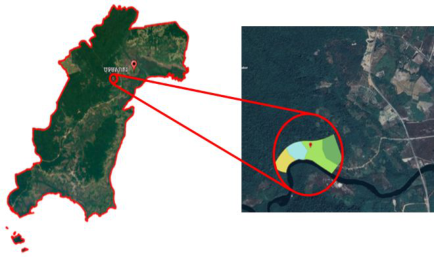
Geographically, Botum Sakor District is one of the most attractive eco- tourism location and home to the Kingdom of Cambodia’s largest national park, Botum Sakor National Park, which is located adjacent to Natio- nal Road 48 between Andong Teuk and Trapeang Rong communes (see Figure 1). This Park spans 183,408 hectares and is bounded on the north by Trapeang Rong commune, on the east by National Road 48, and on the south and west by a vast and long beach, and mangrove forest and home to hundreds of species of animal and birds. Additionally, a labyrinth of new national highways (Thong Sotha, 2020) and airports (Realestate News, 2019) will be completed soon.
However, the current situation of region surrounding the project is facing problems as the following.
A). Deforestation-The economy of this region remains impoverished, and the majority of people in Botum Sakor region are living in poverty facing
The Interaction Between Culture and Nature in the Architecture 127
Figure 1: The Project site location in Botum Sakor District Koh Kong Province Cambodia.
many difficulties due to a lack of knowledge and professional skills neces- sary for survival. (Javier.T, 2018; Veasna, 2018). These are the reasons why the majority of residents find it difficult to pursue professions or other voca- tion trainings other than fishing, deforestation, logging, and wildlife hunting, all of which have big detrimental effects on the natural environment and the people in the future. B). Overdeveloped-Investors’ disregard for natural resource conservation. In recent years, the tourist sector is growing in a rapid rate in different rural regions in the Kingdom and has been hampered by the ineffective uses of natural resources. Overdeveloping on small natural area is the result of a lack of understanding about the value of natural resources on the part of all investors, who never pay attention to conserving those resou- rces on purpose in order to reap the long-term benefits or uses or possibly recirculate them in inefficient ways to develop the sustainability green area. Unfortunately, they choose to severely deforest and expand more space to facilitate development. Landscape design, in fact, is inextricably linked to and dependent on the natural environment.
RESULT AND DISCUSSION
This project development could contribute the resolutions to current situation around the region as follows.
1). Sustainable Planning Procedures:
Enhancing Human Resources-Enhancing human resources is important for the protection of natural resources. By offering vocational training and employment opportunities in tourism sector, it is a feasible approach for sustainable socio-economic development for people’s livelihood and to decrease deforestation process, which has a detrimental effect on the envi- ronment. (Duch Dalin, 2016) Ecotourism is unquestionably the best way to improve the community’s quality of life. Simultaneously, they have the goal of conserving communal woodlands and wildlife.
Enhance and protect the natural environment-Botum Sakor area is fre- quently hit by natural disasters as a result of deforestation, preventing deforestation is insufficient to solve the problem, which necessitates tree
128 Ken
replacement. To fulfill the needs of current situations, the project landscaping design idea is the most appropriate solution for the creation of sustainable green areas by planting more ornamental trees in public spaces and on the premises. The most appealing element to tourists and those who prefer a safe natural environment is the green space that surrounds residences in resorts to enhance the natural beauty of greenery.
Promoting Advantage of National Tourism Attractive-The Cambodian government is supporting the development of rural tourist resorts in order to promote tourism goods, agricultural products, and rural skills, thus increasing local revenue and creating more employment for rural residents. Reduce migration when Cambodia’s tourist industry is severely impacted by the COVID-19 epidemic (Sorn Sarath, 2020). By complying the govern- ment policy on tourism development in the Kingdom, this project would be strongly supported by both local and foreign tourists when the pandemic subsided.
2). The Architectural Design Planning Procedures:
Interaction Design Objective-According to the Royal Government of Cam- bodia’s most recent report, cultural tourism and ecotourism are described as “Green Gold.” Because this industry is critical to the green economy, a sou- rce of jobs, and a driver of national economic development, it contributes about 12% to the production and promotion of local goods in 2016. (Ouk Pisda, 2020) Rural tourism resort development not only creates jobs and rai- ses living standards in rural communities, but also contributes to addressing climate change and migration issues through activities such as environmen- tal protection and conservation, natural resource management, and historical heritage or local culture. The design intention was to create an accommoda- tion area at the foothills of the rural tourist resort. As such, it serves as the focal point of the rural tourism resort, blending Angkor’s architectural aspe- cts with the traditional rural lifestyle and natural environmental resources of the Botum Sakor area to create a more civilized cultural-natural tourism destination.
Home Structure and Environmental Innovation Design-To successfully and sustainably construct homes in this resort, it is vital to rely on two primary components: home structural design and landscape design. This facilitates human interaction with nature and culture.
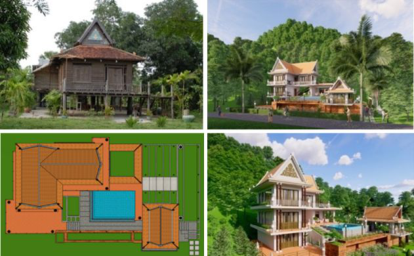
A). Home Structural Design-This residential building’s structure is orien- ted towards leisure and entertainment, which is the primary objective of this design. These constructions are created in a style reminiscent of Khmer dwel- lings and in a tropical style (see Figure 2). Simultaneously, the Angkorian style contributes significantly to the structure’s overall harmony. Each then develops, integrates, and establishes the identity of the Botum Sakor area’s new home. The styles are as follows: Roof Design: Based on the Khmer style of housing. (Courtesy Phumi Khmer, 2014) Khmer houses are built with a high roof and sloping sides to enhance the front elevation and to give the roof of the house the appearance of a temple from a distance. The roof design will feature Angkor carvings
The Interaction Between Culture and Nature in the Architecture 129
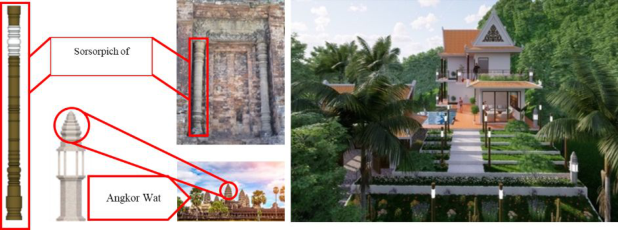
Figure 2: The Innovation of Khmer House located in Botum Sakor natural environment.Figure 3: The Interaction of cultural elements showing on natural landscape design rendering.
were included in the gable roof to emphasize the culture and make it more appealing.
Wall Design: The lodge is designed as an open view, with glass walls and plants to allow ample natural light and easy access to the surrounding scenery. Along with interacting with nature, the designers incorporated elements of Angkorian architectural culture, such as night landscape lamps inspired by the peak of Angkor Wat’s style (see Figure 3).
B). Landscape Design-Natural and cultural factors are critical components of creating a new, meaningful environment. Cultural knowledge is expres- sed through the architecture, gardens, and other ornaments in this landscape design. The building’s roof is designed in the style of Khmer culture, and the dwellings and gardens are constructed of laterite to evoke the civiliza- tion of the Angkorian period. The purpose of the natural resource design is to connect the landscape inside this house to the surrounding nature. For instance, the swimming pool’s design is inspired by the mountains’ natural splendour. Additionally, the landscape design is to make the natural beauty in this location more attractive.
3). Discussion-The article’s analysis of rural tourism development is critical to accomplishing the future objective of expanding the Botum Sakor natural region into a tourist attraction. The research of this resort project will begin with the foothills of the mountain and the construction of a unique Khmer housing architecture design, which will be thoroughly examined and presen- ted through new 3D models that demonstrate the interplay of Khmer people’s
130 Ken
culture and history in order to build a new environment-friendly resort. It is a one-of-a-kind structure in the Kingdom of Cambodia.
Simultaneously, the project housing design aims to demonstrate the public on the value of safeguarding natural and cultural resources in order to foster cultural conservation in the nature through the blending of both ancient and modern Khmer art style. Maintaining the existing forests and planting additional trees, in particular, can significantly minimize the threat of natu- ral disasters. Additionally, the landscape design of the residence reflects the cultural knowledge necessary for establishing a new identity for the neighbo- rhood. For instance, with this housing construction, local residents can gain a better understanding of the Khmer house design, which they can pass on to future generations.
Finally, the development of a resort in the compliance with appropriate technological and architectural standards can help the Botum Sakor area in conserving natural resources and culture, improving local people economy with sustainable and inclusive development, and alleviating national poverty.
CONCLUSION
The paper is about the development of Botum Sakor area to serve as a focal tourist destination with the combination of natural environment, cultural heritage and nation architectural design to reflect Khmer identity and the notion of environmental-friendly design. By designing a unique house in a resort that embedded the spirit of culture and nature, the project also aligns with the government tourism development plans that sought to preserve the nation identity, environment, and economic growth. New landscape design has been introduced to the locals which previously has been neglected by the people, investors and the local government due to the lack of human resources and understanding the value of culture and natural environment benefits. Green development and cultural conservation remain the key pillars for future development of tourism sector and is a window for Cambodia to the international community.
REFERENCES
Courtesy Phumi Khmer. (2014). Khmer Homes. Templenews TV, https://www.templenews.org/2014/11/29/-khmer-homes/ Duch Dalin. (2016). Chambok Community Ecotourism Resort. KHMER TIMES, https://www.khmertimeskh.com/6817/%E2%80%8BE2%80%8B%E2%80% 8B%E2%80%8B-/ Javier. (2018). The flooded forest land in the protected area is being encroached upon
by almost all the rich and powerful. TNAOT, https://www.tnaot.com/km/m/detai l/article/727977 Ministry of Commerce, R. (2014). Cambodia Trade Integration Strategy. Phnom Penh: Cambodia CTIS. Ouk Pisda. (2020). Opening Ceremony of the theme ‘Tourism and Rural Deve-
lopment in Siem Reap. Siemreap Administration, https://siemreap.gov.kh/detail /9614
The Interaction Between Culture and Nature in the Architecture 131
Realestates News. (2019). Airport in Koh Kong Province Nearing Completion for National and International Visitors. https://www.realestate.com.kh/km/news/Ne w-Airport-in-Koh-Kong-will-complete-soon/ Royal Government of Cambodia, R. (2012). Tourism Development Strategic Plan
2012–2020. Ministry of Tourism. Sorn Sarath. (2020). PM: The future of rural tourism and ecotourism. KHMER TIMES, https://www.khmertimeskh.com/50767441/-/ Thong Sotha. (2020). Construction of Samlot-Koh Kong Road to Begin in March.
Khmer Post, https://en.khmerpostasia.com/2020/02/17/construction-of-samlot-k oh-kong-road-to-begin-in-march/ Veasna. (2018). The flooded forest land in the protected area is being encroached upon by almost all of the rich and powerful, taking refuge under the pretext of buying and selling from the people living in the area. KHMER NEWS, https://ww w.khmernews.news/article/archives/120720 World Economic Tourism Council, R. (2017). Travel and Tourism: Economic
Impact2017. Cambodia. Xinhua. (2021). Cambodia draws up plan for post-COVID-19 economic recovery. Asia&Pacific: http://www.xinhuanet.com/english/asiapacific/2021-05/21/c_ 139961217.htm
LISTED IN THE AHFE DIGITAL BOOKSTORE CATALOGUE
Explore the complete digital volume
Human Factors in Architecture, Sustainable Urban Planning and Infrastructure
Read this individual research paper free through the original publisher, or explore the full digital proceedings book.
ISBN 978-1-958651-34-6
Explore this ISBN in the AHFE Bookstore ↗Listed in the July 2026 bookstore catalogue; search by ISBN to confirm current availability · Digital book purchase optional