Character size has a significant impact on the task completion performance of the touch operator, and the long voyage has an impact on the cognition of the operator. Based on the interface display design requirements, this study took characters in the interface as the object to explore the influence of different character display sizes (5, 8, 13, 20.5, 33 pounds) on the operation performance of operators under the background of long voyage. The results show that the click response time of different character sizes has a significant effect on the long voyage background, and the character display of information system needs a larger size in the middle of the long voyage
Character coding is one of the important information coding methods of display visual information display. The ergonomic design of font type, vie- wing distance, and character size has been highly concern by ergonomic research experts. Reasonable visual coding of displayed characters can gre- atly improve the accuracy and speed of information recognition. Madoka OHNISHI et al. studied the effects of brightness contrast and character size on reading speed (Madoka OHNISHI et al., 2020). Chih Yu Hsiao et al. stu- died the effects of Chinese character size, the number of characters per line, and the number of menu items on the visual search task of tablet computer displays at different ages (Chih Yu Hsiao et al., 2019). Yunqian Zhao et al. studied the effects of different character types, sizes, and lighting environ- ments on the legibility of characters in different age groups (Yunqian Zhao et al., 20172016). Qun Wang et al. designed the ergonomic experiment of text coding on the cockpit display interface (Qun Wang et al.,2015). Hsin Chieh Wu et al. studied the optimal sight distance and character size of diffe- rent age groups under electronic screen display (Hsin Chieh Wu et al., 2011). This study uses the self-developed basic experimental test platform of design element coding to carry out the ergonomic experiment of character size with
The Influence of Character Display Size on Personnel Discrimination Performance 145
the reaction time and accuracy as the evaluation indicators. A total of 3 characters and 5 font sizes are set. The subjects are required to complete 7 experiments in turn under the background of the long voyage of the ship, analyze the experimental results, and compare the average reaction time and accuracy of different font sizes by drawing, To study the influence of diffe- rent character display sizes on the operating performance of operators under the background of the long voyage.
EXPERIMENTAL METHOD The ergonomic experiment method was used to explore the influence of diffe- rent character display sizes on the operating performance of operators under the background of the long voyage.
Experimental Design The experiment adopts a 7×3×5 mixed experimental design.The indepen- dent variable 1 (time node) adopts a between-subject design, and the test inte- rval under the background of the long voyage is 12 days, T1-T7 respectively; Independent variable 2 and independent variable 3 adopt a within-subjects design, which is character type and size respectively. There are three types: English, number, and Chinese; there are five sizes: 8 pounds, 12 pounds, 16 pounds, 20 pounds, and 24 pounds. The dependent variables are the click response time and judgment accuracy rate of the corresponding chara- cters selected by the operator, which are automatically collected and obtained through the background data of the experimental program. Control variables include constant light, correct sitting posture and vigilance, and operation with a mouse. To eliminate the error caused by the experimental sequence, the experiment adopts a Latin square design.
Subjects The subjects were 16 men with professional knowledge background, with an average age of 25 years, the average working life of 2 years, no color blindness or color weakness, corrected visual acuity of more than 1.0, and right-handed. All subjects signed the informed consent of the experiment and carried out the test after passing the training.
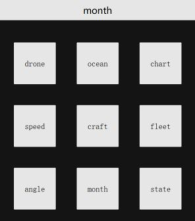
Experimental Device The experiment was carried out on the basic experimental test platform of design element coding. The experimental program was programmed by QT language and can be run under a Windows system. The regional resolution of the experimental interface is 1600 × 1200, size 29.65 × 44.50cm. The subjects respond to the target with the mouse, and the system automatically records the accuracy rate and reaction time of the response. The experimental interface is shown in the figure below. The display content is divided into three groups, which display English, numbers, and Chinese respectively (see Figure 1).
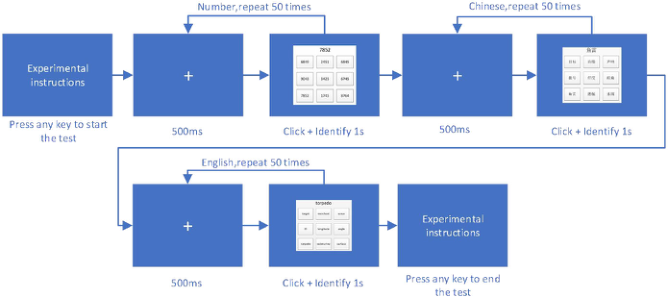
Figure 1: Three forms of experimental interface.Figure 2: Experimental steps.
Experimental Steps The experimental steps are shown in the figure below. After browsing the experimental instructions, the subjects press any key to start the practice. After the practice, they press any key to start the formal experiment. When the screen presents an experimental picture, the subjects quickly browse the entire interface according to the characters displayed at the top of the screen, search for the corresponding characters in the picture, and use the mouse to make a click response. The program automatically records the reaction time and accuracy rate of the subjects’ identification of experimental targets. To eliminate the interference of the practice effect, the picture is presented randomly. There are 3×5×10=150 pictures in the experiment, and it takes about 5-8 minutes for each subject to complete the experiment (see Figure 2).
EXPERIMENTAL RESULTS AND ANALYSIS The experimental data were processed by Minitab statistical analysis softw- are, and the reaction time and accuracy rate measured by the experiment were analyzed by statistics. Eliminate the abnormal data caused by the existence of random interference in the test environment and the unstable influence of the physiological and psychological state of the subjects during the experiment, and obtain the reaction time and accuracy under different character display sizes under the background of the long voyage (see Table 1 and Table 2).
The Influence of Character Display Size on Personnel Discrimination Performance 147
Table 1. Reaction time under different character display sizes (ms).
The analysis of the variance of three character types: English, Numbers, and Chinese shows that in terms of response time, at the significance level of 0.05, the main effect of the time node is significant, and the main effect of character size is also significant. In terms of accuracy, at the 0.05 significance level, the main effect of time nodes is not significant, and the main effect of character size is significant. In terms of reaction time, the main effect of the recognition of the three character types, whether in terms of time nodes or character size, is more significant than the main effect analyzed from the
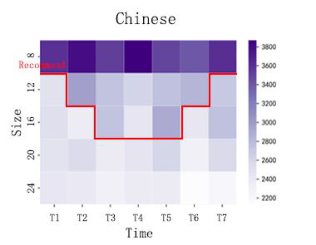
Figure 3: The impact of different character display sizes on the operating performance of operators in the long voyage.
perspective of accuracy. Therefore, it can be said that the reaction time is more suitable as an evaluation index to study the impact of different character display sizes on the operating performance of operators in the long voyage.
CONCLUSION
Based on the display interface of the ship information system, this experiment extracts the character type and size code as the research elements, and draws the following conclusions: when the character size is less than 12 pounds, the operation performance of operators will be significantly reduced; When the character size is 8 pounds, the operating performance of operators is significantly lower than that of 12 pounds, 16 pounds, 20 pounds, and 24 pounds. There is no significant difference in the operating performance of operators under 12 pounds, 16 pounds, and 20 pounds, but a larger character size is required to ensure that the performance does not decline significantly in the middle of the voyage (see Figure 3).
Therefore, it is suggested that the character size of the display interface of the ship information system should not be less than 12 pounds. Under the background of the long voyage, larger character sizes can be considered, and English and Chinese characters need a larger size than numbers. This study reveals the changes in operators’ operational performance under different character display sizes in the background of the long voyage and provides a basis for the design of character size coding of the display interface of the ship information system.
The Influence of Character Display Size on Personnel Discrimination Performance 149
REFERENCES
Hsiao C Y, Wang M J, Liu Y J, et al. (2019),”Effects of Chinese character size, number of characters per line, and number of menu items on visual search task on tablet computer displays for different age groups.” International Journal of Industrial Ergonomics, 72: 61–70. Ohnishi M, Otsukuni T, Takahashi A, et al. (2020),”Effects of luminance contrast
and character size on reading speed.” Vision Research, 166: 52–59. WANG Q, XIE F, WEI Z, et al. (2015),”Ergonomics Research on Encoding of the Cab’s Display Interface.” Vehicle & Power Technology, (01): 27–30+59. Wu H C.(2011),”Electronic paper display preferred viewing distance and character
size for different age groups.” Ergonomics, 54(9): 806–814. Zhao Y, Ding L, Ran L, et al. (2017),”The effect of font type on character legibility for different age groups.” International Conference on Applied Human Factors and Ergonomics. Springer, Cham, 199–210. Zhao Y, Ding L, Li Y, et al. (2016),”The effect of font size, age and lighting environ-
ment on Chinese character legibility.” 9th International Congress on Image and Signal Processing, BioMedical Engineering and Informatics (CISP-BMEI). IEEE, 1665–1669.
Read this individual research paper free through the original publisher, or explore the full digital proceedings book.
ISBN 978-1-958651-44-5
Explore this ISBN in the AHFE Bookstore ↗Listed in the July 2026 bookstore catalogue; search by ISBN to confirm current availability · Digital book purchase optional