The recent upsurge in research activities into artificial neural networks (ANNs) has proven that neural networks have powerful pattern classification and prediction capabilities. ANNs have been successfully used for a variety of tasks in many fields of business, industry, and science. researchers and practitioners. Interest in neural networks is evident from the growth in the number of papers published in journals of diverse scientific disciplines. A search of several major databases can easily result in hundreds or even thousands of “neural networks” articles published in one year.One of the major application areas of ANNs is forecasting. There is an increasing interest in forecasting using ANNs in recent years. Forecasting has a long history, and the importance of this old subject is reflected by the diversity of its applications in different disciplines ranging from business to engineering. The ability to accurately predict the future is fundamental to many decision processes in planning, scheduling, purchasing, strategy formulation, policymaking, and supply chain operations. As such, forecasting is an area where a lot of effort has been invested in the past. Yet, it is still an important and active field of human activity at present and will continue to be in the future. Forecasting has been dominated by linear methods for many decades. Linear methods are easy to develop and implement and they are also relatively simple to understand and interpret. However, linear models have serious limitations in that they are not able to capture any nonlinear relationships in the data. The approximation of linear models to complicated nonlinear relationships is not always satisfactory. In the early 1980s, Makridakis (1982) organized a large-scale forecasting competition (often called M-competition) where a majority of commonly used linear methods were tested with more than 1,000 real-time series. The mixed results show that no single linear model is globally the best, which may be interpreted as the failure of linear modeling in accounting for a varying degree of nonlinearity that is common in real-world problems.ANNs provide a promising alternative tool for forecasters. The inherently nonlinear structure of neural networks is particularly useful for capturing the complex underlying relationship in many real-world problems. Neural networks are perhaps more versatile methods for forecasting applications in that not only can they find nonlinear structures in a problem, they can also model linear processes. For example, the capability of neural networks in modeling linear time series has been studied and confirmed by several researchers.Research efforts on neural networks as forecasting models are considerable and applications of ANNs for forecasting have been reported in many studies. Although some theoretical and empirical issues remain unsolved, the field of neural network forecasting has surely made significant progress during the last decade. It will not be surprising to see even greater advancement and success in the next decade.The purpose of this paper is to use recurrent neural networks to curve the fitting of France electricity exports annually. It is recommended that further research be undertaken in the following areas Intelligent forecasting methods are being used as an alternative to traditional forecasting methods.
The objective of supervised learning is to predict something from data. A trai- ning set of output (target) and some input variables is fed to an algorithm that learns to predict the target values. The output may be categorical. The task of the algorithm is to deliver high-quality predictions, all by itself, extracting the required knowledge solely from the available data. Neural networks are a popular framework for supervised learning a network-like system of wei- ghted summations and differentiable functions that can learn astoundingly complex things. Usually, variants of gradient descent together with backpro- pagate are used to find the optimal values of the network weights. This is all simple and intuitive, yet the resulting networks are usually difficult for people to understand. There are so many weights and connections that we just wonder how the system produced the results. We don’t understand neu- ral networks, but we like them. The reason for their ever-high popularity is simple: they are good. They can learn arbitrarily complex functions, and they often provide excellent predictions for difficult machine learning pro- blems. NNs are widely used in machine learning, time series prediction is just one example application. In 1974 and 1988 made pioneering work in
the field of neural networks by developing a general formulation of backpro- pagation. applied the method to forecasting and compared it to traditional forecasting methods. In 1991 also made a neural network vs. Box Jenkins comparison and found that NNs outperform the Box-Jenkins model for series with a short memory. For series with a long memory, both methods produ- ced similar results. In 1998 compared neural networks with Box-Jenkins and Holt-Winter’s methods for forecasting and found that the design of netw- ork architecture and the choice of input variables require great care, and so applying neural networks in black-box mode is not a good idea. They also found that increasing the number of hidden nodes may deteriorate out- of-sample performance. in 2005 Zhang and Qi found that neural networks are not able to capture seasonality by default, and depersonalization and detrending can help their forecasting performance. In 2000, differencing is unnecessary for neural network-based forecasting, but a log transformation may be beneficial. in 2017 provides a more recent review of the applications of deep learning to time series. This paper’s purpose is to build the best fit curve for our France electricity export chain using recurrent neural networks. The structure of the paper is divided into three main parts: the introduction, the theoretical and practical part, as well as the conclusions.
METHODS
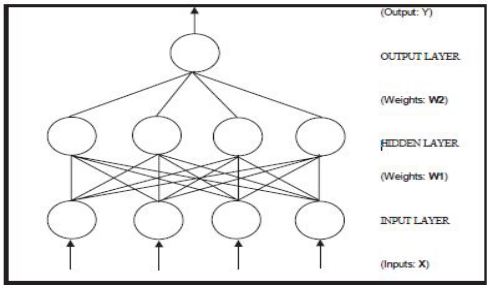
Artificial Neural Network Artificial neural networks (ANNs) are computing models for information processing and pattern identification. They grow out of research interest in modeling biological neural systems, especially human brains. An ANN is a network of many simple computing units called neurons or cells, which are highly interconnected and organized in layers. Each neuron performs the simple task of information processing by converting received inputs into pro- cessed outputs. Through the linking arcs among these neurons, knowledge can be generated and stored regarding the strength of the relationship betw- een different nodes. Although the ANN models used in all applications are much simpler than actual neural systems, they can perform a variety of tasks and achieve remarkable results. Over the last several decades, many types of ANN models have been developed, each aimed at solving different pro- blems. But by far the most widely and successfully used for forecasting has been the feedforward type neural network (Anbalagan et al., 2020; Ashour et al., 2018; Ashour & Abbas, 2018a, 2018b; Jamal et al., 2021; Minu et al., 2010). Figure 1 shows the architecture of a three-layer feedforward neural network that consists of neurons (circles) organized in three layers: input layer, hidden layer, and output layer. The neurons in the input nodes corre- spond to the independent or predictor variables (x) that are believed to be useful for forecasting the dependent variable (y) which corresponds to the output neuron. Neurons in the hidden layer are connected to both input and output neurons and are key to learning the pattern in the data and mapping the relationship from input variables to the output variable. With nonlinear transfer functions, hidden neurons can process complex information recei- ved from input neurons and then send processed information to the output
Curve Fitting Optimization for French Electricity Exports Using Recurrent Neural Networks 229
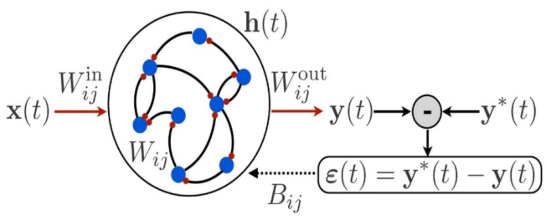
Figure 1: ANN structure.Figure 2: RNN methodology.
layer for further processing to generate forecasts. In feedforward ANNs, the information flow is directional from the input layer to the hidden layer and then to the output layer without any feedback from the output layer (Ahmed et al., 2020; Ashour, 2022; Ashour & Alashari, 2022; Jamal et al., 2021; Minu et al., 2010).
Recurrent Neural Networks For sequence prediction problems, RNNs are the most commonly used NN architecture. They have grown in popularity, particularly in the field of natural language processing. Unlike ANNs, however, the feedback loops of recurrent cells address the temporal order as well as the temporal depende- ncies of the sequences. Every RNN is made up of several RNN units. The Elman RNN (ERNN) cell, the long short-term memory (LSTM) cell, and the gated recurrent unit (GRU) cell are the most commonly used RNN units for sequence modeling tasks. Figure 2 illustrates the structure of the recurrent neural network (Abbas et al., 2020; Abdul et al., 2020; Ashour et al., 2018; Ashour & Al-Dahhan, 2021; Derbentsev et al., 2019).
Evaluation The following criterion is used to evaluate the efficiency of the time series (Ahmed et al., 2020; Ashour, 2022; Ashour et al., 2022; Ashour & Alashari, 2022; Ashour & Al-Dahhan, 2020; Helmi et al., 2018).
230 Ashour and Aldahhan
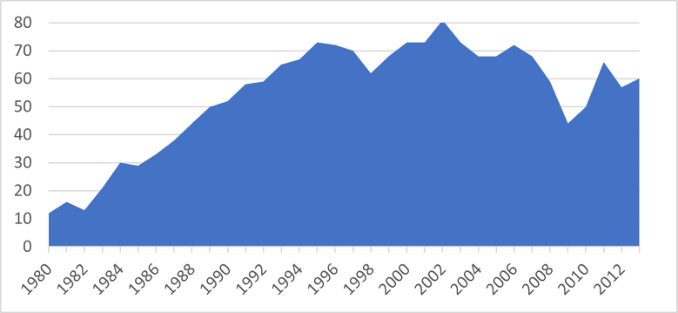
Figure 3: France’s electricity exports by year.
Root mean squared error (RMSE) 2 sP (yt −byt)2
RMSE =
n (1)
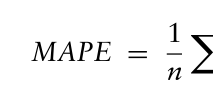
Mean absolute percentage error
X yt −byt
(2)
Equation reproduced from the original PDF.
RESULTS AND DISCUSSION
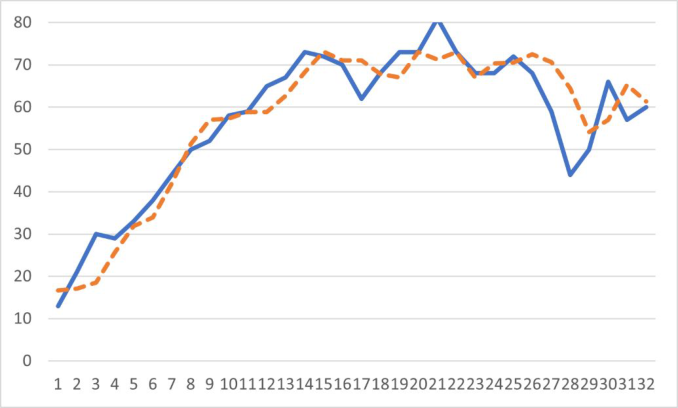
This paper collected 34 years of data consisting of France’s electricity export from 1980to 2012 (source: united states energy information). These data are displayed in Figure 3.
Based on the findings of researchers, we assume that short-term trends exist in our foreign exchange series and that we may use various approaches, not necessarily statistical techniques, to model the short-term trend move- ment of the foreign exchange rates and make predictions. A promising option is the neural network forecasting model.
The ANN structure for this time series is as follows: The variable represents the number of nodes in the input layer, which is one (yt-1). Because the number of time series observed is minimal, the ideal number of nodes in this layer for the first time series is ten. The second time series would have 25 nodes since the amount of time series observed is suitable. The output layer has one node, which is represented by the vector (yt). For the implementation, the MATLAB high-level programming language was employed. Table 1 shows the quality performers ENN for the time series under consideration.
The results of this study indicate that the Significance and efficiency of error accuracy results, Figure 4 illustrates the curve fitting of the time series.
Curve Fitting Optimization for French Electricity Exports Using Recurrent Neural Networks 231
Table 1. Time series evaluation.
Table available in the original PDF paper.
RMSE MAPE
6.29 9.65
Figure 4: Curve fitting of France’s electricity export.
CONCLUSION
In this research, we introduced a method for forecasting time series using recurrent neural networks. RNN has the benefit of requiring minimum pre- processing of the series data and no assumptions about the model underlying the data. In the lack of a strong general nonlinear theory to indicate which strategy is superior in which case, this study relies on experiments and heuristics to guide the methodology, construction, and size of the neural netw- orks. The performance of RNN prediction increased dramatically when each model was utilized independently. Furthermore, the model is likely to be effe- ctive in practical applications since it is simple to implement, and the work required to test a large number of prediction models to select the “best” may be decreased.
REFERENCES
Abbas, R. A., Jamal, A., Ashour, M. A. H., & Fong, S. L. (2020). Curve fitting predication with artificial neural networks: A comparative analysis. Periodicals of Engineering and Natural Sciences, 8(1), 125–132. Abdul, M., Ashour, H., Al-dahhan, I. A. H., & Hassan, A. K. (2020). Forecasting by
Using the Optimal Time Series Method (Vol. 2). Springer International Publishing. https://doi.org/10.1007/978-3-030-44267-5
232 Ashour and Aldahhan
Ahmed, A. A. A., Hameed, M. A., Ashour, & Al-Dahhan, I. A. H. (2020). Using modified earned value for cost control in construction projects. Periodicals of Engineering and Natural Sciences, 8(1), 156–168. https://doi.org/10.21533/PEN. V8I1.1103.G499 Anbalagan, N., Abbas Helmi, R. A., Hameed Ashour, M. A., & Jamal, A. (2020).
Trusted Application Using Biometrics for Android Environment. 2020 16th IEEE International Colloquium on Signal Processing Its Applications (CSPA), 7–12. https://doi.org/10.1109/CSPA48992.2020.9068715 Ashour, M. A. H. (2022). Optimized Artificial Neural network models to time series.
Baghdad Science Journal, 19(4), 899–904. https://doi.org/10.21123/bsj.2022.19. 4.0899 Ashour, M. A. H., & Abbas, R. A. (2018a). Improving time series’ forecast errors by using recurrent neural networks. Proceedings of the 2018 7th International Conference on Software and Computer Applications, 229–232. Ashour, M. A. H., Ahmed, A. A., & Al-dahhan, I. A. H. (2022). Minimizing
Costs of Transportation Problems Using the Genetic Algorithm. Proceedings of Sixth International Congress on Information and Communication Technology, 165–173. Ashour, M. A. H., & Alashari, O. M. N. (2022). Electricity Consumption Forecasting in Iraq with Artificial Neural Network. In T. Ahram & R. Taiar (Eds.), Human Interaction, Emerging Technologies and Future Systems V (pp. 922–927). Springer International Publishing. Ashour, M. A. H., & Al-Dahhan, I. A. H. (2020). Turkish lira Exchange rate fore-
casting using time series models. International E-Journal of Advances in Social Sciences, 6(16), 294–300. Ashour, M. A. H., & Al-Dahhan, I. A. H. (2021). Optimal Prediction Using Artificial Intelligence Application. In T. Ahram, R. Taiar, & F. Groff (Eds.), Human Intera- ction, Emerging Technologies and Future Applications IV (pp. 76–83). Springer International Publishing. Ashour, M. A. H., Jamal, A., & Helmi, R. A. A. (2018). Effectiveness of artificial neu-
ral networks in solving financial time series. International Journal of Engineering and Technology(UAE), 7(4), 99–105. https://doi.org/10.14419/ijet.v7i4.11.20783 Derbentsev, V., Datsenko, N., Stepanenko, O., & Bezkorovainyi, V. (2019). Forecasting cryptocurrency prices time series using machine learning. CEUR Workshop Proceedings, 2422, 320–334. Helmi, R. A. A., Jamal, A., & Ashour, M. A. H. (2018). Identifying high impact disa-
ster triggers on computer networks in Asia Pacific region. International Journal of Engineering and Technology(UAE), 7(4), 95–98. https://doi.org/10.14419/ijet .v7i4.11.20782 Jamal, A., Hameed Ashour, M. A., Abbas Helmi, R. A., & Fong, S. L. (2021). A Wavelet-Neural Networks Model for Time Series. 2021 IEEE 11th IEEE Sym- posium on Computer Applications Industrial Electronics (ISCAIE), 325–330. https://doi.org/10.1109/ISCAIE51753.2021.9431777 Minu, K. K., Lineesh, M. C., & Jessy John, C. (2010). Wavelet neural netw-
orks for nonlinear time series analysis. Applied Mathematical Sciences, 4(49–52), 2485–2495.
Read this individual research paper free through the original publisher, or explore the full digital proceedings book.
ISBN 978-1-958651-44-5
Explore this ISBN in the AHFE Bookstore ↗Listed in the July 2026 bookstore catalogue; search by ISBN to confirm current availability · Digital book purchase optional