Oliver Christ, Andreas Papageorgiou, Pascal Meier, Andreas Urech, Andreas Boroch, Melissa Huang, Christian Eichhorn (2022). Immersive virtual spacewalking in stakeholder workshops:the effect of immersive, BIM-driven design and interaction tools on human sense of presence. In: Human Interaction & Emerging Technologies (IHIET 2022): Artificial Intelligence & Future Applications. AHFE Open Access, vol. 68, pp. 276–282. https://doi.org/10.54941/ahfe1002743
IntroductionOver the last decade, the use of Building Information Modelling (BIM) has become increasingly wide-spread to manage the growing complexity of construction projects. As a result, project managers are facing new challenges in managing stakeholders in BIM projects, as the BIM concept is still relatively new to many of the stakeholders (Leśniak, Górka & Skrzypczak, 2021). The introduction of BIM has brought new and complex activities into the already complex process of project management, resulting in a radical change in the working practices of project managers and in the working practices of the project stakeholders (Li et al., 2021). Besides the purely technical advantages of better(?) planning and manipulating data, plans, etc. used to get the best possible visualization of the future, human factors are at least as, if not more, important when looking into the future. Immersive virtual reality (VR) can transform virtual plans into a walkable world, so that different stakeholders (architect, builder, tenant, etc.) can walk through the same flat without the need for specialist expertise in understanding building plans (Schiavi et al. 2022). This same mental picture of the e. g. apartment can now have an impact on decision-making processes and shorten the time to final judgement. At the same time, different aspects of interior design can be explored (size effect, furnishing, etc.). In our mixed methods study, we wanted to know which interaction mechanisms play an important role in the immersive virtual world and whether the sense of presence (illusion of place) is changed by the virtual design of rooms. MethodsIn three workshops, planned BIM data of two different types of apartments were put into a virtual environment (UNITY3D). We optimized the virtual apartments for an immersive virtual reality walkthrough and developed interactive tools for exploring the virtual apartments. In the first workshop (W1) we aimed to assess and demonstrate the sense of space of the planned apartment. In the second workshop (W2) we focussed on the texturing and in the third workshop we demonstrate the kitchen & wet room variants. Form W1 to W3 the visual details and naturalistic implementation of the virtual apartment were gradually enhanced. The participants were tenants, building owners, architects, and employees from the local building office. Their experience in virtual reality varied from none to a lot of experience. There were different tasks and goals for each workshop. Beside discussions, there was at least one VR-experience session per workshop, where participants would experience the virtual room in groups of two, with tasks specific to the session. This was done with three HTC VIVE pro headsets (one per group) with one per-son experiencing in the virtual world and the other spectating the first-person view from on a 75” screen. After some time, they swapped medium and the person who was in the virtual world now watched from outside. We recorded the following data during the workshop: technical affinity with TA-EG (Karrer, Glaser, Clemens & Bruder, 2009), usability with UEQ-S (Schrepp, Hinderks, Thomaschewski, 2017) and sense of presence with PLBMR (Frank & Kluge, 2014). Additionally, the participants were interviewed several weeks after the workshops with half structured interviews: Over all workshops a dataset of N=13 participants could be archived and evaluated. Descriptive and non-parametric statistics were calculated with SPSS 21. The coding of the interviews was done with MAXQDA.ResultsWe found a heterogeneous group in the scales for technical affinity. Regarding the importance of the tools we found that not all tools were remembered in the interviews. The overall usability rating was good and the most important finding was a significant less sense of presence (PLBMR) in workshop 2 (p > .05, cohens d`=.21).DiscussionThe introduction of BIM resulted in a radical change in the working practices of project managers and in the working practices of the project stakeholders (Li et al., 2021). This change should be carried out in a way that most stakeholders should feel comfortable with. As we saw in the data, the usability ratings were good, but some interviews showed that a reduction in complexity may be a further improvement, since not every feature was remembered or needed in the virtual room (Schiavi et al. 2022). The decrease in sense of presence in the second workshop show a possible connection with the uncanny valley phenomenon. Also, the limitation of the study is discussed and an outlook of possible further research is suggested.
Over the last decade, the use of Building Information Modelling (BIM) has become increasingly widespread to manage the growing complexity of con- struction projects. As a result, project managers are facing new challenges in managing stakeholders in BIM projects, as the BIM concept is still relatively new to many of the stakeholders (Le´sniak et al., 2021). The introduction of BIM has brought new and complex activities into the already complex process of project management, resulting in a radical change in the working practices of project managers and in the working practices of the project sta- keholders (Li et al., 2021). Besides the purely technical advantages of better planning and manipulating data, plans, etc. used to get the best possible visu- alization of the future, human factors are at least as, if not more, important when looking into the future. Immersive virtual reality (VR) can transform
Immersive Virtual Spacewalking in Stakeholder Workshops 277
virtual plans into a walkable world, so that different stakeholders (archi- tect, builder, tenant, etc.) can walk through the same flat without the need for specialist expertise in understanding building plans (Schiavi et al., 2022). This same mental picture of the e. g. apartment can now have an impact on decision-making processes and shorten the time to final judgement. At the same time, different aspects of interior design can be explored (size effect, furnishing, etc.).
What evidence is there that VR in BIM can be useful for the stakeholder process? Dinis et al. (2021) succeeded in improving project communication for stakeholders through a new workflow that combined laser scanning and virtual reality in the context of building information modeling (BIM) and provided an alternative approach for defining expected requirements, quali- ties, and specifications. Building on this, Ventura et al. (2018) were able to show that the creation of a process map depicting all the necessary phases and activities to be considered for the effective implementation of immersive VR to assess design intent with clients and end users was possible. The study by Abbas et al. (2000) revealed otherwise. Thereby, no significant improvement could be observed in the quality of discussion, richness of communication, and openness in the process with VR compared to face-to-face communica- tion. In addition, face-to-face communication achieved slightly better values, which in turn means that immersive reality must be improved in order to bet- ter represent realistic interactions. In this case, the used interaction methods and VR induced presence (illusion of the state or fact of being present, as with others or in a place) seems to play an important role as it has been previously described (e.g., for social presence research see Greenwald et. al., 2017). In our mixed methods field study, we wanted to know which interaction mech- anisms play an important role in the immersive virtual world and whether the sense of presence (illusion of place) is changed by the virtual design of rooms.
METHODS
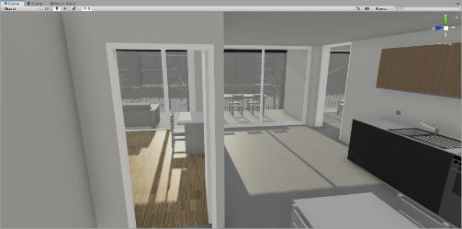
In three workshops, planned BIM data of two different types of apar- tments were put into a virtual environment (UNITY3D). We optimized the virtual apartments for an immersive virtual reality walkthrough and deve- loped interactive tools for exploring the virtual apartments. In the first workshop (W1) we aimed to assess and demonstrate the sense of space of the planned apartment. In the second workshop (W2) we focused on the texturing (W2) and in the third workshop (W3) we demonstrate the kitchen & wet room variants. Form W1 to W3 the visual details and natu- ralistic implementation of the virtual apartment were gradually enhanced (see Figure 1).
The participants were tenants, building owners, architects, and emplo- yees from the local building office. Their experience in virtual reality varied from none to a lot of experience. There were different tasks and goals for each workshop. Beside discussions, there was at least one VR- experience session per workshop, where participants would experience the virtual room in groups of two, with tasks specific to the session. A virtual
Figure 1: From top (W1) to bottom (W3) the visual details and naturalistic implemen- tation of the virtual apartment were gradually enhanced.Figure 2: Interaction options from top left to bottom right: Close door, Open door, Teleport, Change texturing, Measure size/length, Take photo, Swap furniture, Move furniture, Change floor; Change sun position, Mini map.
Figure available in the original PDF paper.
tablet allowed participants to interact in various ways in virtual space and a mini map simultaneously enabled orientation in the virtual apartment (see Figure 2).
Immersive Virtual Spacewalking in Stakeholder Workshops 279
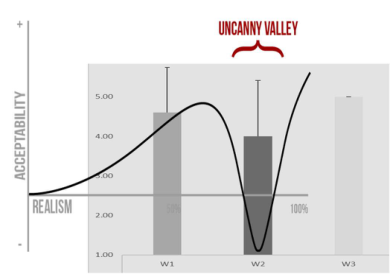
Figure 3: The mean values of several subscales of the PLBMR were reduced in the second workshop.
This was done with three HTC VIVE pro headsets (one per group) with one person experiencing in the virtual world and the other spectating the first- person view from on a 75” screen. After some time, they swapped medium and the person who was in the virtual world now watched from outside. We recorded the following data during the workshop: technical affinity with TA-EG (Karrer et al., 2009), usability with UEQ-S (Schrepp et al., 2017) and sense of presence with PLBMR (Frank & Kluge, 2014). Additionally, the participants were interviewed several weeks after the workshops with half structured interviews: Over all workshops a dataset of N = 13 participants could be archived and evaluated. Descriptive and non-parametric statistics were calculated with SPSS 21. The coding of the interviews was done with MAXQDA.
RESULTS
Quantitative Data Analysis We found a heterogeneous group in the scales for technical affinity. Regarding the importance of the tools, we found that not all tools were remembered in the interviews. The teleport function was retrospectively remembered most often, followed by changing/moving furniture, changing the floor and textu- res, and the mini map. The overall usability rating in the UEQ-S was good and the most important finding was a significant less sense of presence (PLBMR) in workshop 2 with p > .05, cohens‘ d=.21 (see figure 3) which led us to the assumption of a possible uncanny valley effect (see discussion).
Qualitative Data Analysis In the retrospective view of the participants qualitative data from the intervi- ews, showed positive and negative aspects of immersive virtual reality as a supplemental tool:
Regarding the positive aspects, object can be viewed differently and in greater depth, from which a rethinking and a basis for discussion can arise.
Original comment: “This discussion, I mean we then came to this story via details, e.g., of the facility, and whether we would have discussed these
details of the facility based purely on the plans in this way I don’t know. And above all, that it was then also just very transparent for both of them, that is, visible.”
Also, people from outside the field can be more easily involved in decision- making processes. Original comment: “It is of course very advantageous that you can experience the dimensions before the start of construction and can also communicate with them, i.e., just now for our participation process, that we could take people with us, I found that very, very positive and helpful, because of course the people can then also transport their experiences in their environment.”
Regarding the negative aspects, some people noticed that body or other reference points for size estimation were missing/ lighting conditions, textures and colors not realistic enough. Original comment: “What gives you the scale a little bit is the eye level where you have in the model. That shows you something like I’m this tall. But you don’t have any other... You can’t see your own body in the room, for example. That would perhaps be another step, that one, that one perhaps moves a kind of an avatar in there. (...) Or I think it’s very important to be able to judge a room, you have to be able to estimate the size of the room. You can do that through the textures, through the details, where you know how big a window handle is. (...) Or right now if you know about furnishings, if you know: Ah this is the size of a chair, then the room is so and so big.” Also, the discussion did not take place at the same time as viewing. Original comment: “And it was extremely difficult to have such a discourse afterwards, because in virtual reality everyone was alone, actually. But you would discuss as a group. But if you discussed it afterwards, so you sat down at the table afterwards and would discuss.”
The biggest advantage that the workshop organizers identified was redu- ction in the time it takes to submit a building application. Original comment: “If we had not used VR, we would still be arguing for 2 years. ()”.
DISCUSSION
The introduction of BIM resulted in a radical change in the working practices of project managers and in the working practices of the project stakeholders (Li et al., 2021). This change should be carried out in a way that most sta- keholders should feel comfortable with. As we saw in the data, the usability ratings were good, but some interviews showed that a reduction in comple- xity may be a further improvement, since not every feature was remembered or needed in the virtual room (Schiavi et al., 2022). The decrease in sense of presence in the second workshop show a possible connection with the uncanny valley phenomenon. In other research areas e.g. robotics, the term “uncanny valley” demonstrates the phenomenon that, after a certain point, as a robot’s human likeness increases, familiarity with and empathy tow- ard the robot decreases, unless human likeness is at a very high level (Mori, 1970). In interaction design this effect was demonstrated before in different case studies by McMahan et al. (2016). As we cannot describe any causali- ties in this field study, we are only able to describe this phenomenon, which could be important when validated in controlled experiments. If this effect
Immersive Virtual Spacewalking in Stakeholder Workshops 281
is validated, then it can be that the own presence feeling is changed by the visualization, which was conditioned by the topic of the workshop. Whether this then has an influence on the assessment, communication, etc. of the par- ticipants can only be clarified by further studies. Beside this missing causality in this filed study as a main limitation of the study we could show the advan- tage of VR as tool for creating a collective mindset for what is being planned. Even though VR has not yet reached the best maturity level, we are optimi- stic that future technological developments will address the user’s problems to further improve the experience in the stakeholder management process in the construction project.
ACKNOWLEDGMENT
The authors would like to thank Daniel Hofer for his tireless support, orga- nization and commitment, without which the project would not have been possible. We also would like to thank the Basel Chamber of Commerce for its financial support as part of the “be digital” initiative.
REFERENCES
Abbas, A., Choi, M., Seo, J., Cha, S.H., Li, H., 2019. Effectiveness of Immersive Virtual Reality-based Communication for Construction Projects. KSCE J Civ Eng 23, 4972–4983. https://doi.org/10.1007/s12205-019-0898-0. Dinis, F.M., Sanhudo, L., Martins, J.P., Ramos, N.M.M., 2020. Improving pro-
ject communication in the architecture, engineering and construction industry: Coupling virtual reality and laser scanning. Journal of Building Engineering 30, 101287. https://doi.org/10.1016/j.jobe.2020.101287. Frank, B., 2015. Presence messen in laborbasierter Forschung mit Mikrowelten: Entwicklung und erste Validierung eines Fragebogens zur Messung von Presence. Springer Fachmedien, Wiesbaden. https://doi.org/10.1007/978-3-658-08148-5. Greenwald, S.W., Wang, Z., Funk, M., Maes, P., 2017. Investigating Social Prese-
nce and Communication with Embodied Avatars in Room-Scale Virtual Reality, in: Beck, D., Allison, C., Morgado, L., Pirker, J., Khosmood, F., Richter, J., Gütl, C. (Eds.), Immersive Learning Research Network, Communications in Compu- ter and Information Science. Springer International Publishing, Cham, pp. 75–90. https://doi.org/10.1007/978-3-319-60633-0_7. Le´sniak, A., Górka, M., Skrzypczak, I., 2021. Barriers to BIM Implementation in Architecture, Construction, and Engineering Projects—The Polish Study. Energies 14, 2090. https://doi.org/10.3390/en14082090. Li, C.Z., Xue, F., Li, X., Hong, J., Shen, G.Q., 2018. An Internet of Things-enabled
BIM platform for on-site assembly services in prefabricated construction. Automa- tion in Construction 89, 146–161. https://doi.org/10.1016/j.autcon.2018.01.001. Mastrolembo Ventura, S., Castronovo, F., Ciribini, A.L.C., 2020. A design review session protocol for the implementation of immersive virtual reality in usability- focused analysis. ITcon 25, 233–253. https://doi.org/10.36680/j.itcon.2020.014. McMahan, R.P., Lai, C., Pal, S.K., 2016. Interaction Fidelity: The Uncanny Valley of
Virtual Reality Interactions, in: Lackey, S., Shumaker, R. (Eds.), Virtual, Augmen- ted and Mixed Reality, Lecture Notes in Computer Science. Springer International Publishing, Cham, pp. 59–70. https://doi.org/10.1007/978-3-319-39907-2_6. MORI, M., 1970. Bukimi no tani [the uncanny valley]. Energy 7, 33–35.
Schiavi, B., Havard, V., Beddiar, K., Baudry, D., 2022. BIM data flow architecture with AR/VR technologies: Use cases in architecture, engineering and construction. Automation in Construction 134, 104054. https://doi.org/10.1016/j.autcon.2021.104054. Schrepp, M., Hinderks, A., Thomaschewski, J., 2017. Design and Evaluation of a Short Version of the User Experience Questionnaire (UEQ-S). IJIMAI 4, 103. https://doi.org/10.9781/ijimai.2017.09.001. Technikaffinität erfassen – der Fragebogen TA-EG. In Lichtenstein A, Stößel C,
Clemens C, Hrsg. Der Mensch im Mittelpunkt technischer Systeme. 8. Berliner Werkstatt Mensch-Maschine-Systeme, 2009. VDI Verlag GmbH, Düsseldorf. Ventura, S.M., Castronovo, F., 2018. An agenda for implementing semi-immersive virtual reality in design meetings involving clients and end-users: 12th European Conference on Product and Process Modelling, ECPPM 2018. eWork and eBu- siness in Architecture, Engineering and Construction - Proceedings of the 12th European Conference on Product and Process Modelling, ECPPM 2018, eWork and eBusiness in Architecture, Engineering and Construction - Proceedings of the 12th European Conference on Product and Process Modelling, ECPPM 2018 113–122. https://doi.org/10.1201/9780429506215-15. Zaker, R., Coloma, E., 2018. Virtual reality-integrated workflow in BIM-enabled
projects collaboration and design review: a case study. Visualization in Enginee- ring 6, 4. https://doi.org/10.1186/s40327-018-0065-6.
Read this individual research paper free through the original publisher, or explore the full digital proceedings book.
ISBN 978-1-958651-44-5
Explore this ISBN in the AHFE Bookstore ↗Listed in the July 2026 bookstore catalogue; search by ISBN to confirm current availability · Digital book purchase optional