Adibah Dhivani Gusmi, Achmad Nurmandi (2022). Algorithmic Government Framework to Support Government Data Disclosure. In: Human Interaction & Emerging Technologies (IHIET 2022): Artificial Intelligence & Future Applications. AHFE Open Access, vol. 68, pp. 573–580. https://doi.org/10.54941/ahfe1002779
This study aims to analyze the working concept of government algorithms in supporting government data openness. The focus of this research was on the United States, United Kingdom, the Netherlands, and Spain. In the digital era, the government is guided to be active in providing information to the public. This study focuses on implementing data disclosure in the United States, England, the Netherlands, and Spain. This study uses qualitative methods, and the tools used for statistical and bibliometric analysis are VOSviewer and NVivo Plus 12. The data sources for this research are 363 articles on Open Government. Data has increased in the last ten years in the Scopus database. The data analysis phase of this research uses VOSviewer with simple statistical and bibliometric analysis. The results of data analysis show that the most popular keywords are information, ogd itself, and citizens. The trend found that many studies focused more on transparency, information, citizens, and OGD. However, the keywords used also change every year. Each country has a different algorithm for open government. The United States finds more transparency in compiling data. Meanwhile, the UK talks more about the availability of data to make digital government implemented efficiently. It also strengthens the policy that the Netherlands enforces open government data to investigate criminal cases that refer to citizen/community involvement in the Netherlands. Lastly, Spain pays attention to the transparency used to inform some policies in Spain. In the four countries mentioned transparency and information. Also, it is stated that citizen engagement is also a significant finding in each article. However, there are failures to have open government data mainly due to the site and its licenses. They examined the open data that the government uses today as part of an algorithm that has worked previously with experts in computers and information technology.
Livings in 4.0 eras that grow rapidly bring up people to think and act smar- tly. It needs to be adapted by governance actors. From the perspective of nations, they start to run with computation using artificial intelligence. The algorithmic can be considered as one value of smart city. The concept of smart city has been discussed as far as 1960s and 1970s. it started by the us administrative began to use databases, photography and cluster analysis to collect data in order to reduce the poverty in us (Garnett, 2020) . Smart city
is regarded as places where information technology is in mutual with infra- structure, architecture, objects, and even addressing the problems in social, economic, and environmental. then, open government was introduced since the 1970s in the United Kingdom where its insertion was developing and changing the new forms of democratic participation in government back then (Carpio-mendoza, 2021). in recent year (O’Hara, 2015) stated that technophiles, neoliberals, small-government types, civil society, hyperlocal or small-community activists, the traditional mass media in search of a new generation of ‘citizen journalists’ are all supporting openness. the word of algorithmic government was change into government by algorithmic, it is started to publish at 2013 by academician (Khurshid et al., 2018). It was a computing the government’s work from hand-outs to electronics or artifi- cial intelligence. Then, the algorithmic systems are increasingly being used as part of decision-making processes with potentially significant consequences for individuals, organisations and societies as a whole. when used appropri- ately, with due care and analysis of its impacts on people’s lives, algorithmic systems, including artificial intelligence (AI) and machine learning, have great potential to improve human rights and democratic society (Koene et al., 2019). On the other side, (Engin and Treleaven, 2019) stated that algorithmic government is a data science revolution for public sector. It will have a big- ger impact on society that than on finance, due to the pervasive quality of the public sector. The discussion above is explaining about the work of computer as a tool in helping the government work especially in documenting admini- strations. Therefore, algorithmic governance has recently been studied in a variety of circumstances and disciplines, with many objects of investigation. some researchers look at how algorithms behave in a certain social setting, emphasizing the inconsistency between their reactive and proactive natures (Veale and Brass, 2019). It is also been believed by many expert in related field that the computation in social context it refers to the openness in public as well.
LITERATURE REVIEW
Open data or open government data (hereafter OGD) is popular topic for researcher and academician to investigate further (Kassen, 2020). The ope- ning of government data significantly improves urban innovation abilities significantly (Luo, Tang and Fan, 2021). One of the examples of OGD is the data openness in Coronavirus. It is examines the facilitative governance, shared objectives, information dissemination, communication, socializing, AI expertise, and decision-making to reduce the damage inflicted by a corona- virus outbreak. It also asks public and private organizations to assist the government in technology matters related to crisis situation (Sumra, Alam and Aftab, 2021). The role of performance management methods in tran- sparency initiatives has been demonstrated in this article. While the study is essential, it only gives a partial picture of transparency performance (Ingrams, 2018). It needs to be discussed further in a micro to understand it fully. The actors’ behavior demonstrates its significance impacts on data move- ment. More pressure is put on governments to reveal a larger volume of
Algorithmic Government Framework to Support Government Data Disclosure 575
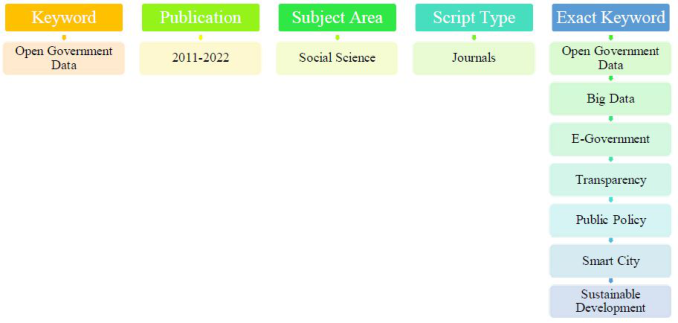
Figure 1: Data collections from Scopus database.
data online through open-data rankings that lead to transparency (Cahlikova and Mabillard, 2020). On the other side, Citizen sourcing has emerged as a significant open government mechanism that enables public organizati- ons to engage with citizens via online platforms for seeking innovative ideas and solutions (Kornberger et al., 2017) in (Schmidthuber, Stütz and Hilgers, 2019). In achieving the idea and solutions, the citizen are challenges by usage barriers or insufficient usage that may obstruct the success open government initiatives by governments worldwide (Wirtz, Weyerer and Rösch, 2018).
METHODS
This research uses qualitative methods, and the tools used for statistical and bibliometric analysis are VOSviewer and NVivo Plus 12 bibliometric analysis with visualising the co-occurrence with keyword, citation, co-citation, and bibliography. The data used are taken from Scopus database.
RESULT AND DISCUSSION
Relationship Between OGD and Algorithmic Government Concept The research in OGD has been increase recently. By using Nvivo 12 Plus, the researcher founds the trend of research in open government data is rise eventually. The graphic shows the peak in 2020 by 66 articles while the lowest is in 2013 by only 7 works. It increases steadily from 2014 to 2018 for four years.
The graph above shows the significant rise on articles between 2019 and 2020. To strengthen the bibliometric analysis on OGD, the researcher uncovers the importance of discussion based on country origin.
Within the data by countries United States is 241 articles published in seve- ral distinguish journal. US produce 241 authentic works that inspire other to write about open data disclosure. However, in making it more adaptable, UK’s 191 articles fond for transparency. Then, 132 studies from Netherlands have uniqueness in investigating criminology cases and also engaging citizen
576 Gusmi and Nurmandi
Graph 1: The trends of research in OGD for the past ten years. Source: Scopus database.
Graph 2: Distribution of interest in OGD based on country origin. Source: Scopus database.
to join with the flow of data disclosure. Lastly, the same as other, 104 papers from Spain are talking about the information and transparency.
Discussing about the Open Government Data (hereafter OGD) is always related to the openness in public that are giving an information and also transparency. There are more than hundred researches influencing other in OGD and algorithmic government.
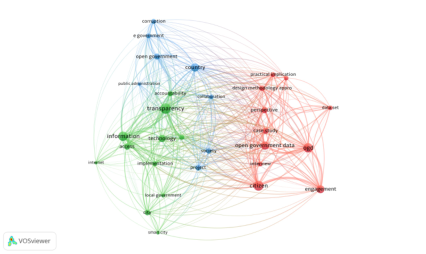
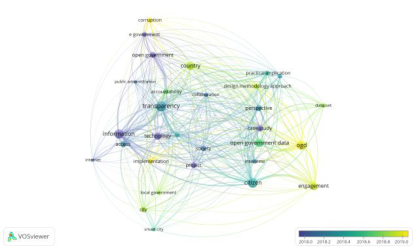
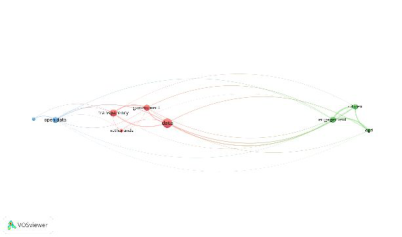
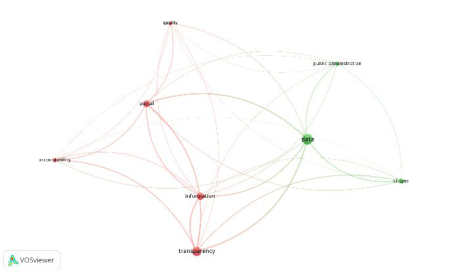
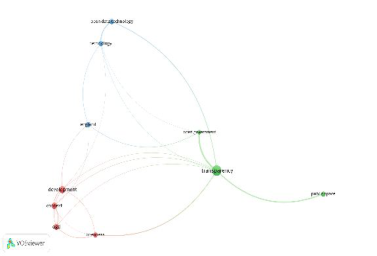
Looking at the vosviewer (figure 2) here is showing that the Information and transparency is the most search keyword, and then it’s followed by OGD as well as citizen. By this linkage, it can be summarised that those 4 words are related and influenced other research theme. The transparency is not only focused on its data, but the system as well. Therefore, a researcher also finds it an interesting issue to discuss (Zuiderwijk and de Reuver, 2021). As the time goes by the trends of discussion about OGD (figure 3) is changed even- tually. In the first and second quarter of 2018, the research was started by the concept of giving information. It is about the government with experts in computer collaboratively serving information into citizen. Then, the fourth
Algorithmic Government Framework to Support Government Data Disclosure 577
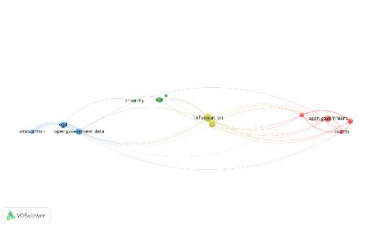
Figure 2: Visviewers data on network visualisation.Figure 3: Vosviewer data on overlay visualisation.Figure 4: Cluster analysis in US.
and sixth quarter of 2018, many researches conduct the important of accoun- tability and OGD, it also starting to the occurrence of local government’s role in implementing the computation of government’s documents. At the last quarter of 2018, the citizen comes to join this cycle. Citizens are able to communicate by complaining and also giving feedback through government official system.
It is also clear that OGD is always related to information and transpare- ncy. At four top countries is mentioned transparency in giving information regarding policy planning and also implementations. The top research topic on transparency is the United Kingdom (Figure 5) and Spain (Figure 7). On the other side United States (Figure 4) reached the top rank in OGD focused
578 Gusmi and Nurmandi
Figure 5: Cluster analysis in UK.Figure 6: Cluster analysis in the Netherland.Figure 7: Cluster analysis in Spain.
on information in supporting open government. Is its different form the rest that the Netherlands (Figure 6), the engagement by citizen is also become a keyword in Scopus search engine; it means that the availability of citizen engagement is real (Safarov, 2020).
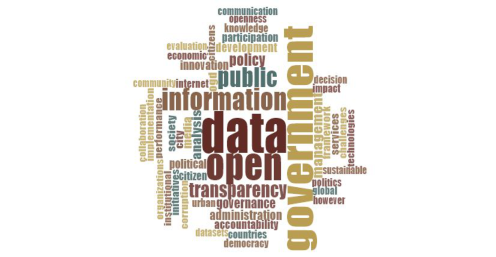
Information and Citizen Engagement After analyzing with vosviewer, the bibliometric will be more dependable by reviewing it from Nvivo Plus 12. With the same data took in .Ris file for about 363 articles, it founds that the most frequent word exist are based on what is figured under.
Algorithmic Government Framework to Support Government Data Disclosure 579
Figure 8: Word frequency on open government data.
The literature analysis results based on the theme show that Data is the 147 most highlighted issue (Figure 8). Thus, the word of open, government and information ranked later. As someone who is majored in Governmental scie- nce, the data needs to be analyse within the governance issue that are always related to open data, public data, information, and several cluster mentioned above. Each of research has different uniqueness. For that reason, the arti- cle focused on OGD and algorithmic government concept will be increase further.
CONCLUSION
Based on result and discussion above, it shows the complete usage of algo- rithmic concept in supporting Government data disclosure. Form several graphics illustrates that United States, United Kingdom, the Netherland and Spain are the most research for the topic of Open Data Government. The details of 363 published articles are not only focusing on OGD but informa- tion, and citizen engagement. The researcher summarise the key factors on implementing the data disclosure in government sectors are by keeping the security guard for every data and sites. On the other hand, the utilization of government data also needs to be improving by not only informing policy, but implementing it as well. For experts in IT, it can also fiddling with algorithm that helps Government works effective and efficiently.
REFERENCES
Cahlikova, T. and Mabillard, V. (2020) ‘Open Data and Transparency: Opportunities and Challenges in the Swiss Context’, Public Performance and Management Review, 43(3), pp. 662–686. doi:10.1080/15309576.2019.1657914. Carpio-mendoza, J. (2021) ‘Bibliometric analysis on open government develo-
pment’, Imaginario Social Publishing entity University of Guayaquil - REDICME, 4(December 2021), pp. 90–100. doi:2737-6362. Engin, Z. and Treleaven, P. (2019) ‘Algorithmic Government: Automating Public Services and Supporting Civil Servants in using Data Science Technologies’, Computer Journal, 62(3), pp. 448–460. doi:10.1093/comjnl/bxy082. Garnett, H.A. (2020) ‘Behind the Screens: E-Government in American State Ele-
ction Administration’, Election Law Journal: Rules, Politics, and Policy, 19(3), pp. 402–417. doi:10.1089/elj.2019.0586.
580 Gusmi and Nurmandi
Ingrams, A. (2018) ‘Transparency for Results: Testing a Model of Performance Management in Open Government Initiatives’, International Journal of Public Administration, 41(13), pp. 1033–1046. doi:10.1080/01900692.2017.1318400. Kassen, M. (2020) ‘Open data and its peers: understanding promising harbin-
gers from Nordic Europe’, Aslib Journal of Information Management, 72(5), pp. 765–785. doi:10.1108/AJIM-12-2019-0364. Khurshid, M.M. et al. (2018) ‘Examining the factors of open government data usability from academician’s perspective’, International Journal of Information Tech- nology Project Management, 9(3), pp. 72–85. doi:10.4018/IJITPM.2018070105. Koene, A. et al. (2019) Scientific Foresight Unit (STOA), A governance framew-
ork for algorithmic accountability and transparency, Brussels: European Union 2019. Available at: http://www.europarl.europa.eu/RegData/etudes/STUD/2019/ 624262/EPRS_STU(2019)624262_EN.pdf. Kornberger, M. et al. (2017) ‘When Bureaucracy Meets the Crowd: Studying “Open Government” in the Vienna City Administration’, Organization Studies, 38(2), pp. 179–200. doi:10.1177/0170840616655496. Luo, Y., Tang, Z. and Fan, P. (2021) ‘Could government data openness enhance
urban innovation capability? An evaluation based on multistage did method’, Sustainability (Switzerland), 13(23). doi:10.3390/su132313495. O’Hara, K. (2015) ‘Government open data and transparency: Oakeshott, civil association and the general will’, Global Discourse, 5(1), pp. 135–152. doi:10.1080/23269995.2014.903720. Safarov, I. (2020) ‘Institutional Dimensions of Open Government Data Implementa-
tion: Evidence from Transition Countries’, Public Performance and Management Review, 43(6), pp. 1359–1389. doi:10.1080/15309576.2020.1805336. Schmidthuber, L., Stütz, S. and Hilgers, D. (2019) ‘Outcomes of open government: Does an online platform improve citizens’ perception of local govern- ment?’, International Journal of Public Sector Management, 32(5), pp. 438–456. doi:10.1108/IJPSM-02-2018-0056. Sumra, K.B., Alam, M. and Aftab, R. (2021) ‘Artificial intelligence for strengthening
administrative and support services in public sector amid covid-19: Challenges and opportunities in pakistan’, Studies in Computational Intelligence. Center for Policy Studies, COMSATS University, Islamabad, Pakistan: Springer Science and Business Media Deutschland GmbH, pp. 199–219. doi:10.1007/978-3-030- 72080-3_12. Veale, M. and Brass, I. (2019) ‘Administration by Algorithm? Public Management meets Public Sector Machine Learning’, Algorithmic Regulation, pp. 121–149. Wirtz, B.W., Weyerer, J.C. and Rösch, M. (2018) ‘Citizen and Open Government: An Empirical Analysis of Antecedents of Open Government Data’, International Journal of Public Administration, 41(4), pp. 308–320. doi:10.1080/01900692.2016.1263659. Zuiderwijk, A. and de Reuver, M. (2021) ‘Why open government data initiatives
fail to achieve their objectives: categorizing and prioritizing barriers through a global survey’, Transforming Government: People, Process and Policy, 15(4), pp. 377–395. doi:10.1108/TG-09-2020-0271.
Read this individual research paper free through the original publisher, or explore the full digital proceedings book.
ISBN 978-1-958651-44-5
Explore this ISBN in the AHFE Bookstore ↗Listed in the July 2026 bookstore catalogue; search by ISBN to confirm current availability · Digital book purchase optional