Shuichi Fukuda (2022). Team Formation and Operations Using Instinct. In: Human Interaction & Emerging Technologies (IHIET 2022): Artificial Intelligence & Future Applications. AHFE Open Access, vol. 68, pp. 581–587. https://doi.org/10.54941/ahfe1002780
Let us take soccer to describe this paper. Soccer games did not change much yesterday. So the formation stayed the same during the game and each player was expected to play his best at his own position. And managers were off the pitch and gave instructions verbally. In short, it was a tree structure. But today, games change from moment to moment, so tree does not work any more. We need to shift to network. But not only games come to change every minute, but the enemy is experiencing the same situation. We often complain about how the real world come to change frequently, extensively and in an unpredictable manner. But the real world does not chare what we will do. It changes as it likes. But the enemy in soccer does their best to betray us. They are trying to foresee what comes next in our operation. Thus, soccer teams are competitors. They are far more difficult to deal with. So, today, managers cannot be off the pitch anymore. They need to understand how the game is changing every minute. No delays are allowed. So, they become playing manager and they play on the pitch now. But it is a competition. So, we need to sense what move the enemy would take. It is very difficult even in one to one game such as boxing, etc. But when it is a competition between teams. the problem becomes more difficult. What becomes crucially important is proactiveness. This is important in one to one, but it becomes more important and difficult in team games. The players need not only to sense what the playing manager has on his mind and prepare for that, but they also need to sense what other players have on their mind. And they also must take into account what play the other player excels or prefers. And they need to consider the same issue about their enemy team. Such holistic perception is needed for being truly proactive. And soccer players today need to be truly pragmatic. Games do not necessarily change as they expect. So, in short, they are experiencing the world of no experience. Changes were smooth yesterday. So we could differentiate them and could predict the future.So, knowledge worked very well. But today, changes become sharp, so we cannot differentiate them. We cannot predict the future anymore. Thus, we have no other way than to go ahead by trial and error. We need to be pragmatic. But we must remember if the number of dimension becomes very large,we cannot solve the problem mathematically, as the curse of dimensions teaches us. Therefore, instinct emerges as a very effective tool. Instinct processes the world of never-experienced-before and it does not care how dimensions may be large. And its greatest advantage is it deals with the real world in real time. Such delays as seen in knowledge-based approaches can be avoided. Come to think, this is the world of business. Soccer is nothing but business.
Let us take soccer to describe this paper. Soccer games did not change much yesterday. So, the formation stayed the same during the game and each pla- yer was expected to play his best at his own position. And managers were off the pitch and gave instructions verbally. In short, it was a tree structure. But today, games change from moment to moment, so tree does not work anymore. We need to shift to network. We should note not only games come to change every minute, but the enemy is experiencing the same situation. We often complain about how the real world come to change frequently, exten- sively and in an unpredictable manner. But the real world does not care what we will do. It changes as it likes. But the enemy in soccer does their best to betray us. They are trying to foresee what comes next in our operation. Soccer games are competition. Therefore, they are far more difficult.
In soccer today, managers cannot be off the pitch anymore. They need to understand how the game is changing every minute. No delays are allowed. So, they become playing managers and they play on the pitch now. But it is a competition. So, we need to sense what move the enemy would take. It is very difficult even in one-to-one game such as boxing, etc. But soccer is a competition between teams. So, the problem becomes more difficult. What
becomes crucially important is proactiveness. This is important in one- to- one, too, but it becomes more important and difficult in team games. The players need not only to sense what the playing manager has on his mind and prepare for that, but they also need to sense what other players have on their minds. And they also must consider what play the other player excels or prefers. They need to consider the same issue about their enemy team. Such holistic perception is needed to be truly proactive.
And soccer players today need to be truly pragmatic. Games do not neces- sarily change as they expect. So, in short, they are experiencing the world of no experience. Changes were smooth yesterday. So, we could differentiate them and could predict the future. So, knowledge, which is the structured accumulation of past experiences, worked very well. But today, changes become sharp, so we cannot predict the future anymore. Thus, we have no other way than to go ahead by trial and error. We need to be pragma- tic. But the number of dimensions of the problem becomes tremendously large. Therefore, we cannot solve the problem mathematically, as the curse of dimensions teaches us.
This paper points out that “Instinct” emerges as a very effective tool to deal with such complex and complicated team formation and operations.
TEAM FORMATION AND OPERATION Soccer is a typical team sport. Living things are called “Creatures” because we create movement to survive. Movement is indispensable for living. Sports are often considered just as pleasure, but they are not. Personal sport is no exception. Sports originates from our needs to create movement. In sports, we challenge. We explore the new horizon. They enhance our ability to survive. That is the origin of sports.
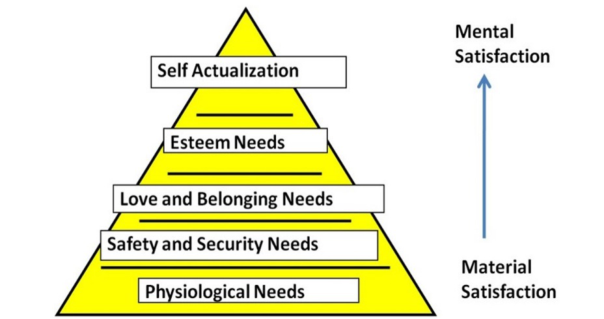
Engineering started to make our dreams come true. Human is said to be the only living thing that can think of the future. So, we wanted to develop our future. But as Abraham Maslow pointed out in his human need theory (Maslow, 1943), (Figure 1), we needed to satisfy our material needs first. We had to secure food, housing, etc.
Our initial needs were material needs. Products were needed to survive. But as time went on, we want better products or products with higher functions.
Thus, the need for higher technologies increased and we made efforts to advance technologies more and more. This led us to the Industrial Revolu- tion. And it introduced “Division of Labor”. We started to work for others. Until then, we worked for ourselves. In short, “Self” was important. But the Industrial Society is a world of team. The Industrial Society brought us is the world of mass production. Technological development made it easy to produce products in mass. But this is not the true world of team. Team is to organize heterogeneous elements to work together. Mass production only produces homogeneous elements in large quantity. But ironically enough, mass production drove us to mental needs. It brought us “Diversification and Personalization”. We come to look for emotional satisfaction. The high- est human need is “Self-Actualization”. We want to demonstrate excellent
Team Formation and Operations Using Instinct 583
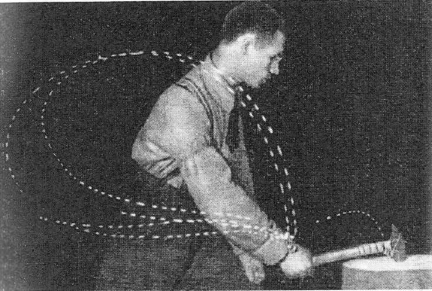
Figure 1: Maslow’s hierarchy of human needs.Figure 2: Motion trajectory.
“Self”. Thus, we are now entering the era of “Self”. We learned how teamw- ork is important during the shift from material to mental needs. We learned how much teamwork is necessary to accomplish complex and complicated jobs.
Edward Deci and Richard Ryan pointed out in their Self-Determination Theory (SDT) (Deci & Ryan, 1985) that we get the maximum happiness and the feeling of achievement, when we do the job which is internally motivated and self-determined. External rewards cannot provide this level of happiness. The Industrial Society is based on external rewards. So, in the Industrial Soci- ety, we are not satisfied enough. Therefore, how we can balance material and mental (emotional) needs becomes important.
Let us discuss from a different perspective. Human movements are divi- ded into two. One is Motion, which is observable from outside. The other is Motor, which is movement inside of us, such as muscles. etc. Nikolai Bernstein made the behavior of motion (Bernstein, 1967), (Figure 2).
At first, our motion trajectories vary widely from time to time, but as we get close to the target object, our muscles harden and move together with
584 Fukuda
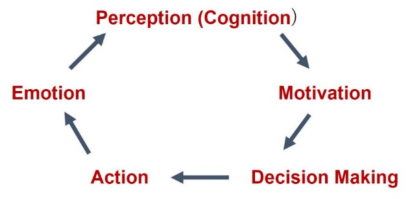
Figure 3: PMDAE cycle.
the skeleton. Thus, we can easily control this musculoskeletal system. Most studies on human movements focus on this stage and discuss “Control”.
But why do our motion trajectories vary so widely from time to time during the first stage? It is to adapt to the changing outside world. The Real World has been changing. But yesterday, its changes were smooth, so we could dif- ferentiate them and could predict the future. But today, its changes are sharp, so we cannot predict the future anymore. We need to directly interact with the outside world. We coordinate all body parts and balance our body to adapt to the changing environments and situations. That is why. The Real World comes to change frequently, extensively, and thus unpredictably, we need to adapt by trial and error. Therefore, the importance of “Coordination” is rapidly increasing.
To describe it another way, this is the problem of compatibility between team and self. You need to be aware of the difference between “Self” and “Selfish”. “Selfish” lacks consideration for other people. You are concer- ned chiefly with your own personal profit or pleasure. “Self” distinguishes you from others. But it considers to work together with others. When the job is simple and easy, you do not need help from others. But when the job becomes complex and complicated, you need to work together with others. More heads are better than one. The Industrial Society is a complex and complicated world, so we need team working.
But we need to be aware that we are not teaming up to adapt to the chan- ges of the Real World. We want to establish our own world, i.e., the world of “Self”, but we need to live together with others and live a happy and satisfactory life. That is “Self”.
EMOTION, MOTIVATION Abraham Maslow made it clear that our needs shift from material to mental with time. And “Self-Actualization” is the final need. What we want finally is emotional satisfaction and feeling of achievement.
We should pay attention to etymologies of the word “Emotion” and “Motivation”. “Emotion” comes from the Latin “movere”. “Emotion is e=ex=out + motion. Therefore, it means to “move out”. Interestingly, “Motivation” comes from the same Latin “movere”. Therefore, “Emotion” and “Motivation” are closely associated. “Emotion” stimulates “Motiva- tion”. So, we repeat PMDAE (Perception§ Motivation§ Decision Making§ Action§ Emotion) cycle (Figure 3).
Team Formation and Operations Using Instinct 585
We perceive the outside world holistically and become situational aware (psychologically). And we are motivated and examine what actions we should take. In other words, we make strategic decisions on how we can move out into the outside world and establish our “Self” world.
The fact that “Coordination” becomes important indicates “Teamwor- king” is increasing its importance.
GAME Detecting the intention of the other party is crucial in the game. This is nothing other than “Communication”.
The true “Game”, therefore, requires “Teamworking” and “Communica- tion”. This “Communication”, however, is to defeat the other party, not to respond to.
Business is a game. Therefore, “Teamworking” and “Communication” are essential. But data in business are composed of a wide variety of information. Thus, we need to tackle with the large amount of heterogeneous data. Thus, we cannot apply mathematical approaches. We cannot evaluate performance in Euclidean way. Therefore, we need to develop non-Euclidean approach.
Another important point is “Analog” plays an important role in games. We need to understand how its flow changes with time. In fact, in medical diagnosis, blood flow plays an important role. Doctors watch how blood is flowing and come up with the diagnosis. Blood carries signals to all parts of our body. Therefore, even after brain death, we can transplant the organs, because our bodies are still living. In the same sense, we need to follow the flow of the game.
EUCLIDEAN, NON-EUCLIDEAN Euclidean approach forms the basis of the Industrial Society. The Industrial Society is Product-centric. We want to evaluate products quantitatively and objectively. Therefore, we use Euclidean approach. It is cardinal based (one, two, three). So, it works well with the traditional computing, which is based on 0-1 framework. And datasets are required to have orthonormality and cardinal distance with units.
But games do not satisfy these requirements. We need non-Euclidean approach for handling them.
What is required in the games, including business, is prioritization. We need to prioritize which policy we should take In short, Euclidean approach pursues problem solving or “How”. Non- Euclidean approach is goal finding. We pursue “What”. P, C. Mahalanobis proposed Mahalanobis Distance (MD) (Mahalanobis, 1936). He is a resea- rcher of design of experiments, and he wanted to remove outliers to improve his datasets. MD, therefore„ is ordinal and we can prioritize which outlier should be removed first, second,--. MD indicates how the point P is far away from the mean of the distribution D. And MD is defined for each individual dataset and the relation between datasets is not considered. MD contributes so much to “Decision Making”.
586 Fukuda
PATTERN Another important item is “Communication”. S. Fukuda and his group used to study detecting emotion from face. We observe the other party, and we sense what is on his mind. Then, we can communicate better. We tried many image processing techniques, but they took too much time, and the results were not satisfactory. During these challenges, Fukuda suddenly realized we can detect emotion of characters in cartoons. So, we developed cartoon face model and succeeded in detecting emotion easily and immediately (Kostov, Fukuda, Johnsson, 2001).
This experience taught us the importance of pattern. When we come across the word “Communication”, we think of verbal communications. But before we invent words, we communicated with movements. We observed the move- ments and understood the message. In fact, that is the way we communicate with pets.
In fact, as Fourier Transform teaches us, we process the flow by noting its pattern. Pattern characterizes flow.
MAHALANOBIS DISTANCE-PATTERN (MDP) Fukuda developed an “Instinct”support tool “Mahalanobis Distance-Pattern (MDP)”by combining MD with Pattern. As MTS is a static pattern matching, he makes it dynamic by introducing “Recurrent Neural Network (RNN)”. But RNN assigns weights to links automatically. So, it is a black box, and we cannot manipulate the system as we wish
So, he introduced “Reservoir Computing (RC)”. RC makes it possible to make adjustment at the output. Therefore, we can manipulate the system as we wish. More important benefit of RC is it enables us to introduce micro technologies. We can make sensors and actuators very small so that we can make them part of our body. Besides, sensors and actuators can work toge- ther, and they will contribute to enhancement of our “Instinct”. This opens the door to holistic perception and helps us to make adequate decisions and to take appropriate actions. As we all can share the holistic perception, our minds will be united, and we can share the common platform more easily.
To describe this in another way, this forming of access sharing is noth- ing other than “Service”, which ICT introduced as the next stage after Knowledge framework. In “Service” framework, everybody can access the complicated and complex data, i.e., information, his or her own way and utilize it as he or she wishes. This framework is very much flexible and is usable for any purposes
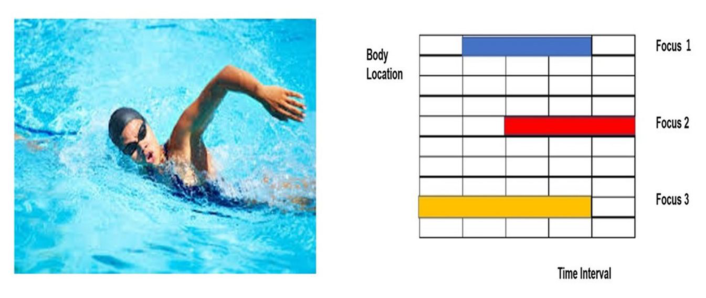
Let us take swimming as an example to show how MDP approach can be used. As body builds and the way we move our body vary widely from person to person. So, videos that show exemplary swim- ming do not work. In the case of swimming, we need to learn all by ourselves. Water changes every minute, so we cannot apply mathematical approaches. We need to make the most of our “Instinct” to learn to swim.
Swimmer can put on wearable sensors or have the video taken. Then, the data sheet as shown on the right will be produced. Each row corresponds to muscles located at different locations. We calculate MD between Time T1 and T2. If MD is decreasing, we know that muscle is working appropriately. But
if MD is increasing, we must change the movement of that muscle. This way, this data sheet provides a tool for supporting the “Instinct” of the swimmer. The swimmer can learn effectively.
This is the case of swimming, but the Real World is now changing every minute just like water. And team organization and management (TOM) beco- mes very important in all areas. This MDP tool can be utilized for a wide variety of applications.
REFERENCES
Bernstein, N.A. (1967) The Co-ordination and Regulation of Movements, Oxford, Pergamon Press. Deci, E. L. & Ryan. R. M. (1985) Intrinsic Motivation and Self-Determination in
Human Behavior, New York, Plenum. Image & Visual Computing, The Journal of the Institute of Image Electronic Engineers of Japan, Volume 30, No. 2, pp. 111–125. Kostov V, Fukuda S, Johansson M (2001) Method for Simple Extraction of Paralin-
guistic Features in Human Face. Mahalanobis, P. C. (1936) On the Generalized Distance in Statistics. Proceedings of the National Institute of Sciences of India. Volume 2, No. 1: pp. 49–55. Maslow, A. H. (1943) A theory of human motivation. Psychological Review, Volume
Read this individual research paper free through the original publisher, or explore the full digital proceedings book.
ISBN 978-1-958651-44-5
Explore this ISBN in the AHFE Bookstore ↗Listed in the July 2026 bookstore catalogue; search by ISBN to confirm current availability · Digital book purchase optional