Min Zhou, Shuang Liang, Giuseppe Lotti, Jiangang Zhu (2022). Sustainability of Craft Communities in the Cosmopolitan Localism. In: Human Interaction & Emerging Technologies (IHIET 2022): Artificial Intelligence & Future Applications. AHFE Open Access, vol. 68, pp. 722–729. https://doi.org/10.54941/ahfe1002798
As human society transitions from an agricultural to an industrial and knowledge-based economy, the functions of craftsmanship and artisans is changing. This paper believes that craftsmanship is a narrative process in which each age leaves its imprint. It is critical to embrace external changes and respond to these challenges in order to form new craftsmanship. The research believes that the craft community either grows, declines, or even disappears due to its interaction with the external environment. We emphasize enhancing the resilience of the craft community to survive in the external changes by changing internal structure functions and connecting external resources to establish new economic activities.
In the twenty-first century, people have begun to recognize the cultural and economic significance of craftsmanship. Cultural knowledge and traditions can be preserved or strengthened through proper cultural commodification (Carlsen,1993; Krystal, 2000; Ware, 2003). Craftsmanship is being resurre- cted and reused, transforming it into a humanistic resource. As a result, local craftsmanship has risen to prominence as a new source of regional economic growth as well as a new mode of cultural construction. Commoditizing tradi- tional culture, according to some studies, may improve social and economic situations (Little, 2000).
However, politics, the economy, society, and even the environment have all changed dramatically. The post-industrialist approach to mass production cleared the way for high-volume creation of products that are strong in both design and functioning (Reubens, 2010). Mass manufacturing, whether at the level of a major multinational corporation or a small local industrial firm, may supply people with necessities for daily life at a lower cost than craft creation. Traditional ways of life and several cultural customs are no lon- ger practiced. Traditional craftsmanship’s cultural ecology is being destroyed, and artisans are having fewer opportunity to express themselves.
UNESCO has played a critical role in the preservation of intangible cultu- ral heritage. It emphasizes the value of craftsmanship, encourages artisans to pass on their knowledge to the next generation, and calls on all countries to
Sustainability of Craft Communities in the Cosmopolitan Localism 723
establish their own systems. Furthermore, “The Convention for the Safeguar- ding of Intangible Cultural Heritage” concentrated on traditional handicraft skills and knowledge, rather than the crafts themselves. However, there is lit- tle consideration of the sustainability, the usability and adaptability of crafts to contemporary life (Karakul, 2019).
Perhaps cosmopolitan localism is the answer. Cosmopolitan localism is a strategy of social innovation that promotes community development by pro- moting the interchange of knowledge, skills, culture, and technology, among other things. It is based on a distributed system, with the goal of conne- cting local and global communities through resilient infrastructures (Escobar, 2018).
CONTRIBUTION AND RESEARCH QUESTIONS Two sides of an emerging scenario are resilient systems and cosmopolitan localism (Manzini, 2013). It’s what Manzini refers to as the SLOC scenario, which stands for Small, Local, Open, and Connected. This work is based on this scenario as well; in other words, our research is based on two hypotheses: 1) The craft community’s development is influenced by both internal and external elements as a result of globalization; 2) Appropriate external capital connection has a favorable impact on the craft community’s resilience.
Some studies concentrate on the impact of digital technology on craftsman- ship, while others stress the importance of collaboration between craftspeople and designers. However, few scholars look at the craft community’s long-term sustainability from a broad perspective. The impact of external influences on the growth of local craftsmanship is explored in this study, which pro- poses changing the internal structure, appropriately linking external capital, and generating new economic activities to strengthen the craft community’s resilience. The following questions will be addressed in this study:
What is the development process of the craft community?
What are the categories and roles of interventions?
How do internal and external factors affect the development of the craft community?
The paper provides references for future research on the development potential of the craft community in the process of globalization. In addi- tion, this study analyzes the evolution of craft communities and the impact of internal and external environments on these communities.
THE EVOLUTION OF THE CRAFT COMMUNITY When it comes to the relationship of the globalization, localism, and the value of cultural diversity, just as Sachs (1992) described: “After all it is only from places that variety crops up, because it is in places that people weave the present into their particular thread of history”. Culture is dynamic and evolving. As a result, craftsmanship, as an aspect of culture, should not be locked in the window of history. On the contrary, it should be resilient and adaptable when facing the challenges of the new environment. Further- more, the craft is a result of knowledge, invention, uniqueness, and risk (Boza,
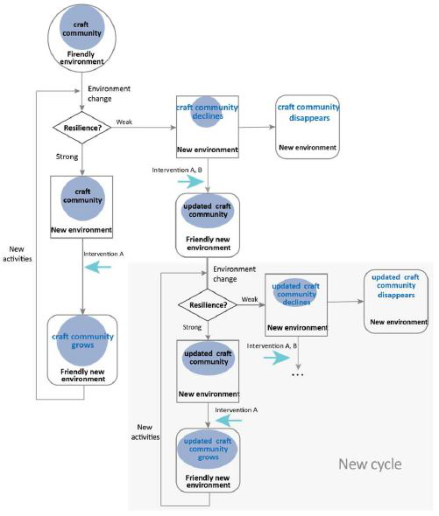
Figure 1: The evolution of the craft community.
2006). Craftsmanship is a social activity that involves the utilization of natu- ral resources, specific skills, and cultural resources in the local area. It has the autonomy as a local economic and social organization and can exchange knowledge and information with the external environment. The importance of craftsmanship’s creativity and dynamics should be emphasized.
From the perspective of craftsmanship’s development process, as indica- ted in Figure 1, the craft community grows, declines or even disappears. The evolution of craftsmanship and the process of being chosen by society, like biological evolution, is ongoing. Furthermore, the same craft group may be at different phases of development at different historical dates. On a macro level, the flourish of craftsmanship results from being selected by society or local people. The general environment is beneficial to the development of the craft community at this level. Then, with globalization, industrialization, technological progress and other factors, the external environment has under- gone significant changes, and people’s attitudes toward craftsmanship have also changed. The craft community will face obstacles and adapt to the new environment if it is resilient; else, it will decline or disappear.
Figure 1 shows two types of interventions, each with a different item. The general environment is the focus of intervention A, which may include encou- raging people to pay attention to local culture or replacing plastics with green alternatives. In some nations, mainstream society does not acknow- ledge craftsman with low social rank at specific times. Mayor Mora (1997), for example, claims that throughout the Spanish industrial modernization of the colonial era, the social values of the artisan guilds were altered, with them being regarded as nasty, low-status trades. As a result, raising awareness and
Sustainability of Craft Communities in the Cosmopolitan Localism 725
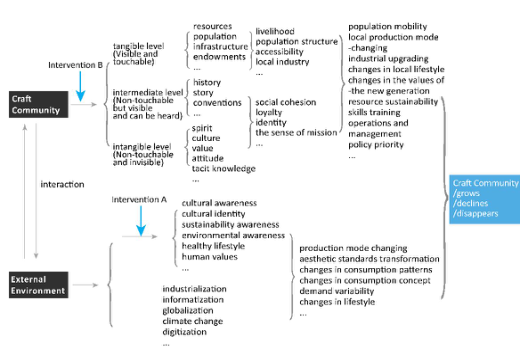
Figure 2: The interaction between the craft community and the external environment.
encouraging people to pay attention to local craftspeople, regional culture, and cultural identity are critical. Intervention A has a large impact but takes a long time to implement.
Intervention B, on the other hand, is focused on the inside of the craft community and attempts to encourage autonomy and initiative within it. Subsidies from the government and favorable tax policies, for example. In addition, working with designers or universities to enhance artisans’ ability to make items with a high identity index that meet market needs.
THE INTERACTION BETWEEN THE CRAFT COMMUNITY AND THE EXTERNAL ENVIRONMENT There are three levels of craft community development: tangible, interme- diate, and intangible. The tangible level includes resources, infrastructure, people, and other things that we can see and touch. The livelihood, popula- tion structure, geography, and accessibility are all determined at the tangible level. The intermediate level relates to stuff that is inaccessible, visible, or audible, such as stories, customs, and so on. Furthermore, the intangible level refers to content that is inaccessible or invisible, such as spirit, culture, attitude, value, tacit knowledge, and so on. As demonstrated in Figure 2, the evolution of the craft community is the result of the interaction between inter- nal relationships and the external environment. This is because, especially in the face of globalization, a craft community must be strongly linked to other communities.
Cultural awareness, cultural identity, sustainability consciousness, envi- ronmental awareness, and other aspects of people’s lives can all be improved by Intervention A. These developments, as well as changes in the social envi- ronment, such as industrialization, informatization, and digitalization, have resulted in changes in production processes, aesthetics, consuming attitudes, lifestyles, and other changes in the entire environment.
Intervention B concentrates on three different levels: tangible, intermedi- ate, and intangible. The tangible level refers to aspects that are visible and
touchable, such as resources, infrastructure, and so on. Intermediate level includes history, story, conventions, and other topics that are not touchable but visible and heard. The non-touchable and invisible aspects, such as spirit, culture, and attitude, are referred to as the intangible level. Interventions in these three areas will result in local population mobility, skill training, policy priority, and lifestyle improvements, among other things. The craft com- munity’s evolutionary pattern and outcome are determined by the changes brought about by Intervention A and Intervention B together.
Some craft communities may be unable to adjust to changes in the external environment until they eventually disappear. Traditional craftsmanship must have emerged in response to a social trend at the time, or it was the outcome of society selecting at a certain historical era. Otherwise, it’s only possible to classify it as manual labor. Local resources are transformed by artisans into practical products that community members can use. Then, as a result of the processes of informatization, globalization, and industrialization, changes in the external environment have resulted in a slew of changes in the community, including industrial upgrades, changes in community lifestyles, population movements, changes in population structure, and shifts in the values of the new generation, among other things. The market has become more and more important to a community.
However, not every craft community is able to adapt to changes in the external environment. Some traditional craft communities that rely on natu- ral resources are unable to shift their economic structures from traditional capital investment to a cutting-edge, new model that can accommodate social development. This may cause serious consequences. Some craft communities, for example, utilized a lot of non-renewable resources, resulting in resource exhaustion. Some communities may be unable to transition from traditional to new media, such as self-media, YouTube, Tik Tok, and other platforms, resulting in the loss of some communication channels. Competitors can some- times use external pressures to steal local resources, such as precious wood, marble, ores, and other raw materials that artisans rely on for existence. Furthermore, artisans are unable to learn sophisticated technologies or a variety of abilities, nor can they introduce capital to update the industry, putting family-based handicraft workshops at a competitive disadvantage in the market. In addition, artisans may lack the opportunity to learn adva- nced technology or a variety of talents, as well as the knowledge of how to seek investment to upgrade equipment. In this situation, the family-run craft workshop is at a competitive disadvantage in the market. After being influe- nced by a foreign culture, the local market shrank. People eventually migrate to industries, service sectors, and even agriculture, forestry, and other indu- stries in search of improved social welfare or personal development chances, such as better education opportunities for children or better medical condi- tions. The competition among the artisan groups has become increasingly intense as the local market and community have shrunk. Sometimes, indi- vidualism is common among artists, and their social cohesion suffers as a result.
Social capital is a crucial community aspect in linking individuals and the community. Social capital is defined as the total value of assets or resources
Sustainability of Craft Communities in the Cosmopolitan Localism 727
held by individuals, communities, networks, or social relations networks (Chang & Chuang, 2011). Benlabsir (2016) defines internal and external social capital as social capital. Putnam (2000) also classifies social capital into two categories: bonding social capital and bridging social capital. The connection of persons with close network links or homogeneous groupings is referred to as bonding social capital. These individuals share a strong sense of self-identity and common objectives. Bonding social capital can increase a group’s relationship by promoting commitment and reciprocity among members. Bridging social capital refers to the connections developed by persons who share common interests but do not have a close network rela- tionship. Bridging social capital aids in the linkage of external resources, the seamless flow of information, and the connection and interaction between heterogeneous groups.
Some communities have adapted to market needs. Usually, to cope with the challenges of the external environment, this type of craft community has typically shifted from individual management to more centralized social management, which provides various types of aid to individual artists, such as bank loan counselling, skill training, and so on. Furthermore, unified mana- gement will improve individual communication and allow connection with other external stakeholders or industries. Bonding social capital plays a role similar to glue, uniting internal members and groups; bridging social capi- tal connects external resources, expands collaboration opportunities with external organizations, individuals, and institutions, and opens up new possibilities.
Internal members’ psychology and behaviors are extremely complicated in this process, and the balance between personal and collective goals is also important to consider. Community members’ attitudes, solidarity, ability, and determination decide whether the community can continue to prosper. The safeguarding of ICH is a cultural endeavour that necessitates the coopera- tion of the entire population. To some extent, the government is extremely efficient and can collect sufficient human and financial resources as the major executive force for the protection and development of traditional craft- smanship, but there is an issue of freedom. The artistry and innovation of craftsmanship may be harmed by authority and officialdom. Furthermore, museums and universities, as the primary defenders of ICH, would face diffi- culties (Kurin, 2007). Furthermore, as Galla (2008) pointed out, community participation is critical, and investment plans that do not include commu- nity participation may fail to fulfill the actual requirements of residents. Spontaneous activities, positive attitudes, commitments, and the spirit of self- reliance and self-determination have all played important roles in the craft community’s long-term development.
CONCLUSION
Crafts or craft communities are always being scrutinized by society. Craft communities either grow, decline, or disappear depending on the commu- nity’s resilience. The development of artisan communities will be aided by appropriate interventions. Intervention A can help to create a craft-friendly
environment, encouraging people to value craftsmanship and culture more. Intervention B supports autonomy and initiative by focusing on the com- munity’s interior. To response to changes in the external environment, the craft community can alter the internal structure and improve effective contact with the external environment. We encourage bottom-up residents to parti- cipate in the community and demand their positive attitude and solidarity; in the process, bonding social capital can strengthen group relationships by encouraging members to commit and reciprocate. When it comes to bridging social capital, the residents’ determination, spontaneity, attitude, solidarity, and willpower define the craft community’s fate. External resource ties are strengthened, diverse external stakeholders and departments engage and col- laborate, and community trust and resilience are improved as a result of this process.
ACKNOWLEDGMENT
China Scholarship Council funds the research. The authors would like to express their gratitude to the people who participated in the research and the China Scholarship Council.
REFERENCES
Benlabsir, S. (2016, October). Knowledge management and social capital: a literature review. In International Conference on Intellectual Capital and Know- ledge Management and Organisational Learning (p. 341). Academic Conferences International Limited. Boza, L. E. (2006). (Un) Intended discoveries: Crafting the design process. Journal of
Architectural Education, 60(2), 4–7. Carlsen, R. S. (1993). Discontinuous Warps: Textile Production and Ethnicity in Contemporary Highland Guatemala. Crafts in the World Market: The Impact of Global Exchange on Middle American Artisans, ed. J. Nash. Chang, H. H., & Chuang, S. S. (2011). Social capital and individual motivations
on knowledge sharing: Participant involvement as a moderator. Information & management, 48(1), 9–18. Escobar, A. (2018). Designs for the Pluriverse. In Designs for the Pluriverse. Duke University Press. Galla, A. (2008). The’first voice’in heritage conservation. International Journal of
Intangible Heritage, 3, 10–25. Karakul, Ö. (2019). The effects of tourism on traditional craftsmanship for the sustainable development of historic environments. European Journal of Sustainable Development, 8(4), 380–380. Krystal, M. (2000). Cultural revitalization and tourism at the Morería Nima’K’iche’. Ethnology, 149–161. Kurin, R. (2007). Safeguarding intangible cultural heritage: Key factors in imple-
menting the 2003 Convention. International journal of intangible heritage, 2(8), 9–20. Little, W. E. (2000). Home as a place of exhibition and performance: Mayan household transformations in Guatemala. Ethnology, 163–181. Manzini, E. (2013). Resilient systems and cosmopolitan localism—The emerging
scenario of the small, local, open and connected space. Economy of Sufficiency, 70.
Sustainability of Craft Communities in the Cosmopolitan Localism 729
Mayor Mora, A. (1997). Cabezas duras y dedos inteligentes. Bogotá. Colcultura. p.
20-68 Putnam, R. D. (2000). Bowling alone: The collapse and revival of American community. Simon and schuster. Reubens, R. (2010). Bamboo canopy: Creating new reference-points for the craft
of the Kotwalia community in India through sustainability. Craft Research, 1(1), 11–38. Sachs, Wolfgang (ed., 1992): The Development Dictionary. A Guide to Knowledge as Power. Zed Books Ltd: London and New Jersey Ware, C. E. (2003). “Marketing Mardi Gras: Heritage Tourism in Rural Acadiana”.
Read this individual research paper free through the original publisher, or explore the full digital proceedings book.
ISBN 978-1-958651-44-5
Explore this ISBN in the AHFE Bookstore ↗Listed in the July 2026 bookstore catalogue; search by ISBN to confirm current availability · Digital book purchase optional