Duc Hai Le, Frank Köster, Klas Ihme (2023). Involving users in Automotive HMI design: Design evaluation of an interactive simulation based on participatory design. In: Intelligent Human Systems Integration (IHSI 2023): Integrating People and Intelligent Systems. AHFE Open Access, vol. 69, pp. 27–37. https://doi.org/10.54941/ahfe1002818
User-centered design (UCD) methods for human-machine interfaces (HMI) have been a key to develop safe and user-friendly interaction for years. Especially in safety-critical domains like transportation, humans need to have clear instructions and feedback loops to safely interact with the vehicle. With the shift towards more automation on the streets, human-machine interaction needs to be predictable to ensure safe road interaction. Understanding human behavior and prior user needs in crucial situation can be significant in a multitude of complex interactions for in-vehicle passengers, pedestrians and other traffic participants.While research mostly focused on addressing user behavior and user needs, the inclusion of users has often been limited to study participants with behavioral inputs or interviewees prompted for opinions. Although users do not have the knowledge and experience as professional designers and experts to create a product for others alone, unbiased insights into the future target groups’ mental models are a valuable and necessary asset. Hence, with stronger user participation and appropriate tools for users to design prototypes, the design process may deeper involve all type of stakeholders helping to provide insights into their mental models to understand user need and expectation.To extend current UCD practices in the development of automotive HMIs, our work introduces a user-interactive approach, based on the principles of participatory design (PD), to enable users to actively create and work within design process. A within-subject study was conducted based on evaluating users’ trust within an interaction with an AV and subsequently configuring the corresponding HMI. The scenario focuses on the interaction between a pedestrian (user’s point of view) deciding to cross path with an automated vehicle (AV, SAE L4). The AV would show its intention via a 360° light band HMI on its roof. The interactive simulation offered users hands-on options to iteratively experience, evaluate and improve HMI elements within changeable environmental settings (i.e., weather, daytime) until they were satisfied with the result. The addition of participation was provided by an interface using common visual user interface elements, i.e. sliders and buttons, giving users a range of variety for real-time HMI configuring.A first prototype of this interactive simulation was tested for the safety-critical use-case in a usability study (N=29). Results from questionnaires and interviews show high usability acceptance of the interactive simulation among participants as assessed by the system usability scale. Overall usability was rated high (System Usability Scale) and frustration low (NASA-TLX raw). Moreover, the interactive simulation was rated to have above average user experience (User Experience Questionnaire). Appended feedback interviews gave valuable insights on improving the simulation user interface, offering different design opportunities within the simulation and a wider parameter space. The short design session time shows the limit of customizability options within this study but needs to be further investigated to determine optimal range for longer evaluation and design sessions. Based on the study results, further requirements for PD simulative environments to assess limits for parameter spaces in virtual environments are derived.
User-centered design (UCD) has been shown to be a successful approach to create human-machine interfaces (HMIs) since its first formal introduction (Maedche et al., 2012; Norman and Draper, 1986). The goal of UCD is to optimize a product regarding usability and user experience (UX) by obse- rving and testing it repeatedly during the design process with users. HMI development processes aim to design solutions as close as possible to users’ mental models to satisfy user expectations and needs when interacting with the system (Forster et al., 2019). Especially new technologies in safety-critical domains such as automated vehicles (AVs) have to be proven reliable in a variety of traffic situations to reduce accidents (Othman, 2021). More and more HMI studies leverage their interface design by introducing HMI ele- ments within virtual scenarios to users in a controlled environment (Le et al.,
2020). Having full control over the repeatability and safety inside virtual rea- lity (VR) renders simulated environments to be better alternatives to real field testing in many applications (Mandal, 2013). Utilizing virtualization in UCD can further reduce costs and accelerate development phases in comparison to conventional simulations (Gabbard et al., 1999; Lawson et al., 2016). Howe- ver, during the actual design stages of UCD, users are often not fully involved and only partially contribute to the design (Kaulio, 1998). Virtual environ- ments can be utilized to offer new interaction strategies and involve users deeper into design processes. One way this can be achieved is by introducing active user involvement into HMI development processes.
Participatory Design (PD) is considered a UCD approach with the exten- sion of additional process tools to actively involve users into the development process (Bratteteig et al., 2013). Current practices suggest different levels of involvement based on domain, product and user target group (Merkel and Kucharski, 2019). The different approaches collectively share a subset of additional processes over the common UCD structure to involve users not only as consumers but also as stakeholders. We refer to PD based on the core characteristics by Greenbaum and Loi (2012) which are: 1) having situations-based actions, 2) giving all stakeholders mutual learning by provi- ding tools and techniques for addressing user needs and expectations as well as 3) having additional views and visions about technology to have different perspectives about the development process, 4) integrating democratic pra- ctices and 5) equalizing power relations in the development process. Hence, the concept of PD addresses the lack of active user involvement during the development chain by treating users as a democratic part of the stakeholder group (Björgvinsson et al., 2010). Although users do not share the same kno- wledge as design experts, being the target audience of the end product makes them experts in their own regard with valuable insights. User integration is described as a positive additional dimension during the generative (prototy- ping) design phase (Sanders, 2002). Furthermore, PD approaches tackle tacit and latent needs (Sanders, 2002) such as subconscious needs or needs which one later noticed to have (Bao et al., 2020). François et al. (2017) addressed possible solutions for actively involving users in the design cycle and listed positive advantages, such as increased HMI usability and acceptance as well as decreased HMI distraction potential.
With the advantages of PD in mind, there are considerations which need to be addressed as well. Bukengolts pointed out that what people say and actually need can diverge drastically (Bukengolts, 2019). Response biases can mislead solution findings by addressing non-reasonable or non-critical problems and should be carefully analyzed with respect to reasons why sug- gestions were made (Scariot et al., 2012). According to François et al. (2017), users may not fully address all design aspects of the product and miss critical aspects regarding safety when designing. The lack of relevant human factors knowledge and implicit understanding of designing for a user group makes it difficult to only rely on user input. Single design ideas may only satisfy one individual without proper knowledge of what fits most users. Therefore, user design should be embedded into expert-guided design cycles (François et al., 2021). Merkel and Kucharski (2019) pointed out that full user involvement
Involving Users in Automotive HMI Design 29
is not always feasible and users should not be treated solely as “data sou- rces” (Merkel and Kucharski, 2019). Integration of PD elements into UCD cycles can increase user acceptance, usability and UX of a product but process structures have to be reevaluated for every use-case. To address this challenge, introducing interactive virtual tools into UCD can uplift design opportunities for users.
Based on these considerations, our overarching goal is to create an intera- ctive simulation based on a virtual environment to integrate principles of PD into UCD processes. We developed and tested a first prototype of this inte- ractive simulation for a particular automotive use case and evaluated it in a user study with respect to usability and UX. We conducted a post-interview with the participants to learn about requirements for the parameter space during participatory HMI design as well as interaction strategy to guide users through the design space.
INTEGRATING USER INTERACTION INTO HMI DESIGN We created an interactive simulation in a virtual environment enabling users to design and adapt a given HMI.To integrate the points mentioned by Green- baum and Loi (2012), at first, users experience a scenario, in which they have to interact with an HMI and have to reflect on their needs for the situation. Secondly, the interactive simulation offers an easy-to-understand interface for users to configure parameters of the HMI (e.g. color, blinking frequency) during the design session while being provided with clear instructions and simple guidance during the entire walkthrough. The last two considerations of democratic approach and equalized power relation are not directly addres- sable in the context of the single design stage as the user solo-designs the HMI. However, to avoid pure preferential choices, we offered a set frame of para- meters to choose from. This limits the time users need to interact with all UI elements as well as sets boundaries to a subset of suitable design parameters for the specific HMIs.
We have chosen an external on-vehicle HMI for communicating intenti- ons of AVs to pedestrians as described earlier (Lau et al., 2021; Wilbrink et al., 2020; Wilbrink, Lau et al., 2021; Wilbrink, Nuttelmann, Oehl, 2021) as exemplary HMI target. The HMI is a cyan-color-emitting 360-degree light band mounted on an automated vehicle (BMW ID3). The simulation scenario is adopted from a previous study by Lau et al. (2021). The HMI is implemen- ted in this study as a prototypical model and does not reflect the researched concept of the HMI as described and evaluated by the original authors. With the changes to fit the study goal, users took the roles of both pedestrian and designer to experience and modify the HMI. Participants’ task was to expe- rience the scenario with the vehicle’s HMI and, to use their impression of the interaction, to modify the prototype until they feel satisfied with their chan- ges. For the study, the simulation was implemented in a player-controlling environment (using mouse and keyboard) with the instructed task to opti- mize the pre-built HMI and adapt it to the user’s expectation and preference. Participants could enter the loop again and experience the scenario with the coupled configuration session up to eight times.
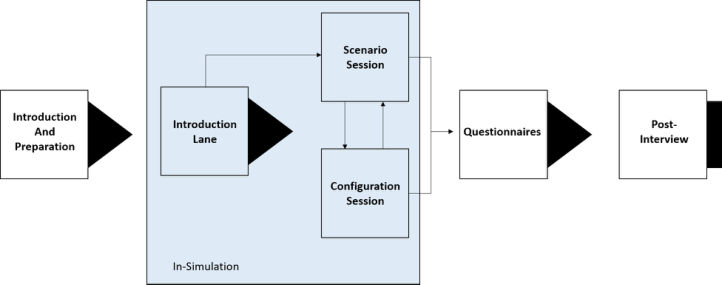
Figure 1: Evaluation study process of the interactive simulation.
EVALUATION STUDY As the evaluation study took place during the COVID-19 epidemic, we deci- ded to convert the intended VR on-sight experiment into a remote study. We therefore distributed our software formatted as an executable file. Live-audio calling with the experimenter during study conduction kept track of users’ progresses. The overall study design comprises of different stages to evaluate the interactive prototype as depicted in Figure 1.
Twenty-nine participants (11 females, 18 males) took part in the study (age: mean [M] = 27.8 years, standard deviation [SD] = 5.1 years). All participants had good German language knowledge (CEFR Lv. C1/C2) and experienced the stages in the same order. The study was structured as a within-subject study to investigate the interface usability and users’ perception of participatory design sessions.
Implementation of the Interactive Simulation The simulation was created using Unreal Engine 4.24 and built for Win- dows 64-bit. Users were instructed to run through three types of scenes: The first one is called the “introduction lane” and introduced the road texture and buildings as well as familiarize users with the controls and interaction. The second level “main level” consists of the scenario and configuration menu where firstly participants were confronted with an upcoming automa- ted vehicle and then were given the opportunity to modify the HMI light band.
To embed participation into the simulation, the active user involvement process was implemented as a configuration session after each scenario itera- tion. This shall give users a general and intuitive understanding where their design options lie. The scenario including the configuration session could be repeated up to eight times.
The parameter space was visually separated into two tabs, HMI light band (T1) and global simulation (T2), see Table 1. The T1 tab includes all confi- gurable parameters regarding the HMI light band with sliders (Brightness, frequency) and a button array (Saturation) containing five variants. The fea- ture for saving configuration has been added to load saved designs for later
Involving Users in Automotive HMI Design 31
Table 1. Meta data of user-customizable simulation parameter.
Table available in the original PDF paper.
Tab Parameter Scale range UI type T1 HMI idle brightness 10 Slider T1 HMI blink frequency 10 Slider T1 HMI color saturation 5 Buttons T2 Environment daytime 3 Slider T2 Environment weather 3 Slider
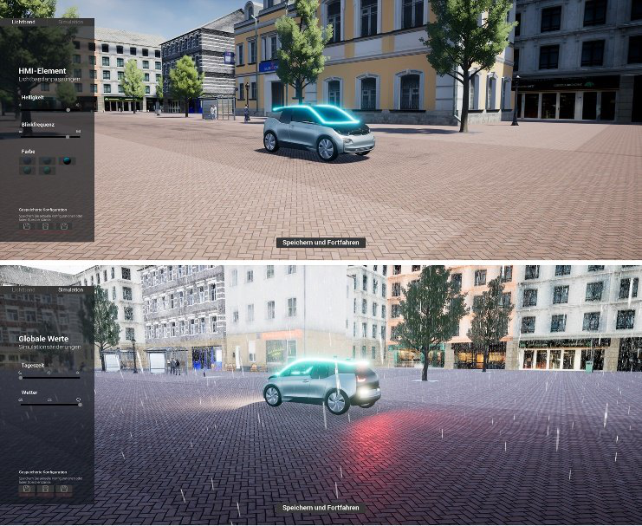
Figure 2: User interface and view on the HMI during the configuration session.
comparison and was requested during pretest. The T2 tab includes additional environment parameters such as weather (sunny, clouded, rain) and daytime (day time, night time, afternoon/sunset), see Figure 1. User were able to con- figure the vehicle’s HMI as well as the global parameters based only on the predefined subset and subrange. Sliders and buttons were implemented to give users control over their decision while having changes to the simulation immediately shown when applied during configuring. During the scenario session up until the AV stopped, participants were not able to move to pre- vent accidental distancing from the scenario. After that, keyboard input for moving around were enabled. View direction could be changed at any point to look around. The environment depicted in Figure 2 shows the approach- ing car within the shared space scenario with the user’s perspective. Besides the vehicle to interact with, there were other moving objects like cars on the street and people on the sidewalk.
Measures We used different measures to assess the perceived task load as well as the perceived software usability of and UX of the interaction with the simulation. All questionnaires were collected with SoSci Survey ver3.2.45 and analyzed using SPSS ver26.0.0.1.
We employed the NASA-TLX to evaluate the task load during the design sessions. We used the raw version without subscale weighting as multiple studies show no significant relevance to the scale evaluation (Hart, 2006).
To assess software usability, the system usability scale (SUS) was used which is shown to be reliable on small sample sizes. System Usability is calcu- lated on a 100-point scale where, according to (Sauro, 2011), the average score conducted over twelve studies is 68, where higher values can be inter- preted as above average and values under 68 as below average. Based on the findings from (Lewis and Sauro, 2009), we split the result into the two subscales usability and learnability. We also included the User Experience Questionnaire short (UEQ-S) which comprises of eight 7-point Likert sca- les to capture both hedonic and pragmatic aspects of UX on two subscales (Laugwitz et al., 2008).
At last, we held a 10-minute semi-structured interview after all questi- onnaires have been completed to elaborate suggestions for improvement and address issues during individual steps in the design process. All post- interviews were logged including voice recordings for later evaluation.
Results
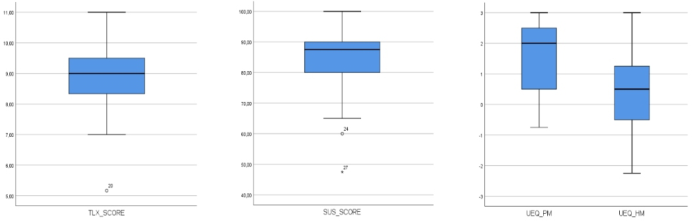
The average processing time of a simulation run including the introduction lane took 8.6 minutes (SD = 4.88 min) with a mean scenario repetition of 3.52 min (SD = 2.04 min). Regarding the perceived task workload, the NASA-TLX shows consistent and equally distributed results on the subsca- les. The majority of the participants reported low mental demand (M = 3.59, SD = 2.19), low physical effort (M = 1.38, SD = 0.97), low temporal demand (M = 2.48, SD = 2.37) and low effort (M = 3.14, SD = 1.95). Regarding frustration (M = 3.83, SD = 3.97) and performance (M = 3.52, SD = 1.52), answers were more spread with higher variance in both subscale dimensions. The overall workload ratings are located at around a value of 9 which can be interpreted as a low perceived task load.
The average score of SUS reached M = 83.79 points (SD = 12.03) and shows above average usability across all participants. Learnability avera- ged at 94.4 points (SD = 8.57) while usability scored at 81.14 points (SD = 14.36). The results of the UEQ short shows high scores in the middle and upper values of hedonic (UEQ_HM) and pragmatic (UEQ_PM) quality. The pragmatic quality was overall rated better (M = 1.47, SD = 1.21) than the hedonic quality (M = 0.48, SD = 1.36). Overall results of the questionnaire were positive (M = 0.97, SD = 1.09). Figure 3 shows the questionnaires’ results with their error bars.
At last, the questionnaires resulted in a variety of different answers towards the feedback of the simulation. Only one participant reported technical lag
Involving Users in Automotive HMI Design 33
Figure 3: Results of the self-report questionnaires (left: NASA-TLX sum score, center: SUS sum score, right: UEQ pragmatic and hedonic qualities).
and simulation execution problems. Users reported the following suggestions towards the simulation experience:
less text and instead more pictograms or pictures (∼22%)
better immersion by introducing more actors like pedestrians, cars and street elements (∼20%)
more visibility of the tab system (∼17%).
Towards the HMI configuration, users preferred:
more color options (∼65%)
a more diverse set of configurations, such as finer increments regarding the sliders (∼31%)
more open design options, include more environmental options, for exam- ple weather option like fog and different traffic options to choose from (∼24%).
Overall, all participants agreed that the idea of active user involvement and such a software tool, as the interactive simulation, is appreciated and would be used again in future applications to work on HMI designs.
DISCUSSION
In this work, we presented an interactive simulation tool for integrating ele- ments of PD into UCD practices for design automotive HMIs. The conducted user evaluation of the prototype of the interactive simulation has given us first insights into user inclusion and appropriate tools for non-experts for virtual environments. The user feedback with regards to the questionnaires and inte- rview reveals the potential positive impact, challenges and limitations of our interactive simulation.
The configuration menu has been extensively used and understood by all participants after an initial learning phase. With the predefined chan- geable parameter combined with the use case, a simulation execution time (excluding the introduction lane) of eight minutes on average could be obse- rved. The duration is shorter than typical user-centered prototyping studies (Le et al., 2020) and may indicate potential parameter space expansion or
more complex scenarios to increase longer presence in the simulation. Accor- ding to the quantitative analysis, the simulation has mostly been accepted by participants with advocacy of usefulness towards developing design from a usability perspective. Users evaluated the system with a high level of usabi- lity and low mental task load. As the interface of the interactive simulation was designed simple with most buttons showing direct feedback, this comple- ments our requirement that the system should be intuitive to use. Moreover, the UEQ short shows good results in pragmatic subscales which may be cor- related to the findings in the TLX raw subscale frustration and perceived performance. This adds up with the results from the qualitative findings from the interviews where participants report difficulties in finding certain subme- nus or perceive the simulation as not realistic enough. Still, the overall high SUS score indicates that the prototype of our simulation is highly usable. Additionally, the final questions of the interviews advocate the potential use of a participatory approach in HMI design. The answers across all questi- onnaires have been overall positive and the concept of using collaborative software was well received. This correlates with the quantitative data and feedback described above. Results of all surveys demonstrate the potential of the given interactive simulation and structure to make the interface more comprehensive as well as give users more options. At this point, it is impor- tant to mention that the assessment of quality of the resulting HMIs regarding measures, such as satisfaction or efficiency was not tracked or further asses- sed as we were only concerned about the user interaction with the interactive simulation.
As the study was conducted as a first test-run of the interactive simulation, there are limitations we want to address. The remote study design and mis- sing baseline-comparison render our study a prototype usability/UX study and the UI as well as user journey have yet to be analyzed to conform to users’ expectations with respect to the use case. Therefore, overall scores of the different questionnaires should be interpreted with caution. Furthermore, the parameter space is only adequate for the time frame set and use case of this particular study, so that a generalization to other use cases has to be demonstrated. Depending on the HMI and technical possibilities, the design space may be created larger and more complex. One next step is to determine the optimal range and depths of given parameters for more complex scena- rios. As the limitations set by the COVID-19 pandemic shifted our study design to a remote study, we slightly changed on how users could interact and dropped the inclusion of more immersive virtual experiences i.e. head- mounted displays. Future studies with different equipment may enable better immersion.
CONCLUSION
We presented an interactive on-screen simulation including core elements of participatory design for automotive HMI development. According to the core aspects described by Greenbaum and Loi (2012) and Luck (2018) i.e. enabling users to “make” designs, scenario-driven configuration sessi- ons, participatory design principles), a design session was implemented for
Involving Users in Automotive HMI Design 35
non-designer users with a subset of design options. Results show a positive tendency towards acceptance of active user involvement and high usability acceptance of the simulation. Our key findings of our prototypical design simulation fits with aforementioned advantages shown by other authors like (François et al., 2017; Sanders, 2002). User reports and questionnaires show potential optimization in user guidance throughout the execution. Within the given time frame, the parameter space was sufficient but for larger work flows it is recommended to increase the parameter space within the frame of required usability specifications for future studies. Findings also indicate that users not only see a need for collaborative working but also want to be involved in today’s complex processes like HMI designs to decrease faulty behavior and increase user acceptance.
As this study was initially prepared as a VR study, more user interacti- ons and better immersion can be introduced. Feel of presence can also be improved within VR with more asset utilization and more intuitive inter- faces using body movement, such as hand gestures and head motion. We hope to show the benefits of increasing user involvement during HMI design processes and elaborate the necessity to push boundaries of well-established UCD methods by gathering information beyond merely observing users with product prototypes. Insights from this study can be used to prepare a more in-depth look into the advantages of user-involving design spaces for auto- motive HMI design sessions or other domains respectively to enable more supporting entities in designing with the user.
ACKNOWLEDGMENT
We gratefully acknowledge funding from the Deutsche Forschungsgemein- schaft (DFG) (KO 1990/7-1). We also thank Fabian Walocha for proof reading.
REFERENCES
Bao, Y., Wei, Z. and Di Benedetto, A. (2020) ‘Identifying the tacit entrepreneurial opportunity of latent customer needs in an emerging economy: The effe- cts of experiential market learning versus vicarious market learning’, Strategic Entrepreneurship Journal, vol. 14, no. 3, pp. 444–469. Björgvinsson, E., Ehn, P. and Hillgren, P.-A. (2010) ‘Participatory design and “demo-
cratizing innovation”‘, Proceedings of the 11th Biennial Participatory Design Conference on - PDC ‘10. Sydney, Australia, 29.11.2010 - 03.12.2010. New York, New York, USA, ACM Press, p. 41. Bratteteig, T., Bødker, K., Dittrich, Y., Mogensen, P. H. and Simonsen, J. (2013) ‘Organising principles and general guidelines for Participatory Design Projects’, Routledge international handbook of participatory design, pp. 117–144. Bukengolts, P. (2019) Trust what your users do, not what they say: Why you
should trust your users’ actions, not their words—and how to give your users what they need, instead of what they think they want. [Online]. Availa- ble at https://www.appcues.com/blog/dont-give-users-what-they-want (Accessed 7 November 2022).
Forster, Y., Hergeth, S., Naujoks, F., Krems, J. and Keinath, A. (2019) ‘User Education in Automated Driving: Owner’s Manual and Interactive Tutorial Support Men- tal Model Formation and Human-Automation Interaction’, Information, vol. 10, no. 4, p. 143. François, M., Osiurak, F., Fort, A., Crave, P. and Navarro, J. (2017) ‘Automo-
tive HMI design and participatory user involvement: review and perspectives’, Ergonomics, vol. 60, no. 4, pp. 541–552. François, M., Osiurak, F., Fort, A., Crave, P. and Navarro, J. (2021) ‘Usability and acceptance of truck dashboards designed by drivers: Two participatory design approaches compared to a user-centered design’, International Journal of Industrial Ergonomics, vol. 81, p. 103073. Gabbard, J. L., Hix, D. and Swan, J. E. (1999) ‘User-centered design and evaluation of
virtual environments’, IEEE Computer Graphics and Applications, vol. 19, no. 6, pp. 51–59. Greenbaum, J. and Loi, D. (2012) ‘Participation, the camel and the elephant of design: an introduction’, CoDesign, vol. 8, 2–3, pp. 81–85. Hart, S. G. (2006) ‘Nasa-Task Load Index (NASA-TLX); 20 Years Later’, Procee-
dings of the Human Factors and Ergonomics Society Annual Meeting, vol. 50, no. 9, pp. 904–908. Kaulio, M. A. (1998) ‘Customer, consumer and user involvement in product development: A framework and a review of selected methods’, Total Quality Management, vol. 9, no. 1, pp. 141–149. Lau, M., Le, D. H. and Oehl, M. (2021) ‘Design of External Human-Machine Inter-
faces for Different Automated Vehicle Types for the Interaction with Pedestrians on a Shared Space’, in Black, N. L., Neumann, W. P. and Noy, I. (eds) Proceedings of the 21st Congress of the International Ergonomics Association (IEA 2021), Cham, Springer International Publishing, pp. 710–717. Laugwitz, B., Held, T. and Schrepp, M. (2008) ‘Construction and Evaluation of a User Experience Questionnaire’, in Holzinger, A. (ed) HCI and Usability for Education and Work, Berlin, Heidelberg, Springer Berlin Heidelberg, pp. 63–76. Lawson, G., Salanitri, D. and Waterfield, B. (2016) ‘Future directions for the develo-
pment of virtual reality within an automotive manufacturer’, Applied ergonomics, 53 Pt B, pp. 323–330. Le, D. H., Temme, G. and Oehl, M. (2020) ‘Automotive eHMI Development in Virtual Reality: Lessons Learned from Current Studies’, in Stephanidis, C., Antona, M. and Ntoa, S. (eds) HCI International 2020 – Late Breaking Posters, Cham, Springer International Publishing, pp. 593–600. Lewis, J. R. and Sauro, J. (2009) ‘The Factor Structure of the System Usability Scale’,
in Kurosu, M. (ed) Human Centered Design, Berlin, Heidelberg, Springer Berlin Heidelberg, pp. 94–103. Luck, R. (2018) ‘What is it that makes participation in design participatory design?’, Design Studies, vol. 59, pp. 1–8. Maedche, A., Botzenhardt, A. and Neer, L. (eds) (2012) Software for People, Berlin,
Heidelberg, Springer Berlin Heidelberg. Mandal, S. (2013) ‘Brief Introduction of Virtual Reality & its Challenges’, International Journal of Scientific & Engineering Research, Volume 4, Issue 4, pp. 304–309 [Online]. Available at https://www.ijser.org/researchpaper/Brief-Introduction-of- Virtual-Reality-its-Challenges.pdf (Accessed 21 April 2022). Merkel, S. and Kucharski, A. (2019) ‘Participatory Design in Gerontechnology: A
Systematic Literature Review’, The Gerontologist, vol. 59, no. 1, e16-e25.
Involving Users in Automotive HMI Design 37
Norman, D. A. and Draper, S. W. (eds) (1986) User centered system design: New perspectives on human-computer interaction, Boca Raton, London, New York, CRC Press. Othman, K. (2021) ‘Public acceptance and perception of autonomous vehicles: a
comprehensive review’, AI and ethics, vol. 1, no. 3, pp. 355–387. Sanders, B.-N. E. (2002) ‘From user-centered to participatory design approaches’, in Frascara, J. (ed) Design and the Social Sciences, CRC Press, pp. 1–8. Sauro, J. (2011) Measuring Usability with the System Usability Scale (SUS) [Online].
Available at https://measuringu.com/sus/. Scariot, C. A., Heemann, A. and Padovani, S. (2012) ‘Understanding the collaborative-participatory design’, Work (Reading, Mass.), 41 Suppl 1, pp. 2701–2705. Wilbrink, M., Lau, M., Illgner, J., Schieben, A. and Oehl, M. (2021) ‘Impact of External Human–Machine Interface Communication Strategies of Automated Vehicles on Pedestrians’ Crossing Decisions and Behaviors in an Urban Environment’, Sustainability, vol. 13, no. 15, p. 8396. Wilbrink, M., Nuttelmann, M. and Oehl, M. (2021) ‘Scaling up Automated Vehicles’
eHMI Communication Designs to Interactions with Multiple Pedestrians – Putting eHMIs to the Test’, 13th International Conference on Automotive User Interfaces and Interactive Vehicular Applications. Leeds United Kingdom, 09 09 2021 14 09 2021. New York, NY, USA, ACM, pp. 119–122. Wilbrink, M., Schieben, A. and Oehl, M. (2020) ‘Reflecting the automated vehicle’s perception and intention’, Proceedings of the 25th International Conference on Intelligent User Interfaces Companion. Cagliari Italy, 17 03 2020 20 03 2020. New York, NY, USA, ACM, pp. 105–107.
LISTED IN THE AHFE DIGITAL BOOKSTORE CATALOGUE
Explore the complete digital volume
Intelligent Human Systems Integration (IHSI 2023): Integrating People and Intelligent Systems
Read this individual research paper free through the original publisher, or explore the full digital proceedings book.
ISBN 978-1-958651-45-2
Explore this ISBN in the AHFE Bookstore ↗Listed in the July 2026 bookstore catalogue; search by ISBN to confirm current availability · Digital book purchase optional