Huaizhi Shi, Yan Zhang, Zhu Zheng (2023). Construction of Cooking Heat transfer Model and Prediction of Temperature based on Machine Learning. In: Intelligent Human Systems Integration (IHSI 2023): Integrating People and Intelligent Systems. AHFE Open Access, vol. 69, pp. 285–294. https://doi.org/10.54941/ahfe1002847
In order to simulate the cooking process heated by gas, considering the characteristics of water and edible oil and combining with the existing heat transfer research, a cooking heat transfer model with mass dissipation of heating medium was constructed in this paper. The numerical simulation of the heat-transfer model under different heating conditions was carried out with MATLAB. The container and the medium temperature simulation results fit well with the experimental data under the same conditions. Based on the physical model, two deep learning models, MDTN (Multiple Time Difference Network) and LSTM(Long Short-Term Memory), were used to learn the variation law of the container temperature during heating. When using the MDTN model to predict the temperature value over a long time horizon, the actual temperature of the container was required to be added to the DataSet intermittently to prevent temperature error from diverging gradually. However, when using the LSTM model for prediction, since the temperature change was relatively stable, this model could predict the temperature of a longer time series using only the initial temperature sequence, and the prediction result was close to the actual temperature. The prediction results of both models conformed to the laws of physics.
With the continuous development of society and technology, emerging scie- nce and technology have a more significant impact on human life, and the scope of influence is also more extensive. In the cooking industry, with the development of artificial intelligence and various automation technologies, some intelligent cooking robots and related patented technologies have emer- ged (Su and Zhang, 2015; Yang, Ma and Guo, 2018). However, due to its high cost and complex complete sets of equipment (Zheng, Jiang and Song, 2021), manual cooking still occupies a dominant position compared with intelligent cooking in modern Chinese families and the catering industry. At the same time, machine learning technology has many branches and is widely used, and many scholars have used deep learning methods to predict tempe- rature changes in different fields. Li et al. (2022) proposed a deep multi-time differential network (MTDN) to predict the indoor temperature at the next
moment and optimize the heating strategy. Zhang and Han (2022) combi- ned Recurrent Neural Network (RNN) and Convolutional Neural Network (CNN) and used ConvGRU deep network model to predict ocean surface temperature. Luo, Zheng and Chen (2022) compared the prediction results of the Autoregressive Integrated Moving Average model (ARIMA) and the LSTM model for the global average surface temperature and optimized the LSTM model to predict the global average surface temperature more accu- rately. Li and Han (2019) used the LSTM model to simulate and analyze the thermal station and optimize the heat distribution of the thermal station.
By integrating the above research contents, machine learning can be used to predict the change in container temperature during cooking. Then the heating of the cooking process can be controlled according to the predicted temperature. Compared with the cooking robot, this method only needs a sensor to collect the container’s temperature, which is simpler in the physi- cal structure and control method and can accelerate the intellectualization of the cooking method. Based on the existing research on heat transfer in coo- king (Deng, 2013), this paper simplifies the heat transfer model according to the characteristics of the heat transfer medium (Zhao, 2009; Chen, Hu and Cheng, 2003), focusing on the temperature change of the container and the medium. The above heat transfer model was simulated using Matlab softw- are, and the simulation results were compared with the experimental heating data. The simulation results fit well with the experimental data regarding temperature change of container and mass dissipation of medium. This heat transfer model could obtain container temperature data under different hea- ting conditions through simulation and build a large number of datasets for machine learning. It solved the problem that only a small amount of data could be obtained through experiments, which made it possible to apply the machine learning method in the field of cooking heat transfer. In order to learn the rule of container temperature change during the heating process, the MTDN model and LSTM model were used to predict the container tem- perature. The two deep learning models differed in implementation, and the two models had their advantages in prediction. Both models could achieve temperature predictions that were close to the target temperature. The heat transfer model constructed and the machine learning method used in this paper could provide a new solution for the field of cooking heat transfer.
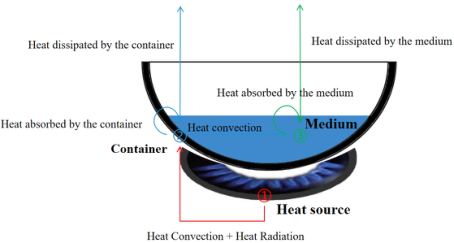
CONSTRUCTION OF HEAT TRANSFER MODEL Typical Chinese cooking was characterized by the heating process of stirred liquid-food particles in an open container. As this paper focused on the tem- perature of the container and medium, food particles could be omitted. The direction of heat transfer was from the heat source to the container and then to the medium. The mode of heat transfer covered conduction, radiation, and convection. In the process of heat transfer, the containers used in coo- king are mostly thin-walled metal, with high thermal conductivity and little influence on the overall thermal resistance. The heat transfer in the liquid with a small volume was mainly carried out by convection, and its internal
Construction of Cooking Heat Transfer Model and Prediction of Temperature 287
Figure 1: Process of heat transfer.
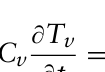
thermal resistance was also ignored. The heat transfer model’s overall thermal resistance was shown (see Figure 1). Governing equation of container heating In the process of cooking, when the gas was used as the heating source and the ambient temperature was stable, the heat balance of the container was as follows: Gas radiation heating + Gas convection heating = Container heat absor- ption + Container radiation heat dissipation + Container conduction heat transfer to the medium. The heat conduction control equation of the contai- ner could be established as follows:
Equation reproduced from the original PDF.
ρv: Density of the container (kg/m3)
Cv: Specific heat capacity of container (J/kg·K)
Kv: Thermal conductivity of container (W/m·K)
Tv: Temperature of the container (K)
1 : ∂2
∂x2 + ∂2
∂y2 + ∂2
∂z2 , Laplacian operator, x, y and z are Cartesian
coordinates Boundary conditions for the container:
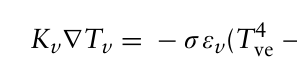
1) The outer wall of the container was heated by radiation and gas conve- ction, and the outer boundary conditions were as follows: Kv∇Tv = hvb(Tb −Tvos) + σεvb(T4
c −T4
vos)
∇: ∂ ∂xi + ∂ ∂yj + ∂ ∂zk, Hamiltonian operator, and ijk are unit vectors in the direction of XYZ respectively
hvb: Flame-vessel convective heat transfer coefficient (W/(m2·K))
Tb: Temperature of flame (K)
Tvos: Temperature of the outer wall of the container (K)
σ: Stephen Boltzmann constant (W/(m2·K4))
εvb: Emissivity of heat transfer system between bottom of combustion chamber and outer wall of the container
Tc: Temperature at the bottom of the combustion chamber (K)
2) The convection heat transfers from the inner wall of the container to the medium had the following inner boundary conditions:
Kv∇Tv = −hvf(Tvis −Tf)
hvf: Container-medium convective heat transfer coefficient (W/(m2·K))
Tvis: The temperature of the inside of the container (K)
Tf: Temperature of medium (K)
3) The radiative heat dissipation of containers exposed to air had the following conditions
Equation reproduced from the original PDF.
ve −T4
e )
εv: Emissivity of the container
Tve: Temperature of the container wall exposed to air (K)
Te: Ambient temperature (K)
Governing equation of medium heating dTf hvfAvf(Tf −Tvis) = −mfCf
e −T4
f ) −Afhfe(Te −Tf)
dt −meLf −σAfεf(T4
Avf: Convective heat transfer area between container and medium (m2)
mf: Mass of medium (kg)
Cf: Specific heat capacity of the medium (J/kg·K)
me: The evaporation mass of the medium (kg)
Lf: Latent heat of vaporization of the medium (J/kg)
Af: The area of contact between medium and air (m2)
εf: Emissivity of the medium
Tf: Temperature of the medium (K)
hfe: Medium-air convection heat transfer coefficient (W/(m2·K)) The evaporation mass (me) was related to mass transfer coefficient (βp), wet air pressure (Pv), and saturated layer water-air pressure (P ′′ v). The latent heat of vaporization (Lf) was inversely proportional to the temperature of the medium. It could be obtained from the latent heat of vaporization (Lfb) at the medium’s boiling point and current temperature. The contact area (Af) between the medium and air was related to the medium’s mass and the con- tainer’s shape, which needed to be calculated and modified according to the actual medium’s value in the model.
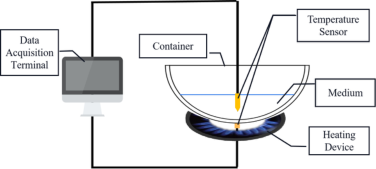
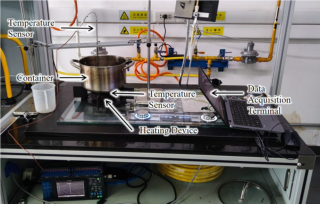
COMPARISON OF EXPERIMENTAL AND MODEL RESULTS Based on the above mathematical model, the simulation calculation of medium heating was carried out using MATLAB. In order to compare with the actual results, the experiment of medium heating was carried out under certain conditions. The main experimental facilities were a heating device, a container, two sensors, and a data acquisition terminal (see Figure 2 and
Construction of Cooking Heat Transfer Model and Prediction of Temperature 289
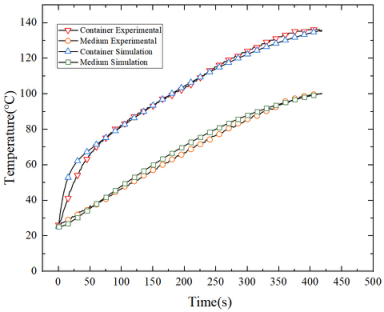
Figure 2: Schematic of the experiment.Figure 3: Experiment devices.Figure 4: Comparison of simulated values with experimental results.
Figure 3). A fixed mass of water was heated by gas in a stainless steel frying pan. Two temperature sensors were placed to measure the temperature of the container and the medium, respectively. The termination condition of the experiment was the boiling of the medium. In the course of the experiment, it was necessary to record the temperature change of the container and the medium and the quality change of the medium.
The comparison between the experimental and model simulation results was shown on the premise that the experimental conditions were consistent with the simulation conditions (see Figure 4). The comparison results showed that under the same conditions, the simulation results were in good agreement with the experimental results within an acceptable error range. The results proved that the model could be used to simulate other conditions of specific
heating, which means that this model could provide a large amount of data for machine learning training.
PREDICTING TEMPERATURE WITH MACHINE LEARNING In order to learn the temperature change rule of the container during the heating process, the above heat transfer model was used to obtain contai- ner temperature data under different heating conditions through simulation. The data format and pre-processing methods would also differ for different machine learning models. In this paper, the MTDN and LSTM models were used for comparative analysis. Predicting temperature by MTDN model
The Multiple Time Difference Network (MTDN) model is a machine lear- ning prediction model that combines the three parts of the past moment, the adjacent moment, and the current moment to predict the next moment’s state jointly.
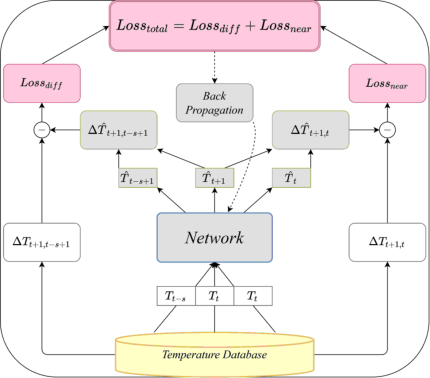
In this paper’s temperature prediction, the input model’s characteristics were the temperature Tt at the current moment, the temperature Tt−1 at the adjacent moment, and the temperature Tt−s at the random moment. The model was based on the fully connected neural network, which contains one input and output dimension and three hidden layers. The output values were the predicted temperatures bTt, bTt + 1, and bTt−s + 1 corresponding to the three moments. The label values used in the model were 1T(t + 1,t) (the difference between the target temperature at time t + 1 and time t) and 1T(t + 1,t−s + 1) (the difference between the target temperature at time t + 1 and the target temperature at t −s + 1). After obtaining the predicted temperatures at three moments through the MTDN model, the difference between the predicted values 1bT(t + 1,t) and 1bT(t + 1,t−s + 1) were obtained by taking the differe- nce of the three parts of the temperature. Then the difference between the predicted and the label values were calculated again, and the mean square error was calculated by summation. After the total loss was calculated, the model parameters were updated by backpropagation. The overall structure of the MTDN model was shown in Figure 5.
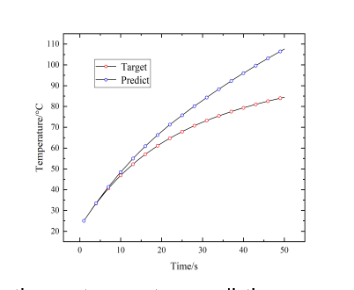
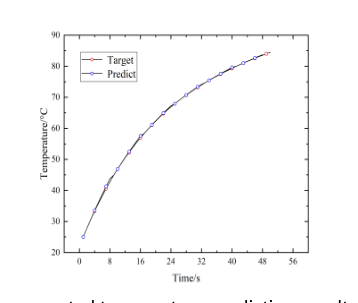
Fifty thousand pieces of data were generated using the heat transfer model built above for machine learning training. When using the MTDN model for actual prediction, the temperature Tt + 1 at the next moment could be predicted only by passing in adjacent temperature Tt−1 and current tem- perature Tt. When using only two initial temperature values to predict the subsequent temperature over a long period of time, the error between the predicted and target temperature values gradually increased over time. The mean absolute deviation(MAD) between the target value and the predicted value was 9.314. A better-predicted temperature could be obtained when the correction was performed using the target temperature discontinuity (one correction every eight seconds). The value of MAD was reduced to 0.145. The two kinds of temperature prediction results were shown in Figure 6 and Figure 7.
Construction of Cooking Heat Transfer Model and Prediction of Temperature 291
Figure 5: Structure of MTDN model.Figure 6: Results of continuous temperature predictions.Figure 7: Intermittently corrected temperature prediction results.
By comparing the two results, it could be seen that the MTDN model could predict the temperature series in a short time of the container. When predicting the temperature for a long time, the initial temperature must be corrected intermittently to prevent the error from diverging.
Figure 8: Structure of LSTM model.
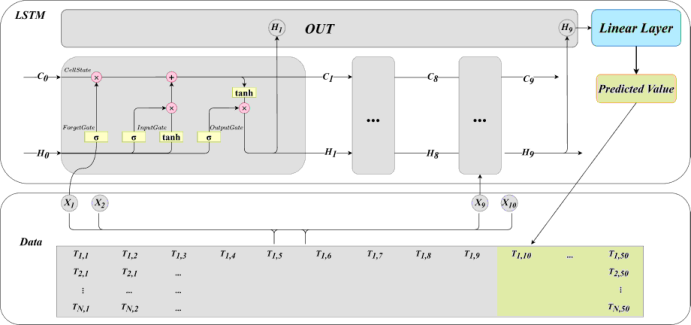
Predicting temperature by LSTM model Long Short-term memory model (LSTM) changes the hidden layer of the traditional Recurrent Neural Network (RNN) model into a memory module, which includes forget-gate, input-gate, and output-gate to control the reset, read and write of input data respectively. During the calculation process, the current unit will receive the output value and the cell state value passed by the previous unit and read in the data. After the calculation of forget-gate, input-gate, and output-gate, the current cell state value and output value are obtained and input to the next cell. In the forward propagation process, the LSTM model will choose the cell state to achieve the memory function. The error backpropagation can efficiently calculate the gradient and update the model parameters. In this prediction model, the length of the temperature sequence input to LSTM was nine-time steps, and the input and output had only one dimension (temperature value). The hidden layer dimension set in this model was 32, and the number of cell layers was 2. The dataset used was consistent with the MTDN model. The values computed by the LSTM were fed into a fully connected layer, and the final output value was computed. The constructed model structure was shown in Figure 8.
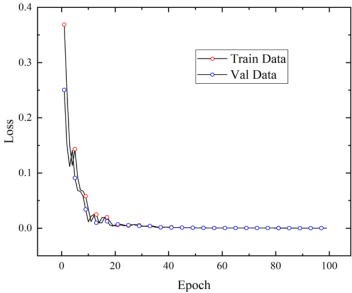
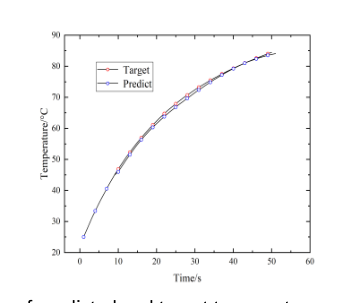
When constructing the data set required by the LSTM model, the tem- perature data was normalized first to prevent the phenomenon of gradient explosion in the calculation. The temperature of every nine-time steps was taken as a group of inputs, and the next time step temperature was used as the label value to train the model. The error of the LSTM model on the trai- ning set and the test set were shown in Figure 9, and the temperature results predicted by the LSTM model were shown in Fig. 10.
From the comparison of temperature curves, it could be seen that for this heat transfer model, since the temperature of the container changed smoothly, the LSTM model could predict the temperature of a longer time series using only the initial temperature sequence, and the prediction result was close to the target temperature. The MAD of the LSTM model was 0.509, which proved that the predicted temperature was close to the target temperature.
Construction of Cooking Heat Transfer Model and Prediction of Temperature 293
Figure 9: Loss on training and test dataset.Figure 10: Comparison of predicted and target temperatures.
CONCLUSION
From the previous content, it can be concluded that the cooking heat transfer model with the medium mass dissipation term constructed in this paper can be used to simulate and analyze different heating situations. LSTM model and MTDN model can be constructed by machine learning method to learn the law of temperature change of container during heating. The two models of machine learning have their own advantages. The MTDN model is rela- tively simple, but the temperature needs to be modified intermittently when predicting the temperature for a long time. In comparison, the LSTM model can predict the temperature for a long time only according to the initial tem- perature series. The prediction results of the two models are close to the target results. The heat transfer model constructed and the machine learning method used in this paper could provide a reference for future research or application of cooking heat transfer.
REFERENCES
De-Yang Luo, Fei Zheng and Quan-Liang Chen (2022), “Prediction of interannual signal time series of global mean surface temperature based on deep learning”, Climatic and Environmental Research, Vol. 27 No. 01, pp. 94–104.
Li Deng (2013), “Construction of Mathematical Model of Chinese Cooking Heat/Mass Transfer Process”, Transactions of the Chinese Society of Agricultural Engineering, Vol. 29 No. 03, pp. 285–292. Peng Li et al. (2022), “A heating strategy optimization method based on deep
learning”, Computer Science, Vol. 49 No. 04, pp. 263–268. Qi Li and Bing-Cheng Han (2019), “Optimal control of primary side of thermal power station based on deep deterministic policy gradient”, Science Technology and Engineering, Vol. 19 No. 29, pp. 193–200. Shi-Ming Yang, Qing-Guo Ma and Cui-Min Guo (2018), “Analysis of the position
and workspace of a new type of parallel cooking robot”, Food & Machinery, Vol. 34 No. 11, pp. 96–100+125. Xue-Wei Zhang and Zhen Han (2022), “Sea surface temperature prediction based on ConvGRU deep learning network model”, Journal of Dalian Fisheries University, Vol. 37 No. 03, pp. 531–538. Yang Su and Cong Zhang (2015), “Research on the Strategy of Realizing Indu-
strial Cooking in China’s Catering Industry”, China Condiment, Vol. 40 No. 01, pp. 131–136. Ye-Shuang Zheng, Xiao-Hui Jiang and Jian-Ping Song (2021), “Design of Intelligent Cooking System Based on Internet”, Applications of IC,Vol. 38 No. 04, pp.66–67. Ze-Shao Chen, Peng Hu and Wen-Long Cheng (2003), “General Contrastive State
Estimation for Saturated Vapor Density, Enthalpy, and Latent Heat of Vaporiza- tion”, Journal of Engineering Thermophysics, No. 02, pp. 198-201. Zhen-Guo Zhao (2009), “Discussion on the formula of water surface evaporation coefficient”, Journal of Hydraulic Engineering, Vol. 40 No. 12, pp. 1440–1443.
LISTED IN THE AHFE DIGITAL BOOKSTORE CATALOGUE
Explore the complete digital volume
Intelligent Human Systems Integration (IHSI 2023): Integrating People and Intelligent Systems
Read this individual research paper free through the original publisher, or explore the full digital proceedings book.
ISBN 978-1-958651-45-2
Explore this ISBN in the AHFE Bookstore ↗Listed in the July 2026 bookstore catalogue; search by ISBN to confirm current availability · Digital book purchase optional