Ana Moreira da Silva (2023). Sketches versus Artificial Intelligence Systems in Design Creative Process. In: Intelligent Human Systems Integration (IHSI 2023): Integrating People and Intelligent Systems. AHFE Open Access, vol. 69, pp. 459–467. https://doi.org/10.54941/ahfe1002866
Artificial Intelligence Systems are part of our daily life and play an important role in so many human activities. As most professions, design practice also relies on artificial intelligence tools. Creativity is an essential element for design as designer’s task is searching to solve problems by creating solutions through new ideas, new designs. Sketching has been traditionally used by designers over the centuries, so it is often seen as an outdated method for design, as tradition can be thought as a strong and unalterable link to the past. In this sense, some consider sketching obsolete, but nowadays its use has evolved and expanded, being widely used by various areas of knowledge and professional practice, surpassing the previous and restricted use only by areas linked to the project such as architecture, engineering and design. Sketches emerge from the need to fix those first ideas that occur and that are manifested through the first signs, coming from the brain. A sketch can be like the ‘thought of the hand’, the hand as an extension of each thought fixed at the moment by the hand gesture that registers it. This paper investigates the nowadays use of sketches by designers despite the Artificial Intelligence Systems growing importance. We intend to rise questions and search for answers and, also, open a debate about several related issues. What is the nowadays role of sketches in Design? Sketches can be a necessary step of a design: its first spark? The process of thinking through sketching helps designers getting their creativity flowing? Can freehand drawings/sketches in Design practice take advantages of the Artificial Intelligence Systems?
Under a qualitative research, based on literature review methodology, through the study and interpretation of several authors statements, this paper investigates the relationship between sketches and Artificial Intelligence Systems (AIS), aiming to stimulate reflection and bringing new perspectives on the nowadays use of sketches despite the AIS growing importance in the design creative process. This study integrates an ongoing research concer- ned with investigating the ways in which the activity of sketching stimulates creativity in design.
SKETCHING IN DESIGN The word Sketch, according to the Oxford English Dictionary, is under- stood as a rough or unfinished drawing, often done to help making a more finished work.
The sketches rough feature, the fast and synthetic action of recording on a surface, is the materialization of what is immaterial, and it is the use of a tool that allows transporting the imaginary, its questions and possible solutions from the field of ideas to visibility. Between the invisible and the visible there is a ‘wall’ that sketches can cross (Silva and Nakata, 2012).
This paper reflects on sketching as the conception and representation or presentation of an idea, essential to design practice.
The relationship between drawing and designers is very intense, as they use this medium as a way of giving output to creative thinking, transfor- ming it into action. Expressing ideas about artifacts that can be accomplished and become material existence. Therefore, the importance of representing ideas and thoughts is undeniable because while thinking the designer draws in order to create (Nascimento, 2007).
For the wide range design area, including several types of designers: pro- duct, graphic and interior, industrial, brand and web designers, illustrators, front-end developers, user interface (UI) and user experience (UX) desi- gners, etc., sketches are the most basic and essential tool for communicating project ideas. When the designer represents graphically, there is an effort to see beyond the real object, as he seeks to understand and analyze not only what he sees as the internal structure of objects, but everything that is dependent on or around them, thus analyzing their invisible lines, propor- tions and complex shapes in order to synthesize them to develop a whole (Perez and Garcia, 2005).
The design project is a complex practice, given the demand for technical and artistic solutions as a result of the manipulation of different elements, such as form, volume, texture, light, materials, technical components and costs, performance and production technology. There is no single method for carrying out the project, as each case is unique and requires different solutions, just as each designer finds solutions through different paths.
Usually, the design process follows four steps: preparation, incubation, solution, and verification. These steps are common not only for designers, but for any professionals whose work is based on a process for defining and solving problems. From an intellectual perspective, the project involves mul- tiple cognitive and motor skills. The main ones being: analysis and synthesis; creativity and reasoning; knowledge and communication. Sketching can be used as a tool during this process stages (Kowaltowski, Moreira, Petreche and Fabrício, 2011).
The designer’s activity consists of a close relationship with the act of draw- ing. This means of expression can, more quickly, represent an idea in a mee- ting with colleagues, technical advisors, development groups or customers. Being always available, it also enables a broader review and manipulation, that is, everyone can give their suggestions and new proposals. This universal
Sketches Versus Artificial Intelligence Systems in Design Creative Process 461
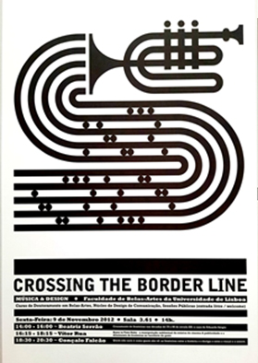
Figure 1: Poster by Jorge dos Reis and related concept sketches (Reis. 2022).
language allows professionals from different areas to communicate in a more practical way.
It is in the initial phase of project conception in design, where sketches are used more frequently, although they are not exactly a final the project representation they can be used along the process in a non-linear way, as it is possible to go back to some stage and propose other solutions for several reasons. In their nature, they reveal moments of the designers’ imagination during their work that needs to articulate and define several relationships.
Graphic designer Jorge dos Reis states that he maintains a consistent production that is always based on the permanent and indispensable pre- ponderance of freehand drawing as a working tool, with the purpose of anticipating and refiguring the definitive forms. The systematic sketch allows a gradual approximation to the desired graphic artifact, in an incessant search (Reis, 2022).
Used as a preparatory study, sketches are an expression means widely used by designers in their processes also as a way for self-reflection on the project. They are part of the designer thought process (Figure 1). During the prepa- ratory study, this type of drawings documents the inquiry phase, examining questions raised by a given intention in a manner that provides the basis for, later, to achieve a more definitive work. These sketches are by nature deli- berately experimental. They produce variations on themes and are clearly exercises toward more concrete design ends. They are generally developed in series and the process is not wholly linear and involves the reexamination of the given questions.
The sketch links the idea to the idealized thing, establishing itself as a space for the designer to invent, dream and investigate without the restrictions of the physical object. Conceived as inspiration, concept, pre-existing form or construction, merges with mental representation and imagination. Drawing materializes cognitive processes, enables perception/reflection interaction, referring to the presentation of form, idea and thought.
462 Moreira da Silva
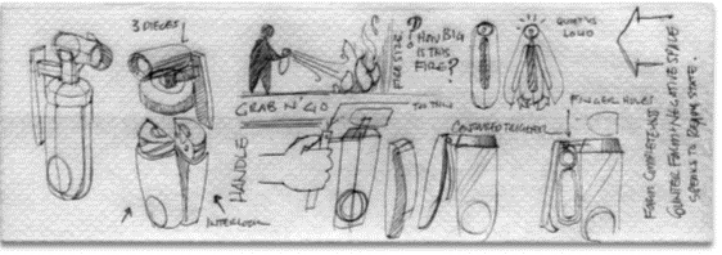
Figure 2: Napkin sketch for a fire extinguisher by Mark Baskinger (2010) https://mv122011.files.wordpress.com/2010/11/baskinger-pencils_pixels.
During this process, the sketch does not have a commitment or an artistic purpose or even an intention to show itself to an external audience. It comes as a method to help the designer to think, registers, improve, questioning and organizing ideas that come to his mind, often in a whirlwind.
This kind of drawings expresses the mind interaction with the eyes and the hand that perform it.
Sketches try to explain concepts and ideas, often with focus on details. They can be self-explanatory, organizing thinking in a readable and rational way. It is exactly this sketches characteristics of organization and explanation that evidence this tool importance in the designer’s creative process. Sketch- ing enables the possibility of taking new perspectives on problems and drive creative thinking (Medeiros and Gomes, 2005).
The sketch is actually a practice, a random and uncommitted freehand drawing. It is usually done when designing, having a coffee, or even sitting in a square, with the goal of registering ideas with quick strokes that capture them. A good part of the designers carry with them sketchbooks because they give the possibility to draw anywhere and at any time. One of the advantages of sketching is, precisely, that we can sketch everywhere, anytime with any medium in many different supports. We do not need special conditions for sketching and we can do it using pencils, pens, markers, or chalk, on any kind of paper, on sketchbooks, whiteboards, chalkboards, and even, many times designers register their ideas that suddenly occur in restaurant napkins.
Napkin sketch (figure 2) shows designer Mark Baskinger ideas evolution through details and actions from many different views recorded during a brief lunch meeting. Jorge Sainz states that, nowadays, sketching has not been discarded by designers and will never be, since it is the best way to move from the idea to its implementation. The question is not the existence or not of a tool that is ‘the best’ to register and communicate an idea, to propose and analyze several solutions, to criticize and help to choose the most useful and adequate response to the given problem. The use of sketches should not disregard the important digital technologies possibilities for design practice (Sainz, 2005).
Designers have been concerned with the search for an improvement on manual representation techniques, even though today there are several free
Sketches Versus Artificial Intelligence Systems in Design Creative Process 463
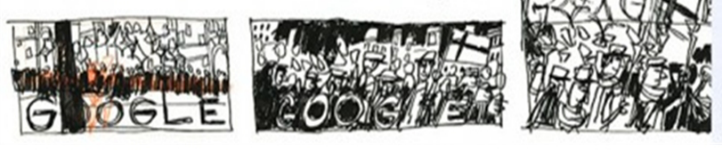
Figure 3: Mike Dutton sketches for Google Doodle. https://www.google.com/doodles.
software that make this type of representation possible in a digital way, for most designers in several design areas, like web designers, the creative phase depends on the manual process of sketching (Figure 3).
Mark Baskinger argues that “pencils before pixels” can be very useful and provide a good basis to refine these sketches via digital images. The ways of registering ideas through sketching can be varied: paper scribbles, Post- its, napkin sketches, etc. Any medium is valid when trying to capture design ideas. For Baskinger, freehand drawings can provide a basis for the transition into digital sketching in a variety of technological tools (Baskinger, 2008).
To John Roome, the possibility of cross-fertilization between traditional and digital platforms that is really interesting, advantageous and innovative (Roome, 2011).
With the information technology evolution, the end of freehand drawing has long been discussed, but, for most designers, the use of new technologies has presented some flaws for the first phase when they must capture in a fast way their arising ideas for creating innovative solutions, inducing them to rescue their notebooks and improve manual representation techniques.
Even though the use of digital tools, like tablets, is frequent. Apparently the sketching actions through this kind of digital tools are also beneficial. However, when sketching, in many different supports even the innovative ones, they still are freehand drawing, the hand is still working as an extension of our human brain.
In a very recent study, a group of researchers investigated the influence of hand sketching on a tablet as compared to pencil or pen and paper on early stages for design concept generation. Researchers asked to several partici- pants (using pen, pencil, and a tablet) to sketch concepts in a quick response to a design proposal. They concluded that sketch quality is highest for pencil drawings on paper and lower for tablet and pen drawings. Participants said that the experience of drawing on paper and on the tablet differ in terms of missing the feeling of friction and freedom on the tablet and that too many features in the digital tool can be distracting when conceiving design responses (Das, Huang and Yang, 2022).
The manual representation benefit, whatever medium is used, can be con- firmed and validated as a basic need for design, because provides new paths for projective problems solutions.
SKETCHING AND CREATIVITY IN DESIGN Creativity can be described as the capacity or ability to conceive innovative and different answers or solutions for challenging and new circumstances, situations or problems.
464 Moreira da Silva
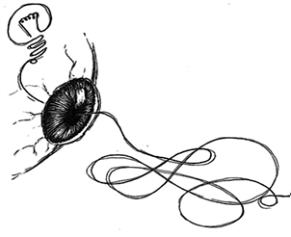
Figure 4: The hand as an extension of the brain, of the reasoning. https://www. google.com/search?q=desenho+de+m%C3%A3o+a+desenhar&oq
Creativity is facilitated by the availability of as many possibilities, choices and alternatives as possible, in personal skills, knowledge, culture, perspe- ctives and available tools, for increasing the chances that unrelated concepts can be combined for a successful creative confluence (Hoorn, 2014).
Most people would describe project activity as one of the human most creative work. To create is to invent something for others to experience or use that can be new, original, unusual and appropriate.
Productivity is the designer focus and is profoundly related with the cre- ative action that aims the materialization of what was desired, needed or a solution for a problem (Medeiros and Gomes, 2005).
Creativity emerges from cognitive abilities and can be understood in terms of individual variations in the use of specific skills, such as flexibility of stored cognitive frame, memory capacity, attention systems, capability for concen- tration, aptitude to make different connections between what we see and what we imagine, open mind to new possibilities, among others.
Creation has in freehand drawing a long tradition. Along times drawing was approached in several areas of creation and knowledge, being in the architecture and in design a fundamental method. The most current scienti- fic researches on the cognitive science research field, point out to the direct interrelations between the hand, the eye and the brain activity during the action of drawing (Figure 4).
Sketches have the important function of assisting the mind to translate ideas into depictions. Drawing as a thinking tool, in which the hand is an extension of the brain, of the reasoning.
As Barbara Tversky states, sketches contain more than they were made to tell because new ideas and forms can be reveled through sketches (Tversky, 2002). In the conceptual/creative process, sketches can give the possibility of tran- sfiguring themselves through graphics that reveal the ideas that give rise to it. It allows to anticipate failures or gaps and also to recognize the desirable solution.
The design process aggregates, in a broader sense, complexity and synthe- sis, making works or products come into existence, through many variables and limits. Designers often must play with several variables and maneuver
Sketches Versus Artificial Intelligence Systems in Design Creative Process 465
around limitations, not having a single set of answers - which leads them to the divergent thinking with regard to the ability to generate multiple solutions to a single problem.
For Remko Van der Lugt, the sketching use for problem solving is still present in designers working method. The activity of sketching stimulates creativity in design process, especially with the positive role that sketching plays in re-interpretation which provides new knowledge and this new kno- wledge leads towards further re-interpretation in a cyclical way through a series of sketches (Van der Lugt, 2005).
Design process can be described as a cyclical process of sketching, inter- preting and taking the sketches further. Designers develop their creativity by engaging in an interactive ‘conversation’ with the sketches they produce to achieve a well thought solution.
Creativity arises when the designer goes beyond the notion of ‘problem solving’ and introduces the procedure of ‘problem generation’ which arises from asking questions about whether the purposes of what is intended can be achieved by any of the solutions he has sketched.
Design process due to the fast flow of thoughts, ideas and associations, is a non-linear and flexible process. Because of its nature, it is impossible to use existing images to express the designer’s fast-flowing creative thou- ghts. Instead, sketches can be produced rapidly without interrupting the thought process and provide the designer with many ideas to choose from (Goldschmidt, 2017).
For Carlos Oliveira, technology is indispensable, but in his opinion it will always function as a complement, as an increasingly sophisticated aid, to the relevant role that the professional will have to continue to play as a decision- maker with a human being vision, capable of generating differentiated and unique value propositions (Oliveira, 2021).
Pedro Domingos, in his book, The Master Algorithm, recognizes the extra- ordinary advances on Artificial Intelligence and its promising future, but, not yet capable of creating something new which is the very essence of Creativity. Domingos is a fellow of the Association for the Advancement of Artificial Intelligence and Professor at the Washington University, being an expert in this subject (Domingos, 2017).
The essence of creativity in design lies in hand drawing that, allowing ideas exploration and creative thinking, giving the ability to express and create continuously throughout the design process, uniting ideas, interesting topics and technical knowledge, enhanced by assistance and interaction with new technologies (Hamilton, 2009).
Creativity is achieved when the designer persistently works to generate a series of alternative solutions early on, followed by a progressive process of refinement, testing and selection. This persistent work is often based on sketches that help him to record and reason out the various solutions.
CONCLUSION
Design is, undoubtedly, a creative process. To solve several design pro- blems, designers need tools with specific qualities. As sketches promote
466 Moreira da Silva
visual thinking proves their profitable use during design creative process. Visual thinking helps the designer to discover new associations, to see in new ways that can drive for discovering new solutions. As visual thinking relies on mental and external images, sketches are great tools to nourish visual thinking.
Creative thinking involves, first of all, the need of generating ideas, making new connections between different ideas, then evaluating them and driving them forward, and, finally, identifying which ideas are relevant and impor- tant. This steps may also influence one another via feedback loops, by the process where the end of which is connected to the beginning. Creative thin- king can be based on sketches because they have the capability of providing support to all this steps.
Many creative professions use sketching as a tool in their design process, from UX designers to movie directors, great ideas start with simple sketches. Sketches are quickly-made freehand drawings and their intention is to give a general overview or the guidelines of something, in relation to the inten- ded final shape or figure, rough drawings representing the chief features of an object or idea and often made as a project preliminary study, synthetic drawings where we represent ideas that have not yet been fully developed.
Sketching assume a peculiar and determinant character in the conceptua- l/creative process, giving thought the possibility of transfiguring itself through graphics that reveal the ideas that give rise to creation. It, also allows the anticipatory structure and the envisaged solution to be recognized.
We can observe that in spite of the existence of digital drawing tools, most designers, from several design areas, still prefer to sketch with a pen, or a pencil on a paper.
However, undervalue technology would be a mistake, therefore, it is neces- sary to promote a coherent fit between pencil and paper and the new digital tools, in order to find the balance between the precision and speed of the new technologies and the use of sketching as another useful tool specially during the creative process in design.
Nonetheless, some questions remain for the further developments: should technological means completely replace the sketch in the name of practicality and immediate results? How much of this reasoning is based on immediate consumerism? This is not intended to question whether the new models of Artificial Intelligence are right or wrong, just to reflect on profound paradigm shifts in such a short period of time.
Design practice should explore digital tools that can promote and empo- wer of creative solutions. To discover flexible tools specifically developed for human creativity in the digital transition era. We also conclude that it is important to understand the Artificial Intelligence Systems positive and negative effect on the creative design process.
ACKNOWLEDGMENT
The author would like to acknowledge the support given by CIAUD – Resea- rch Centre in Architecture, Urbanism and Design, Lisbon School of Archite- cture, Universidade de Lisboa, and by FCT – Foundation for the Science and
Sketches Versus Artificial Intelligence Systems in Design Creative Process 467
Technology, Portugal. This work is financed by national funds through FCT - Fundação para a Ciência e a Tecnologia, I.P., under the Strategic Project with the references UIDB/04008/2020 and UIDP/04008/2020.
REFERENCES
Baskinger, M. (2008) Pencils Before Pixels. A Primer in Hand-Generated Sketching in Interactions, Volume XV. Website: https://mv122011.files.wordpress.com/2010/ 11/baskinger-pencils_pixels.pdf Das, M. Huang, M. Yang M. C. (2022) Tablets, Pens, and Pencils: The Influence
of Tools on Sketching in Early Stage, ASME 2022 International Design Engi- neering Technical Conferences and Computers and Information in Engineering Conference. Website: https://www.researchgate.net/publication/365335430 Domingos, P. (2017) A Revolução do Algoritmo Mestre. Manuscrito Editora, Lisboa Goldschmidt, G. (2017), Manual Sketching: Why Is It Still Relevant? S. Ammon & R. Capdevila-Werning (Ed.) The active image: Architecture and engineering in the age of modeling, Springer Publishing. Hamilton, P. (2009) Drawing with printmaking technology in a digital age. Website:
http://www.lboro.ac.uk/microsites/sota/tracey/journal/dat/images/paul_hamilton. Hoorn, J. F. (2014) Creative confluence. Amsterdam/Philadelphia: John Benjamins Publishing Company. Kowaltowski, D. C. C. K. Moreira, D. C. Petreche, J. R. D. Fabrício, M. M. (orgs.),
(2011), Processo de Projeto em Arquitetura. São Paulo: Editora Oficina de Textos / FAPESP. Medeiros, L. M. S. Gomes, L. V. N. (2005) Desenvolvimento da Linguagem do Desenho: fases, etapas, estágios e níveis. In: Anais do III Congresso Internacional de Pesquisa em Design – III CIPED. Rio de Janeiro, Brasil. Nascimento, M. A. (2007) Desenho e design: desenhar para ver ideias. In: Anais do
VII Congresso Internacional de Pesquisa e Desenvolvimento em Design – P&D Design 2007. Curitiba: Unicemp. Oliveira, C. M. (2021) Marketing molecular e humano. A Small Data. Marketeer Journal. January 2021. https://marketeer.sapo.pt/marketing-molecular-e- humano-a-small-data. Perez, F. J. García, J. A. (2005) Desenho para designers industriais: aula de desenho
profissional. Lisboa: Ed. Estampa. Reis, J. (2022) Um Projectista na Academia, vinte e cinco anos de Design Gráfico para a Universidade de Lisboa. Imprensa da Universidade de Lisboa. Roome, J. (2011) Digital Drawing and the Creative Process. Retrieved from: http://www.lboro.ac.uk/departments/ac/tracey/tracey@lboro.ac.uk, acces- sed 02.04.2022. Sainz, J. (2005) El Dibujo de Arquitectura: Teoría e Historia de un Lenguaje Gráfico.
Madrid: Editorial Reverté. Silva, J. C. P. and Nakata, M. K. (2012) Sketch para design; sua importância no processo de criação de produtos. Bauru: Ed. Canal 6. Tversky, B. (2002). What do Sketches say about thinking? https://www.researchgate.
net/publication/2541825_What_do_Sketches_say_about_Thinking, accessed 12.10.2022. Van der Lugt, R. (2005) Sketching Stimulates a Re-interpretive Cycle in the Individual Designer’s Idea Generation Process. In Design studies, Volume 26. Elsevier.
LISTED IN THE AHFE DIGITAL BOOKSTORE CATALOGUE
Explore the complete digital volume
Intelligent Human Systems Integration (IHSI 2023): Integrating People and Intelligent Systems
Read this individual research paper free through the original publisher, or explore the full digital proceedings book.
ISBN 978-1-958651-45-2
Explore this ISBN in the AHFE Bookstore ↗Listed in the July 2026 bookstore catalogue; search by ISBN to confirm current availability · Digital book purchase optional