Jorge Gil Tejeda, Lorena Olmos Pineda (2023). Exploration of Intercultural Mechanism of Language through the Interaction with Sensitive Qualities of Artistic Objects. In: Human Interaction and Emerging Technologies (IHIET-AI 2023): Artificial Intelligence and Future Applications. AHFE Open Access, vol. 70, pp. 50–56. https://doi.org/10.54941/ahfe1002929
Through the study of 346 artistic products, related to digital paintings from the Medieval period, the relationship between the intercultural mechanism of contemporary language and the qualities of paintings were studied. In this sense the tool developed by Wingfield, C., & Connell, L. (2022) was used, in which the semantic similarity based on user experience was analyzed. In relation to the qualities of artistic object the tetrachoric coefficient of darkness was considered to analyze as one of fundamental sensitive factors of artistic work, so the variables were reduced to the dichotomy: darkness of the digital work in RGB system and concepts based on experience. Likewise, a classification of 57 relevant topics of digital works were obtained. The results suggest the existence of a low relationship in the dichotomy: darkness of image - concept based on experience; However it was observed that as the closeness of the concept increases in relation to the Middle Ages, there is less tendency to find works with a prominent darkness in the digital image., Which suggests that the formation of contemporary concepts related to the Middle Ages are not dependent on the darkness of the work. The intention of these studies lies on exploring the relationship of the intercultural mechanism of language based on semantic similarity -proposed by Wingfield, C., & Connell, in groups of contemporary users and the interaction with sensitive qualities of objects created in ancient times.
From a human perspective the interaction with objects can be approached from many perspectives: from affectations on the activation of various sen- sory mechanisms, complex cognitive processes, adaptability until generation of a variety of responses, just to name some of them. Likewise, the production of objects can be considered as the integration of systems that fuse a diversity of cultural factors such as language, color, shape, among many factors. One of
Exploration of Intercultural Mechanism of Language Through the Interaction 51
the most emblematic cultural artifacts in any culture is the artistic object, which integrates various languages and topics linked to a period. Depending on the characteristics of the artistic object is how a person interacts with it. However, it is observed a factor that has not been explored enough, in relation with the interaction process of a person with an artistic object that implies the construction of concepts, we mean to the exploratory part that makes one person linked to a particular characteristic of an artistic object. The incorporation of multiple factors that integrate the exploration with the object allow at some point the formation of a concept. In that sense is impor- tant to highlight that construction of concepts is also done with objects that were created in distant periods. The construction of the concept in this typo- logy of objects can be through many different forms: face-to-face, in a virtual form, through readings, an oral discourse among others, which is based on the experience with the object. Consequently to this is important to consi- der the type of experiences that people have nowadays which contribute to construction of concepts. Actually a diversity of tools have been developed to explore the concepts that people have in relation with specifics topics and in consideration with a period. This can help to obtain an approximation to the phenomenon and thus detect fundamental factors in this process and its behaviour. On this study we focus on language like a system communication that is considered one of the most important factors that can transfer infor- mation through the time not only in the relation artistic-object to a person, but also in the relation artistic-object to cultural groups.
SYMBOLIC ACTIVITY AND CONFIGURATION OF LANGUAGE Actually there are important studies in relation to acquisition of language and its processing in relation to human being. For example, some studies point out that speech processing in adults is based on precise and speciali- zed networks located in the left hemisphere of brain, likewise the parameters of word segmentation, prosody and phonology begin to be mastered in the first year of life (Dehaene, Hertz, 2006). Additionally, other explorations have shown the existence of asymmetries in language processing directly rela- ted to vocalization (Ehret, 1987), (Petersen, 1984). Also a fundamental role in language has been observed like the function of discrimination between different rhythmic families and that is perceived from birth (Mehler, 1998), (Nazzi, 1998) further a preference to listen the native language is observed in people (Mehler, 1998), (Moon, 1993). However, these studies are focused on the phonological impact in the person’s brain, but there is still much to explore in how different types of language affect thought, as well as how concepts are formed and distorted in relation to objects that do not count with an audible language. There are currently studies from the perspective of Linguistic Anthropology with the works of Lucy (1992), Gumperz and Levin- son (1996), Slobin (1996), and more recently Boroditsky (2003), Deutscher (2010), Kramsch (2014) [12], which have been explored from thought until culture. Language can be defined, from the alternative perspective explored by Vygotsky (1962), Wertsch (1991), Maturana and Varela (1992), Becker (2000), Neuman (2008); a process as simple as an activity (Neuman & Nave,
52 Tejeda and Pineda
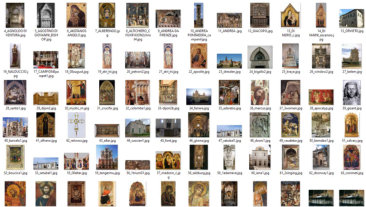
Figure 1: Total Works = 346. (Selection done by: Olmos P.L. & Gil T. J. 2022).Table 1. Topics = 57; Total Works = 346 (Elaboration: Olmos P.L. & Gil T. J. 2022.
Abraham 1 Architecture 78 Consecration 1 Eve 1 Justice 1 Adam and Eve
1
Adoration 4 Assumption 2 Death 4 Hell 1 Moses 1 Altar 8 Biblia 1 Duke 3 Judas 2 Nativity 4 Angel 3 Bishop 4 Evangelist 1 Government 1 Pietà 2 Animal 2 Book 1 Erotic 1 Gloria 1 Old Testament
1
Annunciation 4 Cardinal 4 Emperor 1 Judgment 4 Noha 1 Apocalypse 1 Cerbone 1 Font 1 Madonna 20 Reliquary 3 Apostle 3 Christ 8 Expulsion 1 King 5 Pope 4 Archangel 1 Christians 1 Fortitude 1 Magi 1 Plato 1 Resurrection 1 Saint 38 Trinity 2 Tabernacle 1 The las supper Virgin 41 Sin clasificar 20
2010). The relevance of Language for some authors such as Perlovsky (2007) is to be linked to symbolic activity. This perspective is very interesting because the formation of concepts in human being not only starts from the interaction of a person with other people but also in the interaction with a great diversity of objects. Likewise, Jackendoff (1996) considered language as a hierarchi- cal structure of meaning where determination of a superordinate concept is a necessary condition for determination of meaning (Jackendoff, 1996). In this sense, in order to explore the configuration of contemporary concepts from subordinate factors and activity, the following variables were detected: as a superordinate concept was enunciated the Medieval period and the conce- pts subordinated to it were linked to the recurrent topics that we can find on this period through the production of objects on this range of time. To obtain an approximation to semantic closeness between superordinate conce- pts and subordinate ones the tool developed by Wingfield C. & Connell was used.
METHODOLOGY
The process was integrated into five phases. In the first phase, 346 digital images of the most representative work of each medieval artist were sele- cted. In the second phase, 346 artistic products from the Medieval Period
Exploration of Intercultural Mechanism of Language Through the Interaction 53
Table 2. Topics = 57; B1 = Brightness; B2 = Brightness; B3 = Brightness; B4 = Brightness; B5 = Brightness; AB = Average Brightness AD = Average Darkness; DT = Dominant Technique; T = Tempera; F = Fresco; P = Polychrome; Si = Silver; St = Stone; M = Marble; Br = Bronze; Iv = Ivory; A = Alabaster; O = Oil (Elaboration: Olmos P.L. & Gil T. J. 2022.
Table available in the original PDF paper.
54 Tejeda and Pineda
were classified into 57 topics. This classification was based on repetition as a recurrent topic. In the third phase, the 5 dominant colors and their ave- rage luminosity were obtained from each work, from this information the percentage of darkness was obtained in relation to the maximum luminosity corresponding to R = 255, G = 255, B= 255 in the RGB system. The data of interest were those related to get the luminosity of color of each work from the RGB system. In the fourth phase, the distance between the contempo- rary concepts formed by people from experience and the most representative topics of Medieval Period was obtained. This based on technics developed by Wingfield, C., & Connell, L. (2022) where the behaviour of semantic similarity of topic and time could be observed. In the fifth phase, data was analyzed from the tetrachoric coefficient in order to explore the relationship between darkness of image and the contemporary concept of the Medieval Period formed by people from experience.
PROCESS DESCRIPTION
Figure 1 shows an example of selection of 346 representative digital works of the Medieval Period. Each representative work corresponds to an author of the medieval period.
The artistic objects were classified into 57 topics according to the iteration of topic, the classification can be observed on Table 1.
Table 1 shows iterative topics, and were those related to Architecture with 78 works, Virgin with 41 works, Saints with 38 works, Crucifixion with 31 works, Madonnas with 20 works and Manuscripts with 12 works. Likew- ise, it is observed that topics focus on the religious ideas of period. For the extraction of work’s darkness in RGB system, the average of luminosity of five dominant colors was obtained for each work.
It can be seen in Table 2 that the dark average was 193,283 on an RGB system. Additionally, it was detected with classification that the dominant technique was Tempera with 119 registered works. On the other hand, to analyze the tetrachoric coefficient (rt), the average of dichotomy considered for this study was obtained for each image based on Guilford and Fruchter (1984), where Average Darkness was AD = 193.283. Likewise, to obtain the semantic distance the Euclidean distance of each topic was obtained in relation to contemporary experience of users, where for Concept Distance was (CD)=2.510. According to data, information was visualized based on Abascal and Grande (2014) and is shown in Table 3.
Based on these results the rt of group was obtained; rt = −0.2765766. The results suggest the existence of a low relationship on the dichotomy: darkness of the image - contemporary concept based on experience. How- ever, it was observed with the rt that was an inverse relationship, where to the increase of closeness of concept in relation to the Medieval Period less tendency to find dark colors in digital image of artistic objects, which suggests that the formation of concepts related to the Medieval Period are not so dependent on one of the qualities of an artistic work like is the darkness.
Exploration of Intercultural Mechanism of Language Through the Interaction 55
Table 3. Topics = 57; AD = Average Darkness; AC = Average Concept; CD = Concept Distance. (Elaboration: Olmos P.L. & Gil T. J. 2022.
From the exploration of relationship: intercultural mechanism of language based on semantic similarity in groups of contemporary users and interaction with sensitive qualities of objects created in distant times, five interesting fin- dings were obtained: A) A low relationship was observed in the dichotomy: dark quality of the image – contemporary concept based on the person’s expe- rience. B) It was observed that the less dark qualities the artistic work had, the stronger the concept was in relation to time. C) The exploration in these studies indicates that the qualities of artistic work do not have a decisive influence on the configuration of concepts about objects created in distant times, at least those related to Medieval Period. D) The intercultural mecha- nism of language is seen as a stronger factor than color of an artistic work. E) The integration of a concept is a complex process that involves: a diversity of languages and qualities of object in a hierarchized process.
56 Tejeda and Pineda
REFERENCES
Abascal, E y Grande, I. (2014). Fundamentos y Técnicas de investigación comercial.
(12a Ed) Madrid: Edit. Esic. Boroditsky, L. 2003. Linguistic relativity. In Encyclopedia of Cognitive Science, L. Nadel (ed.), 917–992. London: Macmillan. Claire Kramsch. Language and Culture. AILA Review 27 (2014), 30–55. doi
in Other Languages. New York NY: Metropolitan Books. Ehret, G. (1987) Left hemisphere advantage in the mouse brain for recognizing ultrasonic communication calls. Nature 325, 249–251 Guilford, J., y Fruchter, B. (1984). Estadística aplicada a la Psicología y a la
Educación. Mc Graw Hill. Gumperz, J. & Levinson, S. (eds). 1996. Rethinking Linguistic Relativity. Cambridge: CUP. Jackendoff, Ray. “Conceptual semantics and cognitive linguistics.” (1996): 93–129. Lucy, J. 1992. Language Diversity and Thought: A Reformulation of the Linguistic
Relativity Hypothesis. Cambridge: CUP. DOI: 10.1017/CBO9780511620843 Mehler, J. et al. (1988) A precursor of language acquisition in young infants.
Cognition 29, 143–178 Moon, C. et al. (1993) Two-day-olds prefer their native language. Infant Behav. Dev.
16, 495–500 Nazzi, T. et al. (1998) Language discrimination by newborns: toward an understanding of the role of rhythm. J. Exp. Psychol. Hum. Percept. Perform. 24, 756–766 Neuman, Y., & Nave, O. (2010). Why the brain needs language in order to be self-
conscious. New Ideas in Psychology, 28(1), 37–48. Perlovsky, L. (2007). Symbols: integrated cognition and language. In R. Gudwin, & J. Queiroz (Eds.), Semiotics and intelligent systems development (pp. 121–151). Hershey, PA: Idea Group. Petersen, M.R. et al. (1984) Neural lateralization of vocalizations by Japanese
macaques: communicative significance is more important than acoustic structure. Behav. Neurosci. 98, 779–790 Slobin, D. 1996. From ‘thought and language’ to ‘thinking for speaking’. In Rethinking Linguistic Relativity, J.J. Gumperz & S. Levinson (eds), 70–97. Cambridge: CUP. Wingfield, C. & Connell, L. (2022) Sensorimotor distance: A grounded measure of
semantic similarity for 800 million concept pairs. Behavior Research Methods.”
LISTED IN THE AHFE DIGITAL BOOKSTORE CATALOGUE
Explore the complete digital volume
Human Interaction and Emerging Technologies (IHIET-AI 2023): Artificial Intelligence and Future Applications
Read this individual research paper free through the original publisher, or explore the full digital proceedings book.
ISBN 978-1-958651-46-9
Explore this ISBN in the AHFE Bookstore ↗Listed in the July 2026 bookstore catalogue; search by ISBN to confirm current availability · Digital book purchase optional