Xin Xu, Xiaomei Chen (2023). Research on Body Movement Correction Based on Ergonomic. In: Ergonomics In Design. AHFE Open Access, vol. 77, pp. 860–869. https://doi.org/10.54941/ahfe1003447
Ancient Chinese people paid attention to walking like the wind, sitting like a clock, lying like a bow, and standing like a loose man. This was the standard for a good posture. They did not blindly pursue "thin" to show a person's physical beauty. Our posture had an invisible impact on our health and temperament. Modern people, due to the accelerated pace of life, the popularity and application of electronic products, especially in today's rapid development of information technology, had many factors that caused people to hunchback, neck, splayed feet Bad posture, such as high and low shoulders, not only affects people's physical beauty, but also has a certain impact on their health. This paper analyzes the impact of bad posture on people's body and mind from the perspective of ergonomics, discusses the importance of posture management, and shows the comparison between normal posture and wrong posture by using pictures from three aspects of standing posture, sitting posture, and walking posture. At the same time, on the basis of ergonomics, To explore the muscle structure of people from the front, side, back and three sides when they are upright in normal posture, and to study the corrective action of bad body posture according to the characteristics of body joints. On the basis of the theory of human science, through the research of body movements, we will explore the professional movement methods and practical methods to change the body posture, so as to change the original bad body posture, make the body more upright, and improve the body beauty and body beauty.
The improvement of living standards of Chinese residents has greatly impro- ved people’s quality of life and nutritional status. Unfortunately, new pro- blems such as poor posture, declining physical fitness, obesity, high blood pressure, etc. are also highlighted. In severe cases, there are different degrees of physical deformities, such as body tilt, high and low shoulders, hunch- back, O-shaped legs and so on. In the medical field, the term “posture” is anatomically defined as whether the naturally arranged positions of various parts of the body fit together. The poor posture is caused by the deviation of some parts of the body, which causes the body to have problems such as obstruction and muscle pain when the joints are about to move, and seriously causes the dysfunction of tissues and organs of the whole body. The cause of bad posture is related to the pathological injury caused by genetic factors,
Research on Body Movement Correction Based on Ergonomics 861
diseases and accidents from the human body, and is related to the improper sitting, standing, walking and sleeping posture from the angle of human’s bad living habits.
In the information age, with the mobile phone, computer, network and otherelectronic products gradually becoming the necessities of people’s life and work, especially in the epidemic era of previous years, most students in China study at home as the normal state, making people’s lives mainly “quiet” and “home”. This increases the time of sitting and lying still, and leads to the lack of physical activity. In the long run, people are prone to problems such as decreased joint mobility and uneven development of muscle tissue. The detection rate of obesity, hunchback, round shoulders and high and low shoulders among college students in China continues to rise. Physical health is the key to a person’s temperament. Correcting bad posture should start from a young age. In modern society, people pursue various comfortable sitting, lying and walking postures because of the great pressure of life, and often ignore the harm this wrong posture will bring to the body. Poor posture is not only harmful to human body circulation, but also cause pain in cervical vertebra, lumbar vertebra, shoulder and back for a long time, and may even cause visceral diseases, which have great impact on human body.
Discussing the Importance of Body Management From Human Engineering Posture literally means the posture of the human body. Everyone has more or less posture problems. The body is tall and straight or stiff. In fact, it reflects everyone’s health problems. The theory of ergonomics and human characteristics can help analyze the correct position of different parts of the body during activities. Ergonomics was born after the Second World War. Its essence is that people can try their best to be in a comfortable and natural state during activities or work. As the saying goes in China, “Body shape is wrong and body building is in vain.” This sentence expresses the situation that if one’s body shape is wrong, it is useless to try hard to keep fit. Body building here is not necessarily the exercise that one does in the gym. The same people walking, standing and running also belong to body building. Bad body posture first affects the beauty of the body. However, few people pay attention to the harm that these unattractive postures bring to the health of the body. Such potential harm can be eliminated through effective physical massage, conscious breathing and body-building training. What’s more, if the body shape is not correct, it is easy to cause diseases and sports injuries. The human body is a precise and complicated instrument. Any disease or injury will lead to the whole body. Therefore, proper posture is the premise of heal- thy body building. Body health may be a problem for everyone. The meaning of body posture includes posture, shape and physical appearance, which is a way of appearance when the human body stands upright, sits and walks. Physical health is an indispensable component of physical health and a refle- ction of people’s mental outlook. Sound posture can not only shape external beauty, but also enhance self-confidence and temperament. It is a necessary gesture for every age group. Human body shape has strong plasticity. If it can
862 Xin and Xiaomei
be found and evaluated in the early stage of bad posture and corrected by sci- entific methods and means, irreversible damage can be avoided. Therefore, it is the key to ameliorate the bad posture at present to explore the effective path to enhance the health of the posture, make everyone consciously correct the posture, and find out the thinking and methods of posture evaluation and intervention.
Research on Body Correction in the Theory of Ergonomics A sound posture not only makes people physically and mentally healthy, but also gives them a slight improvement in temperament and makes them more confident. We must first make a correct judgment on our own body, at the same time strengthen the stability of joints and carry out effective physical exercises. We must also adjust some habits in our life. The control of daily posture is especially important in posture adjustment, such as cross-legged, sedentary, irregular sitting posture, etc. There are four common bad postu- res, including hunchback with chest, forward or backward tilting of pelvis, twisted leg shape and bent spine. First, let’s start with the most basic sitting posture.
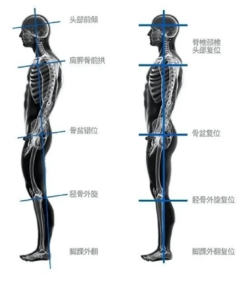
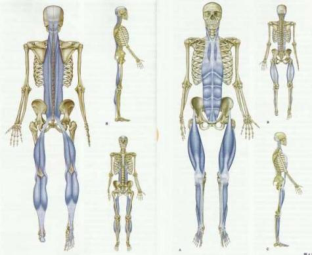
Standing Pose A nice standing posture begins with correcting the body’s force line, which by definition refers to some imaginary lines in the force field. The tangent of any point on these lines points to the direction of the field at that point, and the number of lines passing through the unit area perpendicular to the field represents the intensity of the field. Again, the concept of bringing into the body, in a popular sense, is a line formed by each force-exerting point on the body. Under normal force, the human body’s force line should be vertically upward to ensure uniform contraction of muscles and ligaments. The main muscles for keeping upright are gluteus maximus, quadriceps femoris, triceps crus and erector spinae.
Correct standing posture is a necessary condition to prevent skeletal defor- mity, which will adjust and support sports functions, including shifting the
Figure 1: Author’s drawing.
Research on Body Movement Correction Based on Ergonomics 863
Figure 2: Source from Sohu website.
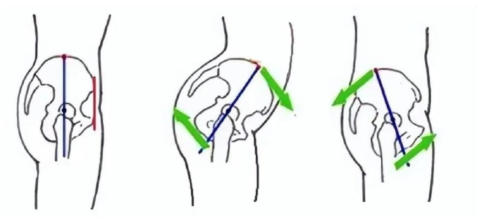
center of gravity to produce a balanced reaction. In functional activities, the activities of the human body can be strengthened through the balanced rea- ction, which will produce greater reaction and faster speed. Note that anterior or posterior pelvic tilt affects the position of the torso. Poor standing posture will compress the diaphragm and limit the expansion of the thorax, which in turn will make breathing not well realized. From the figure, we can see that these two dotted lines are the human gravity line and the pelvic line respecti- vely. The standing posture is incorrect, with front leaning and back leaning, left leaning and right leaning. Therefore, a good standing posture needs to start from the correction force line.
Sitting Position Most of the time in life is either sitting or standing. If you bend your back for a long time, your spine will bend for a long time when you play with your mobile phone. As a consequence, you will have a bad posture, which will seriously affect your temperament.
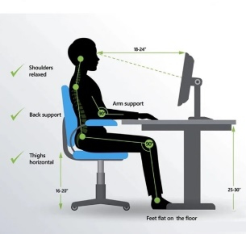
A correct sitting posture is shown in the figure3. The first thing to do is to position the bones. As long as the posture is mentioned, the concept of neu- tral position is indispensable. We often mention how to maintain a neutral position when exercising. Undoubtedly, we should also maintain a neutral position when sitting. In the sitting position, the neutral position should be when sitting. Our head is basically above the chest, and the chest is basically above the pelvis. Secondly, we find the ischium, which grows at the lowest end of our pelvis. It is called ischium because it should be in the sitting posi- tion and is responsible for transmitting gravity downward. The common bad sitting posture often makes the coccyx bear more pressure. Finally, we should do a good job in front support and the angle of lowering the head. When sit- ting, we have to bear the weight of the head. If a supporting force is exerted on the tabletop through the elbow, the tension borne by the thoracic spine can be reduced. Due to the sitting posture, the head is difficult to control above the thorax. When we need to read computers or documents, we should be careful to put the head forward together with the thorax.
864 Xin and Xiaomei
Figure 3: Author’s drawing.
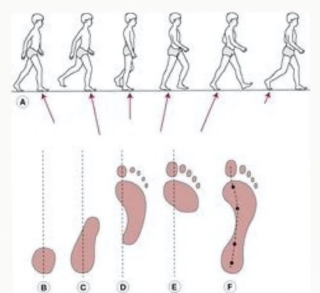
Walking Posture Walking posture is based on a standard standing posture, with legs relaxed, lower abdomen tightened, hips not deliberately upturned, pelvis back to the middle position, neither backward nor forward. With the shoulders naturally backward, people find the power point. Imagine that there is a fixed central axis in the middle of the body. The upper body is motionless and the central axis swings. The muscles of the abdomen drive the left hip bone to swing forward, and the left hand will automatically swing forward to maintain balance. Pay attention to breathing and keep a straight line.
1. Humpback with chest
Regular physical exercise can strengthen the body’s muscle strength, solid bones and flexible joints. The function of the internal organs is also improved and enhanced due to the need to coordinate the body’s organs during exercise, such as rapid heartbeat, enhanced breathing, etc., in order to have adequate blood and oxygen supply for the movement of the organs and muscles throu- ghout the body. Moreover, all the changes in the body are controlled by the nervous system, so sports can also exercise the nervous system, make nerve responses fast and accurate, and improve the regulation of organs throughout
Figure 4: Author’s drawing.
Research on Body Movement Correction Based on Ergonomics 865
Figure 5: Author’s drawing.
the body. Lack of certain physical exercise can affect bone and muscle deve- lopment, bone dysplasia, poor muscle strength, easy to form a hunchback. Being physically active is an effective way to prevent hunchbacks, and the data shows that people who are physically active have a much lower incide- nce of hunchbacks than inactive people. For health, we need to be physically active for a long time.
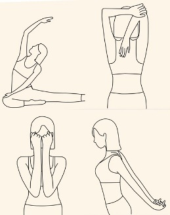
Hunchback with chest is common in young people, mostly because the body often leans to write on one’s stomach or leans to the west in class. As time passes, the body will be affected, resulting in hunchback with chest. Ano- ther reason is that the strength of the back muscles is seriously insufficient. It is mainly due to the fact that the back muscles are too small or not strong enough to pull up the waist and back, resulting in a chest-containing hunch- back. In order to improve the state of humpback with chest, it is suggested to do some actions to strengthen the muscle strength of the back, such as pulling up the body and raising the goat. As shown in the figure, the four movements improve the hunchback with chest, side waist stretching, shoulder stretching, elbow flexion, shoulder opening and back stretching.
2. Pelvis forward or backward
Pelvic anteversion is mostly caused by the imbalance of lower body muscles, including the weakness and tension of lower body front and back muscles. This muscular imbalance causes the pelvis to lean forward and move forward from the median position. The lumbar vertebra with excessive lordo- sis will increase the joint pressure, and the soft tissues around the fifth lumbar vertebra joint and the first sacrococcygeal bone will be under pressure, cau- sing pain. The biggest culprit of pelvis leaning forward is the incorrect sitting posture for a long time. When people sit in front of the computer, the body tends to sit in a correct posture. This overall posture will cause the pelvis of the human body to tilt forward. Although the group of hip flexors is short, the gluteal muscles and the posterior thigh muscles are stretched. With the passage of time, the muscles of the lower body begin to adapt to this incorrect posture, resulting in chronic pelvic anteversion.
First of all, the stretching method of iliopsoas muscle: step on the posture of front bow and back arrow, keep the waist straight, stretch for 15–20 seconds and then change sides, repeat 5–10 times. Stretching method of lower back: step on your knees and lie prone, take a deep breath while stretching for
15–20 seconds, and pay attention to make the lower back feel prolonged. The method of clamping and rolling up the abdomen: step on the lying posture, put your hands on your side, bend your knees slightly, and clamp your legs with pillows or yoga balls. Roll up the abdomen slowly, let the buttocks off the ground and then slowly put down, repeat 15∼20 times.
The method of holding objects and lifting legs in the prone position: step on the prone position with the head resting on the hands and the buttocks forcing the thighs away from the ground, paying attention to the belly sticking to the ground without arching, and slowly put down after stopping for 5 seconds, repeating for 15–20 times.
3. Correction of leg shape
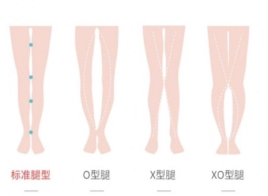
In accordance with the classification of leg shape, it is divided into normal leg shape: when standing, the patella and toes face forward, there are four gaps, namely hip, knee, knee and ankle. The knee joint and ankle joint can be gathered together. O-shaped leg also known as a bowleg. When standing upright, the ankles are together but the knees cannot touch each other, and the patella is facing inward at intervals of more than three centimeters. X-shaped legs: when standing upright, the knees can touch each other, but the ankle parts cannot touch each other, and the interval is more than three centimeters. X-O legs: upright elbows, knees and ankles can be touched, but the tibia (calf) is far away. Knee valgus and foot valgus can be clearly seen. A small part of these poor leg shapes are congenital reasons, and most of them are caused by poor living habits and uneven force caused by body problems, which in
Research on Body Movement Correction Based on Ergonomics 867
Table 1. Author’s drawing.
Table available in the original PDF paper.
Leg shape Muscle expression Oshaped leg muscle tension on the outer thigh, muscle tension on the inner leg and muscle weakness on the opposite side. Xshaped leg inner thigh muscle is tense, outer leg muscle is tense, and opposite side muscle is weak. X-O leg the inner thigh and the inner leg are tense and the muscles on the opposite side are weak
Figure 8: Author’s drawing.
the long run has led to the occurrence of leg shape problems. Find your tense muscles and weak muscles.
Make the weak side strong and relax the tense side. Methods of relaxation include stretching, rolling with foam shaft to tense the lateral muscles or shooting with fascia to hit the tense muscles and tendons.
4. Curvature of spine
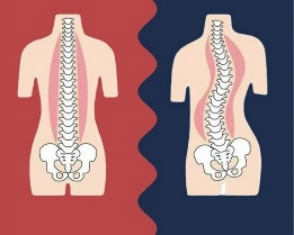
Scoliosis is a common bone problem. In standing posture, the normal arrangement of the spine should be symmetrical on the left and right sides of the body, no matter from the front or the back, and the normal arrangement of the spine should be in a straight line from top to bottom. If you see the spine bending to either side of the body while standing, it is possible that the spine is bent sideways, “the gap between the left and right arms and the trunk is asymmetric, and the right shoulder is higher.” However, most of the scoli- osis is not only inclined leftward and rightward in a single plane, but usually accompanied by the rotation of the spine, which often affects the movement of the shoulder blades, leading to the limitation of the activity of the shoulder joint.
At the same time, there are also many hazards of spinal curvature, which affect the shape and function of the spine. Scoliosis of the spine leads to abnor- mal forms such as spine deformation, uneven shoulder and back, thoracic deformity, pelvic inclination, long and short legs, poor posture, etc. Simul- taneously, it affects functions such as mobility. Spinal deformation is easy to cause intractable pain in the shoulder, back and waist. In severe cases, there
868 Xin and Xiaomei
are even symptoms such as nerve damage, nerve compression, sensory distur- bance of limbs, numbness of lower limbs, abnormal urination and defecation. Autopsy results of patients with early-onset scoliosis show that the number of alveoli is lower than that of normal people, the alveoli are over-inflated or atrophic, the lung lobes or the whole lung are accumulated, and the diameter of pulmonary arteries is far lower than that of peers. The thoracic volume of scoliosis patients decreased, and the thoracic volume of inspiratory phase and expiratory phase is lower than that of normal control group. Scoliosis affects gas exchange, including local ventilation, blood flow, ventilation/blood flow ratio, diffusion, etc. It is prone to respiratory disorders such as shortness of breath and panting, and affects blood circulation. The correction method is to make the body at a right angle. The first step is to stand naturally with your feet slightly apart and your knees and thighs tightened. Put your arms naturally on both sides of your leg. The second step is to inhale, cross your fingers in front of your body and make a fist. Raise your arms above your head with your own front and clamp your ears. Keep your back straight and stretch your spine. The third step is to exhale, tilt the body forward with the hip as the axis, keep the upper body straight, keep the knees and thighs tight, keep both arms at the position beside the ears, and form a straight line with the head, neck, spine and hip, forming a 90-degree angle with the thighs. Breathe naturally and persist. At the end of the movement, inhale, with both arms gripping both ears, and drive the upper body to rise slowly from the cervical vertebra in turn, restoring the natural standing posture.
CONCLUSION
It is suggested that we should always pay attention to our own posture at all stages of life. Considering that most bad postures are caused by long-term bad living habits and body posture, it is proposed that we should always pay attention to our posture (sitting posture, standing posture, walking posture, etc.) in order to avoid its harm. Just like a drop of water wears away a stone, the correction of posture is not a short-term achievement, and it needs a long process.
ACKNOWLEDGMENT
I would like to thank my tutor Professor Chen Xiaomei, whose serious scien- tific attitude, rigorous academic spirit and excellent work style have deeply impressed and excited me. Over the past two years, Professor Chen has not only given me careful guidance in my study, but also given me meticulous care in my thought and life. Here, I would like to express my sincere thanks and high respect to Professor Chen.
REFERENCES
Compiled by the Ergonomics Editorial Board of the Japan Society of Ergonomics.
Anthropometric Manual [M]. Translated by Keesh Zhenhua.
Research on Body Movement Correction Based on Ergonomics 869
Jia Xiping, Huo Hong, Han Chenchen. Analysis of the Current Situation of Unhealthy Posture of Medical College Students [J]. Disease Prevention and Control Bulletin, 2022, 37(04): 89–91. Lin Ping. A study of the body shape characteristics of China’s elite fitness ladies [D].
Shanxi University, 2006. Huang Ping. Analysis of Bad Posture and Sports Intervention of College Students [J].
Contemporary Sports Science and Technology, 2020, 10(5): 17–18. Wei Jian, Wei Guikang. Biomechanical Analysis of the Relationship between Cervical Curvature Change and Degeneration. Guangxi Traditional Chinese Medicine, 1999, (51). Xiangjianhua, Zhitao Yang. Fitness and Method [M]. Beijing: Beijing Polytechnic
University Press, 2009: 23–24. Ye Xin, Huang Qin. Research Progress of Biomechanical Evaluation Methods of Posture [J]. Massage and Rehabilitation Medicine, 2022, 13(21): 77–80.
LISTED IN THE AHFE DIGITAL BOOKSTORE CATALOGUE
Explore the complete digital volume
Ergonomics In Design
Read this individual research paper free through the original publisher, or explore the full digital proceedings book.
ISBN 978-1-958651-53-7
Explore this ISBN in the AHFE Bookstore ↗Listed in the July 2026 bookstore catalogue; search by ISBN to confirm current availability · Digital book purchase optional