Yizhu Lin, Xiaomei Chen (2023). Exploration on the Method of Optimizing Figure Training under the Guidance of Ergonomics. In: Social and Occupational Ergonomics. AHFE Open Access, vol. 106, pp. 62–76. https://doi.org/10.54941/ahfe1003966
As the civilization of modern society continues to develop at a high rate, women in the new era have begun to gradually realize the importance of scientific training in shaping a perfect posture. If Ergonomics is applied to body training, the human body structure and physiological and psychological characteristics can be fully understood. he training movements can be precisely matched to the body size, physiological structure and physical characteristics of individual women so that the training process can be more rationalized and the results maximized within the physiological tolerance of women. By combining the scientific theories of anthropometry, human anatomy and exercise physiology, this paper analyzes the cooperative and coordinated relationship between the normative and mechanical aesthetics of local movement training of women's shoulders, waist and abdomen, and legs. Through the comparison of experimental data, it reflects that the scientific combination of aerobic exercises, muscle training, and flexibility training can not only correct women's bad body deformities and optimize their physical posture but also fully satisfy women's physiological and psychological multiple feelings and even provide some experience and references for better-promoting women's health and scientific body training.In this experiment, 100 female students from the Dalian Polytechnic University modeling program were selected for the study and trained for 5 months. Moreover, the experiment analyzed the specific changes in the students' body structure and aimed to provide a practical and feasible method and theoretical basis for scientific body training.
Ergonomics, as a discipline concerned with the interaction between humans and machines, tools and the environment, has as its main goal to improve the human experience through optimal design and thus increase efficiency, safety and comfort (Jiarong, 2015). By optimizing the design of tools and environments, Ergonomics can reduce the workload, not only by increasing efficiency and productivity but also by improving working conditions and work safety. Ergonomics can provide the theoretical basis for the design of ergonomic tools and equipment that reduce the likelihood of worker injuries on the job. Through proper tool and environment design, Ergonomics can improve the quality and precision of work, thus increasing the quality and
Exploration on the Method of Optimizing Figure Training 63
competitiveness of products. In addition, Ergonomics can improve various activities in daily life (Zhixu and Yanbin, 2015), such as home design, tran- sportation and medical devices, to make our lives more comfortable, safe, efficient and healthy.
The perfect combination of Ergonomics and fitness training can help peo- ple to understand better and apply the principles of body mechanics (Yan and Song, 2015) and thus achieve better physical health and postural results. Several aspects of the combination of Ergonomics and fitness training are shown below: First, Ergonomics can help people identify poor sleeping, sit- ting and gait postures and instruct them on how to adjust mattresses, pillows, chair height and tilt, etc., to reduce stress and discomfort on the body. Fitness training helps people build flexibility and muscle strength to adapt to proper sleeping, sitting and gait positions. Second, by analyzing gait and posture, Ergonomics (Zhang, 2015; Cheng and Chen, 2014; Sun et al., 2010) can assess people’s postural habits and guide them on how to improve their posture. Fitness training can help people exercise their core and leg muscles to support proper posture and gait. Third, the combination of Ergonomics and fitness training can help people correct poor postural habits, such as hunchback, forward-leaning, and other poor postures. Fitness training can help people improve poor postural habits by enhancing physical flexibility and muscle strength (Zhou, 2007), which in turn can help people improve poor postural habits. Therefore, by combining Ergonomics and fitness trai- ning, not only can they reinforce each other to achieve better physical health and postural results, but they can also help people understand and apply the principles of body mechanics, which in turn can improve physical health and comfort.
Ergonomics as a science is dedicated to studying the interaction between the human body and the work environment (Tian, 2018; Liu, 2015; Liu and Zhang, 2017) to improve the efficiency, safety and comfort of the human body. The significance of applying Ergonomics in female form posture is to improve women’s comfort and help them feel less fatigue. In daily work and life, women need to maintain various postures, such as sitting, standing, and walking postures. If women do not draw correctly when maintaining these postures, it can lead to physical fatigue and discomfort. With the Ergo- nomics approach, women’s work and living environments can be adjusted so that women can maintain correct posture in their daily lives, which in turn reduces fatigue and discomfort in their bodies. Some incorrect postures may lead to some diseases related to posture maintenance, such as cervical spondylosis and lumbar spondylosis. By utilizing the Ergonomics approach, women can be helped to adjust their work and living environment to prevent these diseases. Correct body posture can improve women’s productivity and safety. For example, when using a woman’s computer, correct sitting posture can improve her work efficiency and thus reduce the risk of lumbar spine injury. Overall, the Ergonomics approach to optimizing women’s posture can improve comfort and reduce fatigue, as well as prevent posture-related disorders and improve productivity and safety.
64 Yizhu and Xiaomei
RELATED WORK
Both in China and abroad, the application of Ergonomics in form and posture has received wide attention and application. The following are some domestic and international examples: in the category of Ergonomics, rehabilitation engineering is one of the important areas. It involves the optimization of human movement and posture, rehabilitation training and medical device design (Zhang, 2017; Smith et al., 2017). For example, in experiments tar- geting rehabilitation training after knee replacement surgery, the posture and apparatus design of rehabilitation training can be optimized by using the Ergonomics approach, which in turn improves the rehabilitation results. In the course of work in the office, prolonged sitting and use of computers may lead to cervical and lumbar spine diseases. By using the Ergonomics approach, the office environment and work style can be adjusted to improve people’s work efficiency and comfort while preventing cervical and lumbar spine diseases. In sports training, such as running, swimming, and yoga, the use of Ergonomics allows for the optimization of posture, training environ- ment, and equipment design, which in turn improves exercise performance and safety.
In recent years, Ergonomics research in form posture has been developed quite well. Scholars such as Liu Shaobo (2012) introduced the application of Ergonomics in garment design. They discussed the measurement methods of different body parts and the Ergonomics factors to be considered in garment design. By combining examples, the authors elaborated on how Ergonomics can be applied to apparel design. The literature (Zheng et al., 2018) discus- sed the research related to the humanized design of medical instruments based on Ergonomics. The authors introduced the importance and application of Ergonomics in the design of medical instruments. They proposed the basic principles and methods of humanized design, taking the medical bed as an example for its specific analysis. Sun Min and other scholars (Min et al., 2019) introduced the application of Ergonomics in rail driver seat design. The authors discussed the basic principles and methods of Ergonomics in seat design, as well as the specific practices applied to the design of rail dri- ver seats. Through the analysis of seat materials, seating angle and support structure, the authors proposed some design improvements In the literature (Chiu et al., n.d.), a case study of Ergonomics worksta- tion design at a semiconductor company was studied. The study combined Ergonomics risk assessment, anthropometric measurements and simulation software to identify and eliminate Ergonomics hazards in the workplace. The results of the study showed significant improvements in workstation layout and reductions in worker musculoskeletal discomfort. This study (Ning et al., n.d.) used the principles of Ergonomics to optimize the design of com- puter desk chairs. The study improved user comfort and work efficiency by adjusting parameters such as chair height, seat depth, and armrest height. The results of the study showed that optimized computer desks and chairs could effectively reduce the user’s shoulder and back pain, which in turn helps women to improve their productivity.
Exploration on the Method of Optimizing Figure Training 65
In summary, Ergonomics (Hu et al., 2022) is a discipline that studies the man-machine system. It has a wide range of applications, specifically in indu- strial design, transportation, health care, sports, and fitness training. This paper focuses on the role of Ergonomics in fitness training. Many scholars have conducted research on the use of Ergonomics in fitness training, which can improve the effectiveness of training. Through the study of body structure and function, researchers can understand the advantages and disadvantages of different fitness training methods and propose more effective training pro- grams to improve training results. Through the study of the body’s movement process, researchers are able to identify poor posture and exercise habits and thus suggest ways to prevent sports injuries and make fitness training safer. There is no doubt that Ergonomics research in fitness training is of great importance to the development of sports medicine. As a cross-disciplinary discipline, sports medicine combines the knowledge and techniques of several disciplines. By understanding the body and studying the laws of movement, sports medicine provides a more comprehensive and scientific approach to health management. Fitness training is a huge industry, and research on Ergo- nomics can provide a scientific basis and theoretical support for the fitness training industry, thus promoting the development of the fitness training industry. In conclusion, the research on Ergonomics (Liu, 2022) in fitness training can provide scientific support for healthy living. It can not only pro- mote the development of the fitness training industry but also provide an important basis for the development of sports medicine.
ERGONOMICS MODEL OF FITNESS TRAINING METHOD Multiple Methods
Aerobic Training In the process of applying Ergonomics to aerobic training, its main expression is the study of human physiological and psychological aspects. Before fitness training, physical and mental preparation activities are needed to mobilize the flexibility and suppleness of the body muscles fully. Scientific aerobic exercise can quickly help a person’s body in the “aerobic” state. When exe- rcising, most of the muscle groups (2/3) of the human body will be mobilized and involved, burning excess body fat and fully leavening the body’s sugar. In addition, aerobic training enhances the cardiovascular system, respira- tory system function and heart activity, which in turn, adequately transports oxygen-rich blood throughout the body. Thus, aerobic training can regulate psychological and mental state, increase vitality, relieve stress and help people to relax.
Stretching Exercises Stretching exercises can also be called flexibility training. Its purpose is to extend the flexibility and range of motion of the body’s joints and to improve the elasticity and stretching ability of ligaments and muscles. The essence of stretching exercises is to strengthen the expressive ability of the body and to improve the aesthetics of the practitioner’s dynamic and static posture.
66 Yizhu and Xiaomei
By combining the principles of Ergonomics, the direction of the longitudi- nal development of muscle fibers can be precisely discovered, which in turn “straightens,” “lengthens,” and “tightens” all parts of the limb, maximizing the original line of the limb and making the body more upright and graceful. In stretching exercises, the four main parts are shoulders, waist, hips and legs. When practicing, the practitioner can use objects of a certain height (such as handlebars, chairs, walls, etc.), and the exercise methods are divided into: pressing, tilting, bending, swinging, etc.
Shoulder Training Shoulder stretching exercises can improve the flexibility of the sternocla- vicular and acromioclavicular joints, which directly affects the degree of stretching of the chest and back. From the perspective of human anatomy, the shoulder joint is composed of the articular glenoid of the scapula and the humeral head, which is a ball and socket joint. The following two scien- tific training methods for shoulder stretching are recommended here: press shoulders (with the help of the bar) and raise arms to pull shoulders practice steps.
Backing Training In human physiology, the back muscles are mainly located behind the trunk and are divided into the superficial latissimus dorsi, rhomboid and deep ere- ctor spinae muscles. Among them, the deep erector spinae muscles play a role in fixing and compressing the bones of the female back. The erector spinae muscle reaches down to the back of the sacrum and up to the back of the occipital bone and is filled in the groove between the spinous process and the angle of the ribs.
Waist and Abdominal Training As an important part of a woman’s beautiful body line, the waist and abdo- men are not only the part of the human body with the largest range of motion and the most flexibility but also the part of the body where fat is easily sto- red. Scientific training methods for the lumbar and abdominal muscle groups include kneeling posterior lower back and supine kicking exercises.
Leg Training The legs are the main part of the body that supports the weight of the body. The flexibility of the legs provides the strongest support for the body to main- tain an elegant walking posture, leg muscle linear coordination and standing posture. If you want to practice a good combination of leg training, you need both flexibility and strength together. Adhering to long-term leg training can strengthen the flexibility and fixity of the joints and enhance blood circu- lation throughout the body, which can make women’s bodies more fit and energetic gait.
Exploration on the Method of Optimizing Figure Training 67
Data Acquisition The Methods of Data Collection As a science that studies the interaction between the human body and the work environment, Ergonomics can help people design more humane work environments and equipment and reduce the negative impact of work on the human body. In fitness training, Ergonomics can be applied to data acquisi- tion and analysis to help provide a deeper understanding of participants’ body movements and postures, optimize training programs, and thus improve trai- ning results. A detailed description of the Data Acquisition approach using Ergonomics in fitness training is shown below:
Choosing the right sensors and devices is the key to measurement. In Ergonomics, commonly used devices include accelerometers, gyroscopes, displacement sensors, force sensors, etc. The right device needs to be sele- cted according to the needs. For example, accelerometers and gyroscopes are used to measure information such as body acceleration, angular velocity and angle. The sensors and equipment are then placed on the participants or on the training equipment. For example, the accelerometer is fixed to the participant’s hands, waist, feet, etc., by using adhesive straps or straps to ensure the stability and accuracy of the sensor. And sensors and devices need to be calibrated and calibrated prior to Data Acquisition to ensure accurate and comparable measurement results. For example, calibration is performed using standard objects and corrected for sensor errors.
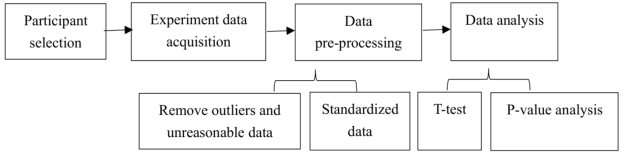
Once the instrument has been adjusted, data acquisition begins. Depen- ding on the needs of fitness training, the appropriate sampling frequency and length of time are set. For example, 50 samples are taken per second, and the sample duration is 10 seconds. The acquired data is saved in a stan- dard format. For example, it is saved as a CSV file or a database format for subsequent data processing and analysis. The collected data is cleaned and denoised, and outliers and unreasonable data are removed to ensure the accu- racy and reliability of the data. The process diagram of Data Acquisition is shown in Figure 1.
Ergonomics’ Data Acquisition approach can help provide a more com- prehensive understanding of a participant’s body movements and posture, optimize training programs, and thus improve training results.
Notes on Data Acquisition When conducting Data Acquisition in female fitness training, the following points should be noted: it is necessary to pay attention to the physical chara- cteristics of women and the impact of the physiological cycle on Data Acquisi- tion to ensure that the time period and cycle of Data Acquisition is consistent,
Figure 1: The process of data acquisition.
Figure available in the original PDF paper.
68 Yizhu and Xiaomei
in order to avoid data errors caused by the above factors. When targeting different training programs, it is necessary to choose the appropriate Data Acquisition method. For example, using sensors, motion capture systems and other devices to capture motion trajectories and joint angles or using bioelectrical signal acquisition devices to record muscle activity status, etc.
To ensure the accuracy and reliability of the data, an adequate amount of data should be collected, and multiple repetitions should be performed to filter and process the data effectively. The safety and comfort of the subjects need to be ensured during data collection to avoid physical injury or negative effects on training. Finally, the data need to be statistically and analytically analyzed according to the experimental purpose and Data Acquisition results to extract valid information, aiming to provide a basis for the development and optimization of training programs.
Data Pre-Processing The data collected in Ergonomics needs to be pre-processed, which speci- fically includes data cleaning and normalization operations to ensure the accuracy and reliability of the data. The detailed process of pre-processing the collected data is shown below:
Data cleaning: First of all, the collected data needs to be cleaned to remove outliers and unreasonable data. The so-called outliers are data that are signi- ficantly different from other data values. For example, a data point is several orders of magnitude larger than other data points due to equipment errors, etc. Unreasonable data refers to those data that clearly do not correspond to body movements and postures. For example, the angle values collected are clearly unreasonable. Cleaning requires the use of conventional statistical methods, using metrics such as calculating the mean, variance, and standard deviation to remove data points that deviate significantly from the mean. Taking the angle of a body part as an example, there may be some errors and outliers when performing Data Acquisition, and then data cleaning is required. First, the mean value of all data needs to be calculated, then the dif- ference between each data and the mean value is calculated. Each difference is squared, and then the average variance of all data is calculated. Finally, the square root of the mean-variance, which is the standard deviation, is calcu- lated. By calculating the mean, variance, and standard deviation metrics can help clean up the data and thus better analyze the effect of fitness training.
Standardization: Standardization allows data of different magnitudes and dimensions to be processed uniformly for subsequent data analysis and pro- cessing. The standardization method should use min-max standardization. The min-max normalization method is a commonly used method for norma- lizing data. It scales the data to a specified range, which is commonly used as [0, 1]. This method can be used to standardize the data when dealing with fitness training collection data to eliminate errors between different samples due to differences in the magnitude of the data.
The process is shown below: for each feature (e.g., height, weight, etc.), the minimum (min) and maximum (max) values are calculated. The value of
Exploration on the Method of Optimizing Figure Training 69
this feature for each sample is normalized by the formula: (x - min) / (max - min). The processed data range is between [0, 1].
Data Analysis Before and after fitness training in Ergonomics, differences in data can be analyzed using difference and p-value methods. The difference is the value of the difference between the data collected before and after fitness training, and the mean and standard deviation can be calculated. The P-value is the statistical probability used to indicate the difference between samples. The smaller the p-value, the more significant the difference. The analysis process includes calculating the difference and p-value, comparing the differences across samples, and performing statistical analysis. For example, by colle- cting body data from different women and measuring their height, weight, and waist circumference before and after fitness training to calculate the dif- ference and p-value. After comparing whether the difference is significant or not, an evaluation of the training effect is derived.
The Ergonomics method can be applied to test the effects of different types of fitness training on women’s muscle strength and endurance. In this pro- cess, strength changes in female muscles before and after different types of training are measured by using a strength testing apparatus, and test data are recorded. The data are then analyzed using statistical methods, mean, varia- nce, standard deviation, and p-value, to determine if the differences in effects between training types are statistically significant.
As a common statistical method, T-test and p-value analysis were used to compare the variability between two groups of data. T-test and p-value analysis can be applied for female fitness training to test whether the data before and after training are statistically significantly different. Specifically, suppose the p-value is less than 0.05. In that case, it means that the difference between the data before and after training is statistically significant, which means that fitness training has a significant improvement effect on the index of interest.
Therefore, applying t-test and p-value analysis can help female fitness trai- ners to assess the training effect more scientifically and to adjust the training program. This method can also be used to compare the effects of diffe- rent fitness training programs and to assess the differences between different training groups. In conclusion, t-test and p-value analysis can serve a very important role in female fitness training, helping to improve training results and guiding the development of training programs. Figure 2 shows the flow chart of Ergonomics in fitness training data processing.
EXPERIMENTAL SUBJECTS AND METHODS Experimental Subjects
A total of 100 female students majoring in modeling at Dalian Polytechnic University were selected for the study and the subjects’ basic information (as shown in Table 1).
70 Yizhu and Xiaomei
Figure 2: Ergonomics in fitness training data processing process.Table 1. Subjects’ basic information.
Table available in the original PDF paper.
Group Sample contents Age Height(cm) Weight(kg) Experimental group 100 20.1+0.87 176.5 + 4.6 55.81 + 6.89
Research Method Objective: improve muscle tone by practicing fitness training movements.
Experimental protocol: fitness training movements that make exercise the main goal include the following: aerobic training; stretching exercises; abdominal breathing; shoulder training; back training; and leg training.
Training plan: During the weekly training, choose a few of these move- ments to practice. Perform 4 sets of 10–15 repetitions for each movement.
Assessment index measurement: according to the national models profes- sional data measurement standard and health physique instrument measu- rement standard and formal operation. Basic body morphological indexes: height, weight, lean body mass, body fat amount; morphological indexes of body circumferences: chest circumference, waist circumference, hip circum- ference; indexes of skin fold thickness of important body parts: upper arms, thighs, abdomen. The above indexes were tested on students in the experi- mental group (Group I) and the reference group (Group II) during one week before and after the experiment, respectively.
Experimental method: a 5-month fitness training course, twice a week, with 90 minutes each time. Students in the experimental group were requi- red to be guided by theories of human movement engineering, human deconstruction, and sports psychology.
Measurements: The waist circumference, weight and body fat percentage of the participants were measured before the beginning and after the end of the experiment. Abdominal muscle area and fat area were measured using abdominal muscle CT scans.
Experimental grouping: The participants were randomly divided into experimental and control groups, with 10 participants in each group. The experimental group conducted fitness training during the training period, and the control group did not train.
Data statistical method: Comparison of the data obtained before and after the experiment was performed using SPSS10 using a t-test to compare the differences between the two groups with a significant level of p < 0.05.
Exploration on the Method of Optimizing Figure Training 71
Experimental Results and Analysis Effect of Fitness Training on Female Body Morphological Indicators From Table 2, it can be seen that there was no significant difference in the height data of the students (p>0.05). The reason for this is due to the fact that the students who participated in the test were around 20 years old, the age at which the peak height growth period has ended.
In Table 2, it can be found that there is a significant difference (P<0.01) between the two indicators, body fat percentage and body fat volume, before and after the experiment. Body fat percentage is a representation of the fat content in a person’s body. Human body weight includes both lean body mass and fat, but the two have different physiological functions. The difference in body fat percentage and body fat volume indicates that the fat of female college students was significantly reduced after training. During training, the body’s caloric expenditure is enhanced, fat mobilization is strengthened, fat synthesis is inhibited, and fat accumulation is reduced, which plays a good role in shaping an ideal body shape for weight loss.
The results of the t-test showed that body weight and lean body mass sho- wed significant changes (p<0.05). Lean body mass, also known as defatted body mass, reflects the standard of a person’s fitness, strength and beauty. This indicates that fitness training played a great role in the muscle growth of the subjects, which promoted the development of strong muscles and made them more elastic.
The experiment indicates that long-term fitness training can significantly improve the body composition of female university students, reduce excess body fat and strengthen muscle firmness so that the body develops more solid and proportional.
The Impact of Fitness Training on Women’s Body Parts Data It can be concluded from Table 3 that there is no significant difference in chest circumference before and after the experiment (P>0.05) and no significant difference after the t-test, which is also more consistent with the physiolo- gical characteristics of adolescent female college students around 20 years old. From the mean values, all the circumference data presented a decrease in circumference after fitness training, and the waist-hip circumference diffe- rence changed very significantly, and the difference increased significantly. It means that scientific shape training can effectively change the BWH of female
Table 2. Comparison of basic morphological characteristics of students’ bodies before and after the experiment.
Table available in the original PDF paper.
Difference P-value
Indicator Before the experiment
After the experiment
Height(cm) 176.5±4.6 176.5±4.6 0.00±0.00 >0.05 Body weight(kg) 55.81±6.89 54.69±7.05 1.32±0.11 <0.05 Body fat percentage(%) 25.70±5.45 23.85±4.88 1.89±0.09 <0.01 Body fat mass(kg) 13.05±5.25 12.63±5.2 0.46±0.06 <0.01 Lean body mass(kg) 37.83±7.87 39.97±8.51 2.14±1.24 <0.05
72 Yizhu and Xiaomei
Table 3. Comparison of students’ pre- and post-experimental body BWH data.
college students, make the BWH ratio more coordinated and develop in the ideal direction, fully express the feminine curve beauty and make the shape more artistic charm.
After 5 months of the experiment, 100 subjects showed different degrees of improvement in body shape and muscle circumference. In terms of biceps circumference and shoulder circumference, the results were better using tra- ditional training methods. The combined approach of Ergonomics theory and traditional training is more advantageous for changes in the chest, waist, hips, body fat percentage and body mass. When training under Ergonomics guidance, changes in smaller muscle groups are more precisely polished and strengthened, while changes in larger muscle groups are more effectively improved after training. Thus, the use of Ergonomics as a guide for women in the training of body shape change can increase the training effect more effectively.
The Effect of Fitness Training on Muscle Strength and Endurance in Women We measure muscle strength by testing maximal weight. For endurance, we measured it by testing maximal duration. We will test 10 female partici- pants before and after training and calculate the mean, variance and standard deviation for each test. Then, we use a t-test to calculate the p-value of the data before and after training to determine if the difference between the two groups is significant. The experimental data are shown in Table 4.
With Excel or other data analysis tools, means, variances, and standard deviations can be calculated for each test. P-values for muscle strength and endurance can be calculated using t-tests. For the calculation of P-values of muscle strength, we followed the following steps: calculate the mean, varia- nce and standard deviation of muscle strength before and after training; use the t.test function in Excel to calculate the P-values of muscle strength before and after training; based on the calculation results, determine whether there is a significant difference between muscle strength before and after training. The results are shown in Table 5.
It is evident from the results of the p-values that the changes in muscle strength and endurance before and after training are highly significant. More- over, the standard deviation is relatively small, indicating a high confidence level in the results. This data set indicated that fitness training had a signifi- cant improvement in muscular strength and endurance in females. In terms
Exploration on the Method of Optimizing Figure Training 73
Table 4. Muscle strength and endurance data before and after the students’ experiments.
Table 5. Analysis of students’ muscle strength and endurance data before and after the experiment.
Table available in the original PDF paper.
T-value P-value Variance Standard deviation
Mean value after training
Indicators Mean value before training Muscle strength 57.5 62.3 4.8 3.14 5.0 0.0005 Endurance 120.4 129.6 9.2 6.84 4.5 0.0025
of muscle strength, the difference between the mean before and after trai- ning was 4.8, and the standard deviation was 3.14. The p-value obtained by the t-test was 0.0005, with a p-value much less than 0.05, indicating that this improvement was significant. In terms of endurance, the differe- nce between the mean before and after training was 9.2, and the standard deviation was 6.84. The p-value obtained from the t-test was 0.0025, again with a p-value much less than 0.05, indicating that this improvement was also significant.
By combining the results of the above data analysis, it can be conclu- ded that female fitness training has a significant effect on the improvement of muscle strength and endurance. Among them, muscle strength impro- ved by an average of 4.8 units and endurance improved by an average of 9.2 seconds. This shows that Ergonomics combined with fitness training can effectively improve physical fitness and enhance the body’s muscular strength and endurance. Furthermore, the Ergonomics method is able to collect and analyze data accurately, providing a basis for fitness training to develop scientifically sound training programs, as well as individuali- zed fitness training programs for people of different body types and ages. The combination of Ergonomics with fitness training has the advantage of being scientific, feasible and personalized. Hence, the subjects underwent the same changes in strength quality after 5 months of experimentation, with varying degrees of improvement. Ergonomics combined with female
74 Yizhu and Xiaomei
fitness training is a training mode that combines anaerobic and aerobic trai- ning with each other. This mode not only enhances maximum strength but also develops strength endurance by improving muscle output in a short period while strengthening inter-muscular conditioning so that the subject’s strength quality is better increased. With more significant improvements in endurance, such as deep squats, kicks, and lumbar stretches, using Ergo- nomics as a guide in training can better improve the growth of strength qualities.
CONCLUSION AND SUGGESTIONS In combination with the above experiments, Ergonomics yields great signifi- cance in female fitness training. By using the Ergonomics method to analyze the data before and after training, the effect of fitness training on women’s muscle strength and endurance can be more accurately understood, and the judgment of the training effect can be supported in the data. All these data can help female trainers to adjust their training programs better to achieve better training results. Furthermore, the Ergonomics approach to fitness trai- ning allows for physical assessment of trainers to help them avoid the risk of physical injury and disease and improve the safety and effectiveness of their training.
With the application of the Ergonomics method, we can better understand the effects and impacts of fitness training for females and then conduct more scientific and rational training program development and body assessment. This not only helps to improve the training effect of women but also provides more accurate data to support the research in the field of fitness training. In this paper, the basic principles of anthropometry, human anatomy and exercise physiology are used to analyze the movements of fitness training so that women understand the role of the human skeleton and muscles and master the principles of movement of various parts of the human body. It is beneficial to the improvement of women’s flexibility, soft openness and flexibility in all aspects. It enables women to dominate better the training methods of various parts of the body to scientifically shape the perfect body, use the correct muscle group training methods to improve physical quality, and then improve women’s healthy and perfect physique through a complete, effective and orderly training mechanism.
ACKNOWLEDGMENT
I became a Chinese professional model in 2005 and served the Monaco natio- nal team as a sign-bearer for the Beijing Olympics opening ceremony in 2008. From 2011 to 2013, I studied at Dalian Polytechnic University as a master’s student. Since 2015, I have been working at my alma mater as a teacher of performance, and I have been working on topics related to the beauty of women’s posture, experimenting with fitness training and summarizing the results in a timely manner.
Exploration on the Method of Optimizing Figure Training 75
It was impossible for me alone to successfully and satisfactorily complete the complex series of work from conception, design, practice, statistics, wri- ting, and revision of this paper. I would like to express my gratitude to my colleagues and leaders at Dalian Polytechnic University for their selfless dedication and help and to the students who cooperated with me in the experimental training and questionnaire survey.
REFERENCES
Cheng Yuming, Chen Caizhen. Experimental study on the effect of fitness training on body shape, composition, quality and immunity of female college students [J]. China Sports Science and Technology, 2014, 50(3). Chiu, M.-C., Wang, M.-J. J., & Fang, W.-C. Improving workstation layout using
ergonomic principles: A case study in a high-tech semiconductor company. International Journal of Industrial Ergonomics, 37(3), 267–274. Guan Jiarong. The strongest muscle fitness class [M]. Nanjing: Jiangsu Phoenix Science and Technology Press, 2015. Hu Zhenyu, Guo Jianzhong, Wang Peng, et al. Design and application of
Ergonomics-based pull-up counter[J]. Ergonomics, 2022(4):4. Liang Zhixu, Cai Yanbin. fitness training [M]. Shanghai: Shanghai Jiaotong University Press, 2015. Liu Guangyuan. Ergonomics-based research and analysis of seating for the elderly[J].
Popular Literature and Arts: Academic Edition, 2022(12):4. Liu Huaimin. Ergonomics and applications [M]. Chongqing University Press, 2015.01. Liu Shaobo. Application of Ergonomics in Garment Design[J]. North Textile, 2012,
(2): 113–114. Liu Xing, Zhang Xianghui, Ergonomics [M]. Huazhong University of Science and Technology Press, 2017.09. Michael M. Smith, Allan J. Sommer, Brooke E. Starkoff, Steven T. Devor CrossFit-
based High-Intensity Power Training Improve Maximal Aerobic Fitness and Body Composition: Retraction[J]. Journal of strength and conditioning research, 2017.31(7). Sun Min, Li Yang, Liu Zhiqiang. Application of Ergonomics in the design of railroad driver’s seat[J]. Atomic Energy Science and Technology, 2019, 53(9): 1634. Sun Qingzhu, Hao Wenting, Hong Feng. Measurement and evaluation of physical
education [M]. Beijing: Higher Education Press, 2010, 63-95. Tian Geng. Theory and analysis of human anatomy [M]. Sichuan University Press, 2018.07. Zhang Yan, Zhang Xian Song. Women’s body shaping strategy [M]. Beijing: China
University of Geosciences Press, 2015. Zhang Yuci. Analysis of aerobic exercise methods for college students [J]. Harbin: Contemporary Sports Science and Technology, 2015, 5(21). Zhang Zhenxue. Book series of desire dynamics psychology [M]. Beijing: China
Business Press, 2017.05. Zheng Ning, Liu Wenliang, & He Yuping. Ergonomics-based optimization of computer desk and chair design[J]. Chinese Journal of Rehabilitation Medicine, 27(2), 115–117.
76 Yizhu and Xiaomei
Zheng Yan, Wang Lingling, Wang Rui. Research on the humanized design of medical instruments based on Ergonomics[J]. Science and technology information, 2018, 32(2): 261–262. Zhou Min. Study on the influence of optimized form teaching content on body form
and mental health of female college students [D]. Master’s thesis, Wuhan Institute of Physical Education, 2007.
LISTED IN THE AHFE DIGITAL BOOKSTORE CATALOGUE
Explore the complete digital volume
Social and Occupational Ergonomics
Read this individual research paper free through the original publisher, or explore the full digital proceedings book.
ISBN 978-1-958651-82-7
Explore this ISBN in the AHFE Bookstore ↗Listed in the July 2026 bookstore catalogue; search by ISBN to confirm current availability · Digital book purchase optional