Saeedeh Mosaferchi, Rosaria Califano, Alessandro Naddeo (2023). How personality, demographics, and technology affinity affect trust in autonomous vehicles: a case study. In: Human Factors in Transportation. AHFE Open Access, vol. 95, pp. 227–236. https://doi.org/10.54941/ahfe1003808
Autonomous vehicles’ companies are awakening of cutting-edge technology by offering self-driving cars, however, customers’ acceptance and trust of this high-tech product has become a significant open challenge in the world. It can be expected that autonomous vehicles (AVs) ameliorate traffic flow, lessen accidents and injuries, and save the time on travel in addition to people’s life. Despite the increment of human replacement by the artificial intelligence in various industries and artifacts, most customers have not convinced with this big revolutionize transportation yet. This paper presents an experiment that evaluated the impact of personality, affinity to technology and demographics on human’s trust in autonomous vehicles. Methods: 19 engineering students did participate in the experiment by using an autonomous vehicle with level 2, that had automated speed and trajectory maintenance, but without automatic detection for obstacles, objects or events while driving. First, the AV programmer explained its function and information about the track for all participants. Then, they were asked to answer to 9 questions of Affinity for Technology Interaction (ATI) scale, 17 demographic questions, and 10 questions of Big Five Questionnaire (BFQ). Afterwards, all participants rode 10-minute path in a pre-defined rout by accompaniment of the AV programmer to control probable dangerous situations. Finally, they completed Trust in Automation Scale questionnaire. Gathering data was analysed using IBM SPSS 26. The mean and standard deviation were calculated for descriptive data and the Spearman for analytical data. Results: The analysis’ results showed a behavioural split (50/50) among people having and not having complete confidence in the autonomous vehicle. Nervous people trust the AV less than others, like people with little or no experience in using an AV. As well, the more transparency in the AV’s behaviours and presenting information about it, the more trust and security perception of participants. People with high level of technology affinity experienced more trust in the AV, as the effect of frequent exposures with an AV. It’s worth mentioning that females are more conservative and prefer to trust an AV less than males. Conclusions: The results indicated that various variables could affect people’s trust in AVs. Obviously, changing people’s demographics and some aspects of personality seem to be impossible most of the times, while as approved by other recent studies, their affinity to technology, as a new type of personality, can change or be changed. As the results showed, it is recommended to AVs companies to design a good system in the vehicle, in order to present all information to passengers clearly. In addition, if some conditions are provided that people can test these vehicles and know more about their functions in detail, their trust will definitely increase significantly.
As technology progresses, vehicles have become growingly efficient, easily accessible to people, and can perform faster and more convenient (Adnan et al., 2018). Along with all the advantages that vehicles have provided to the world, many challenges such as traffic congestion, pollution, and safety have become apparent on the roads (Kuutti et al., 2020). Autonomous vehi- cles (AVs) are presented as a great solution for these challenges in addition to offering comfort and efficient driving (Hakak et al., 2022). AVs are known as driverless or autonomous cars, do different functions of the vehicle with- out the direct driver input, and the driver is not expected to monitor the road continuously (Ravi et al., 2022). The Society of Automotive Engineers International Standard for automation levels classifies AVs from Level 0 (full control of the human driver) to Level 5 (the vehicle completely drives itself) (Duarte & Ratti, 2018). Nowadays, due to some limitations in addition to high expenses of existing sensors, lots of commercial vehicles only include Level 1 to Level 2 autonomy, which need constant driver attention and con- trol (Zanchin et al., 2017). These vehicles have some autonomous items such as blind spot detection, lane keeping, and emergency braking (Zanchin et al., 2017). Although AVs are progressing rapidly, the fruit of this novel pheno- mena may not face with success for sale due to the lack of human control feeling, and people’s trust will reduce whether they are reliable, what, and why they will perform (Lokshina et al., 2022). Trust has an outstanding role in the level of people willingness to utilize AVs, especially in uncertain conditi- ons (Hoff & Bashir, 2015). Indeed, it shows how people think about an AV’s capabilities to meet their expectations (Koester & Salge, 2020). According to a survey performed among Americans, 56% claimed that they would not trust in AVs if given the opportunity (Morra et al., 2019). In a similar study in France, 68% stated their willingness to use an AV showing more accepta- nce of older people towards it (Payre et al., 2014). Based on the literature, trust in AVs is shaped by various factors, such as age, gender, AVs’ behavi- ours, people’s experiences and expectations, etc. (Maeng & Cho, 2022). As some studies have shown, lots of males and young people feel more trust than females and older people, whereas some other research have had oppo- site results (Hartwich et al., 2019; Paddeu et al., 2021). Moreover, other demographic factors have shown significant relationships with trust in AVs (Othman, 2023; Park et al., 2021). Furthermore, some studies have focused on the effect of personality on people’s trust. As personality can impress the driving style of individuals, there can be a relationship between people’s trust in AVs and their personality, since they should accept the AV’s driving style (Paschalidis & Chen, 2022). This concern is known as a suitable predictor for trust in AVs (Brück et al., 2021). Moreover, an indirect personality trait which can affect human’s trust is technology affinity. The higher level of affinity and tendency of people to use technological products can help them to experie- nce more trust in AVs (Othman, 2021). In Italy, AVs are still being in infant phase. In this study, the effect of personality, affinity to technology and demo- graphics on the human’s trust in autonomous vehicles has been investigated thanks to an experimental setup that involve subjects in a ride on board of an autonomous vehicle and ask them to fill some specific questionnaires.
How Personality, Demographics, and Technology Affinity Affect Trust 229
MATERIALS AND METHOD To obtain the research goals, four (4) different questionnaires were used. Before riding with an autonomous vehicle, all participants answered demo- graphic, ATI and Big Five questionnaires. Then, they rode with the AV, and in the final step, they completed a questionnaire about their trust immediately after the riding.
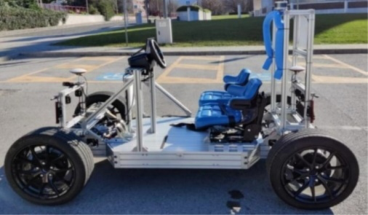
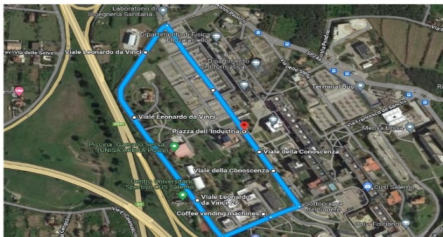
The Autonomous Vehicle and the Track The autonomous vehicle: The second step was riding inside the campus of the university of Salerno (UNISA) with an autonomous vehicle with level 2 (Figure 1), which had automated speed and trajectory maintenance, but with- out automatic detection for obstacles, objects or events while driving. This vehicle was created by mechanical and electrical specialists of the UNISA. It has a main controller that allows controlling the tires’ engines, the steering engine, and the brakes. All of them can be controlled through a remote, by sending the commands via a secure CAN device. Also, it consists of an IMU, a 60 fps 4K camera, and a Velodyne VLP-16 lidar. Even if the level of auto- nomous vehicle is low itself, the effect on the passenger, during the ride, was similar to a “level 4”, thanks to the pre-recording of the track in the control system. The track: All participants rode with the autonomous vehicle one by one with accompaniment of the AV programmer in a pre-defined rout inside for 10 minutes, in a sunny day. The route map is shown in figure 2. Additionally, the path was mostly flat, with few unevenness along the way. The participants were left free to do whatever they wanted during the riding, although, all of them had paid attention to the road constantly.
Participants The participants (N = 19) were limited to Italian engineering students (2 females, Mage=25.79), with the mean age of 7.68 years they had a dri- ving licence. Before the experiment, the whole protocol was explained to the participants, then they filled out the informed consent.
Figure 1: The autonomous vehicle with level 2 which was used in the experiment.Figure 2: The pre-defined rout which participants rode in with an AV.
Questionnaires
1. Demographic Questionnaire: It was composed of 17 questions, inclu- ding age, gender, marital status, driving experience, a few questions about their own cars, some questions related to their knowledge about autonomous vehicles, as well their preferences about autonomous fea- tures of vehicles and a few related areas. 2. Big Five Personality Traits: The short version of Big Five Question- naire (Rammstedt & John, 2007), with 10 questions, were given to the participants (Table 1). It has five classifications of personalities, inclu- ding extraversion (also spelled extroversion), agreeableness, openness to experience, conscientiousness and neuroticism. The answer options are 1 to 5 Likert (0=completely disagree, 5=completely agree). To calculate extraversion, question 1 should be reversed and sum with question 6. For computing agreeableness, question 7 should be reversed and sum with question 2. The sum of the reverse of question 5 with number 10 is the level of openness to experience. Conscientiousness is scored with sum of question 8 and the reverse of question 3. As well, question 9 and the reverse of question 4 shows neuroticism. The questionnaire used is given below.
Table 1. The short version of big five questionnaire.
Table available in the original PDF paper.
Num. I see myself as someone who … 1 … is reserved 2 … is generally trusting 3 … tends to be lazy 4 … relaxed, handles stress well 5 … has few artistic interests 6 … is outgoing, sociable 7 … tends to find fault with others 8 … does thorough job 9 … gets nervous easily 10 … has an active imagination
How Personality, Demographics, and Technology Affinity Affect Trust 231
Extraversion [or extroversion]: This property is known by irritability, sociability, talkativeness, assertiveness, and great amounts of emotional expressiveness. Individuals with high level of extraversion are outgoing and interested to gain energy in social conditions (Power & Pluess, 2015). Agreeableness: It contains some features such as trust, altruism, kindness, affection, and other prosocial behaviours. People high in agreeableness desire to be more cooperative meanwhile those low in it tend to be more competitive and sometimes even manipulative (Power & Pluess, 2015). Openness: Openness [also referred to as openness to experience] focuses attention on imagination and insight the most out of all five personality cha- racteristics. People who have high level of openness like to have a broad range of interests. They are curious about the world and others and are willing to learn new things and enjoy new experiences (Power & Pluess, 2015). Conscientiousness: Among all the personality traits, this characteristic is described by high levels of thoughtfulness, well impulse control, and goal- directed manners. People with high conscientious are interested to be organi- zed and mindful of details. They plan ahead, think about how their behaviour impresses others, and are careful about deadlines (Power & Pluess, 2015). Neuroticism: Neuroticism is a personality property specified by sadness, moodiness, and emotional instability. People high in neuroticism are incli- ned to experience mood swings, anxiety, irritability, and sorrow. Those low in this feature feel more stability and emotionally resilience (Power & Pluess, 2015).
3. Affinity for Technology Interaction (ATI) Scale (Franke et al., 2019): This instrument (Table 2) consists of 9 questions with 6 answers which should be coded as follows: completely disagree = 1, largely disagree = 2, slightly disagree = 3, slightly agree = 4, largely agree = 5, completely agree = 6. Responses to the three negatively worded statements (items 3, 6, 8) should be reversed (6=1, 5=2, 4=3, 3=4, 2=5, 1=6). Finally, a mean score should be computed over all 9 statements. The following table consists of the questions.
Table 2. Affinity for Technology Interaction (ATI) Scale.
Table available in the original PDF paper.
Item Order 1 I like to occupy myself in greater detail with technical systems. 2 I like testing the functions of new technical systems. 3 I predominantly deal with technical systems because I have to. 4 When I have a new technical system in front of me, I try it out intensively. 5 I enjoy spending time becoming acquainted with a new technical system. 6 It is enough for me that a technical system works; I don’t care how or why. 7 I try to understand how a technical system exactly works. 8 It is enough for me to know the basic functions of a technical system. 9 I try to make full use of the capabilities of a technical system.
Table 3. Scale items from the original Jian et al. (2000) trust survey.
Table available in the original PDF paper.
Num. Item 1 The autonomous system is deceptive. 2 The autonomous system behaves in an underhanded manner. 3 I am suspicious of the autonomous system intent, action, or outputs. 4 I am wary of the autonomous system. 5 The autonomous system’s actions will have a harmful or injurious outcome. 6 I am confident in the autonomous system. 7 The autonomous system provides security. 8 The autonomous system has integrity. 9 The autonomous system is dependable. 10 The autonomous system is reliable. 11 I can trust the autonomous system. 12 I am familiar with the autonomous system.
4. Trust Scale: The participants answered 12 questions of Trust in Automated Systems scale which are mentioned in table 3 (Jian et al. 2000). They scored the statements between “not at all = 1” and “extre- mely = 7” on a scale. Statements 1–5 are negatively valanced–they inspire the survey taker to take account a series of negative features– while items 6-12 are positively valanced (Gutzwiller et al., 2019). Finally, the average of all scores were used to report the level of partici- pants’ trust (It is reported from 1 to 7). The participants were informed to consider autonomous systems as the autonomous vehicle.
RESULTS
In the following, a detailed analysis of the collected data is presented with respect to the research aims, which were imported into SPSS version 26, and t- test and Spearman were used. Descriptive analysis was used for demographic questions. Males made up 89.47% of the population, further all of parti- cipants did not have physical and mental diseases. Of the people surveyed, almost 89% were using their own cars and 42.10% were driving more than 3 times weekly. Also 84% of the participants knew what’s an AV, as well 70% of them had used smart homes and/or Internet of Things. Almost 80% of them claimed that they utilize advanced driving assistance systems in their own cars, meanwhile, only 10.52% stated they prefer to use an automatic gearbox rather than the manual. Conscientiousness and neuroticism gained higher scores among participants’ personality traits (47.36% and 36.84% respecti- vely). The analysis showed that the mean of trust is 4.25 of 7. Around 60% of participants had read and visited videos about autonomous vehicles. The trust (M = 4.29) and affinity to technology (M = 4.18) means were higher in males than females. Spearman test was used to compute correlations betw- een various parameters. With increment in participants’ age, their trust in the AV was reduced. Using smart homes and/or Internet of Things had created a significant relationship with participants’ trust in the autonomous vehicle. As different studies have shown, people’s knowledge about AVs can increase
How Personality, Demographics, and Technology Affinity Affect Trust 233
their trust (Sig<0.05). Also, some studies have claimed that more experienced drivers can trust autonomous vehicles less than others (Brell et al., 2019). On the same way, the results showed that more experienced participants in dri- ving, less trust in the autonomous vehicle. Higher affinity to technology had a positive and significant relationship with trust in the autonomous vehi- cle. It shows that individuals who have more willingness to use technologies or try to know more about them, can trust in AVs easier. As results indica- ted, all Big Five aspects except conscientiousness had negative and significant relationship with trust, as it means people with high level off extraversion, agreeableness, neuroticism, and openness to experience can trust AVs more. In general, it can be stated that a behavioural split (50/50) was obtained among all participants having and not having complete confidence in the autonomous vehicle.
DISCUSSION
This research was conducted to understand the effect of personality, demo- graphics, and affinity to technology on people’s trust in AVs. In line with previous studies, men tended to use the AV with more trust than women. Some researchers have confirmed that women feel less trust on which they ride an AV (Kaye et al., 2020). In some cases, increasing the age can affect people’s trust in autonomous vehicles negatively (Hulse et al., 2018; Liu et al., 2019). It represents that younger people tend to experience more risky and new conditions, whereas elderly don’t like, perhaps because of their abilities and control reduction (Liu et al., 2019). In contrast, some researchers have found an increasing trust in older people, which may be to compensate their disabilities when using it (Nordhoff et al., 2018). Based on the existing evi- dence, it is necessary to address women as well as aging population if car manufacturers want AVs to be accepted widely in the future. Knowledge can assist people to trust in AVs more and be less afraid of this complicated vehicle. People with more knowledge about the concept of an AV, its functionality and related information, can trust it easier than people with less information (Lindgren et al., 2020). So, markets and manufactu- rers are strongly recommended to release various videos/podcasts to improve individuals’ knowledge about AVs to expand their opportunities to sell. The relationship between the type of personality and trust was confirmed by this research. Exactly the same as the results obtained, some researchers of the US have stated that all aspects of personality except conscientious- ness have had positive and significant relationship with people’s trust in the AV; more scores in these aspects, more perceived trust in AVs (Charness et al., 2018). Affinity to technology is a beneficial element to evaluate people’s interests to work with and gather different information about technologies. In line with, several research have demonstrated that people who have more affi- nity to technology and have exposed themselves with different technological products, can trust in autonomous vehicles more than others (Bennett et al., 2019).
CONCLUSION
As a conclusion, individuals’ trust in autonomous vehicles can impress by various parameters. The current study claimed that demographics, personality traits and affinity to technology can shape people’s trust in AVs. It can be claimed that some parameters like age or nationality cannot be chan- ged, meanwhile according to the alignment of the results with other studies, it’s very evident the importance of people’s personality type in their trust in self-driving cars. Considering that personality types cannot be easily chan- ged, it is beneficial for automakers to use suitable interfaces for an effective interaction according to people’s personality types in their vehicles.
LIMITATIONS As with all empirical studies, there are certain limitations to the current expe- riment. As mentioned, 19 people were involved in this study, while with more samples the reliability of data will increase. The portion of men and women were not balanced, and it is recommended for future works to pay attention to this matter. Due to some limitations in the campus of the university and the level of the autonomous vehicle, which was used, the total time of riding was not enough to stimulate the Sympathetic system of the participants. As well, having an engineering background can increase people’s trust indirectly.
ACKNOWLEDGMENT
The authors would like to thank the “University of Salerno” for supporting this research. We are grateful to Prof. Mario Vento and Dr. Diego Gragna- niello from the University of Salerno, who assisted us in utilization of the autonomous vehicle.
REFERENCES
Adnan, N., Nordin, S. M., bin Bahruddin, M. A., & Ali, M. (2018). How trust can drive forward the user acceptance to the technology? In-vehicle technology for autonomous vehicle. Transportation Research Part A: Policy and Practice, 118, 819–836. Bennett, R., Vijaygopal, R., & Kottasz, R. (2019). Attitudes towards autonomous
vehicles among people with physical disabilities. Transportation Research Part A: Policy and Practice, 127, 1–17. Brell, T., Philipsen, R., & Ziefle, M. (2019). sCARy! Risk perceptions in autonomous driving: The influence of experience on perceived benefits and barriers. Risk analysis, 39(2), 342–357. Brück, Y., Niermann, D., Trende, A., & Lüdtke, A. (2021). Investigation of Per-
sonality Traits and Driving Styles for Individualization of Autonomous Vehicles. International Conference on Intelligent Human Systems Integration, Charness, N., Yoon, J. S., Souders, D., Stothart, C., & Yehnert, C. (2018). Predictors of attitudes toward autonomous vehicles: The roles of age, gender, prior knowledge, and personality. Frontiers in psychology, 9, 2589. Duarte, F., & Ratti, C. (2018). The impact of autonomous vehicles on cities: A review.
Journal of Urban Technology, 25(4), 3–18.
How Personality, Demographics, and Technology Affinity Affect Trust 235
Franke, T., Attig, C., & Wessel, D. (2019). A personal resource for technology interaction: development and validation of the affinity for technology interaction (ATI) scale. International Journal of Human–Computer Interaction, 35(6), 456–467. Gutzwiller, R. S., Chiou, E. K., Craig, S. D., Lewis, C. M., Lematta, G. J., & Hsi-
ung, C.-P. (2019). Positive bias in the ‘Trust in Automated Systems Survey’? An examination of the Jian et al. (2000) scale. Proceedings of the human factors and ergonomics society annual meeting. Hakak, S., Gadekallu, T. R., Maddikunta, P. K. R., Ramu, S. P., Parimala, M., De Alwis, C., & Liyanage, M. (2022). Autonomous Vehicles in 5G and beyond: A Survey. Vehicular Communications, 100551. Hartwich, F., Witzlack, C., Beggiato, M., & Krems, J. F. (2019). The first impression
counts–A combined driving simulator and test track study on the development of trust and acceptance of highly automated driving. Transportation research part F: traffic psychology and behaviour, 65, 522–535. Hoff, K. A., & Bashir, M. (2015). Trust in automation: Integrating empirical evidence on factors that influence trust. Human factors, 57(3), 407–434. Hulse, L. M., Xie, H., & Galea, E. R. (2018). Perceptions of autonomous vehicles:
Relationships with road users, risk, gender and age. Safety science, 102, 1–13. Kaye, S.-A., Lewis, I., Forward, S., & Delhomme, P. (2020). A priori acceptance of highly automated cars in Australia, France, and Sweden: A theoretically-informed investigation guided by the TPB and UTAUT. Accident Analysis & Prevention, 137, 105441. Koester, N., & Salge, O. (2020). Building trust in intelligent automation: Insights
into structural assurance mechanisms for autonomous vehicles. Kuutti, S., Bowden, R., Jin, Y., Barber, P., & Fallah, S. (2020). A survey of deep learning applications to autonomous vehicle control. IEEE Transactions on Intelligent Transportation Systems, 22(2), 712–733. Lindgren, T., Fors, V., Pink, S., & Osz, K. (2020). Anticipatory experience in everyday
autonomous driving. Personal and Ubiquitous Computing, 24(6), 747–762. Liu, P., Zhang, Y., & He, Z. (2019). The effect of population age on the acceptable safety of self-driving vehicles. Reliability Engineering & System Safety, 185, 341–347. Lokshina, I., Kniezova, J., & Lanting, C. (2022). On Building Users’ Initial Trust in
Autonomous Vehicles. Procedia Computer Science, 198, 7–14. Maeng, K., & Cho, Y. (2022). Who will want to use shared autonomous vehicle service and how much? A consumer experiment in South Korea. Travel Behaviour and Society, 26, 9–17. Morra, L., Lamberti, F., Pratticó, F. G., La Rosa, S., & Montuschi, P. (2019). Building
trust in autonomous vehicles: Role of virtual reality driving simulators in HMI design. IEEE Transactions on Vehicular Technology, 68(10), 9438–9450. Nordhoff, S., De Winter, J., Kyriakidis, M., Van Arem, B., & Happee, R. (2018).
Acceptance of driverless vehicles: Results from a large cross-national question- naire study. Journal of Advanced Transportation, 2018. Othman, K. (2021). Public acceptance and perception of autonomous vehicles: a comprehensive review. AI and Ethics, 1(3), 355–387. Othman, K. (2023). Public attitude towards autonomous vehicles before and after
crashes: A detailed analysis based on the demographic characteristics. Cogent Engineering, 10(1), 2156063. Paddeu, D., Tsouros, I., Parkhurst, G., Polydoropoulou, A., & Shergold, I. (2021). A study of users’ preferences after a brief exposure in a Shared Autonomous Vehicle (SAV). Transportation Research Procedia, 52, 533–540.
Park, J., Hong, E., & Le, H. T. (2021). Adopting autonomous vehicles: The moderating effects of demographic variables. Journal of Retailing and Consumer Services, 63, 102687. Paschalidis, E., & Chen, H. (2022). Moral disengagement mechanisms in interactions
of human drivers with autonomous vehicles: Validation of a new scale and rele- vance with personality, driving style and attitudes. Transportation research part F: traffic psychology and behaviour, 90, 196–219. Payre, W., Cestac, J., & Delhomme, P. (2014). Intention to use a fully automated car: Attitudes and a priori acceptability. Transportation research part F: traffic psychology and behaviour, 27, 252–263. Power, R. A., & Pluess, M. (2015). Heritability estimates of the Big Five personality
traits based on common genetic variants. Translational psychiatry, 5(7), e604- e604. Rammstedt, B., & John, O. P. (2007). Measuring personality in one minute or less: A 10-item short version of the Big Five Inventory in English and German. Journal of research in Personality, 41(1), 203–212. Ravi, C., Tigga, A., Reddy, G. T., Hakak, S., & Alazab, M. (2022). Driver iden-
tification using optimized deep learning model in smart transportation. ACM Transactions on Internet Technology, 22(4), 1–17. Zanchin, B. C., Adamshuk, R., Santos, M. M., & Collazos, K. S. (2017). On the instrumentation and classification of autonomous cars. 2017 IEEE International Conference on Systems, Man, and Cybernetics (SMC).
LISTED IN THE AHFE DIGITAL BOOKSTORE CATALOGUE
Explore the complete digital volume
Human Factors in Transportation
Read this individual research paper free through the original publisher, or explore the full digital proceedings book.
ISBN 978-1-958651-71-1
Explore this ISBN in the AHFE Bookstore ↗Listed in the July 2026 bookstore catalogue; search by ISBN to confirm current availability · Digital book purchase optional