Svetlana Kocerova, Henrijs Kalkis, Zenija Roja (2023). Business Efficiency Metric Implementation Strategies for the Service-providing Companies. In: Human Factors, Business Management and Society. AHFE Open Access, vol. 97, pp. 241–247. https://doi.org/10.54941/ahfe1003900
Lean and work with quality is highly explored and developed in many organizations and countries (Liker, 2004, p. 7). According to several research studies, there is a high level of implementation, but rather low level of evidence in service industry on actual results (Santhosh et al, 2018, p. 8) and lack of literature on use of Lean in new digital realities (Bortolotti et al, 2009, p.7), especially in relation to industrial revolutions 4.0 and 5.0 (Rossi et al, 2022, p.6). Situation is very different in manufacturing, already in 1960th the first quality gurus developed a system on how to measure costs of poor quality in manufacturing (Juran and Godfrey, 1998, ch. 8.1). Other aspect of metrics connected with quality improvements and Lean is the time perspective; in short term there is a much higher possibility to visualize and prove results from quality work, but in long-term perspective, also sometimes called long-term Lean enterprises (Liker and Morgan, 2006, p. 5), different metrics and approach to measurements and continuous work to show results are required.Digital age is here, and there is a need to re-think Lean and how success is measured. Lean 4.0 is well defined (Rossi et al, 2022, p. 5) and now we need to investigate Lean 5.0 and re-evaluation of the required success factors of Lean, quality work and metrics. Looking into research on Lean and digitalization, it is clear that the base Lean concept also when implementing it to a service industry company, shall be adjusted with industrial revolution and Lean 4.0 targets, in order to skip some steps and come closer to desired outcomes in the modern world.The aim of the study is to analyze the possible metrical implication of using Lean methodology and work with quality in a classic way, to suggest possibilities for metric implementation strategies for the service-providing companies.Systematic literature review and content analysis is used as a main research method for this paper. Empirical refinement and validation by using workshops with lean practitioners were used to pilot the assumptions. Main results and findings of the paper are through review of existing metrics, analysis of possible metrics and guidelines for development of metrics there is a possibility to develop a baseline for quality and Lean work results visualization method for a service industry company.
From the very start of the Lean methodology and work with efficiency, Lean success was measured by results such as Cost of quality. According to Krishnan, Agus, Husain (2000, p. 1) the Measurement of Poor-Quality
Cost is a very important strategy in improving Quality and Productivity. In manufacturing most commonly known measurements are: Average Lead Time, Average Cycle Time, Distribution of Effort, Number of Items in Progress, Number of Open Issues. For services closer would be Launch and Development Costs, Personnel Costs, Yearly Total Costs, Return on Investment (ROI), Number of Lean Projects. Referring to Palmer, Torgerson (1999), efficiency is a relation between resource input (costs, labor or equi- pment) and either intermediate outputs (number produced, waiting times, etc.) to final result (products, number treated etc.) and technically in order to improve efficiency there is a need to get a good picture on current situ- ation with resources and processes and using different tools and, of course, people touching the resources and processes, to reallocate resources maximi- zing possible improvements. All these indicators and measures are crucial for company growth, but do not reflect the essence of integration between the traditional Lean management and Industry 4.0 and 5.0. The hybrid of tradi- tional Lean and impact to it of Industry 4.0 and 5.0 is often called Lean 4.0 or Lean 5.0 (Odebrecht de Souza et al, 2022). And this hybrid lean needs a dif- ferent view on tools, mindset, competence and nevertheless success factors or results.
Already now several research indicate that there is a high level of imple- mentation, but rather low level of evidence in service industry on actual results (N., Santhosh et al, 2018, p. 8) and lack of literature on use of lean in new digital realities (Bortolotti et al, 2009, p. 7). There is research and papers about Lean 4.0 and Lean 5.0 providing a perspective to lean transformation under the modern Industrial revolution trends. But there is no paper defining the measurement of success of such a new Lean methodology.
Suggested changes for measuring Lean and effectivization provided a dif- ferent perspective on success factors of Lean implementation, triggered a journey to change the mindset of employees from production into a digitali- zation and automatization direction and highlighted the importance of basic Lean tools and Lean philosophy.
RETHINKING LEAN 4.0 AND 5.0 Industrial revolution 4.0 or Industry 4.0 was introduced in 2011 from a project in the high-tech strategy of the German government. It adva- nced the concept of Cyber Physical Systems into Cyber Physical Production Systems. At the ten-year mark of the introduction of Industry 4.0, the European Commission announced Industry 5.0. Industry 4.0 is considered to be technology-driven, whereas Industry 5.0 is value-driven (Xun Xu, 2021). As mentioned above, this is highly applicable and relevant for manufacturing. In line with the traditional Lean methodology, service industry is facing chal- lenges to adopt the perfectly fitted methodology for manufacturing. On the practical side, service industries are facing quite comparable issues, informa- tional technology development in 2011 raised a lot of challenges and opened a lot of doors. Service industries, for example, finance started to imple- ment applicable technologies into practice and a focus on digitalization and automation meeting lean work. During these 10 years it became clear that
Business Efficiency Metric Implementation Strategies 243
Industry 4.0 made a huge impact on the service industry. All companies, at least on some level, implemented technology and introduced Robot process automation and artificial intelligence technologies working even harder on realization of the efficiency gains putting robots and other technologies on top of Lean. Industrial revolution or Industry 5.0 was introduced in 2022 and is rather new and highly discussed.
For more than 40 years, Lean management has been on the scene, making all other business improvement approaches outlasted and becoming the most successful approach to business improvement. Lean was born in Toyota in Japan in the 1970s and 1980s, but it became world-wide known in the 1990s (Mladineo, 2021). Lean methodology perfectly merges with values in Industry 5.0 that are Human-centric, sustainable, and resilient. The main principles are respect for people and culture, continuous improvement in the long term and value (Liker, 2006). According to literature review made by Mladineo in 2021, most of the success factors for Lean are related to People Despite the significant attention that Industry 4.0 has gained in the last decade, little importance has been given to shop-floor workers’ role in effecti- vely implementing these new technologies in production systems. Nowadays, several authors discuss the need to bring workers back to the centre of the decision-making about implementing the new technologies in what is being called Industry 5.0 (Odebrecht de Souza, 2022).
Most of the theory and competence building in Lean is based on theory from Toyota manufacturing, but Lean needs to develop and emerge into a more digital dimension closer to realities. A lot of different modificati- ons make it quite difficult to navigate in the theoretical field. Nevertheless, per today there are only several works on Lean 5.0 that provide a different perspective to methodology.
Rethinking Value Stream Mapping Value stream mapping often is performed in order to identify wastes. Furthermore Lean 4.0 and Lean 5.0 are providing a company with broader possibilities and analyses of the waste reduction possibilities by using new technologies (Odebrecht de Souza et al., 2022).
Value stream mapping is evolving from classic paper-based mapping into a digital and event real time process during last 10 years by using the “to-be state” as a fully digitized process with no human touch when it is possible and using of Big Data technology and cloud computing collection, string and processing the data to be processes in order to evaluate all variables and fluctuations in process to improve performance (Rossi, 2022). When done poorly, it can be considered as a waste.
During the last 5 years while performing Value stream mapping, one of the risk factors was to identify that there is evidence of Industry 4.0 present in the process, for example, often during mapping it is discovered that macros, robots or other digital tools are used without proper description and docu- mentation. Moving through this discovery phase and identifying not only classic wastes, but also some technology, it became clear that this does not
solve the problem, but rather increases complexity. And in order to miti- gate risks and ensure standardization and move to Industry 5.0 – resilience, there is a need to build a competence for maintenance of digital solutions and competence in people to be able to handle processes if digital solutions are down. Basically, by moving from classic process mapping to use of tech- nology and discovery of technology in processes, the role of an employee is more important than ever was.
Also, when digital solutions like robots are well documented and in place, there are many documents regarding to the massive benefits from Industry 4.0 and it is no doubt that industry 4.0 is the bringing together of robots, inte- rconnected devices and fast networks of data within a factory environment, basically to make the factory more productive and to execute the routine tasks that are best done by robots and not best done by humans (Banu, 2018). At the same time, all robot solutions are per definition temporary, as this is a quick fix until the main system (on which the robot is created) is either improved as a process or modernized, so there is no need in robots. During the time of functioning of the robot, there is a need for competence in emplo- yees in order to maintain manual processes if the robot is down, and to make sure that competence is present in the organization.
Key of Lean 4.0 is Digital Lean Thinking which provides the emergence of thinking and critical employees to the organization’s process, developing digital skills aimed at the culture of digital innovation and literacy (Rossi, 2022). As for Industry 5.0 and Lean 5.0, there have been some discussions about “Age of Augmentation” where the human and the machine reconcile and work in symbiosis (Longo, 2020). Same for Value stream mapping as for the main tool on the process mapping and waste reduction, as well as “to be state” definition with the aim of ultimate digitalization, that requires a human-technology collaboration, long term solutions (not a quick fix) and competence to make it work, emerging into Value stream mapping 5.0 and is setting high requirements in addition to classic Lean Value stream mapping techniques.
PRACTICAL IMPLICATION IN SERVICES Mapping of the processes in the service industry is crucial. Unlike with manu- facturing where processes involve equipment and visible activities, service industry processes often are happening in information systems and might be performed by different people in different ways. Value stream mapping provides the possibility to visualize process and flow of the process broader than standard procedures or instructions (Kerhalkar and Nandurkar 2012). According to Lean methodology Value stream mapping could be divided into two main parts: “as-is” or current state mapping and “to-be” or Future state mapping (Rosmaini, 2002). Value stream mapping provides a good overview and possibility to eliminate wastes and develop Future state mapping.
In a classic Lean and traditional Value stream mapping version, focus is on the identification of wastes, less efficient activities, optimisation of lead time, defining competence gaps. During the last 10 years it became clear that
Business Efficiency Metric Implementation Strategies 245
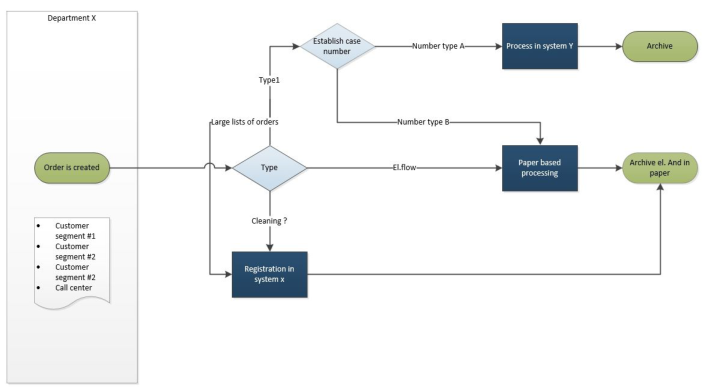
Figure 1: Value stream mapping 4.0 for robotics (created by author, 2023).
this is the only one part of what Value stream mapping and the Future state mapping shall deliver.
In the beginning of industry 4.0 the measurements and success factors of Value stream mapping were: reduction of lead time, number of activities, resource use in the process. During the last 10 years with the development of technology new success factors came into play for the service industry. The “to-be” state and Future state mapping is a streamline process that can be easily automated and, in the perfect world, fully automated by either system improvement, RPA, AI or other technologies.
Cooperation with information technology teams, digital competence and digital thinking became a crucial factor to succeed in this task. Lean experts and SMEs in companies are needed not only to master Lean tools and chal- lenge processes, but also to be able to translate processes into a roadmap for automation. Training of digital competences for all employees, in addi- tion to the traditional Lean training, needed to be performed. This is also an additional prerequisite in order to succeed in Lean 4.0 and 5.0.
Based on the pilot projects and focus groups it is defined that Value stream mapping shall be integrated with the digital templates and tools.
All mapping for Current state mapping and Future state mapping should be completed according to new requirements and with a clear goal to move the process towards automation. Base pilots were completed by using MS Visio and the Value stream mapping standard maps were adjusted according to the new realities.
CONCLUSION
Industry 4.0 and 5.0 are strongly impacting companies and the way they work with Lean and efficiency. A classic Lean thinking is challenged with new technologies and different perspectives in terms of what is considered to
be success. Lean 4.0 and 5.0 are discussed by both academia and practitio- ners, but what is clear a traditional Lean is still there. A classic methodology, culture and tools are the base to start a transformation journey especially in the services industry.
All companies need to start rethinking their improvement efforts and com- petencies of employees in order to keep with the path and ensure that the company is successful in the new age and during the traditional Lean times.
Lean 4.0 and 5.0 are demanding a new perspective of measurement of results in the company, also a development and digitalisation of the tools that are used in classic Lean approach. While moving into Lean 4.0 and Industry 4.0, a clear trend was to maximize the effect of Industry 4.0 and focus on whole automation and digitalization. And if we look into the future and lessons learned from Industry 4.0, what emerged into Industry 5.0, the classic Lean transformed after Industry 4.0 with a human-centric approach fits perfectly. Industry 5.0 is placing the wellbeing of the workers at the cen- tre of the production process and uses new technologies to provide prosperity beyond jobs and growth while respecting the production limits of the planet. At its heart, Industry 5.0 reflects a shift from a focus on economic value to a focus on societal value, and a shift in focus from welfare to wellbeing (Forbes, 2022).
ACKNOWLEDGMENT
This research has been supported by the project “Ergonomic stress indica- tors in contemporary technological work environment and possibilities of its improvement in social-technical system “Human-Machine-Environment”, Agreement No. 1.1.1.2/VIAA/3/19/546.
REFERENCES
Ahmad, Rosmaini & Amin, Rabiatul & Mustafa, Shaliza. (2022). Value stream mapping with lean thinking model for effective non-value added identification, evaluation and solution processes. Operations Management Research. 15. 1–20. 10.1007/s12063-022-00265-9. Bortolotti, Thomas & Romano, Pietro & Nicoletti, Bernardo. (2009). Lean
First, Then Automate: An Integrated Model for Process Improvement in Pure Service-Providing Companies. IFIP Advances in Information and Communication Technology. 338. 579–586. 10.1007/978-3-642-16358-6_72. Cifone, Fabiana & Portioli-Staudacher, Alberto. (2021). Do repetitive and nonrepetitive companies equally benefit from Lean 4.0?. Journal of Manufacturing Technology Management. ahead-of-print. 10.1108/JMTM-12-2020-0500. Jeroen Kraaijenbrink (May 24, 2022) What Is Industry 5.0 And How It Will Radi-
cally Change Your Business Strategy?; Forbes. Website: What Is Industry 5.0 And How It Will Radically Change Your Business Strategy? (forbes.com). Joseph Juran, A. Blanton Godfrey, (1998) Juran’s Quality Handbook: 5th (Fifth) Edition, McGrawHill. Kerhalkar S, Nandurkar KN (2012) Development of VSM implementation procedure
for prefabrication shop through case study approach. Int J Adv Res Sci Engi Tech 1(2): 28–35.
Business Efficiency Metric Implementation Strategies 247
Krishnan, Suresh Kumar & Agus, Arawati & Husain, Nooreha. (2000). Cost of quality: The hidden costs. Total Quality Management. 11. 844–848. 10.1080/09544120050008309. Liker, Jeffrey & Morgan, James. (2006). The Toyota Way in Services: The
Case of Lean Product Development. Academy of Management Perspectives. 20. 10.5465/AMP.2006.20591002. Liker, Jeffrey & Morgan, James. (2006). The Toyota Way in Services: The Case of Lean Product Development. Academy of Management Perspectives. 20. 10.5465/AMP.2006.20591002. Longo F, Padovano A, Umbrello S. Value-oriented and ethical technology engineering
in Industry 5.0: a human-centric perspective for the design of the factory of the future. Appl Sci 2020;10:4182. https://doi.org/10.3390/ app10124182. Mladineo, Marko & ´Cubi´c, Marijan & Gjeldum, Nikola & Crnjac Žiži´c, Marina.
(2021). Human-centric approach of the Lean management as an enabler of Industry 5.0 in SMEs. Odebrecht de Souza, Raphael & Ferenhof, Helio & Forcellini, Fernando. (2022).
Industry 4.0 and Industry 5.0 from the Lean perspective. International Journal of Management, Knowledge and Learning. 11. 10.53615/2232-5697.11.145–155. Özkeser, Banu. (2018). LEAN INNOVATION APPROACH IN INDUSTRY 5.0. Rossi, Arthur & Marcondes, Giovanna & Pontes, Joseane & Leitão, Paulo & Treinta, Fernanda & Resende, Luis & Mosconi, Elaine & YOSHINO, RUI. (2022). Lean Tools in the Context of Industry 4.0: Literature Review, Implemen- tation and Trends. Sustainability. 14. 12295. 10.3390/su141912295. Rossi, Arthur & Marcondes, Giovanna & Pontes, Joseane & Leitão, Paulo &
Treinta, Fernanda & Resende, Luis & Mosconi, Elaine & YOSHINO, RUI. (2022). Lean Tools in the Context of Industry 4.0: Literature Review, Implemen- tation and Trends. Sustainability. 14. 12295. 10.3390/su141912295. Santhosh N. & REGO, ANIL & Sunil, Ganjalgud & NAIK, SACHIN & Gowda, Ashwin & PATIL, SACHIN. (2018). Evaluation of defect correlations with quality, delivery and cost. International Journal of Mechanical and Materials Engineering. 8. 472–484. Xun Xu, Yuqian Lu, Birgit Vogel-Heuser, Lihui Wang, Industry 4.0 and Industry 5.0—Inception, conception and perception, Journal of Manufa- cturing Systems, Volume 61, 2021, Pages 530-535, ISSN 0278-6125, https://doi.org/10.1016/j.jmsy.2021.10.006.
LISTED IN THE AHFE DIGITAL BOOKSTORE CATALOGUE
Explore the complete digital volume
Human Factors, Business Management and Society
Read this individual research paper free through the original publisher, or explore the full digital proceedings book.
ISBN 978-1-958651-73-5
Explore this ISBN in the AHFE Bookstore ↗Listed in the July 2026 bookstore catalogue; search by ISBN to confirm current availability · Digital book purchase optional