Ayodeji Dennis Adeitan, Clinton Aigbavboa, Oyindamola Cynthia Olubiyo (2023). Factors Influencing Globalization of Logistics Management in Nigeria. In: Production Management and Process Control. AHFE Open Access, vol. 104, pp. 57–70. https://doi.org/10.54941/ahfe1003053
Companies in the developed world operates easily in the global market because the factors that influence globalization of logistics management have been studied and the elements influencing globalization have made the process flexible and accommodating. But little is known about the factors that influence globalization of logistics management in Nigeria. Therefore, this study set out to determine the various factors that could influence globalization of logistics management in Nigeria. The study adopted a quantitative approach through the use of a questionnaire survey carried out among selected professionals and consultants in operations, logistics and supply chain department of companies within Lagos, Nigeria. Data gathered were analysed using percentages, mean item score and factor analysis. The research instrument reliability was verified using Cronbach alpha test while the factorability of the data collected was tested using the Kaiser-Meyer-Olkin measure of sampling adequacy and Bartlett's Test of Sphericity. The result revealed that the three cluster factors that influence globalization of logistics management in Nigeria are political, cultural, and economic which were ranked highest. The findings also revealed that all respondents have similar views on the factors that influence globalization in Nigeria. Lastly, since the respondents have agreed that the factors listed influence globalization of logistics management, it is therefore necessary for the Nigerian government and stakeholders in logistics management to look into these factors as a way of closely integrating markets, economies, societies, and ensuring more products are available to consumers universally.
Globalization typically refers to the process by which different economies and societies become more closely integrated, and concurrent with increasing worldwide globalization, there has been much research into its consequences (Nilson & Theresse, 2010). Hamilton & Webster (2009) defined global- ization as political, social and economic links in different countries, while according to Steger (2009) it is the shrinkage of time and space. Globalization
is the word used to describe developmental policies in a trade as well as minimizing transportation costs and information and communication tech- nology transfer (UNCTAD, 2008). Its importance includes economic growth, employment rise, and distribution of income between nations and cities, poverty alleviation, human right, and labour rights. The economy glob- alization, jointly with the customer aligned economy, the web-based data frameworks, and decline in the costs of transportation have cultivated an expanding interest for logistics operations. Globalization is the main source of productivity or capacity through growth in trade which in turn leads to extensive inflows of foreign direct investment such as the inclusion of new ideas and technologies, rise in productivity, improved logistics management, access to markets, training, higher labour wages, job creation, and improved economic growth (UNCTAD, 2008). As defined by Council of Supply Chain Management Professionals (CSCMP), logistics management is the planning, implementation and control of the efficient, effective forward and reverse flow and storage of goods, services and related information between the point of origin and the point of consumption in order to meet customer re- quirements. Simchi-Levi et al (2000) also describes logistics management as a process that has taken inter-organizational boundaries and used these terms interchangeably. Once an organization can develop and implement a formal logistic strategy, such a strategy will add flexibility to the decision-making process. Such a strategy enables the organization to predict service disrup- tions, thereby empowering the organization to ensure that services are at a peak level (Ahmer, 2013). Thus, for the success of logistics management (LM), the process requires heavy emphasis on activities of integration, coop- eration, coordination and information sharing throughout the supply chain, from suppliers to final customers. The logistics sector has been shaped in re- cent years by globalization spread which brings about competitive pressure in logistics companies due to constant demand for products (Kille and Schwem- mer, 2013). As a result of this development, only those companies that are able to fulfil given requirements such as flexibility and quick response to the order of business such as productivity, on-time service delivery, low goods pricing, security in delivery, and degree of service have a chance to survive in this present competitive business environment. The logistics management processes are put together based upon some values such as open and effective and efficient competition, ethics and fair dealing, accountability and trade reporting, and equity. These values help in achieving the eventual goal of consistency in procurement processes, good governance and economic devel- opment (NT, 2005a). Effective logistics management practice has facilitated trade and economic benefits of countries and accelerated the intended devel- opment of globalization. Globalization have a lot of gains and benefits on its own. It is truly a multifaceted phenomenon which covers a great diversity of trends in the economic and logistics ranges. It is dynamic and impulsive, although not entirely disordered bacause of its positive and negative effect of logistics management. As per Asongu (2014), globalization has shown an inverse relationship on logistic management, which indicates the time costs and possibility of trading in a global market, which states that the lower the cost becomes, the higher the possibility of efficient trading, meaning when
Factors Influencing Globalization of Logistics Management in Nigeria 59
the cost of logistics is lower, the rate at which organizations will operate in a global market will be higher internationally and locally. The globaliza- tion process has been recognized as an important underlying force impacting global logistic service providers in terms of global economic growth, reduc- tions of trade barriers, resources and markets, and expansion in trade routes (Lemoine, 2005). Since globalization involves trade liberalization, it shows that there is free and open movement of trade, money and investment across the global border. It reduces the barrier existing in international trade and creates worldwide marketplaces, which, with the expansion in ICT, can be accessed by any person from any location. Therefore, it opens up a world of prospects for business and also connects them to market. Multinational corporations are described as companies which function strategically on a worldwide scale with the center of operations in a developed country. It is any business that has effective activities in two or more countries consisting of distinct features and are usually big entities having a worldwide presence (Kim, 2000). They are the major drivers by which globalization influence is impacting businesses and enterprises in some parts of the world. Nigeria played host to many corporations long before independence and their pres- ence in the country has impacted negatively or positively on the economy and environment in which they operate their business. The globalization of logistics management allows Nigeria to export and import goods, capital and investment without restriction. The influence of globalization on logistics management will enable Nigerian businesses to integrate information systems and processes through the supply chain to transportation, inventory control, and market forecasts. Therefore, the logistics chain management will become limitless and the flow of resources will not be limited to a certain place. At this point, Nigerian organizations logistics chain management will see a dras- tic reduction in the cost of transporting materials, cost of labour and ease of access to raw materials. In recent years organizations have experienced steady growth in international trade and international transport, while the driving forces of such growth are global worldwide economic growth and re- laxations of trade barriers. Pesut (2009) indicates that global logistics can be influenced by several economic, social and political aspects because the pro- cess can be flexible or changeable. Another study by Hamilton and Webster (2009) mentioned that technologies are an important factor that influence globalization in logistics/supply management because the operation of busi- ness has rapidly changed in every aspect so fast owing to technology. Top organizations in the developed world have realized that to achieve compet- itiveness in their business, methodical approaches to place utility, logistics and supply management, and globalization must be developed (Milovanovi´c, 2017). In this global economy world, logistics management tends to bring people and markets together through sourcing of raw materials, goods, and supplies which are essential when it comes to goods assembling and ware- housing goods, and in moving the finished goods to the market. Globalization as a universal trend affects every nerve of the organization: the effects are felt from the human resource management to logistic management and mar- keting, among others. The achievement of worldwide economic equilibrium
cannot be ensured, but the stability in most economic environments indicates the positive effects fostered by the development of trading and adequate ac- cess to new markets. According to Ogbadu and Ameh (2012), it is being suggested that for Nigeria to be a globalized nation with the rest of the world, it must sustain strong and stable macro-economic framework; foster trade liberalization and regional integration; promote sound banking system and financial development; encourage private investment including foreign direct investment; promotes infrastructural development, encourage agricultural development, invest in people and capacity building, and encourage political stability. The factors that influence globalization of logistics management in Nigeria drive the focus of this study. Therefore, the main aim of this study is to determine the factors that influence globalization of logistics management in Nigeria.
METHODOLOGIES In determining the factors that influence globalization of logistics manage- ment in Nigeria, a survey method was adopted. The survey was conducted within Lagos, Nigeria and the target group in the research includes logis- tics managers, supply chain managers, logistics engineers, customer service personnel, inventory managers, consultants, operations managers and pur- chasing manager in the selected multinational companies. Lagos state was selected as the study area due to the high concentration of multinational companies within the area and the easy accessibility to the target area. Man- agement and staff members of the multinational companies within the study area were sampled based on their readiness to take part in the survey and by the virtue of their experience in logistics management. A structured ques- tionnaire was adopted as the instrument for data collection. The choice of a questionnaire survey is based on the fact that the questionnaire has been declared to be easiest and most broadly used research instrument in most social researches and it has the ability to reach a wide range of respon- dents (Tan, 2011). An aggregate of 150 questionnaires were conveniently distributed with 106 retrieved and found fit for data analysis. The question- naire comprised two areas, with points on a Likert scoring scale ranging from ‘strongly agree (5)’ to ‘strongly disagree (1)’. Section one geared towards de- mographic and other personal information from respondents. The second section contains questions that measure the factors that influence global- ization of logistics management in Nigeria. Data analyses were performed using percentage for data on the background information of the respondents. Descriptive statistics such as mean and standard deviation were used with the mean scores of the factors and their standard deviations compared in a tabular form. With a mean value of 2.5 or more, a factor is deemed to be sig- nificant to the study (Field, 2013). Factor analysis was also conducted on the data gathered on the factors that influence globalization of logistics manage- ment in Nigeria. The reliability of the questions in second section was tested using Cronbach’s alpha test which gave an alpha value of 0.962, therefore indicating high reliability of the questionnaire used for this study.
Factors Influencing Globalization of Logistics Management in Nigeria 61
RESULTS AND DISCUSSIONS Factors That Influence Globalization of Logistics Management in Nigeria
The descriptive analysis results reveal the ranking of each of the factors from the highest to the lowest with the Table 1 displaying individual mean scores and likewise the standard deviation of each factor. All the itemized factors have mean values of more than 2.5 indicating strongly that the re- spondents agree that they are factors that influence globalization of logistics management in Nigeria. The results also revealed that ‘Economy (mean item score = 4.14 and standard deviation = 1.142)’, ‘technologies (mean score = 4.10 and standard deviation = 1.068)’, ‘resources and markets (mean score = 4.09 and standard deviation = 0.991)’, ‘political issues (mean score = 4.05 and standard deviation = 1.158)’, and ‘international business (mean score = 3.97 and standard deviation = 1.055)’ were the top five ranked factors that influence globalization of logistics management.
Principal Component Analysis According to Leech et al. (2005) the principal components analysis is a data reducing method used to reduce a large number of variables to a smaller set of basic factors that summarize the important information contained in the vari- ables. As described by Pallant (2007), exploratory factor analysis is generally used in the initial stages of research in order to obtain information involving the interrelationships among a set of variables. Exploratory factor analysis was carried out using the Statistical Package Software for Social Sciences (ver- sion 21.0). In order for the factor analysis to proceed, all the vital tests were
Table 1. Factors that influence globalization of logistics management in Nigeria.
Table available in the original PDF paper.
Rank (R) Factors That Influence Globalization Mean (¯x) Standard deviation (σX)
Economy 4.14 1.142 1 Technologies 4.10 1.068 2 Resources and markets 4.09 0.991 3 Political issues 4.05 1.158 4 International business 3.97 1.055 5 Growth strategies of multinational companies 3.92 1.105 6 Trade routes 3.92 1.169 6 Unemployment rate 3.92 1.217 6 Corruption index 3.92 1.317 6 Production issues 3.91 1.126 7 Industrial organisations 3.88 1.084 8 GDP per capital 3.84 1.180 9 Population density 3.83 1.238 10 Tax systems reduction 3.70 1.189 11 Containerization 3.68 1.000 12 Literacy rate 3.60 1.209 13 Historical 3.40 1.084 14 Source: Field Survey, 2019.
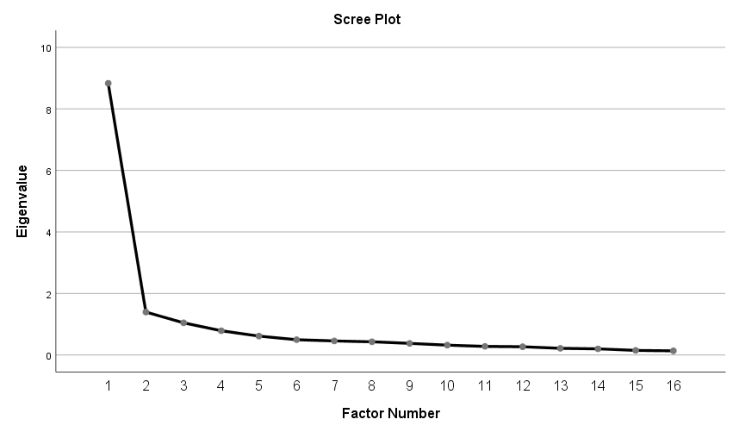
Figure 1: Scree plot for factor analysis.
carried out to determine the suitability of the sample size. Factorability of the correlation matrix can be determined if it can show some correlations of r = 0.3 or higher while Bartlett’s test of sphericity should be statistically sig- nificant or measured at p < 0.05 and the Kaiser-Meyer-Olkin (KMO) which measures the sampling suitability value must be 0.6 or above. The tables 2 to 4 and Figure 1 show the results from EFA on the factors that influences glob- alization of logistics management in Nigeria. Out of the seventeen variables itemized for the first approach, none was omitted. The fitness of the data for factor analysis was first evaluated. Checking of the correlation matrix shows the presence of values above 0.3. In Table 2, the Kaiser-Meyer–Olkin mea- sure of sampling acceptability reached a value of 0.924, thereby exceeding the suggested minimum value of 0.6 which indicates that there are sufficient items for each factor. Bartlett’s test of sphericity reached a value of 1639.842 and was also statistically significant at P = 0.000, thereby supporting the factorability of the correlation matrix. The data was subjected to PCA using varimax rotation. The eigenvalue was based on a conventional high value of 1 as denoted in Table 3, and three factors and eigenvalues exceeding 1.0 were extracted. Also, the Catell’s scree plot in Figure 1 shows the extracted factors by signifying the clear elbow in the plot where the eigenvalues are levelled off. The variance value for each of the extracted factor is as follows: Factor 1 (63.061%), Factor 2 (6.622%), and Factor 3 (5.898%) as shown in Table 4.
Table 2. Kaiser-Meyer–Olkin and Bartlett’s test.
Table available in the original PDF paper.
Kaiser-Meyer-Measure of Sampling Adequacy. .924 Bartlett’s Test of Sphericity Approx. Chi-Square 1639.842
df 136 Sig. .000
Factors Influencing Globalization of Logistics Management in Nigeria 63
Table 3. Rotated factor matrix.
Table available in the original PDF paper.
Factors
1 2 3
Economy 0.831 Technologies 0.770 Trade routes 0.730 Industrial organisations 0.682 Production issues 0.681 Resources and Markets 0.678 Political issues 0.670 Growth strategies of multinational companies 0.583 International business 0.514 Corruption index 0.783 Unemployment rate 0.721 GDP per capital 0.702 Literacy rate 0.565 Historical 0.746 Containerisation 0.664 Tax systems reduction 0.622 Population density 0.508 Extraction Method: Principal Axis Factoring. Rotation Method: Varimax with Kaiser Normalization.a a.Rotation converged in 12 iterations.
Hence, the final statistics of the PCA and the extracted factors accounted for about 70.548% of the entire cumulative variance.
The principal axis factoring showed the presence of three factors with eigenvalues larger than 1 as presented in Table 5. Owing to close inspection of the integral relationships among each of the variables under each factor, the following interpretations were made: Factor 1 was named ‘economic glob- alization’; Factor 2 was named ‘political globalization; and Factor 3 was named ‘cultural globalization’. The names used in describing these factors were derived by a close inspection of the variables within each of the factors. The component indicators of each of the three factors extracted are described below, together with a comprehensive explanation of how each of the three factors was described within the group. The extracted factors are discussed below; Factor 1: Economic Globalization
As shown in the Table 3, the nine extracted factors that influence glob- alization in Nigeria for factor 1 were economy (83.1%), technologies (77.0%), trade routes (73.0%), industrial organisations (68.2%), produc- tion issues (68.1%), resources and markets (67.8%), political issues (67.0%), growth strategies of multinational companies (58.3%), and international business (51.4%). The number in parenthesis specifies the individual fac- tor loadings. Also this group accounted for 63.061% of the variance and has an Eigen value of 10.720 as shown in Table 5. Cronbach’s alpha for this component yielded a value of 0.952 indicating the reliability of the cluster.
Variance Cumulative % Total % of Variance Cumulative %
% Total % of
Variance Cumulative
Total % of
Table 4. Total variance explained.
Table available in the original PDF paper.
Factors Initial Eigenvalues Extraction Sums of Squared Loadings Rotated Sums of Squared
Factors Influencing Globalization of Logistics Management in Nigeria 65
Factor 2: Political Globalization The four extracted factors that influence globalization in Nigeria for factor 2 were corruption index (78.3%), unemployment rate (72.1%), GDP per cap- ital (70.2%), literacy rate (56.5%), and production logistics (57.8%) as presented in Table 7.11. The number in parenthesis specifies the individual factor loadings. Also this group accounted for 6.62% of the variance and has an Eigen value of 1.126 as shown in Table 5. Cronbach’s alpha for this component yielded a value of 0.901 indicating the reliability of the cluster.
Factor 3: Cultural Globalization The four extracted factors that influence globalization in Nigeria for factor 3 were historical (74.6%), containerization (66.4%), tax systems reduction (62.2%), and population density (50.8%) as presented in Table 7.11. The number in parenthesis specifies the individual factor loadings. Also this group accounted for 5.89% of the variance and has an Eigen value of 1.126 as shown in Table 5. Cronbach’s alpha for this component yielded a value of 0.865 indicating the reliability of the cluster.
Normality Tests This part explains the normality test result of the respondents’ years of experience (five years or less and more than five years) using the Kolmogorov- Smirnov and Shapiro-Wilk statistical tests. The Kolmogorov-Smirnov statis- tical test was used because the sample size of years of experience (five years or less) is more than 50 while the Shapiro-Wilk statistical test was also used be- cause the sample size (more than five years) was less than 50. In this research study, 0.05 was used as the cut-off value for the normality tests. The sam- ple sizes from 50 and above used the Kolmogorov-Smirnov statistics results, while for sample size below 50 the Shapiro-Wilk statistics results were used. Table 5 shows the result of the test comparing years of experience (five years or less and more than five years) against the factors that influence globaliza- tion of logistics management in Nigeria. In order to determine whether the variables are normally distributed or not normally distributed, the following criteria are required: If p-value is >0.05; Do not reject H0 (accept H0) mean- ing normally distributed. There is no difference between the groupings. Also, if p-value is <0.05; Reject H0 (accept H1) meaning not normally distributed. There is a difference between the groupings.
The p-values shown in Table 5 were less than 0.05 for the normality tests for years of experience (five years or less and more than five years) against nodes of distribution network. The null hypothesis (H0) is rejected and the alternative hypothesis (H1) is accepted. Therefore, it is not normally dis- tributed. The normality test for years of experience (five years or less and more than five years) against economic globalization showed that the p- values were less than 0.05 as shown in Table 5. The null hypothesis (H0) is rejected and the alternative hypothesis (H1) is accepted. Therefore, it is not normally distributed. There is a difference between the groups on how they assess the factors that influences globalization categorized as economic globalization. Also, the p-values shown in Table 5 were less than 0.05 for
Table 5. Normality test result comparing years of experience against the factors influencing globalization of logistics management in Nigeria.
Table available in the original PDF paper.
Normality test for years of experience rA5 Kolmogorov-Smirnova Shapiro-Wilk
Statistic df Sig. Statistic df Sig.
0.209 74 0.000
Economic globalization
5 years or less
More than 5 years 0.877 32 0.002
0.175 74 0.000
Political globalization
5 years or less
More than 5 years 0.901 32 0.007
0.183 74 0.000
Cultural globalization
5 years or less
More than 5 years 0.951 32 0.151 a. Lilliefors Significance Correction.
the normality test for years of experience (five years or less and more than five years) against political globalization. The null hypothesis (H0) is re- jected and the alternative hypothesis (H1) is accepted. Therefore, it is not normally distributed. There is a difference between the groups on how they view the factors that influence globalization categorized as political glob- alization. Lastly, the normality test for years of experience against cultural globalization showed that the p-value was less than 0.05 for five years or less and greater than 0.05 for more than five years. The null hypothesis (H0) is rejected for five years or less of experience. Therefore, there is a difference between the groups on how they view the factors that influence globalization categorized as cultural globalization. For more than five years of experience, the null hypothesis (H0) is accepted. Therefore, there is no difference be- tween the groups on how they view the factors that influence globalization categorized as cultural globalization.
Non-Parametric Tests This part discusses the non-parametric tests that were conducted since most of the distribution was not normally distributed as revealed from the nor- mality tests results in Table 5. In this study, the non-parametric test was also carried out to determine whether the groups perceived differently from each other. When the p-value is greater than or above 0.05, it implies that the null hypothesis (H0) is not rejected since this would mean that there is no difference between the groups, but if the p-value is less than 0.05, the alter- native hypothesis (H1) will be accepted since this would show that there is a difference between the groups. Hence, the Mann-Whitney U test would be performed. According to Pallant (2007), the Mann-Whitney U test is a method used to evaluate the changes linking two independent groups on a
Factors Influencing Globalization of Logistics Management in Nigeria 67
continuous measure. The years of experience was tested against the variables to ascertain whether respondents with five years or less experience and more than five years’ experience had the same opinion. Table 6 gives the group test statistics while Table 7 shows the test statistics results.
From the results presented in Table 6 and 7, Mann-Whitney U test revealed no significant difference in the economic globalization between respondents’ years of experience (five years or less) (MD = 4.333, n = 74) and those with more than five years (MD = 4.056, n = 32), U = 958.000, z = -1.559, p = 0.119. Also, the Mann-Whitney U test revealed no significant differ- ence in the political globalization between respondents’ years of experience (five years or less) (MD = 4.123, n = 74) and those more than five years (MD = 4.000, n = 32), U = 1035.500, z = -1.029, p = .304.
Table 6. Group statistics.
Table available in the original PDF paper.
Group Statistics
Mean Rank
Median (MD)
rA5 N Mean Std. Devia- tion
74 4.08 0.903 56.55 4.333
5 years or less
SecC_F1 Economic Global- ization
32 3.81 0.997 46.44 4.056
More than 5 years
74 3.90 1.044 55.51 4.125
5 years or less
SecC_F2 Political Global- ization
32 3.65 1.164 48.86 4.000
More than 5 years
74 3.75 0.959 57.28 4.000
5 years or less
SecC_F3 Cultural Global- ization
32 3.41 0.913 44.75 3.500
More than 5 years
Table 7. Test statisticsa.
Table available in the original PDF paper.
Mann-Whitney U Wilcoxon W
Z Asymp. Sig. (2-tailed) 958.000 1486.000 -1.559 0.119
SecC_F1 Economic globalization
1035.500 1563.500 -1.029 0.304
SecC_F2 Political globalization
904.000 1432.000 -1.940 0.052
SecC_F3 Cultural globalization a.Grouping Variable: rA5.
Finally, the Mann-Whitney U test revealed no significant difference in the cultural globalization between respondents’ years of experience (five years or less) (MD = 4.000, n = 74) and those with more than five years (MD = 3.500, n = 32), U = 904.000, z = -1.940, p = 0.052.
DISCUSSIONS The findings from the factor analysis (exploratory and descriptive) were applied when answering the research questions. From the result of the de- scriptive analysis, the economy was ranked first by the respondents as the most important factor that influences globalization in Nigeria with a mean 4.14 and standard deviation of 1.142. Technologies was ranked second with a mean score of 4.10 and standard deviation of 1.068, resources and mar- kets was ranked third with a mean score of 4.09 and standard deviation of 0.991, political issues was ranked fourth with a mean score of 4.05 and stan- dard deviation of 1.158, international business was ranked fifth with a mean score of 3.97 and standard deviation of 1.055, trade routes was ranked sixth with a mean score of 3.92 and standard deviation of 1.169, and corruption index was also ranked sixth with a mean score of 3.92 and standard devi- ation of 1.317. However, containerization was ranked twelfth with a mean score of 3.68 and standard deviation of 1.000, literacy rate was ranked thir- teenth with a mean score of 3.60 and standard deviation of 1.209. Finally, historical was ranked fourteenth with a mean score of 3.40 and standard deviation of 1.048. From the EFA, factors that influence globalization in Nigeria were grouped into three factors, namely economic globalization with the highest mean ranking of (MIS = 3.997 and SD of 0.935), followed by political globalization (MIS = 3.821 and SD of 1.081) and lastly, cultural globalization (MIS = 3.651 and SD of 0.954). The findings are in line with the study of Lemoine (2005) which outlined that steady growth experienced by organizations in global trade is due to the factors that drive or influence globalization such as global economic growth, reductions of trade barriers, Resources and Markets, and expansion in trade routes. Also, Pesut (2009) indicates that globalization is influenced by several economic, social and po- litical factors because the process can be flexible. Another study by Hamilton and Webster (2009) mentioned that technologies are an important factor that influence globalization in logistics/supply management because the operation of business has rapidly changed in every aspect so fast owing to technology. The author reveals that cheap and easy access to technology has led to a wide array of business practices which are now referred to as globalization. Therefore, it is important for Nigeria to adopt these factors that influence globalization for development in the country and a more improved global business environment. The findings also revealed that all respondents have similar views on the factors that influence globalization in Nigeria.
CONCLUSION
The factors that influence globalization in Nigeria have been successfully investigated. Results from the findings of the questionnaire survey indi- cate that the factors that influence globalization in Nigeria from the three
Factors Influencing Globalization of Logistics Management in Nigeria 69
cluster factors are political, cultural, and economic which were ranked high- est. Therefore, it can be concluded that the research objective of the study has been met. The findings also revealed that all respondents have simi- lar views on the factors that influence globalization in Nigeria. Therefore, it is important for Nigerian government to adopt these factors that influ- ence globalization for development in the country and a more improved global business environment. It is recommended that Nigerian government and stakeholders in logistics management to look into these factors influ- encing globalization of logistics management as a way of closely integrating markets, economies, societies, and ensuring more and adequate products are available to consumers universally. Further research can be done to determine whether the adoption of political globalization and cultural globalization can influence development and improved global business environment in Nigeria. It can be conducted with a much bigger sample size than what is attainable in this present study.
References
Ahmer, Z. (2013). Adoption of human resource information systems innovation in Pakistani organizations. Journal of Quality and Technology Management, 9(2): 25. Berggren, N., and Nilsson, T. (2014). Globalization and the Transmission of Social
Values: The Case of Tolerance. IFN Working Paper No. 1007. Research Institute of Industrial Economics, Stockholm, Sweden. Council of Supply Chain Management Professionals (CSMP), 2012. Logistics Management Definitions. [online] Council of Supply Chain Management Profession- als. Available at: [Accessed 15 April, 2019]. Field, A.: Discovering Statistics Using IBM SPSS Statistics. Sage, Thousand Oaks
(2013). Hamilton, L., & Webster, P. (2009). The International Business Enviroment.
New York: Oxford Univeristy Press. Kille, C. and Schwemmer, M. (2013). Challenges 2013, DVV Media Group: Hamburg, https://www.scs.fraunhofer.de/content/dam/scs/de/dokumente/studien/Cha llenges_2013_Exec.pdf. Leech NL, Barrett KC, Morgan GA (2005). SPSS for Intermediate Statistics, Use and
Interpretation. 2nd Edition, Lawrence Erlbaum Associates Inc. New Jersey. Lemoine, W. (2005). Organizational business models in international operations.
The logistics service provider industry. Centre for anvendt logistik og transport- forskning. Denmark. Milovanovi´c, G., Milovanovi´c, S., and Radisavljevi´c, G. (2017). Globalization - The Key Challenge of Modern Supply Chains. ЕКОНОМИКА . 63(1): 31–40. Ogbadu, E. E., and Ameh, A. A. (2012). Globalisation and Nigeria’s Involvement
in International Marketing. Kuwait Chapter of Arabian Journal of Business and Management Review, 2(1). Pallant J. (2007). SPSS Survival Guide: A Step by Step Guide to Data Analysis using SPSS for Windows. 3rd ed. New York: Open University Press. Pesut, M. (2009). Global Supply Chains, Transport and Competitiveness. In: Pro-
ceedings of the Joint Trade and Transport Conference on the Impact of Globaliza- tion on Transport, Logistics and Trade. The UNECE Work, Geneva, Switzerland, 24 February 2009.
Simchi-Levi D., Kaminsky, P. and Simchi-Levi, E. (2000). Designing and Managing the Supply Chain, McGraw-Hill. Steger, M. B. (2009). Globalization: A very short introduction. 2nd edition.
New York: Oxford University Press. Tan, W. C. K. (2011). Practical Research Methods. Pearson Custom: Singapore. UNITED NATIONS CONFERENCE ON TRADE AND DEVELOPMENT (UNC- TAD). Globalization for Development: The International Trade Perspective. UNCTAD/DITC/2007/1. United Nations Publication.
LISTED IN THE AHFE DIGITAL BOOKSTORE CATALOGUE
Explore the complete digital volume
Production Management and Process Control
Read this individual research paper free through the original publisher, or explore the full digital proceedings book.
ISBN 978-1-958651-80-3
Explore this ISBN in the AHFE Bookstore ↗Listed in the July 2026 bookstore catalogue; search by ISBN to confirm current availability · Digital book purchase optional