Oluwaseun Laseinde, Clinton Aigbavboa (2023). Collaborative Initiatives: An information-sharing approach in retail drop shipping supply chain. In: Production Management and Process Control. AHFE Open Access, vol. 104, pp. 137–145. https://doi.org/10.54941/ahfe1003061
Retail dropshipping has become increasingly popular due to its ability to reduce inventory holding costs and enhance customer satisfaction. This model involves retailers displaying goods online and sending customer data to producers who ship directly to customers. However, this approach impedes scalability, such as poor communication among supply chain partners and a lack of inventory transparency. This research paper proposes a collaborative initiative that utilizes information sharing to improve the efficiency and effectiveness of the retail dropshipping supply chain. Sharing downstream sales data with upstream partners can significantly enhance inventory visibility, reduce order fulfillment time, and improve communication and coordination among supply chain partners. Indepth literature review was conducted to identify relevant articles and studies on collaboration in the supply chain, information sharing, and dropshipping. The study revealed the potential benefits of collaborative initiatives and emphasized how information sharing can help overcome some of the limitations of the conventional dropshipping model. The research provides valuable insights into collaborative initiatives in the retail dropshipping supply chain and highlights the crucial role of information sharing in enhancing supply chain operations. By adopting joint initiatives, retailers can overcome the constraints of the traditional dropshipping model and increase profitability. Our study offers a framework for retailers and supply chain partners to collaborate effectively and improve the efficiency and effectiveness of their operations.
The advent of global business environments has resulted in constantly chan- ging markets, intensified global competition, and more discerning consumers. This has made the business environment unpredictable and dynamic (Singh, Garg, & Sachdeva, 2018). In such situations, businesses must seek opportuni- ties beyond their organizational boundaries and partner with others to ensure that their supply chains are efficient enough to meet customers’ demands (Chen et al., 2017).
Many creative industry strategies, such as drop-shipping, have been intro- duced onto the Internet to improve traditional business processes. Retail dropshipping is a supply chain strategy where the merchant does not keep stock but instead sends customer orders and shipping information to a manu- facturer, wholesaler, or other retailers, who will then send the product straight to the client. The dropshipping model has gained immense popularity recently due to its ability to reduce inventory holding costs, improve customer satisfa- ction, and increase the product range offered by retailers. Drop-shipping is a supply alternative frequently employed to meet online demand (Chiang and Feng 2017). Dropshipping lets businesses concentrate on sales and customer acquisition rather than order fulfillment. According to the E-DSS.org web- site, between 22 and 33 percent of online retailers use drop-shipping as their primary strategy for quick product delivery (Dennis et al., 2017).
In contrast to most supply chain systems previously described in the lite- rature, in which the supplier oversees the retailer’s inventory, drop-shipping is distinguished by the retailer’s absence from the distribution process. Drop shipping is a retail fulfillment model where the seller does not keep inven- tory but outsources the shipping process to third-party suppliers who ship the goods directly to the customer. However, the dropshipping model has several limitations that hinder its scalability, such as the lack of transpare- ncy in inventory levels, delays in order fulfillment, and poor communication among supply chain partners. These limitations can result in customer dissatisfaction, increased costs, and reduced retailer profitability.
Collaborative initiatives are becoming increasingly crucial for companies looking to improve the performance of their retail dropshipping supply chain. This involves recognizing the importance of information sharing among sup- ply chain partners and working together to forecast customer demand and co-manage business functions.
OVERVIEW This portion of the paper reviews significant areas of the study, including retail dropshipping, information sharing, and collaborative initiatives.
Retail Dropshipping Online retailers use dropshipping as an order fulfillment strategy. It is an approach whereby a retailer carries no inventory of its own. The retailer forw- ards the customer’s order to the manufacturer or a distributor who fulfills the order directly to the customers based on their agreement. Dropshipping is regarded as an effective method of e-business. It allows e-retailers to sell merchandise without dealing with operational issues such as developing and producing products, tracking inventory, setting up a warehouse, and maintai- ning shipping infrastructure (Chen et at., 2011). In this scenario, the e-tailer operates an online store but depends on the drop-shipper (manufacturer and distributor) for order fulfillment. Dropshipping depends highly on how effe- ctive communication speed is within the supply chain management from the wholesaler and retailer to the consumer (Musa et al. 2016). Dropshipping differs from the usual supply chain management, where the wholesaler is
Collaborative Initiatives: An Information-Sharing Approach 139
in charge of the inventory management for the retailers (Katircioglu et al. 2014). One of the most significant differences between drop-shipping from traditional retailing is selling on the Internet, and it is only based on goods flow and information flow within the supply chain. In traditional retailing, the physical store is needed, where a customer selects products and pays for them at the same time and location when they physically receive the product (Musa et al. 2016). This unique model has several benefits. One of the most significant benefits of dropshipping is launching an online company without spending tons of resources in stock upfront. Traditionally retailers have had to tie up massive capital purchasing inventory. With the dropshipping model, no order is required until a purchase is completed and paid for by the buyer, negating the need for substantial upfront inventory investment. It is possible to start a profitable dropshipping e-commerce business with little money.
Dropshipping businesses have relatively low overhead costs as they do not require product purchases or warehouse management. Such companies can be started from a home office with just a laptop, making it a profitable option for entrepreneurs. As the business grows, the costs are expected to rise, but at a slower pace than traditional brick-and-mortar businesses. Dropshipping businesses can operate from almost anywhere, provided an internet conne- ction, and vendors and consumers can communicate. Since the product sold is not pre-purchased, retailers can offer customers a wide range of products, provided they are in stock with the supplier. Retailers can list items on their website at no additional cost. Scaling a drop-ship operation is straightforw- ard as the supplier or manufacturer handles the bulk of the work, including picking up the product, packing it, and shipping it to the customer. Thus, the retailer does not have to bear the burden of order, which can tie up valuable time and capital expenditure.
A significant drawback of this approach is not having all the product infor- mation. As a result, e-tailers have no idea what the products are like; they cannot manage the selling products. Since the manufacturer does not give detailed product descriptions, it is difficult to respond to end-user inquiries about its weight, size, and efficiency. These queries must be sent to the manu- facturer regularly, which takes time and creates delays when dealing with consumers. Due to the lack of details and knowledge of the product, including valuable and appropriate information on the website may be challenging, negatively affecting search engine optimization. If the incorrect supplier is selected, the product purchased may be out of stock, frustrating consumers who believed they had purchased an item only to discover that they had not. An automated system that updates inventory levels daily is preferable to circumvent this issue.
Challenges and Benefits of Dropshipping Various studies have been conducted on the retail dropshipping supply chain model, identifying its advantages and disadvantages. According to Li et al. (2019), dropshipping can lower inventory-holding expenses and increase retailers’ range of products. However, the authors also noted that the traditional dropshipping model has several limitations, such as delays in
140 Laseinde and Aigbavboa
order fulfillment, high transportation costs, and poor communication among supply chain partners. Similarly, a study by Choi et al. (2020) found that the lack of transparency in inventory levels and poor communication among sup- ply chain partners can result in customer dissatisfaction and reduced retailer profitability.
Supply chain management faces a significant problem due to a lack of demand visibility (Chen, 1998; Lee et al., 2000; Småros et al., 2003). Typi- cally, companies only have access to customer orders as their source of demand information (Cachon and Fisher, 2000). Forrester (1997) provided an example of how demand increases as it moves up the supply chain. He discovered that the bullwhip effect, also known as demand amplification, is brought on by delays in decision-making and inventory control procedures. Relying on inaccurate demand information to manage production and inven- tories can result in inefficiencies such as reduced capacity utilization, low availability, and excess stock levels (Metters, 1997; Disney et al., 2003). To mitigate the negative impacts of the bullwhip effect and enhance the efficie- ncy of the supply chain, experts suggest that businesses should share the sales data of end customers with their supply chain partners. Collaborative foreca- sting can improve demand forecasting and inventory management, resulting in better capacity utilization, higher product availability, and lower inventory levels (Lee et al., 2000). Studies suggest collaborative forecasting can bring even more benefits by improving inter-company integration within supply chains (Metters 1997).
Information Sharing in the Supply Chain The exchange of information has been recognized as an essential strategy for fostering collaboration and improving the entire performance of the sup- ply chain (Wei et al., 2019). The degree to which members of a supply chain exchange information, including sensitive data that may be both formal and informal, is known as information sharing (Anderson and Narus,1990; Mohr and Spekman, 1994). Distributing organizational and practical infor- mation among key stakeholders is known as information sharing. It helps providers manage their supply and delivery times by providing insight across the network. This method minimizes Integrated Supply Chain fluctuation, reducing wasteful dynamic inefficiencies such as the “bullwhip” (Lee, 2010). According to Lee, Padmanabhan, and Whang (2004), in their studies on the Bullwhip effect, a lack of information can negatively influence business: ina- dequate production system, low quality of service, overstock, or shortages of inventory.
Consequently, sharing information may enable stakeholders to adopt network-beneficial planning decisions (Lee et al., 2004). Chen (2003) sugge- sts an in-depth analysis of information sharing. He investigates the usefulness of exchanging information both upstream and downstream, including the production costs and the capabilities that are now accessible. Examples of this include the demand of the final consumer and the stock policies. Information sharing is another topic that Fawcett et al. (2007) investigate. After condu- cting a study and interviews with business owners, the researchers concluded
Collaborative Initiatives: An Information-Sharing Approach 141
that there are four obstacles to exchanging information. These obstacles include the expense and difficulty of deploying modern technologies, the incompatibility of different computer systems, the lack of “connectivity” throughout an organization and its value chain, and the culture connected with knowledge sharing.
Datta and Christopher (2011) investigate different levels of information exchange and various coordination strategies for a paper tissue factory using agent-based modeling and simulation. According to the authors’ findings, supply chain efficiency can be improved by incorporating collaboration methods and information sharing. According to Roach (2022), a drop ship- per can’t do without high-quality suppliers. Since retailers won’t be stocking the products, it’s important to have genuine dropshipping suppliers and ship products on time. He emphasizes the need to maintain a good relationship with dropshipping suppliers from the very start to build a relationship. This relationship will make information sharing more accessible and disputes reso- lved straight away (Roach, 2022). Consequently, it becomes vital to establish alternative ways to enhance information sharing and cooperation.
Collaboration in the Supply Chain Companies are forced to change their business practices due to current eco- nomic challenges. Companies operating in various industries face a more complex and worldwide competitive environment. It’s becoming more com- mon for businesses to go outside their borders for new ways to boost sales and profit margins (Ireland & Crum, 2005). Supply chain collaboration occurs “when multiple independent enterprises collaborate to design and implement supply chain operations with more phenomenal accomplishment than wor- king individually” (Niemann et al., 2018). Collaborative supply networks strive to balance production and supply with customer needs and demand (Vigtil & Dreyer, 2008). Companies collaborate for various reasons, such as mitigating risk and unpredictability.
Sharing information across channel partners establishes a shared under- standing that promotes better planning choices and, as a result, a lower chance of shipping delays and missed revenues (Lehoux et al., 2014). Col- laboration is closely linked to synergy and development, as they all promote cooperative planning and real-time information sharing (Niemann, Kotzé, and Jacobs, 2018). Sharing formal and informal information between firms can enable the integration of competing partner competencies and create new knowledge for mutual advantage (Whipple & Russell, 2007). Busines- ses should only work together if they are both prepared and able to put in time and energy and if the gains expected are more significant than the expenses (Audy et al., 2010). There are several techniques to supply chain collaboration, such as “Collaborative Planning, Forecasting, and Repleni- shment (CPFR),” “Efficient Consumer Response (ECR),” “Quick Response (QR), Vendor Managed Inventory (VMI)” and “Continuous Replenishment Program (CRP).” Companies should follow collaborative implementation standards to establish and sustain a successful collaborative system, mainly because collaboration is now widely recognized as one of the most effective
142 Laseinde and Aigbavboa
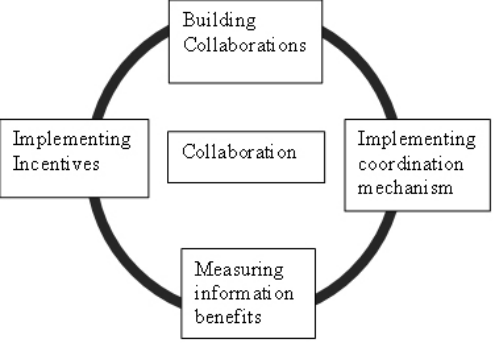
Figure 1: Steps to follow in creating collaborative relationships between firms (Lehoux, Damours, and Langevin 2014).
methods of increasing the possibility of attaining a sustainable competi- tive edge. Figure 1 depicts the steps involved in establishing a collaborative partnership.
Focusing on four key areas is required to have effective collaboration. The first step involves building collaboration by selecting suitable partners, developing a legal framework, and managing relationships and adjustments. The second step is implementing coordination mechanisms facilitating infor- mation sharing and efficient negotiation processes. The third step involves measuring performance and assessing the benefits of collaboration to deter- mine if it is sustainable and worthwhile for all parties involved. Lastly, it is essential to implement incentives that are aligned with collaboration goals to support and promote collaborative efforts (Lehoux, Damours, and Langevin 2014).
The Implementation of Collaborative Approaches Various cooperative strategies have been put out in recent years to encou- rage information sharing and the synchronization of network activity. Vendor Managed Inventory (VMI) and Collaborative Planning, Forecasting, and Replenishment (CPFR) are two of these methods that will be investigated. This strategy, known as vendor, managed inventory (VMI), emerged in the 1980s and involved the manufacturer taking charge of the retailer’s pro- duct stock to improve the retailer’s ability to plan and coordinate production (Barratt and Oliveira 2001; Disney and Towill 2003). GlaxoSmithKline, a pharmaceutical firm, was the subject of a case study that was carried out by Danese (2006). The company had implemented VMI with 18 distributors and suppliers. The study found that implementing VMI led to optimized capacity utilization, increased service level, facilitated information sharing, and redu- ced stock levels. Razmi et al. (2010) performed a comparative analysis of Vendor Managed Inventory (VMI) and a traditional supply chain system in their study. Through mathematical modeling and numerical examples, they
Collaborative Initiatives: An Information-Sharing Approach 143
Table 1. Implementation of the collaborative outcome approach.
Table available in the original PDF paper.
Implementation outcome
Study Collaborative approach (Danese 2006) VMI Increase capacity utilization, lower stock levels, more effectively disseminate information, and raise service levels. Razmi, Hosseini Rad, and Sadegh Sangari (2010)
VMI VMI is a more cost-effective system that offers more significant benefits when compared to the traditional system. Yao, Evers, and Dresner (2007), Yu, Zeng, and Zhao (2009)
VMI A spike in the supplier’s inventory expenses results from a VMI transaction in which inventory is transferred from the customer to the supplier. (VICS 2019) CPFR Any forecast or inventory deviations can be found and fixed before they have a negative impact on sales or profit. (Steermann 2003) CPFR lowering the stock level and effectively launching new products into the market. Cederlund et al. (2007)
CPFR Determine what clients want and how much should be sent to each sales location. Du et al. (2009) CPFR used for agricultural products to address raw materials’ biological nature and perishable items’ features.
could show that VMI was associated with higher benefits and lower costs compared to the traditional system. According to research by Yao, Evers, and Dresner (2007) and Yu, Zeng, and Zhao (2009), adopting VMI could lead to the transfer of inventory from the buyer to the supplier, resulting in increa- sed inventory costs for the supplier. To overcome this issue, the authors advise using an incentive like revenue sharing to compensate for the cost increase. In addition, Marquès et al. (2010) reviewed the literature on VMI and evaluated its many concepts and the elements that made it successful or unsuccessful. The authors have suggested a three-process structure to understand better and describe the VMI technique.
Collaborative-Planning-Forecasting and Replenishment (CPFR) is a rela- tively new collaborative approach that has emerged recently. This approach involves partners working together and sharing information, such as sales history, product availability, and lead times, to coordinate their activi- ties better and reduce excess inventory (Voluntary Interindustry Commerce Solutions [VICS] 2009). The Collaborative Planning, Forecasting, and Reple- nishment (CPFR) approach has the advantage of quickly identifying changes in inventory levels and forecasts to prevent any negative impact on profits and sales. Many companies have successfully implemented this method. Ste- ermann (2003) provides an example of Sears, a major retailer, and their Implementation of CPFR with Michelin, one of their primary suppliers, in 2001. The Implementation of CPFR resulted in the efficient reduction of
144 Laseinde and Aigbavboa
stock levels and the introduction of new products for eighty products. Ceder- lund et al. (2007) conducted a case study on Motorola, which collaborated with its retailers to implement CPFR to understand customers’ needs better and determine the correct quantity to deliver to each point of sale. Du et al. (2009) provide an example of how the CPFR method can be customized to suit agricultural product requirements, considering the raw materials’ peri- shable nature and biological constraints. In addition, Min and Yu (2008) present various case studies illustrating the Implementation of CPFR.
Although the benefits of information sharing have been identified and examples of successful Implementation exist, numerous businesses have struggled to realize these advantages (Cooke, 1998; Lapide, 2001; Vergin and Barr, 1999). Additionally, collaborative forecasting adoption has pro- gressed more slowly than anticipated (Barratt, 2004; Corsten, 2003; Sliwa, 2002).
Training to Improve the Skills of All People Involved Training is an essential aspect of Total Productive Maintenance (TPM) because it ensures that all workers involved in equipment maintenance have the requisite knowledge and abilities to perform their duties successfully and efficiently. By investing in training, businesses may increase the efficiency of their equipment, decrease their maintenance costs, and foster a culture of continual development. Such training requirements include technical trai- ning, emergency preparation training, equipment safety training, and others based on departmental requirements. Workers must possess the appropriate skills and expertise to contribute to a TPM setting. This obligation applies to the maintenance and production divisions, inventory, accounts, and opera- ting divisions. Equipment efficacy will not be compromised by demonstrating the correct degree of training.
CONCLUSION
Collaborative initiatives can effectively address the limitations of the tra- ditional dropshipping model and improve supply chain performance. The literature review suggests that collaborative initiatives, such as collaborative forecasting, shared inventory, and Vendor Managed Inventory (VMI), can improve supply chain efficiency, effectiveness, and customer satisfaction.
REFERENCES
Anderson, James C., and James A. Narus. 1990. “A Model of Distributor Firm and Manufacturer Firm Working Partnerships.” Journal of Marketing 54(1): 42. Chen, Fangruo. 1998. “Echelon Reorder Points, Installation Reorder Points, and the
Value of Centralized Demand Information.” Management Science 44(12 PART 2). Chiang, W. K., and Y. Feng. 2017. “Retailer or E-Tailer? Strategic Pricing and Economic-Lot-Size Decisions in a Competitive Supply Chain with Drop- Shipping.” Journal of the Operational Research Society 61(11): 1645–53. Disney, S. M., and D. R. Towill. 2003. “Vendor-Managed Inventory and Bullwhip
Reduction in a Two-Level Supply Chain.” International Journal of Operations and Production Management 23(5–6): 625–51.
Collaborative Initiatives: An Information-Sharing Approach 145
Forrester, J W. 1997. “Industrial Dynamics.” Journal of the Operational Research Society 48(10): 1037–41. Katircioglu, Kaan et al. 2014. “Supply Chain Scenario Modeler: A Holistic Executive
Decision Support Solution.” Interfaces 44(1): 85–104. Lee, Hau L., Kut C. So, and Christopher S. Tang. 2000. “Value of Information Sharing in a Two-Level Supply Chain.” Management Science 46(5): 626–43. Lehoux, Nadia, Sophie Damours, and André Langevin. 2014. “Inter-Firm Colla-
borations and Supply Chain Coordination: Review of Key Elements and Case Study.” Production Planning and Control 25(10): 858–72. https://dx.doi.org/10. 1080/09537287.2013.771413 Metters, Richard. 1997. “Quantifying the Bullwhip Effect in Supply Chains.” Journal of Operations Management 15(2): 89–100. Mohr, Jakki, and Robert Spekman. 1994. “Characteristics of Partnership Success:
Partnership Attributes, Communication Behavior, and Conflict Resolution Tech- niques.” Strategic Management Journal 15(2): 135–52. Musa, Haslinda Binti et al. 2016. “Drop-Shipping Supply Chain: The Characteristics of SMES towards Adopting It.” Social Sciences (Pakistan) 11(11): 2856–63. Småros, Johanna, Juha Matti Lehtonen, Patrik Appelqvist, and Jan Holmström.
2003. “The Impact of Increasing Demand Visibility on Production and Inventory Control Efficiency.” International Journal of Physical Distribution and Logistics Management 33(4): 336–54.
LISTED IN THE AHFE DIGITAL BOOKSTORE CATALOGUE
Explore the complete digital volume
Production Management and Process Control
Read this individual research paper free through the original publisher, or explore the full digital proceedings book.
ISBN 978-1-958651-80-3
Explore this ISBN in the AHFE Bookstore ↗Listed in the July 2026 bookstore catalogue; search by ISBN to confirm current availability · Digital book purchase optional