Shigekazu Ishihara, Shuichi Konno (2023). Improving Comfort of Shoulder and Back Health in Children's School Bags: Examining Damper Shoulder Straps and Ergonomic Factors. In: Emerging Technologies in Healthcare and Medicine. AHFE Open Access, vol. 116, pp. 55–64. https://doi.org/10.54941/ahfe1004357
This paper presents a study on the implementation of a damper mechanism in the shoulder straps of children's school bags, which is known in Japan as Randsel. The increasing size of textbooks and the need to carry tablet computers further emphasized the necessity for such improvements, particularly for younger elementary school children. To evaluate the effectiveness of the damper strap, a computer vision tracking method was employed. Six schoolchildren were selected as participants and instructed to engage in jogging and walking in place while carrying the Randsel on their shoulders. Three markers were placed on the participants' shoulder and at the top and bottom of the Randsel to facilitate tracking. Results indicated that conventional Randsel designs exhibited delayed up-and-down movements in response to the participants' body motions during jogging on the spot. This resulted in a downward pull on the shoulder when the body was in an upward motion and an upward pull when the body descended to the ground, thereby disrupting the jogging walk. In contrast, the newly invented damper shoulder strap synchronized the timing of the up-and down movements with the body's motion. The delay time of Randsel’s movement from body motion was significantly reduced.
There are several studies on the effect of backpack loading and pediatric health problems.
Chow, D. H. et al. (2006) examined the effect of backpack load on center of pressure (COP) and trunk flexion in both adolescent idiopathic scolio- sis (AIS) patients and normal junior high school girls. Participants with AIS demonstrated poor balance in the lateral direction. Tomal et al. (2022) shows the range of backpack load does not affect their gait, on seven year old school
boys and girls. Less than 10% of body weight is recommended for no effect on gait kinematics.
Dockrell et al. (2015) investigated the musculoskeletal discomfort caused by carrying schoolbags in children of primary or secondary school age in Ireland. 89.7% of them were carrying schoolbags over 2 shoulders. The mean backpack weight was 4.8 ± 1.47 kg and the mean percentage of body weight (BW) was 12.6% ± 4.29%. The mean load of students carrying additional items was 18.3% ± 5.03 BW. The prevalence of musculoskeletal discomfort at baseline was high (63.4%). School bag-related discomfort was reported more frequently in the shoulders (27.3%) than in the back (15%).
Goodgold et al. (2002) conducted a questionnaire survey of 345 children in grades five through eight in Denver. One-third of the students reported a history of back pain. Fifty-five percent of all subjects carried a load greater than 15% of their BW. Younger children carried more heavy loads per body weight. Fifth grade was 19% BW, sixth grade was 21%, seventh grade was 14%, and eighth grade was 15% BW. These literatures shown the effect of backpack load on children’s balance and gait. The relationship between load weight and musculoskeletal comfort is also a major concern.
The Randsel Randsel (randoseru) is a Japanese school backpack. The term “Randsel” is derived from the Dutch word “ransel,” meaning “backpack”. The origin of Randsel is leather or thick cloth backpacks for carrying artillery shells or tools in the army. The design and concept came to Japan during the late 19th century when primary school system was implemented all over Japan. Rand- sel are known for their sturdy, box-like design. They’re traditionally made of leather, though modern versions can be crafted from synthetic leather. They have a clamshell flap that’s secured by metal clasps. The design is intended to evenly distribute weight and maintain an upright posture for the child. The firm sides protect the contents and ensure that papers and books aren’t easily bent or damaged. Children typically receive their Randsel when they begin elementary school, and they use the same backpack throughout their six years of primary education. Due to their durability, a single Randsel can last the entire six years. To ensure durability, it is made with thick synthetic leather and making requires many steps. Mechanizing of production stages are partly established, but still many stages are required human hands for sawing many leather parts. Due to these production difficulties, the price of Randsel is three to four hundred dollars.
Innovative Improvements on Randsel Eishin Co. Ltd., is a company for manufacturing Randsel and selling under their own brand since 1984. They have been researching Randsel design for reducing body load. In this research, we have compared their new prototype design and conventional products.
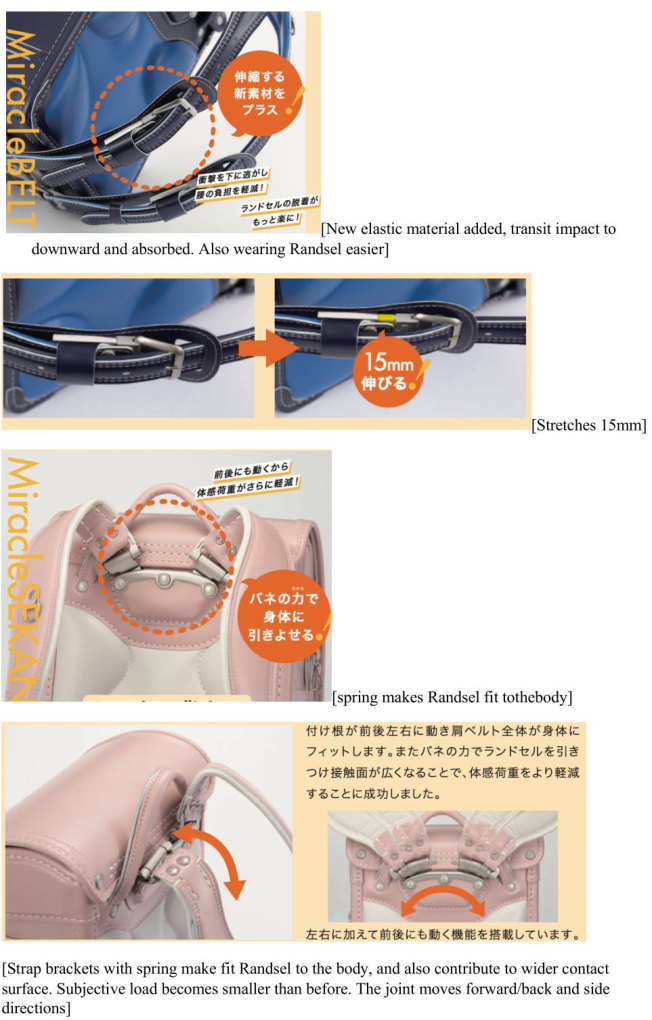
The new prototype design includes two mechanical innovations. One is a dumper at the bottom of the strap. It is designed to fit the strap to the body
Improving Comfort of Shoulder and Back Health in Children’s School Bags 57
and also to absorb the oscillating movement of the Randsel during walking and running. The other is an improved Sekan (a metal bracket that attaches the top of the strap to the bag). Improved Sekan has a spring in it and is intended to move the strap toward the fastener to prevent loose fitting to the body. Both have already been patented.
Figure 1: Dumper at the bottom of strap (upper) and improved Sekan metal bracket (lower).
METHOD FOR MEASURING VERTICAL MOVEMENT DURING JOGGING Randsel: Conventional product and new prototype has dumper and improved Sekan, two types of Randsel were used for evaluation measure- ment. These two evaluation samples are made of exactly the same color (light brown) synthetic leather. The design of them is exactly the same, except of bracket and dumper parts. It is almost impossible for participants to distinguish between them.
In Japan, load of Randsel with filled with textbooks and tablet computers are 4.5 to 6 kg. This weight value are common recognition at Randsel indus- tries. Thus, in the experiment, the load of Randsel was set as 6kg by installing weights in Randsel. The weight of Randsel itself was 1260g.
Shoulder Randsel and jogging on the spot: Subjects were asked to shoul- der the Randsels and jog on the spot for 20 to 30 seconds. The order of the two Randsels was randomized at the time of measurement. The pace of jogging was determined by each subject as their natural pace. Since they are elementary school students, their physical build is highly variable. Each time a subject shoulder Randsel, professional designer of Randsel adjusted the length of shoulder straps to fit each subject.
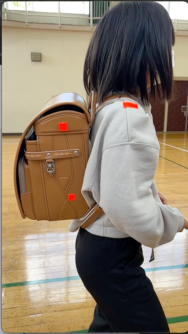
High-speed video-based measurement: The subject jogging on the spot with Randsel was recorded by high-speed movie (120 frames/sec) of iPhone 13 Pro. The resolution was 1080 (horizontal) * 1920 (vertical). Two red paint markers were placed on the rivet at the top left side of the Randsel and 20cm below the rivet. A marker is also placed on the right acromion (outer end of the shoulder blade that forms the highest part of the shoulder), see Figure 1.
Computer Vision Based Analysis: We developed an original marker track- ing program using OpenCV (OpenCV team, opencv.org), an AI image analysis and recognition library.
Subjects: Six students (2 female, 4 male) from third to sixth grade of ele- mentary schools participated. All of them were attended with their parents and during the measurement, parents are also attended the site. Parents are stuff of Eishin and they are well informed earlier than the measurement.
MEASUREMENT RESULTS The typical examples are shown in below lines.
Participant A is a male, sixth grade of elementary school, age 11.
Figure 2: Subject A (sixth grade) while his jogging at the spot.
Figure available in the original PDF paper.
Improving Comfort of Shoulder and Back Health in Children’s School Bags 59
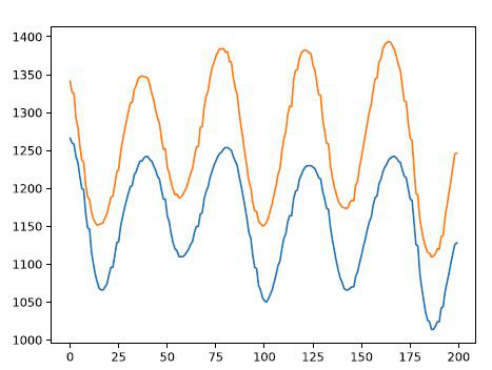
Figure 3 shows the movement of New prototype Randsel and shoul- der. Unit of the X axis corresponds frame. Since movie was taken at 120 frames/sec, graph shows the 200 frames, then duration was 1.67sec. One unit of X axis is 8.33 ms. Then, X = 120 is 1000ms, X = 100 is 833ms.
Unit of Y axis is pixel. In this measurement, 200 mm = 380 pixels, then, 1 pixel is 0.52 mm. Orange line corresponds to the right acromion (end of shoulder blade), blue line is the rivet of upper side of Randsel.
Figure 3: Marker movements of new prototype (blue line) and acromion (shoulder) of Subject A (orange line). Unit of the x axis is frame (8.33 ms = 1 frame), y axis is pixel (1 pixel = 0.52mm).
The deviation due to the delay between the movement of the acromion (orange) and the movement of the upper part of the new prototype Randsel (blue) is small. The measurement data shows that the peak deviation was 1 to 2 frames, or a delay of 8.3 to 16.6 ms. This is a small time delay, and the new prototype is able to follow the body movements sufficiently.
The marker on the new prototype (blue) is never higher than the height of the acromion (orange) throughout the entire section. This means that the new prototype does not bounce.
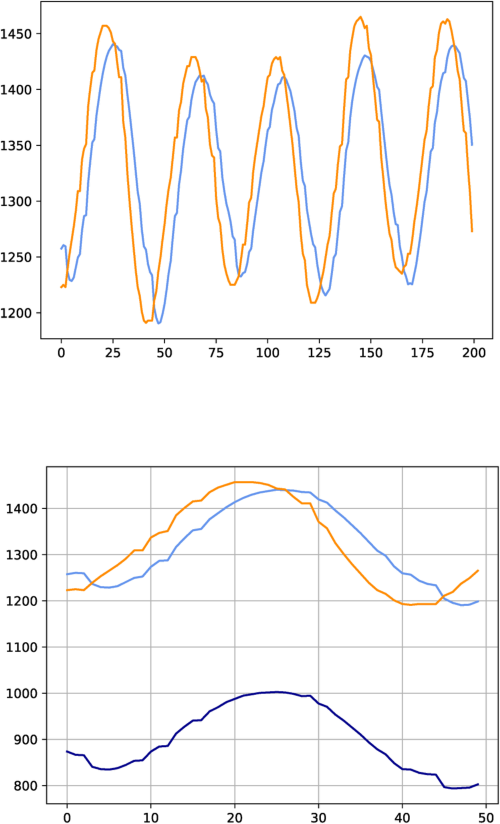
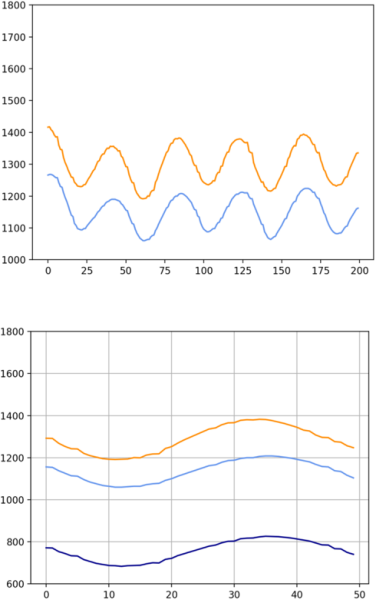
Figure 4 shows the movement of conventional Randsel and shoulder. It is clear that the movement of the conventional Randsel is delayed by the movement of the acromion. In the descending phase (e.g., 20 – 40, 60–80 frame), the upper marker of the Randsel is above the acromion, indicating that the Randsel is bouncing.
Lower plot of Figure 4 focuses on a single vertical movement, and the movement of the lower part of the school cell is also plotted in deep blue line.
The peak of the shoulder peak and the top of the Randsel are offset by 6 to 7 frames, or 50 to 58 ms in time.
When the shoulders are at their peak, the Randsel is not yet at its peak, and the height of the Randsel peaks sometime after the shoulders enter the descending phase from their peak.
When the shoulder height is at the bottom of the valley, the Randsel has not yet at the bottom. While the height of the shoulder is beginning to rise, the Randsel reaches the bottom of the valley after a delay. In other words, the Randsel does not follow the body’s movement and prevents the body from moving up and down.
When the acromion is in the descending phase (frames 23–37 in this plot), the marker on the Randsel is higher than the height of the shoulder, which means that the school bag is bouncing.
Figure 4: Upper: Marker movements of conventional Randsel (blue line) and acromion (shoulder) of Subject A (orange line). Lower: Close up of the first 50 frames. Deep blue line shows the movement of the bottom (20 cm below of the upper marker).
Improving Comfort of Shoulder and Back Health in Children’s School Bags 61
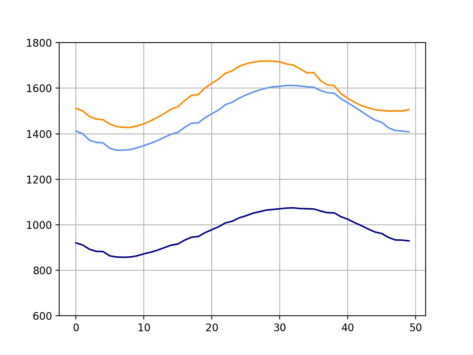
Participant B is a female, third grade of elementary school, age 8. Figure 6 shows the movement of New prototype Randsel and shoulder of subject B. The peak deviations are only 1 to 2 frames, 8 to 16 ms.
Figure 5: Subject B (third grade) while her jogging at the spot.Figure 6: Upper: Marker movements of new prototype (blue line) and acromion (shoul- der) of Subject B (orange line). Lower: Close up of the first 50 frames. Deep blue line shows the movement of the bottom (20 cm below of the upper marker).
In the conventional Randsel, the peak has a deviation of 5 frames. This is a 41.6 ms deviation.
The time gap between the movement of the shoulder peak and the top of the Randsel is indicated by the gap between the two waves becoming wider and narrower in the direction of the time axis (lateral direction). The change in the y-axis gap between the orange and blue waves during the ascending and descending phases of the body indicates that the Randsel is bouncing.
Figure 7: Upper: Marker movements of conventional Randsel (blue line) and acromion (shoulder) of Subject B (orange line). Lower: Close up of the first 50 frames. Deep blue line shows the movement of the bottom (20 cm below of the upper marker).
CONSOLIDATED RESULT
Table 1 shows all participants’ vertical movement delay of Randsel from body, while jogging at the spot.
Conventional product shows an average delay of 43.0 ms between vertical movement and body (acromion) movement. New prototype shows 16.3 ms, 2.6 times shorter than conventional.
Improving Comfort of Shoulder and Back Health in Children’s School Bags 63
Table 1. Measured delay of Randsel vertical movement during jogging at the spot (unit: ms).
Table available in the original PDF paper.
Participant Conventional Product New Prototype A, Sixth grade, Male 54 12 B, Third grade, Female 42 12 C, Third grade, Male 42 20 D, Third grade, Female 37 12 E, Fourth grade, Male 50 25 F, Fourth grade, Male 33 17 Average 43.0 16.3 SD 7.8 5.4
Mean delay differences between conventional product and new proto- type were examined with paired t-test. New prototype shows significantly shorter delay time (t = 7.4214, df = 5, p-value = 0.0006997). 95% confi- dence interval of the difference in time is 17.43 and 35.90. Mean difference is 26.67).
Kinetically, with conventional product, all subjects show the different distances between blue (Randsel) and orange (body) line, in upward and downward phase of body movement. This means that the Randsel’s down- ward movement is delayed by the body’s downward movement. It means that conventional Randsel has bound movement.
New prototype has almost same distances between blue and orange line. It means that improvements of new prototype suppress bound of Randsel.
CONCLUSION
Many research have shown ergonomic concerns about the school bag load on the children. The increasing size of textbooks and the need to carry tablet computers make the load heavier. In this research, we have investigated the new strap bracket and implementation of a damper mechanism in the shoulder straps of Randsel, Japanese elementary school bag.
Computer vision-based analysis of the movement of the body and conven- tional or new prototype design, shows the significant reduction on the delay caused by body movements.
In this consideration, we have studied mainly evaluation in kinetics. In the following studies, we would have fatigue evaluations.
The new Randsel based on the prototype was on the market of spring 2023. It has a good acceptance. Newly invented mechanisms would also be applicable to common fabric backpacks.
ACKNOWLEDGMENT
All child participants and their parents were well informed before the measurement. we deeply appreciate their participation.
REFERENCES
Chow, D. H., et al. (2006). The effect of backpack weight on the standing posture and balance of schoolgirls with adolescent idiopathic scoliosis and normal controls. Gait & Posture, 24(2), 173–181. Dockrell, S., Simms, C., & Blake, C. (2013). Schoolbag carriage and schoolbag-
related musculoskeletal discomfort among primary school children. Applied Ergonomics, 44(5), 799–805. Goodgold, S., Corcoran, M., Gamache, D., Gillis, J., Guerin, J., & Coyle, J. Q. (2002).
Backpack use in children. Pediatric Physical Therapy, 14(3), 122–131. Tomal, P., Fryzowicz, A., Skorupska, E., Dworak, L. B. (2022) Influence of School Backpack Load as a Variable Affecting Gait Kinematics among Seven-Year-Old Children. International Journal of Environmental Research and Public Health. 2022; 19(7):3843. https://doi.org/10.3390/ijerph19073843
LISTED IN THE AHFE DIGITAL BOOKSTORE CATALOGUE
Explore the complete digital volume
Emerging Technologies in Healthcare and Medicine
Read this individual research paper free through the original publisher, or explore the full digital proceedings book.
ISBN 978-1-958651-92-6
Explore this ISBN in the AHFE Bookstore ↗Listed in the July 2026 bookstore catalogue; search by ISBN to confirm current availability · Digital book purchase optional