Zamzarina Ahmad, Irwan Syah Md Yusoff, Velu Perumal, Ng Yee Guan, Norhafifah Samsudin, Mohd Nor Zamri Mat Amin, Nor Liza Mat Yasok, Nik Zuraihah Nik Mohammad, Mohd Ridzuan Samsury (2024). Comparison of Ergonomic Principles for School Furniture Design between Europe, USA, and Asia: An Overview. In: Ergonomics In Design. AHFE Open Access, vol. 129, pp. 14–22. https://doi.org/10.54941/ahfe1004806
The present research comprehensively analyses school furniture design and utilization in different world regions, Europe, the USA, and Asia. In particular, the study emphasizes the significance of ergonomics and its influence on students' health and learning outcomes. Secondary data was applied for comparative analysis between school furniture design in Europe, the USA, and Asia, incorporating extensive surveys and ergonomic assessments. Adopting the existing methodological framework, the research aims to provide a different understanding of the complex interplay of various factors. The effect of the design and use of school furniture on student's well-being and academic performance. Based on the current research, there are noticeable variations in ergonomic standards and practices across different regions. Specifically, Europe places a higher importance on ergonomics and customization when designing school furniture. On the other hand, the USA values flexibility and adaptability in their school furniture design. In contrast, Asia combines conventional and modern design elements to create innovative solutions. These regional disparities offer valuable insights into how cultural factors, education systems, and economic conditions influence ergonomic principles in the context of school furniture. Comparison of ergonomic principles in the design of school furniture from the era of 1800 years until 2000 onward. This study underscores the critical role of ergonomic design in promoting optimal learning conditions in educational settings. Moreover, it underscores the need for customized and localized strategies to enhance student welfare and academic achievement. Additionally, it stresses the importance of recognizing and addressing regional disparities when optimizing learning spaces for maximum effectiveness. In conclusion, this comparative analysis of school furniture design between Europe, the USA, and Asia shows significant differences in ergonomic evolution, specifically in Asia. The outcome of this analysis is given the preliminary observation of ergonomic principles in school furniture design. The result of this study is important to increase awareness and advocacy among stakeholders and industry players.
Comparison of Ergonomic Principles for School Furniture Design 15
INTRODUCTION
A school is an organized educational establishment that facilitates the sys- tematic delivery of knowledge, skills, and values to students. It typically includes a physical infrastructure with classrooms, educational resources, and administrative facilities. Schools are responsible for providing a structured curriculum, fostering a conducive learning environment, and promoting the holistic development of students through academic, extracurricular, and social activities. Ergonomics is the scientific discipline that studies the inter- actions between humans and the elements of a system, aiming to optimize the well-being and performance of individuals within that system. It involves the design and arrangement of products, systems, and environments to ensure they align with human capabilities and limitations. The primary goal of ergonomics is to enhance efficiency, comfort, and safety in various contexts, including workspaces, products, and daily activities (Applied Ergonomic, 2023).
Study Justification Europe, the USA, and Asia are chosen for a comparative analysis of ergonomic principles in school furniture design due to their cultural diversity, different educational systems, economic factors, design trends and innova- tion, regulatory frameworks, demographic variances, global influence, and efforts towards accessibility and inclusivity. This analysis provides insights into how these factors influence the approach to creating comfortable and functional learning environments in each region.
Learning is an activity undertaken with the aim of acquiring knowledge, mastering certain competencies, and forming student attitudes. The success of learning can be seen from the changes in behaviour and student learning outcomes (Puspitarini & Hanif, 2019). Thus, raising the level of society’s intelligence in Europe, the US, and Asia has always been facilitated by the educational system. Regarding student age, Europe, the US, and Asia dif- fer in a few ways, and the paper’s focus was on primary school students. According to Office of the Secretary-General of the European. Schools, Gezer, et al. (2023) the primary cycle consisted of five years of primary education, starting at age six and ending at age ten. Additionally, in Europe, there can be significant regional differences in school hours. While some nations may have longer school days, others might have shorter ones with an emphasis on independent study.
Meanwhile, in the United States, the primary school students were at the age of six until eleven which is at five years (Leeb et al., 2020). In this matter, the typical school day in the United States ranges from six to eight hours, depending on the grade level and individual school policies. However, com- pared to Europe and the US, systems in Asia, and particularly China, differ greatly. According to Liu et al., (2016), Zhao, (2016) and Jia et al. (2020), in 1986, China promulgated and implemented the Compulsory Education Law of the People’s Republic of China, which emphasized the compulsory and universal benefits of nine-year compulsory education. School-age chil- dren have benefited from substantially higher rates of return on education,
greater educational opportunities, and higher academic achievements since the law’s implementation in 1986. Other Asian nations, like Malaysia, also have their own educational systems, in which students begin primary school at age seven and finish it six years later at age twelve (MyGovernment, 2023). The education system in Europe, United States and Asia as shown in Table 1 below:
Table 1. The education system in Europe, United States and Asia (Ministry Education of Malaysia, U.S. Department of Education).
Table available in the original PDF paper.
Country Age (Primary) Hours/Day Europe 3–11 years old 6–8 hours United States 6–11 years old 6–8 hours Asia 7–12 years old 6–8 hours
Based on an analysis of the age distribution and length of time spent in school in each of the three countries, it can be concluded that people spend half of their lives in education (Irwin et al., 2022). Given this, it is impera- tive that schools provide their students with high-quality facilities; therefore, administrators must follow basic ergonomic guidelines like compatibility (Strasser, 2022). In fact, Chim (2019) has raised several issues that have been on people’s minds, such as (1) Why should workplace design incorporate ergonomics principles? (2) To whom should workplace design give due con- sideration and consultation? (3) When should workplace design incorporate ergonomics principles? (4) Where in workplace design should ergonomics be used? (5) How ought ergonomics to be incorporated into office design? (6) What are the design principles of ergonomics in the workplace? All user groups inclusive of students should be considered in workplace design (class- room), as they have varying physical and psychological requirements. Each of these queries ought to be considered when purchasing school supplies.
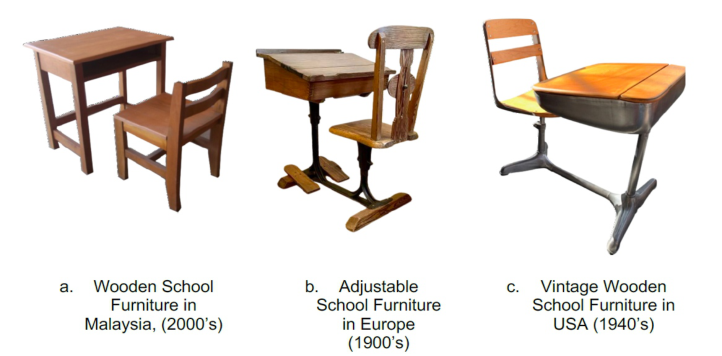
Figure 1: School furniture variants (Ministry of Education Malaysia, North of England School Furnishing).
Comparison of Ergonomic Principles for School Furniture Design 17
Ergonomic furniture holds significant importance in primary schools, espe- cially in Europe, the US, and Asia. The workload for students in these regions varies due to differences in their education systems. In Europe, the US, and Asia, the responsibility of providing quality formal education lies with the respective governments. In some countries, extracurricular activities are highly valued, leading to more flexible student schedules. Despite differences in formal school day lengths, extracurricular activities such as sports, clubs, and homework contribute to students’ overall time commitment to educa- tion. Nevertheless, there is a need for change, as children spend a considerable amount of their school time in classrooms, predominantly in sitting positions. The use of ill-fitted classroom furniture can result in discomfort, irritation, and an increased risk of musculoskeletal disorders, as highlighted by Obinna et al. (2020). Therefore, addressing the ergonomic aspects of school furniture becomes crucial for ensuring the well-being and optimal learning conditions for students.
Children in schools need ergonomic furniture for both their health and academic success. Using chairs, desks, and other furniture with ergonomic designs encourages good posture, lowers the chance of musculoskeletal prob- lems, and improves overall comfort. Considering that students spend a large amount of their times in classrooms, this is especially important. By giv- ing ergonomics top priority when designing school furniture, educational establishments help to foster a welcoming and encouraging environment that benefits students’ physical and mental well-being.
COMPARISON The comparison of ergonomic principles for school furniture design across Europe, the United States, and Asia unveils a diverse landscape shaped by cultural, educational, and societal factors. As educational spaces continue to evolve globally, understanding how these regions approach and priori- tize ergonomic considerations in school furniture is crucial. This study aims to explore and analyse the distinctive approaches, standards, and design philosophies employed in Europe, the United States, and Asia. By delving into the unique cultural nuances and educational practices of each region, this research seeks to provide valuable insights into the shaping of ergonomic principles in school furniture, ultimately contributing to the creation of more inclusive and effective learning environments.
CONCLUSION
Ergonomics is crucial for school furniture design as it directly impacts the well-being, comfort, and productivity of students. The design and arrange- ment of school furniture significantly influence the physical health and posture of students during extended periods of learning. According to the American Academy of Paediatrics in 2021, ergonomic considerations in school furniture contribute to creating an environment that promotes proper body alignment, reduces the risk of musculoskeletal issues, and supports overall student health.
(Continued)
into furniture designs.
diverse teaching methods.
easily reconfigurable setups.
choices. (Kim & Wong, 2019).
characterized by vibrant colours, symbolic
patterns, and a blend of traditional and mod-
ern elements. (Imrie & Street, 2011).
design. (BSI, 2012)
spaces.
activities and community.
port interactive and cooperative learning.
Integrate cultural symbols and preferences
Prioritize flexibility and adaptability to
Focuses on collaborative learning spaces.
Features flexible furniture arrangements and
Emphasizes community-driven functional
Incorporates cultural motifs and symbols,
References BS EN 1729 for school furniture
Reflects cultural perceptions of learning
Incorporates elements catering to group
Emphasizes creating environments that sup-
educational spaces.
technology-friendly furniture.
and adaptable designs.
learning environments.
(Buckley, 2020).
with modern, technology-integrated designs
and traditional layouts.
trends and reflect the dynamic nature of
American educational spaces. (Chiu et al.,
2019)
seating standards. (ANSI, 2015)
principles.
the interconnectedness of physical comfort
and academic performance.
Adapt to the dynamic nature of American
Embrace user-centred design principles and
Collaborate with educators for ergonomic
Focuses on versatility and modular designs.
Incorporates technology to cater to dynamic
Incorporates interactive technologies.
Reflects diverse and multicultural society
Aesthetic choices align with broader societal
Guided by ANSI/BIFMA X6.1-Educational
Prioritizes flexibility and user-centred design
Focuses on overall student well-being and
crucial.
insights into classroom needs.
and adaptability.
classrooms.
modern educational needs.
standard for ergonomic standards (BSI,
dimensions, lumbar support, and
adjustability.
enhanced concentration.
with clean lines, minimalistic designs, and
use of sustainable materials.
study spaces.
(Imrie & Street, 2011).
1729 while integrating innovative solutions.
Balancing functionality and aesthetics are
Collaboration with educators can provide
Aims to create visually pleasing and focused
Considers integration of technology in
Emphasizes multifunctionality to meet
(Miller, 2017)
Emphasizes adherence to BS EN 1729
2012).
Includes specifications for chair and table
Features promote dynamic sitting for
Functional
Requirements
Prioritizes durability, ease of maintenance,
Implications for
Designers
Prioritize ergonomic considerations in EN
Table 2. Comparison of ergonomic principles for school furniture between Europe, United State, and Asia.
Table available in the original PDF paper.
Ergonomic Principle Europe USA Asia
Legalisation and
School Furniture
Standards
Aesthetic
Preferences
Balances functionality and aesthetic appeal
Comparison of Ergonomic Principles for School Furniture Design 19 design vary across countries, reflecting the
diversity of educational systems.
2018 sets guidelines for classroom furniture dimensions, emphasizing ergonomic consid-
erations for students.
(GB Standard, 2018)
EN 1729–2 standard as a nationwide refer-
ence standard.
basic ergonomic consideration, but varia-
tions may lead to differing design innovation
approaches.
Regulatory frameworks for school furniture
In China, the National Standard GB/T 3324–
In Malaysia, all school furniture uses the BS
Compliance with specific guidelines ensures
In Asia, school furniture design only has a basic
design without having a sloping table surface,
adjustable chairs, and other ergonomic features.
Based on previous studies produced in Asia, there
are only 4 countries with national anthropomet-
ric data, namely China, Japanese, Korean and
Taiwanese. Some other countries in Asia only
adapt anthropometric data from foreign coun-
tries in the production of furniture.
(Applied Ergonomic, 2004)
framework for school furniture design.
seating standards focus on performance and
safety requirements for educational seating.
durability, promoting ergonomic designs
prioritizing student well-being.
ANSI/BIFMA guides the regulatory
ANSI/BIFMA X6.1-2018 Educational
These standards emphasize safety and
Just like in the European country the design of
school furniture in the United States already has
ergonomic features such as sloping table
surfaces, adjustable chairs, and sloping backrests
to ensure the comfort of school students during
that time.
In the United State anthropometric data is used
in the production of clothing, furniture and
fittings that correspond to the size of Americans.
(AnthroKids, USA, 1977)
guidelines on dimensions and functional
requirements of school furniture.
ensuring furniture designs adhere to
standardized dimensions.
consistent ergonomic considerations and
design innovation.
EN 1729 promotes ergonomic principles by
Compliance with this standard foster’s
furniture had special features such as adjustable
chairs, sloping table surfaces and footrests.
plays an important role in designing an
equipment including furniture. This is to ensure
that the size of the furniture and the size of the
user can be adjusted and appropriate for use.
(Yu Cheng et al., 2004)
Table 2. Continued
Table available in the original PDF paper.
Ergonomic Principle Europe USA Asia
Regulatory
Frameworks
European Standard EN 1729 provides
Ergonomic Features Beginning in the late 1800s, the design of school
Anthropometric
Data In European countries anthropometric data
Incorporating ergonomic principles in school furniture design also enhances the learning experience by providing a comfortable and con- ducive environment. Comfortable seating, appropriate desk height, and well-designed furniture contribute to reduced distractions, allowing students to focus better on their studies. This aligns with research findings that link ergonomically designed classrooms to improved academic performance and student engagement (Dul, 2016).
Moreover, as technology becomes increasingly integrated into education, ergonomic considerations in furniture design play a crucial role in accommo- dating devices such as laptops and tablets. Properly designed furniture helps create a supportive infrastructure for technology-enhanced learning, ensuring that students can interact with digital tools comfortably and without adverse physical effects.
In summary, prioritizing ergonomics in school furniture design is essential for promoting the health, comfort, and concentration of students, ultimately contributing to an optimal learning environment.
RECOMMENDATION To enhance the overall well-being of students, it is imperative to priori- tize ergonomic considerations in school furniture design. A comprehensive approach involves utilizing anthropometric data specific to the diverse pop- ulation of Asia, ensuring that ergonomic features are incorporated into the design of all school furniture. This goes beyond a mere aesthetic upgrade, as the implementation of ergonomic principles directly impacts the physical comfort and health of students. Furthermore, it is crucial to engage stakehold- ers in the enforcement of ergonomic standards for school furniture, fostering collaboration between educators, designers, and administrators. By recogniz- ing the significance of ergonomic furniture in improving student well-being, we pave the way for a learning environment that not only meets educational needs but also prioritizes the health and comfort of the students who use it.
ACKNOWLEGMENT The author would like to extend the sincere appreciation to the follow- ing individuals for their invaluable cooperation and unwavering support throughout the course of this study. Thank you to Dr. Irwan Syah Md Yusof, Dr. Norhafifah Samsudin, Associate Professor Dr. Ng Yee Guan, Dr. Velu A/L Perumal, Dr. Mohd Nor Zamri Mat Amin, Madam Nor Liza Mat Yasok and Madam Nik Zuraihah Nik Mohammad, on the cooperation and support throughout the study. Their collaborative efforts and support significantly enriched the quality and depth of this research. The authors are profoundly grateful for their dedication to the advancement of this study.
REFERENCES
American Academy of Paediatrics (2021). American National Standards Institute. (2012). Educational Seating. ANSI/BIFMA X6.1.
Comparison of Ergonomic Principles for School Furniture Design 21
AnthroKids, National Institute of Standards and Technology, USA (1977). Applied Ergonomic (2004). Website: https://www.sciencedirect.com/topics/engineeri ng/ergonomics. British Standard Institute, (2012). Website: https://knowledge.bsigroup.com/. Buckley, J. (2020). Student-Centred Seating and Its Impact on Student Engagement.
Journal of Learning Spaces, 9(1), 1–14. Chim, J. M. (2019). 6Ws in ergonomics workplace design. In Proceedings of the 20th Congress of the International Ergonomics Association (IEA 2018) Volume VII: Ergonomics in Design, Design for All, Activity Theories for Work Analysis and Design, Affective Design 20 (pp. 1282–1286). Springer International Publishing. China National Standard, (2018). Website: https://www.gbstandards.org/. Chiu, T. P., Yoon, C., Kitayama, S., & Seifert, C. (2019). Cultural differences in
aesthetic preferences: does product-to-context match matter? Design Discourse on Culture and Society: Re: Research, Volume 5, 5, 35. European Committee for Standardization. (2020). Furniture - Chairs and tables for educational institutions - Part 1: Functional dimensions, EN 1729-1:2020. Getting Primary Education. MyGovernement. 128, 2023. Gezer, E. T., Backes, S., Keller, U., & Lenz, T. (2023). European Public Schools in Lux-
embourg: History, Overview, Attendance Rates, and Composition of the Student Population. European Public School Report 2023: Preliminary Results on Student Population, Educational Trajectories, Mathematics Achievement, and Stakeholder Perceptions, 3–38. Imrie, R., & Street, E. (2011). Designing Inclusive Environments: Rehabilitating the Body and the Principle of Universal Design. Design Issues, 27(1), 78–89. International Ergonomic Association (2000). Website: https://iea.cc/about/what-is-e
rgonomics/. Irwin, V., De La Rosa, J., Wang, K., Hein, S., Zhang, J., Burr, R.,... & Parker, S.
(2022). Report on the Condition of Education 2022. NCES 2022-144. National Center for Education Statistics. J. Jia, R. Ke (2020). Free compulsory education policy and rural human capital accumulation—an empirical analysis based on CFPS, Edu. Econ. (1). 19–30. Kim, Y., & Wong, A. (2019). An empirical study on the effects of collaborative class-
room design on teachers’ perceptions of their teaching and students’ perceptions of the learning environment. Journal of Learning Spaces, 8(1), 41–57. Leeb RT, Price S, Sliwa S, et al. COVID-19 Trends Among School-Aged Children — United States, March 1–September 19, 2020. MMWR Morb Mortal Wkly Rep 2020; 69:1410–1415. Miller, J. E. (2017). Flexible Seating and Student-Centered Classroom Redesign.
Childhood Education, 93(4), 352–360. North of England School Furnishing Website: https://www.thenorthernecho.co.uk/ history/14980488.school-furney-desk/. Organisation of studies (2019). European Union. 0822. Obinna, F. P, Sunday, A. A. & Babatunde, O. (2020). Ergonomic assess- ment and health implications of classroom furniture designs in secondary schools: a case study, Theoretical Issues in Ergonomics Science, doi: 10.1080/1463922X.2020.1753259. Puspitarini, Y. D., & Hanif, M. (2019). Using Learning Media to Increase Learning
Motivation in Elementary School. Anatolian Journal of Education, 4(2), 53–60. S. Liu, S. Zhou, A. Hu (2016). Compulsory education law and economic return to education in urban China: based on regression discontinuity design, Econ. Res. J. 51(2), 154–167.
Strasser, H. (2022). Compatibility as guiding principle for ergonomics work design and preventive occupational health and safety. Zeitschrift für Arbeitswis- senschaft, 76(3), 243–277. Y. Zhao (2016). SOE layoffs, family resources and children’s education, Econ. Res.
J. 51 (5) (101) 115–129. Yu-Cheng et al., (2004). The comparisons of anthropometric characteristics among four peoples in East Asia, Applied Ergonomics, Volume 35, Issue 2, pages 173–178.
LISTED IN THE AHFE DIGITAL BOOKSTORE CATALOGUE
Explore the complete digital volume
Ergonomics In Design
Read this individual research paper free through the original publisher, or explore the full digital proceedings book.
ISBN 978-1-964867-05-2
Explore this ISBN in the AHFE Bookstore ↗Listed in the July 2026 bookstore catalogue; search by ISBN to confirm current availability · Digital book purchase optional