Derek Johnston, Anne Garcia, Sara Lyons (2024). Human Factors Safety Management Issues in Marine and Pipeline Accident Investigations. In: Safety Management and Human Factors. AHFE Open Access, vol. 151, pp. 10–20. https://doi.org/10.54941/ahfe1005297
Implementing a safety management system (SMS) in commercial maritime or pipeline operations is a proactive way to identify, assess, and mitigate safety risks prior to getting underway or commencing operations. An effective SMS is tailored to a specific company or vessel through standard procedures or processes to ensure compliance with applicable regulations, and to proactively identify and mitigate emergent safety issues.Examination of an organization’s SMS that was in place prior to an accident is an integral part of the transportation accident investigation process for marine and pipeline modes. Human factors and human performance are critical inputs to an effective SMS. Processes to mitigate risk and prevent human error are often captured in a company’s SMS. When casualties do occur, the SMS provides a critical insight from which to begin gathering and analyzing evidence.Accident investigation results, including the probable cause, contributing factors, and safety recommendations, can prove useful for continuous improvement of the organization and throughout the industry. In addition, lessons learned may have larger implications across transportation modes and impact the public at large.
The primary responsibility for transportation safety is shared between system owners, operating companies, and the crews or personnel working on a sys- tem. Internationally, it is recognized that a safety management system (SMS) is an effective tool for safety oversight and is used across the commercial avia- tion, railroad, pipeline, and marine transportation industries. When testifying before the U. S. Senate’s Committee on Commerce, Science, and Trans- portation, National Transportation Safety Board (NTSB) Chair, Jennifer Homendy, stated “The NTSB has long recommended the implementation of safety management systems (SMS) in all modes of transportation…An effective SMS program can help companies reduce and prevent accidents and accident-related loss of lives, time, and resources” (Homendy, 2023).
Human Factors Safety Management Issues in Marine and Pipeline Investigations 11
chains of command. An SMS also enacts plans to respond to a range of pos- sible emergency situations and outlines procedures for the identification and correction of non-conformities including an audit process for management to ensure policies and procedures are being followed. Another important aspect of an SMS is the incorporation of both international and domestic regulations within the contained procedures and processes to ensure compliance.
A key component and function of an SMS is instituting a process for the identification and proactive mitigation of emergent hazards, or refinement of existing items to better address known issues. When accidents occur, the operating company’s SMS provides a critical insight from which to begin gathering and analyzing the accident events. Investigators examine the cir- cumstances of an accident to develop findings and determine a probable cause. Often during an investigation, gaps, or areas for improvement in a company’s SMS framework are identified. These identified gaps lead to rec- ommendations that are sent to the groups best positioned to address the issues. Ultimately, the goal of any safety investigation is to identify safety issues and issue recommendations to appropriate stakeholders to prevent similar accidents from happening in the future.
The NTSB has issued safety recommendations regarding the implementa- tion and use of SMS in all modes of transportation.1 This paper examines the use of SMS in commercial maritime and pipeline operations including rele- vant NTSB case studies that highlight human factors considerations in SMS implementations.
MARINE AND PIPELINE SAFETY MANAGEMENT SYSTEMS Rules for international maritime operations are agreed upon by the Inter- national Maritime Organization (IMO) and enacted by member nations through domestic regulations. In the 1980s, the IMO developed the Interna- tional Safety Management (ISM) Code to “provide an international standard for the safe management and operation of ships and for pollution prevention” (IMO, 1993).
United States Code of Federal Regulations (CFR) Title 33 Part 96 (33 CFR Part 96) requires that all US-flagged vessels transporting more than 12 passengers on a foreign voyage as well as tankers, bulk freight vessels, and mobile offshore drilling units over 500 gross tons maintain an SMS. The SMS requirement also extends to “all foreign vessels engaged on a foreign voyage, bound for ports or places under the jurisdiction of the US, and sub- ject to Chapter IX of SOLAS [International Convention for the Safety of Life at Sea].”
Consistent with IMO guidance, United States regulation 33 CFR Part 96 requires an SMS to contain: a safety and environmental protection policy; instructions and procedures to ensure safe operation of those vessels and protection of the environment in compliance with international and United States law; defined levels of authority and lines of communications between, and among, personnel on shore and on the vessel; procedures for reporting 1NTSB safety recommendations are available in the Case Analysis and Reporting Online (CAROL) database and can be accessed via https://carol.ntsb.gov.
accidents and nonconformities; procedures for preparing for and responding to emergency situations; and procedures for internal audits and management reviews of the system.
While the requirement to implement an SMS only applies to the select vessel types listed in the regulations, other maritime sectors, such as the US towing vessel fleet, are subject to similar safety oversight. Regulatory efforts to expand the use of SMS to other US maritime sectors are also ongoing.
For the US pipeline industry, as a result of the San Bruno, California and Marshall, Michigan investigations, the NTSB recommended that the American Petroleum Institute (API) facilitate the development of an SMS standard specific to the pipeline industry.2 In response to this recommen- dation, API developed a recommended practice (RP), ANSI/API RP 1173, Pipeline Safety Management Systems, exceeding the NTSB’s intent in issu- ing the recommendation to facilitate the development of an SMS standard specific to the pipeline industry. In addition, API addressed safety cul- ture and other safety-related issues in its API RP-1173. As a result, on October 22, 2015, the NTSB classified Safety Recommendation P-12-17 “Closed—Exceeds Recommended Action.”
Since ANSI/API RP 1173 was issued, there have been several initia- tives encouraging voluntary Pipeline Safety Management System (PSMS) implementation throughout the pipeline industry and many companies have implemented such programs. However, these programs are not required.
HUMAN FACTORS CONSIDERATIONS IN MARINE AND PIPELINE SMS With any complex system, there are multiple human users (operators, main- tainers, support personnel), each with a different role to see that an operation occurs safely and efficiently. As such, human factors and human perfor- mance are critical SMS inputs. These human considerations ensure that the operator is protected from identified system hazards. They also include pro- visions and requirements within the SMS to reduce the rate or impact of human error. Regulations address some human factors considerations, how- ever other human factors considerations are implemented in an SMS based on an operation’s known or emergent hazards.
An effective SMS implements controls to prevent or mitigate preconditions to human error, such as fatigue, non-standard operations, inadequate train- ing, improper manning, poor communication, and distraction—all of which have been identified as either causal or contributing factors in NTSB marine and pipeline investigation reports. When accidents do occur, investigations often reveal that SMS provisions to control for these preconditions were
2(a) The San Bruno, CA accident occurred on September 9, 2010, when a 30-inch diameter natural gas pipeline ruptured in a residential area, killing 8 people, injuring many others, and destroying 38 homes. The response time was excessively long and contributed to the extent and severity of property damage. (b) The Marshall, MI accident occurred on July 25, 2010, when a 30-inch diameter pipeline rupture and released more than 840,000 gallons of crude oil into nearby wetlands and waterways. Employees who were unaware that the pipeline had ruptured continued pumping oil into the ruptured pipeline for 17 hours.
Human Factors Safety Management Issues in Marine and Pipeline Investigations 13
either not adequately addressed in the SMS or not followed in accordance with the SMS.
NTSB Investigation Case Studies The following case studies highlight six NTSB investigations that identi- fied safety issues related to SMS implementation in commercial marine and pipeline operations, including a multi-modal investigation involving both marine and pipeline. These investigations revealed SMS safety issues related to the human factors areas of fatigue management, management of change, and procedural compliance and training.
Fatigue Management Based on the type of operation, there are associated regulatory and personnel qualification requirements aimed at preventing fatigued operations. Regu- latory requirements and best practices are often the basis for the fatigue management guidelines contained in a company’s SMS. Such SMS require- ments include crew scheduling guidelines, tracking of crewmember work and rest hours, maximum daily work hours, required rest periods, effective use of systems to increase operator vigilance, and crew changeover considerations to control for circadian factors. When implemented effectively and followed as part of a company’s SMS, these requirements provide a formalized and structured approach to fatigue management to ensure that crewmembers are sufficiently rested and alert to safely perform their duties. The following is a case study on a 2021 NTSB investigation report involving a company not adhering to their SMS fatigue policies.
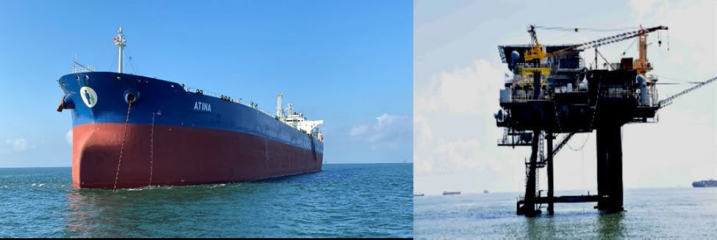
Case Study: Contact of the Tanker Atina With Oil Platform, Gulf of Mexico On October 17, 2020, at 0446 local time, the 898-foot-long tanker Atina was preparing to anchor in the Southwest Pass Fairway Anchorage in the Gulf of Mexico with 21 crewmembers onboard, about 21.5 miles from Pilot- town, Louisiana. During the maneuver, the tanker’s bow struck the manned oil and gas production platform SP-57B. There were no injuries or pollu- tion reported, however damages to the platform and vessel were estimated at $72.9 million.
The NTSB’s investigation revealed that the operating company did not fol- low their SMS procedures for a minimum 1-day turnover period for senior personnel on board the vessel. The master on board at the time of the accident travelled for about 54 hours before joining the vessel to relieve the departing master. Evidence showed that the incoming master did not receive sufficient sleep during their travel period and had never served on board the vessel. After joining the vessel, the incoming master was placed into a critical evolu- tion (navigating downriver and anchoring at night) in a fatigued state, which negatively affected the master’s decision-making and situational awareness during the evolution. A proper turnover period, as required in the company’s SMS, would have allowed for the incoming master to rest, and receive the required handover information from the departing master (NTSB, 2021).
Management of Change Transportation systems are subject to various types of changes through their lifecycle. These changes may relate to technology, equipment, procedures, or the organizational structure. An SMS program would identify and evaluate potential risks associated with changes that could impact safety performance. Once the potential risks are identified, they are managed through the SMS framework by taking steps to reduce safety risks as needed.
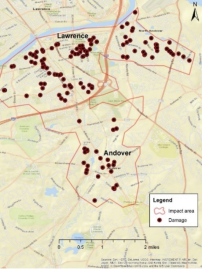
Case Study: Overpressurization of Natural Gas Distribution System, Explosions, and Fires, Merrimack Valley, Massachusetts On September 13, 2018, about 1600 local time, several structure fires and explosions occurred after high-pressure natural gas was released into a low- pressure natural gas distribution system in the northeast region of the Merri- mack Valley in the Commonwealth of Massachusetts. One person was killed and at least 22 others were injured. The fires and explosions damaged 131 structures, including at least 5 homes that were destroyed.
Figure 2: Map showing locations of damaged structures (left) and remnants of house where the fatality and two severe injuries occurred (right) (NTSB, 2019).
This accident was caused by “weak engineering management that did not adequately plan, review, sequence, and oversee the construction pro- ject…” Management of change procedures that conformed with ANSI/API RP 1173 could have helped prevent this accident, and the pipeline operator
Human Factors Safety Management Issues in Marine and Pipeline Investigations 15
was ordered by the state regulatory authority to adopt ANSI/API RP 1173 after the accident.
Procedural Compliance and Training Standardized procedures are contained in an SMS for routine, emergency, and abnormal events. For operational tasks, they facilitate a common understand- ing and predictability among involved crewmembers and set performance expectations and outcomes. Procedures also ensure that critical informa- tion about an ongoing operation is communicated to relevant crewmembers for shared situational awareness. Further, procedures verify that applica- ble regulatory requirements are met, and can help to combat the negative human performance effects of complacency, especially for highly repetitive or monotonous operations. Standardized training ensures that all person- nel are qualified to perform the expected range of operations (both normal and abnormal). It also ensures that personnel are knowledgeable of the procedures and operating principles required for safe operation, and that operations are performed consistently and predictably regardless of the oper- ator. These training provisions are often contained in a company’s SMS. The following case studies examine NTSB investigations which address safety issues relating to SMS requirements for procedural compliance and training.
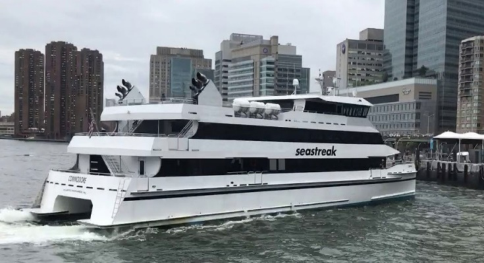
Case Study: Grounding of Passenger Ferry Commodore, Brooklyn, New York On June 5, 2021, about 1608 local time, the high-speed catamaran passenger ferry Commodore was transiting northbound on the East River near Brook- lyn, New York. There were 7 crewmembers and 107 passengers on board. While transiting near Bushwick Inlet, the vessel lost primary steering and propulsion control to both port hull water jets and, due to the loss of control, ran aground. As a result of the grounding, one minor injury was reported, and the vessel sustained an estimated $2.5 million in damages.
The NTSB’s investigation revealed several issues related to the operating company’s SMS emergency procedures. The NTSB found that the operat- ing company’s SMS “did not have procedures that clearly listed steps for the operators to follow in a time-critical loss of propulsion and steering control emergency.” The ferry was equipped with back-up controls that could have been used to slow the vessel and regain control; however, the crew did not use the back-up controls because the procedure was not effectively outlined in the company’s SMS. The NTSB also found that, while the crewmembers con- ducted SMS-required drills for loss of propulsion and steering controls, the drills did not include shifting to the back-up control system. Further, although the ferry’s control panel displayed a warning for an active failure throughout the day, the crew did not identify or report the failure in accordance with the company’s SMS. Following the casualty, the operating company refined their SMS emergency procedures for a loss of propulsion and steering control to address the identified issues (NTSB, 2022).
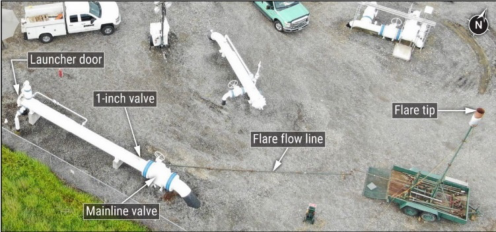
Case Study: Natural Gas-Fueled Explosion During Routine Pipeline Maintenance, Farmersville, Texas Employees of a pipeline company and two contracting organizations began a series of in-line inspections (ILI) of a natural gas pipeline on June 21, 2021, at a facility near Farmersville, Texas. During the first inspection, workers believed the mainline valve was leaking natural gas into the launcher where they needed to work. They adjusted the valve’s position to the point where they believed the gas leak was stopped. This position was marked and was used on subsequent inspections, without issue, until the afternoon of June 28, 2021, when the sixth ILI of the series was initiated. On that afternoon, seven workers were on-site. The in-line tool, or pig, had been loaded through the launcher door and the insertion tool was being removed, when an explosion occurred. The force of the explosion ejected the pig through the open launcher door toward four workers. The explosion fatally injured two workers and injured two others.
Figure 4: Natural gas pipeline explosion accident site, showing the launch door and flare tip, on left (photo courtesy of wylie fire department) and the pig before the explosion, on right (photo courtesy of bobcat contracting).
Among the safety issues uncovered during the NTSB’s investigation of this accident, two involved issues related to training. First, the employees and con- tractors did not receive adequate training on [the pipeline operator’s] pigging procedures and were not qualified to load pigs, in accordance with federal
Human Factors Safety Management Issues in Marine and Pipeline Investigations 17
regulation 49 CFR Part 192. Also, due to the lack of training, the employ- ees could not be expected to recognize and address safety risks when leaky valves, or other unsafe conditions or anomalies (abnormal conditions), occur at a work site.
The NTSB determined that “contributing to the explosion and its severity were [the pipeline operator’s] procedures and training practices that did not prepare workers to recognize and safely respond to abnormal operating con- ditions” (NTSB, 2022). While this operator had a PSMS program at the time the accident occurred, its maturity was ranked through self-assessment as falling between “planning” and “developing” implementation levels. A more mature PSMS program could have helped the operator identify and address these issues before the accident happened.
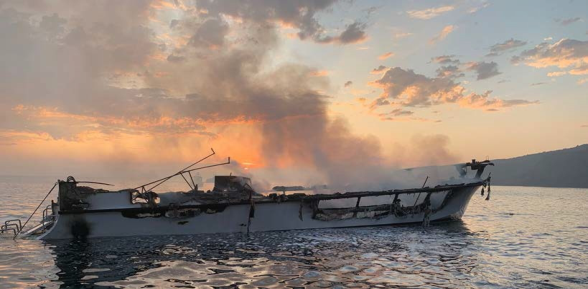
Case Study: Fire Aboard Small Passenger Vessel Conception, Platts Harbor, Santa Cruz Island, California On September 2, 2019, about 0314 local time, a 75-foot-long, small pas- senger vessel, Conception, was anchored in Platts Harbor near Santa Cruz Island, California, when the vessel caught fire. When the fire started, five crewmembers were asleep in their bunks in the crew berthing on the upper deck, and 1 crewmember and all 33 passengers were asleep in the bunkroom below. Crewmembers attempted to fight the fire but were unsuccessful. As a result, all 33 passengers and one crewmember died.
Figure 5: Small passenger vessel Conception at sunrise prior to sinking (NTSB, 2020).
Among the many findings in the NTSB’s report, two highlighted SMS. At the time of the casualty, small passenger vessels, such as the Concep- tion, were not required to implement an SMS. The investigation revealed several safety deficiencies and regulatory non-compliance by the company, including a lack of crew training, emergency drills, and roving patrol. The report stated that, had the operating company implemented and followed an SMS, “it would have likely included procedures for roving patrols that complied with regulations and a company-involved audit process for iden- tifying and correcting non-conformities, when they existed, with the watch
requirements.” Additionally, the report found that, “Had a safety manage- ment system been implemented, the operating company could have identified unsafe practices and fire risks on the Conception and taken corrective action before the accident occurred” (NTSB, 2020).
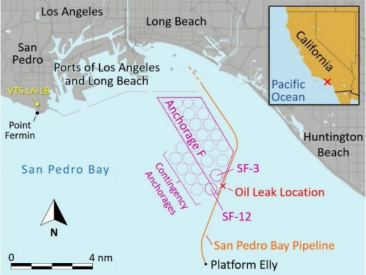
Case Study: Anchor Strike of Underwater Pipeline and Eventual Crude Oil Release, San Pedro Bay, California On October 1, 2021, the San Pedro Bay Pipeline controllers were alerted to a possible leak on the underwater pipeline. For about 14 hours, the controllers attempted to troubleshoot the leak alarms, stopping their shipping pumps eight times in the process. About 25,000 gallons of crude oil leaked from the pipeline into San Pedro Bay. No injuries were reported, however total damages were about $160 million.
Following the accident, an underwater survey of the pipeline revealed a crack along the top of the pipeline within a section of the pipeline that had been displaced from its originally installed location due to containerships dragging anchor in the area months before the release.
The pipeline operator did not have a formal PSMS program which could have helped them comply with regulatory requirements, improve procedu- ral compliance, and improve their incident response. After this accident the NTSB recommended that the Pipeline and Hazardous Materials Safety Administration issue an advisory bulletin asking all regulated pipeline oper- ators to implement a PSMS based on ANSI/API RP 1173.
Figure 6: San pedro bay pipeline with location of oil leak and federal anchorage area (left) and charted location of the san pedro bay pipeline and the tracks of the MSC Danit, Beijing, and Hong Kong spirit, as they dragged anchor, moving out of anchorage positions (NTSB, 2024).
CONCLUSION
An SMS provides companies with an effective and tailored method to antic- ipate and mitigate hazards inherent to a given operation. As noted in NTSB accident investigations across different transportation modes, safety issues
Human Factors Safety Management Issues in Marine and Pipeline Investigations 19
relating to SMS compliance and implementation are often identified as con- tributing or causal factors, and as a result, the NTSB has issued safety recommendations to both marine and pipeline operators and stakeholders requiring the use of SMS in their respective industry areas. These investiga- tions have shown that the implementation of an SMS improves the safety of operations while reinforcing and improving company safety culture. As Chair Homendy stated, “An effective SMS program can help companies reduce and prevent accidents and accident-related loss of lives, time, and resources” (Homendy, 2023).
ACKNOWLEDGMENT
The views expressed in this paper do not necessarily represent the views of the National Transportation Safety Board or the United States Government.
REFERENCES
American Petroleum Institute (2015) ANSI/API Recommended Practice 1173, Pipeline Safety Management Systems, 1st Edition. Available at: https://www.api.org/∼/media/files/publications/whats%20new/1173_e1%20pa .pdf (Accessed: February 2024). Homendy, Jennifer (2023) Testimony of The Honorable Jennifer L. Homendy Chair National Transportation Safety Board Before the Committee on Com- merce, Science, and Transportation United States Senate On Improving Rail Safety in the Aftermath of the East Palestine Derailment. Washington, DC. Available at: https://www.commerce.senate.gov/services/files/6ADD2CE4-4985- 49BE-8A6A-25451F45E8D0 (Accessed: April 10, 2024). International Maritime Organization (1993) Resolution A.741(18), International
Management Code for the Safe Operation of Ships and for Pollution Prevention (International Safety Management (ISM) Code). London: International Maritime Organization. National Transportation Safety Board (2024) Anchor Strike of Under- water Pipeline and Eventual Crude Oil Release. Available at: https://www.ntsb.gov/investigations/AccidentReports/Reports/MIR2401.pdf (Accessed: February 2024). National Transportation Safety Board (2022) Ground- ing of Passenger Ferry Commodore. Available at: https://www.ntsb.gov/investigations/AccidentReports/Reports/MIR2225.pdf (Accessed: February 2024). National Transportation Safety Board (2022) Atmos Energy Corporation Natural Gas- Fueled Explosion During Routine Maintenance. Available at: https://www.ntsb.gov/investigations/AccidentReports/Reports/PIR2203.pdf (Accessed: February 2024). National Transportation Safety Board (2021) Contact of Tanker Atina with Oil and Gas Production Platform SP-57B. Available at: https://www.ntsb.gov/investigations/AccidentReports/Reports/MAB2124.pdf (Accessed: February 2024). National Transportation Safety Board (2020) Fire Aboard Small Passenger Vessel Conception. Available at: https://www.ntsb.gov/investigations/AccidentReports/Reports/MAR2003.pdf (Accessed: February 2024).
National Transportation Safety Board (2019) Overpressuriza- tion of Natural Gas Distribution System, Explosions, and Fires in Merrimack Valley, Massachusetts. Available at: https://www.ntsb.gov/investigations/AccidentReports/Reports/PAR1902.pdf (Accessed: February 2024). National Transportation Safety Board (2012) Enbridge Incorporated Hazardous Liquid Pipeline Rupture and Release, Marshall, Michigan, July 25, 2010. Available at: https://www.ntsb.gov/investigations/AccidentReports/Reports/PAR1201.pdf (Accessed: February 2024). Rules for the Safe Operation of Vessels and Safety Management Systems. United
States Code of Federal Regulations, Title 33, Chapter I, Subchapter F, Part 96 (33 CFR Part 96). Available at: https://www.ecfr.gov/current/title-33/chapter- I/subchapter-F/part-96 (Accessed: February 2024). Towing Safety Management System (TSMS). United States Code of Federal Regulations, Title 46, Chapter I, Subchapter M, Part 138 (46 CFR Part 138). Available at: https://www.ecfr.gov/current/title-46/chapter-I/subchapter-M/part-138 (Accessed: February 2024).
LISTED IN THE AHFE DIGITAL BOOKSTORE CATALOGUE
Explore the complete digital volume
Safety Management and Human Factors
Read this individual research paper free through the original publisher, or explore the full digital proceedings book.
ISBN 978-1-964867-27-4
Explore this ISBN in the AHFE Bookstore ↗Listed in the July 2026 bookstore catalogue; search by ISBN to confirm current availability · Digital book purchase optional