Lance Chong (2024). The Relevancy of Knowledge and the Knowledge of Relevancy: An Information Theory-Based Quantitative Methodology for Evaluating UI Design and Usability. In: Usability and User Experience. AHFE Open Access, vol. 156, pp. 65–77. https://doi.org/10.54941/ahfe1005416
Usability evaluation has posed a complex challenge for several decades. Given its significance, there is a pressing need for fundamental theoretical advancements. This paper introduces a novel approach by formulating an information-theory-based methodology for the quantitative and more direct evaluation of user interface (UI) design and usability. The new methodologies fall under the umbrella of the new theoretical framework of Networked Two-way Communication Channels (NTCC). This framework can be seen as an extension of Claude Shannon’s original one-directional communication channel model, incorporating the user's active involvement in the interaction process. The NTCC model holds promise for mathematically modeling the mechanisms of user-to-UI interactions and providing more direct assessments of UI usability.
The widely accepted definition of “usability” is often regarded as an elusive “general concept that cannot be directly measured” (Nielsen, 1994). There- fore, indirect parameters need to be used to evaluate user interfaces (UIs) and other products’ usability. Indeed, the features of a UI, the motivations of the user, and countless other factors can influence the interaction process. Each parameter can potentially encompass an infinite range of complexity. However, given that such complex subjects have been successfully studied in many well-established fields of science, it is conceivable that if the young field of UI design and research is to become a matured science, its theoretical foundation might eventually resemble that of other more established fields of science. Two scientific fields with noticeable similarities are information theory and thermodynamics. Following long-standing scientific conventions, each of these two branches of science shares the commonality of approach- ing old research problems from new and detached perspectives. Both utilize
mathematics not only as the language for theoretical reasoning but also for practical implementations.
Historian and philosopher Harari has formulated a paradox concerning human intellectual progression: “Knowledge that does not change behaviour is useless. But knowledge that changes behaviour quickly loses its relevance” (Harari, 2016). Given its history-proven validity, this perplexing statement seems difficult to untangle at first glance. However, if we extend our thoughts to the dimension of UI-related interactions, the “knowledge of relevancy” and the “relevancy of knowledge” are not necessarily at odds. They formed a symbiotic relationship and are virtually two sides of the same coin. Inspired by Claude Shannon’s information theory, this paper attempts to explore such a dimension with the help of probability-based mathematical modeling. The byproducts of such an adventure are a set of new tools that seem to be help- ful for evaluating UI effectiveness and usability. These developments offer a promising way forward and can potentially serve as alternatives or to be used side-by-side with many of the currently popular UI evaluation theories and methodologies.
PREVIOUS WORKS This paper delves into two distinctive research realms: UI design and infor- mation theory. Claude Shannon laid the foundation for information theory in 1948 with his seminal paper “A Mathematical Theory of Communica- tion” (MTC) (Shannon, 1948). The field of UI design, and its sister field user experience (UX) research, emerged in the 1980s alongside the advent of interactive personal computers. The popularity of UI/UX design and research surged thereafter with each major advancement in information technology. While both research realms are relatively young, their impact on numer- ous industries has been profound, reshaping our ways of living in countless aspects.
Information theory, formally being considered a branch of general prob- ability theory by the mathematical community (Khinchin, 1957), drew inspiration from Shannon’s background in electronic engineering, signal processing, and, notably, statistical mechanics. Beyond a mathematical dis- covery, it became an intellectual tool for numerous scientific and engineering fields, contributing significantly to our current information age. Its influence extends to diverse areas such as philosophy, biology, finance, and even music.
In contrast, UI/UX research and design have primarily drawn from human factors research, industrial design practices, cognitive psychology, and more recently, theoretical influences from neighboring stakeholder professions such as marketing, and management. Mathematical tools have served to support theories and methodologies borrowed from these adjacent fields, indicating a lack of a native-born theoretical base in the UI/UX field.
Despite these advancements, direct applications of information theory in UI research and design have not been attempted, as revealed by our prelimi- nary background research. In response to this gap, the theory of Networked Two-Way Communication Channels (NTCC) (Chong, 2023) was developed. The NTCC aims to apply Shannon’s MTC theory directly to UI-related design
The Relevancy of Knowledge and the Knowledge of Relevancy 67
and analysis. It has facilitated the creation of entropy-based evaluation meth- ods, allowing more straightforward measurements of UI complexity and the evolving dynamics in user-to-UI interactions.
Compared to prevalent theories and methodologies like the System Usabil- ity Scale (SUS) (Brook, 1996), and the international standard ISO 9241–11 (ISO, 2018) upon which SUS is based, the NTCC model provides a way to evaluate the UI by directly modeling it under Shannon’s information theory. The NTCC’s innovative approach is grounded in the theoretical insight that UI-related interactions resemble a form of thermodynamic process, akin to Shannon’s approach in MTC. The NTCC offers a method to bypass the need for indirect user sentiment surveys and longstanding practices such as using the Likert scales as the primary means of data collection in design research.
THEORETICAL BACKGROUND Shannon’s definition of “information” diverges from the mundane meanings of this word. His information theory provides a probability-based scientific framework applicable to all communication processes. A user-friendly rendi- tion of this definition by Warren Weaver states, “(Information) relates not so much to what you do say, as to what you could say. Information is a mea- sure of one’s freedom of choice when one selects a message” (Weaver, 1949). While comprehensive explanations of Shannon’s theory are available in his original works and numerous dedicated publications that followed, Weaver’s rewording serves as a more accessible entry point for those new to informa- tion theory exploring its “probabilistic nature” within both information and UI contexts.
For practical purposes, this paper will focus on the basic components of information theory directly relevant to the development of our theoretical model.
According to Shannon, his information theory inquires into the “statisti- cal structure” of the communication process, using entropy as the measure of information, inspired by “the H in Boltzmann’s H theorem” in thermody- namics. Shannon entropy, denoted by the letter H (Greek alphabet “Eta”), signifies “a measure of how much ‘choice’ is involved in the selection of the event or of how uncertain we are of the outcome” (Shannon, 1948). A simple example involves the probabilistic event of a coin flip generating binary out- comes. For a fair coin flipped N times, the entropy concerning its outcome between heads or tails can be calculated as H = log2(2N) bits, where N is the total number of trials, and a “bit” (abbreviation for “binary digit,” as suggested by J. W. Tukey) serves as the measuring unit for Shannon entropy (Shannon, 1948).
For example, tossing a fair coin three times (N = 3) yields a total of M = 2N = 8 possible outcomes. Thus, the entropy can be calculated as H = log2M = log2
23 = 3 bits. Assuming the coin is fair, the Shannon entropy for the tossing equals the total number of trials in each set. Extend- ing this concept to measuring the entropy of a UI will become feasible if we can find a logically and empirically valid way to normalize any UI into a
68 Chong
binary mathematical model - a binary finite-state machine (BFSM) similar to the events of a coin flip.
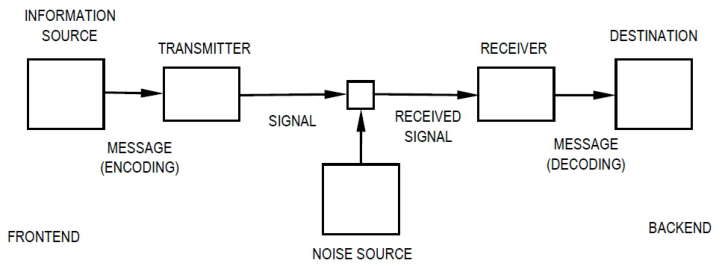
FINDING UI ENTROPY - “THE KNOWLEDGE OF RELEVANCY” (OR THE LACK OF IT) In Shannon’s information theory, communication of any kind is conceptu- alized as a communication channel, in which the encoding-decoding process plays a crucial role in understanding the information transfer mechanism (see Figure 1). The “noise”represents communication errors. Since any UI-related interaction process can be viewed as a communication process, associating the UI with such a schematic is straightforward. The UI-hosting system serves as the source of message input, the user as the destination of message output, and the perceivable UI as the signal after encoding. The user needs to decode the UI to understand its meaning, in order to use it.
Figure 1: The schematic diagram of the communication channel as in Shannon’s information theory (adapted from Shannon, 1948).
Recognizing that the encoding and decoding processes are arbitrary, as seen in Morse code, cryptography, natural language translations, or map- pings of any signifier and signified in a message (De Saussure, 1959), we can achieve a binary mathematical abstraction of the UI - treating it as a Binary Finite-State Machine (BFSM) by following a three-step process of semantic mapping:
1) Cognitive-Centered Abstraction: Acknowledging that a UI is perceived by a human user, we anchor our approach in a cognitively-centered view- point. This perspective aligns with the “human-centered” ideals in UI/UX design, providing a solid logical foundation for the subsequent two steps.
2) Motivation-Driven Abstraction: Recognizing that user motivation drives UI interaction, we categorize UI elements as either “relevant”or “irrel- evant” to the user’s immediate or long-term functional purpose(s). As in Shannon’s MTC, the user’s actual motivation is not our concern; rather, we normalize the UI elements into a binary model based on their relevancy to the user’s motivation.
The Relevancy of Knowledge and the Knowledge of Relevancy 69
3) UI Element Categorization: Categorizing all UI elements as Actionable Interface Options (AIO) or its interchangeable term Actionable Interface Objects (AIO). We can then distinguish them as Certain AIOs (CAIO) and Uncertain AIOs (UAIO) according to the user’s certainty towards these UI elements’ aforementioned relevancy. The nuances of the differences between the terms “options” and “objects” in their definitions and usages shall be fur- ther investigated in future research. For practical convenence in actual usage, these terms are currently considered interchangeable.
This binary model can be applied to any hypothetical UI. We can measure UI entropy at different stages of interaction, representing cognitive difficulty or empirical complexity. For instance, a totally unfamiliar UI with three observable and actionable UI elements (e.g., buttons), yields an initial entropy of H = 3 bits. After interacting with one button, the entropy decreases to H
′ = 2 bits. The real-time UI entropy update reflects the changing cognitive difficulty during the interaction.
To simplify, we assume the user lacks prior knowledge, treating all UI elements as equiprobable. This binary model’s dynamic nature can also be examined by using examples where user knowledge of the UI is present, altering the probability distribution and affecting the UI entropy.
Considering the UI within an information theory context, two notewor- thy observations arise from the above discussion: First, UI learning by the user appears to defy the Second Law of Thermodynamics, resembling a liv- ing proof of “Maxwell’s sorting demon” within a finite context. Second, UI entropy H is a mathematical lower bound, theoretically representing the minimum UI elements needed for M user options or functions. However, cau- tion is needed for using these metrics in UI design, as decisions should not solely aim for seeking the lowest entropy values. Contextual, psychologi- cal, and cultural factors should also guide UI design decisions, avoiding a rule-following, equation-driven approach.
INTERFACE TEMPERATURE - THE “USER-FRIENDLY” ENTROPY As the examples in the previous section have shown, the total counts of Actionable Interface Options (AIOs) or Actionable Interface Objects (AIOs) on a UI by design on a UI by design at its factory-default stage, and the total counts of UIAOs present at any random stage during the interac- tion process, both imply close empirical associations with the degree of UI cluttering. It is therefore logical and technically sensible to contemplate the creation of a measuring scale capable of quantifying and visualizing different levels of UI “cluttering.” Such a scale has the potential to facili- tate UI-related design and research needs, as well as assist in professional and consumer-level communications that are related to UI evaluations or learning.
Scientific terminologies often originate from plain language, taking on new and more precise meanings. This practice has been evident in the establishment and refinements of thermal-physical temperature measuring scales in physics. Temperature scales like Celsius, Fahrenheit, and Kelvin were devised by selecting two anchoring values (usually 0 and 100) from
70 Chong
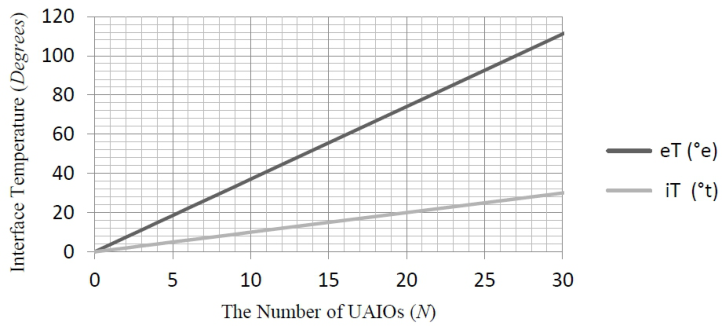
a decimal scale, associating them with two arbitrarily chosen thermo- equilibrium states perceptible to human senses, and evenly dividing the in-between measurements per unit (Müller, 2007). Table 1 and Figure 2 out- line the design considerations for two interface temperature (IT) measuring scales: technical interface temperature (iT) and emotional interface temper- ature (eT), inspired by the above-mentioned scientific precedents in physics (Chong, 2023).
Table 1. The technical interface temperature scale (iT), the emotional interface temperature scale (eT) comparing to the number of UAIOs (N) and the number of total possible outcomes (M) (Chong, 2023).
Table available in the original PDF paper.
N M iT(
t) eT(
e) Empirical associations and references N M=2N N/1 N/0.27 … … … … … 27 1.34×10⁸ 27 100 Water boiling point 100
C; 27 characters. … … … … … 12 4,096 12 44.44 Twelve months; twelve hours; a dozen. 11 2,048 11 40.07 10 1,024 10 37.04 Decimal; human body temperature of 37
C. 9 512 9 33.33 8 256 8 29.63 7 128 7 25.93 Miller’s number of “7±2” (Miller, 1956). 6 64 6 22.22 5 32 5 18.52 Comfortable indoor temperature 18–24
C. 4 16 4 14.81 3 8 3 11.11 2 4 2 7.41 Binary; duality; on/off. 1 2 1 3.70 0 1 0 0 The lowest possible measurement; absolute 0.
Figure 2: The correlations between N and the two interface temperature scales (eT) and (iT) are perfect positive, with a conversion ratio of 100/27 (Chong, 2023).
The Relevancy of Knowledge and the Knowledge of Relevancy 71
The technical interface temperature measuring scale (iT) is a 1:1 direct con- version from the total number of AIOs or UAIOs (the value of N), whichever is applicable for the evaluation needs. It is equivalent to the UI entropy value, assuming all UI objects are equiprobable. The iT scale is intended for technical applications, denoted in measuring units as
t. The emotional inter- face temperature measuring scale (eT) aims for non-technical or commercial use, carrying a conversion ratio of 100/27 from the iT values or from the UI entropy. The design objective for the eT is for its values to empirically resemble the correlations between Celsius temperature degrees and everyday experiences. The measuring unit for eT is
e (see Table 1 and Fig. 2).
The lowest possible readings are zero degrees for both iT and eT. Negative temperature measurements are so far not included in the designs of these two scales, due to the apparent lack of corresponding user experience and immediate theoretical necessity. Cases such as faulty or misleading UAIO can be considered as channel noise (η) or user bias whichever applies to specific situations. The highest possible iT value could be capped by the human retina resolution of 5.76 × 10⁸, or by other limiting values of choice, for specific applications.
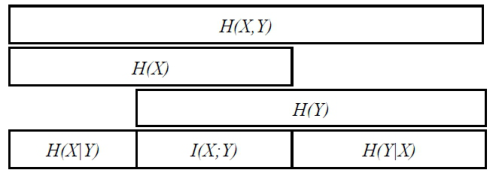
MUTUAL INFORMATION AND CONDITIONAL ENTROPIES - “THE RELEVANCY OF KNOWLEDGE” In Shannon’s communication channel model, the input entropy H(X) repre- sents the total input information, and the output entropy H(Y) denotes the total output information. The joint entropy H(X, Y) combines the total infor- mation present in the channel. The mutual information I(X; Y) signifies the information successfully transmitted and decoded. The equivocation (con- ditional input entropy) H(X|Y) is the information encoded in the input but failed to transmit or decode in the output. The conditional output entropy H (Y|X) is the information not part of the input or wrongly decoded in the output. Both H(X|Y) and H (Y|X) can be considered as noise (η) in the communication channel (see Figure 3).
Figure 3: A Gantt chart showing the relationships among the joint entropy H(X, Y), input entropy H(X), output entropy H(Y), conditional entropy H(Y|X), equivocation H(X|Y), and mutual information I(X; Y) (adapted from MacKay, 2002 & Stone, 2022).
Shannon’s original communication channel concept represents typical one-way communication processes modeled after the 1940s mainstream tech- nologies such as telegraphy and radio broadcasting. The engineering goal was to minimize equivocation H(X|Y) and maximize mutual information I(X; Y) for a perfect, noiseless communication channel, where all entropies approach quantitative limits H (X, Y) = H (X) = H (Y) = I(X; Y). To apply Shannon’s
72 Chong
MTC model to UI design, we need to reconsider the relationships among H(X|Y), H(Y|X), and I(X; Y), as well as the roles each of them plays within the communication channel of UI interactions.
The first step of this reconsideration is extending Shannon’s communi- cation channel model to a two-way version, by including the user’s active involvement in the interaction (Chong, 2023). This model, termed Two-Way Communication Channel (TCC), introduces a feedback loop, where the out- put entropy H(Y) does not necessarily exit the channel, but is inclusive within the TCC at the user-end, and becomes the user’s mental image of the UI, shaping the user’s next steps in the interaction. With the mirrored UI in the user’s mind, H(Y) becomes the input entropy, and H(X) becomes the output entropy during the feedback processes of the same UI interaction, and vice versa for the conditional entropies.
The second step involves reconsidering the functional goal of the UI in the communication channel. At a deconstructed level, when a user interacts with a UI, the actual functional purpose is not to learn and use the UI but to achieve external goals that are likely alien to both the UI and the UI’s frontend hosting system. Therefore, we should recognize H(Y|X) as the user’s actual functional purposes in TCC during a UI interaction, which we can term functional entropy. Mutual information I(X; Y), which we can term interface entropy, then represents the UI information that the user still needs to learn or attend to for fulfilling functional entropy H(Y|X). This analogy leads to a concise conclusion: the UI is merely a medium, a tool to achieve the functional purpose(s). The UI is a means, not the end. This insight aligns with John Brooke’s definition of usability as “a general quality of appropriateness to a purpose” (Brooke, 1996), where the UI’s appropriate purpose clearly represents H(Y|X), which resides outside the UI with the user.
As mentioned previously, interface temperature and interface entropy are closely related. If an unknown UI, at a certain stage with the input of X, has a total of N(X) counts of UAIOs, the technical interface temperature (iT) of this UI at this given stage can be calculated as iT (X) = H (X) = N (X), and vice versa.
MEASURING USABILITY - SEARCHING THE “APPROPRIATENESS TO A PURPOSE” If information is measurable and our preceding reasoning holds, it’s logical to compare different entropy quantities (see Figure 3) in the communica- tion channel to unveil the inner workings of these entropy measurements within a UI interaction mechanism. Given H (Y|X) and I(X, Y) respectively represent functional entropy and effective interface entropy, the following theorem shall evaluate the ratio of the functional entropy that is afforded by a Two-Way Communication Channel (TCC) (Chong, 2023):
Equation reproduced from the original PDF.
The Relevancy of Knowledge and the Knowledge of Relevancy 73
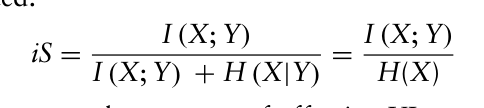
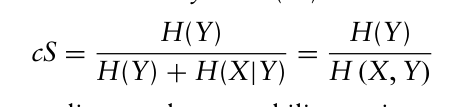
This ratio, termed functional usability ratio (fS), compares H (Y|X) to H(X|Y) and I(X; Y), within H(X, Y), reflecting the TCC channel’s efficiency in affording functional entropy H (Y|X). With I(X; Y) representing effective UI entropy, a theorem for the measurement of interface usability ratio (iS) can be formulated:
Equation reproduced from the original PDF.
H(X)
This ratio compares the amount of effective UI entropy I(X; Y) to total UI input entropy H(X). It is important to note that the mutual information I(X; Y) should represent the UI entropy that the user is already aware of but still uncertain about, not including the UI information that the user has learned. The discussion concerning the amount of user learning will be cov- ered in a later section of this paper. Likewise, considering output entropy H(Y) to be the total information the user receives from the TCC, we can define the UI’s combined usability ratio (cS) as:
Equation reproduced from the original PDF.
For practical expediency, these usability ratios are designed to range between 0 and 1 inclusively, resembling the values of probability. We can call them Sullivan ratios (S) in memory of Louis H. Sullivan, who articulated the maxim “Form follows function” (Sullivan, 1896). Their measuring unit can be denoted as sullivan (s), adhering to International System of Unit (SI) conventions.
These usability ratio theorems align with empirical experiences. For instance, in the functional usability theorem, a smaller mutual information I(X; Y) or a larger output conditional entropy H(Y|X) each contributes to a higher yield of functional Sullivan ratio fS. This relationship aligns with the minimalist UI design ideal. Similar reasoning applies to the other two theorems for iS and cS.
These usability measurements, entropy calculations, interface temperature readings, and the general theory behind the TCC model were introduced through classroom teachings in May and June of 2023 to a group of 31 undergraduate-level university students. The majority of these students not only successfully grasped the theoretical concepts but also demonstrated mastery in applying these techniques in case study implementations. Case studies included smartphone UIs, UI analysis for “Norman Doors”(Norman, 2013), and the UI of small household appliances of the students’ choosing. Preliminary evidence from these case studies suggests that the information theory-based NTCC methodologies are of value for design education and real-world applications.
NETWORKED TWO-WAY COMMUNICATION CHANNELS - THE “SYNERGISTIC RECURSION” OF INTERFACES Shannon’s information theory universally applies to all communication situ- ations. Likewise, we aim to establish the Two-Way Communication Channel (TCC) as a versatile and recursive mathematical model for all UI-related
74 Chong
interactions. However, this hypothesis encounters immediate intellectual challenges: Where does the original source of the input functional entropy H(Y|X) come from? Where does the resulting output functional entropy H(Y|X) go? Empirical observations provide an intuitive answer: these func- tional entropies could extend beyond their origin TCC node to other related or targeted nodes. They can exit one TCC node as part of its functional out- put entropy and then enter another TCC node, either contributing to the functional entropy H(Y′|X′) or as part of the interface entropy I(X′; Y′).
These insights lead us to develop the Networked Two-Way Communica- tion Channels (NTCC) model (Chong, 2023). A typical NTCC domain will consist of numerous interconnected TCC nodes, each node will take input(s), produce output(s), and internally process “patchable” UI entropies and func- tional entropies. Within each NTCC domain, dynamic changes in entropies within different TCC nodes can be deconstructed and evaluated individually or collectively within a given domain range, as shown in previous sections.
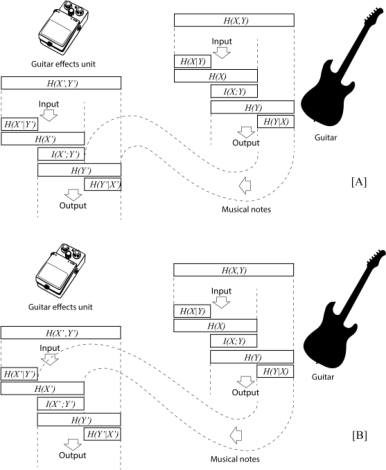
Consider a simplified example of an NTCC domain with two TCC nodes: an electric guitar UI and a guitar effects pedal UI (see Figure 4). Figure 4 part [A] illustrates the scenario where the guitar signal output is considered as the functional entropy output H(Y|X) from the guitar TCC node, feeding into the effects pedal TCC node’s functional entropy H(Y′|X
′). With this interface- entropy patch, the effects unit acts as an “entropy-through” node for the guitar’s musical expression output. The guitar’s output signal information is not considered as part of the effects unit’s UI-controlling interface entropy I(X′; Y′) for adjusting the unit’s effects settings, but as the user’s functional purpose entropy passing through.
Figure 4: Demonstrations of the NTCC model in a real-world scenario where the user’s functional goal changes during interactions with the same UI.
The Relevancy of Knowledge and the Knowledge of Relevancy 75
Figure 4 part [B] depicts a situation where the guitar output signal serves as the input interface entropy, controlling different tonal effects programmed in the effect unit. Here, the user employs the guitar TCC node’s output H(Y|X) as the mutual information I(X
′; Y′) for interacting with the effect unit (e.g., using different volume levels to control the amount of distortion that is applied to the unit’s output). By comparing case [A] and case [B], we can see that the NTCC model effectively describes the UI from the user’s cog- nitive perspectives. Computational patching of functional entropies is based on the user’s perception of the UI during interactions, with the actual hard- ware and software behind the NTCC or each TCC node not being immediate concerns of this model, unless a given situation requires us to do so.
INTERFACE WORK AND INTERFACE HEAT - QUANTIFYING THE “USER EFFORTS” IN INTERACTIONS Further thought experiments can deepen our understanding of the potential parallels between UI interactions, information theory, and thermodynamics - an inspiration for the creation of information theory. In classical thermody- namics, Clausius defined the thermal entropy as 1S = 1Q/T = W/T. This theorem can be transformed into W = 1S · T, where W is work, 1S is the change of thermal entropy, 1Q is the change in the system’s heat, and T is the system’s temperature.
To adapt Clausius’s entropy theorem to UI interactions, we can intro- duce a new parameter, interface work (iW), akin to the “work” in Clausius’s theorem, and replace the other parameters with their UI counterparts. The resulting equation will look like iW = 1H · iT, where 1H is the change in interface entropy, and iT is interface temperature. Further iterations align well with the concepts and methodologies discussed in the previous sections of this paper.
′; Y
For instance, during a UI learning process, if the mutual information of a TCC node changes from I (X; Y) to I(X
′), and the UI temperature remains constant at iT(X), the amount of interface learning work done by the user can be calculated as: iWlearn = (I (X; Y) −I(X′; Y′)) · iT(X)
We can also define functional interface work and combined interface work, each to be calculated as: iWfunciton = (H(Y′|X′) −H (Y|X)) · iT(X)
Equation reproduced from the original PDF.
The apparent association among these three interface work measure- ments are intriguing. It’s verifiable that the user’s combined interface work (iWcombine) equals the amount of functional interface work (iWfunction) minus the interface learning work (iWlearn). In plain words: The amount of inter- face work resulting from interface learning is mathematically provable to be
76 Chong
counterproductive!
iWcombine = iWfunction −iWlearn
Regarding equivocation H(X|Y), at the current stage of our research, its presence in the channel is considered to offer neither usable interface value nor service to the user’s functional purpose. Traditionally, it has also been regarded as(η). There seems to be room for future research concerning the roles of the equivocation in a TCC and in an NTCC. Examples of UI equiv- ocation could be meaningless texts, excessive ornaments, or useless manual buttons, etc. The UI equivocation entropy can be considered distractions to the user, referred to as “useless interface work done by the user” or simply interface heat (iQη):
iQη = (H (X|Y) −H(X′|Y′) · iT(X)
Empirical associations between interface work and real-world situations will need further exploration and validation. This direction calls for ongoing research to examine channel capacities concerning UI/UX, and likely remain open to unforeseen theoretical and practical advancements (Chong, 2023).
CONCLUSION
This paper has only scratched the surface of information theory and its poten- tial applications in UI design and research. Further studies are needed to explore more advanced techniques in this direction. The ideas presented in the paper aim to offer references and inspirations for true advancements yet to come. Concurrently, it is prudent to acknowledge that information- theory-based theories and methodologies are statistics-based reference tools. While they can provide better insights and potentially enable productivity- boosting automation, they may not be perfect replacements for the infinitely rich and forever-expanding human creativity in designers and users. With a clear-minded outlook, we anticipate that our future interactive technologies will continually become more user-friendly as well as more designer-friendly.
REFERENCES
Brooke, J. (1996). SUS - A quick and dirty usability scale. Usability evaluation in industry. CRC Press. pp. 189–194. Chong, L. (2023). Temperature entropy and usability: The theoretical and practical
resemblances between thermodynamics and user interface design. Proceedings of HCII International 2023, Copenhagen, Denmark. De Saussure, F. (1959). Course in General Linguistics. Philosophical Library Inc.
pp. 65–70. Harari, Y. N. (2016). Homo Deus: A Brief History of Tomorrow. Signal. p. 57. ISO.(2018). Ergonomic of human-system interaction – Part 11: Usability: Definitions and concepts (ISO 9241-11:2018). International Organization for Standardiza- tion, International Electrotechnical Commission, Geneva. Khinchin, A. I. (1957). Mathematical Foundations of Information Theory. Dover
Publications. p. 1.
The Relevancy of Knowledge and the Knowledge of Relevancy 77
MacKay, D. (2002). Information Theory, Inference, and Learning Algorithms.
Cambridge University Press. p. 140, 149. Miller, G. A. (1956). The magical number seven, plus or minus two: Some limits on our capacity for processing information. Psychological Review. 63(2), 81–97. Müller, I. (2009). A History of Thermodynamics: The Doctrine of Energy and
Entropy. Springer. pp. 1–7. Nielsen, J., & Levy, J. (1994). Measuring usability: Preference vs. performance.
Communications of ACM, 37(4), 66–75. Norman, D. (2013). The Design of Everyday Things. Revised & expanded edn., Basic Books. p. 15. Shannon, C. E. (1948). A mathematical theory of communication. Bell Systems
Technical Journal, 27. pp. 379–423, 623–656. Stone, J. (2022). Information Theory: A Tutorial Introduction. 2nd edn., Sebtel Press.
p. 94, 149. Sullivan, L. H. (1896). The tall office building artistically considered. Lippincott’s Mag. p. 408. Weaver, W. (1949). Recent contributions to the mathematical theory of communi-
cation. The Mathematical Theory of Communication, The University of Illinois Press. p. 100.
LISTED IN THE AHFE DIGITAL BOOKSTORE CATALOGUE
Explore the complete digital volume
Usability and User Experience
Read this individual research paper free through the original publisher, or explore the full digital proceedings book.
ISBN 978-1-964867-32-8
Explore this ISBN in the AHFE Bookstore ↗Listed in the July 2026 bookstore catalogue; search by ISBN to confirm current availability · Digital book purchase optional