Olumide Ayanrinde, Jeffrey Mahachi (2025). Innovative Pathways to Sustainable Housing in Nigeria: Decarbonization, Human Factors, and Institutional Transformation. In: Sustainable Construction in the Era of the Fourth Industrial Revolution. AHFE Open Access, vol. 187, pp. 24–36. https://doi.org/10.54941/ahfe1006557
This study addresses the urgent need for sustainable housing in Nigeria, focusing on the transformative potential of Circular Economy (CE) principles to address interconnected challenges of decarbonization, human factors, and institutional transformation. With a significant housing deficit and high carbon emissions from the construction sector, theresearch emphasizes building with the end in mind and embedding sustainability as a core value in housing practices.Employing a mixed-methods approach, the study examines policy documents, models carbon emissions, and surveys behavioural factors to understand barriers to sustainablehousing adoption. Comparative analysis with Finland and Germany reveals diverse CE adoption strategies, offering Nigeria an opportunity to turn challenges into opportunities byformalizing grassroots practices and developing tailored policies. The research also highlights the need to deepen connections between homes and ecosystems, advocating forhomes that better reflect societal values and foster harmony with nature.A critical gap in Nigeria’s housing sector lies in the end-of-life phase. The study proposes integrating “EoL wills” to manage material reuse and recycling, aligning with globaldecarbonization goals and laying the foundation for a Circular Building Label in Nigeria. This label would track residential emissions, incorporate decarbonization strategies, and measure sustainable traits through psychometric tools, pushing the boundaries of how sustainability is assessed.Timely with COP29’s focus on climate justice, this research emphasizes the importance of cultivating sustainability traits like reciprocity and delayed gratification, addressing behavioural barriers, and integrating institutional reforms. By harmonizing decarbonization pathways, human factors, and institutional dynamics, this paper provides actionable insights to advance long-term sustainability in Nigeria’s housing sector. The findings shift the focus from government-driven solutions to individual responsibility, offering a bottom-up roadmap for creating homes that embody personal values, foster societal improvement, and harmonize with ecosystems, making the research applicable to other nations in the Global South.
Innovative Pathways to Sustainable Housing in Nigeria 25
INTRODUCTION
Nigeria faces a critical housing need opportunities exceeding 22 million units, a challenge exacerbated by rapid urbanization, resource-intensive construction practices, and foundational regulatory frameworks (Adedeji et al., 2023). This growing demand for housing comes at significant environmental costs, including high carbon emissions from the construction sector, which is a key contributor to global warming. Addressing these issues requires a multi-faceted approach that integrates decarbonization pathways, human-centred strategies, and institutional transformation to promote sustainable housing (Ogbonna et al., 2023). This paper presents innovative solutions grounded in the principles of Circular Economy (CE) to tackle these interrelated challenges in Nigeria’s housing sector.
The construction industry in Nigeria operates within a fragmented regulatory framework, stemming from weak enforcement rather than an absence of relevant laws. The Construction and COREN regulations provide a foundational framework that presents opportunities to further integrate explicit Circular Economy (CE) principles (Ayanrinde et al., 2023). Norms and practices often prioritize short-term goals, rooted in systemic challenges such as policy gaps, reactive governance, and cultural inertia (Suleman et al., 2023). While Nigeria’s Circular Economy Roadmap (NCERM, 2024) is a recent development, countries like Finland and Germany have made significant strides in CE integration through well-established policy frameworks, including Finland CE roadmap 2016–2025, Germany CE Acts 2012, alongside diverse pilot projects spanning the building lifecycle (Ayanrinde et al., 2023). This comparative analysis underscores Nigeria’s ongoing opportunities to formalize contributions from the informal sector practices, such as material reuse and waste reduction and adopt income- sensitive, adaptive policies that promote long-term sustainability while cultivating traits such as delayed gratification will ultimately lead to long- term thinking.
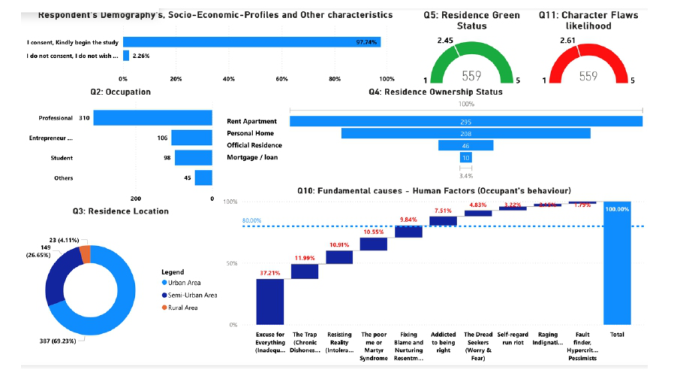
A key focus of this research is the impact of human factors on advancing sustainable housing. Character flaws, identified as primal causes, significantly hinder the adoption of green building practices (Figure 3). With 53% of respondents exhibiting these traits, the findings highlight the need to cultivate sustainability traits, or humane values. This novel approach reorganizes barriers from existing studies into a causal tree framework, categorizing them as immediate, contributory, underlying, root, and primal causes. Consequently, this study posits that embedding humane values into societal behaviours and institutional practices is essential for promoting shared responsibility and aligning the construction sector with global decarbonization pathways.
Additionally, this paper highlights the transformative potential of decarbonization scenarios for residential buildings. Leveraging tools like Power BI and the EDGE app, the research proposes science-based targets that address both emissions reduction and climate resilience (Ayanrinde & Mahachi, 2023).
This study aligns with global climate priorities, including the outcomes of COP29, which emphasized the inequitable burden of climate risks on
26 Ayanrinde and Mahachi
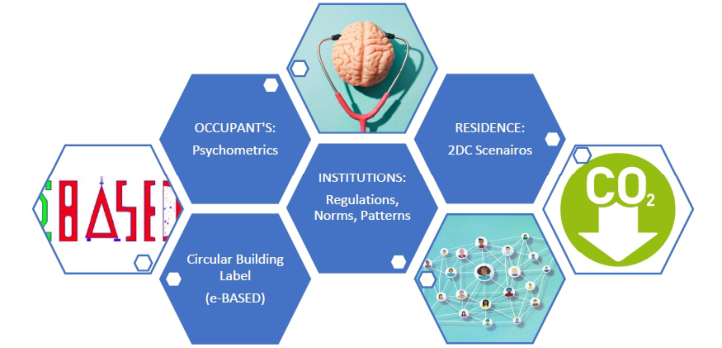
Global South nations (UNFCCC, 2024). Nigeria, despite its low historical emissions, faces disproportionate climate impacts such as flooding in the South and drought in the North (Ayanrinde & Mahachi, 2023; Burgess et al., 2020). By addressing primal causes and fostering institutional and societal transformations, this research aims to position Nigeria as a grassroot forerunners in sustainable housing within the Global South. By integrating decarbonization pathways, human factors, and institutional dynamics, this paper proffers actionable recommendations for achieving long-term sustainability. As illustrated in Figure 1, it posits that combining behavioural and institutional reforms with innovative policies can fully harness the potential of Circular Economy (CE), establishing a sustainable housing framework that harmonizes environmental resilience with social equity (Scott, 2005; UNEP, 2022).
Figure 1: Circular Building Label (CBL) Concept for sustainable housing in Nigeria (e- BASED).
METHODS
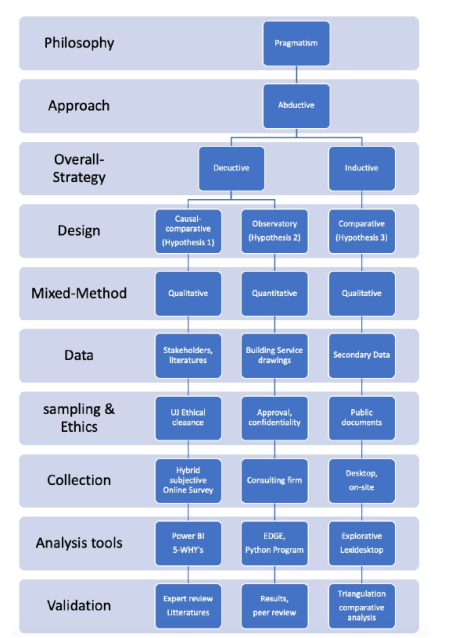
This study employs a mixed-methods research design to explore innovative pathways for sustainable housing in Nigeria, integrating qualitative and quantitative approaches to address decarbonization, human factors, and institutional transformation (Figure 2). The methodology aligns with the principles of the Circular Economy (CE) and the need to contextualize global best practices within Nigeria’s unique socio-economic and cultural realities (Gomide et al., 2024). A qualitative review of policy documents using LexiDesktop, including construction laws, regulations, and the Nigeria Circular Economy Roadmap NCERM (2024), revealed key regulatory gaps and opportunities for integrating Circular Economy (CE) principles. Building upon the study conducted by Ayanrinde et al. (2023), this comparative analysis of construction roadmaps from Nigeria, Finland, and Germany provides insights into structured strategies that Nigeria can adopt to enhance
Innovative Pathways to Sustainable Housing in Nigeria 27
its construction sector. To complement this, quantitative carbon emissions modelling was conducted using Power BI and the EDGE app, focusing on Scope 1–3 emissions across income levels and building types. These tools facilitated the evaluation of emissions reduction scenarios aligned with two- degree-compatible (2DC) pathways (Ayanrinde & Mahachi, 2023; Boehm et al., 2021; Rogelj et al., 2018).
Tailored hybrid surveys with potential occupants’ provided deeper insights by incorporating a branching questionnaire design with 11 context-specific questions per respondent. This approach enhanced the relevance and depth of responses, allowing for a nuanced understanding of behavioural factors affecting green building adoption. With a maximum sum of 559 diverse answers to any question, including homeowners, renters, and individuals from varied socioeconomic contexts, the study achieved sufficient heterogeneity to reflect the complexities of housing behaviours in Nigeria (Creswell & Poth, 2018). The responses also ensured data saturation, capturing rich, meaningful data without additional responses significantly altering thematic patterns (Guest et al., 2006).
Figure 2: Research methodology process.
28 Ayanrinde and Mahachi
Figure 3: Sustainability and socio-economic profiles of respondents.
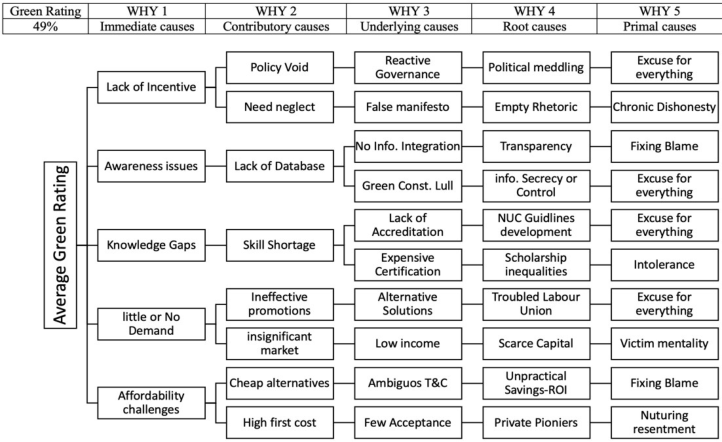
Maxwell (2012) and UNEP (2022) underscore the pressing necessity of systemic transformations that harmoniously integrate behavioral modifications with institutional accountability. This is exemplified in Figure 4, which presents causal branching diagrams illustrating the interrelatedness of these opportunities. Notably, 80% of the barriers, classified as primal causes, originate from 50% of identified character flaws (human factors), underscoring the importance of prioritizing Humane values in a diverse socio-cultural framework.
Figure 4: Primal cause branching for sustainable housing, Nigeria (Q5–Q10).
Innovative Pathways to Sustainable Housing in Nigeria 29
The integration of findings across these methodological design revealed actionable pathways for aligning informal sector practices with structured regulatory frameworks. The study emphasized the importance of formalizing informal sector contributions to CE, as expounded by (Zisopoulos et al., 2023), address the fundamental causes of unsustainable housing and propose innovative strategies for adaptive decarbonization. By applying Scott’s institutional theory, the research assessed the regulative, normative, and cultural-cognitive dimensions of Nigeria’s construction sector and compared them with the structured frameworks in Finland and Germany (Hodgson, 2006; Scott, 2005). This approach highlighted the transformative potential of behavioural and institutional shifts to drive sustainability. Ultimately, the methodology provides an aligned, replicable perspective for addressing the diverse and rich interconnections between human behaviour, policy dynamics, and environmental sustainability, recommending a blueprint for similar challenges across the Global South (Ebuy et al., 2023; Gliedt et al., 2018; Rashed et al., 2023).
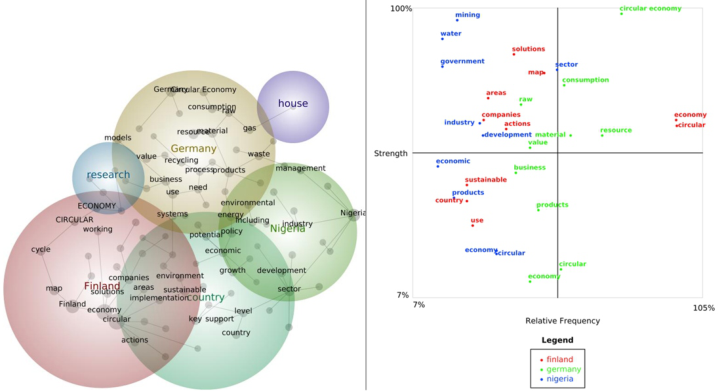
DISCUSSIONS Comparative insights from Finland and Germany illustrate varying levels of CE adoption. Finland exemplifies a holistic approach, emphasizing corporate engagement, recycling, and remanufacturing to close material loops. This structured application of CE integrates sustainability practices at multiple construction stages, driven by strong industry participation and action-oriented policies. Similarly, Germany focuses on resource efficiency and closed-loop systems, aligning industrial processes with CE principles through structured material management and value creation. Germany’s CE Acts and Finland’s CE Roadmap 2016–2025 are examples of robust frameworks that support mature CE ecosystems in both countries, as demonstrated by the findings of Ayanrinde et al., (2023). In contrast, Nigeria’s efforts remain developmental, centred on policy alignment, natural resource management, and infrastructure enhancement. Although Nigeria’s informal sector exhibits resourcefulness in material reuse, these practices are uncoordinated and unsupported by policy (NCERM, 2024). The concept map (Figure 5) highlights Nigeria’s emphasis on potential and support, suggesting opportunities to formalize informal contributions and develop explicit CE policies tailored to its context.
Therefore, this study highlights critical insights into sustainable housing in Nigeria, emphasizing the interplay between decarbonization pathways, human factors, and institutional transformation. According to Table 1 below, research on the lifecycle of residential housing reveals an imbalanced focus, with the planning and design phase receiving the most attention. Studies in this phase prioritize stakeholder awareness and policy recommendations, often relying on theoretical frameworks rather than practical implementation. While this emphasis is vital for integrating Circular Economy (CE) principles, such as eco-design and lifecycle analysis, it exposes a significant gap in applied research needed to drive sustainable practices throughout the housing lifecycle. Conversely, the end-of-life (EoL)
30 Ayanrinde and Mahachi
phase is notably underexplored, with limited studies addressing demolition waste, deconstruction, and material reuse. The current practice of in-situ reinforced concrete construction is unsustainable, necessitating a transition towards reusable structural components and deconstruction methodologies to minimize waste. This aligns with the 2DC decarbonization scenario for buildings recommended by Ayanrinde and Mahachi (2023) for embodied carbon. Consequently, the integration of end-of-life wills as a declaration approach into construction practices is imperative to revolutionize material reuse and recycling.
Figure 5: Circular economy roadmaps Leximancer analysis.Table 1: Research distribution across phases of housing lifecycle in Nigeria.
Table available in the original PDF paper.
Planning and Procurement Operation and
Materials and End of Life
Design
Maintenance Construction
(Abisuga & (Onubi et al.,
(Akanji et al., (Atedhor, 2023)
(Akanbi et al.,
2020) (Aliu, 2023) (Olawumi & Chan, 2021)
2020) (Ekpo, 2019) (Salami et al., 2021) (Atamewan, 2020) (Atedhor, 2023) (Kwag et al., 2019) (Okonta, 2023) (Ezennia, 2022) (Ekung et al., 2022)
(Lin et al., 2015) (Yetano Roche, 2023) (Kwag et al., 2019) (Oladoja & Ogunmakinde, 2021) (Tammy et al., 2017) (Okonta, 2023) (Afolabi et al., 2019)
Okuntade, 2020) (Ade-Ojo, 2022) (Adenle et al., 2021) (Tammy et al., 2017) (Atanda & Olukoya, 2019) (Ebekozien & Aigbavboa, 2022) (Kwag et al., 2019)
2023) (Omoragbon et al., 2023) (Onubi et al., 2020) (Salami et al., 2021) (Tietie et al., 2021) (Atamewan, 2020) (Ekpo, 2019) (Aliu, 2023) (Ekung et al., 2022)
Continued
Innovative Pathways to Sustainable Housing in Nigeria 31
Table 1: Continued
Table available in the original PDF paper.
Planning and Procurement Operation and
Materials and End of Life
Design
Maintenance Construction
(Ebekozien et al.,
2022) (Ochedi & Taki, 2022) (Olawumi et al., 2020) (Suleman et al., 2023) (Okonta, 2023) (Leo-Olagbaye et al., 2023) (Obianyo et al., 2021) (Olawumi & Chan, 2021) (Aliu, 2023)
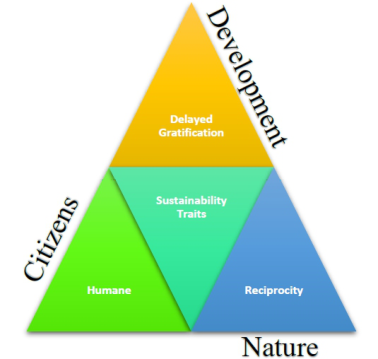
The implications of these findings extend to Nigeria’s construction sector and beyond, underscoring the need for holistic lifecycle research and implementation. Enhancing research on underexplored phases like EoL and operational efficiency can support the adoption of reusable structural elements, closing material loops while reducing lifecycle costs. Behavioural factors, including the cultural inertia for excuses identified in causal branching diagrams (Figure 4), emphasize the need for cultivating sustainability traits (Figure 6), to address systemic barriers. Institutional reforms must align informal practices with structured regulatory frameworks, Promoting collaborative governance and public-private partnerships to operationalize CE principles in Nigeria.
Figure 6: Sustainability traits concept.
32 Ayanrinde and Mahachi
CONCLUSION
This study provides actionable recommendations for advancing sustainable housing in Nigeria by addressing decarbonization, human factors, and institutional transformation. To close gaps in the construction sector and align with Circular Economy (CE) principles, the following strategies are proposed:
1. Formalize informal sector: Introduce structured policies mandating the reporting of building carbon emissions and offering incentives for compliance. These measures can replicate Finland’s success in enhancing material efficiency and ensuring accountability within the construction sector. 2. Integrate EoL wills: Adopt structured end-of-life (EoL) management practices to ensure efficient material reuse and recycling. By prioritizing deconstruction and resource recovery, this approach minimizes waste and lifecycle costs while maximizing sustainability. 3. Leverage psychometric tools: Employ a psychometric display model to assess occupants’ attitudes toward sustainable housing. Categorizing tendencies as “central,” “left,” or “right,” this tool measures traits such as care for Self, People, and Nature. These insights enable tailored public engagement strategies to develop behavioural shifts toward sustainable practices.
By combining these recommendations with insights from Finland and Germany, Nigeria can address systemic barriers and position itself as a grassroots leader in sustainable housing. These strategies propose a circular building label concept (CBL) that aims to strike a balance between environmental resilience and social equity, thereby ensuring a transformative and inclusive future.
ACKNOWLEDGMENT
The authors would like to acknowledge CITER – Tampere University, Finland, for access to LEXIDESKTOP text analysis tool.
REFERENCES
Abisuga, A. O., & Okuntade, T. F. (2020). The Current State of Green Building Development in Nigerian Construction Industry: Policy and Implications. In Green Energy and Technology (pp. 129–146). Springer Verlag. https://doi.org/10. 1007/978-3-030-24650-1_7 Adedeji, I., Deveci, G., Salman, H., Adedeji, I., Deveci, G., & Salman, H. (2023).
The Challenges in Providing Affordable Housing in Nigeria and the Adequate Sustainable Approaches for Addressing Them. Open Journal of Applied Sciences, 13(3), 431–448. https://doi.org/10.4236/OJAPPS.2023.133035 Adenle, Y. A., Chan, E. H. W., Sun, Y., & Chau, C. K. (2021). Assessing the relative importance of sustainability indicators for smart campuses: A case of higher education institutions in Nigeria. Environmental and Sustainability Indicators, 9. https://doi.org/10.1016/j.indic.2020.100092
Innovative Pathways to Sustainable Housing in Nigeria 33
Ade-Ojo, O. C. (2022). Awareness of the LEED requirements for green housing development among built-environment professionals in Nigeria. Built Environment Project and Asset Management, 12(4), 521–536. https://doi.org/10. 1108/BEPAM-02-2020-0032 Afolabi, A. O., Ojelabi, R. A., Omuh, I. O., & Tunji-Olayeni, P. F. (2019). 3D House Printing: A sustainable housing solution for Nigeria’s housing needs. Journal of Physics: Conference Series, 1299(1), 012012. https://doi.org/10.1088/1742-6596/ 1299/1/012012 Akanbi, L. A., Oyedele, A. O., Oyedele, L. O., & Salami, O. (2020). Deep learning
model for Demolition Waste Prediction in a circular economy. 274. https://doi.or g/10.1016/j.jclepro.2020.122843 Akanji, M., Amoah, N., Akpoveso, O. T., Atanya, O., & Ogbechie, C. (2023).
A Review of the Circular Economy in Nigeria. In The Routledge Handbook of Catalysts for a Sustainable Circular Economy (pp. 88–106). Routledge. https: //doi.org/10.4324/9781003267492-6 Aliu, I. R. (2023). Achieving Sustainable Housing in Nigeria: A Rethink of the Strategies and Constraints. In Sustainable Education and Development – Sustainable Industrialization and Innovation (pp. 1164–1179). Springer International Publishing. https://doi.org/10.1007/978-3-031-25998-2_90 Atamewan, E. E. (2020). Abandonment of Housing Projects in Nigeria: Appraisal
of the Environmental and Socio-Economic Implications. European Journal of Environment and Earth Sciences, 1(4). https://doi.org/10.24018/EJGEO.2020.1. 4.29 Atanda, J. O., & Olukoya, O. A. P. (2019). Green building standards: Opportunities for Nigeria. Journal of Cleaner Production, 227, 366–377. https://doi.org/10. 1016/j.jclepro.2019.04.189 Atedhor, G. O. (2023). Greenhouse gases emissions and their reduction strategies:
Perspectives of Africa’s largest economy. Scientific African, 20, e01705. https://doi.org/10.1016/J. SCIAF.2023. E01705 Ayanrinde, O., & Mahachi, J. (2023). Scenario method for catalysing circularity and lowering emissions in the construction sector/real estate, Nigeria. The Routledge Handbook of Catalysts for a Sustainable Circular Economy, 388–402. https://do i.org/10.4324/9781003267492-22 Ayanrinde, O., Siltaloppi, J., Kaipainen, J., Harala, L., Alkki, L., Saari, U.,
Jonker-Hoffrén, P., & Aarikka-Stenroos, L. (2023). Institutions shaping circular economy innovations: Cross-country construction sector analysis. https://researchportal.tuni.fi/fi/publications/institutions-shaping-circular-econo my-innovations-cross-contry-co Boehm, S., Lebling, K., Levin, K., Fekete, H., Jaeger, J., Waite, R., Nilsson, A., Thwaites, J., Wilson, R., Geiges, A., Schumer, C., Dennis, M., Ross, K., Castellanos, S., Shrestha, R., Singh, N., Weisse, M., Lazer, L., Jeffery, L., … Galvin, M. (2021). State of Climate Action 2021: Systems Transformations Required to Limit Global Warming to 1.5
C. World Resources Institute. https: //doi.org/10.46830/WRIRPT.21.00048 Burgess, M. G., Ritchie, J., Shapland, J., & Pielke, R. (2020). IPCC baseline scenarios
have over-projected CO2 emissions and economic growth. Environmental Research Letters, 16(1), 014016. https://doi.org/10.1088/1748-9326/ABCDD2 Ebekozien, A., & Aigbavboa, C. (2022). Evaluation of built environment programmes accreditation in the 21st century education system in Nigeria: stakeholders’ perspective. International Journal of Building Pathology and Adaptation, 41(6), 102–118. https://doi.org/10.1108/IJBPA-02-2022-0027
34 Ayanrinde and Mahachi
Ebekozien, A., Ikuabe, M., Awo-Osagie, A. I., Aigbavboa, C., & Ayo-Odifiri, S. O. (2022). Model for promoting green certification of buildings in developing nations: a case study of Nigeria. Property Management, 40(1), 118–136. https: //doi.org/10.1108/PM-05-2021-0033 Ebuy, H. T., Bril El Haouzi, H., Benelmir, R., & Pannequin, R. (2023). Occupant
Behavior Impact on Building Sustainability Performance: A Literature Review. Sustainability 2023, Vol. 15, Page 2440, 15(3), 2440. https://doi.org/10.3390/SU 15032440 Ekpo, A. (2019). Housing Deficit in Nigeria: Issues, Challenges and Prospects. Ekung, S., Odesola, I. A., & Adewuyi, T. (2022). Green cost premium for attaining energy-efficiency rating in Nigeria’s hot-humid residential buildings. International Journal of Building Pathology and Adaptation, 40(2), 248–268. https://doi.org/10. 1108/IJBPA-01-2021-0008 Ezennia, I. S. (2022). Insights of housing providers’ on the critical barriers
to sustainable affordable housing uptake in Nigeria. World Development Sustainability, 1, 100023. https://doi.org/10.1016/J. WDS.2022.100023 Gliedt, T., Hoicka, C. E., & Jackson, N. (2018). Innovation intermediaries accelerating environmental sustainability transitions. Journal of Cleaner Production, 174, 1247–1261. https://doi.org/10.1016/j.jclepro.2017.11.054 Gomide, F. P. de B., Bragança, L., & Casagrande Junior, E. F. (2024). How Can the
Circular Economy Contribute to Resolving Social Housing Challenges? Applied System Innovation 2024, Vol. 7, Page 21, 7(2), 21. https://doi.org/10.3390/AS I7020021 Hodgson, G. M. (2006). What are institutions? Journal of Economic Issues, 40(1), 1–25. https://doi.org/10.1080/00213624.2006.11506879/ASSET//CMS/ASSET/73 111A81-10BA-458B-B10B-B845B2387BDD/00213624.2006.11506879.FP.PNG Kwag, B. C., Adamu, B. M., & Krarti, M. (2019). Analysis of high-energy
performance residences in Nigeria. Energy Efficiency, 12(3), 681–695. https: //doi.org/10.1007/s12053-018-9675-z Leo-Olagbaye, F., Odeyinka, H., & Rathnasiri, P. (2023). Stakeholders’ roles in the delivery of sustainable housing projects in Lagos state, Nigeria. Sustainability 2023, Vol. 15, Page 11709, 15(15), 11709. https://doi.org/10.3390/SU151511709 Lin, B., Omoju, O. E., & Okonkwo, J. U. (2015). Impact of industrialisation on CO2
emissions in Nigeria. Renewable and Sustainable Energy Reviews, 52, 1228–1239. https://doi.org/10.1016/J. RSER.2015.07.164 Maxwell, J. A. (2012). Qualitative Research Design: An Interactive Approach: An Interactive Approach. 218. https://books.google.com/books/about/ Qualitative_Research_Design_An_Interacti.html?hl=fi&id=DFZc28cayiUC NCERM. (2024). Nigeria Circular Economy Road Map. Obianyo, I. I., Ihekweme, G. O., Mahamat, A. A., Onyelowe, K. C., Onwualu, A. P., & Soboyejo, A. B. O. (2021). Overcoming the obstacles to sustainable housing and urban development in Nigeria: The role of research and innovation. Cleaner Engineering and Technology, 4, 100226. https://doi.org/10.1016/J. CLET.2021.100226 Ochedi, E. T., & Taki, A. (2022). A framework approach to the design of energy
efficient residential buildings in Nigeria. Energy and Built Environment, 3(3), 384–397. https://doi.org/10.1016/j.enbenv.2021.07.001 Ogbonna, C. G., Nwachi, C. C., Okeoma, I. O., & Fagbami, O. A. (2023).
Understanding Nigeria’s transition pathway to carbon neutrality using the multilevel perspective. Carbon Neutrality, 2(1). https://doi.org/10.1007/s43979- 023-00065-5
Innovative Pathways to Sustainable Housing in Nigeria 35
Okonta, D. E. (2023). Investigating the impact of building materials on energy efficiency and indoor cooling in Nigerian homes. Heliyon, 9(9), e20316. https://doi.org/10.1016/J. HELIYON.2023. E20316 Oladoja, O., & Ogunmakinde, O. E. (2021). Challenges of Green Building
In Nigeria: Stakeholders’ Perspectives (pp. 481–491). Deakin University. https://research.bond.edu.au/en/publications/challenges-of-green-building-in-nig eria-stakeholders-perspectives Olawumi, T. O., & Chan, D. W. M. (2021). Green-building information modelling (Green-BIM) assessment framework for evaluating sustainability performance of building projects: a case of Nigeria. Architectural Engineering and Design Management, 17(5–6), 458–477. https://doi.org/10.1080/17452007. 2020.1852910 Olawumi, T. O., Chan, D. W. M., Chan, A. P. C., & Wong, J. K. W. (2020). Development of a building sustainability assessment method (BSAM) for developing countries in sub-Saharan Africa. Journal of Cleaner Production, 263. https://doi.org/10.1016/j.jclepro.2020.121514 Omoragbon, O. M., Al-Maiyah, S., & Coates, P. (2023). A Survey of Environmental Performance Enhancement Strategies and Building Data Capturing Techniques in the Nigerian Context. Buildings, 13(2). https://doi.org/10.3390/building s13020452 Onubi, H. O., Yusof, N. A., & Hassan, A. S. (2020). Understanding the mechanism
through which adoption of green construction site practices impacts economic performance. Journal of Cleaner Production, 254. https://doi.org/10.1016/j.jclepr o.2020.120170 Rashed, Y., Omrani, S., Nilsson, D., & Drogemuller, R. (2023). Sustainability Information Provision (SIP) framework: A review of the promotion of sustainability in the residential sector. Building and Environment, 229, 109930. https://doi.org/10.1016/J. BUILDENV.2022.109930 Rogelj, J., Popp, A., Calvin, K. V., Luderer, G., Emmerling, J., Gernaat, D.,
Fujimori, S., Strefler, J., Hasegawa, T., Marangoni, G., Krey, V., Kriegler, E., Riahi, K., Van Vuuren, D. P., Doelman, J., Drouet, L., Edmonds, J., Fricko, O., Harmsen, M., … Tavoni, M. (2018). Scenarios towards limiting global mean temperature increase below 1.5
C. Nature Climate Change 2018 8:4, 8(4), 325–332. https://doi.org/10.1038/s41558-018-0091-3 Salami, S. F., Isah, A. D., & Muhammad, I. B. (2021). Critical indicators of sustainability for mixed-use buildings in Lagos, Nigeria. Environmental and Sustainability Indicators, 9. https://doi.org/10.1016/j.indic.2021.100101 Scott, W. R. (2005). Institutional theory : contributing to a theoretical research
program. Great Minds in Management : The Process of Theory Development. Suleman, T., Ezema, I., & Aderonmu, P. (2023). Challenges of circular design adoption in the Nigerian built environment: An empirical study. Cleaner Engineering and Technology, 17. https://doi.org/10.1016/j.clet.2023.100686 Tammy, T., Atanda, J., & Baird, G. (2017). Development of a building performance
assessment and design tool for residential buildings in Nigeria. Procedia Engineering, 180, 221–230. https://doi.org/10.1016/j.proeng.2017.04.181 Tietie, D. E. O., Diemuodeke, E. O., Owebor, K., Okereke, C., Abam, F. I., & Njoku, H. I. (2021). Long-term energy demand-side modelling of nigerian household sector. Energy and Climate Change, 2. https://doi.org/10.1016/j.egyc c.2021.100065 UNEP. (2022). UNEP Annual Report. https://www.unep.org/annualreport/2022
36 Ayanrinde and Mahachi
UNFCCC. (2024). 2024 UN Climate Change Conference (UNFCCC COP 29) – SDG Knowledge Hub. https://sdg.iisd.org/events/2024-un-climate-change-confer ence-unfccc-cop-29/ Yetano Roche, M. (2023). Built for net-zero: analysis of long-term greenhouse gas
emission pathways for the Nigerian cement sector. Journal of Cleaner Production, 383. https://doi.org/10.1016/j.jclepro.2022.135446 Zisopoulos, F. K., Steuer, B., Abussafy, R., Toboso-Chavero, S., Liu, Z., Tong, X., & Schraven, D. (2023). Informal recyclers as stakeholders in a circular economy. Journal of Cleaner Production, 415, 137894. https://doi.org/10.1016/J. JCLEPRO.2023.137894
LISTED IN THE AHFE DIGITAL BOOKSTORE CATALOGUE
Explore the complete digital volume
Sustainable Construction in the Era of the Fourth Industrial Revolution
Read this individual research paper free through the original publisher, or explore the full digital proceedings book.
ISBN 978-1-964867-63-2
Explore this ISBN in the AHFE Bookstore ↗Listed in the July 2026 bookstore catalogue; search by ISBN to confirm current availability · Digital book purchase optional