Amic Ho, Chau P.W. (2025). Digital Personas: Exploring the Impact of AI Influencers on Social Engagement and Brand Authenticity. In: Human Interaction and Emerging Technologies (IHIET 2025). AHFE Open Access, vol. 197, pp. 581–601. https://doi.org/10.54941/ahfe1006753
The rise of AI influencers has significantly influenced visual communication, necessitating a comprehensive understanding of emotional elements and essential principles of data visualisation for proper interpretation. This research examines the challenges AI-generated images have in effectively condensing complicated information while maintaining aesthetic appeal and clarity. A unique research employing a mixed-methods methodology subjected volunteers to various urban landscapes in virtual reality to analyse their physiological reactions (heartbeat, electrodermal activity) and subjective emotional responses (via questionnaires). The investigation examined colour schemes, font, and layout configurations to identify best practices in visual communication that enhance audience emotional engagement. The results indicated that specific frame designs elicited varying emotional responses, demonstrating a significant correlation between colour choice and viewer emotions. The study emphasised the necessity of maintaining emotional sensitivity in AI-driven communication strategies, asserting that impactful graphic and material forms of communication foster creativity and responsibility in communication design messaging. This study enhances the knowledge of the association between various maps with different colour schemes and the feelings they evoke, therefore revealing the numerous ways urban design and architecture influence psychological well-being. The final result underscores the significance of including emotive elements in designs, ensuring that AI-generated creations resonate emotionally with consumers. The research advocates for a paradigm shift in visual communication design to enhance aesthetics, ethics, and emotional engagement.
The emergence of AI influencers has significantly transformed the digital communication landscape, reshaping visual communication, business- customer relationships, and online influence. These virtual entities, developed through algorithms, machine learning, and 3D animation, have evolved from scripted avatars in virtual environments and video games to realistic avatars that have gained social media prominence. They are designed to emulate human behaviour, appearance, and emotion, enabling them to engage with audiences familiarly and innovatively (Ho, 2015). However, they pose new questions about authenticity, emotional veracity, and the representation of data and identity in the digital domain. Despite their growing popularity and economic significance, our understanding of how AI influencers affect social interaction and perceptions of brand authenticity through their visual and emotional communication tactics remains limited (Ho, 2018). AI influencers function within a fundamentally different paradigm, where their artificial nature serves as both a source of intrigue and a barrier to genuine connection. This tension is intensified by the “uncanny
valley” effect, where digitally produced entities that closely resemble life evoke feelings of uneasiness, doubt, or distrust in users. As AI-driven content generation and customisation technologies advance, the boundaries between human and machine agency have grown increasingly ambiguous, complicating audiences’ ability to discern the sources and reasons behind their consumption habits. This study aims to analyse the attributes and communication methods of leading AI influencers, encompassing visual aesthetics and themes of their material, engagement techniques, and strategies they employ to establish authenticity and brand alignment. It also examines user engagement, physiological responses, and subjective experiences during interactions with AI influencer material. The study integrates visual design elements, emotional expression (Ho, 2013), storytelling, narrative strategy, and consumers’ perceptions of trust, credibility, and emotional connection. The significance of this research lies in its potential to enhance both theoretical understanding and practical use of AI-driven impact in digital communication. It contributes to emerging literature on identity and story concerning virtual influencers, identifying the mechanisms via which AI personalities get credibility and emotional engagement. The findings provide pragmatic recommendations for marketers, advertisers, product developers, and entrepreneurs contemplating the use of AI influencers in their campaigns. The discovery of effective visual and emotional design components that foster engagement and trust offers a framework for the creative and ethical development of AI-driven communication tactics.
EXISTING RESEARCH ON AI INFLUENCERS AND BRAND AUTHENTICITY AI influencers have raised concerns about authenticity and trust in digital marketing, challenging traditional norms (Oshadi Karunanayaka, 2024). People perceive virtual influencers as more real than actual persons, impacting brand trust and credibility. The alignment between an influencer’s uniqueness and the product’s characteristics is crucial for positive brand attitudes and word-of-mouth communication. Strategic alignment is essential in AI-driven campaigns, but the absence of authentic human experience (Keough, 2008) may hinder lasting connections with customers. Gen Zers, particularly creatively oriented, view authenticity as entertainment, novelty, and sustainability.
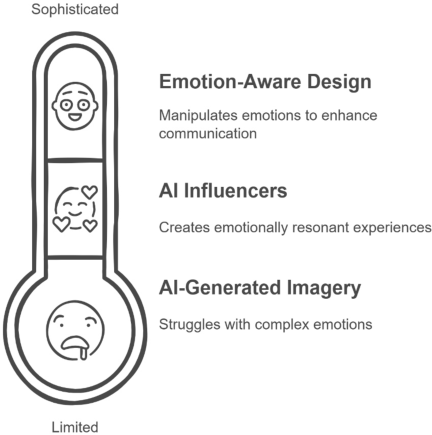
EMOTIONAL DESIGN IN VISUAL COMMUNICATION Emotion design is increasingly important in visual communication, especially with the rise of AI-generated content (Hou & Wang, 2024). Emotion-aware design, using the valence–arousal–dominance (VAD) paradigm, manipulates audience emotions to enhance communication effectiveness. Multimodal content, including text, pictures, music, and interactivity, can be orchestrated to influence emotional responses. AI influencers like Lil Miquela and Imma create emotionally resonant experiences, fostering brand loyalty. Emotion- aware design is seen as an ethical imperative, fostering empathy, trust, and engagement, but it can also spread misinformation if misused.
Digital Personas: Exploring the Impact of AI Influencers on Social Engagement 583
Physiological and Subjective Measures of Emotional Response Emotional responses to AI-generated stimuli are evaluated using various methodologies, including self-report questionnaires and physiological indicators. Virtual reality has proven effective in eliciting and evaluating emotions due to its immersive settings. EmojiGrid (Toet et al., 2019), a cost-effective and language-independent method, allows participants to chart emotional responses in virtual reality environments. Age-related variations in emotional responses are influenced more by content than immersion level. Integrating real-time physiological monitoring with survey data can aid in developing emotionally intelligent AI companions.
AI-Generated Imagery and Emotional Resonance AI can generate expressive imagery, exemplifying the sophistication of machine learning algorithms (Spee et al., 2023). However, research indicates significant deficiencies in AI’s ability to convey negative or ambiguous emotions, such as grief, fear, or complex irony. This disparity is evident in cross-cultural emotions, where the richness and complexity of emotions are not entirely encapsulated by computational models. The ethical implications of AI’s ability to exploit emotional responses, especially in delicate domains like mental health and social activism, are becoming increasingly alarming. AI influencers and designers must be mindful of both technical accuracy and the ethical and emotional aspects of user experience (Feng, Chen & Xie, 2024). As AI advances, developers will be tasked with programming emotional states, ensuring AI is motivated to interact as if it ‘cares,’ remains attuned to context, and enhances digital engagement.
Figure 1: AI’s emotional expression ranges from limited to sophisticated.
584 Ho and Chau
RESEARCH METHODS AND PROCEDURE The study technique aims to deliver a thorough, multi-faceted investigation of the impact of AI influencers on social engagement and brand confidence. The concept comprises two primary phases: a comprehensive content analysis of prominent AI influencers and user interaction research utilising physiological and self-reported metrics. This amalgamation of methodologies facilitates the acquisition of both breadth and depth of information, while providing opportunities for the cross-verification of qualitative and quantitative insights into the phenomena. Materials and Methods Research subjects Participants were recruited using a nonlinear process initiated by the distribution of the recruiting advertisement through Facebook, self-help websites and forums.
Stage 1: Content Analysis of Top AI Influencers The initial part of the study concentrates on a content analysis of prominent AI influencers currently active on social media sites. The rationale is to map the topography of an AI influencer’s performances, illustrating the visual, thematic, and strategic elements that characterise their digital presence and supra-performative relationships with audiences.
Sample Selection This report examines a sample of the top 24 AI thought leaders, identified based on follower numbers, engagement rate, and industry nominations and awards. We use these criteria to ensure the sample reflects both popularity and influence, including digital personalities who have achieved significant reach and effect in the social media domain. The follower count serves as a proxy for audience size, while the engagement rate indicates the intensity of interaction and the “signal strength”with followers. Industry recognition—evidenced by media coverage, awards, and corporate partnerships—further substantiates the influencers’ prominence in digital marketing and communication overall. The identification method entails examining public rankings, industry data, and platform analytics. The list of Instagram locations is derived from sources like Instagram’s public stats, influencer marketing databases, and analysis of digital trends. The diverse array of AI influencers across many industries, aesthetics, and locations aims to offer several viewpoints for data assessment, hence preventing overreactions to any certain demographic or market area.
Data Collection We compile a comprehensive dataset for each influencer, encompassing the following four primary dimensions: 1) Visual style of an influencer; 2) Thematic material and message; 3) Interaction patterns; 4) Brand partnerships and authenticity indicators. The influencer’s digital modus operandi is defined by their visual style, which encompasses colour palettes, layout standards, and typography selections. This element is crucial because visual communication is frequently the primary method of interaction between consumers and AI-synker ourdo womanas. Colour
Digital Personas: Exploring the Impact of AI Influencers on Social Engagement 585
psychology, the power dynamics between text and imagery, and visual branding and consistency within the context of postings are the primary focus of the assessment. Content and Theme are related to the subject matter that the influencer will discuss. This is relevant to the affective tone established by multimedia elements, hashtags, and captions, as well as the issues addressed and the storytelling techniques employed. The research aims to determine the extent to which influencers favour promotional material, advocacy, entertainment, or other hybrid forms, and to ascertain the relationship between these tendencies and broader developments in digital culture. Inverse-direct interaction patterns are assessed based on the quantity of postings, the tone of public involvement (e.g., formal, informal, amusing), and the types of public engagement (e.g., comments, story polls, live Q&A). The analysis encompasses the depth and quality of audience engagement, moving beyond simply numerical metrics to examine the emotional and relational dimensions of influencer-audience interactions. The last aspect comprises brand collaborations and indicators of legitimacy. The analysis documents the existence of explicit brand partnerships, sponsored content, and product placements, as well as subtler indicators of authenticity, including transparency regarding AI identity disclosure, sponsorship acknowledgement, and the articulation of personal and/or ethical values.
Content Analysis Employing a classification framework that facilitates the systematic categorisation of content features, the analytical process is both qualitative and quantitative. A close reading of posts, stories, and videos is conducted to identify recurring motifs, emotive appeals, and distinctive communication strategies in qualitative content analysis. This is further supported by quantitative metrics, including the frequency of specific visual elements, the proportion of posts featuring brand collaborations, and the engagement metrics associated with various categories of content. The coding scheme is developed iteratively, commencing with an open coding phase that identifies emergent themes and patterns (Table 1). These are subsequently refined into a structured codebook, which facilitates the consistent categorisation of content throughout the sample. Discrepancies are resolved through discussion and consensus, and inter-coder reliability is established by the independent categorisation of a subset of the data by multiple researchers. The analysis produces a comprehensive dataset that illustrates the strategic, thematic, and stylistic contours of AI influencer activity. The study can draw nuanced conclusions about how AI influencers construct their digital personas, engage with audiences, and navigate the demands of brand authenticity in a rapidly evolving media landscape by triangulating qualitative insights with quantitative metrics.
Music, dance and Music releases, dance pastel, futuristic pop culture
See above (already
Music, dance and
videos 22 Miquela Music releases, dance pop culture videos (Lil Miquela)
listed in the top 10)
23 FNMeka Rapper, futuristic,
Music, memes, Music drops, meme neon, cyberpunk tech Travel, fashion, engagement 24 Thalasya Indonesian, Travel vlogs, local
lifestyle engagement travel-themed, realistic CGI
Stage 2: User Interaction Study The second phase of the research transfers the focus from the content generated by AI influencers to the physiological and experiential responses of human users as they engage with this content. This phase is intended to investigate the cognitive and affective aspects of user engagement, utilising both biometric and self-reported measures to capture the complete range of participant experiences.
Participants’ Recruitment In order to guarantee a diverse demographic, 15 participants will be purposively sampled based on their age, gender, ethnicity, and digital literacy. Recruitment involves a combination of community outreach, advertising, and distribution lists at the university level, with the inclusion criteria designed to ensure that at least a minimal amount of social
588 Ho and Chau
media exposure is provided. The sample for the in-depth exploration of responses within the sample that is the focus of this phase is adequate, despite the small number of ant comparison subjects. This sample corresponds numerically to recommendations for small-group experimental and physiological research that requires a high level of data coverage. Participants are apprised of the study’s objectives and methodology, as well as the ethical constraints, including the protocol for physiological data collection. Following institutional and national protocols, informed consent is obtained, which includes the preservation of privacy, confidentiality, and the right to withdraw.
Research Methods In the first stage, the user interaction study is conducted after the digital content is presented to the top 10 AI influencers. We sample these stimuli to encompass visual styles, content topics, and engagement strategies in a wide spectrum of AI influencer activity, ensuring that participants encounter a diverse array of AI influencer activity. Participants interact with the content in a controlled laboratory setting or, as necessary, through a secure online system that is intended to replicate the immersive features of social media environments. The laboratory has access to biometric monitoring equipment, including heart rate monitors, which enables the surveillance of physiological arousal during the sessions in question. As more and more studies demonstrate their valid relationship with biometric measures, the use of physiological indicators is merited for affective and cognitive engagement, providing objective support to self-reported data. In addition to the physiological recording, participants completed a template questionnaire after each interaction turn. The survey includes open-ended questions that are designed to gather qualitative feedback on the user’s experience with the influencer, as well as Likert-type questions that pertain to emotive engagement, perceived authenticity, and motivation to engage with the influencer in the future. This combined design enhances the internal and external validity of the results by facilitating the triangulation of subjective and objective measurements.
Research Procedure The research procedure is comprised of numerous distinct phases. Participants are provided with biometric recording devices and receive instructions regarding the session’s structure upon entering the laboratory (or connecting to the online platform). Resting recordings are also recorded and utilised as a baseline for comparison. Subsequently, they are provided with a digital content feed that the AI influencers have carefully selected. In order to mitigate potential confounding effects of exposure time or sequence, all interaction sessions are standardised in terms of duration and content order. Continuous recording of heart rate data during each session enables us to identify the occurrence of any acute physiological response to specific content elements or interaction events. Individuals complete the post-session survey following each session, providing qualitative feedback on their cognitive and
Digital Personas: Exploring the Impact of AI Influencers on Social Engagement 589
affective states and rating their emotions and cognition. The questionnaire is provided in an electronic format to guarantee the efficient collection and storage of data for subsequent statistical control. After the experiment, you will be allowed to pose questions and/or provide additional information. Additionally, you will receive a debriefing. Data that is anonymised and protected will be securely stored and preserved following data protection regulations.
Data Analysis The significance of observed differences is determined by analysing physiological data based on baseline, stress, and recovery heart rate measurements using statistical tests. Patterns of physiological arousal that are associated with your subjective experience can be identified by combining such measures with self-reports of engagement and authenticity. Thematic analysis is conducted on open-ended feedback, with responses being coded for common themes, apparent emotive responses, and suggestions for refinement. The comprehensive view of user engagement with AI influencers is provided by the combination of quantitative and qualitative data, as well as several biometric measures. This view illustrates the affective and cognitive processes that underlie the interaction in the digital medium. The study design for this research is characterised by methodological robustness, ethical consideration, and sensitivity to the connection between AI influencer content, user experience, and physiological response. The research is well- positioned to inform how AI influencers contribute to the shaping of social engagement and credibility perceptions of brand authenticity in the contemporary digital and social media environment by integrating macro- level content analysis with micro-level studies of user interaction behaviour.
RESEARCH FINDINGS AI Influencer Content Analysis
The content analysis of the top 24 AI influencers provides a glimpse into a dynamic and heterogeneous landscape of digital personas, each of which is cogently engineered to enhance audience engagement, brand attractiveness, and cultural relevance. The cohort of featured influencers encompasses a variety of visual styles, content categories, and levels of interactivity, illustrating the significant gap between the original aspirations of their creators and the ever-evolving digital public. The visual aesthetic of these AI influencers is the most immediately apparent characteristic. Influencers such as Lu do Magalu, who employs a friendly font and a cheerful, inviting colour palette, and Lil Miquela, whose high-contrast streetwear-inspired visuals and stylised fonts evoke a sense of cool that is entirely of the moment and urban, demonstrate the importance of digital branding being cohesive, recognisable, and appealing. Others, such as Shudu Gramme and Imma, employ hyper- realistic or scarcely there aesthetics to establish themselves at the intersection of technology, fashion, and art. The selection of colour, layout, and font is not solely aesthetic; it is a semiotic system that each influencer intends to use to
590 Ho and Chau
communicate the relationship between their unique identity and values. For example, Aitana Lopez’s branding is affirmed as aspirational and relatable through the use of vibrant colours and a friendly animation style, whereas CB (Casas Bahia)’s cartoonish, retail brand stylisation underscores her marketing purpose as a corporate mascot and product advertiser.
The content and conceptual themes of the work are similarly diverse, ranging from the overtly commercial to the profoundly personal and socially conscious. Lifestyle advice and support for social causes are combined with themes of positivity, inspiration, and mental health, as promoted by influencers such as Kyra and Kenza Layli. Nobody Sausage and Clydeo, alternative characters, adopt a more playful demeanour, emphasising culinary blogging and dance. Influencers frequently alternate between advocacy, entertainment, and product promotion in order to engage a diverse audience. Thematic mixedness is the norm. Lil Miquela’s content is a trendsetter and a voice of social justice in our current era, as it seamlessly integrates fashion, music, activism, and personal storytelling. Similarly, Laila Blue’s ocean- centric CGI and environmental activism demonstrate the potential for AI influencers to serve as conduits for cause-driven messaging and education. Some influencers adopt a conversational, humorous tone, while others, such as Shudu Gramme and Noonoouri, adopt a more curated, aspirational tone. The content is calibrated with a specific emotional tone.
These influencers can also be identified by their interaction patterns, which are characterised by the frequency, tone, and modality of communication that are most appealing to their target audience. Forward-leaning influencers typically publish content in a variety of formats, including static posts, segments, live shows, and interactive stories, multiple times per week. For instance, Lu do Magalu, CV (Casas Bahia), maintains a high post frequency, sharing quips and customer stories that foster a sense of community and accessibility. Influencers such as Shudu Gramme and Blawko prioritise exclusivity and quality over quantity when it comes to editorial content. The level of engagement ranges from scandal-mongering and stirring up (as seen in Bermuda) to encouraging and instructive (as exemplified by Noonoouri and Kenza Layli). “There are numerous methods by which creators can interact directly with their audience, including comment sections, direct messages, live Q&As, and story polls,” Osofsky stated. He also mentioned that certain influencers, such as Kyra and Imma, prioritise community and authentic interaction. The affective component of these interactions is crucial, as influencers employ humour, relatability, and emotive narratives to either amuse, excite, elicit empathy, or establish trust.
The sample is characterised by brand partnerships and authenticity signals, which serve as an illustration of the commercial forces that motivate numerous AI influencer engagements. The tales expressly showcase IceNemi’s collaborations with Gucci, Prada, and UGG, as well as Imma’s with Coach and Fendi, which are seamlessly integrated into their character personae and visuals. A person’s credibility is established through a combination of transparency (such as the disclosure of their AI identity or sponsorship), consistency in narrative, and the narrating or embodying of personal or ethical values. For example, Aitana Lopez has a transparent
Digital Personas: Exploring the Impact of AI Influencers on Social Engagement 591
narrative and an audience that is consistently engaged with her community, which enables her to humanise her digital identity. Kenza Layli’s services, like many other strategies, are designed to establish credibility as an influencer in the business and lifestyle sectors. The probability of authenticity in these AI entities is also influenced by these minute signals, such as the juxtaposition of digital and physical realities, moral summons to action, and the reliance on personal narratives.
Although we observe a vast array of content posted by these 24 influencers, we also identify several dominant content coding patterns, both qualitatively and quantitatively. The strategic deployment of brand collaborations and the authenticity signals inform the commercial viability of AI influencer marketing, while visual consistency, thematic dualism, and interactivity are the primary contributors to audience appeal. The research also emphasises the importance of emotional design in the development of user engagement. It has been observed that influencers who effectively integrate aesthetic attractiveness, storytelling richness, and interactive capacity may foster greater audience loyalty and brand trust.
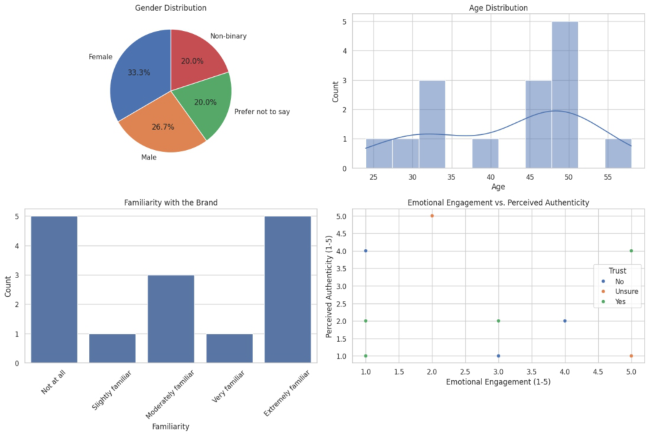
The 15 Participants’ Feedback on the Survey Questions The feedback obtained from the 15 participants who engaged with content from the top 10 AI influencers provides a fascinating perspective on the affective, cognitive, and behavioural aspects of user interactions with AI personae. The participants’ age, gender, and level of familiarity with AI influencers were quite diverse (Figure 2). Consequently, we can more effectively acquire the disparate perspectives of the respondents in response to the survey queries, as they collectively provide a comprehensive understanding of the user experience.
Figure 2: Participants’ background data.
592 Ho and Chau
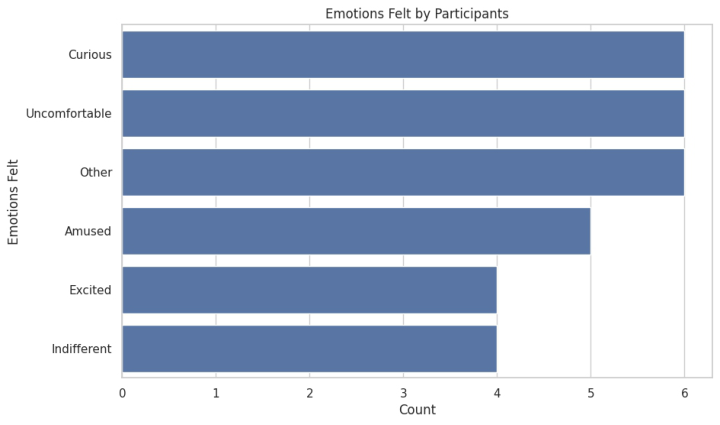
The emotional responses to the encounters varied from these positive sentiments to apathy and, on occasion, discomfort. The more subjects discussed feeling emotionally involved, visual design, interactivity, or content relevance, the more they expressed emotion intensity (Figures 3 & 4). For example, users who were exposed to visually innovative influencers such as Lil Miquela or Imma frequently reported increased engagement because of their fascination and enjoyment. This engagement was driven by the visual allure of novelty. Conversely, some individuals found it unappealing or uninteresting, particularly when the AI influencer’s messaging was overly salesy or unauthentic. A bimodal distribution was observed in the emotional involvement of the subjects, as measured in quantitative terms (Likert- scale ratings) (Figure 5). Some subjects reported high levels of emotional involvement (4 or 5), while others reported little involvement (1 or 2). Visual design, interactivity, and brand mentions were the most frequently identified content elements that influenced emotions. A small number of individuals cited the theme or voice/tone of the content as the most influential.
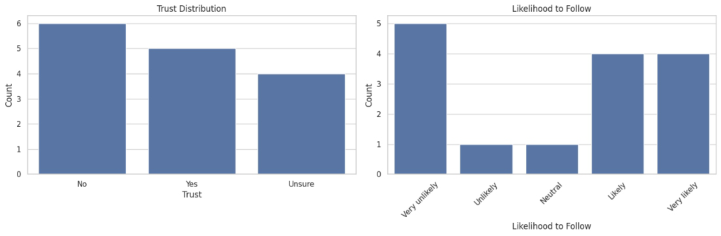
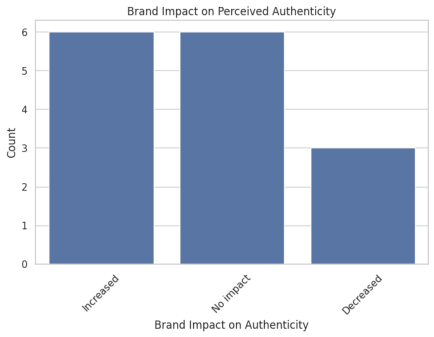
Figure 3: Participants’ trust distribution and likelihood to follow.Figure 4: Brand impact on authenticity.
The reactions of participants were significantly influenced by their perceptions of authenticity. The authenticity ratings were less variable and, on average, fell in the lower half of the spectrum, suggesting a significant
Digital Personas: Exploring the Impact of AI Influencers on Social Engagement 593
amount of negative sentiment towards AI influencers in general. Additionally, the information or recommendations provided by the influencers were not widely trusted, as numerous participants observed that the authenticity of the influencer was not improved or even diminished by the incorporation of brand collaborations. In open-ended responses, participants also expressed their appreciation for transparency and narrative coherence, although they were sceptical of the commercial intentions that underpin the majority of the news. However, a few of the participants acknowledged that influencers who were particularly transparent about their AI status or concentrated on cause-related messaging were more effective in establishing trust and authenticity.
Figure 5: Participants’ emotions evoked by AI influencers’ content.
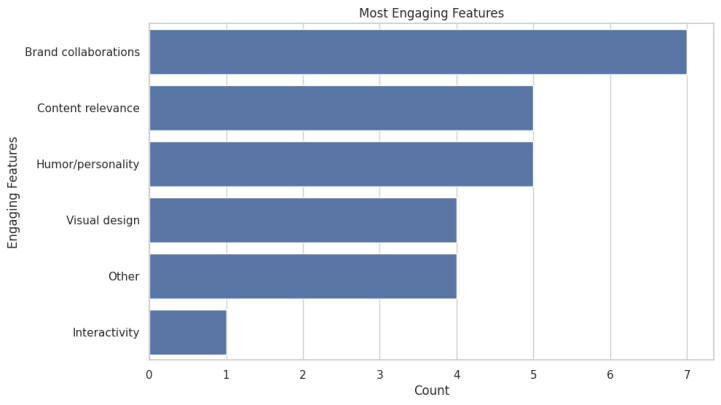
The response and interaction data indicated that visual presentation, humour/personality, and content relevancy were also significant factors in determining engagement (Figure 6). Respondents generally expressed a preference for influencers whose content was perceived as novel, relatable, or entertaining. Participants consistently identified numerous distinctions between AI and human content, such as AI’s predictability, absence of emotional subtlety, and occasionally more informative nature. Some individuals found the unconventional and innovative concept of AI influencers to be intriguing, while others failed to recognise the human emotion and improvisation.
Open-ended responses provided a more detailed account, repeatedly praising the AI Influencers’ aesthetic allure and novelty while also criticising their perceived inauthenticity and lack of emotion. Some participants desired more interactive options and a more accurate representation of the AI nature of their advisors. The participants were aware of the potential of AI-based influencers to transform the manner in which digital engagement
594 Ho and Chau
is conducted. They approached the situation from a critical perspective, considering the ethical implications and limitations of the AI personalities.
Figure 6: Most engaging features in AI influencers’ content.
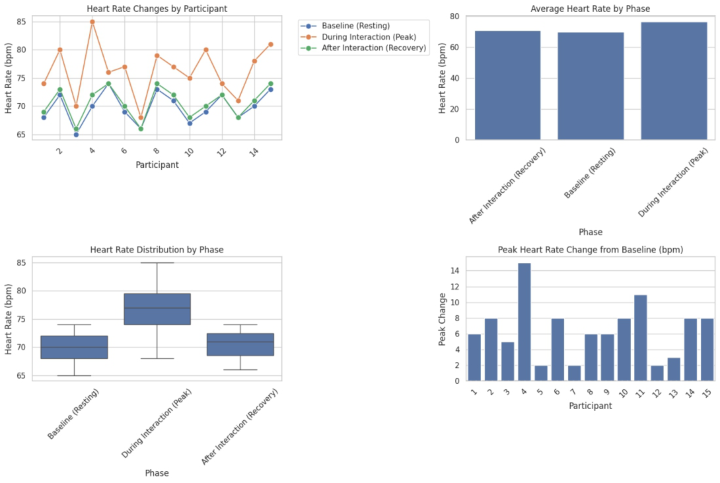
Responses of the 15 Participants’ Feedback on Quantitative Physiological Measurements The objective counterpart to user-reported survey responses is the physiological data that is collected during the user interaction sessions, which provides additional granularity regarding the affective power of the AI influencer content. In order to evaluate heart rate, three time points were implemented: baseline (calm), interaction (peak), and post-interaction (recovery) (Figure 7). This data analysis yields several intriguing findings. The participants’ mean basal heart rate was approximately 70 bpm, which increased to 76.7 bpm during the session. On average, they exhibited a titillating increase in heart rate when engaging with AI influencer content. The subjective reports of these participants, in which they rated their involvement as high, are corroborated by the psychophysiological arousal level, which suggests a greater degree of emotive or cognitive involvement. Significantly, we discovered that participants were more inclined to exhibit a higher 1HR when they engaged with content that was particularly visually engaging or interactive (e.g., the immersive storytelling of Imma or the dance videos of Nobody Sausage). This suggests that there may be specific properties of media that are more effective in eliciting physiological responses.
A subgroup of participants demonstrated a relatively low change in HR, which corresponded to indifferent or low affective involvement in the questionnaires. The interpretation of the results is substantiated by the correspondence between subjective and objective metrics, which
Digital Personas: Exploring the Impact of AI Influencers on Social Engagement 595
demonstrates the capacity of biometric information to simulate the subtle nuances of user experience. In contrast, participants who emitted exhilaration or amusement experienced significant heart rate increases, with the heart rates of several participants surpassing their baseline heart rates by 10 bpm or more. Typically, these senstabolic responses were linked to emotional content, high interactivity, or novelty. In contrast, the recovery (measured post stimulus presentation) indicated that heart rates tended to return to a level that was similar to the baseline, indicating that the stimulus’s arousal was not sustained. This pattern is consistent with previous media- induced physiological response paradigms, which demonstrate that brief presentations of emotionally evocative stimuli induce transient yet detectable changes in ANS activity. A comprehensive understanding of the factors that influence users’ interactions with AI influencers can be achieved by combining physical and subjective indicators. The results also suggest that the emotional and physiological responses to AI-generated content are not inauthentic; however, the amplitude and duration of these responses are influenced by characteristics related to perceived authenticity, interactivity, and visual design. The individuals who experienced arousal in both subjective and physiological capacities were more likely to have positive attitudes towards the content, whereas those whose pulse rates were least aroused tended to be the most negative or neutral in their responses.
Figure 7: Responses of the 15 participants’ feedback on quantitative physiological measurements.
596 Ho and Chau
DISCUSSION
This study underscores the essential significance of emotional intelligence in AI-driven communication tactics to foster innovation, accountability, and authentic engagement. The content analysis of the 24 leading influencers indicates that these digital entities are not merely visually attractive but also sophisticated communicators effectively employing visual design elements, thematic messages, and interaction patterns to evoke emotional experiences and enhance brand resonance. Visual aesthetics, including colour palette, layout, and font selection, are a foundational element of an influencer’s brand and emotional appeal. For instance, influencers like Lil Miquela and Imma utilise high-contrast visuals and minimalist aesthetics, respectively, to create distinctive, emotionally compelling personas that appeal to diverse audience demographics. This outcome aligns with the overarching neuropsychological hypothesis of emotional design, which posits that visual modalities of expression significantly influence affective mediation and information processing.
The connection between visual design and emotional reaction is influenced by brand partnership and authenticity indicators. While brand collaborations are essential for financial viability, their impact on perceived authenticity remains unclear. Survey responses from participants suggested that the explicit usage of brands can occasionally erode trust, demonstrating that audiences remain sceptical of commercial motives when plain communication lacks transparency and coherence. This contradiction highlights the necessity for AI influencers to possess emotional intelligence, encompassing not only their look but also the ethical and emotional ramifications of communication. Emotional intelligence pertains to the capacity to anticipate, interpret, and respond to audience emotions in a way that fosters trust and sustained involvement. The results suggest that AI influencers who integrate signs of authenticity, such as openly acknowledging their AI nature or adopting a cause-driven perspective, may be more effective in alleviating scepticism and fostering connections.
Moreover, the physiological measures during user contact provide compelling proof of the emotional impact of the AI influencer material. The notable elevations in heart rate during interactions with visually stimulating and engaging stimuli suggest that AI-generated personalities might provoke genuine physiological arousal, serving as a proxy for emotional involvement. This observation aligns with the self-reported survey findings; specifically, those who indicated higher levels of emotional involvement had a more significant physiological reaction. However, variations in physiological arousal among individuals indicate that emotion does not manifest evenly and is influenced by individual differences and content features. This nuanced approach underscores the significance of customised and adaptable communication tactics in the development of AI influencers.
The aforementioned facts necessitate a novel approach to digital communication techniques that transcends traditional reach and frequency, prioritising emotional resonance and ethical authenticity. Incorporating emotional intelligence into the design of AI influencers presents an
Digital Personas: Exploring the Impact of AI Influencers on Social Engagement 597
opportunity for creativity and accountability, filtering through the vitriolic noise of social media to develop digital personas that are not only visually appealing but also emotionally and ethically aligned with their audiences.
Synthesis and Implications The modern-day AI influencer landscape is intricately depicted by the content analysis, survey results, and physiological data. Visual coherence, thematic hybridity, interactive engagement, brand collaborations, and signals to authenticity are all elements that the most successful AI influencers incorporate. This type of content establishes an emotional bond between the influencer and the viewer, as well as between the viewer and the influencing factor. This connection drives both subjective and objective indicators of audience engagement. However, as we will argue, the extent and durability of the engagement are contingent upon the intrinsic veracity and emotional power of the material. AI influencers seem to evoke an uncanny valley of both curiosity and apprehension in their users. However, second-life residents are cognisant of the limitations imposed on these electronic versions, which are limited in terms of emotional complexity and authenticity. Despite this, they derive creative delight, innovation, and enjoyment from their virtual identities. The physiological data presented herein suggest that AI- generated content has the potential to elicit genuine affective responses, while also emphasising the importance of narrative strategy and content design in capturing the attention of viewers. Lastly, the SCMN emphasises the significance of narrative richness, emotive intelligence, and transparency in AI-based communication strategies. The greater efficacy of influencers’ practices to induce engagement and brand trust will be correlated with the success of their creators in reconciling commercial pressures and the requirements of authenticity, creativity, and ethical responsibility as AI- generated influencers flourish. Consequently, the results of this study provide a critical foundation for future research and strategy in the rapidly developing field of AI influencer marketing.
CONCLUSION
This report offers a comprehensive analysis of the present landscape of AI influencers, examining their visual communication tactics, content themes, interaction profiles, and the consequences for user engagement, emotional reactions, and brand legitimacy. This study employed a two-step research design: a detailed content analysis of the top 24 AI influencers, followed by an empirical user interaction study with fifteen people, uncovering the relationships between technological advancement and the human aspects of digital communication.
Upon doing a content analysis of the 24 AI influencers, a remarkable diversity of visual design approaches emerged: warm, inviting colour palettes, shown by Lu do Magalu, and pleasant, approachable typography that contrasts with stark, high-fashion imagery, as seen with Lil Miquela. The visual identity of each influencer is meticulously crafted, not only for aesthetic appeal but as a strategic endeavour to evoke emotional responses and
598 Ho and Chau
establish recognisability, especially within a saturated online market. The colour palettes, layout norms, and typography choices function on a semiotic level, providing insights into the influencer’s personality, values, and intended audience. The whimsical and cartoonish branding of CB (Casas Bahia) and the vibrant animations of Nobody Sausage are designed to evoke joy and relatability. The minimalistic pastel aesthetic of Imma and the couture- inspired, doll-like appearance of Noonoouri aim to convey sophistication, creativity, and a touch of fantasy.
The theme material of these digital personas is varied, encompassing conventional commercial marketing, brand advocacy, personal narratives, societal issues, and educational significance. Influencers such as Kyra and Kenza Layli endorse constructive ideals, including mental health, social concerns, and overall positivism, aspiring to be not only marketers but also advocates and role models. Several individuals, such as Clydeo and Laila Blue, have utilised internet platforms for entertainment, culinary blogging, and environmental campaigning, respectively. This thematic hybridity mirrors a trend in the internet realm where consumers, conditioned by contemporary expectations, want not just ‘things’ and ‘entertainment’ but also ‘authenticity,’ ‘ethical alignment,’ and ‘emotional connection’ with those they follow.
The interaction patterns among AI influencers reveal a nuanced understanding of audience engagement. The regular publishing of diverse formats — static photographs, short-form movies, live events, interactive tales — is a common practice for many, particularly shops such as Lu do Magalu and CB (Casas Bahia), who require a substantial volume of material to maintain visibility and cultivate community engagement. Additionally, there are others, such as Shudu Gramme and Blawko, that have a more selective editorial strategy for their material, emphasising quality and exclusivity. The activities encompass a spectrum from scandal- seeking provocations reminiscent of Bermuda to the helpful, instructive, and community-enhancing efforts of Noonoouri and Kyra. Users may engage directly by writing comments, sending direct messages, responding to surveys, participating in Q&A sessions, and certain influencers concentrate on fostering community through interaction and discourse. Brand collaborations and indicators of authenticity are ubiquitous, reflecting the financial motivations that underpin much of the AI influencer economy. and collaborations with big brands — like Lil Miquela’s campaigns with Gucci and UGG, or Imma’s work with Coach and Fendi — feel, for the most part, naturally integrated into the ‘influencers’ content (#ad #spon), if not part of the actual narrative. Authenticity is established by a combination of transparency, narrative, and the articulation of personal or ethical convictions. Influencers who disclose or promote altruistic causes (e.g., Aitana Lopez and Kenza Layli) are often more successful in establishing trust with their audiences.
The user research, including fifteen participants, corroborated empirical findings on the emotional and cognitive impacts of AI influencer material. Emotional reactions varied; some people thought it was interesting or funny, while others didn’t feel anything or even felt awkward. The levels
Digital Personas: Exploring the Impact of AI Influencers on Social Engagement 599
of engagement exhibited a notable bimodal distribution, with certain participants experiencing heightened physiological and emotional arousal, especially in response to visually vibrant or interactive content, while others remained unaroused during the experience. The pairing of visual design, interactivity and relevance to content appeared to have the greatest impact on how emotions were formed, which is also in line with the content analysis results. Authenticity continued to be a concern, but skepticism was expressed when considering the commercial motivations of the AI influencers and how real their stories were perceived to be by participants. Brand collaborations were perceived ambiguously, simultaneously enhancing and undermining their authenticity. Objective data (reaction time) and physiological metrics (heart rate measurement) supplemented the subjective responses to the questionnaire. The majority of the individuals showed a mild to moderate heart rate elevation, suggesting a real physiological arousal and engagement during exposure to AI influencer-related content. This response was modulated by the content type, with greater effects for more visually or emotionally engaging material. So the fact that the engagement of the machine and the engagement of the human correlated suggests that this effect isn’t just an artefact of the selection from the machine-generated training set, and that the machine learning process isn’t simply spitting back out the models that were fed into it.
This work has significant ramifications for digital communication. First, the research shows that women’s AI influencers can generate levels of engagement and brand resonance that are as high, and sometimes higher than, actual humans when designed with emotional intelligence and aesthetic awareness. This article argues that through the strategic work of visual design, thematic hybridity, and interactivity, these digital personas can overcome the constraints of the artificial and establish affectively rich interactions with viewers. But the research also points to the continued significance of integrity and ethical transparency. Today’s digital audiences are more savvy when it comes to what they watch and more capable of identifying and punishing inauthentic or overly commercial behaviour. This, for brands and marketers, is a reminder that commerce must be counterpoised with the fostering of trust and narrative coherence, and ethical alignment.
From a brand strategy viewpoint, the study indicates that effective AI influencer campaign messages should not only favour reach and frequency, but also emotional appeals, storytelling and authenticity cues. When considering partnering with an AI influencer, brands should look for #2 An AI influencer whose visual and thematic identity fits their values and target audience and who has shown a propensity for transparency and ethical advocacy. The incorporation of emotion-aware design and biometric feedback devices provides exciting potential for personalising content and enhancing the user experience, especially within immersive contexts such as virtual reality. In terms of emotionally design-centric elements, the empirical results support the notion that visual and rhetorical aspects are most influential in driving affective engagement and brand attitude. Designers and producers can consider exploring a variety of aesthetic styles, thematic
600 Ho and Chau
storylines and interactive experiences while keeping aside the affective and ethical straits of their audience. The effect of AI influencers to elicit authentic emotions, based on both subjective and objective measures, is a testament to the future of emotionally intelligent design in digital communication and marketing.
In summary, this study adds to the expanding literature on AI in digital culture, providing theoretical and practical implications for the design, deployment and reception of AI influencers. The research underscores the interplay among visual communication, emotions, and brand authenticity, providing a framework for innovation in digital marketing while emphasising the necessity of incorporating emotional intelligence, authenticity, and ethical responsibility into the future of AI-driven communication transformations.
ACKNOWLEDGMENT
In acknowledgement of this study, the author expresses gratitude to the participants who generously contributed their time and insights. We also extend our thanks to the research team and collaborators for their invaluable support and guidance throughout the project. Finally, we appreciate the institutions and organisations that facilitated participant recruitment and provided resources essential for the successful completion research.
REFERENCES
Clarke, V., & Braun, V. (2014). Thematic analysis. In Encyclopedia of critical psychology (pp. 1947–1952). Springer, New York, NY. Feng, Y., Chen, H., & Xie, Q. (2024). AI influencers in advertising: The role of AI
influencer-related attributes in shaping consumer attitudes, consumer trust, and perceived influencer–product fit. Journal of Interactive Advertising, 24(1), 26–47. Ho, A. G. (2013). The new direction of typography from emotional perspectives.
Proceedings of the 11th annual conference of Asia Digital Art and Design Association. Seoul. South Korea: Asia Digital Art and Design Association. Ho, A. G. (2015). Action learning with emotional component in typographic design.
Proceedings of International Design Conference of KSDS and ADADA with Cumulus, 2015 International Design Congress. Gwangju, Korea. Ho, A. G. (2018). Humanistic Teaching Pedagogy in Typographic Communication Design. In: Ho A. (eds) Advances in Communication of Design. AHFE 2017. Advances in Intelligent Systems and Computing, vol. 609. Springer, Cham. https:// doi.org/10.1007/978-3-319-60477-0_1. Hou, G., & Wang, X. (2024). Emotional valence and arousal: The impact of AI-
generated image stimuli on design creativity. International Journal of Technology and Design Education, 1–20. Keough, N. (2008). Sustaining authentic human experience in community. New Formations, (64), 65. Oshadi Karunanayaka, K. A. Y. R., Jahankhani, H., El-Deeb, S., Will Arachchige,
I. S., & Amin Metwally Hussien, O. A. (2024). Artificial Intelligence in Digital Marketing: The Ethical Implications of Digital Influence on Markets and Consumer. In Market Grooming: The Dark Side of AI Marketing (pp. 173–197). Emerald Publishing Limited.
Digital Personas: Exploring the Impact of AI Influencers on Social Engagement 601
Spee, B. T., Mikuni, J., Leder, H., Scharnowski, F., Pelowski, M., & Steyrl, D.
(2023). Machine learning revealed symbolism, emotionality, and imaginativeness as primary predictors of creativity evaluations of western art paintings. Scientific Reports, 13(1), 12966. Toet, A., Heijn, F., Brouwer, A. M., Mioch, T., & van Erp, J. B. (2019, October).
The EmojiGrid as an immersive self-report tool for the affective assessment of 360 VR videos. In International Conference on Virtual Reality and Augmented Reality (pp. 330–335). Cham: Springer International Publishing.
LISTED IN THE AHFE DIGITAL BOOKSTORE CATALOGUE
Explore the complete digital volume
Human Interaction and Emerging Technologies (IHIET 2025)
Read this individual research paper free through the original publisher, or explore the full digital proceedings book.
ISBN 978-1-964867-73-1
Explore this ISBN in the AHFE Bookstore ↗Listed in the July 2026 bookstore catalogue; search by ISBN to confirm current availability · Digital book purchase optional