Sihan Zhao, Xunyi Zhang (2026). A Study on the Impact of a Generative AI-Assisted Artifact Restoration Experience System on the Public's Sense of Agency, Trust, and Information Verification Behaviors. In: Human Factors in Communication of Design. AHFE Open Access, vol. 216, pp. 311–320. https://doi.org/10.54941/ahfe1007647
Publisher statistics will load when you open Metrics.
AHFE OPEN ACCESS OPEN ACCESS CONFERENCE PROCEEDINGS PAPER
A Study on the Impact of a Generative AI-Assisted Artifact Restoration Experience System on the Public's Sense of Agency, Trust, and Information Verification Behaviors
Current museum artifact displays predominantly adopt a static, authoritative, unilinear approach, positioning audiences in a state of passive reception, lacking a sense of participation and agency. Artifacts themselves often suffer from missing information and academic disputes due to historical reasons. The development of Generative Artificial Intelligence (Generative AI) offers new possibilities for the virtual restoration and dynamic presentation of cultural heritage. This study proposes and tests a human-computer collaborative interactive artifact restoration experience system (Manovich & Arielli, 2024), aiming to transform the audience's "static visitation" into "active learning." Through a comparative experiment, the study examines the effects of traditional single-result presentation versus multi-result presentation assisted by Generative AI on the audience's sense of agency, cognitive load, information verification behavior, and trust. Preliminary results indicate that while the multiple possibilities generated by AI increase the audience's cognitive load, they significantly enhance their active verification behavior and sense of participation, while reducing blind trust in a single authoritative result. This study provides empirical evidence for understanding the cognitive communication pathways of cultural heritage in the era of Generative AI and offers a practical framework of "collaborative re-creation" for museum interaction design.
As core cultural and educational institutions, museums have long relied on a singular, static, and authoritative model for knowledge dissemination and display. Audiences passively receive conclusive information through display cases and labels, finding it difficult to access the professional chain involved in artifact research, especially the restoration process. Wang Yue (2025) further corroborates this phenomenon, noting that if exhibitions lack structural connections, audiences will struggle to fully grasp the conveyed information; if auxiliary exhibits fail to effectively interpret
312 Zhao and Zhang the main exhibits, audiences cannot obtain integrated information about the artifacts or understand the artistic relationships between them. This one-way knowledge transmission model diminishes the audience’s sense of choice and participation. Specifically in artifact restoration, traditional exhibitions only present the final restored outcome while omitting the multiple hypotheses and academic debates inherent in the restoration process—a typical manifestation of the aforementioned problem. This model isolates museum audiences from the professional chain, weakening their sense of choice and engagement.With the increasing application of Artificial Intelligence (AI) in cultural heritage—from virtual restoration and pattern completion to dynamic monitoring—technology is reshaping the expression of artifact restoration. In particular, Generative AI, characterized by its ability to generate multiple schemes and enable interactive participation, makes it possible to present “the unknown aspects of artifacts in the form of multiple possibilities” (Manovich, 2024). This raises a key question: When museums open up the restoration process as an interactive system for public participation and verification, how will the public’s learning methods, mechanisms of trust formation, and information verification behaviors evolve?
Based on this, this study proposes a human-computer collaborative artifact restoration experience framework oriented towards public participation (Mazzanti, Ferracani, Bertini, & Principi, 2025). This framework aims to make the uncertainty inherent in the restoration process explicit, guiding audiences from “passive reception” to “active learning” through generating, comparing, and verifying, thereby enhancing their sense of agency and participation, and observing the subsequent impact on trust and information verification behavior.
Literature Review and Theoretical Framework Current museums predominantly present a single result certified by experts. While convenient for rapid dissemination, this obscures the most critical aspect of restoration: judgment and choice under conditions of uncertainty (Spennemann, 2026). The proliferation of Generative AI exacerbates this drawback: due to the rapid development of the internet and AIGC, the difficulty of information retrieval has decreased, and information dissemination has become more widespread. Multiple parties related to artifacts, such as expert teams, collectors, museums, and auction houses, often present differing versions and narratives, further intensifying audience skepticism towards a single, evidence-lacking conclusion presented in museums. Therefore, restoration communication needs to shift from presenting conclusions to revealing the logic of knowledge generation, allowing audiences to understand how evidence is used and where inferences occur. The pathway to realizing this shift lies in presenting multiple possibilities. In the traditional model, audiences passively accept the displayed content. When multiple restoration versions are juxtaposed, a cognitive shift occurs in the audience: firstly, they realize that restoration has multiple possibilities, reducing blind adherence to a single conclusion;
A Study on the Impact of a Generative AI-Assisted Artifact Restoration Experience System 313 secondly, they spontaneously question the basis for version selection, the sources of evidence, and the inferential components, thereby driving active efforts to consult evidence, compare information, and even seek verification from professionals (İslam, Fahriye, Gökmen, Haijun, Rustam, Didem, İpek, & Zehra, 2025). This facilitates a cognitive leap from “passive trust” to “active verification.”
METHODOLOGY
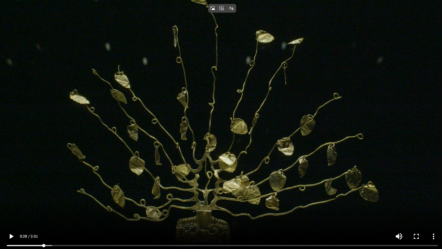
This study employs a comparative experiment method, using the presentation method of artifact restoration results as the independent variable, and the differences in the audience’s sense of agency, information verification behavior, trust, cognitive load, emotional experience, and aesthetic cognition as dependent variables. The focus is on examining the impact of two different artifact restoration presentation methods on the audience. Participants were randomly divided into two groups: the control group viewed a standard digital restoration video of artifacts from the collection of the Liaoning Provincial Museum, while the experimental group interacted with multiple possible restoration versions generated through a Generative AI-assisted system. Subsequently, a questionnaire survey was conducted to collect feedback from both groups on aspects such as sense of participation, level of trust, active verification behavior, cognitive burden, and emotional experience, in order to test the actual impact of the Generative AI-assisted presentation method.
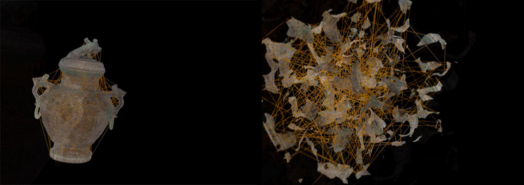
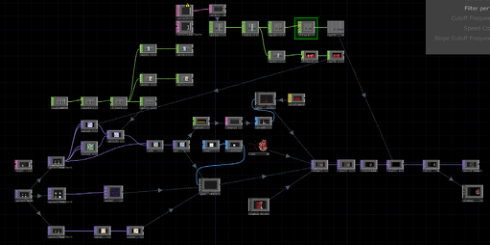
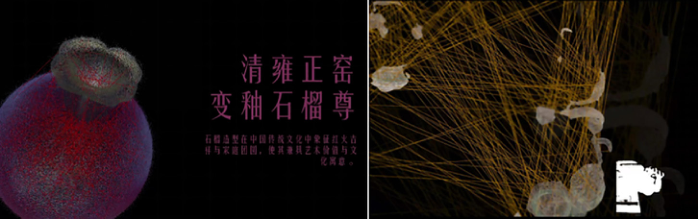
Figure 1: Standard digital restoration video of artifacts from the Liaoning Provincial Museum collection.Figure 2: Diagram of generative AI artifact fragmentation and restoration.Figure 3: Generative AI re-creation interactive workflow.Figure 4: Experimental interactive artifact restoration experience model.
A total of 208 valid participants were recruited for this study. All participants volunteered and were randomly assigned to either the control group or the experimental group. The demographic characteristics of the participants are as follows:
Table 1: Demographic characteristics of participants.
Table available in the original PDF paper.
Remarks
Survey Dimension
Options/ Categories
Count (N)
Percentage (%)
[26–35] 92 44.23%
[36–50] 44 21.15%
Age Group [18–25] 72 34.62% The sample is primarily composed of young and middle-aged adults, who constitute the main demographic visiting museums and have a higher acceptance of new technologies, making them suitable for studying Generative AI interactive experiences.
[50+] 0 0%
53 25.48%
Professional/ Academic Background
[Science/ Engineering/CS] [Design] 46 22.12%
[Humanities/Arts] 73 35.1% The sample covers multiple fields, aiding in examining cognitive differences across various knowledge backgrounds.
[Other] 36 17.31%
(Continued)
Table 1: Continued.
Table available in the original PDF paper.
Remarks
Survey Dimension
Options/ Categories
Count (N)
Percentage (%)
Museum Visit Frequency
[1–2 times per year] [Once per quarter] 78 37.5%
[Once per month] 106 50.96%
8 3.85% The sample consists mainly of frequent visitors, ensuring participants have a basic understanding of museum display methods.
[Almost never] 16 7.69%
[Use occasionally] 176 84.62%
Generative AI Usage Experience [Never used] 20 9.62%
[Use frequently] 12 5.77% The vast majority of participants have some exposure experience, reducing cognitive load caused by unfamiliarity with the technology.
This study employed a questionnaire method for data collection. The questionnaire primarily gathered statistics on the sense of agency, interactive experience, and cognitive and behavioral responses. Descriptive statistics, difference tests, and correlation analyses were conducted using Likert five-point scales to explore the relationships among variables such as sense of agency, information verification behavior, trust, and emotional experience.
RESULTS
The effective sample size for this study was 208 participants, with demographic characteristics as described in Section 3 (Methodology). The sample composition ensured that participants possessed a basic understanding of both museum display methods and AI technology, making them suitable for the experimental operations of this study.
Table 2: Summary of sense of agency and interaction experience data.
Table available in the original PDF paper.
Measurement Dimension
Options/Categories Item Content Agree (%)
Neutral (%)
Disagree (%)
35.58 26.92 37.50
Sense of Participation & Control
Controlling the restoration process through the physical device made me feel like a participant in the restoration decision, not just an observer.
33.18 29.33 37.50
Perceived Consistency of Operation Feedback
The feedback from the physical operations was logically consistent with the fragmentation/restoration effects of the artifact on the screen.
35.09 27.40 37.50
Comprehension of Operation
I could clearly understand how my actions influenced the AI-generated results.
(Continued)
Table 2: Continued.
Table available in the original PDF paper.
Measurement Dimension
Options/Categories Item Content Agree (%)
Neutral (%)
Disagree (%)
37.98 21.15 40.86
Perceived System Usability
I was able to quickly get started and understand how to use this interactive device.
36.54 27.40 36.05
The system responded to my operations very promptly, with no noticeable lag.
35.09 28.85 36.06
The device’s interface guidance and physical prompts were very clear, requiring no additional instructions.
Cross-analysis of agency-related items revealed a positive correlation between operational comprehension and sense of participation (Table 1): among participants who understood the causal relationship between their actions and AI-generated outcomes, the proportion identifying as “participants” was significantly higher. Similarly, perceived consistency of operational feedback was also significantly correlated with participation. This suggests that the generation of a sense of agency depends on two key conditions: clear causal understanding and consistent feedback mapping.
Table 3: Summary of cognitive and behavioral response data.
Table available in the original PDF paper.
Measurement Dimension
Item Content Agree (%)
Neutral (%)
Disagree (%)
37.02 22.12 40.86
Stimulation of Thought by Multiple Possibilities
Seeing the multiple “possibility” restoration schemes generated by AI prompted me to think about the various possible original states of the artifact.
36.54 29.33 34.13
Stimulation of Information Verification Behavior
This kind of uncertain restoration result stimulated my interest in researching the historical background of the artifact more than a single “standard answer” would.
35.46 28.37 33.17
During the interaction, I actively compared the AI-generated effects with the image of the artifact I had in my mind.
39.91 24.04 36.06
I believe the speculative restoration schemes generated by AI have reference value in terms of artistic and historical logic.
Trust and Evaluation of AI-Generated Content
33.65 29.33 37.02
Even knowing it was generated by AI, I still felt this experience enhanced my aesthetic understanding of the artifacts in the Liaoning Provincial Museum collection.
36.54 26.92 36.54
I am more inclined to trust the “single version restored by experts” rather than the “multiple speculative versions provided by AI.” (Reverse coded)
(Continued)
Table 3: Continued.
Table available in the original PDF paper.
Measurement Dimension
Item Content Agree (%)
Neutral (%)
Disagree (%)
34.61 29.33 36.05
Emotional Experience
The moment the artifact “shattered” in the digital simulation evoked strong emotions in me (e.g., regret, shock).
34.14 27.88 37.98
The process of “restoring” the shattered artifact with my own hands gave me a sense of psychological achievement or healing.
38.95 29.81 31.25
Aesthetic Perception
The device’s visual effects (implemented with TouchDesigner) allowed me to appreciate the unique material aesthetics of the Liaoning Provincial Museum artifacts.
Analysis of Table 2 revealed several significant correlations. Sense of participation was positively associated with information verification motivation. Comprehension of operation correlated with positive evaluation of AI content, while feedback consistency was linked to emotional resonance. Emotional fluctuation and sense of achievement were associated with stimulated thought and aesthetic cognition. In contrast, trust in expert authority showed a negative correlation with information verification behavior. These findings suggest that different dimensions of agency promote verification behavior, positive evaluation, and emotional engagement, while reliance on expert authority may inhibit verification. Thematic analysis of interviews with participants in the experimental group identified four core themes: (1) Cognitive Conflict and Exploratory Motivation: Multiple possibilities triggered cognitive conflict, which in turn stimulated the audience’s active desire to explore; (2) Learning Path from Operation to Understanding: Through the trial-and-error process of physical interaction, the audience gradually understood the logic of AI generation; (3) Establishment of Emotional Connection: The sense of participation from “restoring with one’s own hands” led the audience to develop emotional attachment to the artifact; (4) Ambivalent Attitude towards AI Authority: While acknowledging the data foundation of AI, participants still tended to believe that expert judgment possessed more “human touch” and credibility.
DISCUSSION
The study found that when audiences are confronted with multiple possible restoration results, their trust in a single conclusion decreases. However, this “distrust” did not lead to passive avoidance; instead, it stimulated more active verification behavior. This seemingly contradictory behavior reveals that when facing uncertainty, cognitive evaluation and behavioral responses can operate relatively independently. Concurrently, the experimental group exhibited significantly higher cognitive load, which should not be simply attributed to a design flaw, but rather viewed as a necessary cost for deep learning. Traditional communication methods
318 Zhao and Zhang allow audiences to acquire knowledge easily through low-load design, but this “ease” often comes at the expense of depth of understanding. The high load induced by multiple possibilities is essentially the intrinsic load inherent in information complexity; it acts as a switch in cognitive processing, prompting audiences to shift from shallow reception to deep processing. Notably, the experimental group also demonstrated a stronger sense of agency and participation, reflecting a deeper shift in the source of the sense of agency: from superficial interface operation to deep knowledge learning. In the traditional model, the audience is a passive receiver of knowledge, whereas the presentation of multiple possibilities places the audience at a “knowledge judgment node”—when audiences need to actively integrate information to judge restoration outcomes, they are essentially participating in the learning process of historical knowledge. In summary, these three findings collectively point to a core conclusion: by breaking the illusion of authority, activating the positive aspect of cognitive load, and reconstructing the source of the sense of agency, the presentation of multiple possibilities via Generative AI drives a fundamental shift in audiences from “passive reception” to “active learning.”
The findings of this study provide empirical evidence for understanding the transformation of the museum’s role in the era of Generative AI. Spennemann (2026) predicted that the role of museums in the AI era would be more important than ever. This study suggests that this importance lies not in technology reinforcing traditional functions, but in a fundamental qualitative change in role positioning. When AI presents multiple restoration possibilities, the audience’s information verification behavior significantly increases. This indicates that AI does not replace the museum’s knowledge authority, but rather prompts the museum to shift from providing answers to guiding thinking. In this new role, the artifacts themselves do not depreciate, but their presentation undergoes a profound transformation—they are no longer static exhibits to be passively accepted, but cognitive anchors that stimulate active inquiry. The behavior of audiences actively consulting literature and comparing evidence after encountering multiple possibilities precisely fulfills the museum’s new mission in the AI era: to stimulate thinking, not to end it.
Based on the above understanding, this study proposes a “collaborative re-creation” framework for museum interaction design, which uses Generative AI to create a participatory knowledge learning space while respecting historical facts (Wang et al., 2025). The framework integrates three progressive principles: evidence-based generation (using archaeological data to define AI boundaries), visible evidence (transparently presenting sources to build genuine trust), and guiding audiences from seeing multiplicity to learning judgment—developing skills to evaluate evidence and understand different interpretations, thereby transforming brief exhibition visits into transferable dialectical thinking abilities.
CONCLUSION
This controlled experiment found that a Generative AI-assisted artifact restoration system, by presenting multiple possibilities, increased audience cognitive load but significantly enhanced participation, active information verification, and reduced blind trust in authoritative conclusions compared to traditional single-result displays. The study contributes theoretically by providing empirical evidence for human-computer collaborative cognition in cultural heritage, extending uncertainty communication theory, and expanding the concept of agency from technical operation to cognitive participation. Practically, it proposes a “collaborative re-creation” design framework encompassing evidence-based generation, transparent evidence, and cognitive guidance, along with a “Understand-Analyze-Create” participation model. Despite limitations (sample representativeness, lack of longitudinal tracking, ecological validity), future research should investigate varied AI generation strategies, conduct longitudinal and field studies across diverse heritage contexts, and address human-AI co-creation and ethical considerations to advance collaboration from “possibility presentation” to “collaborative creation.”
In summary, this study provides empirical evidence for understanding the cognitive mechanisms of cultural heritage communication assisted by Generative AI and offers a practical framework of “collaborative re-creation” for museum interaction design. Future research needs to test and deepen these findings in broader contexts, promoting the evolution of human-computer collaboration from the “presentation of possibilities” to “collaborative creation.”
ACKNOWLEDGMENT
The author would like to thank the instructors and advisors for their valuable guidance and feedback throughout this research. Appreciation is also extended to all participants who contributed their time to the experimental study. Their support made it possible to explore audience interaction with AI-assisted artifact restoration systems and the cognitive impact of multi- result presentations in museum contexts.
REFERENCES
APA (7th ed.): Manovich, L., & Arielli, E. (2024). Artificial aesthetics. https:// manovich.net/index.php/projects/artificial-aesthetics Goyit, R. Y. (2025). An Overview of Generative AI Systems as Tools for Contemporary
Artistic Process. CONADEV Journal, 5(2). Kong Wenli, Hao Linsan, Xu Hao, et al. (2025). Practices and Reflections on the Application of Generative Artificial Intelligence in Museums. China Information Technology, (10), 70–72. Manovich, L. (2024). From Museum Without Walls to Generative AI Museum.
European Photography, Issue 116.
320 Zhao and Zhang Mazzanti, P., Ferracani, A., Bertini, M., & Principi, F. (2025). Reshaping Museum
Experiences with AI: The ReInHerit Toolkit. Heritage, 8(7), 277. https://doi. org/10.3390/heritage8070277 Spennemann, D. H. (2026). Now more than ever: the role of museum and archival objects in an age of generative artificial intelligence. Collection and Curation, 45(1), 14–20. Suiçmez, İ., Altinay, F., Dağlı, G. et al. (2025). Artificial intelligence application for
museum to experiential transformation of cultural heritage and learning. Smart Learning Environments, 12, 45. https://doi.org/10.1186/s40561-025-00404-2 Wang, H., Gong, Y., Zhang, Y., & Li, F. (2025). Artificial Intelligence for Sustainable Cultural Heritage: Practical Guidelines and Case-Based Evidence. Sustainability, 17(20), 9192. https://doi.org/10.3390/su17209192 Wang Yue. (2025, March 18). A Brief Discussion on the Three Elements of Museum
Exhibitions: Exhibits, Space, and Audience. China Cultural Relics News.
LISTED IN THE AHFE DIGITAL BOOKSTORE CATALOGUE
Explore the complete digital volume
Human Factors in Communication of Design
Read this individual research paper free through the original publisher, or explore the full digital proceedings book.
ISBN 978-1-964867-92-2
Explore this ISBN in the AHFE Bookstore ↗Listed in the July 2026 bookstore catalogue; search by ISBN to confirm current availability · Digital book purchase optional