Braden Trauth (2026). Scale of Permanence of Products: Designing Products in Relation to Nature’s Limitations and Opportunities. In: Interdisciplinary Practice in Industrial Design. AHFE Open Access, vol. 222, pp. 294–304. https://doi.org/10.54941/ahfe1007768
Understanding Sustainable Product Design in a world with what is perceived as limitless materials and energy can be complicated. Circular Design offers good pathways to help navigate these realities. Unfortunately, it doesn’t dig deep enough to get to the root of our unsustainability, energy and nature. However, understanding 3 interconnected concepts, energy, materials and lifespan can be foundational to untangling such complex realities. Founding this understanding in renewable and non-renewable realities can help us navigate these complexities. Within Permaculture Design is a Concept that pre-dates the development of the field called Scale of Permanence, which was developed by P.A. Yeoman for his process called Keyline Design. It was developed to design farms that are water positive farms on the driest continent on earth, Australia. Permaculture and Regenerative Agriculture are founded in these concepts. It starts with the idea that humans can change some things very easily while others are very expensive and energy intensive to change. Thus, focusing on changeable things within the context of unchangeable things is critical. It’s easy to forget such ideas in a world where energy is cheap and abundant allowing us to design products that are energy and materially intensive yet consumable. However, when we do full energy accounting and recognize the limitations of finite energy sources and materials, then we recognize the importance of designing to leverage those finite materials and energy through longevity. On the other hand, when we design consumable products, aligning them with nature’s renewability and cyclicality is fundamental. Looking at all three of these ideas across a spectrum of Energy, Materials and Lifespan, integrating consumability and durability, finiteness and renewability is fundamental to begin to create a field of sustainable products in a world with more people and fewer resources, especially in relation to the field of regenerative agriculture. This paper examines these concepts, translating Yeoman’s Scale of Permanence into a diagram for Scale of Permanence for Product Design, to work with these concepts and existing Circular Economy resources. It shares examples of student projects that came from employing these resources over a 5 years span of employing this diagram in a studio class.
Product Design is a diverse and complicated field that covers a broad field of materials, manufacturing processes and uses. Introducing sustainability
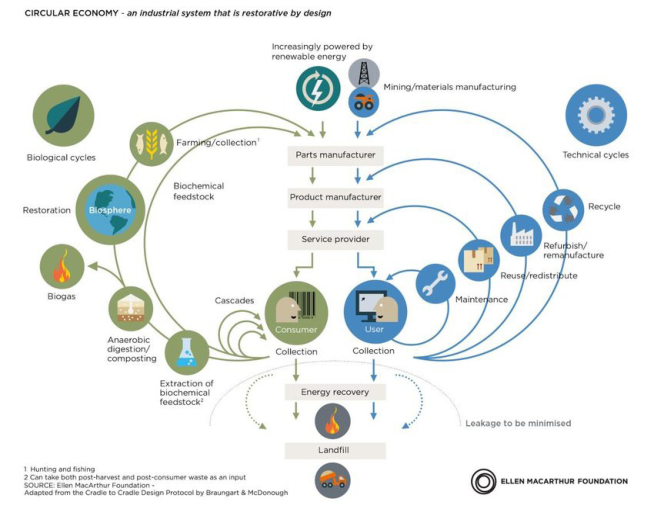
Scale of Permanence of Products: Designing Products 295 into this field is even more complicated. There have been very good resources over the years that help designers and engineers navigate these realities such as booklets like the Okala Practitioner (White, St. Pierre, & Belletire, 2013) or the software, Sustainable Minds or EcoChain. Many of these employ Life Cycle Analysis, which are powerful tools. Circular Design & Economy (CD & CE), as the broad concept, seeks to build out that world through an economy of composting, repair and recycling through guides such as the Butterfly Diagram from the Ellen MacArthur Foundation (EMF) (Ellen MacArthur Foundation, 2023). This concise guide helps designers and students navigate the world of renewable versus non-renewable resources. However, it doesn’t delve into deeper understandings of products, materials and the energy that is used to produce them. Most of our industrial system is founded on non-renewable energies and materials. Even much of our renewable materials are cultivated and harvested via non-renewable energy sources through industrial farming. CE has been developing solutions to this for decades (Anupama Sen, 2021). The work of Howard T. Odum goes back further laying the foundations for CE through concepts like Emergy (Odum, 1996), a thorough energy accounting system that he developed, founded in ecological processes. To gain scope of the problem, Mark Sardella of LocalEnergy.org (Sardella, 2006), calculated that we consume fossil fuels at 5 million times the sustainable rate. Nature on the other hand, if stewarded with life enhancing principles like Permaculture Design offers, can increase production, renewably year after year. With this understanding, one of the best strategies to move towards sustainability is to invest those non-renewable resources into long lasting design solutions to extend the impact of those finite resources while making our lives easier (Holmgren, Permaculture: Principles and Pathways Beyond Sustainability, 2002). CD has a strong focus on recycling which is a good strategy, but should only be employed to manage products and their parts after they have worn out or broken after a long life due to its energy intensity and cost. Some CD resources highlight that if a products lifespan is doubled then its impact is cut in half (White, St. Pierre, & Belletire, 2013), a main focus of the proposed diagram. However, to really move forward with long lived products it does require an examination of our social, cultural and economic systems to move them towards more sustainability, which Mutualistic Design explores (Trauth, Symbiotic Design: Building Resilience & Liberating Economies Through Product Design; Beyond the Circular Economy, 2017), yet is a much larger issue than the scope of this paper. This diagram is to help remind designers of the renewability or scarcity of the energy and materials that go into making our consumable or durable products and to design them accordingly to build a sustainable future. It does not directly address the consumption of energy a product may use during its lifetime though, but does get designers familiar with energy source renewability. Through this, designers can begin to understand the appropriate use of certain resources for specific product lifespans, based on renewability and non-renewability. An antique clock that is well maintained versus a short lived shoe is a good example. Using non- renewable, yet energy dense fossil fuels to manufacture materials that are used to create a long lived product, like a clock is an example of this. Ideally
296 Trauth we would use renewable energy, however that may not be plausible, given the energy needs to manufacture materials like steel or copper. Designing for the longest life possible ensures the most efficient use of that non-renewable, carbon polluting energy source and material. On the other hand, a shoe, which will wear out over time and is a fairly consumable product, should not be made of a material that will last for centuries or millennia in a landfill. Ideally it would be made from renewable energy sources to produce renewable materials for the product. This diagram helps designers visualize those resources in a corollary way, simplifying this complex world we need to work with. It is a simple connector between EMF’s Butterfly Diagram and more detailed Life Cycle Analysis, defining appropriate sustainable design strategies for a world of renewability and non-renewability.
The Inspiration: Keyline Design & PA Yeoman The inspiration for this diagram came from the design process entitled ‘The Scale of Permanence’ developed by P.A. Yeoman for his process called Keyline Design. Keyline Design was developed to design farms that increase water capture through integrated passive water harvesting and gravity irrigation on the driest continent on earth, Australia. Permaculture and Regenerative Agriculture are founded in these concepts. The Scale of Permanence starts with the idea that humans can change some things very easily while others are very expensive and energy intensive to change, and others are almost impossible to change. Thus, focusing on changeable things within the
Scale of Permanence of Products: Designing Products 297 context of unchangeable things is critical. Another way to say this would be to “Design for the Constant”. Yeoman’s Scale of Permanence focuses on the resource of water and how to change what one can on their farm to increase water management and capture, and thus increase resource growth and ultimately production of resources such as pasture for livestock and trees for their many uses. It starts with Climate which is not easily changed and cascades down through elements such and land shape or form, to trees and concluding with soils which can be created in as little as 18 days with proper compost processes. It is an ingenious and well thought out process, founded in leverage, which increases yield with as little effort as possible.
This process highlights the importance of understanding what is within humanities control and what is not. Fundamentally, it is about the concept of leverage, making minor tweaks to a system to increase productivity over the long run, which our products can do. Energy systems rely on leverage as well with concepts such as Energy Return on Energy Invested, examining how much energy it takes to attain a certain amount of energy. This is easy to forget such ideas in a world where energy is cheap and abundant allowing us to use non-renewable resources as if they were renewable. However, when one understands the limitations of non-renewable resources, be it energy or materials, it underscores the importance of designing for longevity to extend the value and impact of those non-renewable resources. This was the inspiration for this diagram.
Energy Energy is foundational to most everything, yet concentrated energy is fundamental to industrialization and by proxy, Industrial Design whether it’s for manufacturing processes or powering our products. In a world with cheap energy, it’s easy to design products that are energy and materially intensive yet affordable enough to be consumable. However, very few sustainable product guides and resources expand their scope to a level of understanding that the deep energy accounting work that Howard T. Odum, a pioneering professor of Systems Ecology, identifies through his Energy Systems Language that is founded in what he calls Emergy (Odum, 1996). Emergy, he defines as “All available energy that was used in the work of making a product and expressed in units of one type of energy.” This quantifies all the renewable and non-renewable processes from past and present that went into the creation of the resources used to create a product. This helps us attain a grasp of the Earth’s production capacity, both currently and in the past. From a systems design perspective, this helps us to understand what the Earth can recreate and what it cannot in a reasonable amount of time. With humanities populations and quality of life growing at such a rapid pace around the planet, especially over the last century, it is important to understand this to identify how to create an advanced society that maintains the comforts and advancements while working within those planetary limitations. Fossil fuels, (carbohydrates turned hydrocarbons through geologic processes) that have powered this development, are generated over millions of years. However, as Mark Sardella pointed out,
298 Trauth we consume 37,000 years’ worth of those former carbohydrates every day through our burning of fossil fuels (Sardella, 2006). This is millions of times the sustainable rate of fossil fuel generation.
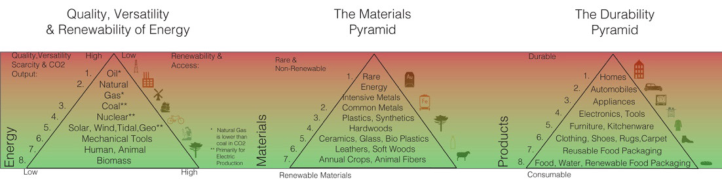
Energy sources have various quality (energy density), versatility (in regards to use), CO2 outputs – current or ancient CO2 cycles, renewability, scarcity and access, which this diagram highlights. Fossil fuels generally have low renewability and access, and have high quality, versatility, scarcity and CO2 output. Coal is the exception, in terms of versatility while natural gas has the lowest CO2 output. Through fracked natural gas replacing coal power generation, President Obama at the end of his term could say that they had reduced CO2 more than any other nation. Nuclear energy is even less renewable and accessible than fossil fuels with higher scarcity yet less versatility, since it primarily generates electricity, however, it may be less carbon intensive depending on the reactor type. Most energies only create electricity, such as nuclear, photovoltaics or wind turbines. Some do this by turning a turbine. Some directly such as wind or tidal generators while others power that turbine through generating heat to boil water to create steam, which turns the turbine. The most common for these include nuclear, coal, natural gas and even wood sometimes. Photovoltaics are the exception, employing silicon electron exchanges. Certain materials are not able to be created through electricity sources and require high intensity heat generated by fossil fuels, such as steel, however researchers are trying to find greener methods for production. Other forms of energy, which have powered every society from currently developing countries to ancient civilizations include human, animal, biomass and even wind and hydro power, often times through direct drive systems like mills. There are good resources to attain a grasp on energy that are accessible to designers who are not well versed on physics or energy theory outside of Howard T. Odum’s work. These include David Holmgren’s 2002 book Permaculture: Principles and Pathways Beyond Sustainability (Holmgren, Permaculture: Principles and Pathways Beyond Sustainability, 2002). His discussions around energy and Emergy are scattered throughout his book and offer good insight into various topics, especially around the concepts of Peak Oil and how to invest these non-renewable energy sources into long lasting solutions to our problems through good design. The other book that is a great resource and offers good insights into the challenges and impacts of energy is Toby Hemenway’s 2015 book, The Permaculture City (Hemenway, 2015). In chapter 7 he goes into exploring the impacts of energy on society, why it’s so valuable and ways to understand energy through efficiency, Emergy, LCA’s, transformity, and Energy Return on Energy Invested or EROEI. Having students read these articles to understand these impacts, they can be begin to design for appropriate long term sustainability solutions and move our designs and ideally society beyond short term economic solutions that exploit the future generations resources that they will need to maintain this level of advancement. This diagram is designed to educate students at a high level about this topic, however when employed in conjunction with these resources like LCA’s, it leverages its impact as an educational tool.
The Energy Pyramid in the diagram (figure 2) can also help designers understand energy for the operation of products. Electric vehicles could be
Scale of Permanence of Products: Designing Products 299 an example of this. However, the diagram primarily focuses on energy inputs for manufacturing the materials and products. In order to leverage energy’s impact it’s critical to use non-renewables for long lasting durable products that require energy intensive materials or manufacturing while employing renewable energies for consumable products made of renewable materials, hence a scale of permanence for products. It achieves this by ranking energy dense, carbon intensive, non-renewable energies at the top of the pyramid (with the exception of nuclear) with a cascade down to less energy dense, lower carbon renewable energies such as solar, wind, human, animal and biomass energy sources. It is worth noting that there are strategies to address carbon pollution by sequestering carbon through planting forests, which employing biomass for energy, could effect. However, biomass is from the current carbon cycle and not the fossilized carbon cycle, which increases surface level CO2. Energy is fundamental to understand sustainability and Industrial Design and thus critical to build a sustainable future with those finite and renewable energies.
Materials
Materials can be a very broad topic, as new materials are being invented every year. However there are general materials that Industrial Design has come to rely on primarily such as metals, plastics, wood, fibers/leathers, rubber, ceramics and glass. Metals, generally, have energy dense needs to extract them from the ore they come from, process them or to recycle them and are thus at the top of the pyramid, aligning with fossil fuels. When recycled, some metals have a much lower energy footprint than virgin mined metals like aluminum. Each metal has varying energy footprints and this is where LCA’s can get into the details of them. Petroleum based plastics come in lower, however are still made from fossil fuel and thus are not renewable and therefore should be used more for longer lifespans so future generations can use them for critical applications. Hardwoods have a longer lifespan to harvest and are more durable than softwoods and thus should be used for longer lasting products. Antique furniture is a good example of this. Ceramics and glass can have a larger energy footprint than Hardwoods, however are fragile and can break, yet reasonably durable. Because of this, their lifespans may not last as long as products made from hardwoods and why they are below hardwoods despite being manufactured from a relatively finite material and energy source. Leathers, softwoods, annual crops for fibers or bioplastics and animal fibers all have faster growth rates and thus can supply the materials needed to make shorter lived, consumable products indefinitely if their sources are managed regeneratively. Regenerative farming restores land degradation caused by annual tillage agriculture ensuring sustainability. (Trauth, Synthesizing Humans with the Planet: Regenerative Agriculture and its relevence and application to Industrial Design, 2023).
Products Products range from single use packaging to highly durable products that can last centuries. Buildings, historically, can last centuries and contain products
300 Trauth that are centuries old, such as hardware or built in furniture. Vehicles, arguably, from an energy perspective, have high embodied energy and are highly durable which results in a long life, especially if maintained. This is followed by home appliances, electronics, and tools, all which contain energy intensive metals. Thus, these should be designed to last exceptionally long and not be disposable after a few years. Furniture and kitchenware, typically have shorter lifespans, depending on the materials (and thus embedded energy). Clothing, Shoes, Rugs and Carpets made from fibers and textiles may have shorter lifespans, especially if made from renewable materials. Using synthetics made from non-renewable materials for these products are not ideal as it took the earth a long time to generate those materials which if used for such products, will have a short life in relation to their lack of renewability. As they degrade, they can break down, creating micro-plastics in our environment, which is an environmental hazard that science is starting to identify the extent of its impacts. Beyond this, we get into very consumable products such as food packaging, which ideally can be made from renewable materials. Of course reusable packaging systems can work as well and have worked in the past but have proven difficult to reinstate (Riccardo Accorsi, 2020). Overall, lifespans of products are generally based on the use of the product initially but sometimes, more importantly, the materials and energy used to create them.
Energy & Its Relation to Materials & Lifespan When full energy accounting identifies the limitations of finite energy sources and materials, then we recognize the importance of designing to leverage those finite materials and energy through longevity. On the other hand, when we design consumable products, aligning them with nature’s renewability and cyclicality is fundamental. Looking at all three of these ideas, energy, materials and lifespan across a spectrum of consumability and durability, finiteness and renewability is fundamental to begin to create a field of sustainable products in a finite world.
Energy, Materials & Lifespan Diagram The pyramidal shape of Energy, Materials and Products in the diagram underscore the broad accessibility and abundance of renewably grown materials and energy at the bottom, while non-renewables are at the top of the pyramid, highlighting their relative scarcity. It also reflects a trophic pyramid found in nature, which also reflects abundance and scarcity. It is green in color at the bottom to convey renewability and red at the top to convey non-renewability. A hard stop between non-renewable materials and energy and consumable products would be ideal. However, seeing these 3 concepts connected helps students understand a high level awareness of what an LCA can achieve, without becoming too complex, and gives more detail than EMF’s Butterfly Diagram, through including the important concept of renewability versus durability in products when energy and materiality are thoroughly understood.
Figure 2: Scale of permanence for products diagram (SPP diagram) (trauth, symbiotic design: building resilience & liberating economies through product design; beyond the circular economy, 2017).
Employing the Diagram in the Studio The SPP Diagram is another tool to simplify a very complex process for students who may not be very technically inclined to run a full LCA or an even simpler LCA such as what is found in the Okala Practitioner. However it can be a stepping stone in the design process in how to think, between EMF’s Butterfly Diagram, explaining the circularity process of renewable and non-renewable materials and the granular detail of an LCA. To prime the students, I present a slide deck about energy from Odum and Sardella’s work and I have the students read Holmgren’s article (Holmgren, Energy and Permaculture, 1994) and Hemenway’s The Permaculture City Chapter 7 about energy to gain an understanding of how long it took the earth to create the fossil fuel we consume and just how concentrated it is in relation human energy output. This lays the foundation of understanding why we need to leverage those resources, both finite and renewable, to their maximum potential. I then present the Butterfly Diagram followed by the SPP Diagram to select proper lifespans followed by a basic introduction to the LCA process. Fundamentally, it helps them understand why they need to break products into durable, repairable and long lasting products made of finite materials and energy and how consumable products can still be produced, if manufactured with renewable energy and materials sources, reflecting Earth’s limitations.
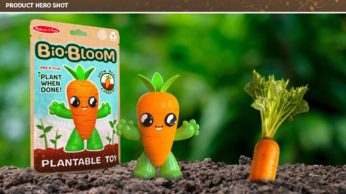
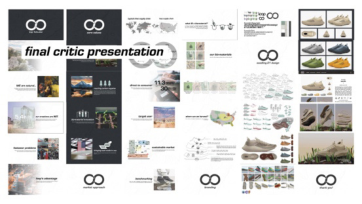
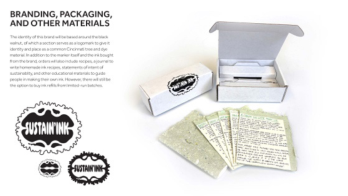
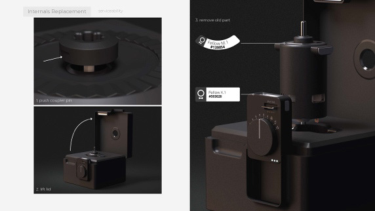
Student Project Examples These are examples of student work from a studio taught by the author employing the SPP Diagram for 5 years now. These examples range from fully compostable toys with seeds embedded in them to grow food once it’s planted to a long lasting repairable blender, designed with the user in mind for simple replacement of broken parts that can be remanufactured. In the middle is a design for natural markers with extended lifespans through durable cases and refillable natural inks and nibs, reflecting materials durability and renewability. The final example is a new shoe brand built around compostability, the foundation of Earth’s circular systems.
Figure 3: Seed embedded compostable toy designed to reflect the relatively short life of many toys. (Trauth, ID Studio: Sustainability & Systems, 2020–2025).Figure 4: Loop shoe brand – compostable shoes due to their consumability. (Trauth, ID studio: Sustainability & systems, 2020–2025).Figure 5: Sustainink markers–this balances the durability of the container and consumability of the ink and nibs made of renewable materials (Trauth, ID studio: Sustainability & systems, 2020–2025).Figure 6: Fellows Blender – designed for consumer repair through modular parts that can be sent back to the manufacturer to repair and resell due to the non-renewable energy and materials used in production (Trauth, ID studio: Sustainability & systems, 2020–2025).
CONCLUSION
Sustainability is a complex system to understand unless one digs deep enough to the foundations of energy theory and how that undergirds geologic and ecological processes. From this one can effectively design products and the systems they exist within. This defines how we can design products that will be sustainable in a world of limited non-renewable resources and theoretically unlimited renewable resources. The SPP Diagram is a tool to help designers understand and build that world. It is a complementary tool to EMF’s Butterfly Diagram and LCA’s. It adds to the growing field of Circular Design and Mutualistic Design as we learn how to transition our complex economies to mimic nature and build long term Mutualism with the Earth.
REFERENCES
Anupama Sen, L. M. (2021). Beyond Energy: Incentiving Decarbonization through the Circular Economy. Oxford, UK: The Oxford Institute for Energy Studies. Dougherty, D. (2012, January 20-22). Carbon Farming Workshop: Keyline Design:
History & application. Spring Valley, NY, USA. Ellen MacArthur Foundation. (2023, February 6th). Collaboration towards a circular economy: City of Phoenix and Arizona State University. Retrieved from EllenMacArthurFoundation.org: https://www.ellenmacarthurfoundation.org/ circular-examples/collaboration-towards-a-circular-economy-city-of-phoenix- and-arizona-state?utm_campaign=drumbeat&utm_medium=email&utm_ source=emf_network_monthly_newsletter&utm_content=link/cities&utm_ term=FUTEN/i Foundation, E. M. (2024, March 19). Ellen MacArthur Foundation: It’s Time for a
Circular Economy. Retrieved from Ellen MacArthur Foundation: https://www. ellenmacarthurfoundation.org/ Hemenway, T. (2015). The Permaculture City: Regenerative Design for Urban, Suburban, and Town Resilience. White River Junction, VT, USA: Chelsea Green Publishing Company. Holmgren, D. (1994, May 1). Energy and Permaculture. The Permaculture Activist,
pp. 4-7. Holmgren, D. (2002). Permaculture: Principles and Pathways Beyond Sustainability.
Hepburn, Victoria, Australia: Holmgren Design Services. Mollison, B. (1988). Permaculture: A Designer’s Manual. Sister’s Creek, Tasmania, Australia: Tagari Publications. Odum, H. T. (1996). Environmental Accounting: Emergy and Environmental
Decision Making. New York, NY: John Wiley & Sons Inc. Riccardo Accorsi, G. B. (2020). A closed-loop packaging network design model to foster infiintely reusable and recyclable containers in food industry. Sustainable Production and Consumption. Sardella, M. (2006, April 2). Energy Presentation - Permaculture Design Certification.
Santa Fe, New Mexico, USA. Trauth, B. (2017, April). Symbiotic Design: Building Resilience & Liberating Economies Through Product Design; Beyond the Circular Economy. Retrieved from Ohiolink. edu: http://rave.ohiolink.edu/etdc/view?acc_num=ucin1491558533324546
University of Cincinnati, College of DAAP. Trauth, B. (2023). Synthesizing Humans with the Planet: Regenerative Agriculture and its relevence and application to Industrial Design. AHFE (2023) International Conference (p. Vol 100). USA: AHFE International. White, P., St. Pierre, L., & Belletire, S. (2013). Okala Practitioner, Integrating
Ecological Design. Phoenix, AZ: Okala Team.
LISTED IN THE AHFE DIGITAL BOOKSTORE CATALOGUE
Explore the complete digital volume
Interdisciplinary Practice in Industrial Design
Read this individual research paper free through the original publisher, or explore the full digital proceedings book.
ISBN 978-1-964867-98-4
Explore this ISBN in the AHFE Bookstore ↗Listed in the July 2026 bookstore catalogue; search by ISBN to confirm current availability · Digital book purchase optional