Yuta Hosaka, Noeru Masuda, Toma Uda, Haruna Korenaga, Hiroo Fujiwara, Mitsuko Ogaki, Mizuki Nakajima (2026). The Effect of Paperboard Package Shape on Consumers’ Inferences about Chocolate Product Contents. In: Interdisciplinary Practice in Industrial Design. AHFE Open Access, vol. 222, pp. 68–76. https://doi.org/10.54941/ahfe1007747
In unplanned in-store purchases, the package shape serves as a crucial visual cue for inferring the physical characteristics of the contents. While prior research has accumulated significant insights into the mechanisms for estimating physical quantities like volume and weight from shape, qualitative and structural aspects (such as the “arrangement of contents”) have not been examined. This study focuses on the risk that discrepancies between consumers' perceived arrangement images and the actual content (expectancy disconfirmation) may undermine repurchase intent. Using paper boxes for chocolate products, we examined how outer box shape influences consumers' “arrangement inferences” and “usage judgments.” A web survey was conducted with 53 individuals in their twenties using nine plain-box designs as stimuli. Model comparisons using generalized estimating equations (GEE) revealed asymmetry in consumer information processing depending on task characteristics. Specifically, arrangement inference relies on relatively simple and immediate processing based on a single dimension (e.g., width) or shape type, whereas usage judgment (for self/others) tends to involve more elaborate processing, integrating multiple dimensions and category information. Furthermore, stratified analysis by purchase frequency and gender revealed that as experience accumulates, the information referenced during inference and judgment tends to become more complex. These results suggest that discrepancies often arise between the careful deliberation involved in purchase decisions and immediate processing of arrangement inferences. Therefore, in package design, it is essential that the shape and category consistently convey the same meaning across both processes.
Often, in-store purchases are unplanned. At such times, packaging serves as a core factor influencing purchase decisions, along with price, promotions, and display. Its impact is particularly significant in the food and confectionery categories, where the reliance on visual information is high. The packaging design comprises graphic elements, such as color and photography, along with the shape of the outer box, including its height, width, and depth. Graphic elements function as cues for sensory evaluations Received February 21, 2026; Revised April 5, 2026; Accepted April 24, 2026; Available online July 20, 2026
The Effect of Paperboard Package Shape on Consumers’ Inferences 69 such as taste, quality, and brand image (Ares & Deliza, 2010), whereas the outer box shape is known to systematically bias inferences about physical aspects, such as volume and size.
Therefore, this study examines the possibility that the shape of the outer box forms an image of the internal arrangement of confectionery products inside opaque paper boxes. In situations where the box cannot be opened before purchase, such as with boxed chocolates, consumers may infer not only the total quantity but also the internal structure, including the presence of individual wrappers and the arrangement pattern, based on the dimensions and proportions of the outer box. If the inferred arrangement image diverges from the actual content, it could negatively impact post-opening evaluations. Furthermore, because the arrangement of content also relates to judgments about usability such as ease of distribution and suitability for gift-giving, and may influence the formation of purchase intent.
The Influence of Shape Cues on Content Inference Packaging is a composite of multiple elements, such as color, photographs, and textual information; however, this study focuses specifically on the shape of the outer box. The shape of a package’s outer box serves as a primary visual cue for consumers to infer the nature of the contents before picking up the product or making a purchase. Specifically, it has been reported that the balance and combination of dimensions such as the container’s length, width, and height influence consumers’ inferences about physical quantities, leading to systematic biases in estimating capacity and perceived volume.
A representative example is the “elongation effect,” as demonstrated by Raghubir and Krishna (1999). This phenomenon occurs when attention is biased toward prominent visual height dimensions during intuitive volume judgment. Consequently, taller containers are more likely to be overestimated as containing “more quantity” than shorter containers, even when their actual capacity is identical. Folkes and Matta (2004) and Garber (2014) theorized and empirically demonstrated that the uniqueness or salience (prominence) of a shape can guide attention, altering the information processing involved in judging the perceived quantity, and potentially cause estimation distortions.
These findings suggest that when consumers view outer packaging shapes, they do not merely perceive the form but infer the physical characteristics of the contents from it, and that these inferences can be systematically biased by shape characteristics. However, the existing packaging research has primarily addressed biases concerning the estimation of continuous quantities (how much is inside), such as volume or weight. Conversely, research directly addressing qualitative and structural aspects—such as the state of contents (“how they are packed”), the presence of individual packaging, or arrangement patterns—has been relatively scarce, resulting in limited accumulated knowledge.
The Mechanism of Post-Purchase Evaluation Formation Revealed by Expectation Mismatch Research Regarding post-purchase consumer behavior, particularly the formation of customer satisfaction and repurchase intention, the expectancy–disconfirmation model is the most established explanatory theory. As proposed by Oliver (1980), this model is based on the idea that consumer satisfaction is determined by the difference between “prior expectations” and “actual experience.” Specifically, the mechanism posits that if the perceived performance (actual experience) after using the product exceeds the expectations held before purchase, a “positive disconfirmation (delight)” occurs, increasing satisfaction. Conversely, if the actual experience falls short, “negative disconfirmation (disappointment)” occurs, decreasing satisfaction.
The validity of this theory has been supported by numerous empirical studies (e.g., Churchill and Surprenant, 1982) which confirm that the difference (discrepancy) between expectations and performance directly influences satisfaction. Subsequent research has continued to refine the model and examine details, such as where consumers set their comparison benchmarks (Tse & Wilton, 1988; Spreng et al., 1996). A meta-analysis by Szymanski and Henard (2001) also positioned discrepancy as one of the key determinants of customer satisfaction.
Applying this research lineage to the context of this study theoretically, supports the following prediction: Specifically, when consumers form some “mental image” or “inference” about the contents based on the package shape, this image functions as a substantive “prior expectation.” If there is a discrepancy between the image evoked by the shape and the actual contents (layout or structure) confirmed after opening, this is perceived as a “negative disconfirmation.” Consequently, this is likely to lead to the risk of reduced product evaluation and decreased future repurchase intention.
Research Objectives Based on the above, this study examines whether consumers infer the arrangement of content within chocolate paper boxes when relying solely on box shape as a cue. Additionally, it aims to confirm the relationship between package shape, inferred content arrangement, and perceived usage, thereby providing insights to prevent the discrepancy (expectancy disconfirmation) that may arise between consumers’ mental images of package-based content and the actual content.
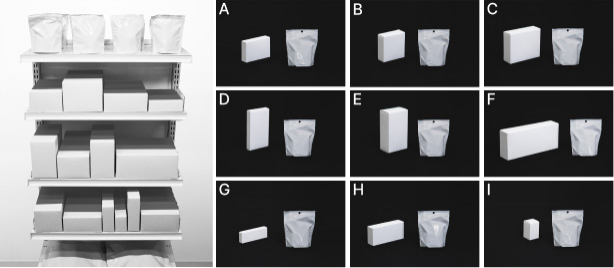
Experimental Methods A survey was conducted using Google Forms and 53 individuals (25 men and 28 women) in their twenties were analyzed. The stimuli consisted of nine types of plain white boxes (A–I) (see Figure 1). Each stimulus image was photographed without the brand name or point-of-purchase (POP) information. Two presentation conditions were prepared: “recreated store display images” including size cues, and “box-only images.” In the experiment, participants first identified the target box within the store display image
The Effect of Paperboard Package Shape on Consumers’ Inferences 71 using an arrow and then inferred the content arrangement (e.g., portioning and alignment). Subsequently, they were shown a box-only image and asked to judge its intended use (for themselves or for others). Responses were measured on a 7-point Likert scale ranging from “1 (not at all) to “7 (very much).” These data are part of a broad package evaluation survey targeting women aged 20s–60s. This study reports only the data extracted from younger respondents, including men in their 20s.
Figure 1: Images of box stimuli (Reference pouch dimensions: H 140 mm × W 100 mm × D 50 mm).
Result
This study examines the influence of package shape on consumer inference and judgment based on both shape-related and cognitive process factors. The analysis comprised two stages. First, the effects of shape characteristics (dimensions and proportions) on inferring the arrangement of content and judging the purpose of a product are identified. Second, recognizing that differences in cue utilization were observed based on task nature (inference/ judgment) and consumer attributes such as purchase frequency and gender, we verified the shape information processing mechanism (inference/judgment mechanism) through a model comparison.
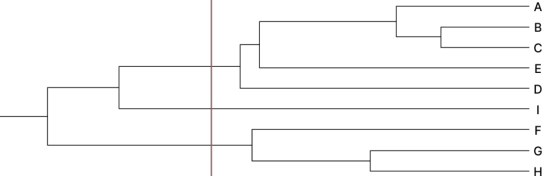
Prior to the analysis, a cluster analysis was conducted to determine whether box shapes could be treated as discrete rather than merely continuous variables (see Figure 2). The nine box stimuli used in this study were characterized using the actual dimensions (height, width, and depth) and ratio metrics (width/ height, depth/width, and depth/height) as shape features. The results yielded three shape types: Type 1, standard width group (not overly wide); Type 2, close ratio group (block-like); and Type 3, horizontally elongated group. In subsequent analyses, this was defined as the “shape type (C)” variable and used as an indicator to verify whether consumers perceive shapes as patterns.
Figure 2: Classification of shape types via cluster analysis.
First, to examine the influence of shape (height, width, and depth) on inference and judgment, model comparisons were conducted using generalized estimating equations (GEE). Specifically, the following models were constructed: Model S included only the main effects of each dimension, Model SI2 included up to second-order interactions, and Model SI3 included up to third-order interactions. Model fit was compared using the quasi- information criterion (QICu). The analysis revealed that the optimal model structure varied depending on task characteristics (refer to Table 1).
Table 1: Comparison of model fit (QICu) by task characteristics.
Table available in the original PDF paper.
Dependent Variable Model QICu ΔQICu Contents are arranged S 485.695 0.695
Contents are arranged SI2 486.750 1.750 Contents are arranged SI3 485.000 0.000
Contents are portioned S 480.522 0.000 Contents are portioned SI2 483.030 2.508
Contents are portioned SI3 485.000 4.478 Intent to Purchase for Self S 487.907 2.907
Intent to Purchase for Self SI2 487.230 2.230 Intent to Purchase for Self SI3 485.000 0.000
Intent to Purchase for Others S 515.125 30.125 Intent to Purchase for Others SI2 493.073 8.073
Intent to Purchase for Others SI3 485.000 0.000 For evaluation items related to inferring the arrangement of content, the main effects model (Model S) without interactions showed the best fit. In contrast, for the evaluation items related to usage judgment, the model that included a third-order interaction (Model SI3) was deemed optimal. Therefore, although the inference task tends to be easily explained by a single dimension, the judgment task likely involves the combined effects of dimension combinations (proportions). Based on these results, the influence of the specific shape variables was confirmed for each dependent variable using the optimal model (refer to Table 2 & 3).
Table 2: Regression analysis of shape variables based on content presentation.
Table available in the original PDF paper.
Variable Contents are Arranged (S) Contents are Portioned (S) Estimate p-Value Estimate p-Value
Depth −0.052035 0.000068 −0.084736 0 H × W 0.000196 0.115622 0.000572 0.000119
H × D −0.000481 0.02754 −0.001053 0.000006 W × D −0.000507 0.208976 −0.001903 0.000019
H × W × D −0.000033 0.001181 −0.000052 0.00003 Regarding inferences, in the adopted main effects model, box width showed a consistent positive influence on arrangement inferences. Specifically, the width coefficient showed a significant positive value (p < .05) for both “the contents are divided into smaller portions” and “the contents are neatly arranged.” That is, consumers tend to infer that the content is divided into smaller portions and neatly arranged in packages that are horizontally longer. Regarding judgments, in the optimal third-order interaction model, the third- order interaction terms involving height, width, and depth were significant.
Next, to verify whether shape influenced consumers uniformly, a stratified analysis of attributes (purchase frequency and gender) was conducted. The results confirmed clear attribute differences in the degree of shape cue utilization. First, differences were observed based on the purchase frequency. Comparing the influence of width in “inference of portioning” across low, medium, and high purchase frequency groups revealed an inverted U-shaped trend, with the coefficient peaking in the medium-frequency group. While the low-frequency group (pre-learning) and high-frequency group (post-learning) showed relatively low dependence on shape, the medium-frequency group strongly applied the simple rule “longer boxes = smaller packs.” Second, gender-based differences were also observed. Regarding “arrangement inference,” women showed significant effects from width expansion on inference, whereas no significant effect was observed for men. These differences indicate not merely
varying “response strength,” but qualitatively distinct processing of shape information based on experience and attributes.
Therefore, to verify whether consumer information processing is based on “continuous numerical values (dimensions)” or “typological categories (shape types),” a comparison using model fit (QICu) was conducted. Here, the dimensional model (S), type model (C), and mixed model (SC) were compared. When constructing the mixed model (SC), multicollinearity was a concern, because shape type (C) is a variable derived from dimensions (S). However, after checking the variance inflation factor (VIF), no significant issues were found, confirming the statistical validity of the model. The results indicated that the optimal model varied depending on the task (refer to Table 4).
Table 4: Comparison of model Fft for information processing modes.
Table available in the original PDF paper.
Dependent Variable Model QICu ΔQICu Contents are arranged C 476.273 0.000
Contents are arranged S 483.810 7.537 Contents are arranged SC 480.220 3.947
Contents are portioned C 484.727 6.119 Contents are portioned S 478.607 0.000
Contents are portioned SC 479.108 0.501 Intent to Purchase for Self C 515.924 36.069
Intent to Purchase for Self S 485.980 6.124 Intent to Purchase for Self SC 479.855 0.000
Intent to Purchase for Others C 499.978 16.588 Intent to Purchase for Others S 515.247 31.857
Intent to Purchase for Others SC 483.390 0.000
In the “portioning” inference, the shape cue of “wide width” evokes a sense of volume, making it a direct basis for inference. In contrast, the “arrangement” inference relies not on the dimensions themselves but on comparing the “sense of alignment” evoked by the package against past experience, suggesting that category cues dominate. This indicates that processing shifts depend on the tasks. Conversely, for usage judgment, the mixed model (SC) was identified as the optimal model. Particularly, for items intended for others, the fit of the simple models was relatively poor, confirming the tendency toward judgments integrating multiple cues.
Furthermore, we examine the influence of attributes (purchase frequency and gender) on model selection. Notably, within this sample’s attribute composition, a significant association was observed (chi-square test, p < .05), confirming the tendency for women to have a higher purchase frequency
The Effect of Paperboard Package Shape on Consumers’ Inferences 75 than men. Analysis of purchase frequency revealed that the optimal model was less clearly defined for the low-frequency group. Conversely, the dimensional model (S) showed a high fit for the medium-frequency group, whereas the type model (C) and mixed model (SC) gained greater support for the high-frequency group. This suggests that as experience accumulates, the referenced information shifts from “single dimension” to “type” or “integrated” cues. Similarly, gender-specific analysis revealed that the optimal model for “portioning inference” was the dimensional model (S) for men and the mixed model (SC) for women. Furthermore, as mentioned earlier, only females significantly utilized shape cues in “arrangement inference.” Consequently, it became clear that even for the same inference task, men tended to focus primarily on dimensions (S), whereas women combined dimensions and types (SC).
Analysis The results above suggest that consumers dynamically switch their processing mode for shape information depending on the task characteristics of “inference” versus “judgment.” In inference tasks, there is a marked reliance on simple cues with low cognitive load. Specifically, in “portioning inference,” dimensional information such as width (S) is selectively used, while in “arrangement inference,” type matching (C) is selectively employed. Both can be interpreted as processing methods that readily lead to immediate conclusions.
In contrast, for usage judgments (especially gift-giving), the results showed elaborate deliberation involving combinations of dimensions and integration of dimensions and type (SC). This aligns with the idea that in gift-giving contexts involving interpersonal risk, simple pattern recognition alone is insufficient, requiring multifaceted verification of whether “the shape is appropriate within the gift-giving context.”
Furthermore, the inverted U-shaped trend observed in the purchase frequency analysis indicates a qualitative shift in processing quality, namely skill development, as experience accumulates. The low-frequency group (pre- learning) exhibited a weak attribution of meaning to shape and unstable judgments. In the medium-frequency group (rule application phase), simple rules like “wide width = portioned” are strongly applied, maximizing sensitivity to specific cues. However, the high-frequency group transitions to flexible processing that starts with category matching but integrates other information as needed, leading to a relative decrease in dependence on a single dimension.
Furthermore, regarding gender differences in model selection (the best fit model was S for men and SC for women), careful interpretation is required, considering associations with other factors such as purchase frequency, rather than attributing it solely to the main effect of gender itself. However, from the perspective of everyday consumption, men tend to have a higher proportion of self-consumption, making them more likely to rely on dimensions (S) to obtain practical information such as perceived volume. Conversely, women are presumed to have relatively more opportunities for social consumption, such as gifting or sharing, leading to the formation of a
schema that prioritizes integrated judgments (SC) encompassing usage and context. In other words, these differences can be interpreted as a result of cue-seeking strategies optimized according to the usage scenarios.
Conclusion
The results of this study suggest that consumers’ information processing exhibits duality depending on the task. Purchase decisions involve a complex and careful evaluation process that confirms the consistency between shape and type. In contrast, arrangement inference is suggested to be a relatively simple and immediate process that relies on specific cues such as dimensions or type.
This asymmetry in processing styles means that, even if the shape is refined to enhance purchase intent, its visual information may be processed during the arrangement inference process as a signal of an arrangement that diverges from the actual content. This risk creates expectations that exceed the actual content. Consequently, a discrepancy may arise after opening, resulting in negative disconfirmation (disappointment) and potentially damaging the repurchase intent.
Therefore, in package design, it is essential to create designs in which shape and category consistently convey meaning, preventing discrepancies in both the careful deliberation of purchase decisions and the immediate inference of arrangements.
References
Ares, G., & Deliza, R. (2010). Studying the influence of package shape and colour on consumer expectations of milk desserts using word association and conjoint analysis. Food Quality and Preference, 21(8), 930–937. Churchill, G. A., Jr., & Surprenant, C. (1982). An investigation into the determinants
of customer satisfaction. Journal of Marketing Research, 19(4), 491–504. Folkes, V., & Matta, S. (2004). The effect of package shape on consumers’ judgments of product volume: Attention as a mental contaminant. Journal of Consumer Research, 31(2), 390–401. Garber, L. L., Jr., Hyatt, E. M., & Boya, Ü. Ö. (2014). The perceived size of packages
of complex vs. simple shape depends upon the number of packages presented. International Journal of Management Practice, 7(2), 144–159. Oliver, R. L. (1980). A cognitive model of the antecedents and consequences of satisfaction decisions. Journal of Marketing Research, 17(4), 460–469. Raghubir, P., & Krishna, A. (1999). Vital dimensions in volume perception: Can the
eye fool the stomach?. Journal of Marketing Research, 36(3), 313–326. Spreng, R. A., MacKenzie, S. B., & Olshavsky, R. W. (1996). A reexamination of the determinants of consumer satisfaction. Journal of Marketing, 60(3), 15–32. Szymanski, D. M., & Henard, D. H. (2001). Customer satisfaction: A meta-analysis
of the empirical evidence. Journal of the Academy of Marketing Science, 29(1), 16–35. Tse, D. K., & Wilton, P. C. (1988). Models of consumer satisfaction formation: An extension. Journal of Marketing Research, 25(2), 204–212.
LISTED IN THE AHFE DIGITAL BOOKSTORE CATALOGUE
Explore the complete digital volume
Interdisciplinary Practice in Industrial Design
Read this individual research paper free through the original publisher, or explore the full digital proceedings book.
ISBN 978-1-964867-98-4
Explore this ISBN in the AHFE Bookstore ↗Listed in the July 2026 bookstore catalogue; search by ISBN to confirm current availability · Digital book purchase optional