Chen-Wei Chang, Wei-Ru Chen (2026). Investigating Driver Decision-Making in Pedestrian Crossing Scenarios. In: Advances in Human Factors of Transportation. AHFE Open Access, vol. 224, pp. 570–579. https://doi.org/10.54941/ahfe1007885
Pedestrians are considered one of the most vulnerable groups in the traffic environment. In recent years, pedestrian fatalities have shown an increasing trend, drawing substantial public attention to pedestrian safety. Drivers’ decision-making and behavioral responses when encountering pedestrians are critical determinants of pedestrian safety. Therefore, this study aimed to investigate drivers’ decision-making processes in pedestrian crossing scenarios. A total of 30 licensed adult drivers aged 18 and 40 years were recruited for this study. A driving simulator was used to present pedestrian crossing events under varying traffic density conditions. Drivers’ decision-making process was examined across varying traffic density conditions. In addition, different pedestrian warning lead times were introduced to investigate the effects of time budget on drivers’ decision-making. A significant interaction between traffic density and warning lead time was found to affect longitudinal acceleration variability. Under low traffic density, the shortest lead time (3s) resulted in the greatest variability in longitudinal acceleration. Conversely, in high traffic density, the variability was highest at the intermediate 5-second lead time, suggesting that intermediate time budgets may impair timely hazard perception under high-complexity conditions. Drivers in the medium EI group demonstrated improved lateral stability with a 3-second lead time, while no significant effects were found for low or high EI groups. The findings of this study provide valuable insights into drivers’ decision-making processes in pedestrian crossing situations and may serve as a reference for future research on driver–pedestrian interactions, as well as for the development of advanced driver assistance systems (ADAS). Ultimately, the results may contribute to improving safety for both drivers and pedestrians and provide a foundation for further investigations into driver–pedestrian interaction processes.
According to the World Health Organization (WHO, 2023), approximately 1.19 million people worldwide died as a result of road traffic accidents in 2021, with nearly two-thirds of the fatalities occurring among young adults aged 18–29 years. Among these deaths, pedestrians accounted for approximately 21% of all traffic-related fatalities. A similar trend has been observed in Taiwan. Statistics from the Taiwan Traffic Safety Information
Investigating Driver Decision-Making in Pedestrian Crossing Scenarios 571 Network (2023) indicate that the number of pedestrian casualties at intersections increased from 8,205 in 2018 to 8,914 in 2022, representing an average annual growth rate of 1.8% over the past five years. In addition, the total number of traffic fatalities in Taiwan reached 3,085 in 2022, marking the highest level in the past eight years. Further analysis of national statistics reveals that the continuous increase in registered vehicles has been accompanied by a corresponding rise in pedestrian injuries and fatalities. This trend suggests that increasing vehicle density may be a contributing factor to pedestrian safety problems. Therefore, understanding drivers’ decision- making processes when approaching pedestrian crossing segments under different traffic density conditions is of critical importance and may provide valuable insights for improving the safety of driver–pedestrian interactions.
In addition to traffic density, drivers’ emotional states have also been identified as an important factor influencing driving decision-making. Jonah (1986) and Ulleberg and Rundmo (2003) defined road rage as a state in which drivers operate a vehicle while experiencing feelings of tension or anger. Previous studies have shown that age, personality traits, and emotional factors are closely associated with the likelihood of engaging in risky driving behaviors. Norris et al. (2000) further suggested that drivers’ emotional conditions can serve as a strong predictor of future crash risk. Recent research has also demonstrated that emotional intelligence is closely related to driving performance. Ou et al. (2025) reported that drivers with lower levels of emotional intelligence performed worse on the Useful Field of View (UFOV) test and exhibited higher levels of risky and distracted driving behaviors, as well as a greater number of collisions. These findings indicate that drivers’ attentional control and situational awareness may vary according to their level of emotional intelligence. Driving is a task that requires sustained attention and patience, and one of the most thoroughly studied causes of aggressive driving behavior is anger—a common but potentially dangerous emotional state (Stephens & Ohtsuka, 2014; Sullman et al., 2015). In congested traffic environments, drivers may easily become frustrated by the non-compliant behaviors of other road users. Samu et al. (2025) indicated that higher emotional intelligence can reduce biases in risk perception and judgment, thereby decreasing risky behaviors and enhancing the ability to make safer decisions in complex traffic environments. In contrast, drivers with lower emotional intelligence are more likely to become irritated and engage in unsafe driving behaviors, which may indirectly increase the risk to pedestrians.
With the rapid development and widespread application of advanced driver assistance systems (ADAS), various types of warning systems have been introduced to enhance driving safety and reduce traffic accidents. Yan et al. (2014) reported that the presence of warning information had a significant effect on maximum deceleration. Specifically, the maximum deceleration rate was substantially lower when no warning was provided compared to when auditory warnings were available. Moreover, as the auditory warning lead time increased (e.g., from 3 s to 5 s), the magnitude of deceleration also increased. These findings suggest that auditory warnings play an important role in reducing collision risk. In emergency situations, simple warning messages have been found to be more effective than complex messages, as
572 Chang and Chen they reduce drivers’ mental workload and facilitate timely collision avoidance actions. Similarly, Chen et al. (2011) investigated an Intersection Collision Warning System (ICWS) and found that drivers responded faster to auditory warnings than to visual warnings. The implementation of the warning system reduced intersection collision rates by approximately 40% to 50%. Yan et al. (2015) further examined the effects of different warning lead times (ranging from 2.5 s to 5.5 s) in red-light violation scenarios. Their results indicated that earlier warnings helped reduce the intensity of emergency braking and lowered the likelihood of rear-end collisions. Taken together, these studies suggest that auditory warning information is closely associated with drivers’ braking response time and collision avoidance performance.
Based on the issues discussed above, this study aims to address the growing concern of pedestrian safety by employing a driving simulator to investigate drivers’ behavioral responses to pedestrian crossing events under different traffic density conditions. In addition, different warning lead times will be introduced to examine how variations in time budget influence drivers’ decision-making processes. The specific objectives of this study are as follows: (1) to examine the differences in driving performance among adult drivers with different levels of emotional intelligence when encountering pedestrian crossing situations; (2) to investigate how emotional intelligence influences driving performance under varying traffic density conditions; (3) to explore the effects of different warning lead times on the driving performance of drivers with different levels of emotional intelligence. This study contributes to the transportation human factors literature by examining how environmental complexity (traffic density) and temporal constraints (warning lead time) jointly influence driver decision-making in pedestrian interactions.
METHODOLOGY
Participants A total of 30 adult participants (23 males and 7 females) aged between 18 and 40 years were recruited for this study. All participants were screened for physical and psychological health using the Brief Symptom Rating Scale (BSRS-5, Chen et al., 2005). Only individuals without identified physical or psychological conditions based on the assessment were included in the study. All participants held a valid automobile driver’s license issued by the Ministry of Transportation and Communications of Taiwan. Individuals with visual or auditory impairments, neurological disorders, or psychological conditions (e.g., epilepsy or psychiatric illnesses) were excluded from participation.
Experimental Equipment and Materials Driving Simulator
The experiment was conducted using the STISIM Model M100WS-OT driving simulator developed by System Technology, Inc. (STI). The simulator was equipped with a steering wheel, manual transmission gearbox, and driving controls (including accelerator and brake pedals) manufactured by Logitech. The virtual driving environment was developed using the STISIM Drive®
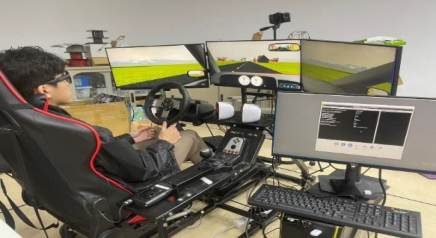
Investigating Driver Decision-Making in Pedestrian Crossing Scenarios 573 Scenario Definition Language (SDL) to create realistic pedestrian crossing scenarios. The simulator system consisted of three liquid crystal display (LCD) screens positioned to the left, front, and right of the driver, providing a 135-degree field of view to approximate real-world driving conditions (see Figure 1). This configuration enabled participants to experience an immersive and realistic traffic environment during the experiment.
Figure 1: Experimental setup of the driving simulator environment.
Emotional Intelligence Questionnaire Participants’ emotional intelligence was assessed using the Wong and Law Emotional Intelligence Scale (WLEIS) developed by Law et al. (2004). Based on their scores, participants were classified into three groups: high, medium, and low emotional intelligence. The WLEIS consists of four dimensions: (1) Self-Emotion Appraisal (α = 0.89); (2) Others’ Emotion Appraisal (α = 0.89); (3) Use of Emotion (α = 0.80); (4) Regulation of Emotion (α = 0.89). The questionnaire comprises 16 items, each scored on a 7-point Likert scale. To categorize the participants, this study utilized percentiles to divide them into three distinct groups: participants in the lower 33rd percentile was classified into the low emotional intelligence (EI) group; those between the 33rd and 66th percentiles were assigned to the medium EI group; and those above the 66th percentile constituted the high EI group. Higher scores on the scale indicate a greater proficiency in understanding and effectively managing both one’s own emotions and those of others.
Experimental Scenario The experimental scenarios were designed to simulate both high-density urban road environments and low-density suburban road environments. Traffic density was operationalized using reserve capacity (RC) as a quantitative indicator, based on criteria adopted by transportation authorities in Taiwan. Road segments with RC ≥ 400 pcu/h were defined as low-density conditions, representing free-flow traffic with minimal delay and sufficient roadway space. In contrast, conditions with RC < 0 pcu/h were classified as high- density scenarios, indicating oversaturated traffic where demand exceeds capacity, resulting in reduced inter-vehicle spacing and increased potential for visual occlusion. High traffic density scenarios were modelled after urban
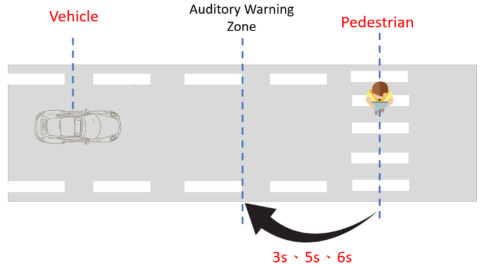
574 Chang and Chen road conditions and included multi-lane straight roads (two- and three-lane roads), intersections, and heavy traffic flow conditions. Low traffic density scenarios represented suburban road environments, including single- and two-lane roads, intersections, and lighter traffic flow conditions. To minimize potential expectancy effects, the experimental route included 14 intersections along a 15-kilometer driving course. Pedestrian crossing events occurred at six predetermined intersections (Intersections 2, 4, 6, 9, 12, and 14). At the beginning of each trial, participants were randomly assigned to either an urban or suburban driving scenario. When the vehicle approached an intersection, pedestrians randomly entered the crosswalk from either side at walking speeds ranging from 1.3 to 1.5 m/s. An auditory warning signal (“beep”) was presented at one of three randomly assigned lead times—3, 5, or 6 seconds prior to the vehicle reaching the crosswalk. Each warning lead time occurred twice during the experiment, with presentation order fully randomized (see Figure 2). To prevent interference from traffic signals, all intersections were set to flashing yellow lights or had no traffic signals. Participants were instructed to remain within their lane and maintain a target speed of 50 km/h throughout the experiment.
Figure 2: Illustration of the experimental scenario design.
Experimental Design This study adopted a 3 (emotional intelligence (EI) level: low, medium, high) × 2 (traffic density: low, high) × 3 (warning lead time: 3 s, 5 s, 6 s) mixed factorial experimental design. The between factor was emotional intelligence level, determined using the WLEIS and categorized into three groups (low, medium, high). The within factors were traffic density (low vs. high) and warning lead time (3 s, 5 s, 6 s). The manipulation of traffic density was based on the experimental framework proposed by Robbins et al. (2019), aiming to examine how different traffic environments influence drivers’ decision-making performance and reaction behavior. The warning system was designed to simulate an advanced driver assistance system (ADAS) that detects pedestrians and provides auditory alerts. The selection of warning lead times was based on previous studies by Yan et al. (2014, 2015) and Qu et al. (2022). The dependent variables in this study included longitudinal acceleration (m/s²) and steering wheel angle variation (degrees). Longitudinal
Investigating Driver Decision-Making in Pedestrian Crossing Scenarios 575 acceleration was used as an indicator of drivers’ longitudinal control behavior, reflecting speed regulation and stability. Steering wheel angle was used to represent lateral control behavior, capturing drivers’ lane-keeping performance and lateral stability. This design allows for the examination of both main effects and interaction effects among environmental, temporal, and individual factors.
Experimental Procedure Prior to the experiment, participants were informed of the study purpose and procedures. After confirming their understanding, all participants signed an informed consent form. Participants completed vision and color screening, followed by the emotional intelligence questionnaire. They confirmed no medical conditions or history of substance use before proceeding. Only individuals with corrected visual acuity of at least 0.8 and no color vision deficiencies were allowed to proceed. Before the formal experiment, participants completed a 10-minute practice session in the driving simulator to become familiar with vehicle controls, including steering, braking, and acceleration. During the formal experiment, the first 2 kilometers of the driving route consisted of standard manual driving to allow participants to adapt to the simulated environment. Subsequently, pedestrian crossing scenarios were introduced under both low- and high-density traffic conditions. Each participant completed six experimental trials involving different combinations of traffic density and warning lead times (3 s, 5 s, and 6 s). Participants were instructed to respond to pedestrian crossing events while maintaining safe vehicle control, including lane keeping and appropriate speed adjustments. Each participant completed all experimental conditions in a randomized order to minimize order effects.
RESULTS
The present study collected and analyzed drivers’ behavioral responses in pedestrian crossing scenarios, focusing on two primary performance indicators: longitudinal acceleration and steering wheel angle. All statistical analyses were conducted using IBM SPSS Statistics Version 22 on the Mac operating system. A mixed-design Analysis of Variance (ANOVA) was performed to examine the effects of emotional intelligence, traffic density, and warning lead time on driving performance. When significant effects were identified, Bonferroni post hoc tests were applied to further explore pairwise comparisons and interaction effects among the factors. The significance level was set at α = 0.05.
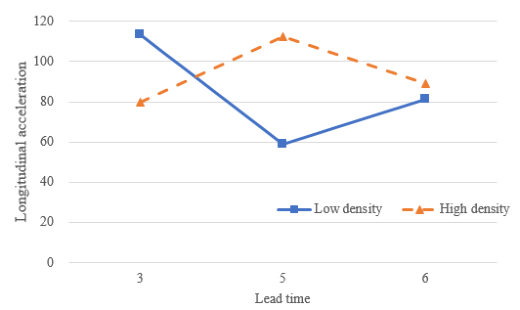
Longitudinal Acceleration A mixed-design ANOVA was conducted to analyze drivers’ longitudinal acceleration across different experimental conditions. The results revealed a significant interaction effect between traffic density and warning lead time on longitudinal acceleration performance (F (2, 54) =15.988, p < 0.001). The Bonferroni post hoc analysis indicated that when the warning lead time was
576 Chang and Chen 3 seconds, drivers exhibited significantly greater variations in longitudinal acceleration under low traffic density conditions compared to high traffic density conditions (p = 0.001). However, in high-density traffic, variability was highest at the 5-second lead time (p < 0.001). This suggests delayed hazard perception. When the warning lead time was 6 seconds, no significant differences in longitudinal acceleration were observed between high- and low-density traffic environments (p = 0.311). Regarding the impact of warning lead times within specific density scenarios, the results showed that under low traffic density, longitudinal acceleration at a 3-second warning lead time was significantly higher than at 5 seconds (p < 0.001) and 6 seconds (p < 0.001). In the high-density condition, longitudinal acceleration at a 5-second warning lead time was significantly higher than at 3 seconds (p = 0.017), while no significant difference was observed compared to 6 seconds (p = 0.065). This result indicates that in low-density environments, a shorter lead time may prevent drivers from having sufficient preparation, leading to inadequate vehicle control and subsequent longitudinal instability. Conversely, in high-density conditions, a 5-second lead time might induce a delay in awareness; specifically, drivers may fail to perceive immediate hazard due to a temporal illusion, resulting in delayed responses when encountering hazards (see Figure 3). However, the analysis showed no significant main effect of emotional intelligence on longitudinal acceleration performance (F (2,27) = 3.022, p = 0.065). This finding suggests that drivers’ emotional intelligence level did not significantly affect their longitudinal vehicle control in the present experimental scenarios.
Figure 3: Interaction effects of traffic density and warning lead time on longitudinal acceleration.
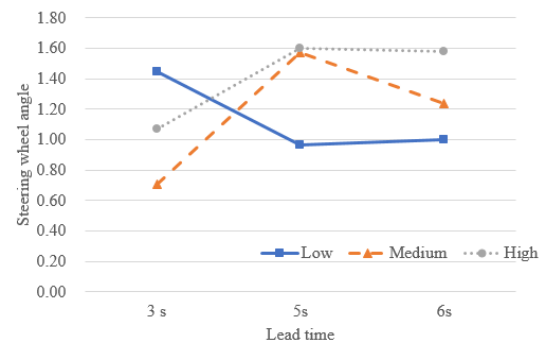
Steering Wheel Angle A similar repeated measures ANOVA was conducted for steering wheel angle data. The results demonstrated a significant interaction effect between EI group and warning lead time on steering wheel angle behavior (F(4, 54) = 2.864, p = 0.032). Post hoc comparisons revealed that for the medium EI group, steering wheel angle performance at a 3-second warning lead time was significantly better than at 5 seconds (p = 0.023), though no significant
Investigating Driver Decision-Making in Pedestrian Crossing Scenarios 577 difference was found compared to the 6-second condition (p = 0.215). However, the warning lead time did not significantly influence steering wheel angle performance for either the high (p = 0.754) and low (p = 0.422) EI groups (see Figure 4). These results suggest that drivers with medium EI are most capable of executing timely responses to pedestrian hazards under shorter warning lead times. Furthermore, no significant differences were observed among the three EI groups across all warning lead time conditions (all ps>0.05). However, no significant main effect of traffic density was observed for steering wheel angle performance (F(1,27) = 0.828, p = 0.371). This indicates that traffic density did not significantly affect the drivers’ lateral control stability.
Figure 4: Interaction effects of EI group and warning lead time on steering wheel angle.
DISCUSSION AND CONCLUSION This study examined to investigate drivers’ decision-making processes in pedestrian crossing scenarios by examining the effects of traffic density, warning lead time, and emotional intelligence on driving performance. Longitudinal acceleration and steering wheel angle were adopted as objective indicators of drivers’ longitudinal and lateral vehicle control. The findings offer empirical evidence on how drivers respond to pedestrian-related hazards under different environmental and temporal conditions.
A key finding of this study is the significant interaction effect between traffic density and warning lead time on longitudinal acceleration. The results revealed that drivers’ longitudinal control performance was strongly influenced by the available time budget, but the direction of this effect varied depending on environmental complexity. Specifically, under low traffic density, drivers exhibited significantly greater variations in longitudinal acceleration when the warning lead time was only 3 seconds, compared to 5- and 6-second conditions. This may indicate reduced allocation of attentional resources under low-demand conditions, consistent with Yan
578 Chang and Chen et al. (2014) and Yan et al. (2015), which indicate that insufficient lead time reduces drivers’ ability to prepare appropriate deceleration strategies. In contrast, a different pattern emerged under high traffic density. In this condition, the most unstable longitudinal performance occurred at the 5-second warning lead time, rather than at 3 seconds. This finding suggests that an intermediate time budget in complex traffic environments may lead to misperception of available response time, whereby drivers perceive sufficient time and consequently delay their responses. Such delayed reactions under high workload conditions have been discussed in earlier research on driver workload and hazard perception (Robbins et al., 2019; Qu et al., 2022). When the warning lead time was extended to 6 seconds, no significant differences were found between high- and low-density conditions, indicating that longer preparation time allows drivers to stabilize their vehicle control regardless of environmental complexity.
Unlike longitudinal acceleration, steering wheel angle performance was not significantly influenced by traffic density. Instead, a significant interaction effect was observed between emotional intelligence group and warning lead time. Post hoc analyses showed that drivers in the medium EI group demonstrated better lateral stability when the warning lead time was 3 seconds compared to 5 seconds. This suggests that drivers with moderate emotional intelligence may be more capable of mobilizing cognitive resources and executing timely steering adjustments under high time pressure. Interestingly, warning lead time did not significantly affect steering behavior for either the high or low EI groups. This may reflect a more balanced integration of emotional regulation and attentional control of emotional regulation and attentional flexibility, enabling them to respond more effectively in urgent situations. These findings are partially consistent with research suggesting that emotional intelligence can influence adaptive decision-making and behavioral regulation under stress (Samu et al., 2025).
In conclusion, this study demonstrates that drivers’ responses in pedestrian crossing scenarios are strongly influenced by the interaction between traffic density and warning lead time, and that emotional intelligence plays a selective role in lateral control under specific temporal conditions. Short warning times are particularly problematic in low-density environments, while intermediate warnings may be less effective in high-density contexts. These findings highlight the need for adaptive, context-aware pedestrian warning systems to enhance driver preparedness and improve road safety. The results contribute to a deeper understanding of driver–pedestrian interaction processes and provide a valuable foundation for future research and technological development aimed at reducing pedestrian-related accidents.
ACKNOWLEDGMENT
The authors gratefully acknowledge the financial support provided by the National Science and Technology Council (NSTC), Taiwan, through the Undergraduate Research Project Grant (Grant No. 113-2813-C-324-010-E).
Investigating Driver Decision-Making in Pedestrian Crossing Scenarios 579 The authors also sincerely thank all participants who took part in the experiment.
REFERENCES
Chen, H. C., Wu, C. H., Lee, Y. J., Liao, S. C., & Lee, M. B. (2005). Validity of the five-item Brief Symptom Rating Scale among subjects admitted for general health screening. Journal of the Formosan Medical Association, 104(11), 824–829. Chen, H., Cao, L., & Logan, D. B. (2011). Investigation into the effect of an
intersection crash warning system on driving performance in a simulator. Traffic injury prevention, 12(5), 529–537. Jonah, B. A. (1986). Accident risk and risk-taking behaviour among young drivers. Accident Analysis & Prevention, 18(4), 255–271. Law, K. S., Wong, C. S., & Song, L. J. (2004). The construct and criterion validity of
emotional intelligence and its potential utility for management studies. Journal of applied Psychology, 89(3), 483–496. Norris, F. H., Matthews, B. A., & Riad, J. K. (2000). Characterological, situational, and behavioral risk factors for motor vehicle accidents: a prospective examination. Accident Analysis & Prevention, 32(4), 505–515. Ou, Y. K., Tseng, P. Y., & Chen, W. R. (2025). The relationship between emotional
intelligence, visual cognitive performance, and driving behavior across different age groups. Traffic Injury Prevention, 1–10. Qu, D., Li, H., Liu, H., Wang, S., & Zhang, K. (2022). Crosswalk safety warning system for pedestrians to cross the street intelligently. Sustainability, 14(16), 10223. Robbins, C. J., Allen, H. A., & Chapman, P. (2019). Comparing drivers’ visual attention
at Junctions in Real and Simulated Environments. Applied ergonomics, 80, 89–101. Samu, J., Yang, C., & Winter, S. R. (2025). Assessing the role of emotional intelligence in risk behavior across safety critical environments: A systematic review. Transportation Research Interdisciplinary Perspectives, 33, 101627. Stephens, A. N., & Ohtsuka, K. (2014). Cognitive biases in aggressive drivers: Does
illusion of control drive us off the road?. Personality and individual differences, 68, 124–129. Sullman, M. J., Stephens, A. N., & Yong, M. (2015). Anger, aggression and road rage behaviour in Malaysian drivers. Transportation research part F: traffic psychology and behaviour, 29, 70–82. Taiwan Traffic Safety Information Network (2023). Road Safety Dashboard.
Retrieved from http://roadsafety.tw/ Ulleberg, P., & Rundmo, T. (2003). Personality, attitudes and risk perception as predictors of risky driving behaviour among young drivers. Safety Science, 41(5), 427–443. World Health Organization. (2023). Global status report on road safety 2023.
Retrieved from https://www.who.int/publications/i/item/9789240086517 Yan, X., Xue, Q., Ma, L., & Xu, Y. (2014). Driving-simulator-based test on the effectiveness of auditory red-light running vehicle warning system based on time- to-collision sensor. Sensors, 14(2), 3631–3651. Yan, X., Zhang, Y., & Ma, L. (2015). The influence of in-vehicle speech
warning timing on drivers’ collision avoidance performance at signalized intersections. Transportation Research part C: Emerging Technologies, 51, 231–242.
LISTED IN THE AHFE DIGITAL BOOKSTORE CATALOGUE
Explore the complete digital volume
Advances in Human Factors of Transportation
Read this individual research paper free through the original publisher, or explore the full digital proceedings book.
ISBN 979-8-950676-00-0
Explore this ISBN in the AHFE Bookstore ↗Listed in the July 2026 bookstore catalogue; search by ISBN to confirm current availability · Digital book purchase optional