Özlem Özden Tunca, Deniz Şarlak, Ayşe Altunkaya Erdoğmuş, Özlem Koç Özden, Özlem Melek Mumcuoğlu (2026). Health Psychology in the Digital Age: Cyberchondria, Health Anxiety, and Online Health Information-Seeking Behaviors. In: Human Factors in Design, Engineering, and Computing. AHFE Open Access, vol. 238, pp. 2162–2173. https://doi.org/10.54941/ahfe1008442
1 Fenerbahçe University, Faculty of Economics, Administrative and Social Sciences, Department of Psychology, Istanbul, Türkiye ↗
2 Ada Kent University, Faculty of Economics, Administrative and Social Sciences, Department of Psychology, Famagusta, Turkish Republic of Northern Cyprus ↗
3 İstanbul Sabahattin Zaim University, Faculty of Humanities and Social Sciences, Department of Psychology, Istanbul, Türkiye ↗
4 Private Clinical Psychology Practice, Ankara, Türkiye
5 Independent Practice / Self-Employed, Istanbul, Türkiye
The widespread availability of digital health resources has improved access to health information; however, repetitive and anxiety-driven online searching may be associated with cyberchondria. This cross-sectional correlational study examined the relationships among cyberchondria, health anxiety, and online health information-seeking behaviors in 400 adults who self-reported having both a physical disability and diabetes. Data were collected using a Personal Information Form, the Health Anxiety Inventory, and the Cyberchondria Severity Scale–Short Form (CSS-12). Regular online health searching was reported by 75% of participants, repetitive searching by 40%, trust in online health information by 55%, and searching to feel reassured or reduce worries by 65%. Cyberchondria was moderately and positively associated with health anxiety (r = .48, p < .001). Health anxiety was also positively associated with regular online health searching (r = .41), repetitive searching (r = .44), and reassurance seeking (r = .39; all p < .001). In hierarchical regression analysis, demographic variables explained 8% of the variance in cyberchondria. Adding diabetes duration, perceived health status, and trust in digital health information increased the explained variance to 24%, while the inclusion of health anxiety increased it to 32%. The final model, which additionally included regular online health searching, repetitive searching, and reassurance-seeking behavior, explained 38% of the variance in cyberchondria, R² = .38, F(10, 389) = 23.84, p < .001. These findings support the relevance of a multidimensional health psychology perspective on cyberchondria and suggest the potential value of integrating human factors and health psychology perspectives in the design of digital health environments.
Digital technologies have transformed the ways in which individuals access, interpret, and act on health information. Online health resources can enhance health literacy, support self-management, facilitate participation in healthcare decisions, and improve access to health-related knowledge across diverse populations. However, online health information seeking is not uniformly beneficial. Repetitive searching, particularly when driven by uncertainty or anxiety, may become difficult to control and may contribute to maladaptive patterns of digital health engagement. A recent systematic review and meta- analysis reported a significant positive association between online health information seeking and health anxiety, suggesting that repeated searching may become problematic when information is ambiguous, excessive, or difficult to evaluate (Wang et al., 2024). In contemporary digital health environments, search engines, symptom-checking resources, social media, and increasingly artificial-intelligence-based systems can expose users to a wide range of diagnostic possibilities, often with limited clinical context.
Cyberchondria refers to excessive or repeated online searching for health- related information that is accompanied by increased anxiety or distress (Starcevic& Berle, 2013; Starcevic & Aboujaoude, 2015). The construct has been conceptualized as multidimensional. The original Cyberchondria Severity Scale included compulsion, distress, excessiveness, reassurance seeking, and mistrust of medical professionals (McElroy & Shevlin, 2014), whereas the later CSS-12 retained four core dimensions—compulsion, distress, excessiveness, and reassurance seeking (McElroy et al., 2019). Accordingly, cyberchondria is conceptually distinct from ordinary online health information seeking. Rather than reflecting information seeking alone, it represents a potentially maladaptive interaction between searching behavior, uncertainty, and emotional responses.
Health anxiety is a central psychological process within this interaction. From a cognitive-behavioral perspective, individuals with elevated health anxiety are more likely to interpret ambiguous bodily sensations or health- related information as threatening and may engage in repeated checking or reassurance-seeking behaviors in an attempt to reduce uncertainty (Salkovskis et al., 2002). Although such behaviors may provide short-term relief, they may also maintain anxiety over time by reinforcing threat-related interpretations and limiting opportunities for corrective learning. In digital contexts, online health searching can function as an easily accessible form of checking and reassurance seeking. Search results presenting numerous possible diagnoses or emphasizing severe outcomes may therefore increase perceived threat rather than resolve uncertainty.
Empirical evidence supports these mechanisms. Systematic reviews and meta-analytic studies have demonstrated positive associations among health anxiety, online health information seeking, and cyberchondria (McMullan et al., 2019; Schenkel et al., 2021; Wang et al., 2024). Longitudinal evidence also suggests that characteristics of the digital information environment may be important, as information overload and trust in online health information have both been positively associated with cyberchondria across different online information sources (Zheng et al., 2023). These findings indicate that
cyberchondria cannot be understood solely as an individual psychological tendency; it also reflects the interaction between users and the digital environments in which health information is encountered.
These processes may be particularly salient for individuals living with both physical disability and diabetes. The coexistence of physical disability and diabetes may increase the need for symptom monitoring, healthcare utilization, self-management, and repeated health-related decision making, thereby increasing reliance on digital health information. Research involving individuals with physical disabilities resulting from neurological conditions has demonstrated substantial engagement in online health information seeking and highlighted the role of contextual and socioeconomic factors in shaping this behavior (Aldharman et al., 2023). Human-centered digital health research has similarly emphasized accessibility, digital health literacy, usability, and effective communication with healthcare professionals for people with disabilities (Ha et al., 2023). Research among individuals with diabetes has also shown that health anxiety is associated with higher levels of cyberchondria (Türedi & Albayrak Coşar, 2025). For individuals managing both disability-related needs and diabetes, online health information seeking may therefore be particularly relevant to daily self-management but may become maladaptive when driven by escalating anxiety or repeated reassurance-seeking needs.
From a human factors perspective, cyberchondria may be understood as emerging from the interaction between users’ psychological characteristics and the design of digital health environments. Information volume, accessibility, perceived credibility, source presentation, interface structure, and communication of uncertainty may influence how users interpret health information and whether searching is discontinued or repeatedly continued. Evidence linking information overload and information trust with cyberchondria illustrates the relevance of these system-level influences (Zheng et al., 2023). Human-centered digital health design therefore requires attention not only to the amount of information provided but also to how that information is organized, contextualized, and communicated to users who may be particularly vulnerable to anxiety-driven searching.
Despite the growing literature on health anxiety, cyberchondria, and online health information seeking, several gaps remain. Much of the existing research has examined these constructs in general population samples or single-condition groups, while relatively limited attention has been given to individuals living simultaneously with both physical disability and diabetes. Psychological factors such as health anxiety are also frequently examined separately from digital-behavioral variables such as searching frequency, repetitive searching, reassurance seeking, and trust in online health information. Consequently, less is known about how psychological characteristics and specific patterns of digital information seeking jointly account for cyberchondria among individuals with complex health-management needs. From a human factors perspective, there is also a need to connect these psychological and behavioral processes with implications for safer, more accessible, and more supportive digital health environments.
Health Psychology in the Digital Age: Cyberchondria, Health Anxiety, and Online 2165 The present study therefore examined the relationships among cyberchondria, health anxiety, and online health information-seeking behaviors in adults living with both physical disability and diabetes. It also evaluated the extent to which demographic and health-related characteristics, diabetes duration, perceived health status, trust in digital health information, health anxiety, regular online health searching, repetitive searching, and reassurance seeking accounted for variance in cyberchondria. It was hypothesized that health anxiety would be positively associated with cyberchondria and that health-related and online information-seeking variables would explain additional variance in cyberchondria beyond demographic characteristics. By examining these relationships in individuals with combined physical disability and diabetes, the study aimed to address an underexplored population and generate findings relevant to human-centered digital health design.
METHOD
Study Design and Participants This study employed a cross-sectional correlational design. The sample consisted of 400 adults who self-reported having both a physical disability and diabetes. The study therefore included a single group of participants with co-occurring physical disability and diabetes rather than separate comparison groups.For the purposes of this study, physical disability was defined as a self-reported physical impairment that limited daily functioning and was associated with ongoing healthcare needs. Reported physical disabilities included orthopedic impairments, such as spinal cord injury, amputation, and mobility disorders, as well as neurological conditions, including multiple sclerosis and stroke-related sequelae. Diabetes diagnoses were self-reported and included both Type 1 and Type 2 diabetes. Diabetes subtypes were not analyzed separately because the primary aim was to examine psychological and digital health information-seeking processes among individuals living with both conditions. Diabetes duration was self-reported and ranged from 1 to 15 years. It referred to the time elapsed since diabetes diagnosis and did not represent the duration of physical disability.
Recruitment and Procedure Participants were recruited through multiple community-based channels, including social media platforms, disability- and diabetes-related associations, and healthcare centers. Recruitment announcements described the general purpose of the study and invited adults living with both physical disability and diabetes to participate. Individuals who expressed interest were screened for eligibility based on self-reported physical disability and diabetes. Eligible participants were informed about the purpose and procedures of the study. Data were collected in 2019. Participation was voluntary, and verbal and written informed consent were obtained from all participants before data collection.
MEASURES Personal Information Form
The researcher-developed Personal Information Form collected demographic information (age, gender, and education), health-related information (diabetes duration and perceived health status), and information on digital health behaviors and perceptions (regular online health searching, repetitive searching, trust in digital health information, and reassurance seeking). Each digital health variable was assessed using a single question with a yes/no response format, coded as 0 = No and 1 = Yes. The reassurance-seeking question assessed whether participants searched for health information online to feel reassured or reduce their worries.
Health Anxiety Inventory Health anxiety was assessed using the 18-item Health Anxiety Inventory developed by Salkovskis et al. (2002) and adapted into Turkish by Aydemir et al. (2013). The first 14 items assess health-related anxiety and responses to bodily sensations, whereas the final four items assess anticipated emotional reactions and perceived consequences in the event of serious illness. Each item is scored from 0 to 3, yielding a total score ranging from 0 to 54, with higher scores indicating greater health anxiety. The Turkish validation study reported high internal consistency (Cronbach’s α = .91). In the present study, Cronbach’s α was .82.
Cyberchondria Severity Scale–Short Form Cyberchondria was assessed using the 12-item CSS-12 developed by McElroy et al. (2019). The scale uses a 5-point Likert-type response format and comprises four three-item dimensions: Excessiveness (Items 1, 3, and 6), Distress (Items 4, 8, and 9), Reassurance Seeking (Items 5, 11, and 12), and Compulsion (Items 2, 7, and 10). Higher total scores indicate greater cyberchondria severity. The original study reported a Cronbach’s α of .90 for the total scale. For the present study, the scale was administered in Turkish following forward–backward translation and expert review. Before the main data collection, the Turkish form was piloted with 30 adults from the same target population. These participants were excluded from the main study sample. Cronbach’s α for the total scale was .79 in the pilot sample and .83 in the main sample.
Statistical Analysis Descriptive statistics were calculated for all study variables. Pearson product–moment correlation coefficients were used to examine bivariate associations among cyberchondria, health anxiety, regular online health searching, repetitive searching, and reassurance-seeking behavior. A four- step hierarchical multiple regression analysis was conducted to examine the incremental contribution of demographic, health-related, psychological, and online health information-seeking variables to cyberchondria. Cyberchondria total score was specified as the dependent variable.
Health Psychology in the Digital Age: Cyberchondria, Health Anxiety, and Online 2167 At Step 1, age, gender, and education level were entered. At Step 2, diabetes duration, perceived health status, and trust in digital health information were added. Perceived health status was reverse-coded for regression (1 = excellent, 5 = very poor), with higher scores indicating poorer perceived health. Health anxiety was entered at Step 3. At Step 4, regular online health searching, repetitive searching, and reassurance-seeking behavior were added.
Changes in explained variance were evaluated using ΔR² and the corresponding F-change statistics. Standardized regression coefficients (β) were examined to assess the relative contribution of individual predictors. Multicollinearity was evaluated using variance inflation factor (VIF) values (Field, 2018). All VIF values were below 2.5, indicating no evidence of problematic multicollinearity. Statistical significance was set at p < .05. Analyses were conducted using IBM SPSS Statistics, version 27.0.
RESULTS
The sample consisted of 400 adults, of whom 52% were female and 48% were male. The mean age was 42.3 years (SD = 11.7), and the mean diabetes duration was 8.6 years (SD = 6.3). The largest educational group comprised participants with an associate or bachelor’s degree (34%).Regarding perceived health status, 8% rated their health as very poor, 22% as poor, 45% as fair, 20% as good, and 5% as excellent. Regarding digital health behaviors and perceptions, 75% of participants reported regularly searching for health information online, 40% reported repetitive searching for the same health topics, 55% reported trusting online health information, and 65% reported searching online to feel reassured or reduce their worries. The mean health anxiety score was 28.4 (SD = 8.2), and the mean cyberchondria score was 34.2 (SD = 7.6). Cyberchondria was moderately and positively associated with health anxiety, r = .48, p < .001. Health anxiety was also positively associated with regular online health searching, r = .41, p < .001, repetitive searching, r = .44, p < .001, and reassurance seeking, r = .39, p < .001. Cyberchondria was positively associated with diabetes duration, r = .22, p < .001, trust in digital health information, r = .19, p < .01, regular online health searching, r = .38, p < .001, repetitive searching, r = .42, p < .001, and reassurance seeking, r = .35, p < .001. Cyberchondria was negatively associated with perceived health status under the original coding, r = −.26, p < .001.
Table 1: Pearson correlations among focal study variables.
Note. N = 400. Perceived health status was coded from 1 = very poor to 5 = excellent. *p < .05. **p < .01. ***p < .001.
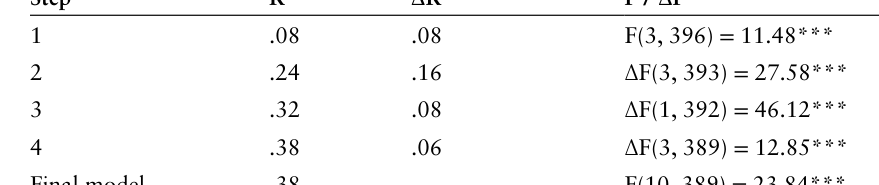
A four-step hierarchical multiple regression analysis was conducted with cyberchondria total score as the dependent variable. All VIF values were below 2.5. At Step 1, age, gender, and education level collectively explained 8% of the variance in cyberchondria, R² = .08, F(3, 396) = 11.48, p < .001. Younger age, β = −.18, p = .001, and lower education level, β = −.14, p = .009, were significant predictors, whereas gender was not, β = .06, p = .226. At Step 2, diabetes duration, reverse-coded perceived health status, and trust in digital health information were added. Explained variance increased to 24%, ΔR² = .16, ΔF(3, 393) = 27.58, p < .001. Diabetes duration, β = .21, p < .001, trust in digital health information, β = .19, p < .001, and more negative perceived health status, β = .24, p < .001, were significant positive predictors. At Step 3, health anxiety explained an additional 8% of the variance, ΔR² = .08, ΔF(1, 392) = 46.12, p < .001, increasing total explained variance to 32%. Health anxiety was a significant positive predictor, β = .31, p < .001. At Step 4, regular online health searching, repetitive searching, and reassurance-seeking behavior were added. Together, these variables explained an additional 6% of the variance, ΔR² = .06, ΔF(3, 389) = 12.85, p < .001. Regular online health searching, β = .22, p < .001, repetitive searching, β = .20, p = .001, and reassurance-seeking behavior, β = .17, p = .002, were all significant positive predictors. Health anxiety remained significant in the final model, β = .22, p < .001. The final model explained 38% of the variance in cyberchondria, R² = .38, F(10, 389) = 23.84, p < .001.
Note. N = 400. B = unstandardized coefficient; SE = standard error; β = standardized coefficient; VIF = variance inflation factor; ΔR² = change in explained variance. Perceived health status was reverse-coded for regression (1 = excellent, 5 = very poor), with higher scores indicating poorer health. Higher education scores indicated greater educational attainment. Coefficients are reported for the step at which each predictor was entered; the final-model coefficient for health anxiety is additionally presented. ***p < .001.
DISCUSSION
The present study examined cyberchondria, health anxiety, and online health information-seeking behaviors among adults living with both physical disability and diabetes. Cyberchondria was moderately and positively associated with health anxiety and was also related to diabetes duration, poorer perceived health, trust in digital health information, regular online health searching, repetitive searching, and reassurance-seeking behavior. Together, these findings suggest that cyberchondria in individuals with complex health-management needs reflects the interaction of psychological vulnerability, health-related experiences, and patterns of engagement with digital health information. The association between health anxiety and cyberchondria is consistent with systematic reviews and meta-analytic findings showing that individuals with elevated health anxiety are more likely to engage in excessive or repetitive online health information seeking (McMullan et al., 2019; Schenkel et al., 2021; Wang et al., 2024). Health anxiety remained a significant predictor even after demographic, health- related, and digital-behavioral variables were considered. This pattern is compatible with cognitive-behavioral accounts in which health-related uncertainty and threatening interpretations of bodily sensations promote repeated checking and reassurance seeking.
The hierarchical regression analysis provides further insight into the incremental contribution of different domains. Demographic characteristics explained 8% of the variance in cyberchondria. The addition of diabetes duration, perceived health status, and trust in digital health information
increased explained variance to 24%. Health anxiety increased this to 32%, and regular online health searching, repetitive searching, and reassurance seeking further increased explained variance to 38%.
The positive association between trust in digital health information and cyberchondria is noteworthy. Trust is generally necessary for meaningful engagement with health information; however, greater trust may also increase reliance on digital sources when individuals encounter ambiguous symptoms or health concerns. This finding is compatible with evidence linking information trust and information overload to cyberchondria (Zheng et al., 2023). The result should not be interpreted as indicating that trust itself is harmful. Rather, it emphasizes the importance of calibrated trust and users’ capacity to evaluate source credibility, uncertainty, and contextual relevance.
Health anxiety accounted for additional variance beyond demographic and health-related factors. Its standardized coefficient decreased from β = .31 when initially entered to β = .22 in the final model after regular online health searching, repetitive searching, and reassurance seeking were included. This reduction suggests statistical overlap between health anxiety and specific digital searching behaviors. Because the design was cross-sectional, however, the pattern should not be interpreted as evidence of mediation or causal ordering. The inclusion of repetitive searching provides an important extension to the analysis. Regular online health searching, repetitive searching, and reassurance seeking collectively accounted for an additional 6% of the variance in cyberchondria and each remained significant in the final model. These findings suggest that the quantity of searching alone does not fully characterize maladaptive digital health engagement. Repeatedly returning to the same health topics and searching specifically for reassurance provide additional information about cyberchondria beyond regular online health searching.
This distinction is especially relevant because online health information seeking can serve adaptive functions for people managing chronic conditions. Adults living with both physical disability and diabetes may use digital resources to understand symptoms, treatment recommendations, accessibility issues, lifestyle management, and healthcare decisions. Frequent searching should therefore not automatically be interpreted as maladaptive. Greater concern arises when searching becomes repetitive, difficult to terminate, or primarily motivated by anxiety reduction. From a human factors perspective, the results support viewing cyberchondria as an interaction between user characteristics and digital information environments. Search interfaces, symptom-checking tools, social media platforms, and artificial-intelligence- based health information systems can influence searching through information volume, ordering, credibility cues, framing, and communication of uncertainty.
Digital health systems may therefore benefit from transparent sourcing, clear communication of uncertainty, accessible explanations of risk, appropriate contextualization of symptom information, and guidance regarding when professional assessment is warranted. For users with disabilities, psychological safety should be considered alongside accessibility and usability.
Health Psychology in the Digital Age: Cyberchondria, Health Anxiety, and Online 2171 Clinical and Human Factors Implications
The findings suggest that interventions addressing cyberchondria should focus not only on the amount of online searching but also on its function and pattern. Psychoeducation may address anxiety-driven checking, repetitive searching, reassurance seeking, evaluation of online sources, tolerance of uncertainty, and the appropriate use of digital health resources as complements rather than substitutes for professional healthcare. At the system level, digital health platforms may reduce unnecessary anxiety by providing transparent source information, clearly distinguishing evidence-based content from user-generated information, contextualizing risk, avoiding disproportionate emphasis on severe but unlikely diagnoses, and directing users toward clinically appropriate care when indicated.
Limitations The cross-sectional correlational design precludes conclusions regarding causality or temporal direction. Health anxiety may increase repetitive online searching, repeated searching may increase health anxiety, or the relationship may be reciprocal.The study relied substantially on self-report data, including information concerning physical disability and diabetes, which may have introduced recall or reporting bias. Type 1 and Type 2 diabetes were not analyzed separately, and variations in the type and severity of physical disability were not examined. These factors may influence health information needs and patterns of digital engagement. Regular online health searching, repetitive searching, trust in digital health information, and reassurance seeking were assessed using researcher-developed single-item indicators. These items do not provide the psychometric breadth offered by validated multi-item measures. Because the data were collected in 2019, the findings may not fully reflect contemporary online health information-seeking practices, particularly those involving conversational AI.Conceptual overlap may exist between some researcher-developed behavioral indicators and the dimensions of the CSS-12. Reassurance seeking overlaps conceptually with the CSS-12 reassurance-seeking dimension, whereas repetitive searching is related to its excessiveness dimension. Although the VIF values did not indicate problematic multicollinearity, this conceptual proximity should be considered when interpreting the regression coefficients. Participants were recruited through social media, disability- and diabetes- related associations, and healthcare centers. This recruitment strategy may have favored individuals who were comparatively engaged with healthcare services or digital information resources, thereby limiting the generalizability of the findings.The model explained 38% of the variance in cyberchondria, indicating that a substantial proportion of the variance remained unexplained. Future studies should examine additional factors, including intolerance of uncertainty, emotion regulation, digital health literacy, eHealth literacy, information overload, source credibility, and artificial-intelligence-based health information seeking.
Future Directions Future studies should use longitudinal and experimental designs to clarify temporal relationships among health anxiety, online searching, repetitive searching, reassurance seeking, and cyberchondria. Validated multidimensional measures of digital health information-seeking behaviors should be preferred over single-item indicators. Further research should also investigate artificial-intelligence-based health information seeking. Conversational AI systems may alter traditional patterns of reassurance seeking, perceived expertise, information trust, and repeated health-related questioning. These processes may be especially important for individuals with chronic conditions and disabilities who rely heavily on digital resources.
CONCLUSION
Cyberchondria among adults living with both physical disability and diabetes was associated with health anxiety, poorer perceived health, longer diabetes duration, trust in digital health information, and specific online health information- seeking behaviors. The final hierarchical regression model explained 38% of the variance in cyberchondria. Health anxiety, regular online health searching, repetitive searching, and reassurance-seeking behavior remained significant predictors in the final model. These findings suggest that cyberchondria is best understood as a multidimensional phenomenon involving both psychological processes and patterns of interaction with digital health information. Integrating health psychology with human factors principles may contribute to digital health environments that are accessible and informative while also reducing the potential for anxiety-driven and repetitive information seeking.
REFERENCES
Aldharman, S. S., Althagafi, M. K., Alzahrani, A. A., Alshahrani, L. H., Abu Zahirah, M.
O., Alharthi, A. S., Madkhali, A., & Al-Qahtani, Z. (2023). Online health information seeking by individuals with physical disabilities caused by neurological conditions in Saudi Arabia. Cureus, 15(1), e34460. https://doi.org/10.7759/cureus.34460 Aydemir, O., Kirpinar, I., Sati, T., Uykur, B., & Cengisiz, C. (2013). Reliability and validity of the Turkish version of the Health Anxiety Inventory. Noropsikiyatri Arsivi, 50(4), 325–331. https://doi.org/10.4274/npa.y6383 Field, A. (2018). Discovering statistics using IBM SPSS statistics (5th ed.). Sage
Publications. Ha, S., Ho, S. H., Bae, Y. H., Lee, M., Kim, J. H., Kim, J. H., & Lee, J. (2023). Digital health equity and tailored health care service for people with disability: User- centered design and usability study. Journal of Medical Internet Research, 25, e50029. https://doi.org/10.2196/50029 McElroy, E., & Shevlin, M. (2014). The development and initial validation of
the Cyberchondria Severity Scale (CSS). Journal of Anxiety Disorders, 28(2), 259–265. https://doi.org/10.1016/j.janxdis.2013.12.007 McElroy, E., Kearney, M., Touhey, J., Evans, J., Cooke, Y., & Shevlin, M. (2019). The CSS-12: Development and validation of a short-form version of the Cyberchondria Severity Scale. Cyberpsychology, Behavior, and Social Networking, 22(5), 330–335. https://doi.org/10.1089/cyber.2018.0624
Health Psychology in the Digital Age: Cyberchondria, Health Anxiety, and Online 2173 McMullan, R. D., Berle, D., Arnáez, S., & Starcevic, V. (2019). The relationships
between health anxiety, online health information seeking, and cyberchondria: Systematic review and meta-analysis. Journal of Affective Disorders, 245, 270–278. https://doi.org/10.1016/j.jad.2018.11.037 Salkovskis, P. M., Rimes, K. A., Warwick, H. M. C., & Clark, D. M. (2002). The Health Anxiety Inventory: Development and validation of scales for the measurement of health anxiety and hypochondriasis. Psychological Medicine, 32(5), 843–853. https://doi.org/10.1017/S0033291702005822 Schenkel, S. K., Jungmann, S. M., Gropalis, M., & Witthöft, M. (2021).
Conceptualizations of cyberchondria and relations to the anxiety spectrum: Systematic review and meta-analysis. Journal of Medical Internet Research, 23(11), e27835. https://doi.org/10.2196/27835 Starcevic, V., & Aboujaoude, E. (2015). Cyberchondria, cyberbullying, cybersuicide, cybersex: “New” psychopathologies for the 21st century? World Psychiatry, 14(1), 97–100. https://doi.org/10.1002/wps.20195 Starcevic, V., & Berle, D. (2013). Cyberchondria: Towards a better understanding of
excessive health-related Internet use. Expert Review of Neurotherapeutics, 13(2), 205–213. https://doi.org/10.1586/ern.12.162 Türedi, M. G., & Albayrak Coşar, A. (2025). Diyabet hastalarında sağlık kaygısının siberkondri düzeylerine etkisi: Bir eğitim ve araştırma hastanesi örneği. Turkish Journal of Diabetes and Obesity, 9(1), 48–60. https://doi.org/10.25048/ tudod.1569492 Wang, Z., Hu, Y., Huang, B., Zheng, G., Li, B., & Liu, Z. (2024). Is there a relationship
between online health information seeking and health anxiety? A systematic review and meta-analysis. Health Communication, 39(12), 2524–2538. https:// doi.org/10.1080/10410236.2023.2275921 Zheng, H., Chen, X., Jiang, S., & Sun, L. (2023). How does health information seeking from different online sources trigger cyberchondria? The roles of online information overload and information trust. Information Processing & Management, 60(4), 103364. https://doi.org/10.1016/j.ipm.2023.103364
SEARCH THE AHFE DIGITAL BOOKSTORE BY ISBN
Explore the complete digital volume
Human Factors in Design, Engineering, and Computing
Read this individual research paper free through the original publisher, or explore the full digital proceedings book.