Martin Pszeida, Yannick Lieb, Wolfgang Weiss, Christian Poglitsch, Jördis Rausch, Manon Mannherz, Jochen A Mosbacher, Johanna Pirker, Knut Möller, Ludger Tebartz van Elst, Lucas Paletta (2026). Emotional Regulation of Adults with high-functioning ASD Using Pupillometry from Real and Artificial Stimuli. In: Cognitive Computing and Internet of Things. AHFE Open Access, vol. 205, pp. 197–211. https://doi.org/10.54941/ahfe1007374
Social interaction deficits are a core characteristic of Autism Spectrum Disorder (ASD) and are often linked to atypical attentional processing of socially relevant cues (Baron-Cohen, 1995). Understanding these mechanisms is essential for developing sensor-based learning analytics in serious games. Eye movement analysis provides a non-invasive and cost-effective approach to derive digital biomarkers for ASD (Frazier et al., 2018). In this study, we examined pupillometry features at rest and during emotion processing, building on earlier findings that pupil dynamics reflect autonomic and cognitive function in ASD (Anderson et al., 2013; Pszeida et al., 2025). We specifically tested whether video-based virtual stimuli elicit pupillometric responses comparable to real human faces.Participants included N = 20 neurodiverse (ND) adults with ASD (M = 26.20, SD = 4.78; 50% female) and N = 20 neurotypical (NT) controls (M = 23.71, SD = 2.93; 33% female). All participants completed a standardized psychological test battery and the digital Emotion Evaluation and Regulation Test (EERT), which presented video stimuli of six emotions (joy, sadness, fear, disgust, anger, neutral). Stimuli were drawn from (i) the validated FACES database (Ebner et al., 2010) and (ii) artificially generated virtual character faces (Poglitsch et al., 2024). ASD classification was supported by the RAADS-R screening tool (Ritvo et al., 2011), with the ND group showing markedly elevated scores (ND: M = 128.72, SD = 38.36; NT: M = 17.24, SD = 12.47). Cognitive profiles indicated a high-functioning ASD subgroup based on CFT-20R fluid intelligence scores (Weiß, 2008; ND: M = 116.95, SD = 11.22; NT: M = 114.48, SD = 13.05).Participants viewed four individual actors expressing all six emotions in real and virtual face videos, each lasting 2 seconds. The first 2 seconds following stimulus onset were analyzed relative to a 500 ms baseline period. Pupillometric features included peak dilation latency, dilation amplitude, and time-to-recovery.For emotion ‘anger’ expressed by real faces, ND participants showed a delayed time-to-peak dilation of approximately 200 ms, increased dilation amplitude by ~0.1 mm, and prolonged recovery time by ~600 ms compared to NT individuals. Neutral real faces produced group differences only in peak latency (~200 ms). Virtual anger stimuli yielded comparable effects: ND participants again demonstrated delayed peak latency (~200 ms), larger dilation amplitude (~0.1 mm), and delayed recovery (~500 ms).These results indicate that both real and virtual emotional face videos elicit distinct pupillometric signatures in high-functioning ASD. Latency to peak dilation, amplitude increase, and delayed recovery consistently differentiated ND from NT participants. The findings suggest that pupil dynamics may serve as reliable biomarkers of emotion regulation and attentional processing in ASD and highlight the feasibility of using virtual stimuli for scalable assessment in digital and game-based environments.
Autism Spectrum Disorder (ASD) is characterized by persistent differences in social communication and interaction, often accompanied by atypical attention to socially relevant cues such as faces, gaze direction, and affective expressions (Guillon et al., 2014). In adulthood, these differences remain highly relevant because they influence everyday participation in education, work, and interpersonal settings. One particularly important challenge concerns the recognition and regulation of emotions during social interaction (Baron-Cohen, 1995; Howe, 2023). When emotionally relevant information
is processed in an atypical way, misunderstandings can arise not only at the level of emotion recognition accuracy, but also in the temporal dynamics of orienting, arousal, and recovery. For human factors research, this is important because social behaviour in digital environments is increasingly mediated by interactive systems that can, in principle, sense and respond to user state.
Eye tracking provides a promising route toward such sensing. It is non- invasive, increasingly affordable, and well suited for capturing fine-grained attentional behaviour during naturalistic computer-based tasks. In ASD research, gaze behaviour has repeatedly been used to study how visual attention is distributed across eyes, mouth, and non-social regions of a scene (Guillon et al., 2014). Pupillometry extends this approach by adding a measure of autonomic and cognitive response dynamics (Mathôt, 2018). Pupil dilation is sensitive to attentional effort, emotional salience, and regulatory load, and may therefore reveal aspects of socio-emotional processing that are not visible in overt behavioural responses alone (Langer et al., 2023). This makes pupillometry attractive for sensor-based learning analytics in serious games, where online indicators of engagement, challenge, and emotional load are needed to personalize feedback and task difficulty (Figure 1).
Figure 1: The objective is to extract relevant biomarkers from pupillometry and eye-tracking measures for the exploration of learning analytics in ASD-oriented serious games. This would enable improvements in the training of people with ASD to successfully engage in social scenarios. The picture shows the virtual character “Camilla” in communication with the user (the social gaze point is super-imposed in green color).
The present paper builds on this perspective and examines whether video-based real and virtual emotional faces elicit comparable pupillometric signatures in adults with ASD. The comparison is relevant for applied human factors and ergonomics because virtual characters offer clear advantages for digital intervention design: they are controllable, reproducible, and scalable, and they can be embedded in interactive learning environments. At the same time, their practical value depends on whether they trigger response patterns that are functionally similar to those elicited by real human faces. If this is the case, virtual stimuli could support valid assessment and adaptive training in serious-game settings.
Emotional Regulation of Adults With High-Functioning ASD 199 Against this background, the study investigates pupillometric responses at rest and during emotion processing in high-functioning adults with ASD and neurotypical controls. The focus lies on peak dilation latency, dilation amplitude, and recovery time as candidate digital biomarkers. By linking these measures to a structured Emotion Recognition and Regulation Task (Pszeida et al., 2025), the paper aims to contribute to the design of objective learning analytics that are sensitive to temporal aspects of socio-emotional processing. Beyond group comparison, the broader goal is to clarify whether virtual face stimuli can serve as a scientifically credible basis for scalable digital assessment and future adaptive intervention systems for adults with ASD.
A further motivation is methodological. Many existing autism studies have relied on static photographs, child samples, or coarse behavioural outcome measures. However, adult populations with ASD, especially those with average or above-average cognitive ability, may perform adequately on accuracy-based tasks while still showing atypical processing dynamics. In such cases, latency and recovery measures can reveal differences that remain hidden when only socially expected versus atypical responses are considered. Dynamic video stimuli are also closer to real social interaction than still images and therefore increase ecological validity for human-centred system design.
This work addresses the intersection of neurodiversity, learning analytics, and digital therapeutics. Rather than treating eye tracking as a diagnostic endpoint alone, the study interprets pupillometric measures as operational indicators that can eventually inform adaptive interfaces, user modelling, and individualized training trajectories. The paper therefore moves from a purely descriptive comparison of groups toward an applied interpretation: which eye-tracking-based markers appear robust enough to guide future adaptive serious games for socio-emotional learning in adults with ASD.
The longer-term vision is a paradigm shift toward personalized digital therapy using a serious game framework (Wunsch et al., 2025). At its core is a two-way Digital Therapy Solution (2-DTS’) that leverages computer vision and psychophysiological measures to deliver interactive, individualized emotion recognition training. In such a two-way digital therapy solution, hyper-realistic avatars can serve as reproducible emotional templates embedded in gamified social scenarios. Personalization is central: the system should not only present tasks but also sense attention and regulatory state through eye tracking and related psychophysiological markers.
RELATED WORK
Emotion Regulation and Eye Tracking in Adults With ASD Research on social attention in ASD has consistently shown that facial emotion processing is shaped by atypical allocation of visual attention. Meta-analytic evidence indicates that emotion recognition is, on average, less accurate in autistic individuals than in neurotypical groups, although findings vary with task demands and stimulus modality (Uljarević &
Hamilton, 2013). Eye-tracking studies refine this view by showing that the issue is not only whether an emotion is recognized correctly, but also how attention is distributed across informative facial regions over time. Atypical fixation patterns to the eye region, increased attention to less informative areas, and greater variability in scan paths have all been associated with ASD (Guillon et al., 2014).
For adults, this is especially relevant because explicit performance can appear relatively intact while underlying processing remains atypical. A systematic review and meta-analysis of eye-tracking studies in adults with ASD concluded that fixation behaviour toward eyes and non-social regions can differentiate autistic and non-autistic adults, particularly in passive viewing paradigms (Setien-Ramos et al., 2023). Dynamic tasks are therefore valuable because they capture the temporal unfolding of social attention rather than a single static snapshot.
Emotion regulation adds a second layer to this account. Difficulties in ASD are not limited to decoding affective expressions; they also involve altered modulation of attention and arousal when emotionally salient material is encountered. In adults with ASD, maladaptive cognitive emotion regulation strategies have been associated with higher anxiety and depression, highlighting the functional importance of regulation processes (Bruggink et al., 2016). Eye-tracking work further suggests that regulation-related mechanisms can be reflected in sustained attention to negative material, reduced flexibility of orienting, or delayed disengagement from emotionally salient cues (García-Blanco et al., 2017). Anger cues are particularly relevant because they combine strong social salience with elevated regulatory demand. Meta-analytic evidence suggests a small but meaningful attentional bias toward threatening faces in ASD, with larger effects in adults than in children (Fan et al., 2021).
Stimulus realism is another key issue for applied design. Virtual characters offer experimental control, repeatability, and scalability, but their value for assessment and training depends on whether they engage mechanisms like those elicited by real human faces. Work on dynamic emotional faces in autistic adults indicates that atypical visual attention remains detectable under more ecologically valid conditions, although outcomes depend on task demands and stimulus design (Macinska et al., 2024). This makes the validation of virtual stimuli essential for serious games and XR-based interventions (Poglitsch et al., 2024).
Pupillometry as a Digital Biomarker Layer Pupillometry adds a particularly valuable dimension to this literature. Whereas fixations and saccades indicate where a person looks, pupil dynamics provide information about arousal regulation, attentional effort, and temporal processing load. A systematic review and meta-analysis concluded that pupillary responses differ between individuals with and without ASD, with especially robust indications for altered latency and response dynamics,
Emotional Regulation of Adults With High-Functioning ASD 201 although interpretations vary across paradigms (de Vries et al., 2021). Earlier work also showed atypical baseline pupil size and autonomic indicators in ASD, supporting the view that pupil measures can index altered autonomic regulation during social and emotional processing (Anderson et al., 2013). Broader meta-analytic evidence on gaze behaviour further supports the use of eye tracking as a scalable biomarker approach in autism research (Frazier et al., 2017).
Overall, the literature points to three unresolved issues: adult ASD requires methods sensitive to process dynamics rather than only accuracy; emotion regulation should be studied together with visual attention; and the translational value of virtual characters depends on whether they elicit pupillometric signatures comparable to those observed with real faces. The present study addresses these gaps by focusing on adults, dynamic emotional videos, and pupil-based temporal biomarkers.
STUDY PROTOCOL Participants and Screening
The study was performed at the University Clinics in Freiburg, Germany, and followed a case-control design. The subject-level exploratory dataset comprised 41 adults, including 20 participants with ASD and 21 neurotypical controls (NTC). The ASD group had a mean age of 26.20 years (SD = 4.78; 50% female), while the control group had a mean age of 23.71 years (SD = 2.93; approximately one third female). Marker-specific analyses used the available valid cases after eye-tracking quality control.
To characterize the sample, participants completed a standardized psychological battery including the RADS-R for autism-related symptomatology (Rausch et al., 2025; German version of RAADS-R, Ritvo et al., 2011) and the CFT-20R for fluid intelligence (Weiß, 2008). The ASD group showed markedly elevated RADS-R scores (M = 128.72, SD = 38.36) compared with controls (M = 17.24, SD = 12.47), while fluid intelligence was comparable between groups (ASD: M = 116.95, SD = 11.22; NTC: M = 114.48, SD = 13.05), indicating a high-functioning ASD subgroup.
Emotion Recognition and Regulation Task The experimental core was the Emotion Recognition and Regulation Task (ERRT), implemented as a digital eye-tracking task. Participants viewed short video clips showing six basic emotional expressions—joy, sadness, fear, disgust, anger, and neutral—displayed by real human faces from the validated FACES database (Ebner et al., 2010) and by artificially generated virtual faces (Figure 2). Conventional analyses used pre-stimulus normalization and peak/latency parameters; the exploratory analysis additionally used trial- based baseline correction and AUC features during the first four seconds after stimulus onset.
Figure 2: (Left) 4 emotionally weighted stimuli from the FACES database (Ebner et al., 2010). (Right) 4 artificially generated characters representing emotionally neutral, virtual stimuli (Poglitsch et al., 2024; Pszeida et al., 2025).
Pupillometric outcome variables were selected to capture complementary aspects of response dynamics (Hershman et al., 2023). The predefined markers comprised peak constriction, latency to peak constriction, the interval from constriction to subsequent dilation, and 50% recovery time. For the exploratory analysis, baseline-corrected trial-level curves were also summarized as positive AUC, absolute AUC, peak dilation, peak constriction, latency measures, subject-level trial variability, emotion- related differentiation, and real-versus-avatar contrasts. Positive AUC was interpreted as cumulative phasic dilation above the baseline-corrected curve.
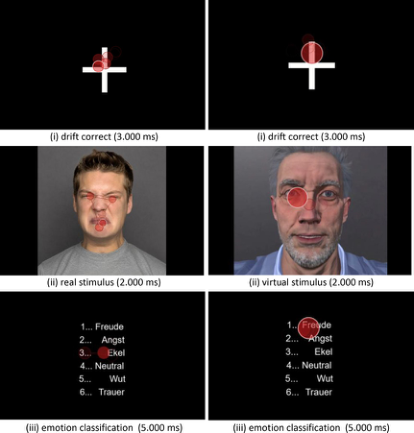
Figure 3: Emotion recognition and regulation task. Fixations are visualized in tobii pro lab. The task includes user-based emotion classification across six categories: joy, fear, disgust, neutral, anger, and sadness. Stimuli include virtual faces and FACES database stimuli (Ebner et al., 2010).
Emotional Regulation of Adults With High-Functioning ASD 203 The objective of our work is to examine facial emotion processing in the context of attentional switching to socially relevant stimuli as an important avenue to elucidate the mechanisms underlying social differences in ASD. The presented work addresses, particularly the potential application in sensor- based learning analytics in serious games for people with ASD.
The Standard Operating Procedure (SOP; Figure 3) was structured as follows. After informed consent and familiarization, participants completed standardized psychological tests, including the level of intelligence (CFT 20-R; Weiß, 2006), and measuring of ASD traits in adults (RADS-R). They then performed the ERRT while eye tracking was recorded. The task sequence consisted of drift correction, stimulus presentation, and emotion classification; wearable cardiovascular sensing was prepared for future multimodal extensions. Eye tracking was performed with a Tobii Fusion Pro system at 250 Hz to enable analysis of fixation, saccade, and pupil-diameter features in Tobii Pro Lab. A Polar Verity Sense sensor was additionally prepared to capture photoplethysmography-derived heart rate and heart- rate-variability measures for future multimodal extensions.
The Ethics Committee at the University Freiburg Clinics authorized the study (No. 25-1071-S1).
Research Hypotheses and Learning Analytics The protocol was designed from a learning-analytics perspective. In addition to explicit task performance, the aim was to derive objective biomarkers that can later be integrated into a serious game for adults with ASD. In this sense, the ERRT served as a controlled probe task to identify pupil-based markers of socio-emotional processing that are sufficiently stable, discriminative, and interpretable for adaptive digital environments. The comparison between real and virtual faces was central because virtual characters are the intended medium for later game-based assessment and training.
The main hypothesis was that adults with ASD would show altered pupillometric dynamics during emotion processing compared with neurotypical controls. A second hypothesis was that virtual emotional faces would evoke response profiles comparable to real faces. The predefined repeated-measures analyses tested effects of emotion and stimulus format with group as a between-subject factor. The exploratory feature-level analyses used Welch group comparisons, Hedges g, false discovery rate correction across all tested features, and quality-filtered sensitivity checks based on valid-trial rate.
EXPERIMENTAL RESULTS The analysis focused on pupillometric responses, operationalized as changes in pupil dilation. Responses were examined during the first 4.000 ms after video stimulus onset (each video with duration of 2.000 ms was repeated) and normalized to the specific mean pupil diameter recorded during the 500 ms baseline period (depicting crosshair as drift correct with a total duration of 3.000 ms) before stimulus presentation.
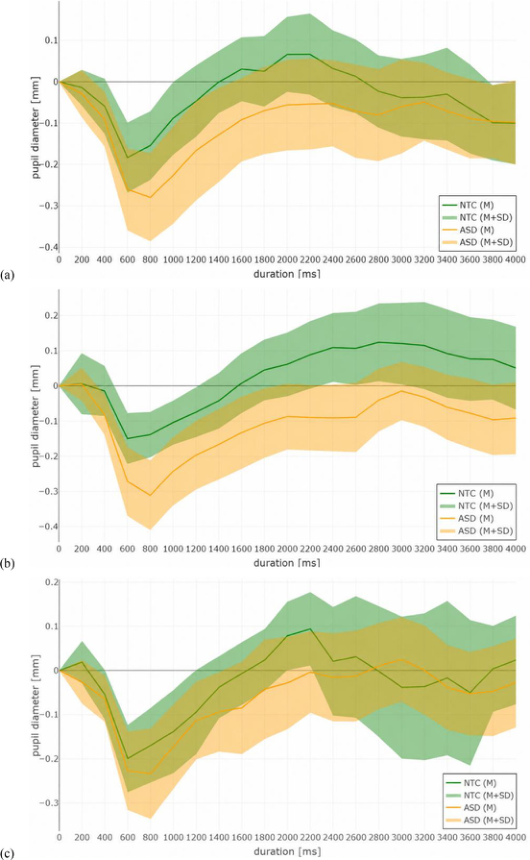
Figure 4 shows various time courses of pupil size at 200 ms sampling intervals, in the context of expressing emotion of ‘anger’ as well as ‘neutral’ expression, with mean (M) and standard deviations (SD).
Figure 4: Pupillometric responses on (a) real and (b) virtual face video stimuli expressing emotion of ‘anger’, as well as on (c) real ‘neutral’ faces, depicting larger pupil response magnitudes and delayed time-to-peak pupil dilation of adult persons with ASD compared with neurotypical controls (NTC), with mean (M) and standard deviations (SD).
Predefined Peak, Latency, and Recovery Markers The predefined analyses first evaluated conventional pupillometric markers derived from peak and latency parameters. These analyses were important because they represent the most direct candidate biomarkers for online use
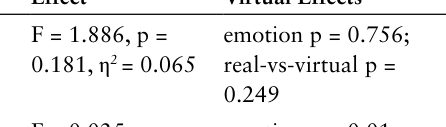
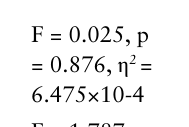
Emotional Regulation of Adults With High-Functioning ASD 205 in a learning-analytics system. Across the four conventional markers, the results did not provide stable evidence for a corrected ASD-versus-NTC group difference (Table 1).
Overall, the most consistent effects were related to emotion and stimulus format, especially for latency-based parameters. However, an anger-specific analysis of 50% recovery revealed a significant group effect, F = 5.980, p = .020, ηp² = .157, with longer recovery in ASD than in NTC participants (390.8 ms vs. 228.8 ms), indicating slower post-response pupil recovery in this condition.
Table 1: Predefined repeated-measures ANOVA results from the conventional peak-, latency-, and recovery-based pupillometry markers. The quality-filtered recovery effect is treated as exploratory because of marker-specific missingness and reduced sample size.
Table available in the original PDF paper.
Interpretation
Marker Main Group Effect
Emotion / Real-vs- Virtual Effects
Peak constriction / negative peak amplitude
Equation reproduced from the original PDF.
No robust group effect; no relevant stimulus-format effect.
Latency to peak constriction
Equation reproduced from the original PDF.Equation reproduced from the original PDF.
Timing varied by emotion and stimulus format, but not by group.
Constriction-to- dilation interval
Strong stimulus-format effect; no group separation.
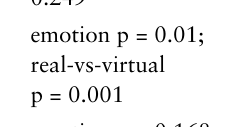
F = 1.787, p = 0.189, η2 = 0.045 emotion p = 0.168; real-vs-virtual p < 0.001 50% recovery after constriction F = 3.033, p = 0.096, η2 = 0.121 emotion p=0.066; real-vs-virtual p = 0.347
Uncorrected group trend only; quality-filtered result remained exploratory.
Taken together, the conventional markers support the interpretation that real and virtual social stimuli evoke measurable pupil-response dynamics, but they do not provide a sufficiently robust stand-alone group marker. This is consistent with the internal data summary indicating that the originally selected four parameters were mainly sensitive to stimulus and emotion effects rather than to corrected group-level ASD-versus-NTC differences.
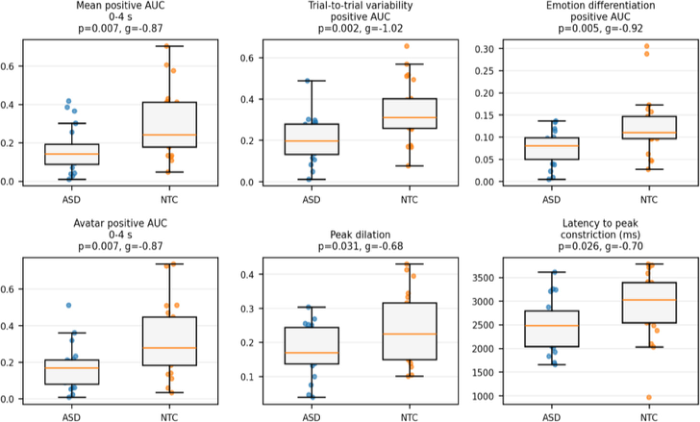
Exploratory AUC-Based and Variability-Sensitive Features To examine whether broader temporal summaries of the pupil curve were more sensitive, a second feature-level analysis was conducted on baseline- corrected trial data (Figure 5, Table 2). The strongest exploratory effects were observed for positive AUC features in the first four seconds after stimulus onset. In contrast to isolated extrema, these features summarize the cumulative positive dilation component and can therefore capture sustained phasic engagement across the full response window. The most consistent pattern was a reduction of positive pupillary reactivity in the ASD group. Positive AUC variability showed the largest effect (ASD: M = 0.206, NTC: M = 0.340; p = .0019; g = –1.02), followed by emotion differentiation of positive AUC (p = .0047; g = –0.92), mean positive AUC (p = .0067; g = –0.87), and avatar positive AUC (p = .0071; g = –0.87). Peak dilation and
latency to peak constriction also showed medium-to-large exploratory effects. However, none of the exploratory effects survived FDR correction across the full feature set; the best corrected value was p_FDR approximately .135.
Figure 5: Exploratory pupillometry features by group. Compared with neurotypical controls, ASD participants showed lower positive AUC, trial variability, emotion differentiation, avatar AUC, peak dilation, and latency to peak constriction. Welch tests and Hedges g are uncorrected; findings are exploratory, as FDR correction was not significant.Table 2: Candidate exploratory group effects. Negative Hedges g denotes lower feature values in the ASD group than in neurotypical controls. The p column reports uncorrected Welch tests; p_FDR reports false-discovery-rate-corrected values from the full exploratory feature set.
Table available in the original PDF paper.
Exploratory Feature ASD M (SD) NTC M (SD) p p_FDR Hedges g 0.206 (0.108) 0.340 (0.147) 0.0019 0.135 –1.02 Positive AUC variability, 0-4 s
0.075 (0.039) 0.127 (0.069) 0.0047 0.135 –0.92
Emotion differentiation, positive AUC Mean positive AUC, 0-4 s 0.166 (0.120) 0.301 (0.177) 0.0067 0.135 –0.87
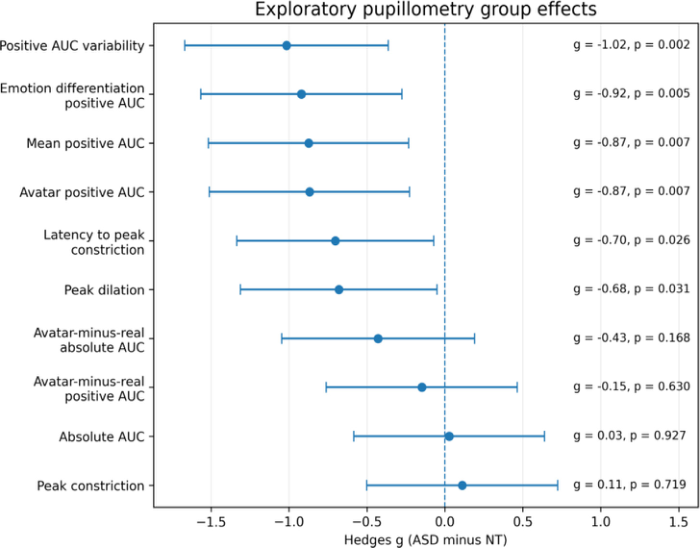
Emotional Regulation of Adults With High-Functioning ASD 207 Sensitivity analyses supported the descriptive stability of the main AUC pattern. When participants with a valid-trial rate below .70 were excluded, mean positive AUC remained lower in the ASD group (p = .011, g = –0.82), and positive AUC variability remained the strongest marker (p = .0039, g = –0.95). With a stricter valid-trial rate threshold of .80, the same two features remained conspicuous (mean positive AUC: p = .014, g = –0.81; AUC variability: p = .0056, g = –0.92). These analyses strengthen the signal- level plausibility of the pattern, but they do not convert the findings into confirmatory evidence (Figure 6).
Figure 6: Exploratory effect-size summary for the candidate pupillometry features. The vertical dashed line represents no group difference. Effects to the left indicate lower values in the ASD group than in neurotypical controls. AUC-based measures cluster among the largest effects, whereas absolute AUC and peak constriction do not show meaningful separation.
Implications for Virtual-Stimulus Learning Analytics The exploratory findings suggest that AUC-based pupil features may better capture the dynamic modulation of socio-emotional processing than single peak values alone. In applied terms, this is relevant for serious games and virtual-character training because a user-adaptive system needs markers that are sensitive to gradual changes in arousal, attention, and regulatory engagement.
The absence of strong avatar-minus-real differences in the exploratory feature set further suggests that virtual emotional faces can evoke pupil- response patterns that are sufficiently comparable to real faces for use as controlled training stimuli.
The pattern should be interpreted as reduced positive pupillary reactivity and reduced trial- and emotion-related differentiation in ASD, rather than as a definitive diagnostic biomarker. This interpretation is compatible with the view that social-emotional processing differences may be reflected not only in recognition accuracy or gaze allocation, but also in the coupling between visual attention, affective salience, and autonomic arousal.
For future learning analytics, the most promising direction is therefore not a single-threshold classifier, but a multi-feature state model that combines AUC, variability, gaze allocation, task performance, and potentially cardiovascular or electrodermal signals.
DISCUSSION
This paper extends the original peak- and latency-based pupillometry analysis with exploratory AUC-based features. The central methodological insight is that conventional extrema are easy to interpret but may miss group-relevant differences in the temporal shape of the response. AUC and variability measures integrate information over time and may therefore be more appropriate for dynamic social-emotional stimuli, where relevant differences can emerge as cumulative modulation rather than as a single maximum or minimum.
At the same time, the exploratory nature of the results must remain explicit. The number of tested features was large, many features were correlated, and the strongest uncorrected effects did not survive FDR correction. The present data therefore support hypothesis generation and feature prioritization, not confirmatory claims. A next study should pre-register a compact set of AUC- based markers, define exclusion and quality thresholds prospectively, and validate the markers in an independent sample with sufficient statistical power.
For human factors and ergonomics, the practical value lies in the translation from measurement to adaptive design. If replicated, reduced positive AUC and reduced emotion differentiation could inform individualized pacing, repetition, feedback, and selection of avatar expressions in serious games for adults with ASD. Because virtual stimuli are controllable and reproducible, they are particularly well suited for systematic manipulation of emotional intensity, ambiguity, and interaction difficulty.
CONCLUSION AND FUTURE WORK The complemented analysis indicates that predefined peak-, latency-, and recovery-based pupil markers alone did not provide robust corrected ASD- versus-NTC group effects. Exploratory feature-level analyses, however, revealed a coherent pattern in which adults with ASD showed lower positive AUC, lower trial-to-trial variability, and weaker emotion-related
Emotional Regulation of Adults With High-Functioning ASD 209 differentiation of pupillary responses to emotional faces. These effects were medium to large in uncorrected tests but did not survive FDR correction and must be treated as preliminary.
Future work should replicate the AUC-based markers in a larger and more diverse sample, pre-register the feature set, and combine pupillometry with gaze, HRV, EDA, and behavioural emotion-recognition measures. The long- term objective is a validated learning-analytics layer for adaptive virtual- character training, where psychophysiological markers can help personalize task difficulty and feedback without overinterpreting exploratory group effects.
ACKNOWLEDGMENT
This research was partially supported by the European Commission through the ERA PerMed programme under the EU Horizon 2020 Research and Innovation Programme, project ETAP (ERAPERMED2022-276).
REFERENCES
Anderson, C. J., Colombo, J., & Unruh, K. E. (2013). Pupil and salivary indicators of autonomic dysfunction in autism spectrum disorder. Developmental Psychobiology, 55(5), 465–482. https://doi.org/10.1002/dev.21051 Baron-Cohen, S. (1995). Mindblindness: An essay on autism and theory of mind.
MIT Press. https://doi.org/10.7551/mitpress/4635.001.0001 Bruggink, A., Huisman, S., Vuijk, R., Kraaij, V., & Garnefski, N. (2016). Cognitive emotion regulation, anxiety and depression in adults with autism spectrum disorder. Research in Autism Spectrum Disorders, 22, 34–44. https://doi. org/10.1016/j.rasd.2015.11.003 Derogatis, L. R. (1977). SCL-90-R: Administration, scoring and procedures manual
for the R(evised) version. Johns Hopkins University School of Medicine. de Vries, L., Fouquaet, I., Boets, B., Naulaers, G., & Steyaert, J. (2021). Autism spectrum disorder and pupillometry: A systematic review and meta-analysis. Neuroscience & Biobehavioral Reviews, 120, 479–508. https://doi.org/10.1016/j. neubiorev.2020.09.032 Ebner, N. C., Riediger, M., & Lindenberger, U. (2010). FACES—A database of facial
expressions in young, middle-aged, and older women and men: Development and validation. Behavior Research Methods, 42(1), 351–362. https://doi.org/10.3758/ BRM.42.1.351 Fan, X.-Z., Duan, Y.-W., Yi, L.-X., & He, H.-Z. (2020). Attentional bias toward threatening emotional faces in individuals with autism spectrum disorder: A meta-analysis on reaction time tasks. Research in Autism Spectrum Disorders, 78, 101646. https://doi.org/10.1016/j.rasd.2020.101646 Frazier, T. W., Strauss, M., Klingemier, E. W., Zetzer, E. E., Hardan, A. Y., Eng, C.,
& Youngstrom, E. A. (2017). A meta-analysis of gaze differences to social and nonsocial information between individuals with and without autism. Journal of the American Academy of Child & Adolescent Psychiatry, 56(7), 546–555. https://doi.org/10.1016/j.jaac.2017.05.005 Gaab, J. (2009). PASA: Primäre und sekundäre Bewertung stressreicher Ereignisse – Manual. Universität Freiburg, Institut für Psychologie.
García-Blanco, A., Perea, M., & Salmerón, L. (2017). Eye fixation patterns in emotion regulation: A meta-analysis. Cognition and Emotion, 31(8), 1528–1540. https://doi.org/10.1080/02699931.2016.1231213 Gotham, K. O., Siegle, G. J., Han, G. T., Tomarken, A. J., Crist, R. N., Simon, D. M.,
& Bodfish, J. W. (2018). Pupil response to social-emotional material is associated with rumination and depressive symptoms in adults with autism spectrum disorder. PLOS ONE, 13(8), e0200340. https://doi.org/10.1371/journal.pone.0200340 Guillon, Q., Hadjikhani, N., Baduel, S., & Rogé, B. (2014). Visual social attention in autism spectrum disorder: Insights from eye tracking studies. Neuroscience & Biobehavioral Reviews, 42, 279–297. https://doi.org/10.1016/j. neubiorev.2014.03.013 Hershman, R., Milshtein, D., & Henik, A. (2023). The contribution of temporal
analysis of pupillometry measurements to cognitive research. Psychological Research, 87(1), 28–42. https://doi.org/10.1007/s00426-022-01656-0 Howes, S. S. (2023). Emotional intelligence in autistic adults: A review with considerations for employers. Sustainability, 15(9), Article 7252. https://doi. org/10.3390/su15097252 Langer, K., Jentsch, V. L., & Wolf, O. T. (2023). Rapid effects of acute stress on
cognitive emotion regulation. Psychoneuroendocrinology, 151, 106054. https:// doi.org/10.1016/j.psyneuen.2023.106054 Macinska, S., Lindsay, S., & Jellema, T. (2024). Visual attention to dynamic emotional faces in adults on the autism spectrum. Journal of Autism and Developmental Disorders, 54(6), 2211–2223. https://doi.org/10.1007/s10803-023-05979-8 Mann, H. B., & Whitney, D. R. (1947). On a test of whether one of two random
variables is stochastically larger than the other. The Annals of Mathematical Statistics, 18(1), 50–60. https://doi.org/10.1214/aoms/1177730491 Mathôt, S. (2018). Pupillometry: Psychology, physiology, and function. Journal of Cognition, 1(1), Article 16. https://doi.org/10.5334/joc.18 Mathôt, S., Fabius, J., Van Heusden, E., & Van der Stigchel, S. (2018). Safe and
sensible preprocessing and baseline correction of pupil-size data. Behavior Research Methods, 50(1), 94–106. https://doi.org/10.3758/s13428-017-1007-2 Mathôt, S., & Vilotijević, A. (2023). Methods in cognitive pupillometry: Design, preprocessing, and statistical analysis. Behavior Research Methods, 55, 3055–3077. https://doi.org/10.3758/s13428-022-01957-7 Poglitsch, C., Safikhani, S., List, E., & Pirker, J. (2024). XR technologies to enhance
the emotional skills of people with autism spectrum disorder: A systematic review. Computers & Graphics, 121, 103942. https://doi.org/10.1016/j.cag.2024.103942 Pszeida, M., Lieb, Y., Schneeberger, M., Mosbacher, J., Dini, A., Poglitsch, C., Pirker, J., Paletta, L. (2025). Learning Analytics Using Eye Tracking-based Biomarkers on Serious Games for Adults with Autism Spectrum Disorder. In L. Paletta (Ed.), Cognitive Computing and Internet of Things. AHFE Open Access, 165. AHFE International. http://doi.org/10.54941/ahfe1006091 Rausch, J., Fangmeier, T., Falter-Wagner, C. M., Ackermann, H., Espelöer, J., Hölzel,
L. P., Riedel, A., Ritvo, A., Vogeley, K., & van Elst, L. T. (2025). A novel screening instrument for the assessment of autism in German language: validation of the German version of the RAADS-R, the RADS-R. European archives of psychiatry and clinical neurosci, 275(8), 2449–2460. https://doi.org/10.1007/s00406-024- 01894-w
Emotional Regulation of Adults With High-Functioning ASD 211 Ritvo, R. A., Ritvo, E. R., Guthrie, D., Ritvo, M. J., Hufnagel, D. H., McMahon, W.,
Tonge, B., Mataix-Cols, D., Jassi, A., Attwood, T., Eloff, J., Delorme, R., Salvat, G., Iskander, J., Le Couteur, A., Seidel, K., & Lessell, M. B. (2011). The Ritvo Autism Asperger Diagnostic Scale-Revised (RAADS-R): A scale to assist the diagnosis of autism spectrum disorder in adults. Journal of Autism and Developmental Disorders, 41(8), 1076–1089. https://doi.org/10.1007/s10803-010-1133-5 Sepeta, L., Tsuchiya, N., Davies, M. S., Sigman, M., Bookheimer, S. Y., & Dapretto, M. (2012). Abnormal social reward processing in autism as indexed by pupillary responses to happy faces. Journal of Neurodevelopmental Disorders, 4, Article 17. https://doi.org/10.1186/1866-1955-4-17 Setien-Ramos, I., Lugo-Marín, J., Gisbert-Gustemps, L., Díez-Villoria, E.,
Magán-Maganto, M., Canal-Bedia, R., & Ramos-Quiroga, J. A. (2023). Eye- tracking studies in adults with autism spectrum disorder: A systematic review and meta-analysis. Journal of Autism and Developmental Disorders, 53(6), 2430– 2443. https://doi.org/10.1007/s10803-022-05524-z Uljarević, M., & Hamilton, A. (2013). Recognition of emotions in autism: A formal meta-analysis. Journal of Autism and Developmental Disorders, 43(7), 1517–1526. https://doi.org/10.1007/s10803-012-1695-5 van der Wel, P., & van Steenbergen, H. (2018). Pupil dilation as an index of effort
in cognitive control tasks: A review. Psychonomic Bulletin & Review, 25(6), 2005–2015. https://doi.org/10.3758/s13423-018-1432-y Weiß, R. H. (2008). CFT 20-R: Grundintelligenztest Skala 2 – Revision. Hogrefe.
LISTED IN THE AHFE DIGITAL BOOKSTORE CATALOGUE
Explore the complete digital volume
Cognitive Computing and Internet of Things
Read this individual research paper free through the original publisher, or explore the full digital proceedings book.
ISBN 978-1-964867-81-6
Explore this ISBN in the AHFE Bookstore ↗Listed in the July 2026 bookstore catalogue; search by ISBN to confirm current availability · Digital book purchase optional