Rune Rimstad, Arne Lindstad (2021). Health Related Factors in Traffic Accident Investigation. In: Advances in Human Aspects of Transportation: Part I. AHFE Open Access, vol. 15. https://doi.org/10.54941/ahfe100610
The aim of the study is to evaluate road traffic accident analyses reports as a means to improve the system of medical driver examinations. Qualitative analyses was made of accident reports from the Norwegian Public Roads Administration region East and South throughout 2008 and 2009. Only 23 of 235 reports contained information on driver health. Many different diagnoses were represented. Intoxication was a major contributor to accidents. Straight-ahead accidents is discussed as a field of further investigations. In conclusion, the accident analyses reports are not a good source of information on drivers’ health. The system needs wider authorities and mandate to be an effective contribution to public health work in Norway.
'INTRODUCTION A fundamental understanding of the underlying causal factors leading to road traffic accidents is necessary in developing an effective system for traffic safety management (Muskaug et al, 2010). These include health-related factors. Since January 2005, the Norwegian Public Roads Administration has systematically conducted in-depth accident analyses of all reported fatal accidents involving motorized vehicles and road users in Norway. We wanted to explore whether these analysis reports have the potential to serve as part of a knowledge base for the health authorities with a view to improving the system of medical examinations for driver’s licence holders.
Regulations relating to drivers’ health were introduced in Norway with the Motor Vehicle Act of 1912, which simply stated that the driver had to be of a sober nature and physically fit to drive (Arbeidsdepartemetnet, 1912). Since then, the regulations have been expanded and refined. The current regulations are still expressed as functional requirements on the higher level, but the accompanying instructions to health workers and authorities have become increasingly deterministic and detailed (Helsedirektoratet, 2010; Samferdselsdepartementet, 2004; Sosial- og helsedirektoratet, 2007).
Alcohol abuse and dependence, dementia, epilepsy, multiple sclerosis, schizophrenia, psychiatric disorders as a group, sleep apnoea and cataracts are the chronic illnesses found to have the highest relative risk of crash involvement (Charlton et al, 2010). The differentiation between long term effects of the illness and acute exacerbations has not been established.
Autopsy reports as part of in-depth accident analyses have found acute illness to be itself a major primary cause of death, and not only a cause of accidents. A Swedish study covering 152 older drivers found 19.7% to have died of natural causes prior to crash. Additional victims showed signs of potentially fatal acute illness, but had also large crash injuries which were recorded as the cause of death (Skyving et al, 2009). In a Finnish study of 54 accidents in which sudden illness on the part of the driver was concluded to be the immediate cause of accident, 57% of the Human Aspects of Transportation I (2021) https://openaccess.cms-conferences.org/#/publications/book/978-1-4951-2097-8 drivers died of the illness and not of injuries. 38 of the 54 accidents were caused by cardiovascular disease (Tervo et al, 2008). Traffic Accident Investigations in Norway
The Norwegian Public Roads Administration has one accident analysis group in each geographical region and local district accident groups with on-call personnel (The Norwegian Public Road Administration, 2010). The police report fatal accidents to the nearest accident group, who examine the crash site and collect evidence. The regional accident analysis group analyses the accident and its contributing factors based on both the accident group’s report and the police report.
The Accident Investigation Board Norway has also carried out investigations into accidents and incidents on the roads since September 2005. The investigation and reports are of a more thorough and deep probing nature and only four to six reports are compiled each year. The board concentrates on accidents involving heavy goods vehicles, buses, transportation of dangerous goods and accidents in tunnels (Accident Investigation Board Norway, 2010).
The Accident Investigation Board Norway draws its mandate and authority from The Road Traffic Act and supporting regulations. These give the board quite wide authorities and thereby insight into otherwise confidential material such as hospital records. The Norwegian Public Roads Administration’s Accident Analysis Group works on a mandate from the Directorate of Public Roads and has insight into police reports on authority from the State Attorney, but has no direct access to health records.
METHOD AND MATERIAL Our study is based on the in-depth accident analysis reports from the Norwegian Public Roads Administration’s Accident Analysis Groups in region East and South, covering about 2.5 of Norway’s 4.9 million inhabitants. The reports are stored at each regional office. They are not included in any national database, and the information had to be extracted from the full-text files. The reports are de-identified. All reports from 2008 and 2009 were examined, making a total of 240 reports. Reports not involving vehicles requiring a driver’s licence were excluded. This left 235 accidents involving mostly cars, but also lorries, busses, tractors, motorcycles, all-terrain-vehicles, bicycles and pedestrians.
Both researchers extracted data on type of accident, a short description of the accident, information on the drivers of the vehicle causing each accident, witness descriptions of the accident and the analysis of causal factors. We also noted from what sources information about health issues were drawn.
Reports containing information on drivers’ health, including statements confirming that the driver was in good health, were identified and analysed further.
All 235 reports were then analysed in search for subgroups, not mutually exclusive, of possible interest for later research.
RESULTS
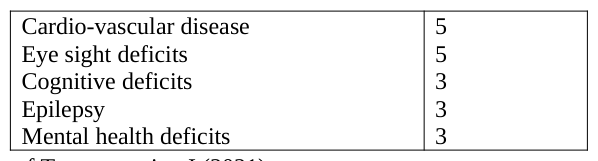
Only 23 of the 235 reports described drivers with some kind of illness or health impairment (see Table 1). The health information was in most instances either given by witnesses or relatives, or taken from blood sample examination results. In one case, the information came from a general practitioner, in one case ambulance personnel. Three post mortems had been undertaken. All the health information seemed to have been extracted from police reports.
Table 1: Medical conditions registered for 23 drivers Cardio-vascular disease Eye sight deficits Cognitive deficits Epilepsy Mental health deficits 5 5 3 3 3 Human Aspects of Transportation I (2021) https://openaccess.cms-conferences.org/#/publications/book/978-1-4951-2097-8
Five drivers were described as being in a state of psychological imbalance immediately prior to the accident. This was highlighted in accidents that might have been intentional, i.e. potential suicides. In all of these cases, the driver was also intoxicated.
Of psychiatric diseases, depression, ADHD and development disorders were represented. One driver had on doctor’s orders stopped taking psychoactive drugs a few weeks before the accident, after using them for years. One driver had impaired cognitive functioning.
The most commonly mentioned disorder was heart disease. No clear distinction was made between different types of heart disease; e.g. coronary artery disease, heart failure or arrhythmias.
Six drivers had a disease involving possible sudden loss of consciousness: epilepsy, diabetes and transitoric ischemic attack. Three of them used preventive medication.
Only two drivers were known to have reduced vision, evidenced by the fact that their driver’s licence stated they must wear glasses while driving. A post mortem revealed one other driver with a loss of central field vision, inconsistent with lawfully holding a licence.
One driver had a therapeutic blood concentration of an opioid on testing. Another had a therapeutic concentration of a prescription sedative. There was no specific information on medication used by any of the other drivers.
One driver had a physical handicap.
Intoxicated drivers In as many as 58 accidents, the driver was intoxicated. Driving when intoxicated is illegal, whether this involves alcohol, narcotics, illegal drugs or prescription drugs influencing the ability to drive. Everyday use, periods of over- use or repeated use in connection with driving is inconsistent with holding a driver’s licence. Most of the accident reports did not contain sufficient data to separate episodic intoxications from chronic abuse. Even so, it is clear that several drivers did not meet the regulations’ health standards. Examples were drivers who have had their licence revoked due to driving while intoxicated, drivers with a mixed use of prescription drugs, amphetamine and methamphetamine (a combination presumably uncommon in episodic and rare use), and finally drivers who on autopsy showed pathological organ findings consistent with chronic alcohol abuse.
Straight-ahead accidents 56 accidents were of a head-on or run-off-the-road type. They involve a vehicle that either drifts slowly off the road or into the oncoming lane, or continues straight ahead in a road curve – without the driver making any noticeable attempts to manoeuvre or brake.
Suggested causal factors in the reports in this category of accidents were mainly: falling asleep, fatigue, inattention, malaise, acute illness and suicide. Many reports use information on how fast or abrupt the change of course has been to arrange these causes in terms of relative probability. A sudden change of lane, leading to a head-on accident with a lorry might suggest suicide (and some of them are indeed confirmed by witnesses as planned suicides). A slow drift over to the road shoulder might suggest the driver falling asleep.
Human Aspects of Transportation I (2021) https://openaccess.cms-conferences.org/#/publications/book/978-1-4951-2097-8
In some cases the vehicle had veered about in its lane for some time before the accident, or otherwise shown signs of the driver having problems. In other cases, the driver in the following car described perfect driving up to the time of the accident, suggesting a sudden change on the part of the driver.
DISCUSSION
Autopsies were seldom performed, even in cases where the most probable cause of the accident was sudden illness. Blood sample analysis was done in many cases, but often only of the driver of the car initializing the chain of events and most often for ethanol only. Almost all information on pre-crash health came from the police reports, and the accident analysis reports give little account of the source or quality of this information.
Reports containing information on drivers’ health The number of reports in this group is small - smaller than one would expect, considering the age-distribution of the drivers. This is clearly a significant limitation to our analyses. Judging from clinical experience, there must be important data missing, with e.g. only three drivers having reduced vision. The lack of information makes quantitative analysis of the material less interesting. Nevertheless, the analysis groups’ annual reports present surveys on the percentage of accidents caused by health related factors (Jansen, 2010; Region sør, 2009; Statens vegvesen, 2009).
There are no reports presenting accident-triggering health weaknesses, not covered by the current regulations. No drivers had their licence withdrawn because of health weaknesses. The health disorders represented by these 23 drivers are quite heterogeneous, covering a wide range of diagnoses. There were 14 drivers with epilepsy, diabetes, heart disease or vision impairment – conditions where some, but not all, patients are allowed to drive.
In the reports we found an underlying assumption of chronic heart disease as a potential cause of sudden incapacitation, making the driver unable to control the vehicle. There are no actual findings in the reports to support this understanding. As an example, an elderly driver drove his car off the road and died at the scene from internal injuries. There were no witnesses to the accident. The police drew the conclusion that the accident was caused by a sudden heart illness, based on information from ambulance personnel who identified the driver as a heart patient they had frequently been called out to in the past. No post mortem, blood analysis or any other investigations were carried out.
Subgroups of possible interest for later research We found the number of intoxicated drivers to be disappointingly large. This is also commented in the accident analysis groups’ annual reports, and is a consistent finding from year to year (Jansen, 2010). Driving while intoxicated is illegal, on grounds for which this material provides ample support. This is in accordance with more extensive research on prescribed drugs as cause of accidents in Norway (Engeland et al, 2007; Gustavsen et al, 2008). Similarly, it supports the refusal to grant licences to applicants who are relatively often drunk or otherwise intoxicated, or who show signs of long-time effects of chronic abuse. There were several drivers in the material where witness statements or the drugs used indicated a drug use incompatible with holding a licence, yet the driver still held a valid licence.
Quite a few drivers had never held a licence, or had it revoked because of prior traffic violations – mostly drunk- driving. Denying this group of drivers a licence may not be an effective enough measure to keep them out of the traffic.
We believe that the straight ahead-accidents is where more data would be of most interest. The accident analysis in most cases suggested health related causes as a possibility. It would be an important finding even if these cases have no connection to health problems. But if they do, it is in this group we expect to find the cases of sudden incapacitating illness and even death prior to the accident. These assumptions are supported by previous research (Lam and Lam, 2005).
Recommendations on improving the in-depth analyses The existing system of accident groups and accident analysis groups, and the process of analysis and reporting, all seem appropriate and comprise a potentially useful tool on health matters – as it already is in the field of road environment safety. To meet this potential, we believe three basic factors must be in place: Human Aspects of Transportation I (2021) https://openaccess.cms-conferences.org/#/publications/book/978-1-4951-2097-8
- The accident analysis groups must include medical personnel. Starting January 2010, this is already the case, as each group now has an appointed physician. We recommend that the physician become a full member of the group, not simply an expert summoned when needed.
- The accident analysis groups’ physicians must have access to the drivers’ medical records to uncover potential medical factors in each case. The Accident Investigation Board Norway has the authority to retrieve such information, but investigates very few accidents annually. We recommend that the Norwegian Public Roads Administration accident analysis groups be given similar powers. The police should certainly not have routine access to such information, so the present system of analysing drivers’ health almost entirely through police reports seems to be a dead end.
Ideally, every driver involved in a fatal accident should be examined immediately, clinically or post mortem. In real life, this is not possible. But the serum level of prescription drugs, blood glucose level, clinical signs of a transitoric ischemic attack, or a pathological EEG all change in the course of a few minutes or hours. Access to medical records from ambulance services, hospitals or GPs immediately after the accident could make quite a good substitute.
- The police play a crucial role, and will still do so in the future. They notify the accident groups, compile the standard reports and talk to witnesses. It is also up to the police authorities to order blood sample analyses and autopsies. It would be an important step to make it standard routine to sample and analyse blood (both a wide toxicology screen and a set of biochemical markers) from all drivers involved in fatal accidents and to do autopsies including neuropathological examination of all deceased in fatal accidents. This should be done independent of considerations of guilt or criminal conduct. And of course independent of cost, which may be an issue worth resolving once and for all.
There are legal issues involved in drawing the line between the police investigation and the accident analysis work. This has already been determined for the work of the Accident Investigation Board and should be an easier matter to solve for the accident analysis groups, since their reports are not open to the public – or the police.
A European Union expert group have issued a number of recommendations for road accident investigations, aiming for a unified European standard (SafetyNet, 2008). Our suggestions are in support of the expert group’s conclusions.
CONCLUSIONS
The accident analysis reports from the Norwegian Public Roads Administration contain little information on drivers’ health, due to lack of availability of clinical and historic information on the subject. This leads to a serious lack of health related causal explanations, which to a large degree discredits the accident analysis reports as a knowledge- base for policy-makers and licencing authorities in refining health regulations.
ACKNOWLEDGEMENTS
We would like to thank Ove Njå and Geir Sverre Braut for valuable comments on earlier drafts.
REFERENCES
Accident Investigation Board Norway. (2010), Road Traffic. URL: http://www.aibn.no/Road-Traffic Arbeidsdepartementet. (1912), Lov av 21. Juni 1912 om bruk av motorvogner. Charlton, J.T., Koppel, S., O’Hare, M., Andrea, D., Smith, G., Khodr, B. et al. (2010), Influence of chronic illness on crash involvement of motor vehicle drivers: 2nd edition. Monash University Accident Research Centre. Engeland, A., Skurtveit, S., Mørland, J. (2007), Risk of Road Traffic Accidents Associated With the Prescription of Drugs: A
Registry-Based Cohort Study, ANN EPIDEMIOL, Volume 17 Page 597-602. Gustavsen, I., Bramness, J.G., Skurtveit, S., Engeland, A., Neutel, I., Mørland, J. (2008), Road traffic accident risk related to prescriptions of the hypnotics zopiclone, zoldipem, flunitrazepam and nitrazepam, SLEEP MEDICINE, Volume 9 Page 818-822 Helsedirektoratet. (2010), Retningslinjer for fylkesmennene ved behandling av førerkortsaker. IS-1348. URL; http://helsedirektoratet.no/publikasjoner/retningslinjer-for-fylkesmennene-ved-behandling- av-forerkortsaker Human Aspects of Transportation I (2021) https://openaccess.cms-conferences.org/#/publications/book/978-1-4951-2097-8
Jansen, H.S. (2010), Dybdeanalyse av dødsulykker i Region Øst 2009. Statens vegvesen, Oslo. URL: http://www.vegvesen.no/_attachment/185814/binary/361543 Lam, L.T., Lam, M.K.P. (2005), The association between sudden illness and motor vehicle crash mortality and injury among older drivers in NSW, Australia. ACCIDENT ANALYSIS AND PREVENTION, Volume 37 Page 563-567. Muskaug, R., Løtveit, S., Guttormsen, J., Larsen, R.S., Svalastog, T., Linhave, J. et al. (2010), Nasjonal tiltaksplan for
trafikksikkerhet på veg 2010-2013. URL: http://www.regjeringen.no/Upload/SD/Vedlegg/Veg%20og %20vegtrafikk/nasjonal_tiltaksplan_trafikksikkerhet_2010-2013.pdf Norwegian Public Road Administration. (2010), In-depth Analysis of Fatal Road Accidents in Norway 2005-2008. The Norwegian Public Roads Administration, Oslo. URL: http://www.vegvesen.no/_attachment/114317/binary/206539 Region Sør. (2009), Dybdeanalyser av dødsulykker Region sør 2008. Årsrapport, Statens vegvesen. URL: http://www.vegvesen.no/_attachment/111043/binary/194319 SafetyNet. (2008), Recommendations for Transparent and Independent Road Accident Investigation, Deliverable D4.5 of the EU
project SafetyNet. URL: http://www.dacota-project.eu/Links/erso/safetynet/fixed/WP4/sn_wp4_d4p5_final.pdf Samferdselsdepartementet. (2004), Forskrift om førerkort m.m. FOR 2004-01-19 nr 298. URL: http://www.lovdata.no/for/sf/sd-20040119-0298.html Skyving, M., Berg, H.Y., Laflamme, L. (2009), A pattern analysis of traffic chrashes fatal to older drivers. ACCIDENT ANALYSIS & PREVENTION, Volume 41 Page 253-258 Sosial- og helsedirektoratet. (2007), Regler og veiledning for utfylling av helseattest for førerkort m.v. IS-1437. URL:
http://helsedirektoratet.no/publikasjoner/forerkort-regler-og-veiledning-for-utfylling-av- helseattest-for-forerkort Statens vegvesen. (2009), UAGs dybdeanalyser av dødsulykkene i vegtrafikken i Region Øst. Statens vegvesen, Oslo. URL: http://www.vegvesen.no/_attachment/109554/binary/189973 Tervo, T.M.T., Neira, W., Kivioja, A., Sulander, P., Parkkari, K., Holopainen, J.M. (2008), Observational Failures/Distraction
and Disease Attack/Incapacity as Cause(s) of Falat Road Crashes in Finland. TRAFFIC INJURY PREVENTION Volue 9 No.3 Page 211-216
Human Aspects of Transportation I (2021) https://openaccess.cms-conferences.org/#/publications/book/978-1-4951-2097-8
LISTED IN THE AHFE DIGITAL BOOKSTORE CATALOGUE
Explore the complete digital volume
Advances in Human Aspects of Transportation: Part I
Read this individual research paper free through the original publisher, or explore the full digital proceedings book.
ISBN 978-1-4951-2097-8
Explore this ISBN in the AHFE Bookstore ↗Listed in the July 2026 bookstore catalogue; search by ISBN to confirm current availability · Digital book purchase optional