Ross Parrya, Samuel Aupetitb, Olivier Buttellic, Jacques Riffd, Marie Laure Weltera, Elodie Laloa (2020). Studying Falls in Real Life Situations: Coupling Subjective Experience and Biomarkers in the Design of Innovative Methods. In: Advances in Science, Technology, Higher Education and Society in the Conceptual Age: STHESCA. AHFE Open Access, vol. 10. https://doi.org/10.54941/ahfe100396
Complementary to the presentation discussing the use of an onboard system designed to monitor gait in real-life situations, we will show here how the analysis of data from both biosensors and the psychophenomenological evaluation of subjective experience may provide pertinent information about hazardous situations. We will present a methodology that has proven to be successful in demonstrating how behavior emerges during the context of motorcycle riding. Here, our attention will focus more specifically on gait phenomena, balance and falls in patients with Parkinson's disease. The method consists of documenting the whole process (instead of using isolated data) with consideration to details regarding the patient's perspective of the situation in question (self-report, self-awareness, subjective experience). We argue that confronting the data at different levels of activity (which are typically addressed independently of the other) assists to verify, interpret and objectify the observed phenomena.
As part of the ECOTECH project, our current research activities seek to develop an integrated approach to the evalu- ation of human locomotor behavior. Combining technological, ergonomic and clinical expertise, we propose an in- novative suite of tools and methods designed to characterize gait disorders in real life situations. With a particular focus on neurological disorders such as Parkinson’s disease (PD), our long term goal is to provide a reliable, person- alized and ecological approach to gait evaluation, falls-risk assessment and falls prevention.
Balance and gait disorders can be particularly disabling and impact significantly upon an individual’s quality of life. The secondary effects of gait instability, such as reduced physical activity and hospitalization impose an increas- ingly heavy economic burden upon healthcare services and society more generally. Falls, the direct result of balance and gait disorders, figure as one of the leading causes of injury and death among older people (Tinetti, 2003). This problem is worse still for sufferers of neurodegenerative disorders such as Parkinson’s disease (PD) where a range of complicated gait phenomenon may be observed. Locomotor disturbances typical in (though not exclusive to) PD include: akinesia—a difficulty initiating movement; festination—rapid, shuffling steps made to compensate for the postural disturbances of the trunk; and also freezing of gait—a particular symptom where patients appear to have their feet ‘stuck’ to the ground. Unfortunately, symptoms such as these are often resistant to pharmaceutical and sur- gical interventions. Moreover, Parkinsonian gait disturbances tend to be highly context dependent; they emerge in everyday settings consequent to stress, fatigue or environmental triggers such as approaching a doorway or dealing with time constraints (Nutt et al, 2011).
Providing accurate assessment of human locomotor performance and gait stability has proved to be an exceptional challenge to biomedical sciences. Although an exceptionally wide range of techniques have been proposed, both in clinical and research domains, no one measure has proven to be a reliable indicator of falls risk. Motor performance tests (eg. Berg Balance Scale and the Timed Up and Go) provide an indication of functional ability but are not capa- ble of providing a predictive assessment of gait stability or fall risk (Muir et al, 2010). While clinical questionnaires, amongst the most common tools for assessing falls risk, may lack objectivity. Parkinson specific assessment such as the Universal Parkinson’s Disease Rating Scale (UPDRS) offset some of these limitations through combining both approaches but nonetheless tend to have poor reproducibility (Jacobs et al, 2006)’ In recent years, quantitative evaluation of postural performance and gait have become increasing common, exploit- ing the use of force platforms and kinematic analysis techniques. Studies using posturographic data however, have at times presented contradictory results, particularly in the PD populations (Morrison et al, 2008; Termoz et al, 2009). Further to this, information on postural displacement alone provides only partial insight into the complex interac- tions between the physiological mechanisms and the environment from which motor behaviour emerges.
Put simply, gait disorders and falls are complex phenomena; they necessitate a multifactorial and personalised ap- proach to assessment (Ambrose et al, 2013). Functional tests and quantitative analysis are important, but in order to have predictive value, such data must be interpreted with respect to the patient’s individual situation. In the same manner, clinical questioning remains a vital component in medical assessment; the difficulty lies in efficiently ob- taining the information pertinent to the phenomena in question (Cicourel, 2002). The work presented here seeks to overcome these issues. We propose a combination of tools and methodological processes for evaluating postural in- stability and gait dysfunction in natural situations. Used appropriately, this approach may be used to characterize at- risk situations with ecologically valid data (Brunswik, 1956), thus highlighting complex relatinoships between fa- tigue, emotions, thought processes, physical environment and locomotor activity.
CONCEPTUAL FRAMEWORK In order to fully appreciate gait disorder, loss of balance and the situations that bring about falls, one is obliged to consider the patient, the activities he engages in as well as his surrounding environment. A holistic approach to pa- tient assessment must confront social supports (family, caregivers), cultural identity (beliefs, customs, body image), psychological wellbeing (self-confidence, self-awareness, sense of purpose), the physical environment (accessibility, distance, terrain) and technical aspects (adaptive equipment, available resources). Experimental conditions, such as those that may exist in a laboratory or hospital facility limit the extent to which complex interactions between these factors may be explored. Effectively coming to grips with an actor’s behaviors, intentions and emotions demands more naturalistic approaches to patient assessment.
With this in mind, the conceptual and methodological principles discussed in the following paper draw upon frame- works of “French cognitive ergonomics” (Ombredane and Faverge, 1955; Theureau, 2003). At the crossroads be- tween several disciplines (cognitive anthropology, psychology and microsociology), this approach has been used throughout a series of research projects involving the evaluation, adaptation or design of various pursuits including work organisation, driving, sport and the conception of technical instruments. Using detailed analysis of sociocul- tural, psychological, technical and environmental systems, the aim of French cognitive ergonomics is to explore re- lationships between context, cognition and action in real world environments. Placing a high value on the ecological validity, data collection processes are conceived so as to minimise any disturbance to the activity in question.
In designing tools or adapting situations in such a way that they will be both relevant and accepted by their users, this approach maintains that: (a) human activity must be investigated across different times scales rather than being limited to punctual windows of observation
(b) the actor’s subjective experience is a vital component to building an understanding of the situation in question, it must therefore constitute a privileged object of interest during data collection, data analysis and design processes (c) research methods must document and confront the complexity of human activity—combining objective and sub- jective viewpoints as opposed to reducing human activity to discrete tasks and variables to be studied in isolation.
Following these principles, human activities can be perceived as being fundamentally dynamic in nature, modified through the experience of the actors the perpetual changes in the situations they encounter (Lave and Wenger, 1991). Understanding human activity thus necessitates more extended periods of data collection so as to permit greater sen- sitivity to its evolution over time. Continuous recording and analysis of subject activity across different time scales is key; from the micro scale (milliseconds to seconds) and meso scale (minutes to a day) through to the macro scale (day to month). In the case of patient populations this may of course include reference to clinical history, disease progression and response to treatment.
An actor of course, is always in the best position to describe what difficulty he encounters (Grize, 1995). Under- standing their point of view (self-report, self-awareness, subjective experience) is crucial in determining that which is meaningful to the actor (Bannon, 1991). Care must then be taken in methods used to acquire and process this in- formation in such a way that it may provide useful research material. An Investigator may obtain partial understand- ing of participant activity as they demonstrate, describe or comment on what is significant for them in a particular situation. It is a process that may be used to identify different motives, apprehensions or decision-making processes that would shape the eventual outcome. French cognitive ergonomics typically uses (a posteriori) tailored interview techniques encouraging an actor to verbalize those details pertinent to their actions. These details can subsequently be validated with reference to the ‘traces’ of the activity—those materials providing concrete details on actual task performance (eg. work documents, end products, video recordings, movement data). The present project seeks to further develop these methods of stimulated recall with patient populations, targeting the experiences of gait dys- function and loss of balance.
Using this conceptual framework, researchers may capitalise on the richness of the data obtained; different aspects regarding the situation may then be targeted as hypotheses regarding individual performance are generated then sub- sequently analysed using the multidimensional datasets. Methods as conceived so as to take into account the percep- tions, actions, focalisations, interpretations, emotions and communications that define the activity in which the sub- ject is engaged (Theureau, 2003). Oftentimes analysis involves the confrontation of the behavior of the unit of inter- est (individual, group or system) and the actors’ subjective experience of the activity in question (Theureau, 2003). While the quantitative data concerning subject behavior is essential, the power of the approach is derived by using the subjective experience of actor to guide, filter and interpret understanding of the subject in the context of his situ- ation.
Beyond the immediate research interests in understanding motor behavior and task performance, the course of action (Theureau, 2003) approach equally has the effect of increasing an actor’s/group’s level of self-awareness with re- spect to the task in question. Combining clinical expertise and patient experience, we believe that this methodology may eventually favor the doctor-patient interaction and therapeutic education.
TOOLS AND METHODOLOGICAL PROCESSES Data Collection
In cooperation with the other partners of the ECOTECH project, TEA1 (France), Chang Gung Memorial Hospital and LaRC2 of the National Tsing Hua University (Taiwan), we propose an integrated system of wireless sensors for tracking the physiological and biomechanical aspects of an individual’s motor activity during the course of their daily activities. Lightweight and highly portable, this system acquires movement data through means of motion sen- sors (accelerometers, magnetometers, gyroscopes) and surface electromyography (EMG). Autonomic function also is monitored using electrocardiography (ECG), respiratory rate (RR) and galvanic skin response (GSR); a combina- tion that provides valuable information regarding factors such as emotion and fatigue (detailed description of this onboard system as well as the proposed signal processing techniques is described in our accompanying paper). De- scribing behavior in terms of raw physiological activity and movement parameters, we refer to these measures as ‘low-level data’ (Aupetit et al, 2011).
In addition to the biomarkers, audiovisual records equally constitute a key component in our holistic approach to the study of motor performance in daily life activities. When planned in advance, with consideration to both the envi- ronment and the activities to be undertaken, audiovisual data can provide a highly accurate representation of the se- quence of events. From these records, observations concerning different gestures, expressions, discussions, signals, noises or the environmental configuration may be made. Here, we refer to audiovisual records as ‘intermediate-level data’ (Aupetit et al., 2011). According to the level of detail required, it may support secondary investigations such as activity analysis or discourse analysis.
The final element of the integrated approach that we propose involves obtaining information regarding the actor’s subjective experience of the situation. In particular, this process seeks to identify those details shaping the individ- ual’s choice of actions. Using a technique referred to as self-confrontation (Theureau, 2003), this process is facili- tated by reviewing relevant sections of the audiovisual records with the actor himself. During this time, the investi- gator encourages the actor to recount his experience of the activity, highlighting different points of interest in the au- diovisual recording. Further to this, more specific questioning may be used to clarify details regarding sensory per- ceptions, emotional responses, thinking processes and environmental triggers at specific points in time. The informa- tion extracted from this process is considered as ‘high-level data’ (Aupetit et al., 2011), given that it is principally characterized by the actor’s conscious relationship to the situation in question.
Data Analysis Whilst only at the trial stage in its use with patient populations at the time of publication, the data analysis processes described here have been successfully used to analyze the skills and behaviors of motorbike riders through the course of training and actual traffic situations (Aupetit et al, 2011). The experimental protocol used sensors mounted to the frame of the motorbike (all signals being relayed to an on-board data logger); a set of cameras and micro - phones; and self-confrontation interviews conducted immediately following each session. Having obtained informa- tion from these three separate methods subsequently permits data analysis using two complementary processes (Au- petit et al, 2011).
The first process of data analysis may be considered as the ‘bottom-up process’. It involves the identification of sig- nificant events in the actor’s behavior by locating anomalies or significant events in the low-level data. In other words, notable changes in patterns of physiological activity or movement parameters are isolated and then inter- preted firstly with reference to the audiovisual records and secondly with reference to the actor’s subjective experi- ence of the moment in question. A key interest of this method is describing the circumstances in which a loss of con- trol arises. For example, certain relationships between acceleration, handlebar position and yaw angle may be in- dicative of critical events during motor cycle riding but it is only when observing higher level information regarding environmental hazards, a trainer’s instructions and the rider’s state of mind that the situation provoking the incident can be understood.
Conversely, data analysis may also exploit a ‘top-down process’ whereby information emerging from the self-con- frontation interview may facilitate the detection of pertinent behaviors or contextual variables in the audiovisual
1 Technologie Ergonomie Applications
2 Laboratory for Reliable Computing
records. In this case, it is the patient’s own report of the events that leads the investigators to scrutinize different pat- terns in the low-level data, seeking fluctuations in the physiological activity and postural organization that corre- spond with patient’s subjective experience. Whilst undergoing training, for instance, motorcyclists may be particu- larly conscious of their ability to control the tilt of the motorbike as they bank through a turn. As shown by Aupetit et al (2011), a individual’s perception of his improvement may be verified with reference to the movement sensors mounted upon the bike. Further examination of audiovisual records may then provide evidence of the exercises through which this skill can be observed to improve, or training advice that corresponded with improved perfor- mance.
POTENTIAL CLINICAL APPLICATIONS Used in tandem, we believe that the bottom-up and top-down approaches can provide a powerful method of under- standing (and prevent) human gait in real life situations as different factors influencing locomotor behavior may be evaluated. Hypotheses regarding motor performance and the impact of different triggers—be they emotional, cogni- tive, environmental or other, can be generated then tested, as observations at each data level (low, intermediate and high) are used to substantiate or dismiss proposed relationships between gait and the context studied.
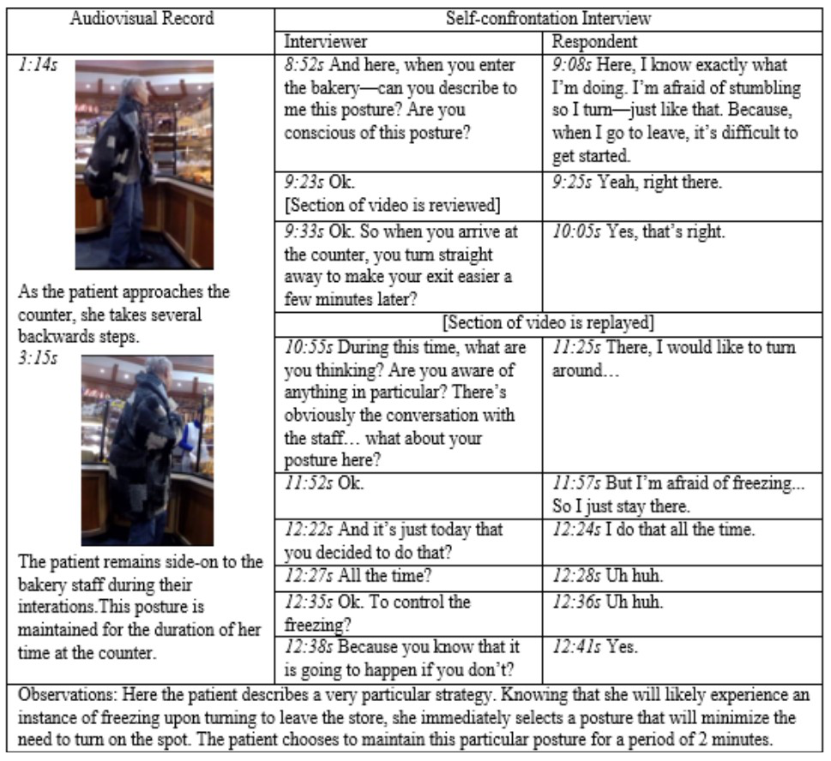
Figure 1. From intermediate (video) to high level (verbalizations) data : an example of bottom-up process
Taken from our preliminary trials, the above illustration shows how examination of audiovisual records and data from the SC interview may support clinical investigations (given that the system of biosensors for acquiring low- level data is in its final stages of development, only high level and intermediate data is provided in the following ex- ample). This sequence of events follows a late-middle aged PD patient as she carries out her morning routine of pur- chasing bread from the nearby bakery. The activity is chosen as a known at-risk situation: the patient reports having had difficulties in this environment, including one prior fall. Whilst experiencing no evident difficulty in making her way to the bakery, the subject is observed to experience difficulty when turning to enter. Upon changing the walking trajectory, her right foot is observed to turn awkwardly during the swing phase and her foot catches the doormat. Figure 1 provides images extracted from the audiovisual records of the patient whilst standing at the counter. Once arrived, the patient is seen taking two steps backward and one to the side. This posture / foot position is then main- tained as the staff take her order and prepare the requested items, a period of time in excess of two minutes. Observ- ing the audiovisual records, this appears a somewhat unnatural position as the patient remains side-on to the staff whilst talking, paying and collecting her items from beside the register. From a clinical perspective, the apparent movement limitations in this posture present as analogous to the pathological features of akinesia or freezing. Evi- dence from the SC interview shows however that the patient is very conscious of the fact that turning in small con- fines has the potential to provoke a freezing event. The patient selects this side-on position so as to facilitate gait ini- tiation when leaving the store. On a clinical level, this is a particularly interesting finding. Rather than being the di- rect consequence of locomotor dysfunction, the posture chosen here is intentional, a conscious adaptation of motor behavior. It is a clear example of how analysis of top-level and intermediate-level data may effectively be used to distinguish pathological dysfunction from a conscious behavioral strategy generated in response to a particular con- text.
Top-Down Process Beyond the potential for verifying clinical observations, high-level data may also be used to guide more in depth in- vestigations of context specific gait phenomena. Patients with various locomotor disorders report for instance, how social situations may compound problems of gait initiation (see Cassidy et al, 2011, for examples of this in patients with cerebellar ataxia). Using a top-down analysis, SC interviews could effectively be used to gain a clear descrip- tion of how a subject experiences daily life in public places; a person staring as they tremor, being told to hurry up as they move through a queue. The importance a patient attaches to this may clearly have very real consequences upon both their behavior and their motor function. Using the integrated approach to gait analysis proposed here, these situations could then be characterized through video records illustrating the events while reference to biomarker would show to what extent these situations provoke changes firstly in the autonomic nervous system and secondly in terms of postural control.
Bottom-Up Process Bottom-up approaches provide a particularly interesting manner of investigating specific gait dysfunction. In consid- ering freezing of gait, patterns in low-level data may be used to identify each specific occurrence. Kinematic analy- sis for example may be used to locate signature patterns of alternate high frequency angular variation at the knees punctuated by an interval of limited angular variation (Nutt et al, 2011). Once identified, the investigator would then be prompted to detail the circumstances surrounding each event using the audiovisual records. Potential hypotheses about interactions between motor performance and other factors such as environmental configuration, cognitive loading or competing motor demands could then be formed. Next, transcripts of the self-confrontation interview would be consulted in order to establish the patient’s experience of the event. As necessary, follow up interviews may be scheduled to provide further detail sensory perception, emotional responses or cognitive processes relating to the event. The systematic confrontation of data from each level may in such a way be used to clarify the complex interactions (eg. medication, environmental triggers, cognitive loading, fatigue) that contribute to this problem.
CONCLUSIONS
Motor behaviors are particularly complex phenomena. If current methods for evaluating problems such as gait disor- ders and falls are to improve comprehensive tools sensitive to the multifactorial origins of balance disorders must be developed. Used in combination with an onboard system of biomarkers, the methods proposed here permits gait analysis through the combination of data at three different levels of human activity. It may thus be used to describe complex interactions between; low-level data regarding physiological and muscular activity patterns; intermediate data providing audiovisual documentation of a patient’s behavior; and high-level data providing detailed information on the actor’s conscious experience of the activity in question, one level data validating/invalidating the other ones.
The integrated approach to data analysis may facilitate the identification of important phenomena within multidi- mensional datasets using bottom-up and top-down approaches. When applied, these processes may help to distin- guish those circumstances that provoke locomotor dysfunction. Ultimately, this method may be key in both clinical and research initiatives to improve understanding of complex neurological conditions and improve patient care. In addition, ecological and activity-based approaches to evidenced based medicine may serve to improve doctor-patient relationships as gaps between pathophysiology and daily life activity are bridged.
The technology and methods developed as part of the ECOTECH project will of course be transferable to the study of activity and motor control in other medical conditions, aging, athletic performance, or other ergonomic and work redesign studies.
The French and the Taiwanese National Agencies for research support the present project (ECOTECH) by grants provided to the Brain Spine Institute, PRISME Lab, TEA SME, Chang Gung Memorial and National Tsing Hua Universities.
REFERENCES
Ambrose, A.F., Paul, G., Hausforff, J.M. (2013), “Risk factors for falls among older adults: A review of the literature”.
MATURITAS. Volume 75, 51-61. Aupetit, S., Riff, J., Espié, S., Larnaudie, B., Buttelli, O. (2011). « Tools and methodologies for the study of motorcyclist’s behaviour in real context”. ADV. TRANSP. STUD. Volume 24, 15-22. Bannon, L. (1991), “From human factor to human actor”, in: Design at Work: Cooperative Design of Computer systems.
Greebaum, J., Kyng, M. (Eds.), LEA, Mahwah, pp. 27–44. Brunswik, E. (1956). “Perception the representative design of psychological experiments”, Berkeley CA US: University of California Press Cassidy, E., Reynolds, F., Naylor, S., De Souza, L. (2011). « Using interpretative phenomenological analysis to inform
physiotherapy practice: An introduction with reference to the lived experience of cerebellar ataxia”. PHYSIOTH. TH. PRACTICE, Volume 27, 263-277. Cicourel, A.V. (2002), “Le raisonnement medical : une approche socio-cognitive”, Paris : Editions du Seuil. Giladi, N., Hausdorff, J. M. (2006), “The role of mental function in the pathogenesis of freezing of gait in Parkinson's disease” J.
NEUROL. SCI. Volume 248 pp. 173-6 Grize, J.B.(1995). « Signification ». In: Vocabulaire de l’ergonomie. de Montmollin, M. (Ed.), Octarès Editions, Toulouse, pp.
225. Jacobs, J.V., Horak, F.B., Van Tran, K., Nutt, J.G. (2006), “An alternative clinical postural stability test for patients with Parkinson’s disease”, J. NEUROL. Volume 253 pp. 1404-1413. Lave, J., Wenger, E. (1991), “Situated learning: legitimate peripheral participation”, Cambridge: Cambridge University Press Morrison, S. Kerr, G., Newell, K.M., Silburn, P.A. (2008), “Differential time- frequency-dependent structure of postural sway
finger tremor in Parkinson’s disease”, NEUROSCI. LET. Volume 443 pp. 123-128 Muir, S.W., Berg, K., Chesworth, B., Klar, N., Speechley, M. (2010), “Quantifying the magnitude of risk for balance impairment on falls in community-dwelling older adults: A systematic review and meta-analysis”, JOURNAL CLIN. EPIDEMIOL. Volume 63 pp.389-406. Nutt, J.G, Bloem, B.R., Giladi, N. Hallett, M. Horak, F.B. Nieuwboer, A. (2011). “Freezing of gait: Moving forward on a
mysterious clinical phenomenon”, LANCET NEUROL. Volume 10 pp. 734-744. Ombredane, A., Faverge, J. M. (1955), « L'analyse du travail ». Paris: PUF. Spildooren, J., Vercruysse, S., Desloovere, K., Venberghe, W., Kerckhofs, E. Nieuwboer, A. (2010), “Freezing of gait in Parkinson's disease: the impact of dual-tasking turning”, MOV DISORD. Volume 25 pp. 2563-70 Termoz, N., Halliday, S.E., Winter, D.A., Frank, J.S. Patla, A.E. Prince, F (2008), “The control of upright stance in young elderly
persons with Parkinson’s disease”, GAIT POSTURE. Volume 27 pp. 463-470 Theureau, J. (2003), “Course of action analysis and course of action centered design”. In: Handbook of cognitive task design, E.
Hollnagel (Ed.), Lawrence Erlbaum Associates. Tinetti, M.E. (2003), “Clinical practice: Preventing falls in elderly persons”, NEW ENGL. J. MED. Volume 348 pp.42-49.
LISTED IN THE AHFE DIGITAL BOOKSTORE CATALOGUE
Explore the complete digital volume
Advances in Science, Technology, Higher Education and Society in the Conceptual Age: STHESCA
Read this individual research paper free through the original publisher, or explore the full digital proceedings book.
ISBN 978-1-4951-2110-4
Explore this ISBN in the AHFE Bookstore ↗Listed in the July 2026 bookstore catalogue; search by ISBN to confirm current availability · Digital book purchase optional