Blanca Topon-Visarrea, Andrés Moran, Mauricio Valle (2022). Automation of the wastewater reception process for fish protein production. In: Intelligent Human Systems Integration (IHSI 2022): Integrating People and Intelligent Systems. AHFE Open Access, vol. 22. https://doi.org/10.54941/ahfe100991
SISAu Research Center, Facultad de Ingeniería y Tecnologías de la, Información y la Comunicación, Universidad Tecnológica Indoamérica, Quito, Machala y Sabanilla, Ecuador ↗
The food industry generates a high impact on the environment due to the waste generated in the production process and the different products that go on the market. A large part of them is used in landfills or as agricultural fertilizer, but they are not efficiently used. Each sector generates different percentages of waste depending on what is manufactured. One of the sectors that has grown the most is aquaculture and fishing, generating more and more waste which negatively impacts the environment. Ecuador, due to its oceanographic location is one of the main exporters of fishery products in Latin America, highlighting tuna fishing. The waste generated in this sector can be utilized to improve the functional properties of food providing with antioxidants. Reusing that waste will give rise to cheaper products with high nutritional values. Some of the subproducts that can be obtained are flour, protein, oil, hydrolysates, concentrates, animal feed, among others. Industries that produce fish protein are globally growing. This product is used as animal feed in all countries. Among the main producers of fish protein are Peru and Chile. In Ecuador, only one company is manufacturer. This company was born because of a need for environmental remediation of the tuna sector, currently reaching a production of 2400TM / year, with working long hours and double shifts. This company seeks to improve the current production process, incorporating an automatic control system in the processing of raw materials. The production of fish protein consists of five main stages: reception, centrifuge, filtration, evaporation, and drying. For the final product elaboration, wastewater from the manufacture of canned tuna is used, which is the main raw material. The reception stage is one of the most delicate parts of the process since the raw material has a time of use of up to 36 hours. After this time, the product cannot be used. This phase requires improvements since it has an operational type level which is the lowest level of the automation pyramid. This stage is limited to basic mechanical level controls. At the reception, the raw material must pass through a separator of suspended solids until the filtration process using membranes for the water treatment where dissolved solids are extracted. Through a change of pressures, the passage of water is forced through the membranes. Subsequently, the evaporation and drying phases take place to obtain the final product. In the present research, an automatic control system is designed to monitor the time, temperature, and volumes in the reception stage. It will generate a controlled and constant shipment of raw material complying with the installed capacity of 2400 tons of finished product per year. This amount is obtained with no extra days of the staff, optimizing resources. The proposed automatic process helps to maintain a constant pumping system. Finally, 95% of efficiency will be obtained in the process, decreasing the production time from 10.15 hours to 9.30 hours.
Intelligent Human Systems Integration (IHSI 2022): Integrating People and Intelligent Systems https://openaccess.cms-conferences.org/#/publications/book/978-1-7923-8988-7
INTRODUCTION
The food industry generates a high impact on the environment due to the waste generated in the production process and the different products that go on the market. A large part of them is used in landfills or as agricultural fertilizer, but they are not efficiently used. Each sector generates different percentages of waste depending on what is manufactured (Restrepo Gallego, 2006), (Hervas & Villanueva, 1999). One of the sectors that has grown the most is aquaculture and fishing, generating more and more waste which negatively impacts the environment (Villamil & Váquiro, 201). Ecuador, due to its oceanographic location is one of the main exporters of fishery products in Latin America, highlighting tuna fishing (Nikolik, G;, 2018), (Sanchez & Vayas, 2020). The waste generated in this sector can be utilized to improve the functional properties of food providing with antioxidants. Reusing that waste will give rise to cheaper products with high nutrition-al values. Some of the subproducts that can be obtained are flour, protein, oil, hydrolysates, concentrates, animal feed, among others. Industries that produce fish protein are globally growing. This product is used as animal feed in all countries (Hleap & Gutierrez, 2015). Among the main producers of fish protein are Peru and Chile (Cerda, 2019). In Ecuador, only one company is manufacturer. This company was born because of a need for environmental remediation of the tuna sector, currently reaching a production of 1346000 TM / year, with working long hours and double shifts.
This company seeks to improve the current production process, incorporating an automatic control system in the processing of raw materials. The production of fish protein consists of five main stages: reception, centrifuge, filtration, evaporation, and drying. For the final product elaboration, wastewater from the manufacture of canned tuna is used, which is the main raw material. The reception stage is one of the most delicate parts of the process since the raw material has a time of use of up to 36 hours. After this time, the product cannot be used. This phase requires improvements since it has an operational type level which is the lowest level of the automation pyramid. This stage is limited to basic mechanical level controls (Sanchez, et al., 2019). At the reception, the raw material must pass through a separator of suspend-ed solids until the filtration process using membranes for the water treatment where dissolved solids are extracted. Through a change of pressures, the passage of water is forced through the membranes. Subsequently, the evaporation and drying phases take place to obtain the final product (Torres Avalos & Lozano González, 2017).
In the present research, an automatic control system is designed to monitor the time, temperature, and volumes in the reception stage. It will generate a controlled and constant shipment of raw material complying with the installed capacity of 2400 tons of finished product per year. This amount is obtained with no extra days of the staff, optimizing resources. The proposed automatic process helps to maintain a constant pumping system. Finally, 95% of efficiency will be obtained in the process, decreasing the production time from 10.15 hours to 9.30 hours
Intelligent Human Systems Integration (IHSI 2022): Integrating People and Intelligent Systems https://openaccess.cms-conferences.org/#/publications/book/978-1-7923-8988-7
ANALYSIS AND DESIGN
Process analysis Fish protein production must be a stable process in order to obtain a product with a higher percentage of protein and optimal health quality (Cabello, et al., 2013). To achieve this, automatic control is required throughout the process, which allows the flow, volume, and time variables to be controlled (Collado, 2010).
The importance of sending wastewater is emphasized, since the accumulation, shortage, or intermittent transfer of raw material generates bottlenecks in the process, causing delays in production and non-compliance with production levels (Avendaño & Silva, 2018).
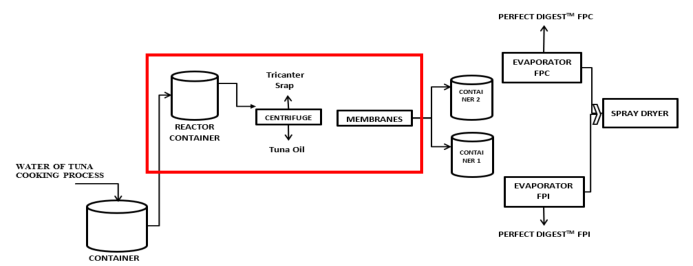
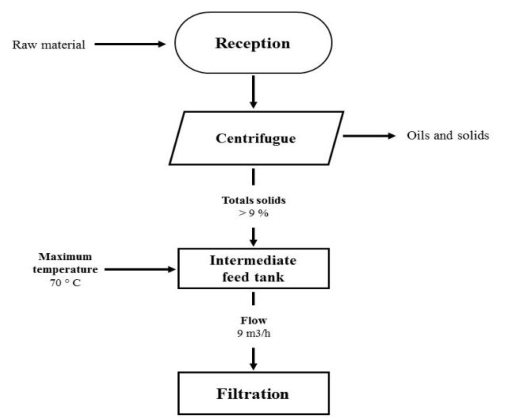
Figure 1: Fish protein production process
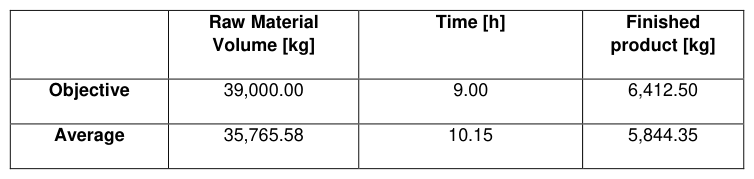
Fish protein production will depend on demand. Once the projected volume is completed, the pumping stage ends, and the raw material will be processed in the following stages. See Figure 1. The semifinished product will be moved to a mechanical separator that removes the oil, tuna wastewater, and a solid. The raw material that enters the separation process must deliver the product in a stable and continuous manner; the volume sent will depend on the production plan. Table 1 shows the target volume of raw material and finished product, and those obtained on average in 2020. There is evidence of a 10% reduction in the use of the product according to the planning (Topon Visarrea, et al., 2021).
Intelligent Human Systems Integration (IHSI 2022): Integrating People and Intelligent Systems https://openaccess.cms-conferences.org/#/publications/book/978-1-7923-8988-7
Table 1. Summary of objectives and outcomes
Pumping system design The pumping system in the fish protein manufacturing process is important be-cause of the issues mentioned above. Therefore, it is necessary to make a selection of materials and a proposal for the operation of the new automatic system. The design of the automatic system will consist of the stages shown in Figure 2 and are detailed below.
Figure 2: Operating model
Figure available in the original PDF paper.
Identification of installed capacity. The fish protein processing plant has an annual production volume of 1346,000 tons/year using available resources such as production equipment, facilities, technology, experience, and human resources. In order to make maximum use of its in-stalled capacity, the production process makes use of overtime and extra hours of the aforementioned resources.
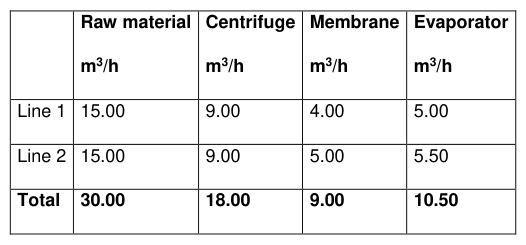
Table 2. Installed capacity plant Raw material Centrifuge Membrane Evaporator m3/h m3/h m3/h m3/h
Intelligent Human Systems Integration (IHSI 2022): Integrating People and Intelligent Systems https://openaccess.cms-conferences.org/#/publications/book/978-1-7923-8988-7
Table 2 shows the production capacity of each process area and identifies that there is a bottleneck in the production capacity of the membranes, which corresponds to 9 m3/h, causing downtime and delays in the production line. The proposed improvement action is to feed the membrane area continuously without oversupply and intermittency, since this implies waste or unforeseen cuts due to lack of raw material flow.
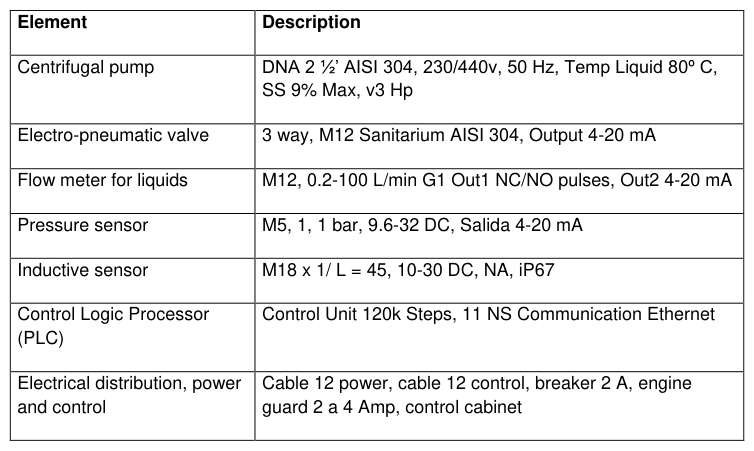
Selection of equipment and instruments. With the installed capacity known, the elements that will be part of the automatic control system are selected. A summary of the elements and characteristics are shown in Table 3.
Table 3. Equipment and instruments
Control system design Software. Figure 3 below shows the flow diagram of the raw material collection process, which will enable compliance with the requirements of the system. When the raw material is ready, the process begins, which feeds an intermediate tank of the membrane process, passing through the centrifuge to separate the oil and the sus-pended solids, until completing the minimum of 90% of the intermediate tank to start the filtration.
After starting the filtration process, the pressure sensor will be in charge of maintaining the intermediate tank at 90% +/- 10%, positioning the recirculation valve until the desired volume is completed, according to the production order, that is, between 30 and 40 m3 of
Intelligent Human Systems Integration (IHSI 2022): Integrating People and Intelligent Systems https://openaccess.cms-conferences.org/#/publications/book/978-1-7923-8988-7 raw material, which is controlled by a flowmeter that will indicate the closure of the feed from the reception.
Implementation of the automatic system
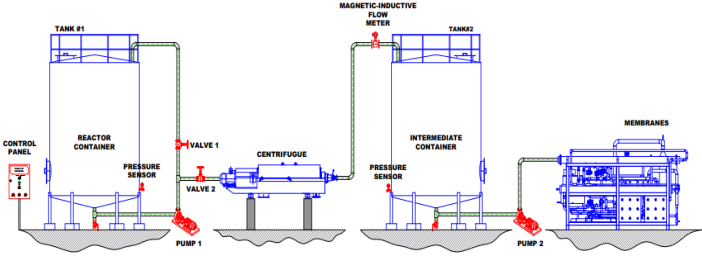
Figure 4 shows the installation diagram of the automatic raw material pumping system, where, once started up, it will be able to start the process, with the optimum level of collection and the parameters adjusted to the plan. The process is started by opening valve 1 and closing valve 2, to move the raw material by means of a separator that removes the suspended solids, up to the filtration process in a constant way at maximum capacity which will be recorded by a flowmeter which will control the total raw material corresponding to the planned recipe, once the total volume is reached, valves 1 and valve 2 return to the initial position until the preparation of the next raw material of the production process.
Figure 3: Operation of the receiving system.
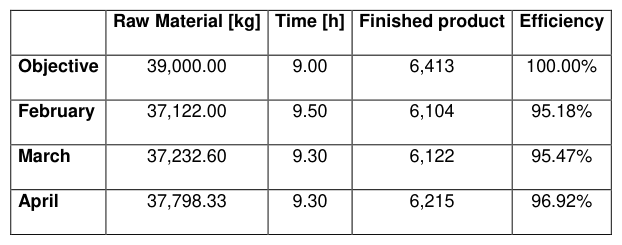
RESULTED Once the installation, testing, and start-up stage of the automatic process were completed, a decrease in process times and efficiencies over the installed capacity of up to 95% was evidenced. These values were analyzed during 3 months of daily tests to all production orders generated.
Intelligent Human Systems Integration (IHSI 2022): Integrating People and Intelligent Systems https://openaccess.cms-conferences.org/#/publications/book/978-1-7923-8988-7
Figure 4: Diagram of the automatic pumping system Once the improvement was made, the decrease in production costs was noted, corresponding to labor, use of basic services, and production inputs, which are reduced due to the decrease in operating hours due to the implementation of the automatic raw material feeding system.Table 4. Tests performed on the automatic process Raw Material [kg] Time [h] Finished product Efficiency
CONCLUSIONS AND FUTURE WORK The fish protein production process seeks to make the most of the waste generated by a tuna canning plant, reducing the generation of waste and making the most of a new product. This process is delicate because the wastewater has to be processed in a maximum time of 36 hours. In addition, it is a process that seeks to be as stable as possible to obtain the optimum protein percentage of 4% and, of course, the sanitary quality corresponding to pathogens typical of the tuna process. The proposed automatic process helps to maintain a constant pumping system, finally obtaining 95% efficiency in the process and decreasing the production time from 10.15 hours to 9.30 hours.
Intelligent Human Systems Integration (IHSI 2022): Integrating People and Intelligent Systems https://openaccess.cms-conferences.org/#/publications/book/978-1-7923-8988-7
As future work, it is recommended to analyze the protein levels to propose an improvement in the separation by size, since the quality of the protein is qualified by the register of amino acids corrected for protein digestibility.
ACKNOWLEDGMENTS
The authors would like to acknowledge the Indoamerican Technological University and the Faculty of Engineering and Information and Communication Technologies.
REFERENCES
Avendaño, E. & Silva, H., 2018. Análisis de los cuellos de botella en la logística internacional de las Pymes de confecciones en Colombia. Telos Rev. Estud. Interdiscip. en Ciencias Soc., Issue 20, pp. 510-536. Cabello, A., García, A. & Figueroa, B., 2013. Calidad físico química de la harina de pescado
Venezolana. Saber, Issue 25, pp. 414-422. Cerda, E., 2019. Productividad y competitividad en la Industria del Salmón en Chile. Collado, E., 2010. Efecto de la materia prima y de la mezcla de materiales (licor de prensa y saguanza) sobre la calidad, rendimiento y precio del aceite de pescado. Hervas, A. & Villanueva, R., 1999. Automatización de procesos industriales. Universidad
Politénica de Valencia. Hleap, J. & Gutierrez, C., 2015. Fish hydrolysates - production, profits and new developments in the industry. A review. Agroindustry and Food Science. Nikolik, G;, 2018. The salmon farming industry, a bankers perspective Rabobank: Globally
leading food and agribusiness lender and financial services provider. s.l., s.n. Restrepo Gallego, M., 2006. Cleaner Production in Food Industry.. Produccion + Limpia Vol. 1 No. 1. Sanchez, A. & Vayas, T., 2020. Pesca y acuicultura en Ecuador. Universidad Tecnica de
Ambato. Sanchez, T., Paredes, V. & Erazo, F., 2019. Desarrollo de un alimento para mascotas utilizando subproductos de la industria atunera en la ciudad de Manta. Volumen 15, pp. 63-76. Topon Visarrea, B., Mendoza, C. & Zapata, M., 2021. Influence of energy cost on industrial
competitiveness in a refined tuna protein processing company. Advances in Human Factors, Business Management and Leadership. AHFE 2021, Volumen 267. Torres Avalos, G. A. & Lozano González, E., 2017. Disminución de solidos de aguas grises mediante un proceso de aireación. Ra Ximhai, pp. 393-404. Villamil, O. & Váquiro, H., 201. Fish viscera protein hydrolysates: Production, potential
applications and functional and bioactive properties.. Food Chemistry, Elsevier, Volumen 223, pp. 160-171.
Intelligent Human Systems Integration (IHSI 2022): Integrating People and Intelligent Systems https://openaccess.cms-conferences.org/#/publications/book/978-1-7923-8988-7
LISTED IN THE AHFE DIGITAL BOOKSTORE CATALOGUE
Explore the complete digital volume
Intelligent Human Systems Integration (IHSI 2022): Integrating People and Intelligent Systems
Read this individual research paper free through the original publisher, or explore the full digital proceedings book.
ISBN 978-1-7923-8988-7
Explore this ISBN in the AHFE Bookstore ↗Listed in the July 2026 bookstore catalogue; search by ISBN to confirm current availability · Digital book purchase optional