Vera Barradas, Ana Loures, Luis Loures, José Silveira Dias, Victoria Carrillo Durán (2022). Colour as a Distinctive Element of the Territories. In: Human Dynamics and Design for the Development of Contemporary Societies. AHFE Open Access, vol. 25, pp. 135–140. https://doi.org/10.54941/ahfe1001381
This paper is part of research under development, which aims to define a set of criteria and/or parameters in the fields of design and communication, to enhance the sustainability of Low-Density Territories, through the recognition of their identity and their distinctive signs.Thus, this article aims to know if the colour is constituted as a distinctive sign and contributes to the identity of the territory.According to studies developed by several authors over the past few years, the distinctive signs, whether tangible or intangible, are identifying and differentiating elements that ensure ethical and fair competition, which encourages sustainability. They can contribute decisively to the construction of a region's iconography, the reaffirmation of its territorial imprint and are a stimulus to territorial development. In the context of signs and place identity comes the concept of genius loci, or spirit of place, created by Norberg-Schulz, which refers to the distinctiveness that characterises each place.As long as there is light, colour is in every landscape we see. Whether they are, or not, worked, by Man, each landscape holds a palette that is composed of the colours that compose it: sky, vegetation, soil, rocks, buildings, signs, among others.For Simon Bell (1993), despite the chromatic variability that landscapes present, they are associated to a limited scale of colours, a fact that facilitates the definition of a local identity.Talking about local identity, as far as colour is concerned, leads to the concept of Colore Loci, which derives from the previously mentioned Genius Loci, created by Raimondo, to demonstrate the unique characteristics of a given place.In order to achieve the established objective, three types of landscape were identified: Natural Landscape, characterized by being able to have, or not, human intervention, but where the action of nature prevails and where the presence of construction is very reduced or even null; Landscape built by Man using local natural resources, refers, for example, to urban agglomerations where local materials are used to build, i.e. where local stone is used for the design of streets and pavements, for the cladding of buildings, or for the construction of exposed stone walls; and Painted Landscape, which is one that, regardless of whether or not it uses materials from the region, stands out for its deliberate use of artificial colours, which make these landscapes unmistakable.Through the analysis carried out it was possible to conclude that colour is even a distinctive sign of the territory, since each place has different types of heritage, natural and built, and these give the landscape distinctive shades, through permanent and non-permanent colours. However, and turning the focus to the valuation and attractiveness of the territories, which is the central theme of the doctoral research, it can be stated that the colour, and its use, can also create the identity of a place, and thus enhance it and make it attractive, since according to the analysis carried out, the spaces created by colour (the painted landscapes) are the most visited.
Currently, more than 60% of the territory of mainland Portugal is classified as Low Density Territory. This, as a general rule, is made up of areas with low demographic density, an aging population and low educational qualifi- cations. The urban structure is normally polynucleated, consisting of small and dispersed agglomerates, with poor accessibility. Partnerships between the public and private sectors are limited, and institutions have little territorial dynamics. Agriculture often continues to be the dominant economic activity, presenting, in many cases, low levels of productivity and competitiveness. This context has been increasing since the 1980s of the 20th century (Mota, 2019; PSD, 2014; Moreira, 2001; and Ferrão, 2000). In this sense, and in an attempt to reverse the abandonment of the territory, and the scenarios for the coming years, it is considered of crucial interest to develop strategies methodologies that contribute to the recognition of the specificities of these territories, enhancing their distinctive signs.
Thus, the color, which is considered by Costa (2011) as being “a property of the things in the world”, can constitute an element that confers the identity of the place, since each place has its singularities, and that these correspond different shades.
DEVELOPMENT Identity and Distinctive Signs of the Territory
Over the past few years, several studies have been carried out to identify the distinctive signs of territories, as crucial elements for their characteriza- tion and development (Covas et al., 2019; Dallabrida, 2019 and; Covas and Covas, 2015), since, and according to Professor António Covas, “a good pretext or distinctive sign (...) this is all that is needed to keep the ope- rating system and the geoeconomy of a region in full operation.” (Covas, 2021, s.p.), and there are regions that lack encouragement to maintain themselves.
According to Moro (2017), distinctive signs are identifying elements, of differentiation, which ensure ethical and fair competition, which encourages sustainability. For Covas et al. (2019, p. 1), distinctive signs can “contribute decisively to the construction of the iconography of a region, the reaffir- mation of its impressive territorial mark and encouragement to territorial development”. As for Bruch (2011), the “sign” represents an object, whether this material or immaterial, “having the function of distinguishing it from other objects, similar or similar” (Covas et al. 2019).
Distinctive signs are then considered to be the territory’s identity, since identity is defined as “a unified and identifiable look for a product or organization” (Dabner et al., 2019).
In general, the definition of identity refers to the set of characteristics spe- cific to a certain element, be it a person, an animal, an object or the like, which differentiates it from the others. As Moraes et al. (2010, p. 9) “talking about identity is dealing with complexity”. Even so, identity is influenced by the environment that surrounds it, perhaps for this reason Bauman (2005)
Colour as a Distinctive Element of the Territories 137
considers that an identity does not define a person throughout life, and for this author, identity is an unfinished condition.
In the context of the place’s identity, the concept of genius loci, or spirit of the place, appears, created by Christian Norberg-Schulz, which refers to the distinctive character that characterizes each place. Norberg-Schulz argues that a good project is one that protects and conserves the environment in which it is inserted, without this implying copying old models, but rather highlighting the identity of the place and interpreting it in a new way. This presupposes those spaces must be treated as individual and at the same time dynamic places. Light and color help, according to Christian Norberg-Schulz, to determine the genius loci of places (Boeri, 2016).
Color in Landscape As long as there is light, color is in every landscape we see. Whether worked or not by Man, each landscape, whether natural or not, has a palette that is composed of the colors of the sky, vegetation, soil, rocks, buildings, signs and advertisements, and everything what makes it up.
For Simon Bell (1993), despite the chromatic variability that landscapes present, they are associated with a limited color scale, a fact that facilitates the definition of a local identity.
Speaking of local identity, as far as color is concerned, leads to the concept of Colore Loci, which derives from the aforementioned Genius Loci and was created by Claudia Raimondo, to demonstrate the unique characteristics of a particular place. For her, architecture has to recognize the vocation of the place. According to Pernão (2017), Raimondo applied this concept in the Restoration, arguing that these values must be preserved in any architectural or urbanism intervention.
Subsequently, Color Loci Placemaking appears, combining Colore Loci with the concern previously expressed by Bauman (2005), which proposes an approach to color that combines the conservation and enhancement of the identities of each place with the inevitable and essential changes that cha- racterize society contemporary, in the sense of privileging the individuality of each urban action with the peculiarities of each context, and which values new meanings and new potentials that also involve the chromatic component (Boeri, 2016).
The concept of Color Geography was created in the 70s of the last cen- tury, by Jean-Philippe Lenclos, (Aguiar, 2003) who defended that a certain color palette can be considered as characteristic of a certain place. The colors of the natural environment (stones, wood, vegetation, etc.) and the colors of the artificial environment created by man (buildings, streets, etc.), being the result of a specific interaction and coexistence between man and nature, determine this palette, which distinguishes places and cultures (Per- não, 2017). Lenclos also refers to the importance of distinguishing between permanent colors, namely stones|rocks, painted surfaces, roofs, roads, and non-permanent colors, such as the color of the sky, vegetation that changes over the seasons, and mirrors of water that often reflect the color of the sky. (Pernon 2017).
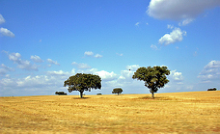
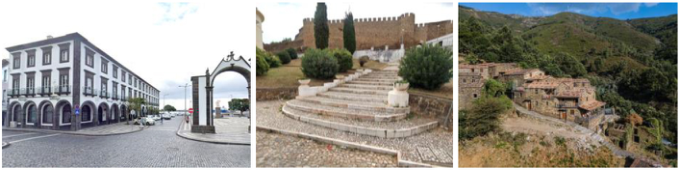
Figure 1: Planície Alentejana | Alto Douro Vinhateiro | Ria Formosa. (Source: Google).Figure 2: Ponta Delgada | Estremoz | Cerdeira. (Source: Google e Google Maps).
However, and if identity cannot be associated with the past or the pre- existing, it may be the result of an interpretation and transformation project (Decandia, 2000, p. 183) dictated by community dynamics, and then the color it can represent an important instrument for the creation or rein- forcement of identity. Boeri 2016. These projects, when integrating the participation of the population, without each one losing their individuality, can become elements of collective identity (Conte, 2019).
ANALYSES Based on the above, three landscape typologies were identified at this stage, which have in common the fact that the color distinguishes them from the others, that is, the color gives them their own identity, but which are diffe- rent in their conception. The typologies created are: a) Natural Landscape; b) Landscape built by Man using local natural resources, and c) Painted Landscape.
The Natural Landscape is, in this context, characterized by being able to have, or not, human intervention, but where the action of nature prevails and where the presence of construction is very limited or even nil. These areas cor- respond, for example, to the vast Alentejo plains, the Alto Douro Vinhateiro, or the lagoon system of Ria Formosa, in the Algarve. Living ecosystems, some dependent on Man, and all very different from each other.
The Landscape built by Man using local natural resources, refers, for exam- ple, to urban agglomerations where materials from the region are used to build, that is, where limestone, granite, marble or basalt are used for the design of streets and sidewalks, for the cladding of buildings, or for the construction of stone walls. The examples of the façades, outlined in an almost black tone, from the city of Ponta Delgada, the marble sidewalks in Estremoz, and the stone houses in Aldeia de Xisto Cerdeira, in the Serra da Lousã.
Colour as a Distinctive Element of the Territories 139
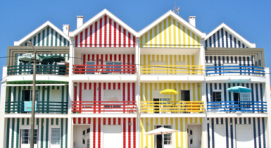
Figure 3: Praia da Barra, Aveiro | Rua Cor de Rosa, Lisboa | Cais da Ribeira, Porto. (Source: Google).
Finally, the Painted Landscape is one that, regardless of whether or not it uses materials from the region, stands out for its deliberate use of artificial colors, which make these landscapes unmistakable. Color in cities, as menti- oned above, appears everywhere, and is often used as a way of establishing boundaries (Conte, 2019), of creating barriers (the yellow stripe at metro stations is an example), however, there are cases in which the use of color is purely aesthetic and others that aim to capture attention and attract people. In figure 3 some of these cases are represented, with the typical colored stri- ped houses of Praia da Barra in Aveiro, with Rua Cor de Rosa in Lisbon and the colored facades of Baixa do Porto, all places of strong tourist attraction, and all totally created by Man.
Through the analysis carried out, it is possible to infer that there are several types of landscape where color helps to identify them, however, in national territory, not many do not have human intervention. Although some “atta- cks” on heritage, namely natural, are known, and unsustainable practices are still common in terms of construction, the fact that we increasingly value what is ours can be a first step towards having more landscapes like those represented in the figure 2.
However, and turning the focus to the valorization and attractiveness of territories, which is the central theme of the investigation, with the support of the examples considered above, it can be stated that color and the use of color can effectively create the identity of a place, and thus enhances and makes it attractive, since these are the most visited places, although it is not just because of the color, but this element demonstrates great relevance.
ACKNOWLEDGMENT
The authors would like to acknowledge to the VALORIZA Research Cen- ter, from the Polytechnic Institute of Portalegre, for the possibility of being present at this conference and to the Foundation for Science and Technology (FCT) for funding this research.
REFERENCES
Aguiar, J., 2003. Planear e Projectar a Conservação da Cor na Cidade Histórica: experiências havidas e problemas que subsistem. Comunicação ao III ENCORE, LNEC. Website: http://conservarcal.lnec.pt/pdfs/AGUIAR_3%20 ENCORE.pdf. Bauman, Z., 2005. Identidade: entrevista a Benedetto Vecchi. Tradução de Carlos
Alberto Medeiros. Zahar, Rio de Janeiro, Brazil.
Bell, S. 1993. Elements of Visual Design in the Landscape. E&FN Spon. p. 72. Boeri, C., 2016. Planeamento e projecto da cor urbana. Tese de Doutoramento em Arquitetura, Faculdade de arquitetura e Artes, Universidade Lusíada de Lisboa. Conte, V., 2006. A Cor na Paisagem - Salinas do Samouco Minas de S. Domingos.
Dissertação de Mestrado em Cor na Arquitetura, Faculdade de Arquitetura da Universidade de Lisboa, Portugal. Conte, V., 2019. A Cor em Acção. By the Book, Lisboa. ISBN: 978-989-8614-86-5. Costa, J., 2011. Design para os olhos – Marca, Cor, Identidade, Sinalética. Dinalivro, Lisboa. ISBN: 978-972-576-588-3. Covas, A. e Covas, M.M., 2015. Multiterritorialidades: temas e problemas de
governança e desenvolvimento territoriais. Edições Colibri, Lisboa, Portugal. Covas, A., 2021. PT 2030, a política da administração e a administração da política.
Público, 5 de maio de 2021. Website: https://www.publico.pt/2021/05/05/ opini ao/noticia/pt-2030-politica-administracao-administracao-politica-1961320. Covas, A., Covas, M. e Dallabrida, V., 2019. Os Signos Distintivos Territoriais e a Smartificação do Território. uma Abordagem Exploratória. Biblio3W - Revi- sta Bibliográfica de Geografía y Ciencias Sociales Universitat de Barcelona. Vol. XXIV. Número. 1268. ISSN: 1138-9796. Dabner, D., Stewart, S. e Vickress, A., 2019. Curso de design gráfico – principios e
práticas. 2a edição. Editorial Gustavo Gili, São Paulo, Brazil. Dallabrida, V., 2019. “Significar territórios” para reafirmar sua especificidade e identidade territorial: aproximações teóricas e indicativos metodológicos. IX Seminário Internacional sobre Desenvolvimento Regional – Processos, Políticas e Transformações Territoriais. De 11 a 13 de setembro de 2019, Rio Grande do Sul, Brazil. Decandia, L., 2000. Dell’identità: Saggio sui luoghi: per una critica della razionalità
urbanistica. Soveria Mannelli, Rubbettino. Ferrão, J., 2000. Relações entre mundo rural e mundo urbano - Evolução histórica, situação atual e pistas para o futuro. Sociologia, Problemas e Práticas, 33, 45–54. ISSN 0873-6529. Moraes, D., Krucken, L., e Reyes, P., 2010 [org.]. Caderno de Estudos Avançados em
Design. Editoria da Universidade do Estado de Minas Gerais, Barbacena. ISBN: 978- 85-62578-04-5 Moreira, M., 2001. Globalização, Agricultura e Zonas Rurais Desfavorecidas. Celta Editora, Oeiras, Portugal. ISBN: 972-774-119-3. Moro, M., 2017. A proteção dos sinais distintivos como promoção da ética e da
sustentabilidade em um mercado de livre concorrência. Pensar, Fortaleza, v. 22, n. 1, p. 335-352, jan./abr. 2017. DOI: 10.5020/2317-2150.2017.3700. Mota, B., 2019. A Problemática dos Territórios de Baixa Densidade: Quatro Estudos de Caso. Dissertação de Mestrado. ISCTE, Instituto Universitário de Lisboa, Portugal. Pernão, J., 2017. A phenomenological approach to colour surveys in architecture.
Journal of the International Colour Association, 19, 23–33. PSD - Partido Social Democrata, 2014. Territórios de Baixa Densidade, Territórios de Elevado Potencial (Sumario Executivo). Website: http://autarcas-psd.pt/tool s/download.php?doc=236.
LISTED IN THE AHFE DIGITAL BOOKSTORE CATALOGUE
Explore the complete digital volume
Human Dynamics and Design for the Development of Contemporary Societies
Read this individual research paper free through the original publisher, or explore the full digital proceedings book.
ISBN 978-1-958651-01-8
Explore this ISBN in the AHFE Bookstore ↗Listed in the July 2026 bookstore catalogue; search by ISBN to confirm current availability · Digital book purchase optional