Zhengtang Tan, Ziqin Luo, Shuang Lin (2022). Exploration and Practice of Progressive PBL in costume design course: The Example Engineering and Design College of Hunan Normal University. In: Ergonomics In Design. AHFE Open Access, vol. 47, pp. 30–38. https://doi.org/10.54941/ahfe1001916
This study aims at the problems of college students' education in China's fashion design specialty, such as fragmented knowledge system, an unnatural connection between courses, and slim employment prospects. Taking "knowledge innovation" as the theoretical model, "project-driven" as the teaching intervention approach, and aiming at optimizing the curriculum system of fashion design specialty and improving the knowledge learning ability and employment scope of college students, the educational reform practice of series design courses was carried out. Use field observation method and this paper observed the four learning stages of fashion design major in the National Teaching Demonstration Center of Fashion Design and Engineering Practice of Hunan Normal University from freshman to senior. By introducing four categories of projects, namely, "competition, innovation and entrepreneurship, enterprise innovation and enterprise practice," the four knowledge types of construction, practice, distribution, and collaborative design gradually promoted the renewal, expansion, and iteration of students' knowledge design level. This study summarizes the "progressive project-driven" teaching mode of fashion design specialty. It is found that the "progressive project-driven" teaching mode can assist the organic connection between courses, help students learn various knowledge of fashion design step by step, and improve their creative thinking ability.
PBL is called “project-based learning” or “project-driven learning” (DeFil- lippi, R.J. 2001). This teaching model has been widely used in Chinese engineering, computer, English, medicine, and other multidisciplinary teach- ings. In the field of design education in China, the “project-driven” teaching mode emphasizes the practical learning-oriented by the workflow in practice
Exploration and Practice of Progressive PBL in Costume Design Course 31
and cultivates students’ technical level, cooperation ability, and professio- nal adaptability. However, compared with traditional teaching methods, the project-driven teaching method also has some defects or deficiencies in the actual teaching process (JingLi 2012). For example, Chinese scholar Dai Shanshan suggested that the project system requires schools, teachers, and students to invest more teaching resources and energy. It is pointed out that the single project-based teaching of Ma Li quickly leads to fragmentation of learning knowledge.
In Japan, Tama University of Fine Arts officially introduced the project- driven teaching mode in 2006. For example, a series of courses such as material research and sustainable design are introduced into “Textile Design,” which forms a specialized curriculum system of textile design based on the application and study of materials and the accumulation of interdi- sciplinary knowledge. The University of Missouri, USA, put forward the echelon small class education method of undergraduate, master’s and doctor’s degrees, strengthen the cooperation of team opinions, and targeted exercise of students’ project integration ability (Alain Findeli, 2001).
Progressive Inquiry Mode Based on the connection of knowledge learning in teaching activities, Xu Jiang proposed a teaching model of “progressive project-driven,” which emphasized the progressive relationship between projects and courses and systematic teaching (Xu Jiang2017). In the teaching of product design, through implementation-oriented projects, future design-oriented projects, and autonomous group-oriented projects, the professional skills of design students and their application ability to meet various social needs can be gradually improved. Yang Huan built an innovative teaching mode of “adva- nced” digital media design series courses. Systematically assist students in establishing dynamic design thinking and practical experience from four steps and a series of lectures: cutting-edge professional skills, basic professional knowledge, value system, and valuable professional experience (Yang Huan, 2018). Based on project-driven teaching, China’s design education has put forw- ard a progressive curriculum teaching mode to promote the spiral develo- pment of individual knowledge innovation (Li Jiangxia, 2013). The esta- blishment of a progressive curriculum mode makes the smooth transition between subtasks within the curriculum and between the curriculum and the curriculum and promotes the continuity of individual knowledge innovation.
To sum up, design disciplines are characterized by practical operation, interdisciplinary nature, and changeability of design objects. The teaching mode of “project progressive driving” can promote the theory and practical knowledge, cross-cutting and professional knowledge of fashion design layer by layer, and form the discipline characteristics of “emphasizing practice”and “diversification” of fashion design, which is helpful for professional students to conform to the development trend of interdisciplinary and cross-cultural times to build a comprehensive and comprehensive knowledge structure (Pirita Setama-Hakalenin, 2008).
THE CLOTHING DESIGN PROJECT RESEARCH AND DESIGN Research Purpose and Object
The research purpose of this paper is to carry out a series of practical proje- cts based on the traditional teaching model, according to students’ different cognitive stages and knowledge mastery progress, and explore and summa- rize the types of projects that are suitable for different stages of fashion design, and refine the progressive project-driven mode, which has achieved the goal of gradually improving students’ professional skills and innovation.
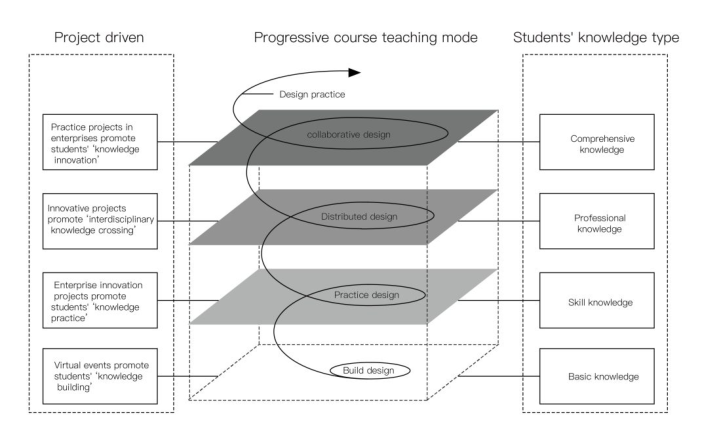
Research Method and Process The research methods of this paper include literature reading and field obse- rvation. The establishment of the progressive curriculum model proposed by Hakkarainen in this paper has four key stages. As shown in Figure 1, the first stage is “Building Design”, which means that students gradually build their independent knowledge points through learning design know- ledge; After that, in the process of continuously updated design learning, the knowledge learned can be fully applied in practice through design proje- cts. As a result, the command has also crossed to the second stage, which is called “practical design,” which means that students create new knowledge through internal absorption and processing of individuals after acquiring uni- que expertise and introducing theory into practice; The third stage is called “distributed design,” in which all learning activities are shared among lear- ning participants, and multidisciplinary students are emphasized to introduce their knowledge into design practice from different angles. The last stage is “collaborative design”, which emphasizes the cooperation and multi-interest requirements in design, and also enables students to think about practical design and cooperation skills with others from the perspectives of the market and users.
Aiming at the progressive course teaching mode, based on four key stages, we adopt the action research method and carry out corresponding project practice in the implementation to explore the reasonable teaching mode for a series of courses of fashion design specialty (Lin Shuang, 2021).
PROJECT-DRIVEN MODEL GENERATED IN A SERIES OF COURSES OF FASHION DESIGN Stage 1, The Virtual Competition Project Promotes Students’ “Knowledge Building”
The Fashion Design major of the School of Engineering and Design of Hunan Normal University set up the course of Digital fashion illustration in the second semester of the first year. There are 64 hours in four weeks, divided into two parts: (1) Basic knowledge of digital fashion illustration; (2) Kno- wledge of digital fashion illustration skills. According to the knowledge construction mode, this course divides it into two types of knowledge: basic knowledge and skill knowledge. However, the proportion of basic knowledge in classroom knowledge intervention is relatively high, while skill knowledge is relatively low.
Exploration and Practice of Progressive PBL in Costume Design Course 33
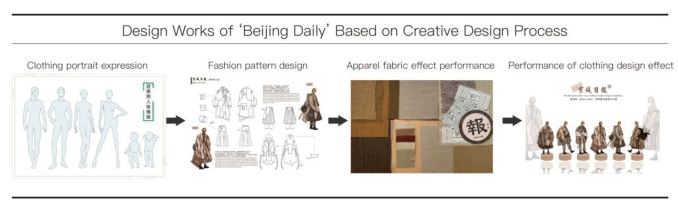
Figure 1: Design works of ‘Beijing Daily’ based on the creative design process.
Digital fashion course is an introductory course of fashion design speci- alty. In the first 32 class hours, our courses include learning AI, PS software drawing, and clothing styles. In the last 32 hours, Pay attention to students’ comprehensive application of drawing skills to design creativity. Therefore, in the course, the way of “promoting teaching through competition” is adopted Strengthen students’ knowledge system construction and professional skill level improvement from “software application” to “creative expression” of digital fashion illustration.
As shown in Figure 1, it is the fifth “James Fabric” Cup Fashion Creative Design Competition for students. It belongs to the comprehensive training of knowledge in the course of digital fashion illustration. As shown in the figure, through comprehensive training, the costume portrait expression, style dra- wing, and effect drawing learned in the course can be applied step by step in the design process through creative design processes and methods to streng- then the system construction of students’ basic knowledge and improve their professional skills. Therefore, this paper proposes that the introduction of competition virtual items in introductory courses can help students digest and apply the basic knowledge they have learned step by step. On the other hand, it can focus on encouraging students to express their creative designs instead of being constrained by practical factors such as market and cost. Finally, it can help students master all essential knowledge points and gradu- ally build a knowledge system to master the performance of fashion design effects.
Stage 2: Enterprise Innovation Projects Promote Students’ “Knowledge Practice” The elective course of Design Psychology is set in the second semester of the sophomore year in Fashion and Costume Design in the School of Engineering and Design of Hunan Normal University. Because there are many categories of academic knowledge, there is a lack of integration with practice. However, this course is a required core course in a design discipline. Students’ learning enthusiasm is low, which leads to less consideration of the application of rela- ted knowledge in practical design application in the later period (Chen Lixun, 2014). In this lecture, the teacher rearranged 32 class hours. As shown in the table below, the course is divided into three teaching modules: (1) Basic
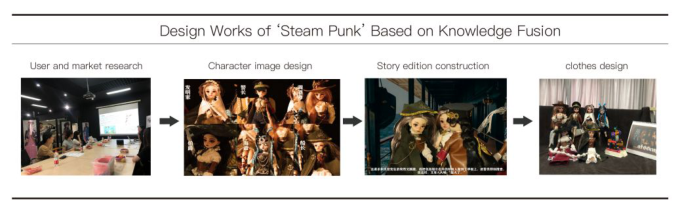
Figure 2: ‘steampunk’ design works based on knowledge fusion.
knowledge of design psychology; (2) Skills and knowledge of design psych- ology; (3) Professional understanding of design psychology. Starting from the third teaching content of the second lecture, the course introduces the project-based practical course for baby clothes design, which is jointly deve- loped by the school-enterprise cooperation innovation and entrepreneurship education base, and promotes the transformation of students’ ability from “comprehensive quality education” to “knowledge application practice.”
In the course of Design Psychology, teachers use the teaching method of learning to encourage students to transform the absorbed knowledge into the created knowledge through enterprise projects. As shown in Figure 2, the pra- ctical training of baby clothes for students with the theme of “steampunk.” Through design practice, we can skillfully apply the theoretical knowledge of the course, such as user research and analysis, emotion and design, cognition and learning, feeling and perception, to user and market research, character image design, storyboard construction, and fashion design. In the process of reporting the results, users and enterprise personnel were also invited to discuss the feasibility of the invention, and through practical projects, mul- tidisciplinary knowledge was initially involved. Therefore, this paper puts forward that the introduction of specific projects of school-enterprise coo- peration in the course of professional practice can transform the knowledge from teachers into a new understanding of students themselves through the practical design process of innovative design, which is a knowledge practice teaching mode driven by enterprise innovation.
Stage 3, Innovation and Entrepreneurship Projects Promote Students’ “Interdisciplinary Professional Knowledge Cross” In the third year of college, most students will participate in the innovation and entrepreneurship project of college students, and specifically, based on the preliminary design students, primary electronic students, and significant mechanical students, they will jointly explore and complete the conceptual design envisioned by the team in the form of team participation. In this paper, we have made a concrete analysis of the innovative and entrepreneurial pro- ject of “Intelligent Morning Running Weather wear Design for Aging,” which we have been participating in since April 2021. The design process can be divided into three stages: (1) raising questions; (2) Conceptual design; (3) Pra- ctical production, Question raising refers to the user investigation and data
Exploration and Practice of Progressive PBL in Costume Design Course 35
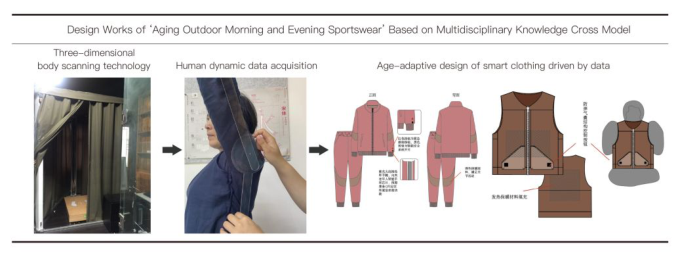
Figure 3: Design works of “Outdoor morning and evening sportswear suitable for aging” based on multidisciplinary knowledge cross pattern.
collection of the physiology and psychology of the elderly, and the case analy- sis of the elderly wearing clothes. This stage is the professional knowledge of the design discipline. At the conceptual design stage, the team discussed the physical and psychological problems of the elderly, such as unattractive body shape, fear of cold in joints, ease to get lost, etc. Based on the summary of the previous stage, and jointly gave the garment design solutions from the multi- disciplinary perspectives of electronic design, mechanical design, and garment design. It can be seen that this module belongs to the cross-application of mul- tidisciplinary professional knowledge. In the third practical production stage, this part attaches great importance to the training of students’ cooperation ability and also needs the joint beneficial cooperation of multi-disciplines.
As shown in Figure 3, the renderings of the project “Data-driven inno- vation of intelligent and aging outdoor morning and evening sportswear” were designed for students. In the figure, we can see that through the intervention of multidisciplinary knowledge, students of clothing major, ele- ctronics major, and mechanical major all take part in the design with their professional learning, thus expanding the single cognitive framework of stu- dents. Based on this, this paper holds that the introduction of innovation and entrepreneurship projects can break the single knowledge structure bar- rier of fashion design students, enrich students’ knowledge system through distributed knowledge, and achieve the goal of knowledge cross-learning.
Stage 4: Enterprise Practice Project Promotes Students’ “Knowledge Integration” The graduation design course of 2017 clothing and costume design major in the School of Engineering and Design of Hunan Normal University was ope- ned in the first half of 2021. Graduation thesis is a comprehensive required course for graduates to apply the theoretical knowledge they learned in school to practice. At present, the construction of integrating knowledge innova- tion consciousness into graduation design is still in the primary stage, which does not reflect the ability of knowledge innovation and knowledge integra- tion. Therefore, we pay more attention to knowledge integration training in this practice. In this course, graduation design is divided into four teach- ing modules: (1) basic knowledge of graduation design, (2) skill knowledge
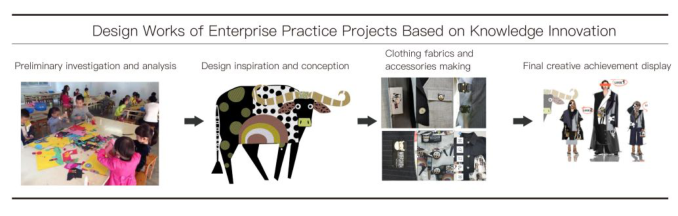
Figure 4: Design works of enterprise practice project based on knowledge innovation.
of graduation design, (3) professional knowledge of graduation design, and (4) integration knowledge of graduation design. The whole course extends the creative part of the enterprise project, curriculum Teaching Based on the Design of Zodiac Elements in Kindergarten Clothing.
As shown in Figure 4, it is a design work named “The Application of Zodiac Elements in Kindergarten Garden Clothing Design-Taking Zodiac Cattle as an Example.”Through cooperative innovation, the design inspira- tion, drawing modeling, and achievement report learned in the course can be applied in the design innovation link through creative methods. Improve students’ knowledge innovation ability. Therefore, this paper proposes that the introduction of enterprise practice projects into the curriculum can not only comprehensively apply the basic knowledge that students have learned but also express their creativity, and finally achieve the goal of “knowledge integration” and “knowledge innovation.”
CONCLUSION
As shown in Figure 5, this paper proposes a progressive project-driven cur- riculum model. Specifically, during the freshman year, we introduce the con- struction design method, adopt the teaching method of promoting teaching by competition, and guide students to creatively construct basic knowledge; Sophomore students integrate knowledge into practice to test and promote students’ skills and knowledge learning through social practice; Through innovation and entrepreneurship projects, junior students have broken the single knowledge framework of fashion design, crossed with multidiscipli- nary professional knowledge such as electronics and machinery, broadened students’ horizons and further activated their creative ability; Fourth-year-old graduates apply the knowledge they have learned in series, and at the same time emphasize the collaborative design training of enterprise personnel, desi- gners and users, so that students can use the knowledge comprehensively (Li Qiumei Lai Xiaoling, 2019). Through the research of teaching practice, this paper puts forward that relying on “virtual competition project,” “enter- prise innovation project,” “innovation and entrepreneurship project,” and “enterprise practice project” to enter the corresponding teaching stage in a progressive spiral way, which can assist the organic connection between
Exploration and Practice of Progressive PBL in Costume Design Course 37
Figure 5: Progressive teaching mode.
courses in the teaching process of fashion design, help students learn vari- ous knowledge of fashion design step by step and improve their innovative thinking ability(Chen Lixun, 2014).
ACKNOWLEDGMENT
Thanks for this study: Research on the Reform Practice of “Progressive Project-driven” Teaching Model in the Core Curriculum Group of Fashion Specialty(the number: HNJG-2021-0040), Research on the aging-resistant design of smart wearable clothing based on 3D human body data collection and support of application projects (the number:20K077).
REFERENCES
Alain Findeli. (2001). Rethinking Design Education for the 21st Century: Theoretical, Methodological, and Ethical Discussion[J]. Design Issues, 17(1):5–17. Chen Lixun. (2014) The practical cognitive dimension of tacit knowledge theory and
design discipline [J]. Decoration DeFillippi, R.J. (2001), Introduction: project-based learning, reflective practices and learning outcomes. Management Learning, 5–10. Jing Li. (2012) A preliminary study of all-media talent training in universities
in western China under the background of media integration [D]. Chongqing University. 81 Li Jiangxia (2013) Student-centered, project-driven and result-oriented-innovation and enlightenment of undergraduate engineering education mode in Worcester Institute of Technology [J]. Research on Higher Engineering Education, Li Qiumei, Lai Xiaoling. (2019) Thinking of fashion design thinking in personnel
training mode [J]. Design
Lin Shuang, (2021) one day. Research on sustainable development of product design capability driven by progressive project teaching [J]. Beauty and times: creativity (I), Pirita Setama-Hakalenin (2008) Learning through collaborative design: Technology
strengthens knowledge practice. 111–113. Xu Jiang. (2017) Research on “Progressive Project-driven” Teaching Mode of Product Design Specialty [D]. Yang Huan. (2018) Exploration and practice of a series of advanced digital media
design courses-Take the Academy of Fine Arts of Hangzhou Normal University as an example [J]. Decoration
LISTED IN THE AHFE DIGITAL BOOKSTORE CATALOGUE
Explore the complete digital volume
Ergonomics In Design
Read this individual research paper free through the original publisher, or explore the full digital proceedings book.
ISBN 978-1-958651-23-0
Explore this ISBN in the AHFE Bookstore ↗Listed in the July 2026 bookstore catalogue; search by ISBN to confirm current availability · Digital book purchase optional