Sonia Cueva-Ortiz (2022). Knowledge city vs smart city: Approaches and development areas. In: Human Factors in Architecture, Sustainable Urban Planning and Infrastructure. AHFE Open Access, vol. 58, pp. 339–345. https://doi.org/10.54941/ahfe1002370
CEAAD-EUT Center of Studies in Architecture, Art and Design-Territorial Urban Studies, Universidad Tecnológica Indoamérica, Quito, Ecuador; CITEHS Research Center for the Territory and Sustainable Habitat, Universidad Tecnológica Indoamérica, Quito, Ecuador ↗
Knowledge Cities (KC) and Smart Cities (SC) have made significant investments with influence throughout the world in only four decades. This has occurred although these concepts are still being developed, being urgent to advance in their understanding. This article focuses on comparing these types of cities, seeking to understand their approaches, the fields of study in which they are developed and the lines of action in which they are projected. A mixed methodology is applied, qualitative to deepen the concepts and quantitative through the VOS viewer software, which is used to process more than two thousand articles indexed in Scopus. We found that the KC is formed around the notion of change of the productive matrix and develops issues related to its urban spatial and social conformation. While the SC concept is developed in the technological sciences, relating more to the use of the internet of things (IoT), big data, cloud computing, and its application in the city.
INTRODUCTION AND THEORETICAL FRAMEWORK From the study of towns such as Palo Alto or Cambridge, which had rapid economic growth due to a large flow of innovations related to ICTs, the notion of innovative environment emerged in 1985 (Castells & Hall, 2001) and later the notion of city of information linked to the so-called information age (United Nations & ITU, 2003), later known as the city of knowledge (Carrillo, 2015).
SCs have several definitions that describe what a smart city should be. Thus in Caragliu et al. they say “We believe a city to be smart when investments in human and social capital and traditional (transport) and modern (ICT) communication infrastructure fuel sustainable economic growth and a high quality of life…” (2009, p. 50). On the other hand, the study by Camero & Alba (2019) describes the benefit of the use of technology, making the components of the traditional city more efficient, which is in line with the description of Hall et al. (2000), while other authors relate the concept of SC with that of sustainability (Albino et al., 2015).
Knowledge City The notion of innovative environment (innovative milieu) is developed by the GREMI research group, defining it as “the set or the complex network of mainly informal social relationships on a limited geographical area, often determining a specific external ‘image’ and a specific internal ‘representation’ and sense of belonging, which enhance the local innovative capability thought synergetic and collective learning processes” (Camagni, 1991, p. 3). On this basis, some authors develop the theory of the information city, technopolis or intelligent city (in the line of Komninos) (Castells & Hall, 2001; Komninos, 2009) and cities of this type are built (Esmaeilpoorarabi et al., 2020). According to this phase of knowledge production, these concepts of city are founded, adding the concept of Knowledge-based urban development (KBUD) (Carrillo, 2015; Yigitcanlar & Lönnqvist, 2013). Thus, under the notion of a city of knowledge, the General Metropolitan Plan GMP of Barce- lona changed its land uses, seeking to integrate diverse activities in specific geographical area, proposing to include the “activities @1”. This plan creates 5 specialized clusters in: ICT, (multi)media, design, medical technologies and energy (Cueva, 2018). This creation of diverse activities and clusters was also observed in Sofía Antípolis.
Cueva and Cruz (2021) after a bibliographic and empirical analysis define the components and conditions of the innovative environment and the city of knowledge, concluding that the innovative environment is that network of spontaneous relationships that arises in a delimited geographical area in which eight basic components converge: 1. Universities/ High-level training, 2. Research centers, 3. Technology transfer centers, 4. Government instituti- ons, 5. Culture and leisure centers, 6. Housing and services, 7. Organizations of investment and 8. Production or industry center, while the city of know- ledge is made up of these innovative media, specialized in various areas of knowledge forming some clusters.
Smart Cities Van den Buuse & Kolk (2019), interview representatives of the largest com- panies with SC programs, such as IBM and Cisco, finding that in SC the technological solutions are focused on the sustainable development of cities. Camero and Alba (2019) explain that most SC studies come from Compu- ter Science and Information Technology (CC/IT), with only 4% coming from urban studies journals . Giffinger et al. (2007) has influenced the concept of SC describing 6 fields of smart action that have been collected in several current SC studies (Appio et al., 2019).
When reviewing some representative cases of SC, we find cases such as Glasgow, a city that received 24 million pounds sterling from the Innovate UK program in 2013, whose Future City Glasgow project is made up of: 1) the Glasgow Operations Center (COG), 2) Open Glasgow, which encou- rages open data, and 3) a demonstration of its benefits (Cowley et al., 2018).
1“@ activities” refers to activities with intensive use of ICT. A detailed description of these is in the modification of the Barcelona Urban Regulations of 2006.
Knowledge City vs Smart City. Approaches and Development Areas 341
These projects affect open data policies and their use. For which entities that handle data obtained by a closed circuit television are co-located. Managed “the physical co-location of some services (related to crime control), creating a City Central Control Room with state-of-the-art technology and software (and) a City Incident Response Room with a Police Silver Command”(Future City Glasgow Evaluation, 2016, p. 35).
Bristol is another of the cities with funding from the Innovate UK program, with an allocation of 5.3 million, with projects similar to that of Glasgow, especially the COG, although with a greater aesthetic impact on the city, due to its unique reflective spherical volume of the Data Dome. Space that also has an important online presence (Caprotti, 2019). The Data Dome, in addi- tion to housing the Bristol Open data, allows its users to view it on the large curved screen, built for a planetarium. This building in terms of its urban- architectural impact, as a physical structure in the city, is nothing more than an anecdotal symbolic space, so Caprotti (2019) describes the Smart City as an architecturally invisible city.
METHOD
The investigation is divided into three phases. The first makes a qualitative approach to the concepts of KC and SC. In relation to the KC, a review of articles from the Scopus base is made since 2005. Theoretical review fed by the study of 4 cases of worldwide influence: Cambridge Phenomenon, Silicon Valley, Sophia Antipolis and 22@Barcelona. In relation to the Smart City, a high-impact literature review is made, including empirically based arti- cles and literature reviews, complemented by the review of two case studies: Glasgow and Bristol in the United Kingdom.
In the second phase, a bibliometric analysis is carried out, with the Vosvi- ewer software, developed by Jan van Eck and Waltman (2010), which yields a data mapping of the KC and SC articles. The set of articles, reviews, book chapters and conferences found in the Scopus database registered until 11/26/19 is selected. The search option was pointed out: title/abstract/ke- ywords. In the case of KCs, the following set of terms was introduced: ““knowledge city” OR “knowledge cities” OR “Knowledge-based urban” OR “knowledge-based city” OR “knowledge-based cities” OR “information city” OR “information cities””, obtaining a total of 374 articles. While for the SC the terms were introduced: ““Smart Cities” OR “Smart City” OR “digital city” OR “digital cities””. Given the large number of articles found and observing that a maximum of 2,000 documents could be processed, only articles from the years 2019 and 2020 corresponding to articles and reviews were selected. The data was taken on 11/26/19, giving a total of 1742 arti- cles. Of the articles obtained, the field or areas of study to which they belong were recorded according to the same Scopus database.
In the third phase, a comparison is made by mapping, with the help of the aforementioned software, the co-occurrence of the words in the docu- ment abstracts, and the co-occurrence of the author keywords. The results obtained were compared with the qualitative review of documents, validating and contributing to the interpretation of the data obtained in said mapping.
342 Cueva-Ortiz
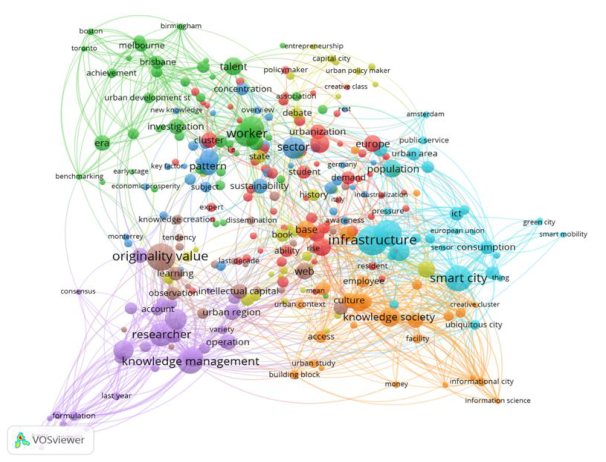
Figure 1: Mapping of summaries of the city of knowledge.
A mapping of the co-occurrence of words used in the abstracts of the more than two thousand one hundred articles was obtained, as well as of the co- occurrence of keywords used by the authors, based on which the results are presented.
RESULTS
The quantitative analysis ratifies the focus of the KC studies, which is in the production of knowledge and innovation as the basis of its development. In the summary map it can be seen that very common terms stand out within the knowledge society such as innovation or originality, research, among others, see Figure 1.
Note: Created with VOSviewer software selecting: binary count, 4 co- occurrences, the last two attributes indicate the number of documents in which a term occurs, at least 4 times (van Eck & Waltman, 2013)). The total of the database of KC publications indexed in Scopus is used as detailed in the methodology.
The so-called innovative media is the engine of this city (Cueva-Ortiz & Cruz-Cárdenas, 2021) an engine of economic growth, creativity and develo- pment. Likewise, the cases of the city of knowledge show a wide occupation of the territory.
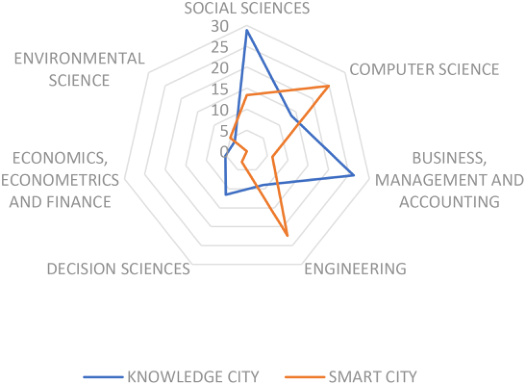
KC and SC Areas of Study and Focus To see the focus of these conceptions, the keywords have been used. Thus, it can be seen that in SC studies, only 13% belong to social studies, while 25% belong to Computer Science and Information Technology (CS/IT) and 22% to engineering. Hence, SC focuses mostly on IoT, Big Data and Cloud
Knowledge City vs Smart City. Approaches and Development Areas 343
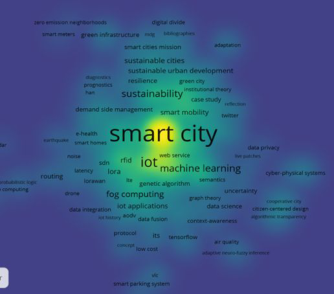
Figure 2: Fields of study of knowledge and smart city.Figure 3: Keywords of articles of knowledge city (3a) and smart city (3b). The maps were created with VOSviewer software.
computing. In the cities of knowledge, on the other hand, 29% belong to the field of social sciences, and within these, all belong to urbanism, planning and city magazines. In second place the 26% belong to field of Business, Management and Accounting (see Figure 2).
Just as there is a great difference in the fields of research from which they come, there is a great difference in the approaches of these two conceptions, while SC is more related to the technological application in the city with the aim of making it more efficient, more sustainable or another, the KC seeks to create an innovative environment, strengthen the creation of knowledge and innovation, to enter to occupy a place in the new world organization of work, governed by the knowledge economy, with ICT being its great allies.
Of the keywords of the authors, in the case of the KC, the most concurrent 65% refer to urban and spatial issues (urban, planning, development, spaces, places), and 30% to social issues of knowledge (intellectual capital, know- ledge - society/management/workers/economy) while in the case of CS, 65%
344 Cueva-Ortiz
refers to technology: internet of things, big data, machine learning, cloud computing, sensors, among others and only 2 of the 17 most concurrent, refer to issues related to the city, noting a very low relationship with urban and spatial issues (see Figure 3).
CONCLUSION
Despite the large amount of literature, SCs have defined little in terms of their relationship with the city in terms of urban planning, land use and more issues related.
The impact of ICTs on the city, in spatial terms, comes from the study of the cities that spontaneously entered and were impacted by a new productive system, from which the KC approaches emerged, in which changes in the occupation of the territory and the urban ecosystem formed to satisfy new forms of production, relationships and life (Castells & Hall, 2001) which is also seen in planned cities based on knowledge (Yigitcanlar & Lönnqvist, 2013). Despite the attempts made by the same international firms that advise and benefit from the construction of SC (van den Buuse & Kolk, 2019) and auth- ors concerned about the city (Appio et al., 2019), the SC concept currently and according to quantitative data, continues to be a wave of application of the internet of things in urban planning and the city in general, with few signs of innovation in the urban area.
REFERENCES
Albino, V., Berardi, U., & Rosa-María Dangelico. (2015). Smart cities: definitions, dimensions, and performance. Journal of Urban Technology, 22, 1723–1738. Appio, F. P., Lima, M., & Paroutis, S. (2019). Understanding Smart Cities: Innovation
ecosystems, technological advancements, and societal challenges. Technological Forecasting and Social Change, 142, 1–14. Bibri, S. E., & Krogstie, J. (2017). Smart sustainable cities of the future: An extensive interdisciplinary literature review. Sustainable Cities and Society, 31, 183–212. Camagni, R. (1991). Local “milieu”, uncertainty and innovation networks: tow-
ards a new dynamic theory of economic space.” In R. Camagni (Ed.), Innovation Networks: Spatial Perspectives (pp. 121–144). Camero, A., & Alba, E. (2019). Smart City and information technology: A review.
Cities, 93(March), 84–94. Caprotti, F. (2019). Spaces of visibility in the smart city: Flagship urban spaces and the smart urban imaginary. Urban Studies, 56(12), 2465–2479. Caragliu, A., del Bo, C., & Nijkamp, P. (2009). Smart cities in Europe. Journal of
Urban Technology, 18(2), 65–82. Carrillo, F. J. (2015). Knowledge-based development as a new economic culture.
Journal of Open Innovation: Technology, Market, and Complexity, 1(1), 15. Castells, M., & Hall, P. G. (2001). Tecnópolis del mundo : la formación de los complejos industriales del siglo XXI (Pascual Mo). Alianza Editorial. Cowley, R., Joss, S., & Dayot, Y. (2018). The smart city and its publics: insights from
across six UK cities. Urban Research & Practice, 11(1), 53–77.
Knowledge City vs Smart City. Approaches and Development Areas 345
Cueva-Ortiz, S., & Cruz-Cárdenas, J. (2021). Knowledge Cities: ICT and Urban Components. In L. Y. (eds) Markopoulos E., Goonetilleke R.S., Ho A.G. (Ed.), International Conference on Applied Human Factors and Ergonomics AHFE 2021. (pp. 181–188). Springer, Cham. Cueva, S. (2018). Cuidad de la era de la Información. Espacios de poder o esperanza?
Universidad Tecnológica Indoamérica. h Esmaeilpoorarabi, N., Yigitcanlar, T., Kamruzzaman, M., & Guaralda, M. (2020).
How can an enhanced community engagement with innovation districts be esta- blished? Evidence from Sydney, Melbourne and Brisbane. Cities, 96(April 2019), 102430. Future City Glasgow Evaluation. (2016). Giffinger, R., Ferter, C., Kramar, H., Kalasek, R., Pichler-Milanovic, N., & Meijer, E.
(2007). Smart cities Ranking of European medium-sized cities. In Research Insti- tute for Housing, Urban and Mobility Studies. Delf University of Technology (Vol. 16, Issue October). Hall, R. E., Braverman, J., Taylor, J., & Todosow, H. (2000). The Vision of A Smart City. In 2nd International Presented at the Life Extension Technology Work- shop Paris, France September 28, Paris, France. 2nd International Life Extension Technology Workshop. Jan van Eck, N., & Waltman, L. (2010). Software survey : VOSviewer, a computer
program for bibliometric mapping. 84, 523–538. Komninos, N. (2009). Intelligent cities: towards interactive and global innovation environments. In International Journal of Innovation and Regional Development (Vol. 1, Issue 4). United Nations, & ITU. (2003). Cumbre Mundial sobre la Sociedad de la
Información. Van den Buuse, D., & Kolk, A. (2019). An exploration of smart city approaches by international ICT firms. Technological Forecasting and Social Change, 142, 220–234. Van Eck, N. J., & Waltman, L. (2013). {VOSviewer} manual. Leiden: Univeristeit
Leiden, January. Yigitcanlar, T., & Lönnqvist, A. (2013). Benchmarking knowledge-based urban development performance: Results from the international comparison of Helsinki. Cities, 31, 357–369.
LISTED IN THE AHFE DIGITAL BOOKSTORE CATALOGUE
Explore the complete digital volume
Human Factors in Architecture, Sustainable Urban Planning and Infrastructure
Read this individual research paper free through the original publisher, or explore the full digital proceedings book.
ISBN 978-1-958651-34-6
Explore this ISBN in the AHFE Bookstore ↗Listed in the July 2026 bookstore catalogue; search by ISBN to confirm current availability · Digital book purchase optional