Alexander Gorovoj, Christian Schiller, Michaela Friedrich, Abdul Rahman Abdel Razek (2022). Towards the role of smart services as well as AI in building and enhancing entrepreneurial resilience in small and medium-sized service companies. In: The Human Side of Service Engineering. AHFE Open Access, vol. 62, pp. 286–294. https://doi.org/10.54941/ahfe1002569
The aim of this paper is to provide practitioners and consultants with guidelines for enhancing organizational resilience in small and medium-sized businesses. It describes the actions an organization could perform and what goals should be pursued in order to successfully respond to potential threats. Design/methodology/approach – The paper builds on existing research on organizational resilience as well as the resilience of complex systems and the theories established there. By linking these research areas, it describes an adapted framework that considers the use of artificial intelligence and the provision of smart services in service companies. In addition, the paper illustrates the practicality of the framework by applying it to a small brick-and-mortar retail business.Findings – This paper proposes the use of a structured approach and methods such as stress testing and simulations to increase organizational resilience. It suggests that using artificial intelligence as well as offering smart services can have a positive impact on the resilience of a small and medium sized business.Originality/value – The paper contributes to the better applicability of measures aimed at increasing organizational resilience by suggesting a structured approach as well as appropriate avenues for action.Keywords: Organizational Resilience, Complex Systems, Smart Services, Artificial Intelligence
The COVID-19 pandemic has led to numerous changes in politics, social environment and economy. The fear of the virus as well as the actions to contain the pandemic have threatened the existence of numerous German service companies. So far, many of them have only been able to avert the threat of bankruptcy by government interventions, short-time work and sup- port from nongovernmental organizations (Adam & Alarifi, 2021). However, some of the service companies might not survive the pandemic. Small and medium-sized companies turned out to be particularly vulnerable. Unlike internationally active large enterprises, they have little financial cushion and
Towards the Role of Smart Services as well as AI 287
therefore indicate higher bankruptcy risks (Peichl et al., 2021). While the manufacturing sector was able to continue business operations under certain conditions, many retailers and other service providers had to cease opera- tions completely. As a result, the service sector, which is by far the most employment-intensive and at the same time the most value-adding sector in Germany, was confronted with challenges that have threatened its very existence (Peichl et al., 2021; Welter & Wolter, 2021).
Brick-and-mortar retail is one of those hard-hit sectors. In addition to the losses resulting from the measures taken to contain the COVID-19 pande- mic, brick-and-mortar retailers are facing threats from online retail, which has been growing in recent years. While brick-and-mortar retail in Germany experienced a decline in customers of up to 65% in 2020, online retailers in the European Union increased their sales by 36% - click-and-mortar provi- ders even by 60% (GfK SE, 2021, p. 16). There was already a trend toward online commerce prior to the COVID-19 pandemic (Statistisches Bundesamt [Destatis], 2022), while the containment measures might have had an accele- rating effect on it. Possible reasons for this include customers’ fear of infection and interventions such as limits on the maximum number of visitors in stores or curfew, which could reduce the attractiveness of brick-and-mortar retail for customers. In response, some vendors had adapted their services to the situation and launched additional services such as online catalog, availability queries, product reservations, and click-and-collect to combine the advanta- ges of online shopping with the fast availability of brick-and-mortar retail. This shift to omnichannel distribution may have had a positive impact on retailers’ resilience as it allowed them to keep their businesses running. Our observations indicate that small companies in particular often lack know- ledge about how to systematically increase their organizational resilience. Despite numerous ideas, a lack of resources often hinders small businesses from successfully putting them into practice.
Guides and frameworks that already exist in the academic literature to help increase organizational resilience may be viewed by small and medium-sized enterprises (SMEs) in the service sector as either too complex or too generic. The ongoing study aims to derive recommendations for action for the service industry using current insights from organizational resilience research. Thus, the flexibility and resilience against external factors threatening the existe- nce of service companies shall be increased. To facilitate this, a conceptual framework (Gorovoj et al., 2021) that was announced earlier at the 31st RESER conference is presented in this paper. It serves as a foundation for further industry- and company-specific extensions considering the heteroge- neous structure of the service industry. Furthermore, the practical suitability of the framework will be evaluated by applying it in a small stationary retail business.
ORGANISATIONAL RESILIENCE It is observable that the social and scientific interest in organizational resi- lience and how to build it is steadily increasing and has been boosted by
the COVID-19 pandemic. To meet the increased interest, numerous scienti- fic papers have been published on this topic. For example, the number of scientific publications on the topic of organizational resilience has almost quadrupled from over 14,000 in 2012 to over 52,000 in 2020 (Digital Sci- ence, 2018-). Several standards such as BS 65000:2014 (British Standards Institution, 2014) or ISO 22316:2017 (International Organization for Stan- dardization, 2017) have also been developed on this subject. In addition, numerous models and frameworks have been published in the scientific com- munity over time to either identify the processes that contribute to increasing organizational resilience (e.g. Duchek, 2020) or to highlight the influencing factors (e.g. Barasa et al., 2018). Furthermore, the need for approaches that take company size into account has become apparent. While Burnard and Bhamra (2011) pointed out some implications of their resilient response fra- mework for small and medium-sized enterprises (SMEs), Gunasekaran et al. (2011) considered the characteristics of SMEs in their concept. A study by Sullivan-Taylor and Branicki (2011) identified a lack of technical as well as organizational capabilities and resources being characteristic obstacles in SMEs while rapidity has been found to foster their organizational resilience. Adam and Alarifi (2021) have examined the role of SME’s innovation pra- ctices and external support in their performance during the COVID-19 crisis. They concluded that innovation practices of SMEs have a direct impact on the likelihood of surviving the crisis, while external factors (such as govern- ment support programs) play a mediating role. An overview of further factors and characteristics that have been found to influence resilience of SMEs can be obtained in publications of Korber and McNaughton (2018) and Ates and Bititci (2011).
BRIDGING THE GAP TO RESILIENCE OF COMPLEX SYSTEMS Despite the plethora of generic frameworks on organizational resilience, lit- tle has been published specifically on resilience of SMEs in the service sector. In addition, many of the frameworks published to date have a high degree of abstraction, showing only “what” needs to be done to increase resilience, but not “how” it could be done. This lack of practicality might be conside- red as insufficient by some SMEs. To address this shortcoming, we present a conceptual resilience framework for SMEs operating in the service sector. The proposed concept is mainly based on previous work by Punzo et al. (2020) on resilience of complex systems. Complex systems are characterized by a variety of attributes (for a comprehensive approach, see Bar-Yam, 2002; Ladyman et al., 2013; Lloyd, 2001). Among its major ones are: “a large number of interacting parts; interactive complexity; and self-organization.” (Tan et al., 2005, p. 38). The transfer from complex systems research is driven by the assumption that the high number of interactions and the behavior of entities in a service delivery network correspond to the properties of complex systems (Barasa et al., 2018; Briscoe et al., 2012; Burton et al., 2018; Engelseth et al., 2021; Rouse & Basole, 2010; Sebhatu et al., 2016; Tan et al., 2005). In addi- tion, increasing connectivity in technology augmented services, such as smart
Towards the Role of Smart Services as well as AI 289
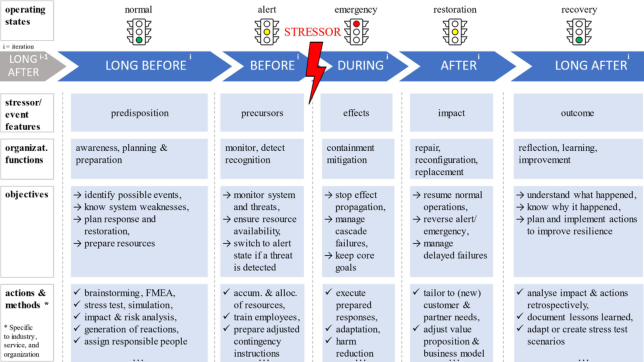
Figure 1: Conceptual resilience framework for SMEs in the service delivery network. (Adapted from Punzo et al., 2020, p. 3870).
services or the use of artificial intelligence, are associated with increasing complexity (Briscoe et al., 2012).
For the purpose of better feasibility in practical use, the circular repre- sentation of the “resilience wheel” (Punzo et al., 2020, p. 3870) has been converted into a linear process visualized by a horizontally aligned sequence of arrows (see Figure 1). Also there have been made minor changes to the terminology. For instance, in the framework we use the term organization rather than system. The intention is to focus more on the internal view of a company and its own position within the value-creating system, rather than on the system itself. Furthermore, we no longer speak only of events, but also of stressors. By doing so, we also aim to capture those threats to the orga- nization that are caused by single or multiple entities - inside or outside the system. These may include, for example, competitors or (cyber) criminals.
The resilience wheel (Punzo et al., 2020, p. 3870) as well as the framew- ork created by adapting it are characterized by five phases, namely “long before”, “before”, “during”, “after” and “long after”. Those five phases represent the time interval between the identification of a stressor and its occurrence. In each of these phases, the stressor or event has its own main feature. As an organization goes through all five phases, starting with the “long before”, it finds itself alternating between different operating stages: “normal”, “alert”, “emergency”, “restoration” and “recovery”. To facili- tate intuitiveness, the framework uses an analogy to a traffic light, which illustrates the different operating states. While pursuing appropriate goals, the organization will successively activate different functions required by the situation.
For example, an announced change in the law that will not come into force for several years provides sufficient preparation time for an adjustment. Thus, the associated situation can be classified in the “long before” phase. The organization should then start suitable adaptation measures. Since there
is always a risk that stressors will occur unannounced, a resilient organiza- tion permanently scans the environment for possible threats and develops countermeasures by analyzing its own weaknesses, planning an appropriate response and allocating the necessary resources.
Various methods and actions can be considered for planning responses, depending on the organization, service, and industry. Simple ideation techni- ques such as brainstorming can be used in order to identify potential threats. Internal weaknesses can be revealed, for example, by using Failure Mode and Effects Analysis (FMEA). Methods such as risk assessment and business impact analysis can be useful for prioritizing potential threats. Simulations and stress tests might reveal further vulnerabilities that would otherwise be hidden. It may also be beneficial to assign individuals or teams responsible for developing, coordinating, documenting, and maintaining planned responses.
Once planned, the organization should monitor its own and the value- creating system’s health more closely so threats can be detected quickly. If an imminent threat is detected, the organization switches to the alert state and activates the appropriate response plans. An important goal in this phase is to ensure resource availability. While the event or stressor is impacting business operations, the organization is experiencing an emergency state. In this condition, the most important goals are preventing the spread of the disruption or at least mitigating it, as well as ensuring business operations and pursuing core objectives. This involves executing responses that have already been pre-planned and prepared. A high degree of adaptive flexibility may be supportive to master the situation.
During the after phase, the operating state of an organization is chara- cterized by restoration. Further adjustments, reconfigurations or any repairs are aimed at avoiding downstream failures and restoring the normal state. This may require the organization to quickly adapt to new customer and partner needs and modify its value proposition and even its business model. In contrast, the long after phase can be seen as a retrospective. The aim here should be to gain a sound understanding of what happened, why it happened, what the consequences were, and how the actions taken affected the situa- tion. Thus, conclusions, results and lessons learned should be documented as they serve as an information base for activities carried out in the subsequ- ent long before phase. With the knowledge gained, it can be used to enrich action plans and develop new stress test scenarios. Since it is an iterative pro- cess (indicated by the indexed “i”), the long after phase merges into the long before phase and the process restarts at a higher iteration level.
USE CASE: A FAIR TRADE STORE To evaluate the suitability of the framework for use in practice, it was applied in the context of a brick-and-mortar retailer. Located in a small town (popu- lation < 50,000) in southwestern Germany, this fair trade store offers a mixed assortment of goods ranging from clothing to various food items. According to the criteria of the U. S. Small Business Administration (2019), the entity can be classified as a small business. In an interview with the two owners, it emerged that the COVID-19 virus and the measures taken to contain it have
Towards the Role of Smart Services as well as AI 291
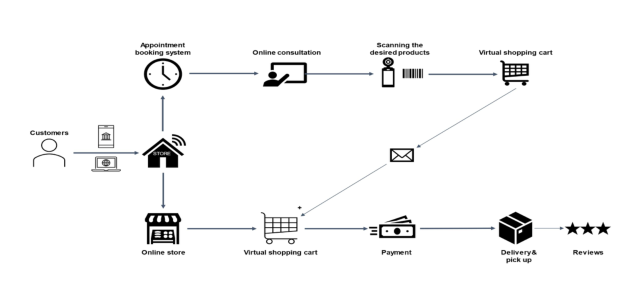
Figure 2: A multi-channel approach of a fair trade store to increase its resilience.
resulted in a sharp drop in customer visits and sales, threatening the very exi- stence of the business. Although the COVID-19 pandemic was not yet fully resolved, a business continuity plan was developed that considered further lockdowns in response to the emergence of potential new pandemic threats as possible stressors.
Applying the resilience framework to the scenario presented here, the company operates in the long before phase. Thus, the experience gained in previous lockdowns serves as the information base. As a result, a concept based on multi-channel distribution was developed in several brainstorming rounds. To accomplish this, an online store was launched to provide custo- mers with a shopping experience that is not limited by opening hours or their location (see the bottom part of Figure 2). In the context of smart service, an online consultation function was also set up to provide customers with an opportunity to obtain information by talking to the expert, just as they would on site in the store (see the upper part of Figure 2). For this purpose, visitors can book an appointment for online consultation in the system. After a successful booking, they receive a confirmation message and their indi- vidual URL access link, which leads them to an online video conferencing system. During the customer conversation, the employees activate the camera on their smartphones or tablets and are able to move freely around the store. They can respond individually to customers’ questions and wishes and pro- vide them more in-depth information on products of interest. Once customers have made their choice, employees scan the barcodes on the products and use them to fill a virtual shopping cart. After the consultation is done, they send the shopping cart in the form of a URL link directly to the customers via e-mail or text message. When the URL link is called up, the customers are redirected to the shopping cart of the online store, where they can find the products previously discussed. They also have the option of adding further products from the online store and completing the purchase.
Although the provision of the online store as well as the online consul- ting function might have a positive impact on the company’s resilience, it also poses risks, such as cybercrime, to business operations. In this case, the
framework was also used to develop appropriate action plans and implement the necessary steps, such as training staff and administrators.
The use of tools based on artificial intelligence (AI) can further increase the resilience of the fair trade store. For example, AI applications for demand forecasting can be used to ensure that sufficient resources (such as products and personnel) are available. Using natural language processing (NLP) and virtual agents for the online consultation function, a digital twin of the brick- and-mortar store can enable visits outside of store opening hours. However, further development and research activities are needed.
CONCLUSION
Despite the growing interest in organizational resilience and the associated increase in research activities resulting in a large number of frameworks being developed, only a few of them can be considered suitable for practical use in small and medium-sized businesses. To address this shortcoming, in this paper we present a conceptual resilience framework for SMEs in the service sector, which is mainly based on earlier work by Punzo et al. (2020) on the resilience of complex systems.
As we hypothesize that leveraging and offering smart services as well as using artificial intelligence in service delivery will increase resilience in SMEs, an additional, practice-related layer, “Actions & Methods”, has been added to serve as a placeholder. This extension helps to account for heterogeneity in the service sector because it encourages to make case-specific adaptations. Initially, it includes a sample of conceivable activities and tools that can be adapted and extended to the area of application. One of these tools is a so- called “stress test” or simulation. Along with impact and risk analysis, these can be powerful instruments for creating awareness of potential hazards and developing solutions to address them.
To assess the suitability of the framework for its use in the field, it was applied to a case study in a fair trade store. Drawing on recent experiences, pandemic situations were identified as a potential threat to business operati- ons. To increase organizational resilience and to cope with such events in the future, a multi-channel distribution system was set up, supported by digital services.
Clients play a central role in the service delivery process. Therefore, they should also be highly relevant for activities to increase the resilience of service companies. As mentioned before, we assume that offering smart services and leveraging artificial intelligence can generate benefits for both providers and customers with a positive impact on the company’s resilience. Thus, ongoing studies are intended to identify appropriate methods, tools and actions for each process phase that are suitable for a particular service branch or entity in the service delivery network.
ACKNOWLEDGMENT
This work has been funded by the German Federal Minis-try of Education and Research (BMBF) through the Project “SmARtPlaS (No. 02K18D112).
Towards the Role of Smart Services as well as AI 293
The authors wish to acknowledge the Commission, the Ministry and all the project partners for their contribution.
REFERENCES
Adam, N. A., & Alarifi, G. (2021). Innovation practices for survival of small and medium enterprises (SMEs) in the COVID-19 times: The role of external support. Journal of Innovation and Entrepreneurship, 10(1), 15. https://doi.org/10.1186/ s13731-021-00156-6 Ates, A., & Bititci, U. (2011). Change process: a key enabler for building resilient
SMEs. International Journal of Production Research, 49(18), 5601–5618. https: //doi.org/10.1080/00207543.2011.563825 Barasa, E., Mbau, R., & Gilson, L. (2018). What Is Resilience and How Can It Be Nurtured? A Systematic Review of Empirical Literature on Organizational Resi- lience. International Journal of Health Policy and Management, 7(6), 491–503. https://doi.org/10.15171/ijhpm.2018.06 Bar-Yam, Y. (2002). General Features of Complex Systems. UNESCO Encyclopedia
of Life Support Systems. Briscoe, G., Keränen, K., & Parry, G. (2012). Understanding complex service systems through different lenses: An overview. European Management Journal, 30(5), 418–426. https://doi.org/10.1016/j.emj.2012.06.004 British Standards Institution (2014). Guidance on Organizational Resilience (BS 65000:2014). https://shop.bsigroup.com/products/guidance-on-organizatio nal-resilience?pid=000000000030258792 Burnard, K., & Bhamra, R. (2011). Organisational resilience: development of a
conceptual framework for organisational responses. International Journal of Pro- duction Research, 49(18), 5581–5599. https://doi.org/10.1080/00207543.2011. 563827 Burton, C., Elliott, A., Cochran, A., & Love, T. (2018). Do healthcare services behave as complex systems? Analysis of patterns of attendance and implications for service delivery. BMC Medicine, 16(1), 138. https://doi.org/10.1186/s12916-018- 1132-5 Digital Science. (2018-). Dimensions [Computer software]. https://app.dimensions.a
i/discover/publication?search_mode=content&search_text=organizational%20r esilience&search_type=kws&search_field=full_search Duchek, S. (2020). Organizational resilience: a capability-based conceptualization.
Business Research, 13(1), 215–246. https://doi.org/10.1007/s40685-019-0085-7 Engelseth, P., White, B. E., Mundal, I., Eines, T. F., & Kritchanchai, D. (2021).
Systems modelling to support the complex nature of healthcare services. Health and Technology, 11(1), 193–209. https://doi.org/10.1007/s12553-020-00504-8 GfK SE. (2021). Einzelhandel Europa 2020 und 2021. https://insights.gfk.com/dow nload-gfk-studie-einzelhandel-europa Gorovoj, A., Schiller, C., & Friedrich, M. (2021). Towards the role of smart servi-
ces as well as AI in building and enhancing organizational resilience in small and medium-sized service companies – Part A: A conceptual framework. In B. Bien- zeisler, K. Peters, & A. Schletz (Chairs), The Disruptive Role of Data, AI and Ecosystems in Services: Proceedings of the 31th RESER Conference. Symposium conducted at the meeting of Fraunhofer Institute for Industrial Engineering IAO, Heilbronn, Germany. Gunasekaran, A., Rai, B. K., & Griffin, M. (2011). Resilience and competitiveness of small and medium size enterprises: an empirical research. International Journal of Production Research, 49(18), 5489–5509. https://doi.org/10.1080/00207543. 2011.563831
International Organization for Standardization (2017). Security and resilience — Organizational resilience — Principles and attributes (ISO 22316:2017). https: //www.iso.org/obp/ui#iso:std:iso:22316:ed-1:v1:en Korber, S., & McNaughton, R. B. (2018). Resilience and entrepreneurship: a syste-
matic literature review. International Journal of Entrepreneurial Behavior & Research, 24(7), 1129–1154. https://doi.org/10.1108/IJEBR-10-2016-0356 Ladyman, J., Lambert, J., & Wiesner, K. (2013). What is a complex system? European Journal for Philosophy of Science, 3(1), 33–67. https://doi.org/10.1007/s13194- 012-0056-8 Lloyd, S. (2001). Measures of complexity: a nonexhaustive list. IEEE Control
Systems, 21(4), 7–8. https://doi.org/10.1109/MCS.2001.939938 Peichl, A., Sauer, S., Lautenbacher, S., Rumscheidt, S., Miethe, J., & Steffens, S.
(February 2021). Eigenkapitalentwicklung im Zeichen der Coronakrise: ifo- Studie im Auftrag der IHK für München und Oberbayern. Munich. ifo Institut – Leibniz-Institut für Wirtschaftsforschung an der Universität München e. V. Punzo, G., Tewari, A., Butans, E., Vasile, M., Purvis, A., Mayfield, M., & Varga, L.
(2020). Engineering Resilient Complex Systems: The Necessary Shift Toward Complexity Science. IEEE Systems Journal, 14(3), 3865–3874. https://doi.org/ 10.1109/JSYST.2019.2958829 Rouse, W. B., & Basole, R. C. (2010). Understanding Complex Product and Service Delivery Systems. In P. P. Maglio, C. A. Kieliszewski, & J. C. Spohrer (Eds.), Service Science: Research and Innovations in the Service Economy. Handbook of Service Science (pp. 461–480). Springer US. https://doi.org/10.1007/978-1-4419-1628- 0_20 Sebhatu, S. P., Johnson, M., & Enquist, B. (2016). Service Innovation in a Complex
Service System: Public Transit Service Sustainability Business Cases. Procedia - Social and Behavioral Sciences, 224, 269–275. https://doi.org/10.1016/j.sbspro .2016.05.459 Statistisches Bundesamt. (2022). Wirtschaftliche Auswirkungen: Statistiken mit Bezug zu COVID-19. https://www.destatis.de/DE/Themen/Querschnitt/Corona /Wirtschaft/kontextinformationen-wirtschaft.html#408870 Sullivan-Taylor, B., & Branicki, L. (2011). Creating resilient SMEs: why one size
might not fit all. International Journal of Production Research, 49(18), 5565– 5579. https://doi.org/10.1080/00207543.2011.563837 Tan, J., Wen, H. J., & Awad, N. (2005). Health care and services delivery systems as complex adaptive systems. Communications of the ACM, 48(5), 36–44. https: //doi.org/10.1145/1060710.1060737 U.S. Small Business Administration. (2019). Table of Small Business Size Stan-
dards Matched to North American Industry Classification System Codes. https://www.sba.gov/sites/default/files/2019-08/SBA%20Table%20of%20Size% 20Standards_Effective%20Aug%2019%2C%202019_Rev.pdf Welter, F., & Wolter, H.-J. (2021, March 18). Perspektiven für den Mittelstand in der Covid 19-Pandemie.: Teil 2: Herausforderungen für den Mittelstand (IfM- Hintergrundpapier). Bonn.
LISTED IN THE AHFE DIGITAL BOOKSTORE CATALOGUE
Explore the complete digital volume
The Human Side of Service Engineering
Read this individual research paper free through the original publisher, or explore the full digital proceedings book.
ISBN 978-1-958651-38-4
Explore this ISBN in the AHFE Bookstore ↗Listed in the July 2026 bookstore catalogue; search by ISBN to confirm current availability · Digital book purchase optional