François Leborgne, Reon Smits, Maya Gencheva, Stefan De Vries, Erwin Meinders, Pierre Cluitmans, Chris Lee, Jan-carlos Kuhlmann (2023). The development of a washable and durable smart textile to measure electrodermal activity for early stress recognition. In: Intelligent Human Systems Integration (IHSI 2023): Integrating People and Intelligent Systems. AHFE Open Access, vol. 69, pp. 513–523. https://doi.org/10.54941/ahfe1002872
This paper presents the results of the development of a new sock garment with integrated electrodes for monitoring physiological signals for stress detection in people with intellectual disabilities or dementia. Misunderstood stress-induced behaviours reduce the quality of life of these individuals and complicate caregiver support and treatment, as the correct interpretation of these behaviours. One of the physiological parameters most related to stress is electrodermal activity (EDA). It shows a direct response to the sympathetic nervous system activation ('fight or flight' response) in the form of a change in skin electrical properties such as skin conductance (SC) or skin impedance (SI). The phasic component of EDA is associated with short-term events and occurs in the presence of stimuli that control sweat gland activity. Therefore, analysis of this signal can be used as an indicator of emotional arousal or stress.To continuously measure EDA on an individual, a comfortable, durable, and easy-to-use carrier is essential. Current medical electrode patches (carriers) have limited user-friendliness because of their large shape and risk of skin irritation during extended use. Besides, the daily disposal of electrode patches would pose a major supply chain challenge and generate large amounts of medical waste. Furthermore, depending on the target group, classic wrist sensors may not be accepted by patients due to their discomfort and removed during recording. Considering the above limitations, a garment sock with integrated electrodes was proven to be the most efficient location in terms of signal quality, comfort, and an optimal alternative to standard medical electrodes. This allows the electrodes to be applied in one handling while maintaining permanent spacing and positioning of the electrodes on the skin. This garment can also be reused several times after regular washing cycles. Screen printing was chosen as a method for incorporating conductive electrodes onto garments. Conductive inks can be printed onto the garment directly or onto a thermoplastic polyurethane (TPU) film, which has been proven to be a suitable material for this type of integration. Screen printing onto these films offers both high flexibility and stretchability. The printing process allows the use of complex designs, such as stacking layers and printing dielectric insulating layers on top of the conductive layers. Different types of connectors were studied and designed to convert this stretchable film into a fixed connector tail with strain relief. Finally, test prints were made in a lab to validate each material and ink combination of silver, carbon, and dielectric inks. This aim was to achieve the desired robustness, and flexibility and to optimise the position of the sensors to achieve a good balance between patient comfort and good EDA signal output.The work showed that the use of advanced screen-printing technologies in the smart sock was the best solution to ensure high wear comfort while maintaining good signal quality even after repeated use and washing while maintaining low costs and high flexibility during production. In addition, the sheet-to-sheet production method proved to be cost-effective and enabled rapid changes in the material stack and sock design.
People with severe intellectual disabilities or dementia are known to be more sensitive to stress, which can lead to challenging behaviour that naturally affects their quality of life. This also impacts their families (Janssen, Schu- engel, and Stolk, 2002), as well as the people who are responsible for their well-being. Challenging behaviour is one of the leading causes of the transi- tion from extramural care to expensive intramural care (Toot et al., 2017). Early reporting of emerging stress can allow caregivers to respond in a timely and appropriate manner to reduce the risk of escalation (Knapp et al., 2005). This reduces the stress of their work, improves the person’s quality of life, and reduces costs (Lang et al., 2013). This could be beneficial both for intramural and extramural care.
In everyday life, stress occurs when faced with challenges that alter the person’s emotional, mental, and physical state (Simon et al., 2021). Although the body can adjust, stress can lead to serious health problems and is even considered one of the leading causes of death in people with intellectual disa- bilities (Valvano, 2018). Where communication is difficult, recognising stress and understanding its triggers becomes complex and is usually left to the interpretation of clinical staff working closely with the client, as the correct interpretation of these behaviours requires long-term observation and effort (de Vries et al., 2022).
Stress is directly regulated by the autonomic nervous system through the sympathetic nervous system (fight or flight response) and the parasympa- thetic nervous system (rest and digest response) (Won and Kim, 2016). The former response oversees the immediate changes caused by a stressor whereas the latter promotes the recovery process in the body (Picard, 2009). Additi- onally, skin conductance (SC) also known as electrodermal activity (EDA) has also been proven to be an efficient indication of the autonomic nervous system in response to a stimulus (Pop-Jordanova and Pop-Jordanov, 2020). It indicated the activity of the skin’s sweat glands observed as changes in skin resistance (Boucsein, 2012). To measure EDA and thus autonomic nervous system activity, various wearables in multiple forms and body locations have been developed with different levels of accuracy and comfort.
The Development of a Washable and Durable Smart Textile 515
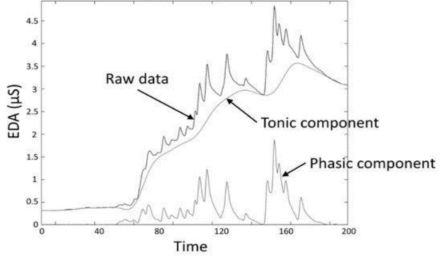
Figure 1: EDA signal separation — taken from (Posada-Quintero and Chon, 2020).
Due to the complexity of recording electrodermal activity without motion artefact, signal quality and user-friendliness are often not achieved (Zhang, Haghdan and Xu, 2017). Considering the target group, this challenge beco- mes even more important due to the lower tolerance threshold for these sensors. Thus, this article describes the process of developing a new type of sensor integrated into a sock that has both ergonomic and signal-accurate design that will record a high-quality signal to obtain good information useful for stress recognition.
ELECTRODERMAL ACTIVITY, MEASUREMENT LOCATION, AND SIGNAL QUALITY TheEDA signal is usually divided into two different components: the phasic component and the tonic component (Posada-Quintero and Chon, 2020) (see figure 1). The tonic level, also referred to as the skin conductance level (SCL), is associated with low frequency and is the underlying slowly changing level that is related to the level of attention of the person (Boucsein, 2012). This level may differ significantly from person to person depending on hydration, skin dryness, or autonomic regulation (Saeed et al., 2018). The phasic compo- nent or skin conductance response, associated with high frequency, is associ- ated with specific emotionally arousing stimulus events and occurs between one to five seconds after the onset of the emotional stimulus (Hernando- Gallego, Luengo and Artes-Rodriguez, 2018). In addition, skin conductance responses not related to stimuli occur spontaneously in the body at a rate of one to three bursts per minute during a neutral state (Boucsein, 2012).
EDA can be measured at various locations on the body, such as the head, shoulders, calf, hand, and even foot. However, the recorded EDA signal is not the same everywhere because the intensity or quality of the signal varies. Since the density of sweat glands is higher in certain regions such as the palmar surface (hand, foot, head), some locations are more efficient for recording (van Dooren et al., 2012). Studies have already shown that the best place to measure EDA is either the palmar surface of the hand or the foot (Bou- csein, 2012). Most of the commercially available wearables used for EDA measurements are wrist sensors (Chen, Abbod and Shieh, 2021). Based on the experience of the authors in intramural care, the research’s target group does not always accept these types of sensors and might try to remove them
during the recording. This could be due to the introduction of an unknown object in their daily life. Therefore, a smart garment could be a solution for better user acceptance. A good potential position for both signal quality and user-friendliness, based on user demographic, is located on the inner side of the foot over the extensor of the big toe’s base joint and adjacent to the foot sole.
To measure EDA, two electrodes are positioned at the selected location to collect a good signal. Measuring EDA can be realised with or without using an external source of electricity (Boucsein, 2012). Endosomatic devices refer to the measurement of EDA using solely the natural electrical skin changes whereas exosomatic devices require an external current applied on the skin through the electrodes with direct or alternating current (DC or AC) (Posada- Quintero and Chon, 2020). The electronics module mentioned in this paper uses a DC measurement method. By applying a constant external current (µA) through the electrodes the change in the voltage on the skin is measured. This is then used to calculate the variation in skin resistance, by the inverse of which, the SC can be determined.
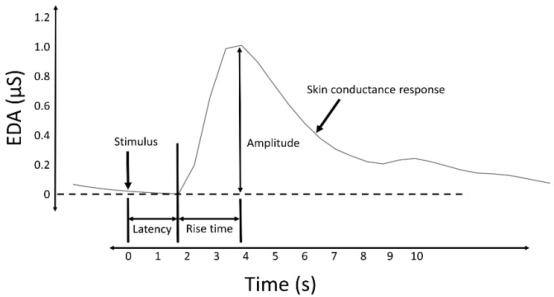
In order to compare the accuracy of sensors (medical patches, wrist sen- sors, socks) and their technical characteristics e.g., the electrode size or the shape of the alternating current, a method of qualifying the EDA signal is required. This involves finding a way to distinguish a good-quality signal from a bad one (Zhang, Haghdan and Xu, 2017). However, due to the com- plexity of this physiological signal, there is not yet a consensus, but a set of characteristics for describing a good signal has been developed and accepted already (Gashi et al., 2020). Hence, a typical galvanic skin peak will systema- tically show an exponential decay with no more than three non-overlapping peaks within a five-second window (see figure 2) (Gashi et al., 2020). These rules were developed due to the typical physiological form of skin condu- ctance and their lasting response (Boucsein, 2012). Besides, any sharp rise or drops would need further attention due to the potential similarities betw- een noise and a typical sympathetic nervous system activation (see figure 2) (Boucsein, 2012). Furthermore, based on the sensors used, a typical range will be set to remove outliers due to motion or disconnection during testing or using the garments.
To evaluate EDA data quality, a quality metric has been developed to qui- ckly describe the quality of the signal based on the characteristic of a good signal given above. First, a shape artefact detection algorithm using machine learning was reused splitting an EDA signal into 5-seconds epochs labelled as clean and noisy (Gashi et al., 2020). This method was then modified to better suit the sensor to maximise the accuracy of the artefact detection. The EDA quality metric is then defined as the ratio of noisy epochs in a speci- fic period (1 minute). With a range value within 0-100%, the metric gives the percentage of clean epochs in the whole signal. Hence, to compare each characteristic of this new sensor, 35 sessions of test separated into partici- pants were analysed and pre-processed by a typical low-pass filter (Hossain et al., 2022) for both the sock sensor and an Empatica E4 (Empatica Inc, Boston, United States of America). This specific test was used to enhance both physical and physiological (stress/arousal) responses.
The Development of a Washable and Durable Smart Textile 517
Figure 2: Ideal skin conductance response — taken from (Posada-Quintero and Chon, 2020).
DEVELOPING A COMFORTABLE AND FUNCTIONAL GARMENT WITH INTEGRATED ELECTRODES It is important to have a comfortable, durable, and easy-to-use wearable when measuring continuously on a person’s foot since it will be worn for an extended period. Conventional medical electrode patches may not be useful in this situation because of the limited user comfort as prolonged use of these patches could result in skin irritation and large amounts of medical waste (Tokumura et al., 2005). A garment with an integrated electrode may solve the limitations of conventional medical electrodes. However, this garment would need to be stretchable, flexible, and applied easily in one handling to resemble a normal sock while monitoring physiological signals. The goal is to create a design that the user will not be able to distinguish from a normal sock in terms of comfort. The design of the sock can be divided into two distinct parts: the substrate, which collects the EDA on the skin thanks to sensing pads and electrode wires, and the electronic module, which collects and processes this information.
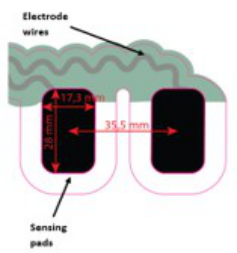
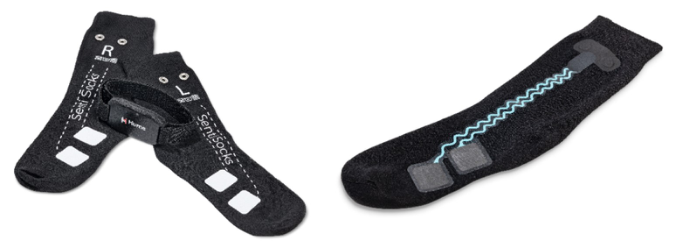
Garment and Electrodes Design To measure skin conductance, four electrode wires connected to two sen- sing pads are used to form one electrode package to make the measure- ments on the foot possible (see figure 3 — left). Two identical sensing pads (17.3x28 mm) are separated by a centre-to-centre distance of 35.5 mm. The pad size was chosen to ensure good contact, while the separation ensures a large dynamic range in the measured skin resistance (the EDA signal).
The electrode package, as shown in figure 3, is multi-layered achieved by screen printing. Firstly, a layer of thermoplastic polyurethane (TPU) is used as a base layer on the fabric. High electrical conductivity is achieved by using a layer of silver, while contact between the skin and the silver is achieved with a layer of carbon. After which, a layer of dielectric ink is placed as an insulator of the tracks going from the top towards the bottom of the sock. This enables EDA measurement on the bottom of the foot without having
Figure 3: Garment sock with screen-printed layers (right) and sensing pads zoomed-in (left).
extra disturbances from the rest of the foot. Finally, a TPU layer is placed on top, which provides a smoother surface for less friction and thus exerts less force on the electrodes (Jost et al., 2013). It is also used to encapsulate, protect, and insulate the rest of the printed conductive layers. The materials of the layers were chosen to provide the desired robustness for normal use of the smart textile. A snap-on button connector was chosen to connect the electronics module to the printed garment (see figure 3 - right).
The meandering electrode wires connect the sensor pads on the bottom of the foot to the electronic module on the ankle. This meandering shape was chosen so that the sock can be stretched reducing the immediate damage to the electrodes and hence increasing their lifetime (Verstraete, Pakazad, and Dekker, 2016). All these decisions were made to ensure a functional and easy- to-use smart sock design.
RESULTS
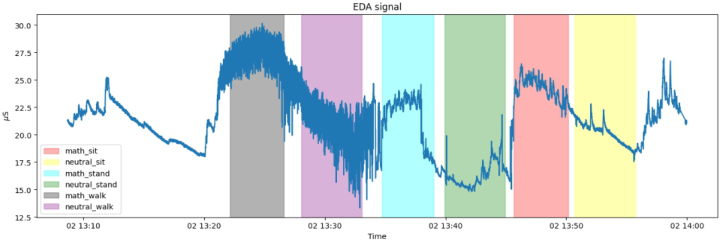
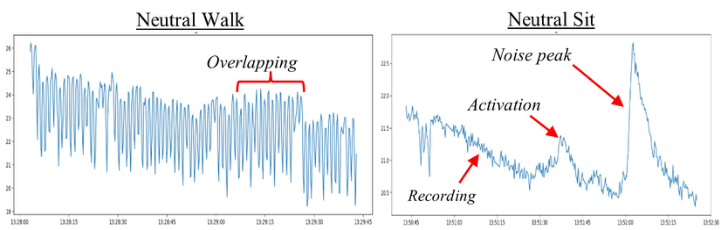
The test presented in the previous section is divided into different types of activities designed to promote both physical activity (walking) and a stressor (mathematical questions in a limited amount of time causing arousal). The result for one session is illustrated in figure 4. Each activity is followed by a neutral period in which the subject looks at coloured pipes moving across a screen, which has been shown to induce a neutral mental state(Gross and Levenson, 1995). Noise is present during all the different activities; howe- ver, its influence is greater during the motion response than the neutral one. Therefore, the frequency bandwidth of the signal increases strongly during motion response and the amplitude of the signal exhibits larger fluctuation (see Figures 4 and 5 – left).
As expected from the definition of EDA and its association with arousal, neutral states show fewer peaks because of less activation of the sympathetic nervous system (see figure 5 - right). Furthermore, some peaks show an expo- nential decay in a feasible range without overlap, describing a signal of good EDA quality (see figure 5 - right). However, some noise is still present during neutral or math position appearing because of sensing pad disconnection, recording noise, or slight movement of the user (see noise figure 5 – right).
The Development of a Washable and Durable Smart Textile 519
Figure 4: EDA lab test decomposition.Figure 5: EDA signal for the neutral walk (left) and the neutral sit condition (right).
Furthermore, during the motion part of the test, the motion artefact increases a lot hiding the physiological signal.
Within the same signal, the quality metric showed good values for the neu- tral and stable positions, even when a stressor is present, and a lower value during the motion response (see table 1). During both the neutral and mathe- matical parts of the experience, the EDA metric showed high results, although the number of spikes increased sharply during the stressful environment. These spikes were considered physiologically acceptable by the algorithm. However, when responding to movement, the metric values decrease each time, as shown by the smaller standard deviation. The quality of the signal decreases immediately during motion.
The EDA metric shows high values (> 85%) when recording with a com- mercially available sensor, Empatica E4. This sensor is located on the wrist and therefore still shows high values during walking activity since the move- ment is not as much. However, the pre-processing of the data of Empatica is confidential therefore it is unknown whether that could influence the high result (91.5% on average) of the EDA quality metric. Nonetheless, the results of the Empatica seem to confirm the usefulness of the metric for further future analysis of the sock.
The sock sensor appears to respond to changes in EDA related to auto- nomic nervous system activation, but quality decreases during movement. To link the signal to stress detection, a cleaning algorithm will be used with addi- tional low-pass and wavelet-based methods (Shukla et al., 2018) to reduce
Table 1. EDA quality metric comparison for the sock and the Empatica sensor (mean ± std).
Table available in the original PDF paper.
Users Hours
Math sit Neutral sit
Math stand
Neutral stand
Math walk
Neutral walk
21 35
Sock 65.5% ± 23.4
84.8% ± 17.3
64.2% ± 22.6
81.6% ± 15.1
26.3% ± 16.7
26.3% ± 12.8
35 35
E4 86.7% ± 20.3
97.5% ± 7.2
91% ± 16.8
95.2 % ± 13.7
89.2% ± 21.9
88.9% ± 19.8
Figure 6: Sock garment with electronics module on the outer side (left) and inner side (right).
motion artifacts and facilitate the localization of stress-related spikes within the signal. Finally, a machine learning algorithm was implemented (de Vries et al., 2022) for stress detection and showed an accuracy of 85% in stress peak detection using the sock data even during motion response. This shows the ability of the sock combined with signal processing and machine lear- ning to achieve an efficient balance between user comfort and stress detection accuracy.
There is a lack of research when it comes to user acceptance of people with severe intellectual disabilities and supportive technologies (Pedrozo Campos Antunes et al., 2019). However, the garment described in this paper (see figure 6 for results) has been tested with 60 clients in 27 different care houses in the Netherlands, Austria, and Belgium. Of those people, 48 have accepted and are successfully using the system. For the rest of the participants, the usage of the sock was not possible due to compression socks, other footwear necessary for their comfort, or repeated behaviour that resulted in remo- ving the garment (together with additional clothing on them). This suggests that for the majority of the target group this solution is comfortable and user-friendly.
CONCLUSION AND RECCOMENDATIONS By implementing a customised solution to measure electrodermal activity with a high-quality signal while maintaining ease of use and comfort, this sock wearable proposes a new solution that could replace traditional wrist sensors and medical patches. Due to the selected materials for the layers,
The Development of a Washable and Durable Smart Textile 521
the created electrode package shows potential for multiple washing and reu- sability cycles. The test executed to verify this helped gather information for improvements to extend even further the use of the garments (up to 10 times). Integrating the electrode package into a sock creates a much more environmentally friendly and cost-efficient product in comparison to dispo- sable solutions. In addition, it does not add any unknown garments to the user’s life, which may improve acceptance.
The electrodermal activity was analysed at the selected location on the foot. The quality of the signal was computed based on the ground truth pre- sented in the previous section. To simplify the visualization, a quality metric was developed to easily compare signals but also parts within a signal. The solution presented a high-quality metric (>80%) during arousal and neu- tral positions while no motion was involved. However, the signal showed noise during motion reducing the value of the EDA quality metric (>30%). Therefore, further improvements in signal acquisition and pre-processing, out of the scope of this paper, will later be implemented. However, after post-processing, the machine learning model still showed good results (85% accuracy) even during movement. In addition, to eliminate the electrode pola- rization challenges that the DC EDA measurement method faces, further investigation is being done on AC measurements. This paper showed that the sock-based wearable, i.e., measurement on the foot, provides accurate measurements and can be used for further analysis.
REFERENCES
Boucsein, W. (2012) Electrodermal Activity. Second edition. Boston, MA: Springer US. Available at: https://doi.org/10.1007/978-1-4614-1126-0. Chen, J., Abbod, M. and Shieh, J.S. (2021) ‘Pain and stress detection using weara-
ble sensors and devices—a review’, Sensors (Switzerland). MDPI AG, pp. 1–18. Available at: https://doi.org/10.3390/s21041030. de Vries, S. et al. (2022) ‘Accurate Stress detection from Novel Real-Time Electrodermal Activity Signals and Multi-task Learning Models’, Cognitive Computing and Internet of Things, 43, pp. 111–117. Available at: https://doi.org/10.54941/ahfe 1001845. Gashi, S. et al. (2020) ‘Detection of Artifacts in Ambulatory Electrodermal Activity
Data’, Proceedings of the ACM on Interactive, Mobile, Wearable and Ubiquitous Technologies, 4(2). Available at: https://doi.org/10.1145/3397316. Gross, J.J. and Levenson, R.W. (1995) ‘Emotion Elicitation using Films’, Cognition and Emotion, 9(1), pp. 87–108. Available at: https://doi.org/10.1080/ 02699939508408966. Hernando-Gallego, F., Luengo, D. and Artes-Rodriguez, A. (2018) ‘Feature Extra-
ction of Galvanic Skin Responses by Nonnegative Sparse Deconvolution’, IEEE Journal of Biomedical and Health Informatics, 22(5), pp. 1385–1394. Available at: https://doi.org/10.1109/JBHI.2017.2780252. Hossain, M.B. et al. (2022) ‘Comparison of Electrodermal Activity from Multiple Body Locations Based on Standard EDA Indices’ Quality and Robustness against Motion Artifact’, Sensors, 22(9). Available at: https://doi.org/10.3390/ s22093177.
Jost, K. et al. (2013) ‘Knitted and screen printed carbon-fiber supercapacitors for applications in wearable electronics’, Energy and Environmental Science, 6(9), pp. 2698–2705. Available at: https://doi.org/10.1039/c3ee40515j. Knapp, M. et al. (2005) ‘Intellectual disability, challenging behaviour and cost in
care accommodation: what are the links?’, Health and Social Care in the Com- munity, 13(4), pp. 297–306. Available at: https://doi.org/10.1111/j.1365-2524. 2005.00539.x. Lang, R. et al. (2013) ‘Early Signs and Early Behavioral Intervention of Challenging Behavior’, Challenging Behavior. International Review of Research in Develo- pmental Disability. 44th edn. Edited by R. Hastings and J. Rojahn, pp. 1–35. Available at: https://doi.org/10.1016/B978-0-12-401662-0. 00001–4. Pedrozo Campos Antunes, T. et al. (2019) ‘Assistive technology for communication of
older adults: a systematic review’, Aging and Mental Health, 23(4), pp. 417–427. Available at: https://doi.org/10.1080/13607863.2018.1426718. Picard, R.W. (2009) ‘Future affective technology for autism and emotion communication’, Philosophical Transactions of the Royal Society B: Biological Scie- nces, 364(1535), pp. 3575–3584. Available at: https://doi.org/10.1098/rstb.2009. 0143. Pop-Jordanova, N. and Pop-Jordanov, J. (2020) ‘Electrodermal Activity and Stress
Assessment’, PRILOZI, 41(2), pp. 5–15. Available at: https://doi.org/10.2478/pr ilozi-2020-0028. Posada-Quintero, H.F. and Chon, K.H. (2020) ‘Innovations in electrodermal activity data collection and signal processing: A systematic review’, Sensors (Switzerland). MDPI AG. Available at: https://doi.org/10.3390/s20020479. Saeed, A. et al. (2018) ‘Model Adaptation and Personalization for Physiological
Stress Detection’, IEEE 5th International Conference on Data Science and Adva- nced Analytics (DSAA), pp. 209–216. Available at: https://doi.org/10.1109/DSAA .2018.00031. Simon, D. et al. (2021) Predicting caregiver reactions to challenging behaviors in the context of dementia. Available at: https://academic.oup.com/innovateage/article /5/Supplement_1/1023/6468254 Tokumura, F. et al. (2005) ‘Skin irritation due to repetitive application of adhesive
tape: the influence of adhesive strength and seasonal variability’, Skin Resea- rch and Technology, 11(2), pp. 102–106. Available at: https://doi.org/10.1111/ j.~1600-0846.2005.00088.x. Toot, S. et al. (2017) ‘Causes of nursing home placement for older people with dementia: A systematic review and meta-analysis’, International Psychogeriatrics. Cambridge University Press, pp. 195–208. Available at: https://doi.org/10.1017/ S1041610216001654. Valvano, L. (2018) Links between Stress and the most common causes of Death. Available at: https://www.stress.org.uk/links-stress-common-causes-death / (Accessed: 27 September 2022). van Dooren, M., de Vries, J.J.G.G.J. and Janssen, J.H. (2012) ‘Emotional swe-
ating across the body: Comparing 16 different skin conductance measure- ment locations’, Physiology and Behavior, 106(2), pp. 298–304. Available at: https://doi.org/10.1016/j.physbeh.2012.01.020. Verstraete, H., Pakazad, S. and Dekker, R. (2016) Design of stress-deflecting objects and shapes for metal interconnects in stretchable electronic circuits using finite element analysis. Available at: https://www.researchgate.net/publication /266065511.
The Development of a Washable and Durable Smart Textile 523
Won, E. and Kim, Y.-K. (2016) ‘Stress, the Autonomic Nervous System, and the Immune-kynurenine Pathway in the Etiology of Depression’, Current Neuropharmacology, 14, pp. 665–673. Available at: https://doi.org/10.2174/ 1570159X14666151208113. Zhang, Y., Haghdan, M. and Xu, K.S. (2017) ‘Unsupervised motion artifact detection
in wrist-measured electrodermal activity data’, in Proceedings - International Sym- posium on Wearable Computers, ISWC. Association for Computing Machinery, pp. 54–57. Available at: https://doi.org/10.1145/3123021.3123054.
LISTED IN THE AHFE DIGITAL BOOKSTORE CATALOGUE
Explore the complete digital volume
Intelligent Human Systems Integration (IHSI 2023): Integrating People and Intelligent Systems
Read this individual research paper free through the original publisher, or explore the full digital proceedings book.
ISBN 978-1-958651-45-2
Explore this ISBN in the AHFE Bookstore ↗Listed in the July 2026 bookstore catalogue; search by ISBN to confirm current availability · Digital book purchase optional