Jiqing Fu, Jiajing Zhang, Zihao Wang (2023). Symbols in product semantic of aging design research based on eye tracking methodology. In: Ergonomics In Design. AHFE Open Access, vol. 77, pp. 326–336. https://doi.org/10.54941/ahfe1003390
The application of eye-tracking technology provides quantitative data on users' visual and attention mechanisms. It detects the user's interactive attention mode to a specified visual stimulus. Elderly populations undergo a phased degenerative process in hand, eye and brain coordination due to physiological decay as they age. Research shows that aging design is essential in the current social development process. This study focuses on matching the interface of aging products and the user experience of semantic design in the visual symbol of aging effects, coordinating the performance of the physiological sequence-oriented cycle of the elderly population in interaction design. A virtual model with eye-tracking technology was prepared, and we applied the inductive effect of digital visual symbolic semantics on elderly people, capturing subjects' eye-tracking data to study the influence of virtual environment perception on interaction interface design. In this study, comparative analysis of sampling and quantitative analysis of data were the main experimental methods. The study used the 3d dynamic simulation technology to create a virtual interaction between users and products, exploring the different needs of subjects at the visual sensory level. In this experimental study, a variety of virtual spaces were constructed and the aging design models were designed. “Blender” and “cinema4d” were used to design products and display the dynamically in space, using Pantone color combination analysis, using visual communication symbols for geometric analysis. After the completion of the models, the subjects were sampled by eye-tracker, and the sampling data were sorted and analyzed in batches. This issue focuses on the visual symbolic interaction experience of aging design product semantics. It explores the visual sensory semantic efficiency of the design symbols through data visualization with eye-tracking technology. The design symbols are analyzed by the aging design research method. The study provides data support for design research implementation to enhance the aging design's semantic efficacy.
There has been more and more serious population aging along with the passing of time, which has been an urgent problem to be solved by most countries. According to the 2019 World Population Data Outlook Report, there were about 9.1% of people at the age of 65 or above in 2019, and it
The Symbols in Product Semantic of Aging Design Research 327
was estimated that the elderly population in the world would reach 11.7% in 2030, 15.9% in 2050 and 22.6% in 2100 (United Nations. 2019). Accor- ding to the current situation in China, the proportion of the elderly aged over 65 would reach 16.5% of the total population in 2030. Under the background of the big policy strategy for the development of the digital eco- nomy, how to actively explore and respond to the population aging and the rapid development of information technology such as product services, arti- ficial intelligence, big data, blockchain and metauniverse to actively cope with the problem of population aging with be a major problem for us. The aging group in the real aging transition stage becomes the key focus of the process of social development in the current stage. Based on the inco- ming aging group with a higher knowledge reserve system, we focus on the development of the digital economy industry. Before entering the aging soci- ety, how to reasonably and effectively provide industrial technology support and service system innovation for the aging group so as to have product semantic rational design development and user research with the orienta- tion of the aging users becomes an opportunity for the conduction of the study.
USER EXPERIENCE STUDY FOR THE AGING USERS The product usability and user experience would affect the acceptance and use of the elderly for the products. Nelson proposes 5 attributes for pro- duct feasibility, including learnability, efficiency, memorability, error rate and satisfaction (NIELSEN J. 1994). The user experience would pay more atten- tion to the subjective feeling of users, which is people’s cognitive impression and response to the products, systems or services they use or expect to use. Davis proposes an applicable theoretical model for studying the acceptance of elderly users of information technology, the Technology Acceptance Model (TAM). The model provides two decisive factors to affect technology acce- ptance and use, and perceived usefulness and perceived ease of use (DAVIS F D.1989). Due to the arrival of the cycle of imperceptible physical wea- kness, the aging users go through the staged degradation process in the hand, eye and brain coordination along with the growth of age and physiological decay. Visual, auditory, tactile, olfactory, and gustatory sensations are the most intuitive organ performance of perception and perception of physiolo- gical function degradation of the aging group. In the stage of degeneration of all perceptual senses, the degeneration of the visual system is the most signifi- cant. It is mainly divided into the change of several functions. 1. The change of visual acuity. The elderly would start to be hard to see the dynamic object, and they would need to look at smaller objects clearly with auxiliary tools. 2. The change of light and dark feeling. The aging group starts to take a longer time for the light adaptation and dark adaptation, which means that they would take much more time to adjust to the change from the bright to the dark and from the dark to the bright. 3. The change of color sensitivity. People’s ocular lenses would turn yellow along with the increase in age. The object color of the aging group starts to turn to be yellow and vague. 4. Narrow field of view. The aging group starts to be incapable to focus on the information of visual
edge, and their visual blind spot turns to be bigger (Hiroho Noborikura. 2000). Through the implantation of eye-tracking technology for accurate data research and analysis, we can initially realize that in the visual expression of the product, finding the visual experience characteristics that reasonably cater to the elderly, so that the elderly can maintain an efficient and comfor- table cognitive state in visual all the time is one of the key points of this study. Focus on the forming of a light environment and combine with the appro- priate color matching and symbol marking to form a symbol suitable for the usage habits and cognitive characteristics of the aging group, and there is the integration of similar functions to have the study on the design conveni- ent for the aging people by adopting the design method of product semantic modularization.
The conduction of the user experience study needs us to explore the inte- raction design of the product semantic interface, convenient for the aging people based on the cognitive characteristics of the elderly.
(1) Need to build up a cognitive model for the elderly and study the relation- ship with the product’s interface interaction convenient for the elderly. Cognition refers to the tracking of visual perception using eye-tracking. There would be digitalized transition and graphical representation for the input of the sample, and the sample is used for the design processing process. (2) Have a profound mining of the user demand of the aging group with qualitative and quantitative data analysis. With the combination of the sage habits, character characteristics and demand for products of elderly users, research on terminal products with interactive interface and user interviews and surveys, have a community subdivision on the users and build up the persona model and scene facilitate virtual simulation experiment to have profound mining of user need. (3) Establish an aging group approach to virtual simulation product inter- face based on the cognitive model of the elderly. Through the conclusion of the cognitive characteristics and needs of elderly users, starting from three levels: product information architecture, interface interaction design and semantic visual performance.
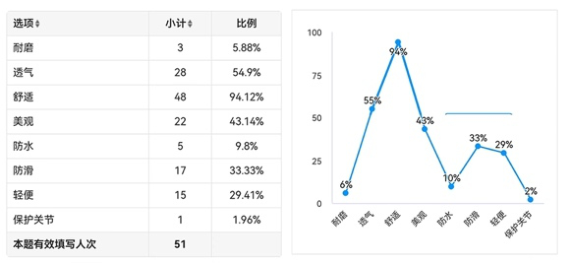
Figure 1: Illustrated with data of elderly shoes (adapted from China.CAA.2021).
The Symbols in Product Semantic of Aging Design Research 329
THE STUDY OF THE AGING DATA BASED ON THE EYE-TRACKING METHODOLOGY Application of Eye-Tracking Methodology to Elderly Interface Data Collection
The theory of eye movement control is a study of cognitive processes begin- ning in the 1970s. The theory of eye movement is mainly based on the sequential attention shift (SAS) and guidance by an attentional gradient to build up a systemic study on the eye tracking control model. The retinal image is decided by fixation time and fixation position, while there is a visual buffering process in the programming process of twitching of the eyelid, so the information buffer control is required when the information taken in visual reading is reflected on the cerebral cortex. The eye-tracking metho- dology would be adopted in the conduction of a user experimental study, which would show the users’ interactive behavior and psychological state in real-time. Trace the eye movement with an eye-tracker to analyze the basic laws of the subjects’ psychological activities, cognitive processes, operating habits and so on by the real-time recording of the eye position and movement track when processing visual information. The sensory index data samples of subjects are acquired through experiments, and there is data sample analysis in the study through the track index research. The sensory data sample of the early elderly users is analyzed with the eye-tracking methodology so as to study the elderly users’ functional symbol cognition of product semantics. This is the main content of this paper.
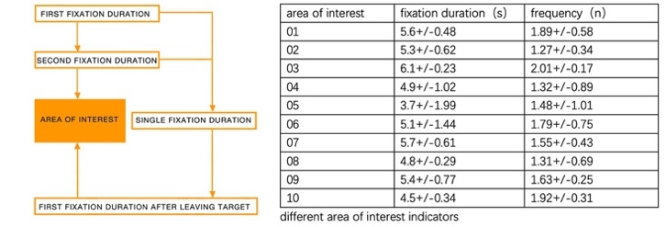
The most important method of eye-tracking recording analysis is to sepa- rate the first reading (fixation) in certain interesting areas from the later reading time. Researchers would need to confirm the analysis target area according to the need of research, i.e. “area of interest” (Shui Xue & Gao Ming & Xiang Huiwen. 2018). In this area, the reading time attribute of fixation is the key information for sampling user data. Based on the visual function degradation of the elderly subjects, there should be multiple short sampling to acquire the correct data. The data collection time is divided into three parts:
1. Single fixation duration refers to the first fixation reading of the subjects. The single fixation duration is a good index for the semantic cognitive activation stage of the product interface. This is the accurate cognitive test for aging users in the highest concentration duration stage. In the reading of the first fixation duration, the subjects’ duration of the first fixation on the area of interest is the important node for the experimental sampling. The occurred fixation duration means the duration between the beginning of the first fixation of the subjects on the interface in the area of interest and the time when the fixation point leaves the area of interest and the eye jumps to another area of interest. 2. Second fixation duration means the index derived by the subjects in multiple fixations in the area of interest, i.e. finding the secondary key position in the area of interest in addition to the central focus position in the test.
Figure 2: Illustrated with data of area of interest (adapted from China.CAA.2022).
3. The first fixation duration after leaving the target means the first fixa- tion duration after the fixation point leaves the current area of interest, which is very crucial for the subjects of the early elderly. The existence of interference factors or sub-interest regions outside the region of inte- rest would have an intuitive presentation of data because of the decrease in concentration. Thus, the generated test deviation value is the sub- tle data sampling analysis point for the elderly users’ cognition of the interface.
The test data of the three durations is adopted as the main reference stan- dard of design to find out the reason for the factor of the attentional decline of the early elderly tested. To gain more accurate data on the area of inte- rest of the twitching of the eyelid, the design researcher subdivides the eye track formed by the first vision reading and forms a data sample to derive the indexability focus of data formation.
The Information Cognition of the Aging Group on the Product Semantics Due to the weak attention, the biological signal would be easily interrupted by irrelevant factors as the external environment when there is a measurement on the biological indexes of eye-tracking for the users of the aging group. Hence, the single-dimension biological measurement and analysis for the pro- duct human-computer interaction situation made for the elderly users would not be objective or correct. The design could be used to solve the information cognition of product semantics and the common problems of products cau- sed by the physiological decline of the elderly. Firstly, in biology, the elderly is declining in the functions of sensation, cognition and action. Secondly, along with the growth of age, the action speed of the elderly would be slower and slower. At the same time, the correlation between their sensation and cogni- tion would be enhanced along with the increasing age. Finally, under certain specific situations, the operation skills of the elderly need to be conducted with the help of perceptual information (RYOKO F. 2009). On the semantic expression assisted by perceptual information, in the experiment, the design researcher introduces the digital interactive context design to design the user experience that is matched with the interface of the product convenient for the
The Symbols in Product Semantic of Aging Design Research 331
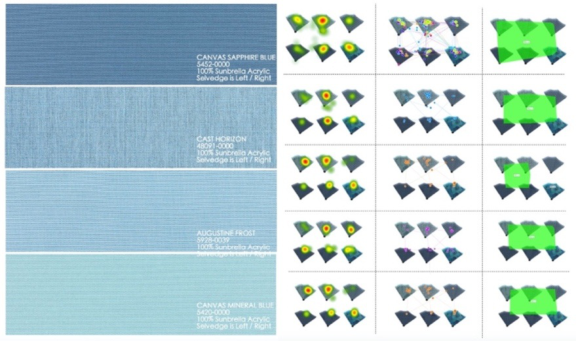
Figure 3: Illustrated with data of aging cart design (adapted from China.CAA.2020).
elderly people and product semantic visual symbols, so as to further coordi- nate the more accurate performance of physiological sequence guidance cycle of the aging group.
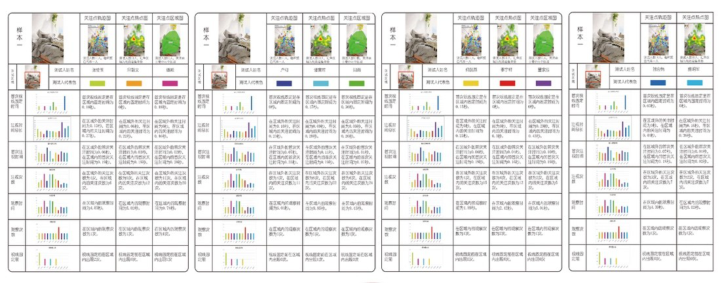
Through the experimental data analysis of the eye-tracking methodology, we understand that the information of the aging population on the visual semantics of products mainly exists in three aspects: color, material and inter- face symbols. With the awning of the elderly stroller for example, there is an analysis record for the systemic eye-tracking on the three factors mentioned above: hotspot area map, eye-tracking trajectory and data sample classifica- tion of the focused area of interest; and the final analysis is the materials, color and the operation interface, etc. which integrates to form the semantic interface orientation of the product design.
VIRTUAL SIMULATION INTERFACE CONVENIENT FOR THE ELDERLY PEOPLE There would be accuracy deviation in the aging group in the eye-tracking data under different light-sensitive conditions. Hence, the virtual simulation form of product visual focus tracking combined with the product use process in a virtual reality environment is used in the data sampling of this experi- ment. It is integrated with the interactive interface of the product convenient for the elderly people and a visual sensory guidance system. A virtual simula- tion interactive environment of users and products is made with 3d dynamic simulation technology, and then there is a study on the conversion of the aging group in virtual simulation space through the scenario-based design combination form so as to achieve the optimal combination of design seman- tics. The eye-tracking technology provides data support for achieving the enforceability of design semantics of the product convenient for aging design.
Setting of Virtual Simulation Model Space The setting of space needs to be specified in the virtual simulation experi- ment. The outdoor space is involved with the change of virtual ray, so this
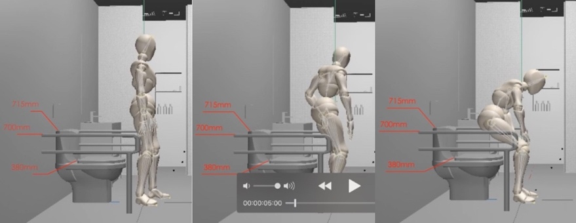
Figure 4: Illustrated with aging virtual simulation demo (adapted from China.CAA.2022).
experiment study confirms making the indoor space of the family as a model main body. Different space attributes are built into the model to make a sequ- ence layout of 3D products model in a space carrier. The living state of the elderly in the home environment is virtualized and restored with 3d anima- tion. Combined with the virtual use process streamlining of the model of the elderly (shown in the figure), there is an analysis of the unreasonable factors in the product by observing the operation, use and behavior path of main products in each space during the animation, and then there is a comparison of the data collection methods of multiple times and multiple people.
Setting of the Aging Model and Product Interface Scale Only with a better understanding of the user model can users make a better realization of the system semantics of the product interface. The user model in a virtual simulation experiment could explain the use situation and use habits of the products, so as to analyze the optimal human-machine interface interactive method (Starr M S & Rayner K. 2001). The user model would meet the social life experience of users and their instinctive cognition. The user model requires designers to reach the following three points in designing the product interface scale:
(1) Conform to the user’s life experience: Firstly, the semantic presentation of the interface should conform to the habits of users. Especially for the elderly, the used path is the key point. Secondly, the symbolic semantics of the interface should conform to the cognition of users. The users would be at a loss if they don’t know about the meaning of the symbol (Suryadevara N. et al. 2013). The semantic graphics and icons of the interface should be refined from the things recognized by the elderly so that they could connect them with familiar things in daily work life and associate their meaning in the shortest time. (2) Find out the unconscious behavior: the unconscious design could be deemed as the design to follow the instincts and habits of users. The instincts could be transformed to be habits under certain conditions. In this stage, users almost regard such cognitive habits as “instinct”. Cultivate users with new user habits through the mining of unconscious behavior, so that these habits become new “instincts” .
The Symbols in Product Semantic of Aging Design Research 333
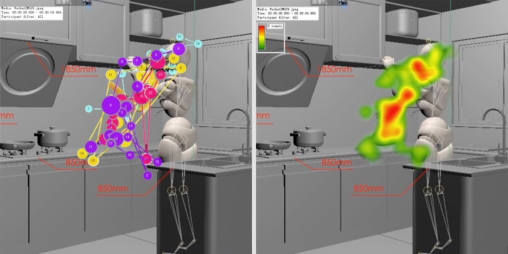
Application of Eye-Tracking Methodology in the Virtual Simulation Space Set the time index of eye tracking the area of interest and conduct the dyna- mic behavior tracking of the elderly model in the virtual simulation space. Firstly, the experiment has a segmented virtual simulation animation demon- stration in the spaces with different attributes and conducts the eye tracker testing study with the principle of the split lens. There is sample sampling and analysis of the eye tracking in the secondary virtual simulation space.
Figure 5: Illustrated data with aging virtual simulation (adapted from China.CAA.2022). (1) The products in the space are imaged with demos, and the eye-tracking of the dynamic flow of the elderly model is carried out first (Starr M S & Rayner K. 2001). Observe the sequence of their actions and find out the most focused position to divide the key point of the region. (2) Have a secondary rendering of the scene to match the color, material and interface of the real scene and actual products for virtual use, and there would be the observation of close focus with eye-tracking. There is a sample study analysis on the different two study materials. The eye-tracking of the human-machine operated product interface was per- formed to summarize the data samples by displaying the attention of color, symbol, shape, and material respectively.Figure 6: Illustrated data with virtual simulation sample (adapted from China.CAA.2022).
In the end, there is a comparison of the two samplings to have a design analysis and study different focus problems. Have a research on elderly users based on multi-dimensional data synchronous measurement and analysis.
STRATEGY OF PRODUCT SEMANTIC DESIGN FOR THE AGING PEOPLE Only master the user demands can we seize the psychological characteri- stics of users and develop products with pertinence and purpose according to the demands and characteristics, so the product would be at the top in the industry. The experimental study sample is acquired through eye-tracking methodology. In view of the characteristics of the aging people, the pro- duct designer would decompose the real demand of the elderly by analyzing the physical and psychological behavior characteristics, so as to find out the interface semantics of the design convenient for the aging people in the current product.
4.1 Strategies for functional simplicity: Build simplicity within the cogni- tion range of the elderly. Simplicity is a very important principle of interface interaction experience development. The objective is to enable the users to know and use the products conveniently and quickly, so as to try to reduce the error rate in the use of the users. In the study of the design semantics convenient for aging people, we should pay more attention to this strategy principle in the study. Optimize the presentation of the symbolic semantic content in the product interface and the interface-oriented representation; do well in the market research with more consideration on the cognition level of the elderly so as to meet the market demand of the aging users.
4.2 Strategy for minimizing memory burden: In the interface design, we should try to reduce the things to be remembered by the elderly users. We should quickly guide the confirmation information of interface symbol memory instead of making the elderly recall the information. Along with the degradation of physiological function, the visional perception of the elderly is weakened, and their attention and memory are also degenerated, so it is hard to learn and master new things rapidly. Their limits of information proces- sing in the cerebral cortex turn to be narrow, and their memory is limited and unstable, so their oblivion rate is higher and higher. Therefore, it is necessary to design the treatment to minimize the memory burden.
4.3 Strategy of product interface optimizing layout design: In the layout design of the product interface, the important information should move with the fixation point of eye-tracking data analysis. The aging of the elderly⣙s visual sensory system would narrow their vision, so the intuitive breadth of visual perception is asymmetrical in the reading of the product interface, and their reading speed of the interface layout is also slower. When perceiving the product interface, most of the information that they could see is within the area of interest of eye-tracking. Thus, there is a scientific and optimized layout for the data information extracted by the experiment, and there is full use of the biological characteristics of elderly users through the application of eye-tracking.
4.4 Strategy of the color design performance: Color can simulate visual senses of people, so the appropriate color combinations are better for the visi- onal perception of the elderly so as to effectively guide its operation. Reduce
The Symbols in Product Semantic of Aging Design Research 335
the use of similar color and choose the one with a higher contrast ratio. Accor- ding to the hotspot color analysis of eye-tracking, visual aging would make the elderly receive far less light than the young and their color discrimina- tion is weaker, especially for the blue and purple. The identification ability of green is also weakened. With the consideration of the change in the elderly in visual ability, there should be less collocation of blue and purple in the interface design. The semantic color should be adopted with the color with higher contrast so that the characters and symbols are more recognizable.
CONCLUSION
Designing and developing products that meet the demands and use of the elderly has great significance for boosting the positive and healthy population aging. Based on the eye-trackering and other experimental devices and the experimental application of digital virtual simulation technology, we focus on the key characteristics to have synchronous test analysis according to the product features, research objectives, and visual perception preferences of elderly users. It is adopted with the suitable user study method to provide evidence for the semantic design development of the product convenient for aging people. Find the real sample data scientifically to keep optimizing and upgrading according to the real data and feedback of the elderly users in the actual user. Designers should have a full understanding of the changes in physiological and psychological behavior characteristics of the elderly, know about the cognitive characteristics of the elderly and analyze the real needs of the elderly to design products that would be really convenient for the elderly users. Through the design study of the product semantics, decompose the design symbol with the study method of the design convenient for the aging people. Find the new design feasibility for the exploration and practice of the semantics of the product convenient for the aging people.
ACKNOWLEDGMENT
Finally, I am also deeply indebted to all my family members and friends for their encouragement which inspires me every time when i have no motivation to continue.
REFERENCES
DAVIS F D. (1989) Perceived Usefulness, Perceived Ease of Use, and User Acceptance of Information Technology. Mis Quarterly, 13(3): 319–340. Hiroho Noborikura. (2000) Significance of the Quantity and Emission of Light
in Human Physiology. Journal of the Illuminating Engineering Society of Japan, Vol. 84. No. 1. pp. 46–49. KAMIN S T, LANG F R, BEYER A. (2017) Subjective Technology Adaptivity Predicts Technology Use in Old Age. Gerontology, 63(4): 385–392. Nielsen J. (1994) Usability Engineering. San Francisco: Morgan Kaufmann. Ryoko F. (2009) Needs of the Elderly for “Elderly-aiming” Products: From the View
of Gerontechnology. Consumer Electronic, (4): 125.
Shui Xue, Gao Ming, Xiang Huiwen. (2018). Shijue Renzhi Zhong de Yanggong Lilun ji Shizheng Yanjiu: 67–79. Starr M S, Rayner K. (2001) Eye movements during reading: Some current contro-
versies. Trends in Cognitive Science, 5: 156∼163. Suryadevara N. K., Mukhopadhyay S. C., Wang R., Rayudu R. K. (2013) Forecasting the behavior of an elderly using wireless sensors data in a smart home. Engineering Applications of Artificial Intelligence; Vol. 26 Issue 10, pp. 2641–2652, 12p. United Nations. (2019) World Population Prospects: The 2019 Revision. New York:
Department of Economic and Social Affairs Population Division.
LISTED IN THE AHFE DIGITAL BOOKSTORE CATALOGUE
Explore the complete digital volume
Ergonomics In Design
Read this individual research paper free through the original publisher, or explore the full digital proceedings book.
ISBN 978-1-958651-53-7
Explore this ISBN in the AHFE Bookstore ↗Listed in the July 2026 bookstore catalogue; search by ISBN to confirm current availability · Digital book purchase optional